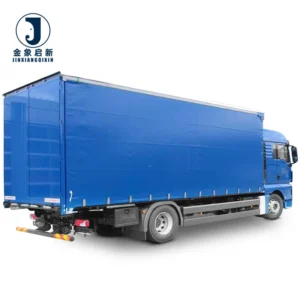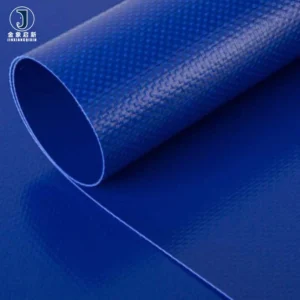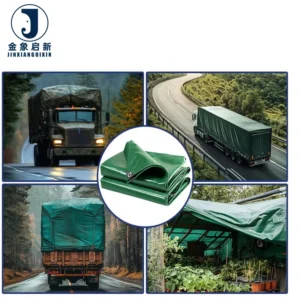
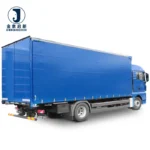
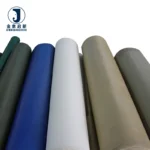

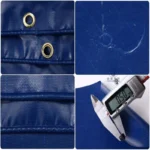
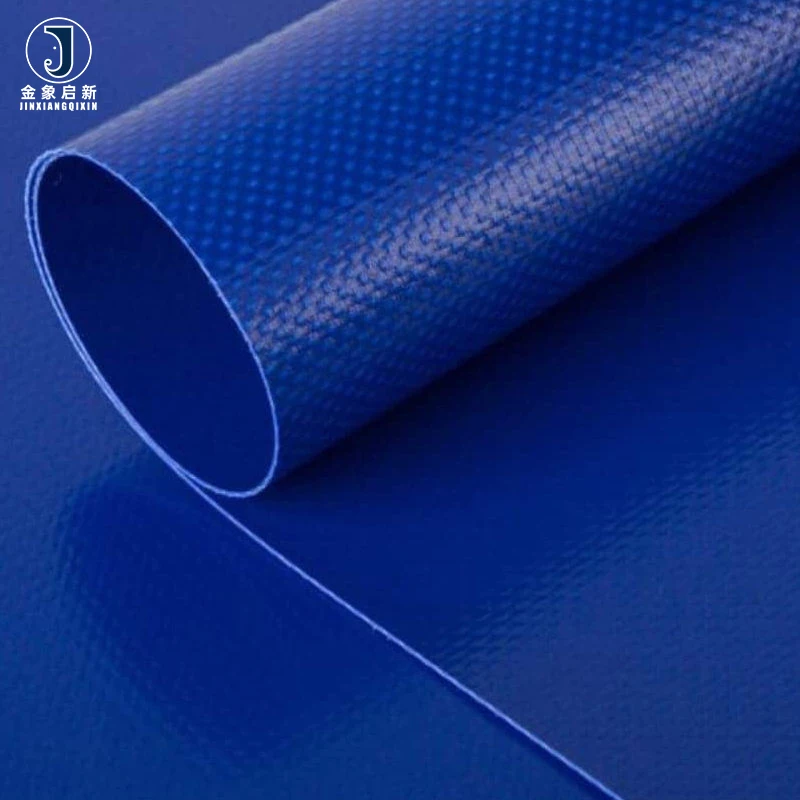
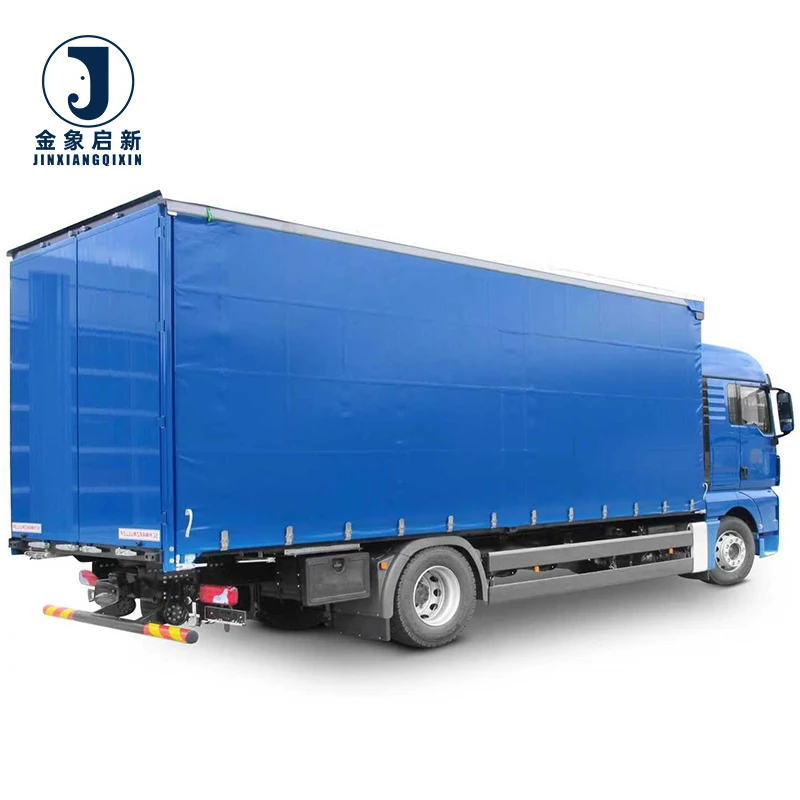
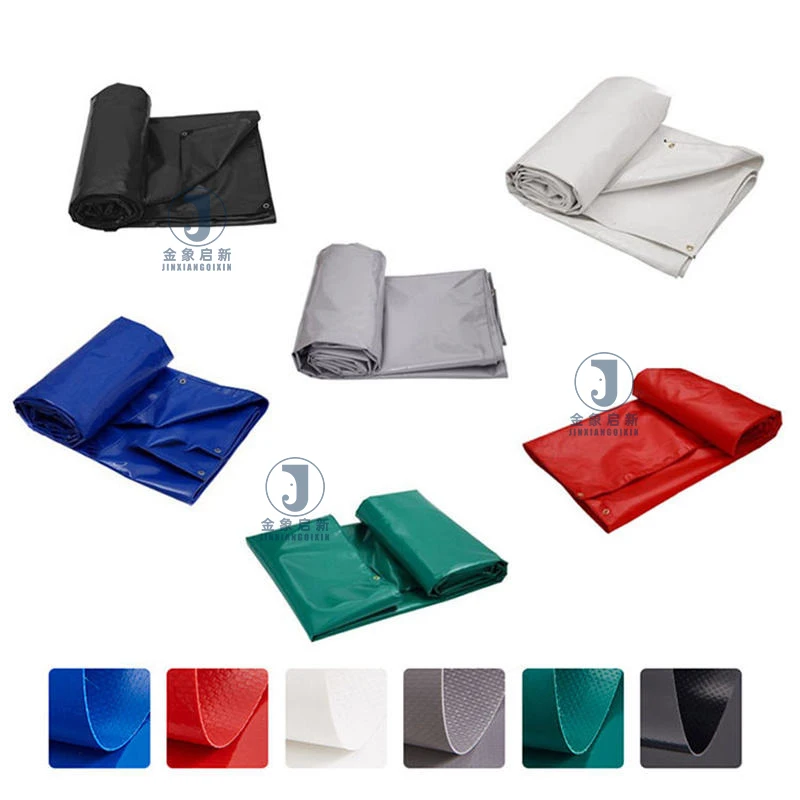
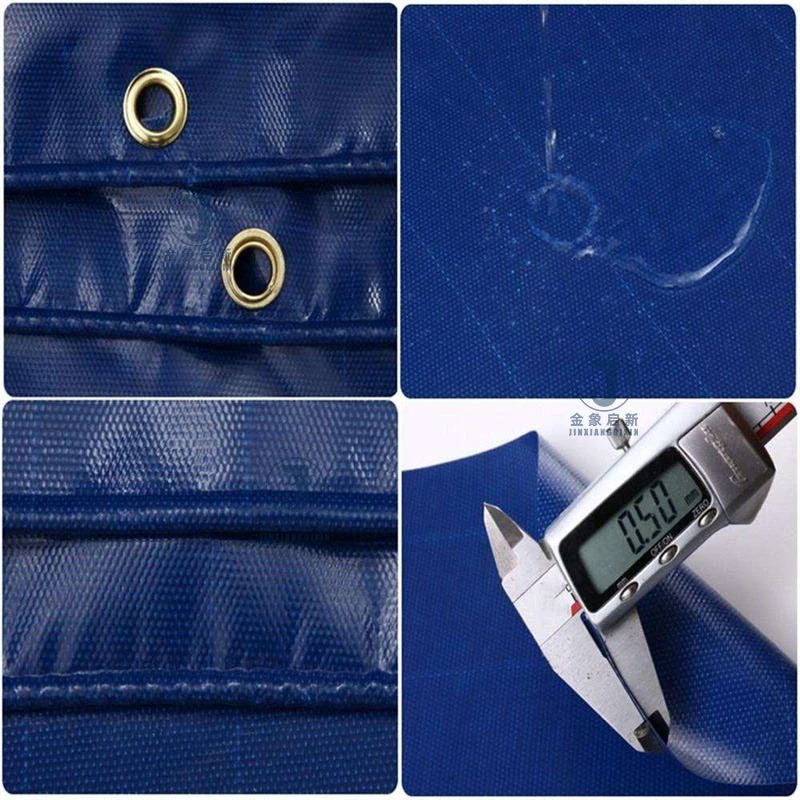
Proven Coating Adhesion — Hot-melt coating technology bonds PVC to high-strength polyester mesh, ensuring the blackout truck cover resists delamination under road vibration and load flex.
Technical Specifications
| Parameter | Value |
|---|---|
| Product Type | PVC Coated Tarpaulin |
| Base Fabric | High-strength polyester mesh |
| Coating Technology | Laminated technology & Hot-melt coating technology |
| Weight (GSM) | 350gsm / 420gsm / 500gsm / 550gsm / 600gsm / 750gsm |
| Total Thickness | 0.32mm / 0.35mm / 0.4mm / 0.45mm / 0.5mm / 0.65mm |
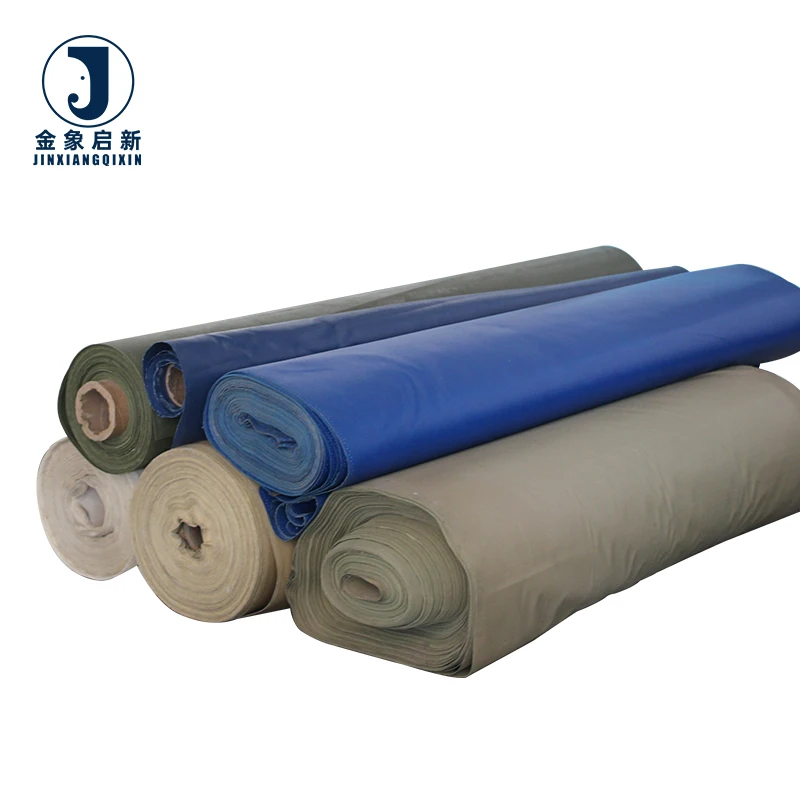
| Roll Size | 2m width × 75m length / 2.1m width × 50m length |
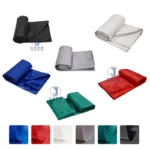
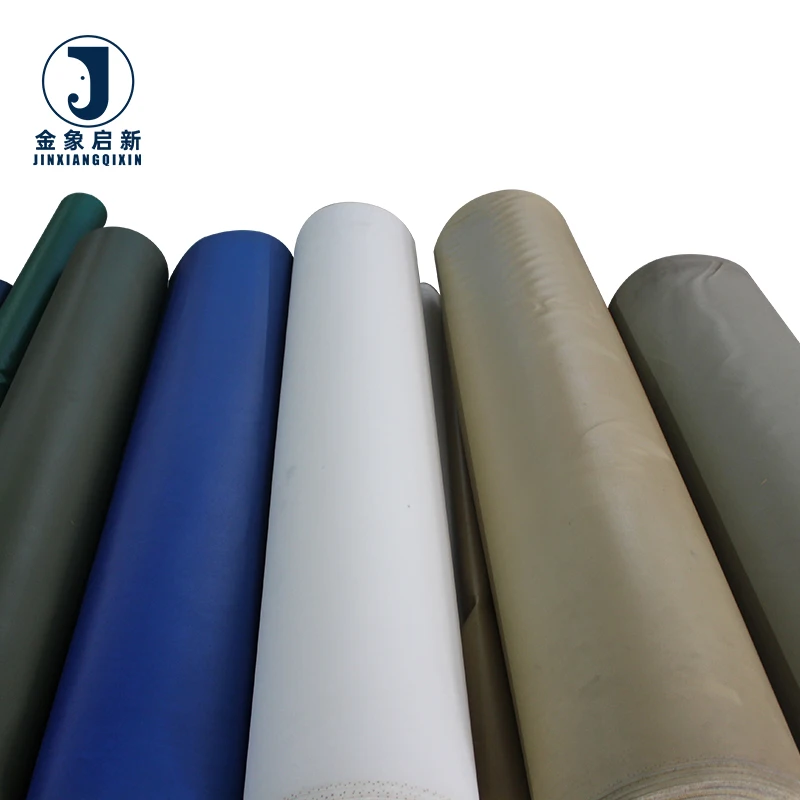
| Color Options | Blue / Red / Yellow / Light blue / Grey (Customizable) |
| Waterproof | Fully waterproof coated construction |
| Cold Crack Resistance | Stated (temperature range not specified in source) |
| Anti-Mildew | Stated (test basis not stated in source) |
| Anti-Static | Available in anti-static grades — confirm the resistance standard required for your market |
| Flame Retardant | Available in flame retardant grades — confirm the grade required for your market |
| UV Treatment | Anti-UV treated (test basis not stated in source) |
| Color Fastness | Stated (grade not stated in source) |
| Service Life | Suited to extended outdoor exposure under normal circumstances |
| Certifications | ISO 9001, CE |
Application Suitability
| Application | Exposure & Requirement |
|---|---|
| Truck and trailer side curtains | Constant flexing at load points, road debris abrasion, UV and weather exposure, wind lift forces |
| Flatbed cargo covers | Direct sunlight, rain ingress prevention, tie-down tension stress, frequent folding and unfolding |
| Transport equipment OEM fitment | Precise dimensional tolerance to vehicle model, weld seam integrity at stress concentrations, batch colour match across fleet |
| Construction logistics fleet covers | Job-site dust and mud, chemical splash from building materials, rough handling during daily deployment |
| Heavy equipment tarpaulin wraps | Puncture risk from sharp edges, prolonged static load, wind-driven rain penetration |
Why Generic PVC Truck Cover Sizing Fails Fleet Operators
A cover cut to a generic dimension leaves cargo exposed at the edges and concentrates tie-down stress at misaligned eyelets, accelerating failure at the most vulnerable points.
Fleet managers who order PVC truck cover stock in standard sizes consistently report that the edges lift under highway wind, allowing water to channel directly onto cargo. Tie-down straps pull against fabric that was never reinforced at the actual anchor points of a specific trailer model. Within a short operational cycle, the most common failure is not the fabric itself but the seam or hem where the load shifts and flexes repeatedly [NEED_CITE: tensile and tear test methods for coated fabrics per ISO 1421]. This pattern repeats across logistics networks that specify material grade correctly but overlook the cut-to-fit requirement. The result is premature replacement, cargo damage claims, and downtime spent re-rigging covers that should have lasted far longer.
Weld Integrity at Load Flex Points
When a PVC truck cover flexes over a shifting load, the highest stress falls on the seam. Hot-melt coating technology allows thermal welding that fuses the PVC layers across the joint, creating a bond that matches the base fabric in tear resistance. Unlike stitched seams that introduce needle holes and thread degradation, welded joints maintain continuity of the waterproof barrier and resist delamination under repeated bending cycles encountered during long-haul transport.
Blackout Construction and Cargo Privacy
The blackout PVC coating blocks light transmission through the fabric, serving dual purposes for transport operators. Cargo remains concealed from view during stops and transit, reducing theft risk for high-value loads. Simultaneously, the opaque coating layer contributes to UV shielding of the cargo space beneath, limiting solar heat buildup inside the trailer. This PVC truck cover construction is available in multiple colour options to align with fleet livery requirements while maintaining full light blockage.
How Coating Method and Base Fabric Determine Real-World Performance
The distinction between laminated and hot-melt coating technology directly affects how a PVC truck cover performs in service. Hot-melt coating forces molten PVC into the interstices of the high-strength polyester mesh, creating a mechanical lock that resists peeling under thermal cycling and mechanical flex [NEED_CITE: coating adhesion test standards for PVC coated polyester fabrics]. Laminated construction bonds pre-formed PVC films to the base fabric, offering consistent thickness at a different cost structure. The base fabric denier and weave density govern how tear propagation behaves once the surface is breached — a tighter mesh arrests tear spread more effectively than an open weave at equivalent weight. GSM alone does not predict strength; a lighter fabric with a denser base weave can outperform a heavier one with an open mesh in tear resistance. Coating weight and base fabric specification must be evaluated together to match the mechanical demands of a given transport application.
The Hidden Cost of Specifying on Quoted GSM Alone
Operators who approve PVC truck cover orders based solely on the quoted GSM frequently discover on delivery that the material feels noticeably lighter than expected. Coating weight can be reduced while maintaining overall thickness through formulation adjustments that lower density, meaning a roll that measures correctly on a micrometer still carries less PVC mass per square metre than specified [NEED_CITE: coating weight verification methods for PVC tarpaulin per ISO standards]. The practical consequence appears months into service: the fabric becomes brittle under UV exposure sooner, cold crack resistance drops in winter conditions, and the coating surface chalks or flakes under abrasion. Welds that initially held firm begin to peel because there is insufficient coating material to maintain the fused joint. Batch inconsistency compounds the problem when different rolls within the same order arrive with varying actual weights, producing visible performance differences across covers deployed side by side on identical trailers.
What Verification Capability Means for Your PVC Truck Cover Order
Production lines equipped with dedicated QA checkpoints verify coating weight and GSM at each stage rather than relying on batch-level assumptions. The hot-melt coating process allows real-time adjustment of coating thickness to maintain the specified weight across the full roll length. A 10-person R&D team develops cut patterns matched to specific trailer models, generating samples within days so fitment can be confirmed before bulk production proceeds. Three full production lines with 36 sets of professional equipment support volume orders while maintaining the scheduling discipline that fleet operators require. Every roll undergoes inspection before dispatch, with results documented against the original specification sheet rather than a generic tolerance band.
Documentation & Verification
- Material specification sheet listing confirmed GSM, base fabric denier, coating method, and colour reference per order
- Pre-shipment inspection record with actual measured weight values against stated specification
- UV and flame retardant test reports provided where treatment grade is confirmed at inquiry stage
- ISO 9001 and CE certificates available with each consignment
- Roll packing list detailing dimensions, weight, and batch number for traceability
- Certificate of origin and customs documentation prepared per destination market requirements
Fabrication, Handling & Storage
- Hot-melt coated PVC surfaces respond well to thermal welding — set temperature and dwell time to the specific GSM grade ordered
- Reinforce hems at tie-down positions using webbing inserts compatible with the PVC coating chemistry
- Store rolls upright on pallets to prevent flat-spot deformation of the polyester mesh core
- Unroll in moderate temperatures; cold crack resistance varies by grade, and stiff fabric risks surface creasing
- Clean with mild detergent solutions — solvent-based cleaners may soften the PVC coating surface over time
- Plan cut layouts on 2m or 2.1m roll widths to minimize offcut waste and reduce the number of welded panel joins
Preparing Your PVC Truck Cover Inquiry
Provide the specific truck or trailer model dimensions, including any irregular contours or protrusions that affect the cover pattern. Specify the operating climate range and whether flame retardant or anti-static certification is required by your site or jurisdiction. Indicate the annual volume and whether covers are needed as finished fabricated units or as roll stock for in-house cutting. Confirm colour requirements and whether multiple covers must match across a single fleet deployment.
Frequently Asked Questions
Q: How can I verify the GSM on arrival matches what was quoted?
A: Request the pre-shipment inspection record that documents the actual measured coating weight and base fabric mass for your specific rolls. Cross-check these values against the material specification sheet provided with your order. If discrepancies appear, the documented production-stage QA data provides a traceable reference point for resolution before the material is cut or deployed.
Q: Can the PVC truck cover be cut to fit my specific trailer model?
A: Yes. Provide the exact dimensions and profile of your truck or trailer model, including tie-down point locations and any protrusions. The R&D team develops a cut pattern and produces a sample for fitment approval before bulk fabrication proceeds. This eliminates the edge-lift and stress-concentration problems that generic sizing causes on the road.
Q: What certifications support the flame retardant or anti-static treatment?
A: Flame retardant and anti-static treatments are available in various grades depending on market requirements. Specify the standard your site or jurisdiction requires — such as a particular fire classification or anti-static resistance level — at the inquiry stage. Test reports confirming the treatment grade are then supplied with your documentation package.
Q: How do welded seams hold up where the load shifts during transport?
A: Hot-melt coating technology enables thermal welding that fuses PVC across the joint without needle holes or thread. The welded seam matches the base fabric in tear resistance and maintains waterproof continuity at flex points where stitched seams typically fail first under repeated load movement and road vibration.
Q: Is colour consistent across multiple covers in the same fleet order?
A: Batch colour consistency is controlled through the coating process and verified during pre-shipment inspection. Rolls from the same production batch are allocated to a single order to prevent visible shade variation when covers are installed side by side on identical trailers. Confirm colour reference numbers at the inquiry stage for precise matching.