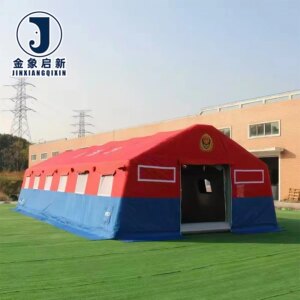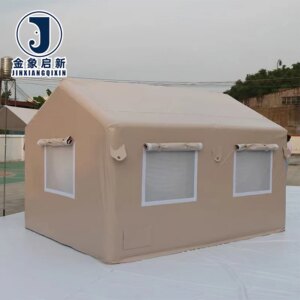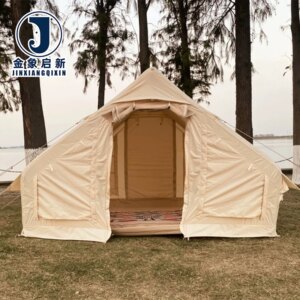

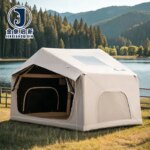
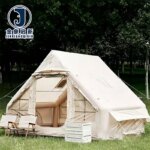
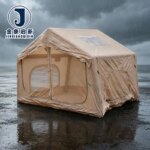
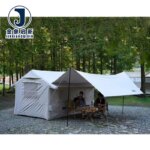
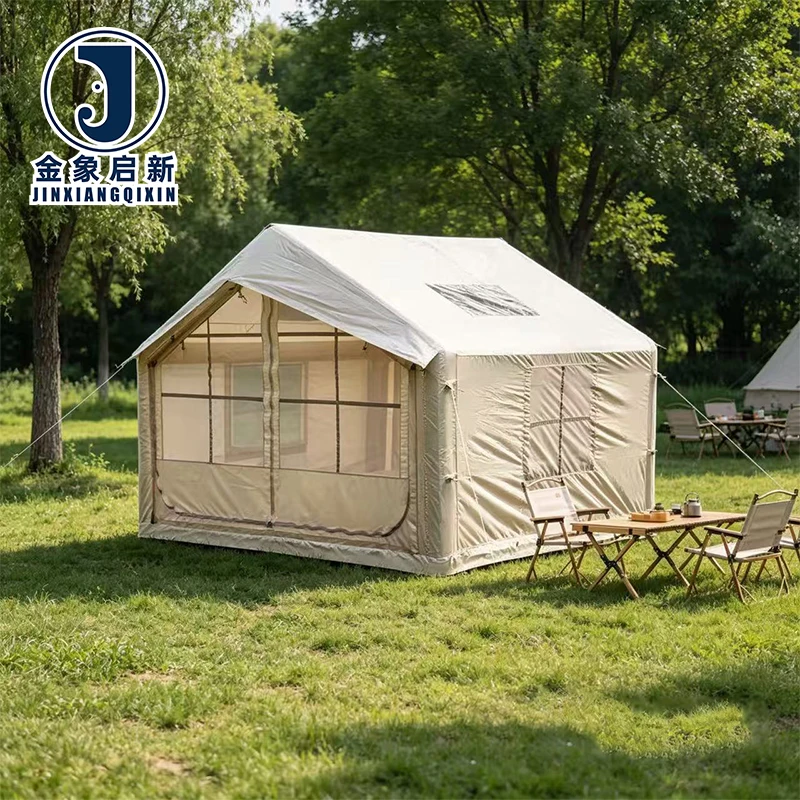
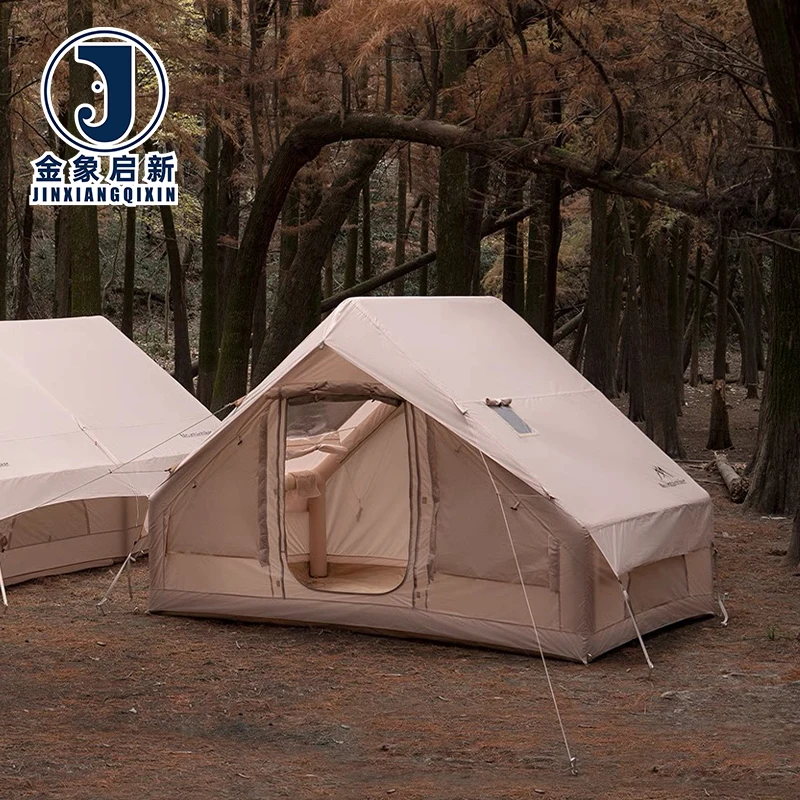
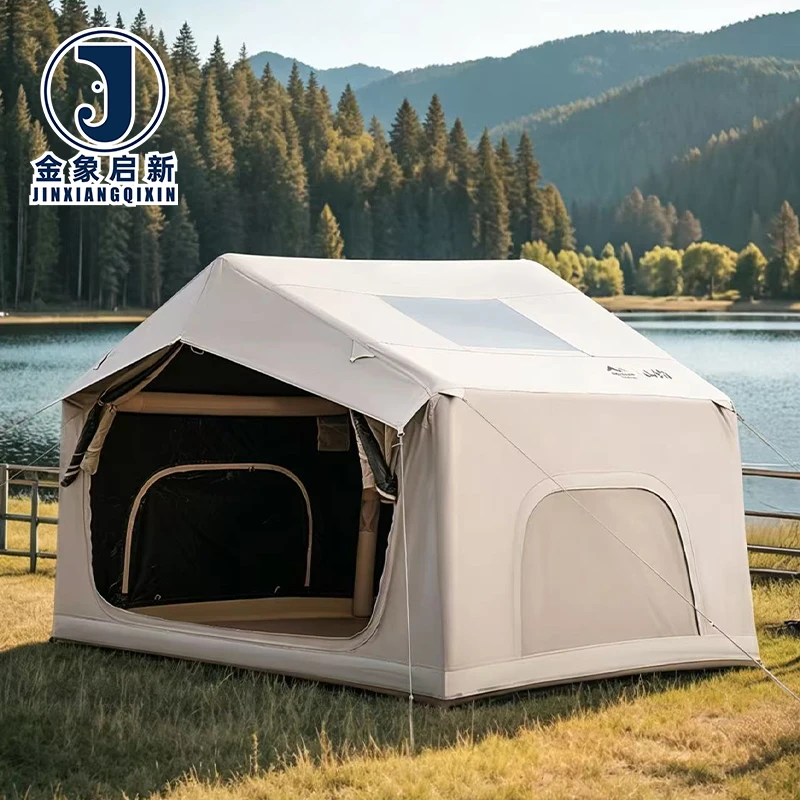
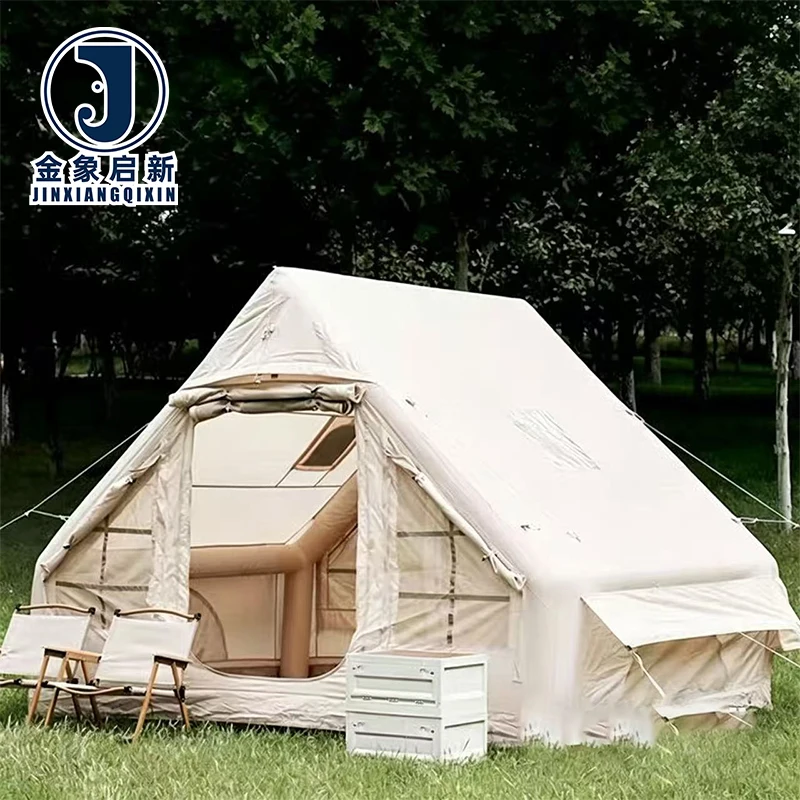
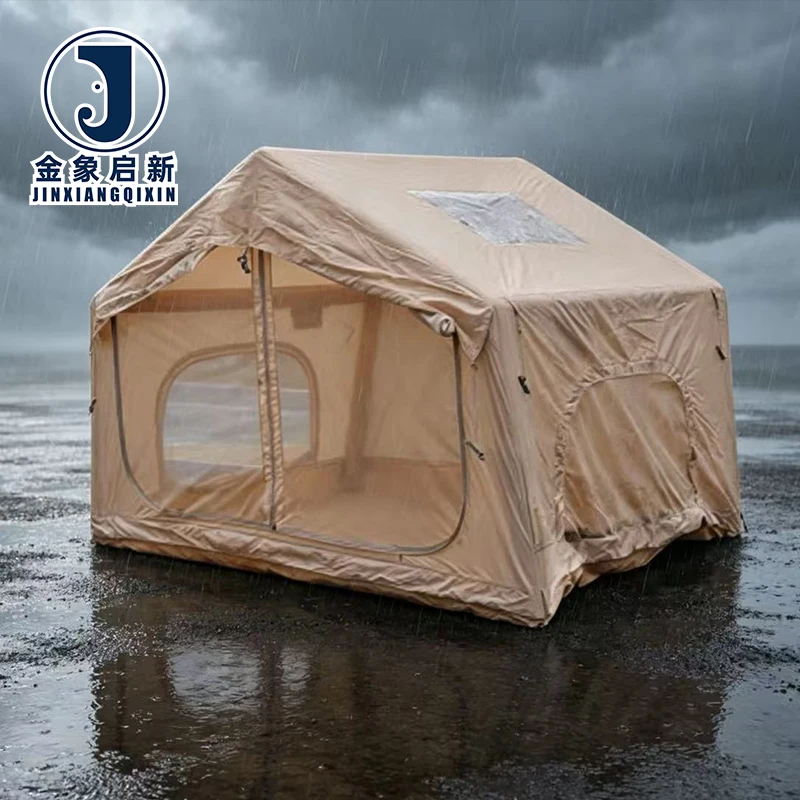
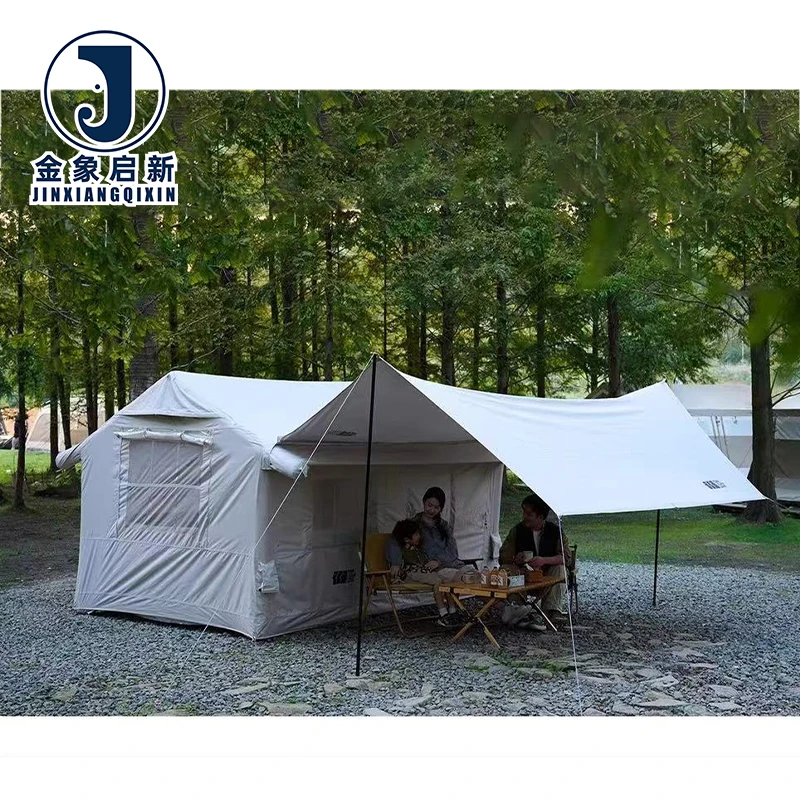
Technical Compliance First — Every batch of inflatable structure fabric ships with fire-retardant and anti-static test documentation, aligned to the compliance framework your project site demands, manufactured under ISO and CE certified processes.
Technical Specifications
| Parameter | Value |
|---|---|
| Product Type | Inflatable tent |
| Core Material | PVC tarpaulin |
| Construction | Single-layer |
| Capacity | 4-6 Person |
| Opening Mechanism | Quick automatic opening |
| Season Rating | Four-season design |
| Key Features | Waterproof, UV-resistant (test basis not stated in source), tear-resistant, fire-retardant (grade not stated in source), anti-static (surface resistance or standard not stated in source) |
| Customization | OEM & ODM, sample customization, pattern printing |
| Production Facility | 9,180 m² with 3 full production lines, 36 sets of professional equipment |
| R&D Support | 10 technicians |
| Quality System | Full-process QA/QC with dedicated on-site staff |
| Certifications | ISO 9001, ISO 14001, ISO 45001, CE |
Application Suitability
| Application | Exposure & Requirement |
|---|---|
| Mining and tunnelling temporary shelters | Dust, confined-space fire risk, mandatory fire-retardant compliance, frequent relocation |
| Aviation ground support enclosures | Fuel-adjacent zones requiring anti-static surface properties, wind loading on inflated membranes |
| Remote construction crew housing | Extended UV exposure, four-season temperature swings, rapid deployment needs |
| Outdoor event membrane structures | Crowd-safety fire codes, repeated inflation/deflation cycles, public liability compliance |
| Disaster response staging areas | All-weather waterproofing, fast setup, transportability in bulk |
Why Certification Without Documentation Fails the Site Inspection
Inflatable tent fabric fire retardant anti-static certified is not a phrase you can put on a purchase order and assume compliance. The gap between a supplier’s verbal claim and a test report your site auditor will accept is where projects stall, inspections fail, and commissioning dates slip.
Fabric must ship with a batch-matched test report that names the standard, the test laboratory, and the result — anything less is marketing, not compliance.
On regulated industrial sites — mining faces, aviation aprons, tunnelling portals — safety inspectors do not read product brochures. They read certificates. When ventilation duct or inflatable shelter fabric arrives without a fire-retardant grade tied to a recognised standard, or without an anti-static test result showing the surface resistance range, the entire installation can be rejected before it is inflated. [NEED_CITE: fire classification requirements for temporary structures on mining and tunnelling sites] This is not a paperwork inconvenience. It is a project delay that costs more than the fabric itself, and it happens because procurement specifications stopped at the word "certified" without defining what certification means for that particular site authority.
What Fire-Retardant Actually Means in Inflatable Structure Fabric
Fire-retardant PVC tarpaulin is available in multiple grades, and the grade your project requires depends entirely on the regulatory body governing your site. A tunnelling contractor in Europe may need fabric classified under EN 13501-1, while a mining operation in Australia references AS 1530.2. Without specifying the grade and obtaining a matching test report, you are purchasing fabric with an unknown compliance position. The core material in this inflatable tent fabric is formulated for fire-retardant performance — confirm the grade required for your market and request the corresponding batch test report before placing a production order.
Anti-Static Performance and the Measurement That Matters
Anti-static treatment in PVC inflatable tent fabric fire retardant anti-static certified applications is not a binary property. It is defined by surface resistance, typically measured in ohms per square, and the acceptable range varies between aviation fuel-handling zones, underground mining environments, and general industrial use. The fabric is produced with anti-static formulation, and the surface resistance value or applicable standard should be confirmed against your site’s specific safety protocol before the order enters production. [NEED_CITE: anti-static surface resistance standards for PVC-coated fabrics in hazardous environments]
Reading the Specification Sheet Beyond the Buzzwords
Tear resistance in single-layer PVC tarpaulin is a function of both the base fabric denier and the coating adhesion to that base. A heavier coating does not automatically deliver higher tear strength if the base fabric weave is loose or the adhesion process is under-cured. The single-layer construction used here is engineered for repeated inflation and deflation cycles where flex stress concentrates at seam and valve attachment points. Waterproof performance comes from the continuous PVC coating envelope, while UV-resistant formulation — with a test basis available on request — addresses the polymer degradation that causes chalking and embrittlement after extended outdoor exposure. The four-season design rating reflects the material’s ability to remain flexible at low temperatures without cracking, and to resist softening or tackiness in high ambient heat.
What Happens When Inflatable Fabric Specs Are Assumed Rather Than Verified
The consequences of specifying inflatable tent fabric without verified fire-retardant and anti-static documentation are not theoretical. On mining and tunnelling sites, a failed inspection means the structure is deflated and removed, sometimes within hours, while replacement fabric is sourced and shipped. [NEED_CITE: project delay costs from non-compliant temporary structure fabric in regulated environments] Aviation ground support enclosures rejected for inadequate anti-static documentation sit idle on the apron while the contractor argues with the supplier over whose responsibility the certification gap represents. Event structures denied approval by the local fire marshal days before opening leave organisers with no fabric, no structure, and no time to re-source. These failures share a common root: the procurement specification described properties without requiring documented proof, and the supplier delivered fabric that matched the description but not the evidence chain the site inspector required.
Why Procurement Teams Source This Fabric Here
Three full production lines and 36 sets of professional processing equipment provide the capacity to fulfil large project orders for inflatable structure fabric without splitting production across multiple subcontracted facilities, keeping batch consistency under direct control. A 10-technician R&D team handles custom sample development, pattern printing specifications, and material selection questions before the order is confirmed, reducing the risk of ordering fabric that does not match the project’s actual deployment conditions. Dedicated QA and QC staff conduct full-process inspection rather than end-of-line sampling, meaning coating weight, treatment application, and visual consistency are checked at every stage. ISO 9001, ISO 14001, ISO 45001, and CE certification provides the quality management framework that regulated procurement channels require, with documentation traceable to each production batch. Pre-shipment inspection records are generated at 100 percent coverage before dispatch, not as a spot-check on selected rolls.
Documentation & Verification
- Material specification sheet stating base fabric denier, coating type, and treatment parameters for inflatable tent fabric
- Fire-retardant and anti-static test reports issued per batch, matched to the compliance standard your site requires
- Pre-shipment inspection record confirming 100 percent inspection coverage before dispatch
- ISO and CE certificates available as part of the tender or procurement submission package
- Certificate of origin and customs documentation prepared for international project site delivery
- Roll packing list detailing quantities, weights, and roll identifiers for receiving verification
Fabrication, Handling & Storage
- Heat-welding parameters should be tested on sample swatches of the PVC tarpaulin core material before full production runs
- Seam allowance and reinforcement at inflation valve attachment points must account for single-layer construction flex stress
- Rolls should be stored horizontally on racking to prevent permanent creasing in the PVC coating layer
- Low-temperature transport requires gradual warming before unrolling to avoid cold-cracking the PVC surface
- Pattern printing areas require solvent-free cleaning agents to preserve print adhesion on the coated surface
- Field repairs on fire-retardant treated fabric must use compatible PVC adhesive to maintain treatment continuity at the patch
Request a Specification-Matched Quotation
To move from a general enquiry to a production-ready quotation, provide your project’s fire-retardant and anti-static compliance requirements by name of standard, along with the deployment environment and expected inflation cycle frequency. Specify whether you need raw fabric rolls for in-house fabrication or finished inflatable tent units with valve and seam construction. If your project requires colour matching, pattern printing, or custom dimensions, include reference samples or Pantone codes with your initial brief so the R&D team can develop and dispatch pre-production samples for your approval before the main order is scheduled.
Frequently Asked Questions
Q: What fire-retardant standard does the inflatable tent fabric meet?
A: The PVC tarpaulin core material is formulated for fire-retardant performance, and the specific grade and test standard are confirmed against your site’s regulatory requirements. Request a test report referencing the standard applicable to your project — such as EN 13501-1, AS 1530.2, or NFPA 701 — and the matched report will be issued with the production batch.
Q: What anti-static certification is provided and what surface resistance range does it cover?
A: Anti-static treatment is applied during coating, and the surface resistance value depends on the formulation selected for your application. Aviation and mining environments typically require different resistance ranges. Provide your site’s safety specification and the corresponding test report will be prepared and matched to the batch documentation before shipment.
Q: Can the fabric be supplied with a test report matching my mining or aviation site requirements?
A: Yes. Fire-retardant and anti-static test reports are issued per production batch and can be aligned to the compliance framework specified by your site authority. Submit the required standard names during the enquiry stage so the correct formulation and testing protocol are applied before production begins.
Q: What is the sample and prototype development process for custom inflatable structure specifications?
A: The 10-technician R&D team develops samples based on your dimensional, material, and treatment requirements. Samples are produced for your review and approval before bulk production is scheduled. Pattern printing, custom sizing, and OEM configurations are all addressed at the sample stage to confirm the specification matches your deployment needs.
Q: How is batch consistency controlled across multiple production runs for large project orders?
A: Three full production lines operate under a full-process QA and QC system with 100 percent pre-shipment inspection. Coating weight, treatment application, and visual consistency are verified at each stage. Pre-shipment inspection records and roll packing lists are provided so you can trace every roll back to its production parameters and test results.