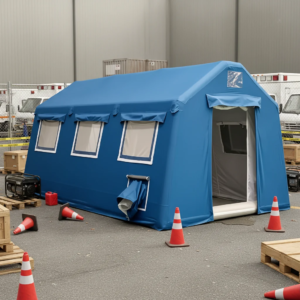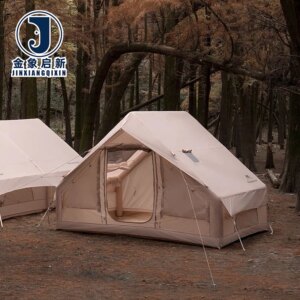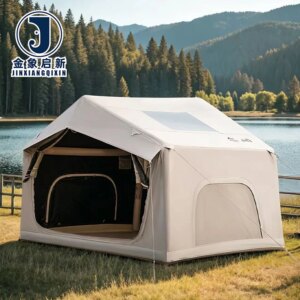
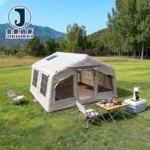
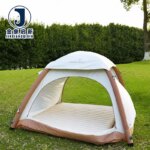

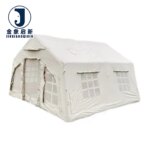
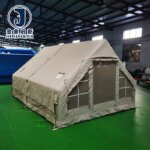
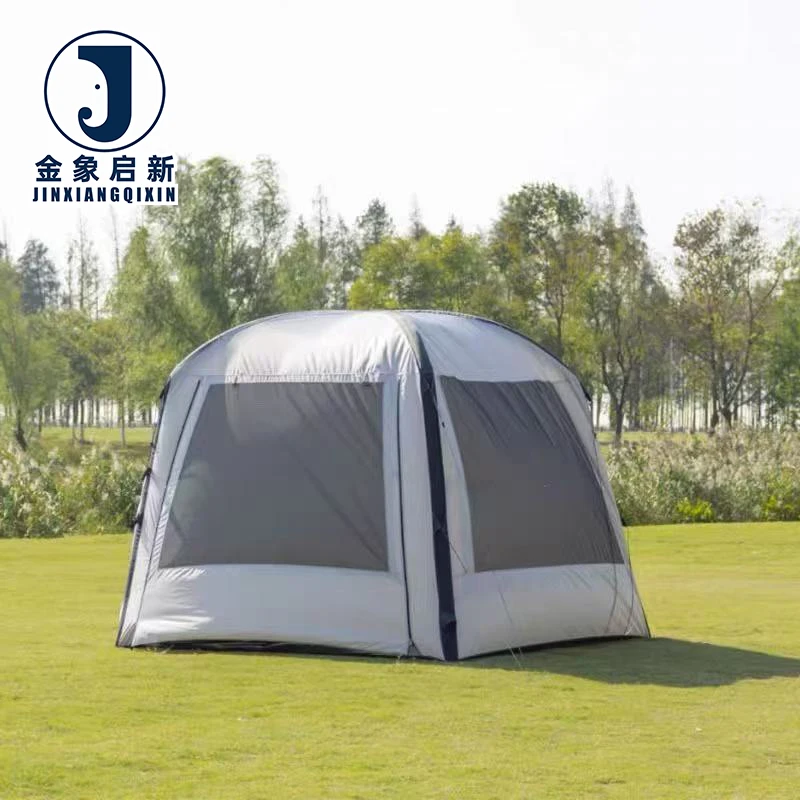
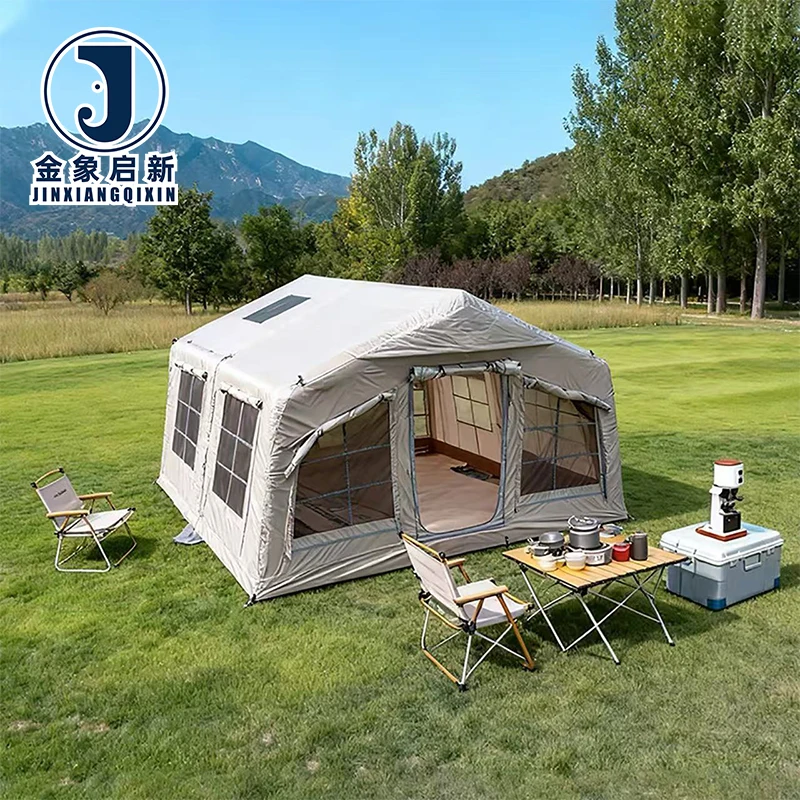
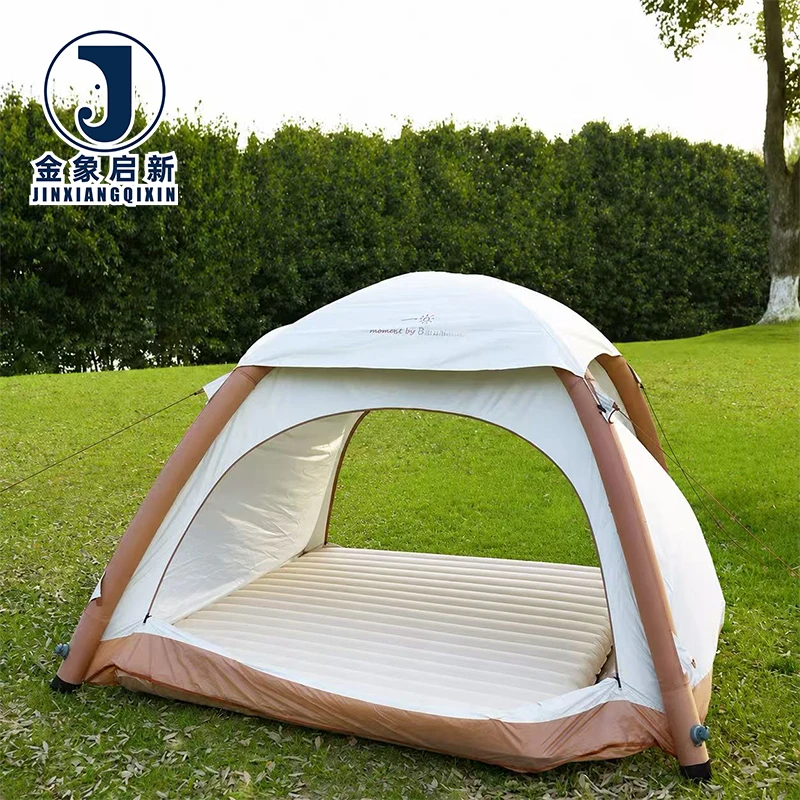
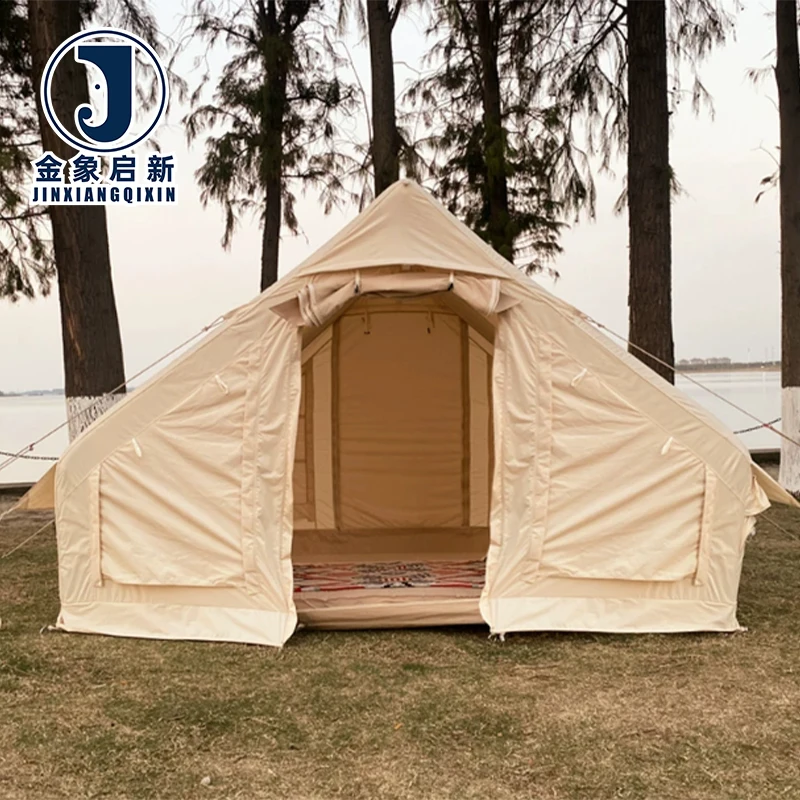
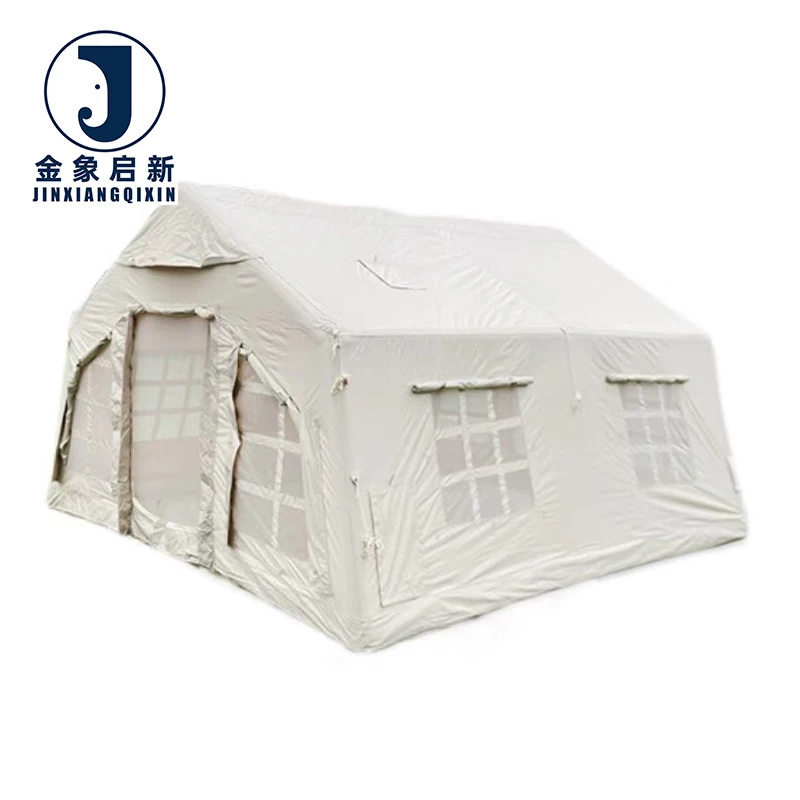
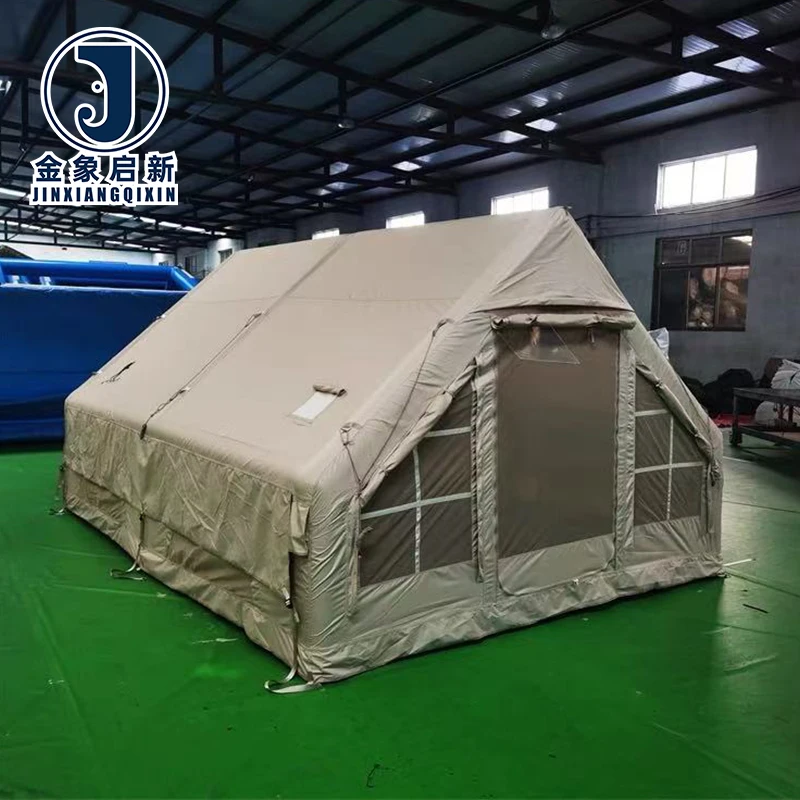
Certified Batch Consistency — Every roll of inflatable tent fabric undergoes full-process QA and QC inspection across three dedicated production lines before release for industrial deployment.
Technical Specifications
| Parameter | Value |
|---|---|
| Product Type | Inflatable Tent |
| Core Material | PVC tarpaulin |
| Structure Type | Automatic Inflatable |
| Capacity | 3-5 Person |
| Waterproof | Fully waterproof coated construction |
| UV Resistance | UV-resistant (test basis not stated — confirm required standard for your market) |
| Tear Resistance | Tear-resistant PVC construction |
| Fire Retardancy | Fire-retardant (grade not stated — confirm required grade for your market) |
| Anti-Static | Anti-static treatment (surface resistance or standard not stated — verify against site compliance requirement) |
| Customization | OEM & ODM, sample customization, pattern printing |
| R&D Support | 10 technicians |
| Production Lines | 3 full production lines |
| Processing Equipment | 36 sets of professional equipment |
| Quality Control | Strict full-process inspection with dedicated QA & QC staff |
| Standards | ISO 9001, ISO 14001, ISO 45001, CE |
Application Suitability
| Application | Exposure & Requirement |
|---|---|
| Mining and tunnelling temporary shelters | Fire-retardant and anti-static compliance required, continuous underground exposure, ventilation duct proximity |
| Disaster relief and emergency staging | Rapid deployment under field conditions, multi-weather exposure, regulatory audit documentation |
| Construction site field offices | Prolonged outdoor weather exposure, UV degradation, daily personnel traffic and equipment contact |
| Logistics staging areas | Temporary shelter for cargo and equipment, wind load, puncture risk from handling operations |
| Outdoor event management structures | Public-facing environment requiring fire safety compliance, repeated assembly and teardown cycles |
What "Certified Fire-Retardant" Actually Means on a Job Site
Certification without a test report citing a specific grade is not certification — it is a claim waiting to fail an audit.
Contractors sourcing an Inflatable Tent aftermarket supplier often receive product descriptions that state "fire retardant" without referencing DIN 4102, NFPA 701, M2, B1, or any other recognised standard. When a site safety inspector requests documentation, a generic statement on a quotation does not satisfy the requirement. The tent either passes or gets pulled from service, and the project absorbs the delay and replacement cost. [NEED_CITE: fire classification standards for temporary structures on industrial sites]
This Inflatable Tent aftermarket supplier addresses that gap by offering fire-retardant PVC inflatable tent fabric with test documentation tied to a specific grade. Before placing a bulk order, request the test report and match it against your local regulatory framework.
Ventilation and Shelter Fabric Engineered for Compliance-Sensitive Sites
Mining, tunnelling, and aviation environments impose strict material requirements on every fabric that enters the work zone. Inflatable tent fabric fire retardant anti-static certified material must carry documentation that names the standard, the grade achieved, and the testing laboratory. Our PVC inflatable tent fabric is available in fire-retardant and anti-static formulations developed for these hazard-sensitive applications. The 10-person R&D team works with buyers to confirm that the material specification aligns with the compliance framework of the target site before production begins.
Batch-to-Batch Consistency Across Multi-Site Deployments
Deploying inflatable shelters across several project locations simultaneously demands that every roll of fabric performs identically. Colour variation between batches creates visible mismatches when tents are erected side by side, while inconsistent coating weight affects inflation rigidity and seam strength. Our three full production lines maintain controlled coating parameters and in-process inspection at each stage. [NEED_CITE: coated fabric batch consistency standards for industrial applications] This approach supports fleet operators and disaster relief coordinators who need reliable Inflatable Tent aftermarket supply across geographically dispersed sites.
Reading the Specification Sheet Beyond Marketing Language
Understanding material specifications requires separating verified data from general claims. The PVC tarpaulin core provides waterproof and tear-resistant performance through its coated construction, but fire-retardant and anti-static properties depend on specific treatment formulations applied during production. Buyers should examine whether the specification sheet references a test standard or simply uses descriptive language. UV resistance, for example, varies significantly depending on whether the treatment was formulated for tropical exposure or temperate climates, and only a test report can confirm the performance boundary. The automatic inflatable structure relies on consistent air-beam rigidity, which is directly influenced by coating weight and base fabric tensile characteristics — both parameters that must be specified and verified rather than assumed.
The Hidden Cost of Untested Material Claims
When fire-retardant grades are stated without supporting test reports, the risk surfaces at the point of regulatory inspection. A tent deployed on a mining site without documented compliance can shut down operations until replacement fabric arrives. Anti-static claims without measured surface resistance data create liability in environments where spark ignition is a concern. Colour inconsistency across rolls from the same purchase order forces contractors to reject partial shipments, extending lead times and inflating project costs. [NEED_CITE: consequences of non-compliant fabric in temporary industrial structures] Weld seam failures on inflatable beams occur most frequently when the coating formulation does not match the heat-sealing parameters used during fabrication, a problem that traces back to specification clarity at the ordering stage.
Why Procurement Teams Specify This Source
Our production facility operates 36 sets of professional processing equipment across three dedicated lines, giving buyers capacity assurance for multi-site rollout schedules. The 10-person R&D team handles structural modifications and material thickness adjustments specific to inflation system requirements rather than offering generic product swaps. Every production run passes through dedicated QA and QC staff who inspect coating weight, seam integrity, and surface finish before the roll is cleared for dispatch. OEM and ODM capabilities include pattern printing and sample customization, allowing buyers to validate the material against site-specific compliance requirements before committing to volume orders. ISO 9001, ISO 14001, ISO 45001, and CE certifications are maintained under current issuing bodies and are available for cross-border procurement documentation.
Documentation & Verification
- Fire-retardant test report citing specific grade and standard (e.g., DIN 4102, NFPA 701) matched to buyer’s market requirement
- Anti-static surface resistance measurement report or compliance certificate for hazard-sensitive site approval
- ISO 9001, ISO 14001, ISO 45001, and CE certificates from issuing bodies with scope covering inflatable structure fabric
- Pre-production sample accompanied by batch-specific quality inspection report detailing material specifications
- Roll packing list with weight verification per roll against stated specification before dispatch
- Certificate of origin and customs documentation supporting cross-border procurement
Fabrication, Handling & Storage
- Heat-seal inflatable beam seams using temperature settings matched to the specific PVC coating formulation to avoid delamination
- Store rolls upright on padded cores to prevent creasing that weakens the PVC tarpaulin at fold lines
- Allow cold-stored fabric to reach ambient temperature before unrolling to prevent cracking of the PVC coating
- Clean surfaces with non-solvent cleaners to preserve anti-static treatment and fire-retardant coating integrity
- Inspect welded seams at flex points before each deployment cycle for early signs of coating separation
- Use reinforced patches of matching PVC tarpaulin grade for field repairs to maintain fire-retardant continuity
Before You Request a Quote
To move from inquiry to specification, provide your target deployment environment and the specific fire-retardant or anti-static standard your site mandates. Confirm whether you require automatic inflatable structures in standard 3-5 person capacity or need dimensional modifications for specialised staging applications. Indicate your annual volume estimate and whether you need rolls for in-house fabrication or finished tents ready for deployment.
Frequently Asked Questions
Q: What fire-retardant grade does the inflatable tent fabric carry for my market?
A: The fabric is available in fire-retardant formulations, but the specific grade must be confirmed against your local regulatory requirement before production. Request a test report citing the standard relevant to your market, such as DIN 4102, NFPA 701, or M2, and verify that the scope covers inflatable structure applications. Our R&D team aligns the treatment formulation to your compliance framework during sample development.
Q: How is anti-static performance measured for mining or aviation environments?
A: Anti-static performance is evaluated through surface resistance measurement, and the acceptable threshold depends on the hazard classification of your site. Before bulk production, request a test report or compliance certificate documenting the measured value. This documentation supports site safety audits and regulatory submissions in environments where spark ignition must be controlled.
Q: Can dimensions and material thickness be customized for specific inflation systems?
A: Yes, OEM and ODM customization covers structural modifications, material thickness adjustments, and pattern printing. The 10-person R&D team develops samples based on your inflation system specifications and load requirements. Pre-production samples allow you to validate dimensional accuracy and material performance before authorising mass production.
Q: What documentation ships with each order for regulatory compliance?
A: Each shipment includes a fire-retardant test report, anti-static measurement documentation where applicable, ISO and CE certificates, a batch-specific quality inspection report, and a roll packing list with weight verification. Certificate of origin and customs documentation are provided for cross-border procurement. Confirm your documentation requirements during the inquiry stage.
Q: How is batch consistency maintained across large orders for multiple sites?
A: Three full production lines operate under strict full-process QA and QC inspection, with in-process checks at every coating and fabrication stage. Each production run generates a batch-specific quality report covering material specifications and test results, ensuring that fabric deployed across different project sites meets identical performance standards.