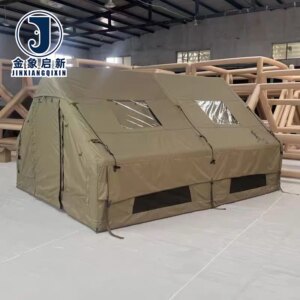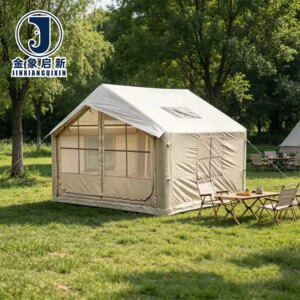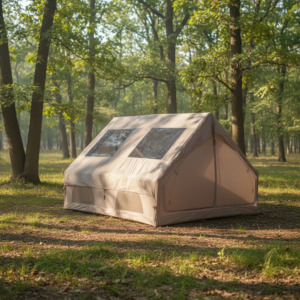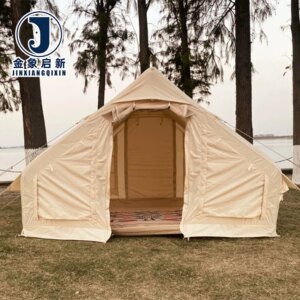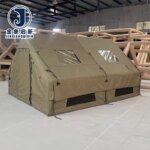

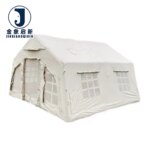
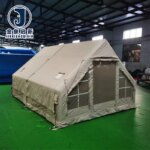
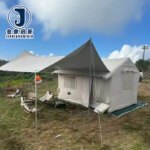
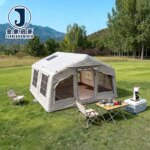
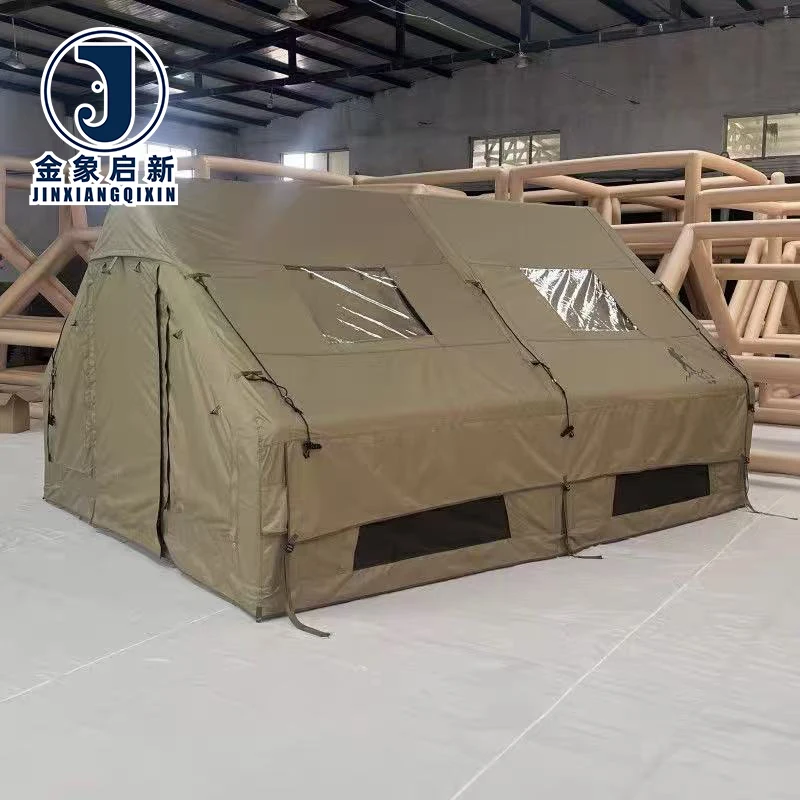
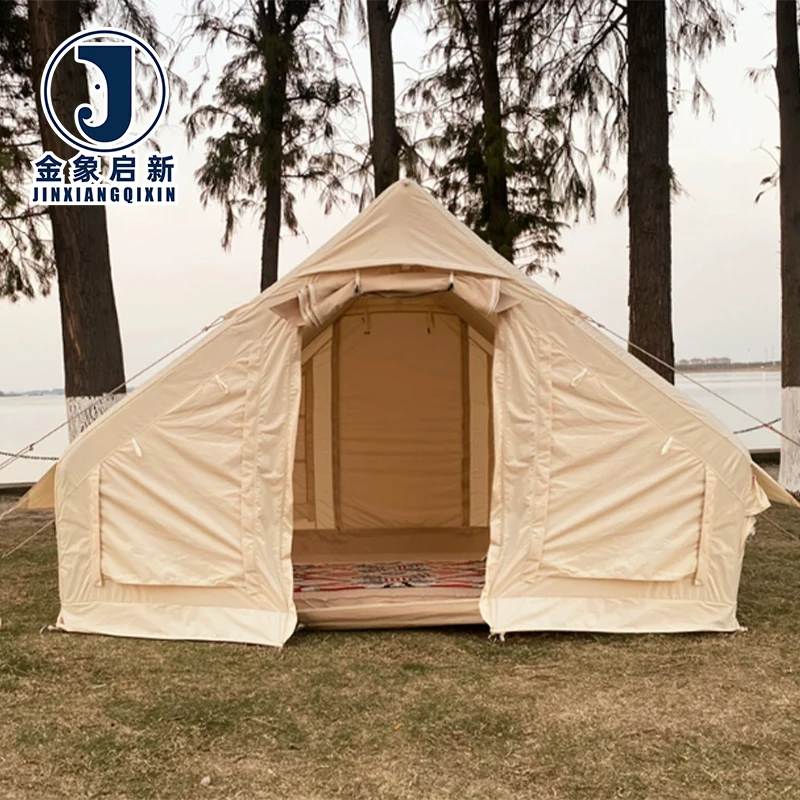
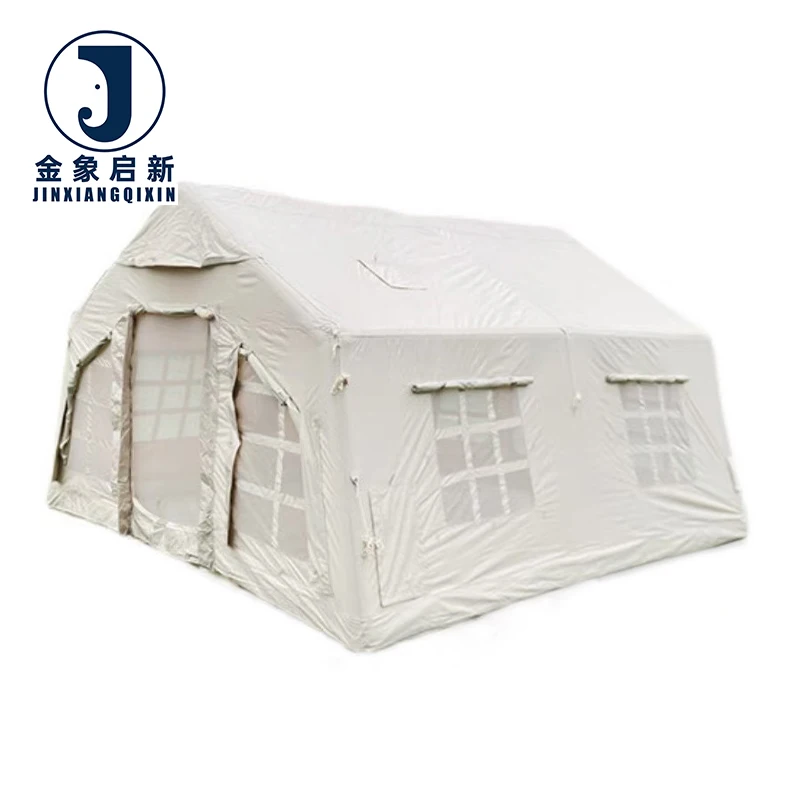
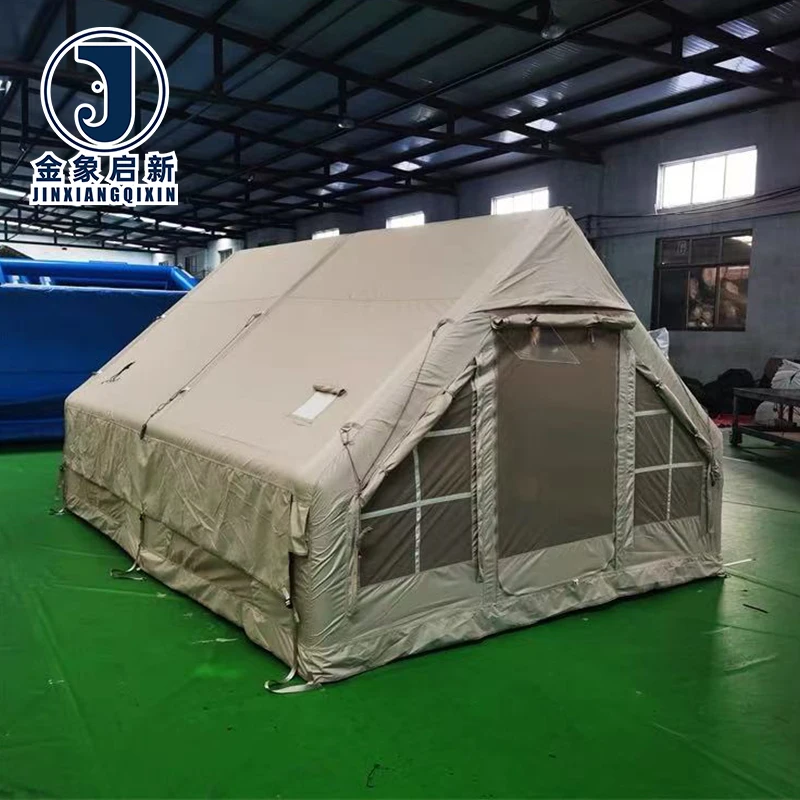
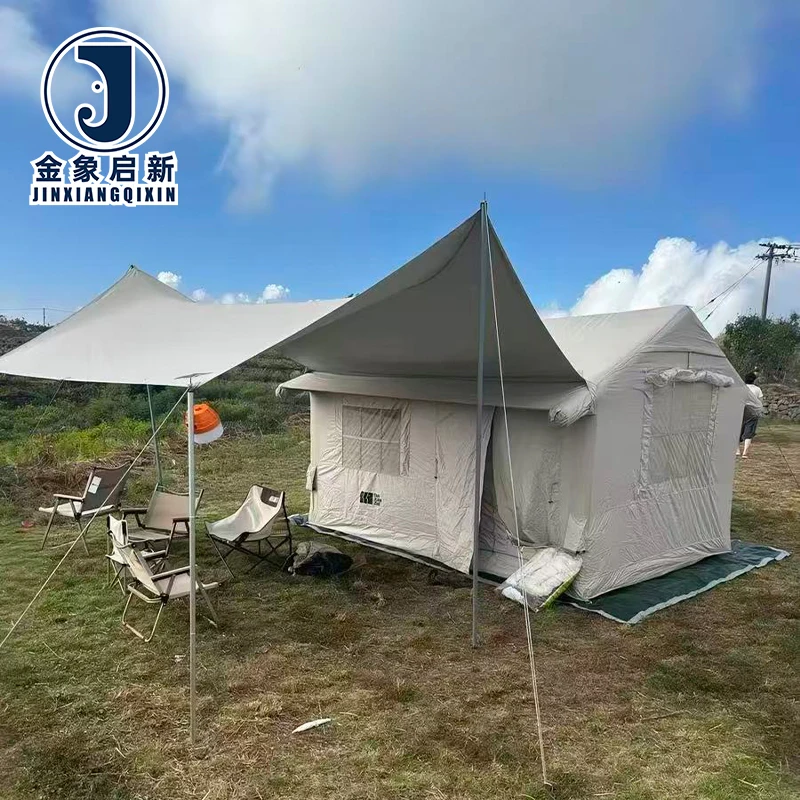
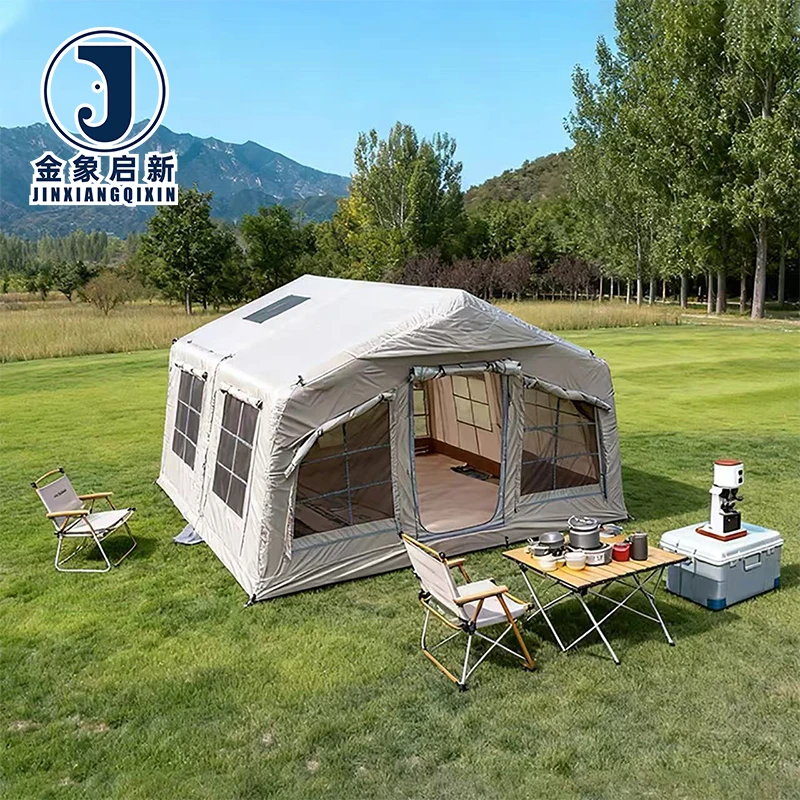
Coated Fabric Process Control — nearly three decades of PVC coating expertise applied to inflatable tent material, with dedicated QA&QC at every production stage and 100% pre-shipment inspection.
Technical Specifications
| Parameter | Value |
|---|---|
| Product Type | Inflatable Tent |
| Core Material | PVC Tarpaulin |
| Waterproof | Yes (rating not stated in source) |
| UV Treatment | UV-resistant (test basis not stated in source) |
| Tear Resistance | Tear-resistant (test basis not stated in source) |
| Construction | Single layer |
| Capacity | 4-6 person |
| Feature | Quick automatic opening |
| Customization | OEM & ODM (sample customization, pattern printing, size adjustments, material thickness variations, color matching) |
| Production Facility Area | 9180 square meters |
| Production Lines | 3 full production lines |
| Processing Equipment | 36 sets of professional processing equipment |
| R&D Team Scale | 10 technicians |
| Quality Control | Strict full-process quality inspection with dedicated QA&QC staff |
| Certifications | ISO9001, ISO14001, ISO45001, CE |
Application Suitability
| Application | Exposure & Requirement |
|---|---|
| Commercial-grade inflatable tent rental fleets | Repeated inflation/deflation cycles, transport abrasion, UV and rain exposure, frequent handling by non-specialist staff |
| Adventure tourism rapid-deployment shelters | Remote site setup, wind loading on inflated beams, ground contact moisture, seasonal storage and redeployment |
| Industrial event temporary structures | High-visibility branding, multi-day continuous inflation, public safety compliance, crowd proximity wear |
When Inflatable Tent Fabric Lacks the Certification Your Site Demands
Material that arrives without verifiable fire-retardant or structural documentation stops a project at the inspection stage, not at the installation stage.
Commercial tent manufacturers and event organizers regularly specify inflatable structures for sites where local fire codes or insurance requirements demand documented compliance. Sourcing an Inflatable Tent Fabric manufacturer that supplies material without the correct test reports creates a compliance gap that only surfaces when the structure is already on-site. The cost of replacing installed fabric mid-event or mid-season far exceeds the effort of confirming certification before purchase. [NEED_CITE: fire safety classification requirements for temporary structures in public assembly venues]
Coating Adhesion and the Inflatable Beam Integrity Question
Inflatable tent beams rely on the bond between the PVC coating and the base fabric to hold internal air pressure across thousands of inflation cycles. A coating that delaminates at the weld line or along a fold crease compromises the entire beam, not just the affected section. Our coating process controls adhesion at the interface level, ensuring that welded seams on inflatable tent structures maintain integrity through repeated pressurization and deflation. This is where Inflatable Tent Fabric manufacturer capability separates material that survives one season from material that survives many.
Single-Layer Construction and Logistics Efficiency
A single-layer PVC tarpaulin design reduces packed weight and volume compared to multi-layer alternatives, which matters directly for rental fleet operators who transport structures between event sites. The trade-off is that all structural and environmental performance must come from one integrated material rather than a laminated system. Our 10-person R&D team works with buyers to confirm that the selected material thickness and coating weight meet both the structural inflation requirements and the transport logistics constraints of the intended deployment model. [NEED_CITE: single-layer versus multi-layer coated fabric performance in inflatable structures]
Reading the Specification Sheet Beyond the Headline Numbers
Waterproof performance in PVC tarpaulin depends on coating continuity and seam welding quality, not simply on a binary waterproof claim. UV-resistant treatment is available in different grades, and the correct grade depends on the deployment climate and expected exposure duration — confirm the grade required for your market before placing a production order. Tear resistance in inflatable tent fabric is governed by the base fabric denier and weave density together with the coating penetration into the yarn structure. A heavier coating does not automatically produce higher tear resistance if the base fabric is loosely woven. Understanding these relationships prevents specification errors that only become visible after the material is cut and welded.
The Hidden Cost of Batch-to-Batch Color Variance
When a commercial tent manufacturer orders fabric across multiple production runs for a rental fleet, color inconsistency between batches becomes visible the moment two tents from different batches are pitched side by side at the same event. This is not a cosmetic issue — it triggers client complaints, return requests, and fleet rotation problems that disrupt rental scheduling. Controlling color consistency requires pigment batching discipline and inline inspection at the coating stage, not just a final visual check before dispatch. [NEED_CITE: color measurement standards for coated fabric batch consistency per ISO 105 series]
Why Source Inflatable Tent Fabric From This Facility
Three full production lines and 36 sets of professional processing equipment support bulk output without sacrificing the process control that inflatable tent material demands. The 10-person R&D team handles material thickness selection, color matching, and pattern printing development, producing pre-production samples within days rather than weeks. Full-process QA&QC inspection runs at every production stage, with 100% pre-shipment verification against the agreed specification. ISO9001, ISO14001, ISO45001, and CE certifications are maintained to support buyer compliance documentation for downstream clients. Custom sizing and OEM/ODM capability allow tent manufacturers to specify exact dimensions and branding requirements without accepting generic stock sizes.
Documentation & Verification
- Material specification sheet stating PVC tarpaulin composition, coating type, and available treatment options for inflatable tent fabric
- Pre-production sample approval record confirming color, thickness, and print before mass production begins
- Quality inspection report per batch covering visual defects, dimensional tolerance, and coating continuity
- ISO9001, ISO14001, ISO45001, and CE certificates provided as compliance documentation for downstream market access
- Pre-shipment inspection record with dedicated QA&QC sign-off against the confirmed purchase specification
- Roll packing list detailing quantity, dimensions, and batch reference for receiving verification
Fabrication, Handling & Storage
- Heat welding parameters must match the specific PVC tarpaulin coating weight — request recommended temperature and dwell time settings before fabrication begins
- Store rolls upright on pallets in a dry, shaded area to prevent compression creasing that affects inflatable beam inflation uniformity
- Avoid dragging single-layer PVC tarpaulin rolls across unprotected concrete surfaces during warehouse handling to prevent coating abrasion
- Clean inflated tent surfaces with mild soap and water only — solvent-based cleaners may degrade the PVC coating surface treatment
- Allow custom pattern printing to cure fully before folding or packing to prevent ink transfer between contact layers
- Repair minor punctures with compatible PVC adhesive patches applied to a clean, dry surface following the manufacturer’s recommended cure time
What We Need to Quote Your Inflatable Tent Fabric Order
Provide the intended deployment environment and any fire safety or compliance requirements your end market mandates, so we can confirm the correct treatment grade. Specify the required material thickness, color references, and whether pattern printing or branding is needed on the finished tent panels. Indicate your annual volume estimate and whether you require roll stock for your own fabrication line or pre-cut panels to your tent pattern dimensions. Sample development is available before mass production commitment.
Frequently Asked Questions
Q: What customization options are available for inflatable tent fabric sizing, thickness, color, and pattern printing?
A: We support full OEM and ODM customization including material thickness adjustments, Pantone or RAL color matching, custom roll widths, and pattern printing for branded tent panels. Our R&D team develops pre-production samples for your evaluation and approval before mass production begins, ensuring the finished material matches your exact tent design requirements.
Q: How is UV resistance verified and what test basis supports the anti-UV treatment claim?
A: UV-resistant treatment is applied during the coating process, and the specific grade depends on your deployment climate and exposure duration. We recommend confirming the test standard required by your target market so we can supply material with the appropriate treatment level and supporting documentation for your compliance records.
Q: What certifications are provided and how do they support market access for inflatable tent products?
A: Our facility holds ISO9001, ISO14001, ISO45001, and CE certifications, which we provide as compliance documentation to support your downstream market access requirements. These certifications cover our quality management, environmental management, occupational health and safety, and product conformity systems across all production stages.
Q: How is batch-to-batch color and thickness consistency controlled across large-volume inflatable tent fabric orders?
A: We control consistency through pigment batching discipline at the mixing stage, inline coating weight monitoring during production, and dedicated QA&QC inspection at every process step. Pre-production samples are retained as reference standards, and 100% pre-shipment inspection verifies each roll against the confirmed specification before dispatch.
Q: What is the sample development and approval process before mass production begins?
A: Our 10-person R&D team develops pre-production samples within days of receiving your specification, covering material thickness, color, and any custom printing requirements. You review and approve the sample before we release mass production, ensuring the bulk order matches your exact tent manufacturing requirements without costly rework or rejection after delivery.