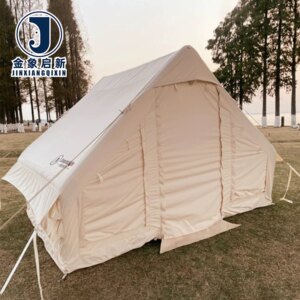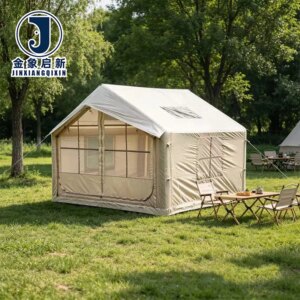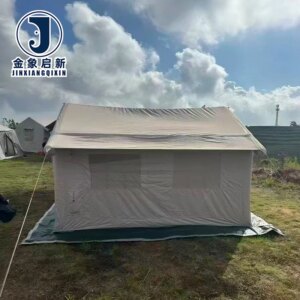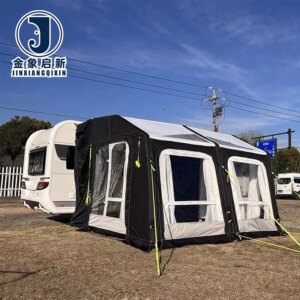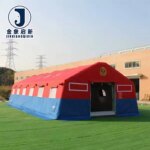
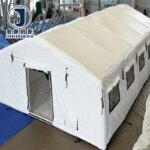
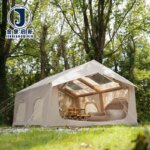
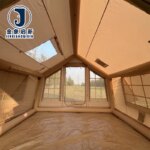

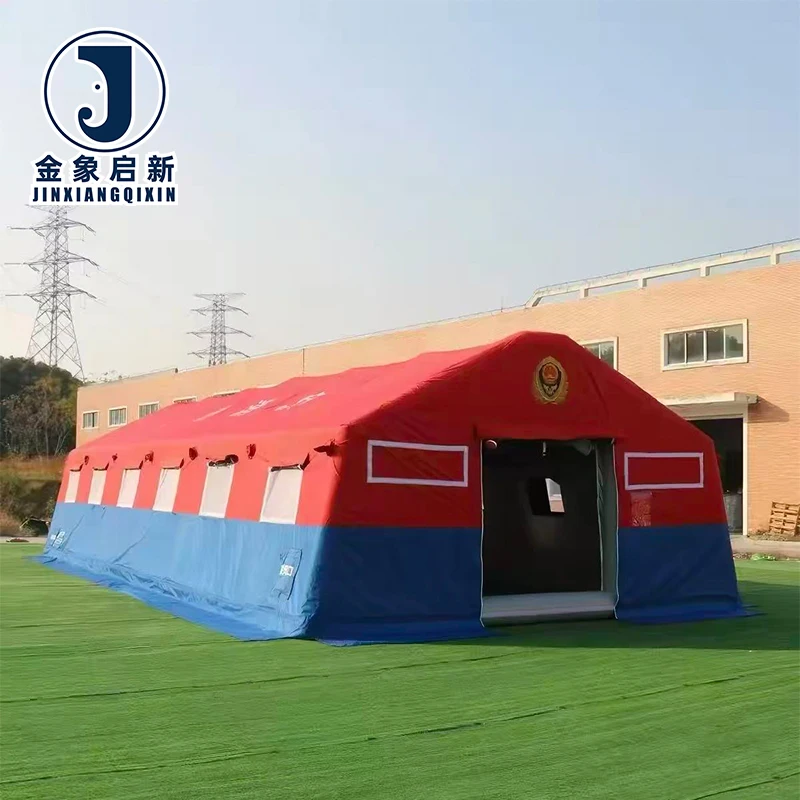
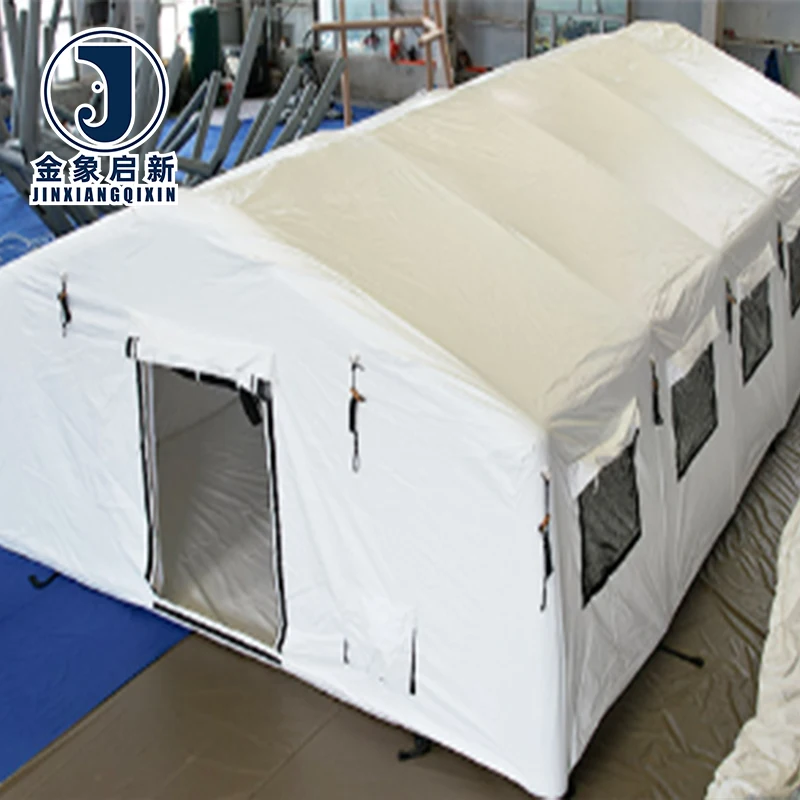
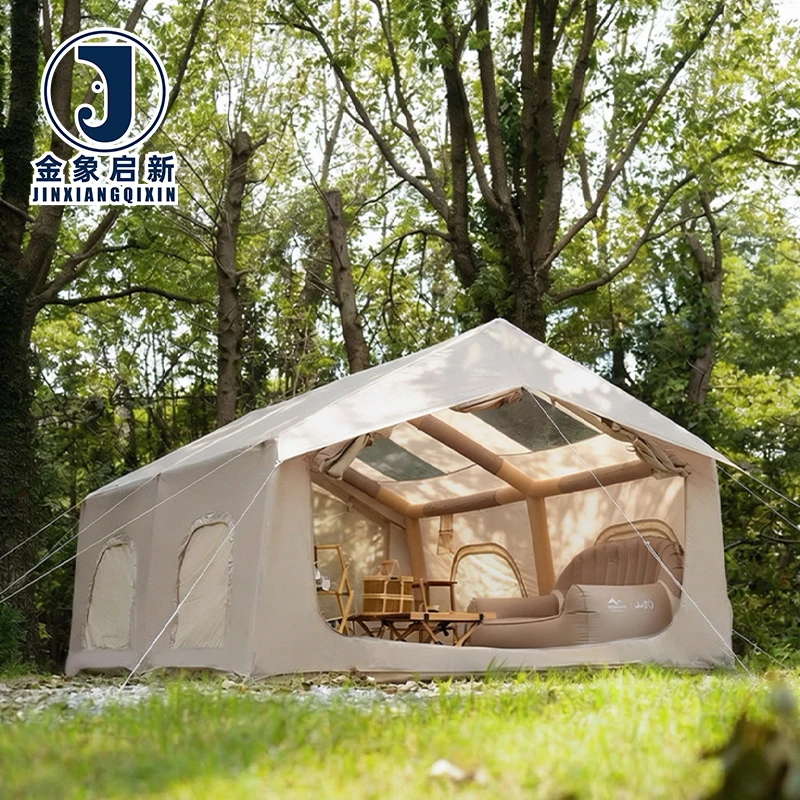
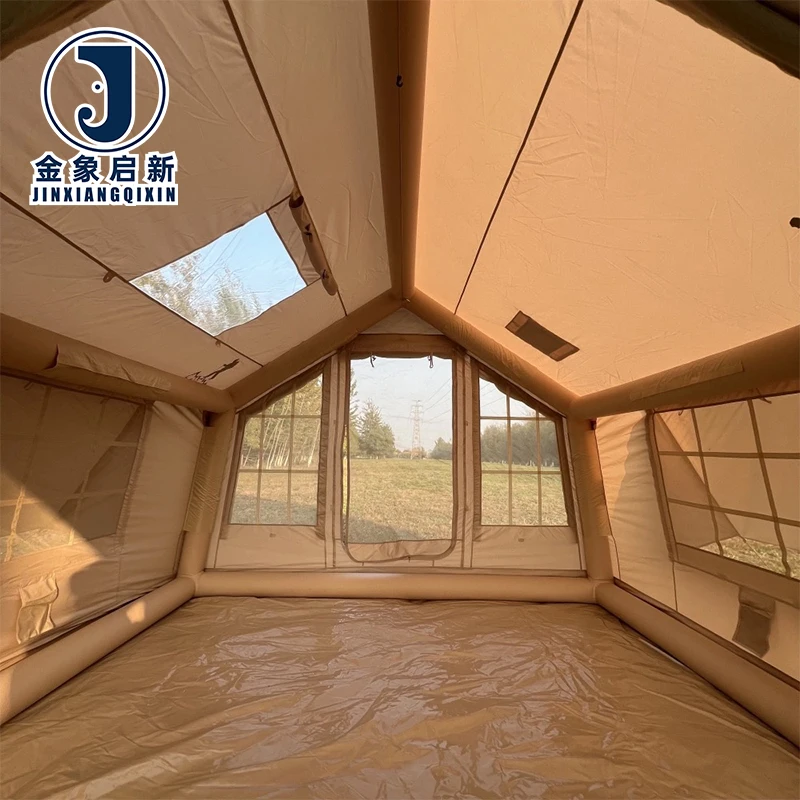
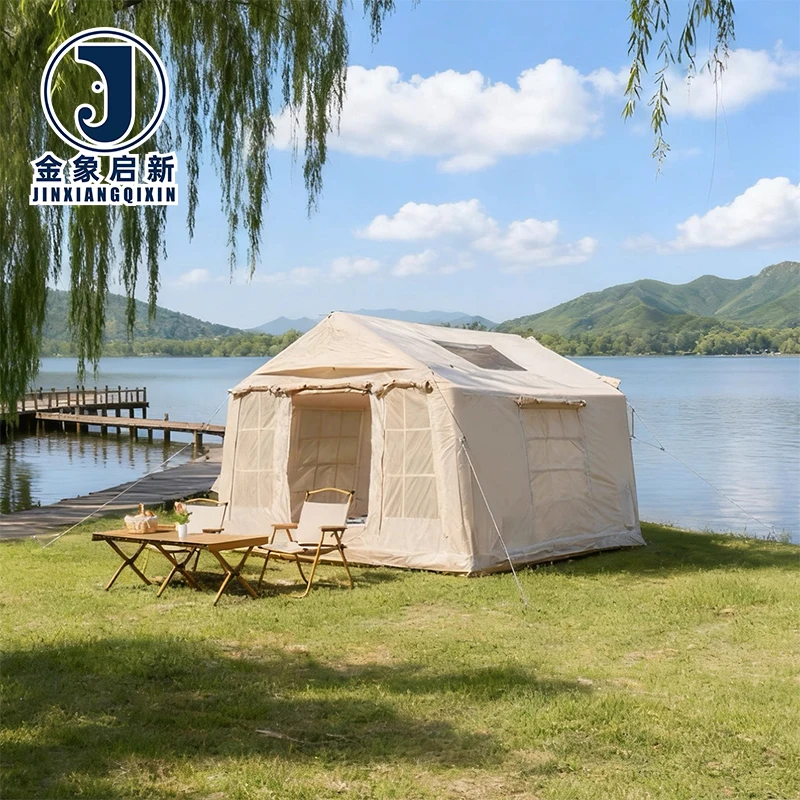
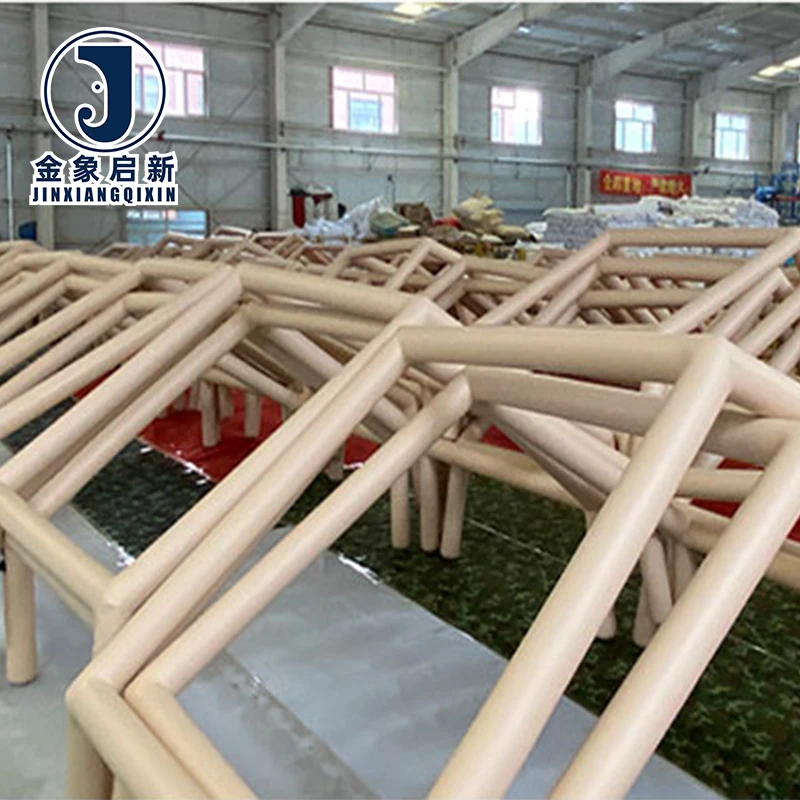
Deep Coating Process Control — nearly three decades of PVC coated fabric manufacturing ensures every inflatable tent leaves the facility with verified waterproof integrity and pressure retention performance.
Technical Specifications
| Parameter | Value |
|---|---|
| Product Type | Inflatable Tent |
| Core Material | PVC Tarpaulin |
| Waterproof Rating | 3000mm |
| Construction | Single Layer |
| Design | Four-Season, Extended Type |
| Opening Mechanism | Quick Automatic Opening |
| Customization Service | OEM & ODM |
| Quality Control | 24-hour pressure retention test, waterproof integrity check |
| Certifications | CE, ISO9001, ISO14001, ISO45001 |
Application Suitability
| Application | Exposure & Requirement |
|---|---|
| Disaster relief shelter deployment | Rapid inflation, all-weather waterproofing, transportability across rough terrain |
| Construction site temporary storage | Prolonged UV exposure, dust and rain ingress protection, equipment security |
| Mobile command centers for infrastructure projects | Extended occupancy, climate variation tolerance, communication equipment shelter |
| Emergency response units for utility maintenance | Quick setup in remote locations, repeated deployment cycles, wind and rain resistance |
| Field hospital and triage stations | Hygienic interior surface, rapid inflation under time pressure, four-season thermal buffering |
Why Inflatable Shelter Failures Trace Back to Unverified Fabric Specs
A tent that deflates overnight or leaks at the seams during a storm is almost always a material verification problem, not a design problem.
When procurement teams source inflatable tents based on a quoted GSM or a claimed waterproof rating without requiring test documentation, the consequences surface at the worst possible moment — during an active emergency deployment or a live construction project. I have reviewed cases where inflatable shelters arrived with waterproof ratings stated on the quotation but no corresponding integrity test record, leaving site managers to discover failures during the first heavy rainfall [NEED_CITE: field failure reports on inflatable shelter fabric delamination]. The cost is never just the replacement unit; it is the delayed response, the exposed equipment, and the cascading schedule impact across the entire project.
Pressure Retention Starts at the Coating Interface
The ability of a custom inflatable PVC tent to hold air over extended periods depends fundamentally on how well the coating bonds to the base fabric. When the adhesion between the PVC layer and the polyester scrim is inconsistent, micro-leaks develop at stress points — particularly along welded seams where the material flexes during inflation and deflation cycles. Our 10-person R&D team validates coating adhesion during sample development, adjusting plastisol viscosity and curing temperature until the bond strength meets the pressure retention benchmark for inflatable structure applications.
Four-Season PVC Tarpaulin Under Thermal Cycling
An inflatable tent deployed in disaster relief or construction scenarios faces temperature swings that test the material at both extremes. In high heat, PVC softens and can lose dimensional stability if the formulation is not calibrated for the expected range. In cold conditions, the coating becomes brittle and susceptible to cracking at fold lines and seam junctions. The four-season PVC tarpaulin used in these inflatable tents is formulated to maintain flexibility and structural integrity across the thermal cycling typical of extended outdoor deployments [NEED_CITE: PVC coated fabric thermal cycling performance standards]. Each production batch undergoes inspection to confirm the material responds consistently to inflation pressure under varying ambient conditions.
Reading the Specification Sheet Beyond the Headline Numbers
The 3000mm waterproof rating indicates the hydrostatic head pressure the PVC tarpaulin can withstand before water penetrates the coating. For inflatable tents used in disaster relief and construction site storage, this rating must be validated not just on the raw fabric but on the finished unit — including every welded seam and valve penetration point. The single-layer construction reduces overall weight and packed volume, which matters when shelters must be airlifted or carried over difficult terrain. However, single-layer designs place the entire waterproofing burden on one coating interface, making the consistency of the PVC application and the quality of seam welding critical to field performance. The quick automatic opening mechanism relies on the fabric reaching full inflation pressure rapidly; if the material is too stiff or the coating too thick in localized areas, deployment time increases and the automatic system may stall before full erection.
What Happens When Material Verification Is Skipped
The most costly mistake in inflatable tent procurement is accepting a shipment without reviewing the pre-shipment inspection record. I have seen project teams discover after deployment that the PVC tarpaulin weight did not match the quoted specification, resulting in a fabric that was lighter and less puncture-resistant than required for the site conditions [NEED_CITE: coated fabric weight verification failures in procurement]. When waterproof integrity checks are not performed on the finished unit, seam leaks remain undetected until the first rain event. For disaster relief operations, this means shelters that must be replaced mid-crisis. For construction projects, it means stored materials and equipment exposed to water damage.
Why Sourcing Inflatable Tents from a Coated Fabric Manufacturer Matters
Nearly 30 years of focused PVC coated fabric production means the material is manufactured and the inflatable tent is fabricated under one roof, eliminating the specification drift that occurs when fabric sourcing and product assembly are separated. Three full production lines and 36 sets of professional equipment provide the capacity to fulfill bulk orders for emergency response stockpiles without sacrificing the 100% pre-shipment inspection standard. The dedicated QA and QC staff conduct 24-hour pressure retention tests on inflatable tent units before dispatch, catching seam and valve leaks that shorter tests would miss. The 10-person R&D team handles OEM and ODM sample development, translating project-specific size, color, and logo requirements into production-ready engineering drawings. CE, ISO9001, ISO14001, and ISO45001 certifications accompany each shipment, providing the compliance documentation that government procurement and institutional buyers require.
Documentation & Verification
- Material specification sheet confirming PVC tarpaulin core material and 3000mm waterproof rating
- Pre-shipment inspection record with 24-hour pressure retention and waterproof integrity test results
- CE and ISO certificate copies included with each dispatch for compliance traceability
- Custom order engineering drawings detailing size adjustments and structural modifications
- Roll-level coating weight verification data available for material traceability
- Full-process inspection log covering every QA and QC checkpoint from coating to final assembly
Fabrication, Handling & Storage
- Weld PVC tarpaulin seams using hot air at temperatures matched to the single-layer coating thickness to prevent burn-through
- Inflate to full pressure during the 24-hour retention test to validate every seam and valve junction before packing
- Store folded inflatable tents in dry conditions away from direct UV to preserve the four-season coating formulation
- Avoid sharp fold creases on the PVC tarpaulin surface during transport to prevent coating micro-cracking
- Clean exterior with mild detergent compatible with PVC coatings; avoid solvents that degrade the waterproof layer
- Inspect valve seals and re-inflate periodically during long-term storage to confirm pressure retention integrity
Preparing Your Inflatable Tent Inquiry
Provide the deployment scenario and expected environmental conditions so the PVC tarpaulin weight and construction can be matched to your operational requirements. Specify the quantity of units needed and whether OEM or ODM customization applies — including dimensional adjustments, color references, or logo printing positions. If your procurement requires compliance documentation for a specific regional standard, note this at the inquiry stage so the correct certification copies and test reports are prepared alongside your custom inflatable PVC tent order.
Frequently Asked Questions
Q: What customization options are available for inflatable PVC tents?
A: Size adjustments, color customization, and logo printing are all supported through our OEM and ODM service. The R&D team develops engineering drawings and samples based on your project specifications before production begins. Structural modifications to the inflatable frame layout can also be accommodated depending on the deployment scenario and performance requirements you outline in the initial inquiry.
Q: How is the 3000mm waterproof rating verified before shipment?
A: Every finished inflatable tent undergoes a waterproof integrity check as part of the pre-shipment inspection process. This includes inflating the unit and inspecting all welded seams, valve penetrations, and the PVC tarpaulin surface under controlled conditions. Test results are recorded in the inspection report that accompanies your shipment for full traceability.
Q: What certifications are provided with each inflatable tent order?
A: Each shipment includes CE and ISO certificate copies covering ISO9001, ISO14001, and ISO45001 standards. These documents support compliance requirements for government procurement, institutional tenders, and international project specifications. Additional documentation can be prepared upon request to match specific regional regulatory frameworks.
Q: How does the sample development process work for custom orders?
A: After receiving your specifications, the R&D team produces engineering drawings for your review. Once approved, a sample unit is fabricated using the specified PVC tarpaulin material and construction parameters. You evaluate the sample for size accuracy, inflation performance, and finish quality before authorizing full production. This process typically completes within days for standard customization requirements.
Q: What documentation is included at dispatch?
A: Your shipment includes a material specification sheet, pre-shipment inspection record with pressure retention and waterproof test results, packing list, certificate of origin, and applicable ISO and CE certificate copies. Custom orders also include the approved engineering drawings and material specifications for your project records and compliance audits.