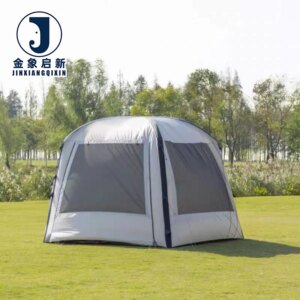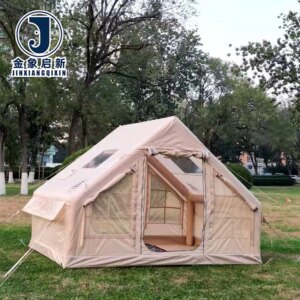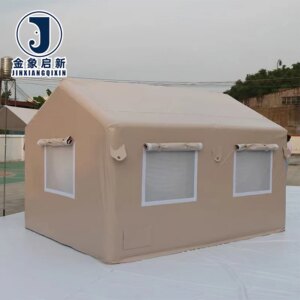



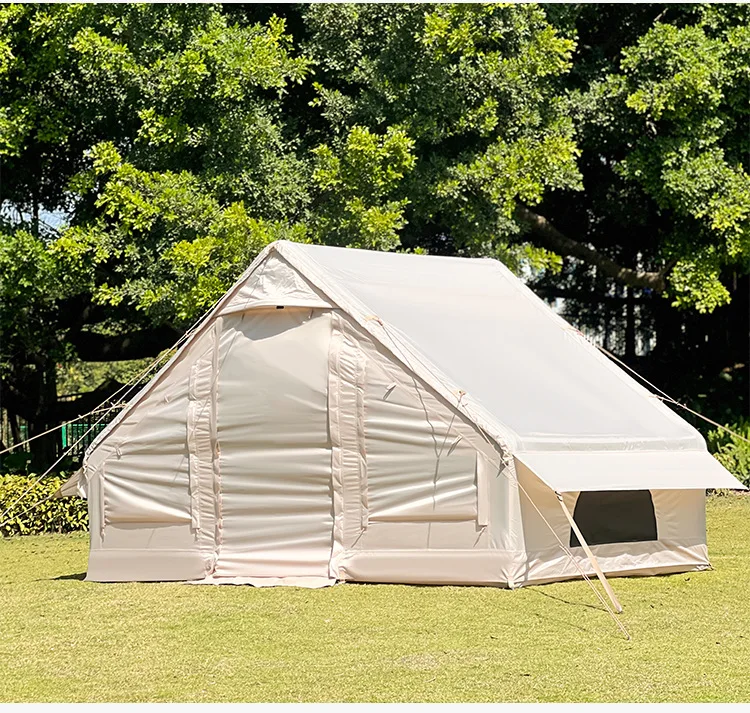
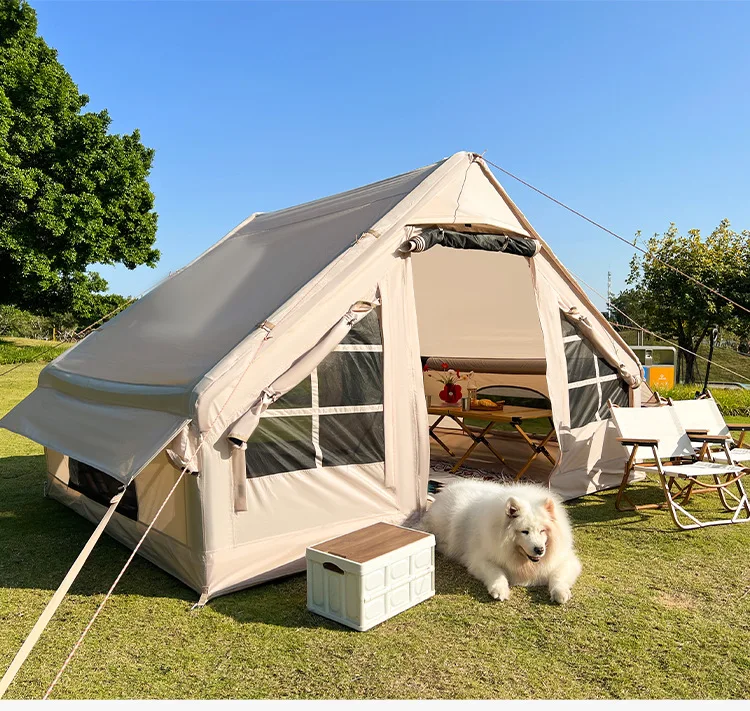

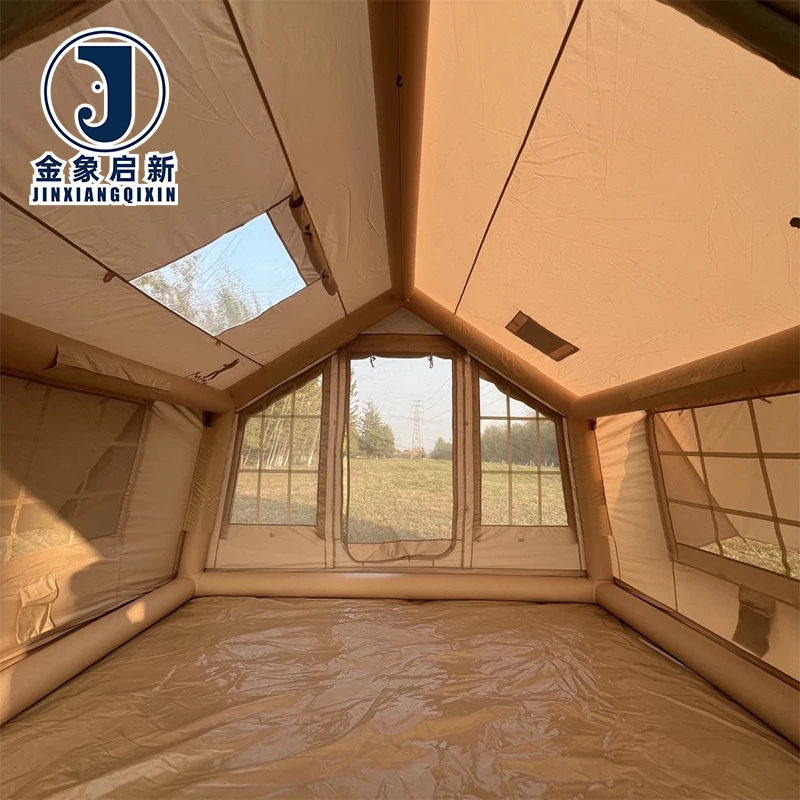
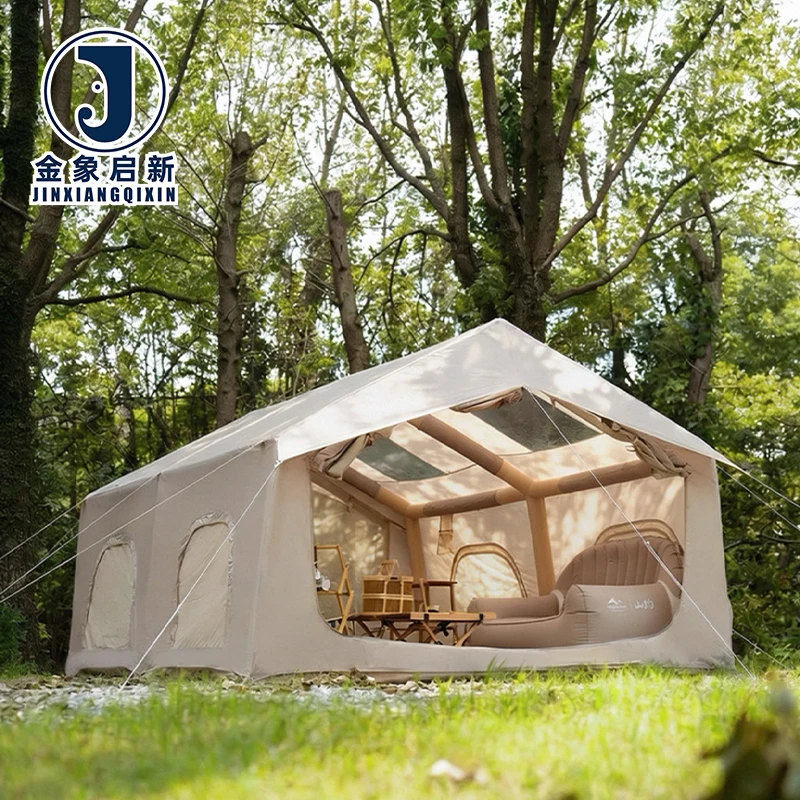
Material Compliance Alignment — we match fire-retardant and anti-static treatments to your site’s regulatory framework before production begins, eliminating certification gaps at inspection.
Technical Specifications
| Parameter | Value |
|---|---|
| Product Type | Inflatable Tent |
| Core Material | PVC waterproof fabric |
| Construction | Single-layer PVC |
| Capacity | 2-3 Person |
| Season Rating | Four-Season |
| Opening Mechanism | Quick Automatic Opening |
| Waterproof Rating | Fully waterproof coated construction |
| UV Resistance | Available with UV-resistant treatment — confirm grade required for your market |
| Fire Retardancy | Available in fire-retardant grades — confirm the grade required for your project standard |
| Anti-Static Property | Available with anti-static treatment — confirm surface resistance or standard required |
| Tear Resistance | Tear-resistant PVC construction |
| Certifications | ISO 9001, ISO 14001, ISO 45001, CE |
| OEM/ODM | Supported — sample customization, pattern printing, size adjustments, material thickness variations, color matching |
Application Suitability
| Application | Exposure & Requirement |
|---|---|
| Temporary industrial shelters | Continuous outdoor weathering, wind loading on inflatable frame, rapid deployment demands |
| Mining and tunnelling enclosures | Dust-laden airflow, confined-space fire safety compliance, anti-static requirements underground |
| Construction site field offices | UV and rain exposure over multi-month projects, abrasion from site traffic and equipment movement |
| Emergency response deployment | Sub-zero to high-temperature range, rapid inflation and deflation cycles, transport and storage stress |
| Event and exhibition structures | High visual consistency across panels, branding print adhesion, crowd-safety fire compliance |
Why Inflatable Structure Fabric Fails Compliance Audits on Site
Inflatable membrane structures deployed on regulated sites — mines, airports, construction zones — frequently arrive with fabric that lacks documented fire-retardant or anti-static certification matching the project specification. The material performs adequately in dry conditions but fails the audit because the test report references a different standard than the one the safety officer requires.
Specification-stage alignment of treatment grades to site compliance frameworks prevents rejection at handover.
Procurement teams sourcing Inflatable Tent Fabric manufacturer supplies often discover the gap only during pre-installation inspection. The fabric passes a generic flame test but not the specific grade mandated by the local authority. Anti-static claims on the data sheet reference a laboratory method that does not map to the mining or aviation standard enforced on the ground. [NEED_CITE: fire classification standards for temporary membrane structures]
Coating Formulation for Inflatable Membrane Integrity
The single-layer PVC construction used in inflatable tents must balance air-holding capability with flexibility across temperature swings. Coating weight and adhesion to the base fabric determine whether the membrane sustains internal pressure without delamination at stress concentrations. Our formulation process controls coating thickness within tight tolerances so that each panel inflates uniformly.
Fire-Retardant and Anti-Static Treatment Mapping
Industrial sites enforce specific fire-retardant grades tied to their insurance and regulatory framework. We work with buyers to identify the applicable standard — whether a national building code classification or a sector-specific mining regulation — then compound the PVC coating with additives matched to that requirement. Anti-static treatment follows the same alignment logic, targeting the surface resistance range the site safety plan mandates. [NEED_CITE: anti-static surface resistance standards for industrial fabrics]
Understanding PVC Base Fabric Parameters for Inflatable Use
The base fabric denier and weave density define how the membrane resists tear propagation when a puncture occurs under inflation pressure. A higher-denier yarn in a tighter weave limits tear spread but adds weight, which matters when the structure must be transported and deployed rapidly. Coating adhesion to this base determines whether heat-welded seams hold under cyclic inflation and deflation — a weak bond causes the seam to peel before the fabric itself fails. The PVC coating method, whether knife-over-roll or calender, influences both peel strength and surface finish, affecting how printed branding adheres and how the membrane cleans after site exposure. Waterproof performance depends on full encapsulation of the base yarns, leaving no wicking path through the weave. [NEED_CITE: tensile and tear test methods for coated fabrics per ISO 1421]
What Happens When Treatment Grades Are Not Verified Before Shipment
A membrane structure that arrives on a mining site without the correct anti-static documentation gets held at the gate until a replacement certificate or re-test is arranged. The delay cascades into project scheduling and can trigger contractual penalties. Fire-retardant fabric installed in an aviation-adjacent structure may pass visual inspection but fail when the safety officer cross-references the test report against the airport authority’s standard. These scenarios arise when the supplier ships a generic treated fabric rather than one compounded to the buyer’s specific compliance requirement. [NEED_CITE: regulatory compliance documentation for temporary industrial structures]
Procurement Advantages Built on Three Decades of Coated Fabric Focus
Our 10-person R&D team develops material formulations and samples within days, allowing buyers to validate fire-retardant and anti-static performance before committing to bulk production. Three full production lines and 36 sets of professional equipment support batch consistency across large inflatable structure orders, reducing colour and coating-weight variation between rolls. Dedicated QA/QC at every production stage includes 100% pre-shipment inspection, catching treatment or weight deviations before dispatch. ISO 9001, ISO 14001, ISO 45001 and CE certifications underpin every shipment, supporting customs clearance and site safety audits. The sample development process covers custom sizing, pattern printing, and material thickness adjustments, ensuring the membrane design matches the structural engineering requirements.
Documentation & Verification
- Material specification sheet stating base fabric denier, coating weight, and treatment type for each roll
- Fire-retardant test report aligned to the project’s mandated standard where applicable
- Anti-static surface resistance test record matched to site compliance requirements
- Pre-shipment inspection record with batch-level traceability across the order
- ISO and CE certificates supporting import clearance and on-site safety audits
- Certificate of origin and customs documentation for international shipment
Fabrication, Handling & Storage
- Heat-weld seams at manufacturer-recommended temperature to maintain PVC coating bond on inflatable panels
- Store rolls upright on padded supports to prevent compression marks on the single-layer PVC surface
- Avoid dragging fabric over abrasive ground during site deployment to protect the waterproof coating layer
- Use compatible PVC adhesive for field repairs on punctured inflatable membrane sections
- Clean with neutral-pH detergent to preserve fire-retardant and anti-static surface treatments
- Allow material to acclimatize before inflation in sub-zero conditions to prevent coating stiffness cracking
What We Need to Quotation Your Inflatable Structure Project
Provide the intended application environment — mining, construction, aviation, event — along with the fire-retardant or anti-static standard your site enforces. Specify the membrane dimensions, inflation pressure range, and whether you require finished panels or roll stock for your own fabrication. Indicate colour, pattern printing, and material thickness preferences, and confirm whether pre-production samples are needed for engineering validation before bulk commitment.
Frequently Asked Questions
Q: What fire-retardant grades are available for inflatable structure fabric, and how do they map to local regulations?
A: We formulate PVC coating with fire-retardant additives matched to the standard your project specifies. The applicable grade depends on your jurisdiction and site type — mining, aviation, or construction each reference different frameworks. Confirm the required classification with your safety officer, and we align the compound and test documentation accordingly before production begins.
Q: How is anti-static performance verified and documented for mining or aviation site compliance?
A: Anti-static treatment is compounded into the PVC coating to target the surface resistance range your site mandates. We conduct testing per the relevant standard and supply the report with each shipment. The documentation references the specific test method so your compliance team can cross-reference it against site safety requirements without additional verification steps.
Q: What custom sizing and printing options are supported for inflatable membrane structures?
A: Our R&D team handles custom panel dimensions, material thickness adjustments, and pattern printing for branding or identification. Samples are developed within days so you can validate fit, inflation behaviour, and print adhesion before authorizing bulk production. Colour matching across rolls is controlled through our in-process QA system to maintain visual consistency on assembled structures.
Q: How are batch consistency and weld integrity ensured across large inflatable fabric orders?
A: Each production run undergoes in-process coating weight and adhesion checks across all three production lines. Pre-shipment inspection covers 100% of rolls, verifying GSM, colour uniformity, and weld-seam behaviour on sample panels. This systematic approach reduces roll-to-roll variation that could affect inflation uniformity or seam performance during field assembly.
Q: What certification and test documentation is supplied with each shipment for compliance audits?
A: Every shipment includes a material specification sheet, relevant fire-retardant and anti-static test reports, ISO and CE certificates, and a pre-shipment inspection record. Documentation is structured so site safety officers and customs authorities can trace material properties and compliance status directly from the packing list without requesting additional paperwork after delivery.