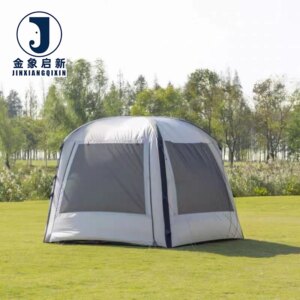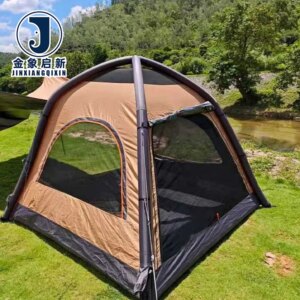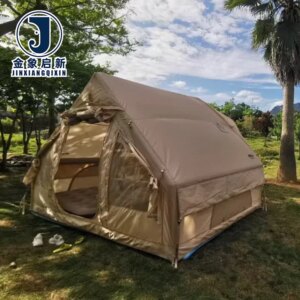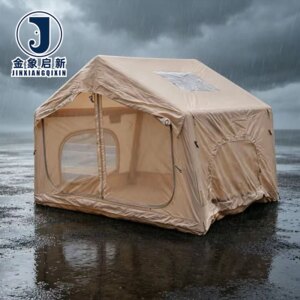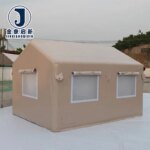
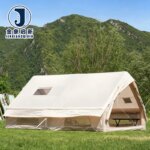
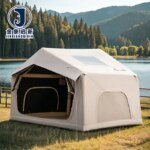
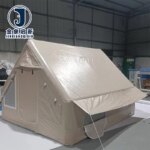
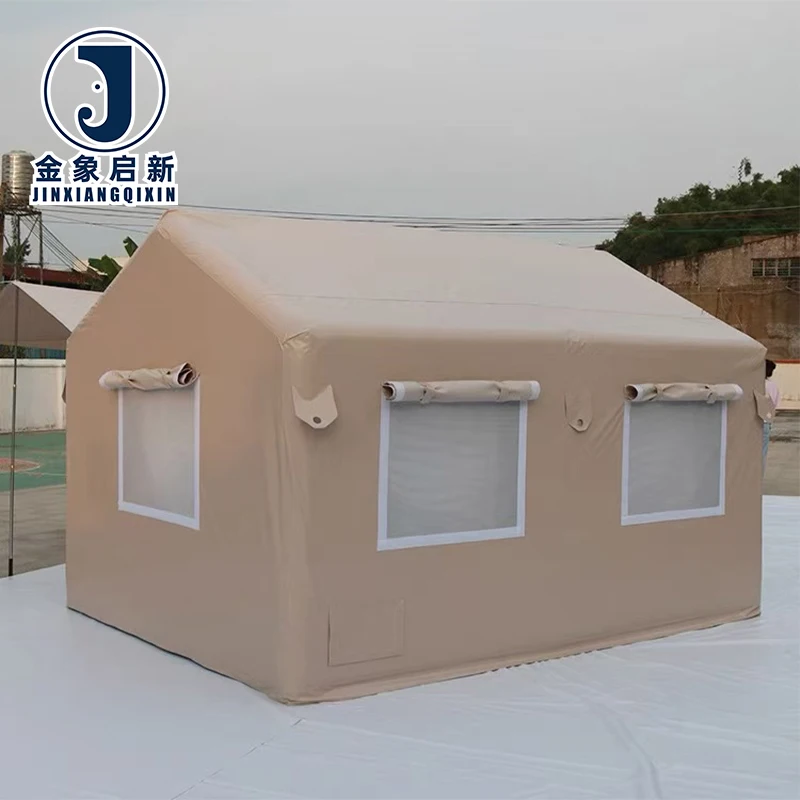
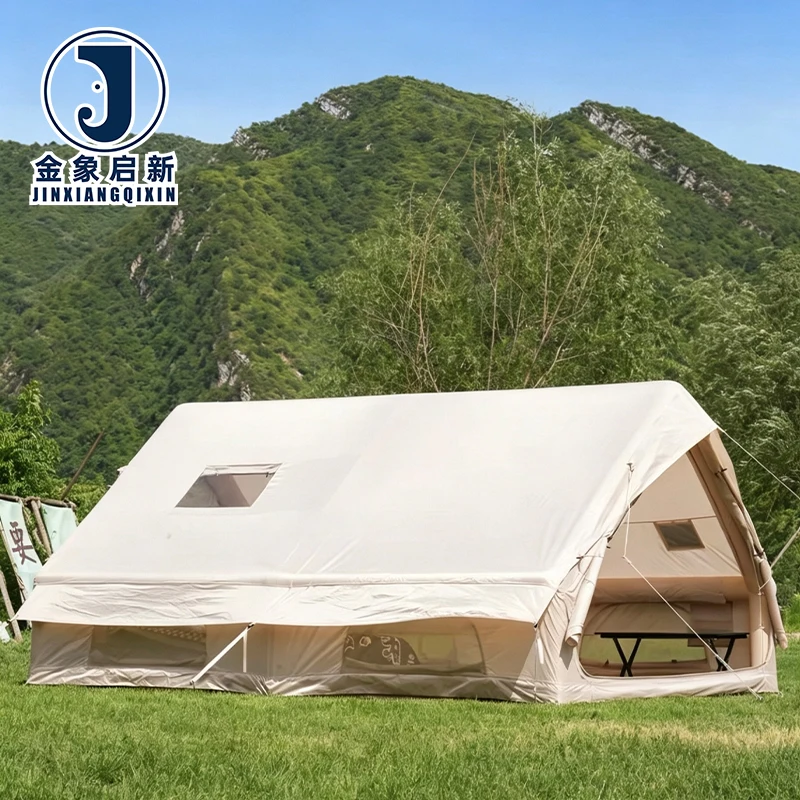
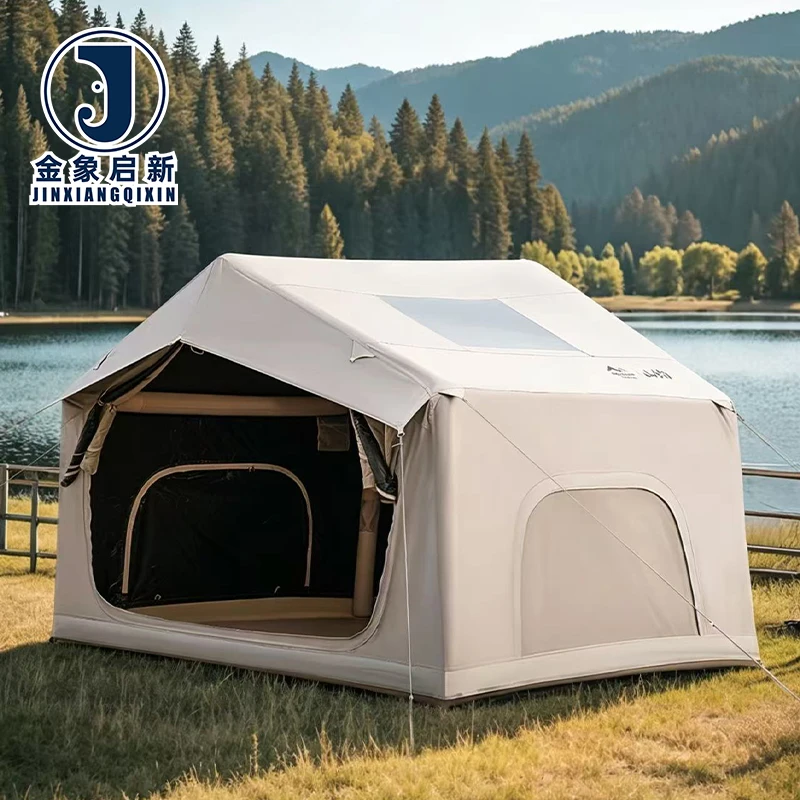
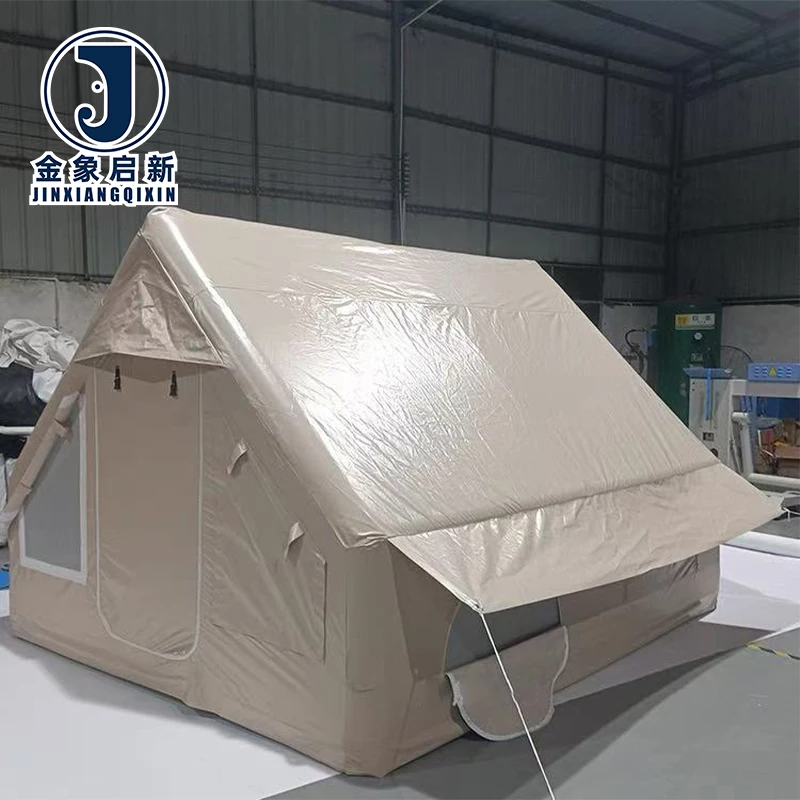
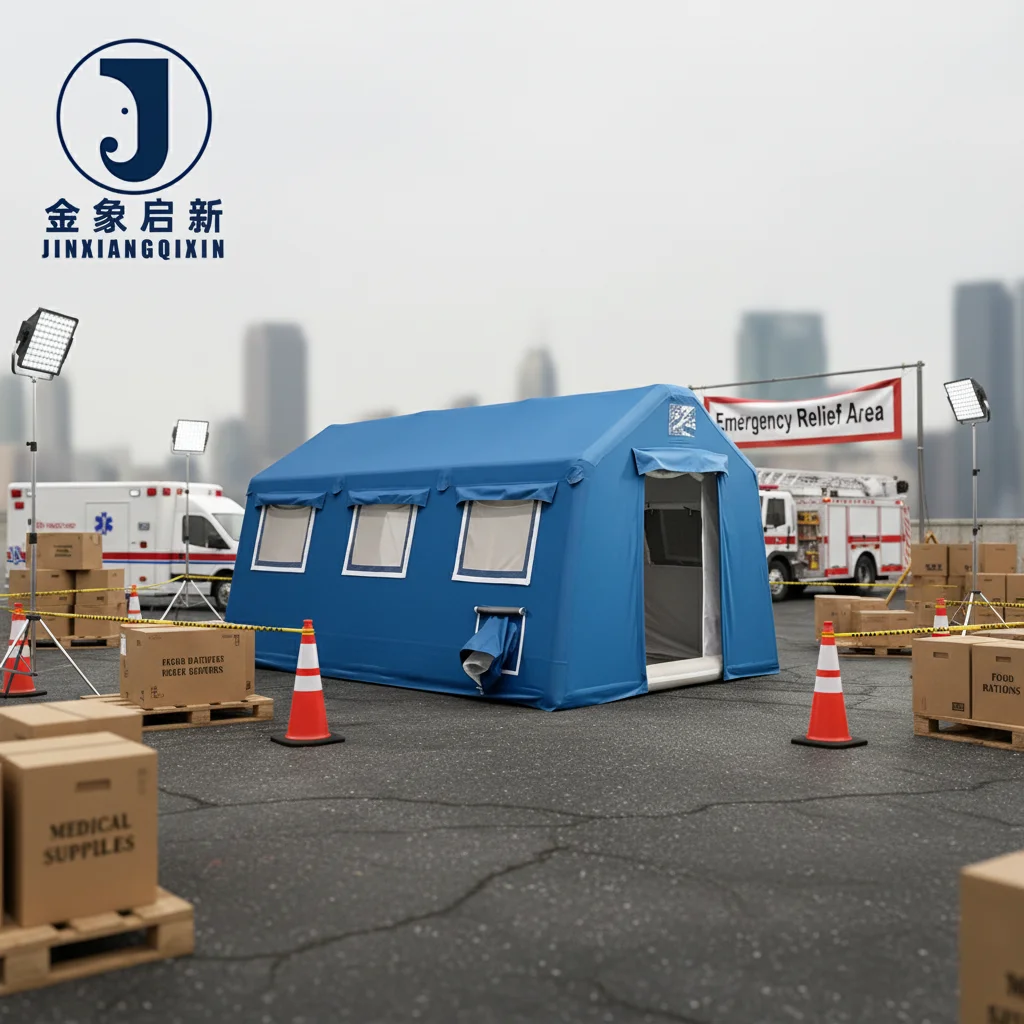
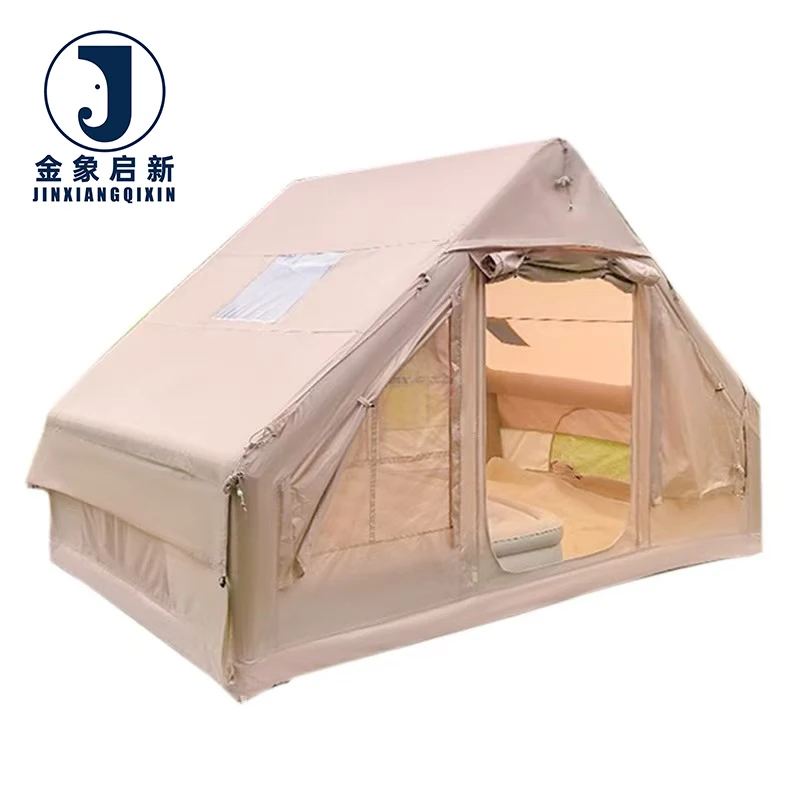
Deep Process Control Over Coating Weight and Adhesion — nearly 30 years focused on coated fabric translates into PVC inflatable tents where every seam, air tube, and panel holds pressure without delamination or bleed-through.
Technical Specifications
| Parameter | Value |
|---|---|
| Product Type | Inflatable Tent |
| Core Material | PVC tarpaulin |
| Material Thickness | 0.4mm – 1.2mm (range covers product family — confirm grade for this item) |
| Construction | Single layer |
| Setup Mechanism | Quick automatic opening (inflatable air frame) |
| Capacity Range | 2 – 8 person configurations |
| Key Features | Waterproof, tear-resistant; UV-resistant, fire-retardant, anti-static grades available — confirm required standard before ordering |
| Customization | OEM & ODM: sample customization, pattern printing, material selection, product design |
| Color | Customizable |
| Sample Lead Time | 7 – 10 business days |
| Standards | ISO 9001, ISO 14001, ISO 45001, CE |
Application Suitability
| Application | Exposure & Requirement |
|---|---|
| Disaster relief & emergency response | Rapid deployment under severe weather, full waterproof integrity, fire-retardant compliance for camp staging areas |
| Temporary site offices on construction sites | Continuous UV exposure, dust and abrasion, wind loading on air-frame structure |
| Outdoor equipment storage & logistics staging | Prolonged ground contact, moisture ingress risk, mechanical abrasion from loading operations |
| Agricultural field operations | Seasonal UV exposure, chemical contact from fertilizers, repeated inflation and deflation cycles |
| Specialist membrane & inflatable structures | Anti-static requirements in confined environments, structural air-holding performance under temperature variation |
Why "Fire Retardant" Without a Certified Grade Is a Liability for Inflatable Shelters
A tent that claims fire retardancy without a test certificate is a compliance risk, not a safety product.
When an inflatable tent arrives on a disaster relief site or a construction camp, the safety officer asks for documentation — not marketing language. If the fire-retardant grade does not match the local building or temporary structure code, the entire deployment can be shut down before anyone sleeps inside. [NEED_CITE: fire classification standards for temporary membrane structures vary by jurisdiction]. Procurement teams sourcing a custom inflatable tent fabric for commercial or industrial use face the same exposure: a tent that fails a site audit becomes dead inventory and a delayed project. This is why confirming the exact grade and receiving the test report with shipment is non-negotiable.
Inflatable Air-Frame Engineering for Rapid Field Deployment
Traditional pole-and-canvas shelters require multiple crew members and considerable time to erect, a serious constraint during emergency response or high-tempo site operations. The inflatable tent manufacturer approach replaces rigid poles with pressurized PVC air tubes that deploy in minutes with a single pump connection. Each tube is heat-welded from the same PVC tarpaulin used in the tent body, ensuring material compatibility and eliminating the corrosion and breakage problems associated with metal or fibreglass frames. This is the core reason industrial and relief buyers specify a custom inflatable tent fabric with consistent coating adhesion — the air tube must hold pressure across temperature swings without seam creep or delamination.
Pressure Retention and Coating Integrity Under Variable Conditions
An inflatable structure lives or dies by its ability to hold internal pressure over extended periods. The PVC tarpaulin core material must resist micro-porosity that develops when coating adhesion is weak or uneven. In field conditions where daytime heat softens the coating and night-time cold stiffens it, the fabric undergoes cyclic stress at every welded joint. Jinan Jinxiang’s three full production lines and 36 sets of professional processing equipment allow tight control over coating weight application, which directly governs how well the air tubes maintain pressure without topping up. [NEED_CITE: cyclic thermal stress and coating adhesion in inflatable membrane structures]. Buyers evaluating an inflatable tent manufacturer should request inflation pressure endurance data from the pre-shipment inspection record to confirm real-world performance.
Reading the Specs: Thickness, Capacity, and Treatment Grades
Material thickness in the 0.4mm – 1.2mm range covers the full inflatable tent product family, from lightweight camping configurations to heavy-duty industrial shelters. Thinner grades suit short-term or seasonal deployments where weight and pack size matter; thicker grades provide the puncture resistance and air-holding durability needed for continuous industrial use. The 2 – 8 person capacity range reflects tube geometry and panel count rather than a single fixed dimension, so each configuration carries its own pressure and load specification. Waterproof performance comes from the fully coated PVC construction, while UV-resistant, fire-retardant, and anti-static properties are available in specific grades — the exact standard must be confirmed against your site or market requirements before production begins. Fire-retardant grades differ between regions, and what passes inspection in one jurisdiction may not satisfy another.
The Hidden Cost of Skipping Inflation Pressure Verification Before Shipment
A tent that holds pressure perfectly in the factory can behave differently after container transit, especially if rolls were stored under compression or the welded tubes experienced stress during packing. When inflation pressure endurance is not verified at the batch level, the first sign of trouble appears on site — a tube that slowly deflates overnight, forcing crews to re-inflate before every use. [NEED_CITE: pre-shipment inspection protocols for inflatable fabric structures]. For disaster relief operations, this delay is unacceptable; for construction site offices, it erodes confidence in the entire temporary infrastructure. Selecting an inflatable tent manufacturer that includes inflation pressure endurance and dimensional accuracy confirmation in its 5-step quality check eliminates this failure mode before the product leaves the factory.
Why Procurement Teams Source Inflatable Tents Here
Nearly 30 years of specialization in coated fabric means the PVC tarpaulin used in every inflatable tent is produced under deep process control — coating weight, adhesion, and base fabric tension are managed as interdependent variables, not isolated checkboxes. The 10-person R&D team handles material selection and air-frame geometry together, so a custom inflatable tent fabric is engineered as a system rather than adapted from stock roll goods. Three full production lines support bulk orders with on-time delivery, while dedicated QA and QC staff conduct 100% pre-shipment inspection including waterproof performance verification and fabric strength testing. ISO 9001, ISO 14001, ISO 45001, and CE certifications are not wall decorations — they govern the documentation that ships with every order. Samples are developed within 7 – 10 business days, allowing buyers to validate material thickness and air-tube performance before committing to production volume.
Documentation & Verification
- Material specification sheet confirming PVC tarpaulin composition and coating thickness for each tent configuration
- Test reports for UV-resistant and fire-retardant grades with stated standards — confirm grade required before ordering
- Pre-shipment inspection record covering inflation pressure endurance, waterproof rating, and dimensional accuracy
- ISO 9001, ISO 14001, ISO 45001, and CE certificates included with every shipment
- Roll packing list and certificate of origin for customs clearance and inventory reconciliation
Fabrication, Handling & Storage
- Heat-weld all air-tube seams using temperature settings matched to the PVC tarpaulin thickness grade specified for your tent configuration
- Store deflated tents flat or loosely rolled to prevent permanent creasing in the PVC coating layer
- Avoid dragging tent panels across abrasive surfaces during deployment to protect the single-layer PVC construction
- Clean with mild detergent only — solvent-based cleaners can degrade the PVC coating surface and compromise waterproof integrity
- Inspect welded joints at air-tube connection points before each inflation cycle for early signs of delamination
Requesting a Specification Match for Your Project
Provide the intended application, expected deployment duration, and environmental exposure conditions so the material thickness and treatment grade can be matched to your requirements. If your market mandates a specific fire-retardant or anti-static standard, include the regulation reference so the correct grade is selected and documented. Confirm whether you need finished tents in specific person-capacity configurations or roll stock for your own fabrication line, and indicate whether pattern printing or colour matching is required for branding or site identification.
Frequently Asked Questions
Q: What fire-retardant grades are available for inflatable tents used in temporary site operations?
A: Fire-retardant PVC tarpaulin is available in multiple grades; the specific grade must match your local temporary structure or building code. Provide the regulation reference or target market so the correct grade is selected, tested, and documented with a test report included in your shipment. Confirming the grade early avoids compliance failures on site.
Q: Can I order custom sizes outside the standard 2 – 8 person range for industrial inflatable shelters?
A: OEM and ODM services cover custom sizing, material thickness selection, and air-frame geometry design. The R&D team develops a sample within 7 – 10 business days so you can validate dimensions, inflation performance, and fabric handling before bulk production. Minimum order quantities apply to custom configurations.
Q: How is batch-to-batch consistency ensured for large-scale inflatable tent orders?
A: Every production run goes through a 5-step quality check including material certification review, fabric strength testing, waterproof performance verification, inflation pressure endurance, and dimensional accuracy confirmation. A dedicated QA and QC team conducts 100% pre-shipment inspection, and results are documented in the batch-level quality report that ships with your order.
Q: Is pattern printing available for branding or site identification on inflatable tents?
A: Pattern printing is available as part of the OEM and ODM customization service. Colour matching and print layout are confirmed during the sample development phase, which typically takes 7 – 10 business days. Approve the printed sample before production to ensure consistency across the full order.
Q: What documentation ships with each inflatable tent order for compliance verification?
A: Each shipment includes a material specification sheet, applicable test reports for UV and fire-retardant grades, ISO and CE certificates, a pre-shipment inspection record, a roll packing list, and a certificate of origin. This documentation package supports site safety audits, customs clearance, and inventory management.