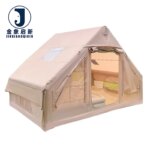
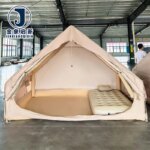
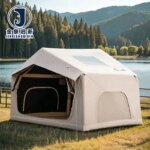
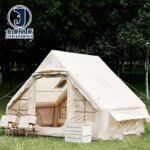
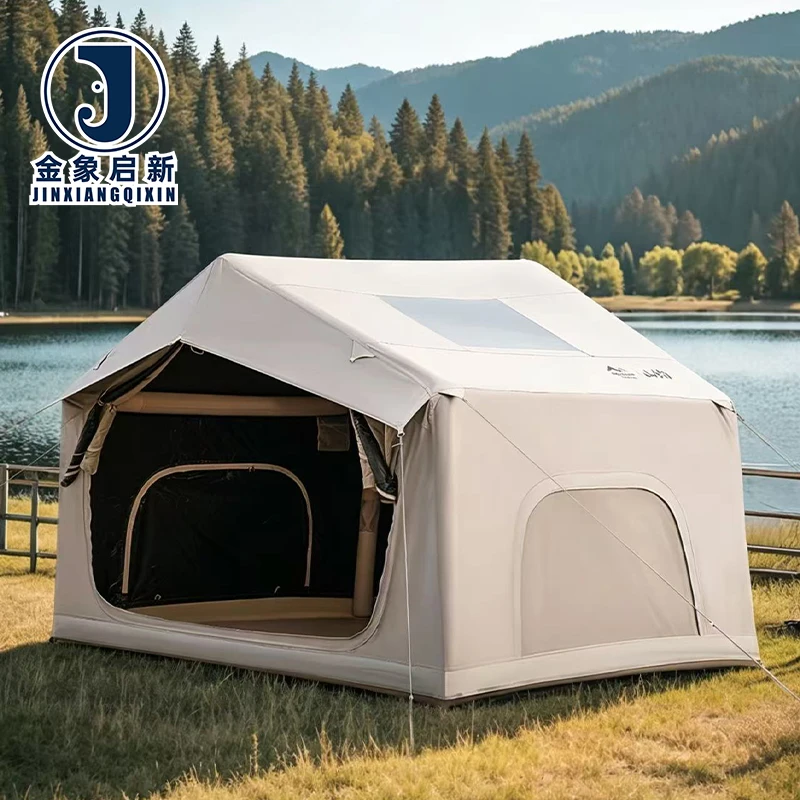
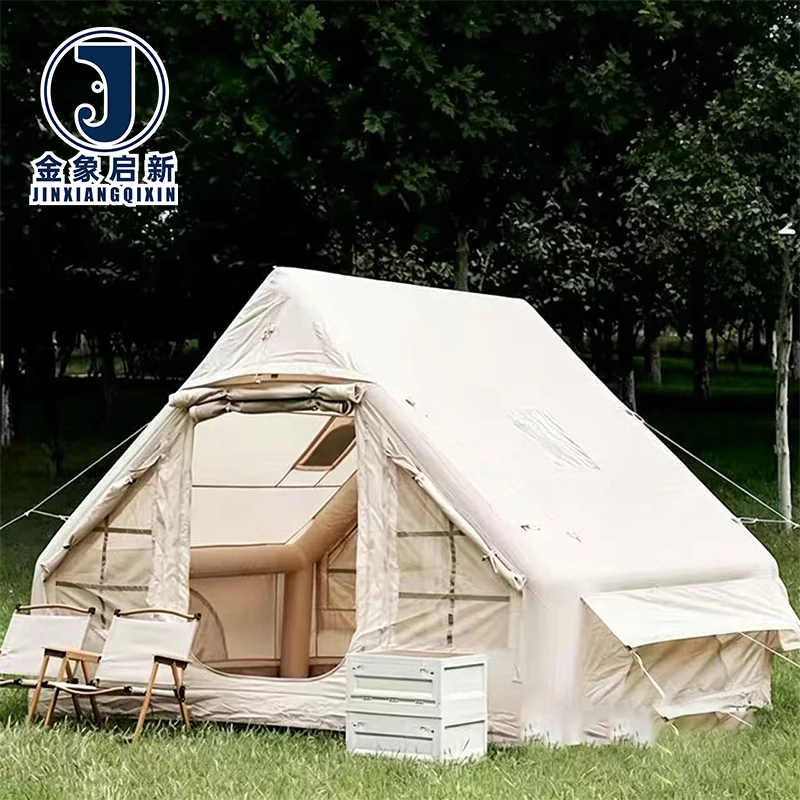
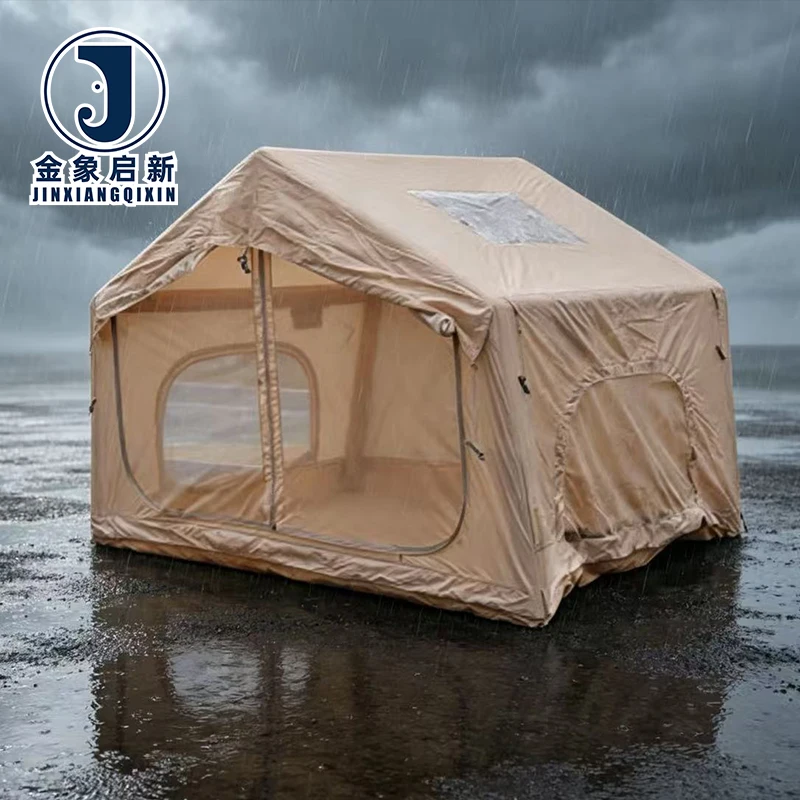
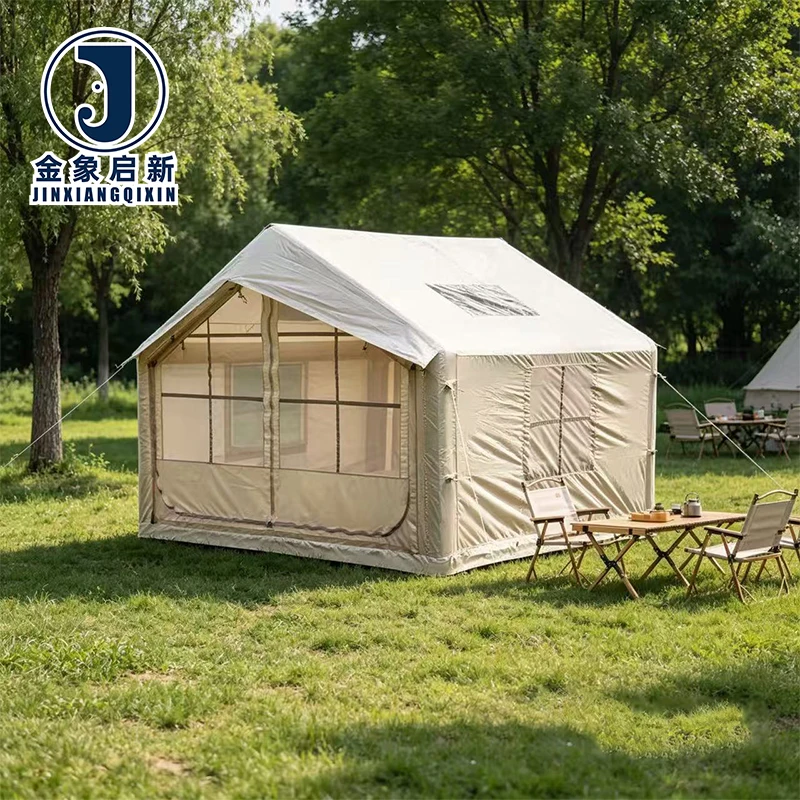
Deep Process Control Over Coating Weight — verified at every production stage for industrial inflatable structures where seam and coating integrity determine field reliability.
Technical Specifications
| Parameter | Value |
|---|---|
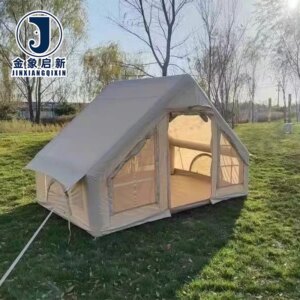
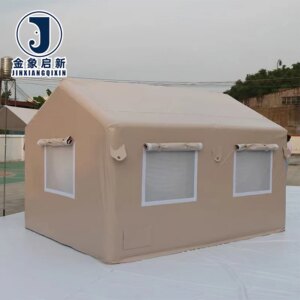
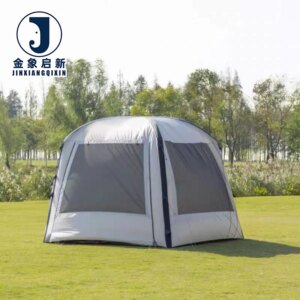
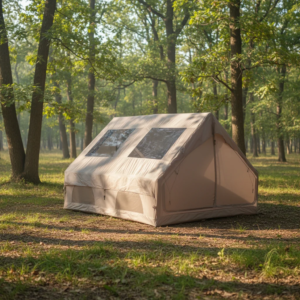
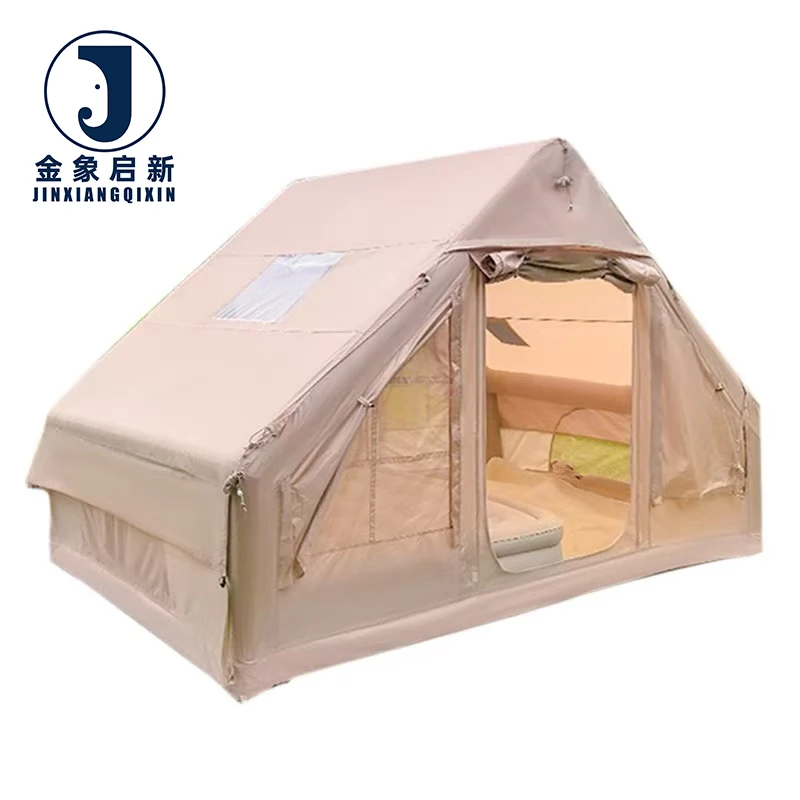
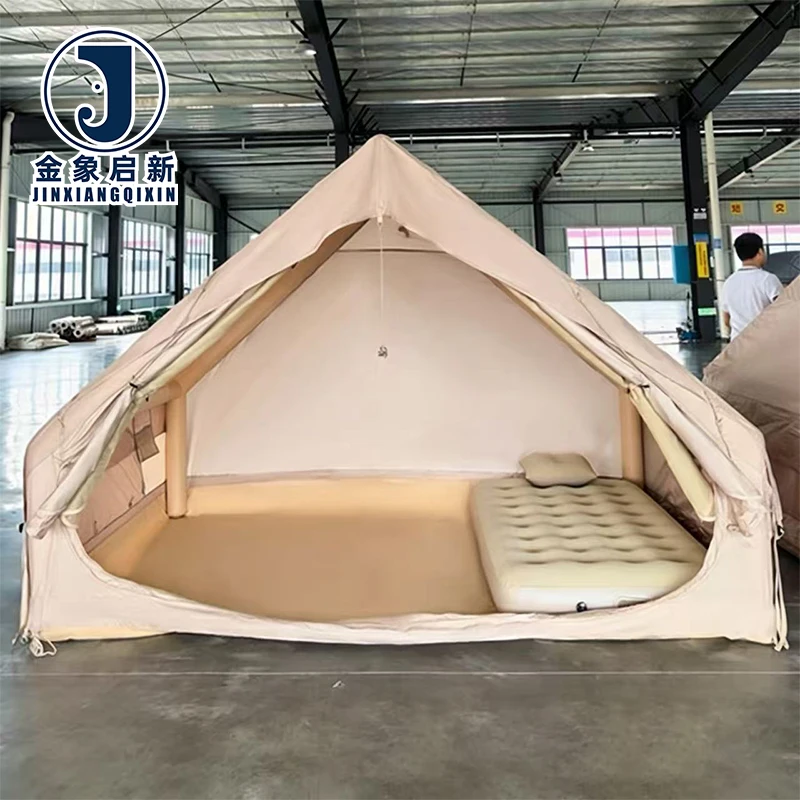
| Product Type | Inflatable Tent |
| Core Material | PVC Coated Fabric |
| Waterproof Rating | ≥10,000 mm water column |
| UV Resistance | 4,000 hours accelerated aging (test basis not stated) |
| Tear Strength | ≥300 N (test standard not stated) |
| Product Form | 1-2 Person Quick Automatic Opening Inflatable Structure |
| Opening Mechanism Durability | 500+ deployment cycles |
| Customization | OEM & ODM — sample customization, pattern printing, custom sizing up to 5 m length, Pantone color matching, logo printing |
| Production Lines | 3 |
| Processing Equipment | 36 sets |
| R&D Team | 10 technicians |
| Quality Control | 7-stage inspection (raw material testing, cut precision, seam integrity, pressure retention, hardware functionality, dimension measurement, packaging compliance) |
| Standards | ISO 9001, ISO 14001, ISO 45001, CE |
Application Suitability
| Application | Exposure & Requirement |
|---|---|
| Temporary site offices at construction projects | Continuous UV exposure, wind loading, repeated inflation-deflation cycles, abrasion from ground contact |
| Equipment storage shelters for logistics operations | Moisture ingress prevention, dust exclusion, forklift proximity puncture risk, rapid deployment between shifts |
| Mobile command posts for industrial events | High-visibility appearance, frequent relocation, multi-day weather exposure, power cable pass-through integrity |
| Emergency outdoor trip shelters in controlled environments | Rapid inflation under time pressure, low-temperature handling, reliable seam adhesion after storage |
What "Certified" Means When Your Inflatable Shelter Fails Inspection on Arrival
An inflatable tent fabric without batch-specific test documentation is a liability, not a shelter.
Industrial procurement teams routinely receive inflatable structures where fire-retardant or anti-static claims are stated on the quotation but never substantiated with a test report tied to the actual batch delivered. On mining and aviation sites, this gap between claim and documentation causes inspection failures, work stoppages, and contract penalties [NEED_CITE: fire classification compliance for temporary structures on regulated industrial sites]. The inflatable tent fabric must ship with verifiable performance data, not a generic brochure reference. When a contractor specifies a custom inflatable structure for a controlled environment, every roll used in that structure should trace back to a documented test result.
Why Ventilation-Adjacent Inflatable Shelters Demand More Than Generic PVC
Mining and tunnelling contractors position inflatable shelters near ventilation infrastructure, where airborne particulate concentration and fire risk profiles differ fundamentally from open-air camping scenarios. The PVC coated fabric used in these environments must meet the fire-retardant grades required by the specific site operator — confirm the grade required for your market before specifying. Jinxiang Tech supplies the base inflatable tent fabric with test documentation that aligns to the compliance framework your site auditor will reference. Without this alignment, even a structurally sound shelter becomes unusable the moment the safety inspector requests paperwork.
How Rapid Deployment Cycles Stress the Coating-Adhesion Boundary
Every inflation and deflation cycle flexes the fabric at the seam lines, where coating adhesion faces its most concentrated mechanical challenge. A custom inflatable structure rated for 500+ deployment cycles depends on consistent coating weight and bond strength across the entire panel surface. Inconsistent coating thickness creates localized weak points where delamination begins, typically visible only after the structure has been pressurized in cold conditions. The 7-stage inspection process addresses this by testing seam integrity and pressure retention as discrete checkpoints before the inflatable tent fabric leaves the facility [NEED_CITE: coating adhesion failure modes under cyclic flexural loading in PVC fabrics].
Reading the Specification Sheet Beyond the Headline Numbers
The ≥10,000 mm water column rating indicates the hydrostatic pressure the PVC coating can withstand before moisture penetration, which matters for four-season outdoor deployment where ground contact and pooling water create sustained hydrostatic load. Tear strength at ≥300 N reflects the force required to propagate an existing tear through the coated fabric — this value depends on both the base fabric denier and the coating penetration depth, not the GSM alone. The 4,000-hour accelerated aging UV test provides a relative durability indicator, though field UV exposure varies significantly by latitude, altitude, and installation angle. Buyers should request the specific test standard behind each figure to ensure comparability with their own acceptance criteria.
The Cost of Specifying Inflatable Fabric Without Verifying Coating Consistency
Roll-to-roll coating variation causes panels from the same production batch to exhibit different stiffness profiles, which becomes apparent only after the inflatable structure is pressurized on site. Softer panels stretch more under internal pressure, creating uneven stress distribution that accelerates seam fatigue at the boundary between stiff and flexible zones [NEED_CITE: tensile mismatch failure patterns in multi-panel inflatable assemblies]. Batch-specific quality certificates detailing coating weight and tear test results prevent this by confirming consistency before fabrication begins, not after the structure fails during a storm.
Why Procurement Teams Source Inflatable Fabric Here
Jinxiang Tech operates three full production lines with 36 sets of processing equipment, supporting bulk inflatable tent fabric orders with consistent lead times. The 10-person R&D team handles material selection, custom sizing up to 5 metres, Pantone color matching, and pattern printing — delivering digital prototypes and physical samples before bulk production commits. Every shipment includes documentation matched to the batch: material specification sheets, test reports, and compliance certificates. The 7-stage quality inspection covers raw material tensile testing through final pressure retention verification, catching coating defects that visual inspection alone would miss. Nearly 30 years of coated fabric production provides the process depth needed to hold tight coating tolerances across long production runs.
Documentation & Verification
- Material specification sheet stating coating weight, base fabric construction, and treatment grade per roll
- Batch-specific test reports for waterproof rating, UV aging, and tear strength tied to production lot
- ISO 9001, ISO 14001, ISO 45001, and CE certificates included with each shipment
- Pre-shipment inspection record confirming dimension measurement and seam integrity across all panels
- Certificate of origin and customs documentation prepared for cross-border inflatable fabric shipments
Fabrication, Handling & Storage
- Hot-air welding temperature and speed must match the PVC coating thickness to prevent delamination at seam lines
- Store rolls vertically on padded racks to avoid compression creases that weaken the coated surface
- Clean with pH-neutral detergent only; solvents degrade the UV-resistant PVC formulation
- Allow stored fabric to reach ambient temperature before unfolding to prevent cold-cracking at fold lines
- Cutting layout should account for directional grain in the base weave to maintain consistent tear propagation resistance
Before You Request a Quote
To specify the right inflatable tent fabric for your project, provide the intended application environment and any fire-safety or anti-static grades required by the site operator. Confirm whether you need finished cut-and-welded panels or raw roll stock for your own fabrication line. If color consistency across multiple structures matters, indicate the Pantone reference and total quantity so the production team can plan a single coating run for the entire batch.
Frequently Asked Questions
Q: Which fire-retardant or anti-static certifications apply to inflatable structures for mining or aviation sites?
A: Certification requirements vary by site operator and jurisdiction. Jinxiang Tech supplies inflatable tent fabric in fire-retardant grades with batch-specific test reports — confirm the exact grade and standard required for your project before placing the order. The 10-person R&D team can advise on common frameworks for mining and aviation applications.
Q: How is UV resistance validated for long-term outdoor inflatable deployment?
A: The PVC coated fabric undergoes 4,000 hours of accelerated aging testing (test basis not stated). For projects where extended UV exposure is a primary concern, request the specific test standard and compare the result against your regional solar radiation data. Batch-level test reports ship with every order.
Q: What is the maximum custom size and color matching capability for inflatable fabric?
A: Custom sizing is available up to 5 metres in length per panel, with Pantone color matching and logo printing supported through the OEM and ODM service. For large-volume orders, the production team coordinates single-batch coating runs to maintain color consistency across all rolls.
Q: How does batch-to-batch coating consistency get verified before shipment?
A: The 7-stage inspection process includes raw material tensile testing, seam integrity verification, and pressure retention checks as discrete quality gates. Each batch ships with a quality certificate documenting waterproof rating, UV resistance, and tear strength results specific to that production lot.
Q: What documentation ships with each inflatable fabric order for global compliance?
A: Every shipment includes the material specification sheet, batch-specific test reports, ISO 9001, ISO 14001, ISO 45001, and CE certificates, a pre-shipment inspection record, certificate of origin, and a roll packing list. Additional customs documentation is prepared based on the destination market requirements.