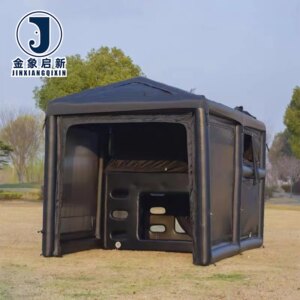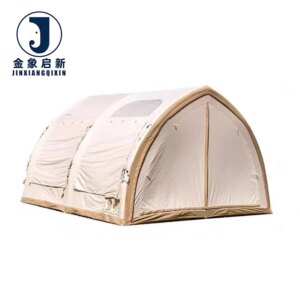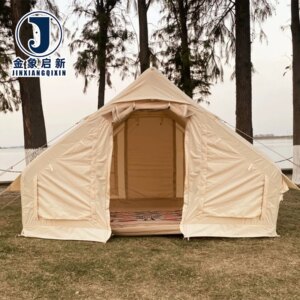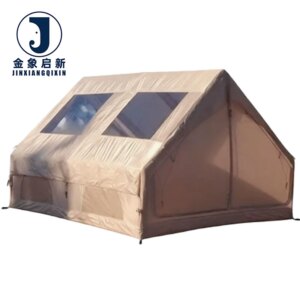


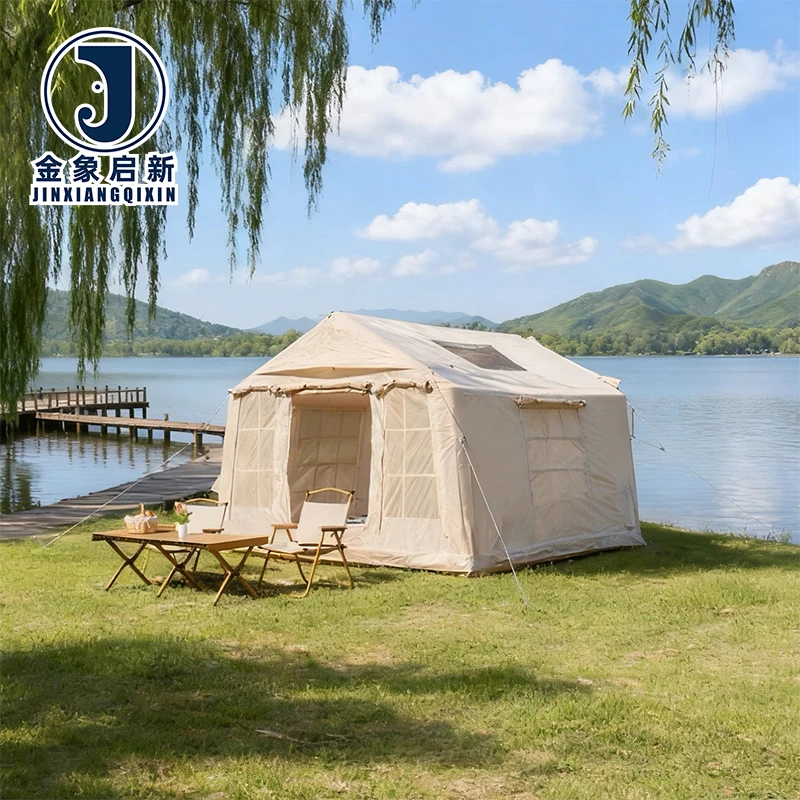
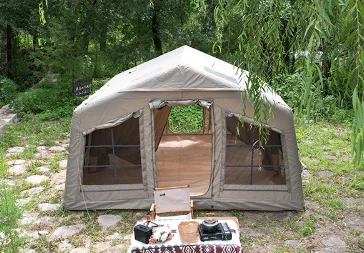
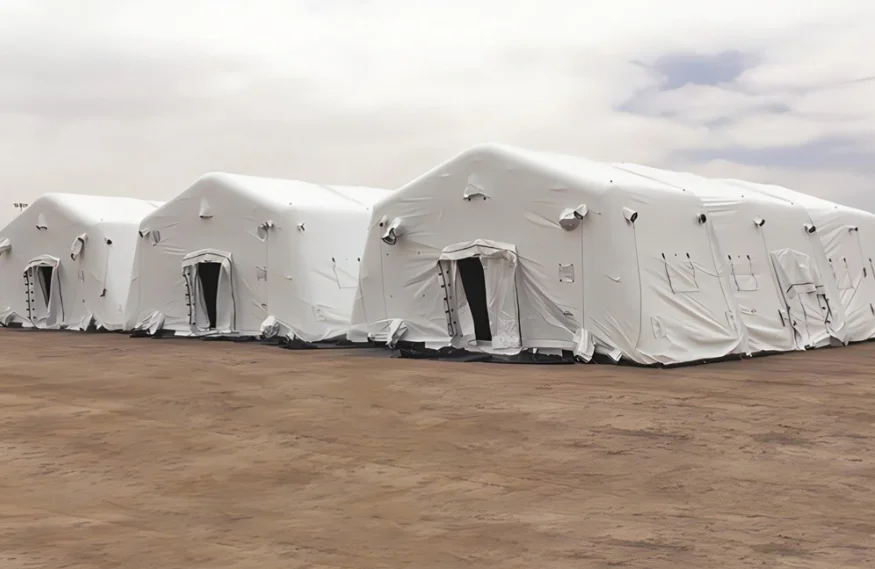
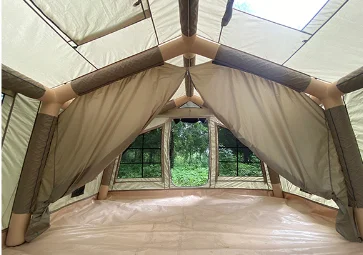
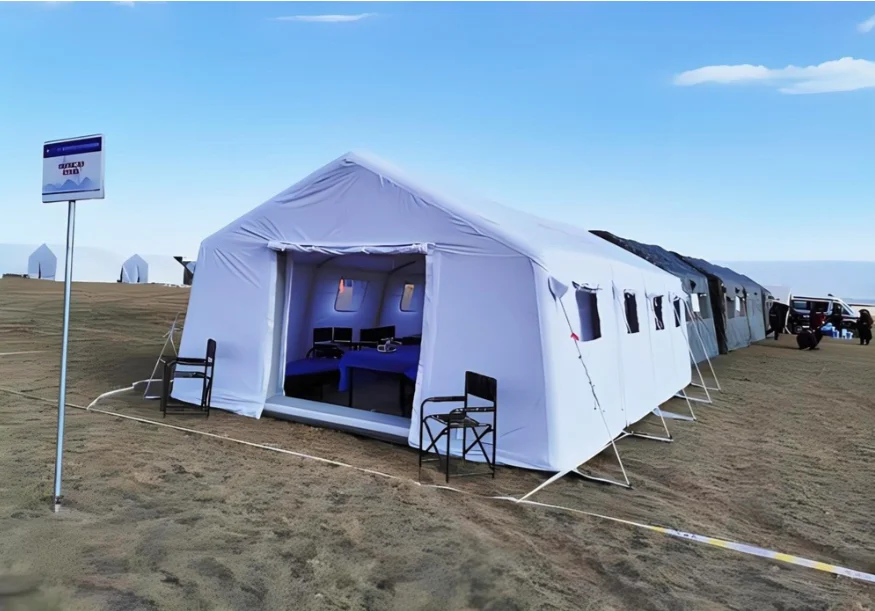
Coated Fabric Process Control — Inflatable tent fabric production backed by three dedicated lines and in-process QA at every coating stage, ensuring fire-retardant and anti-static properties remain consistent from the first roll to the last.
Technical Specifications
| Parameter | Value |
|---|---|
| Product Type | Inflatable Tent |
| Core Material | Waterproof PVC Fabric |
| Key Features | Waterproof, UV-resistant, Tear-resistant, Fire-retardant, Anti-static |
| Fire-Retardant Grade | Available in fire-retardant grades — confirm the grade required for your market |
| Anti-Static Performance | Anti-static treatment applied — surface resistance or standard to be confirmed per specification |
| UV Treatment | UV-resistant formulation — test basis available on request |
| Customization | OEM & ODM: sample customization, pattern printing, material selection, product design |
| R&D Support | 10-technician team handling material selection and sample development |
| Standards | ISO9001, ISO14001, ISO45001, CE |
Application Suitability
| Application | Exposure & Requirement |
|---|---|
| Mining and tunnelling inflatable shelters | Continuous underground deployment, strict fire-retardant and anti-static compliance, high abrasion from equipment proximity |
| Aviation and construction ventilation structures | Airflow-driven flex cycles, mandatory fire safety certification, exposure to fuel or chemical environments |
| Commercial glamping and event tents | Repeated inflation and deflation, extended UV exposure, wind loading on membrane surfaces |
| Temporary site welfare and staff accommodation | Seasonal weather extremes, frequent relocation, need for rapid deployment and teardown |
| Outdoor exhibition and storage structures | Long-term weathering, public safety codes requiring documented flame retardancy, large-span membrane stress |
What Happens When Inflatable Tent Fabric Ships Without the Certification Your Site Demands
Every roll leaves the factory with a material specification sheet naming the fire-retardant grade and anti-static performance — not a generic claim.
Procurement teams sourcing Inflatable Tent Fabric fire retardant certified materials regularly face a frustrating pattern: the quotation states compliance, but the shipment arrives with no test report to back it up. Site inspectors reject the structure. The project stalls while replacement material is sourced on emergency lead times. I have seen inflatable shelters sit deflated on mining sites for weeks because the fabric supplier could not produce a valid fire classification document [NEED_CITE: fire classification standards for temporary membrane structures in mining environments]. The cost of that delay far exceeds any unit price saving on the original order.
Fire-Retardant Formulation for Membrane and Inflatable Use
The PVC compound used in this Inflatable Tent Fabric fire retardant certified range is formulated to support combustion resistance across the full membrane surface. Fire-retardant additives are integrated into the coating layer rather than applied as a topical finish, which means the protection does not wash off or degrade through repeated flexing during inflation cycles. The specific grade must match the safety code of the destination market — confirm the classification your project requires before sampling.
Anti-Static Treatment Where Discharge Poses Real Risk
In mining ventilation and aviation ducting environments, static buildup on membrane surfaces can create discharge events near combustible atmospheres. The anti-static treatment in this fabric range addresses that operational hazard by modifying surface conductivity. The measured surface resistance value and the test method used are documented on the specification sheet [NEED_CITE: anti-static performance measurement standards for industrial membrane fabrics]. Always verify the threshold your site safety plan mandates before confirming the order.
Reading the Specification Sheet Beyond the GSM Number
GSM tells you the total weight per square metre, but it does not isolate how that weight is distributed between the base fabric and the coating layers. A heavier coating can increase waterproofing and UV shielding while contributing little to tensile or tear performance. The base fabric denier and weave density are what govern how the material resists tearing when an inflatable beam is under pressure. When evaluating Inflatable Tent Fabric fire retardant certified options, request the base fabric specification alongside the GSM to understand the full strength profile. Coating adhesion method — whether knife-over-edge, lamination, or calendering — determines how well the coating resists delamination at welded seams under repeated inflation stress.
The Cost of Specifying Without Verification
When fire-retardant grade is assumed rather than documented, the consequences surface at the worst possible moment — during the site safety audit after the structure is already erected. Entire inflatable shelters have been ordered to be dismantled and replaced because the fabric lacked the specific classification the inspector required [NEED_CITE: compliance enforcement for temporary structures on regulated industrial sites]. Anti-static performance gaps are harder to spot visually but carry equal risk in environments with combustible dust or vapour. The material may pass initial acceptance and only fail when an electrostatic discharge event is recorded during routine monitoring. Batch-to-batch inconsistency in coating weight can also mean that the first roll passed testing while subsequent rolls in the same shipment drift outside the acceptable range.
Why Procurement Teams Source This Range
Three full production lines and 36 sets of professional equipment give this operation the capacity to fulfil large-scale inflatable structure orders without splitting production across unrelated facilities. The 10-technician R&D team develops samples within days when custom dimensions, valve configurations, or pattern printing are specified. Dedicated QA and QC staff inspect every production stage rather than sampling only at the end, which catches coating weight deviation before it reaches the packing stage. Full material traceability allows any production batch to be traced back through its component origins — critical when a mining or aviation client needs audit-ready documentation. ISO9001, ISO14001, ISO45001, and CE certifications are maintained as operating standards, not display items.
Documentation & Verification
- Material specification sheet stating fire-retardant grade and anti-static performance per roll
- UV and flame-retardant test reports matched to the specific batch number
- ISO9001, ISO14001, ISO45001, and CE certificates available for project audit submission
- Pre-shipment inspection record with dimensional and coating weight verification
- Certificate of origin and customs documentation for cross-border shipment
Fabrication, Handling & Storage
- Hot-air welding temperature and speed must be calibrated to the PVC coating thickness for full seam integrity
- Valve reinforcement patches should be applied with compatible adhesive and heat-activated bonding
- Store rolls upright on pallets to prevent flat-spot deformation of the coating surface
- Avoid deployment below the material’s cold-flex threshold to prevent coating micro-cracking
- Clean with pH-neutral detergent only — solvents degrade the fire-retardant additive layer
- Field repairs require compatible PVC repair compound matching the coating formulation
Before You Send the Enquiry
Provide the intended application environment, the specific fire-retardant classification your local authority or site safety plan mandates, and the anti-static threshold if applicable. Include the required dimensions, annual volume estimate, and whether you need finished panels with valve openings or full rolls for in-house fabrication. If colour matching or pattern printing is part of the project scope, share the reference codes so the sampling process can begin immediately.
Frequently Asked Questions
Q: What fire-retardant grade does the inflatable tent fabric carry, and does it meet my target market’s safety code?
A: The fabric is available in fire-retardant grades, and the specific classification is documented on the material specification sheet with a corresponding test report. Because safety codes vary by country and application — mining, aviation, and commercial events each have different thresholds — share your target market’s requirement so we can confirm the matching grade before sampling begins.
Q: How is anti-static performance measured and documented for mining or aviation site compliance?
A: Anti-static treatment is applied during the coating process, and the resulting surface resistance is measured and recorded on the specification sheet. The test method and measured value are provided so your site safety team can verify compliance against their internal threshold. If your project specifies a particular standard, share it during the enquiry stage.
Q: Can you provide third-party test reports for UV resistance and flame retardancy before order confirmation?
A: Yes. Test reports covering UV resistance and flame retardancy are prepared for the specific batch and can be shared during the evaluation phase. These documents allow your compliance team to review the data before committing to a production order, eliminating the risk of discovering gaps after shipment.
Q: What is the process for custom dimensions, valve configurations and pattern printing on inflatable tent fabric?
A: The 10-technician R&D team handles custom sizing, valve opening placement, and pattern printing from initial design through sample development. Samples are produced within days of specification confirmation. Once the sample is approved, full production proceeds with in-process QA at every stage to ensure the custom features remain consistent across the entire order.