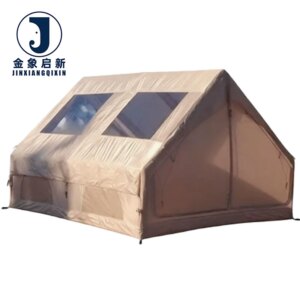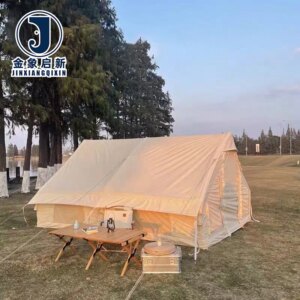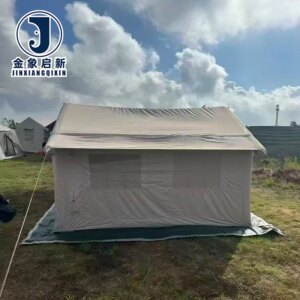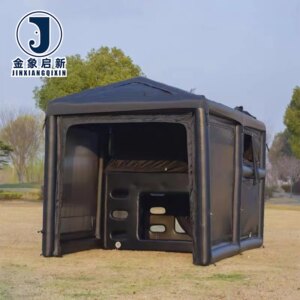
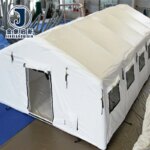
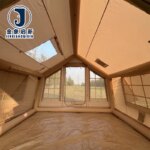
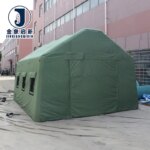
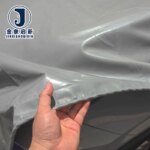
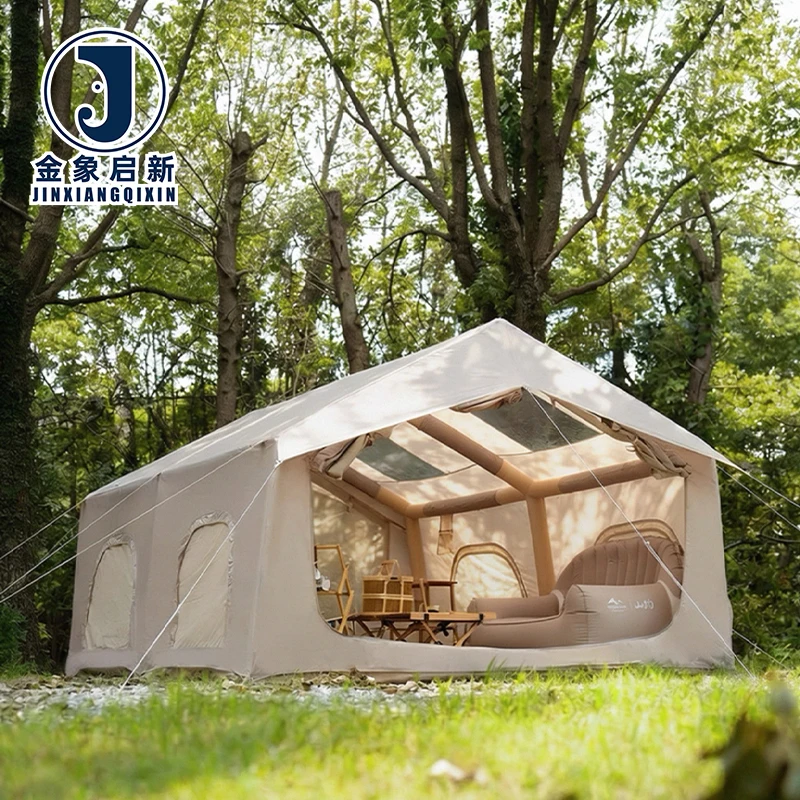
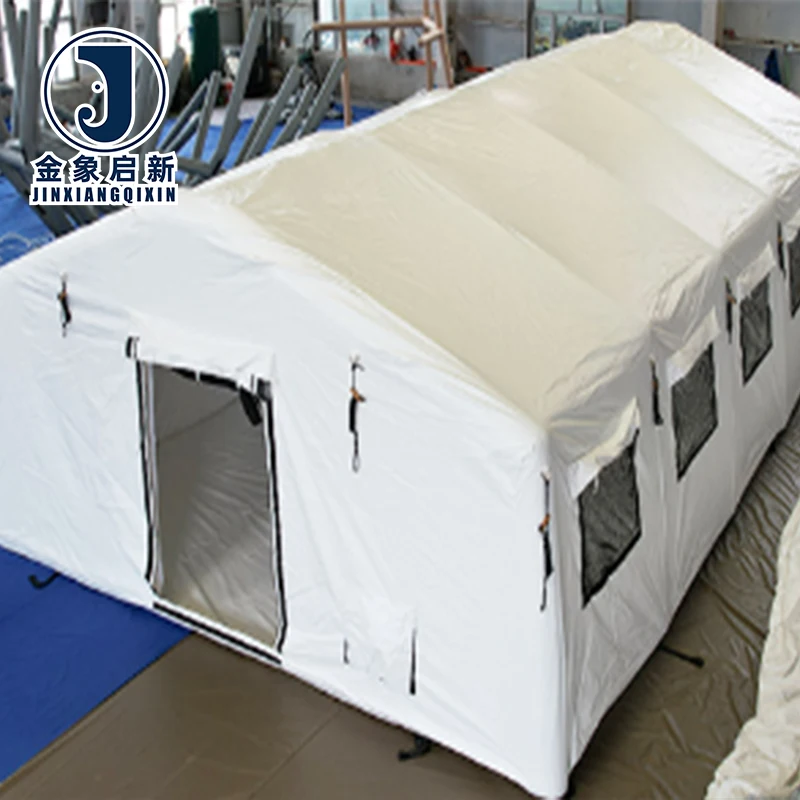
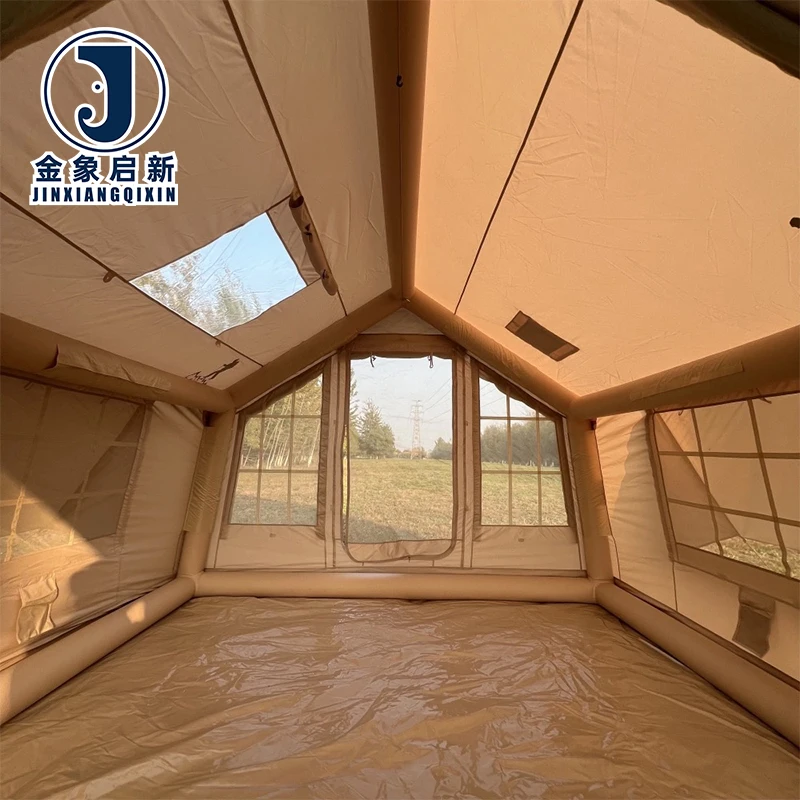
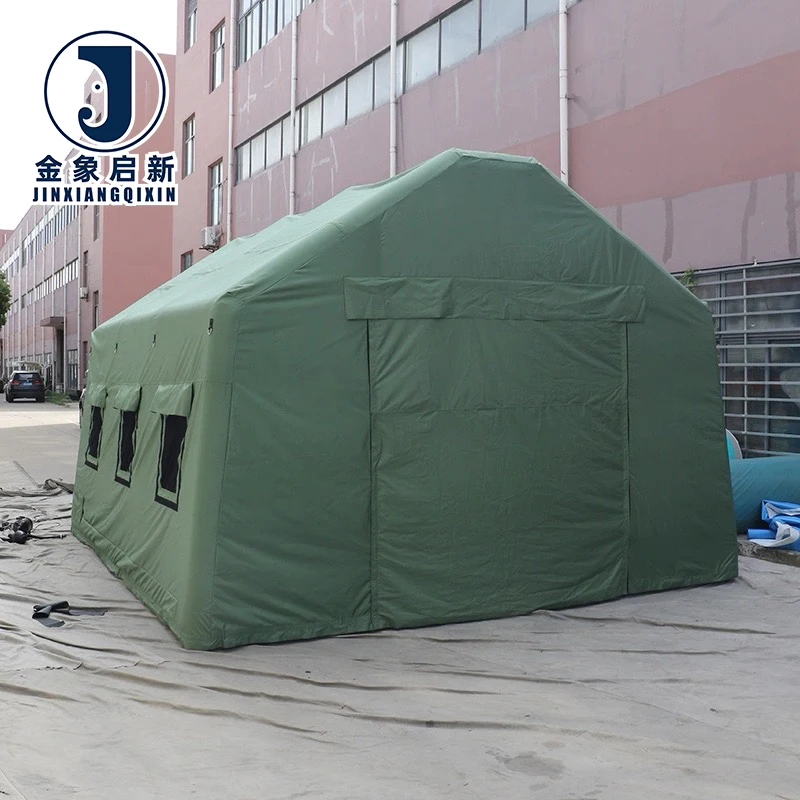
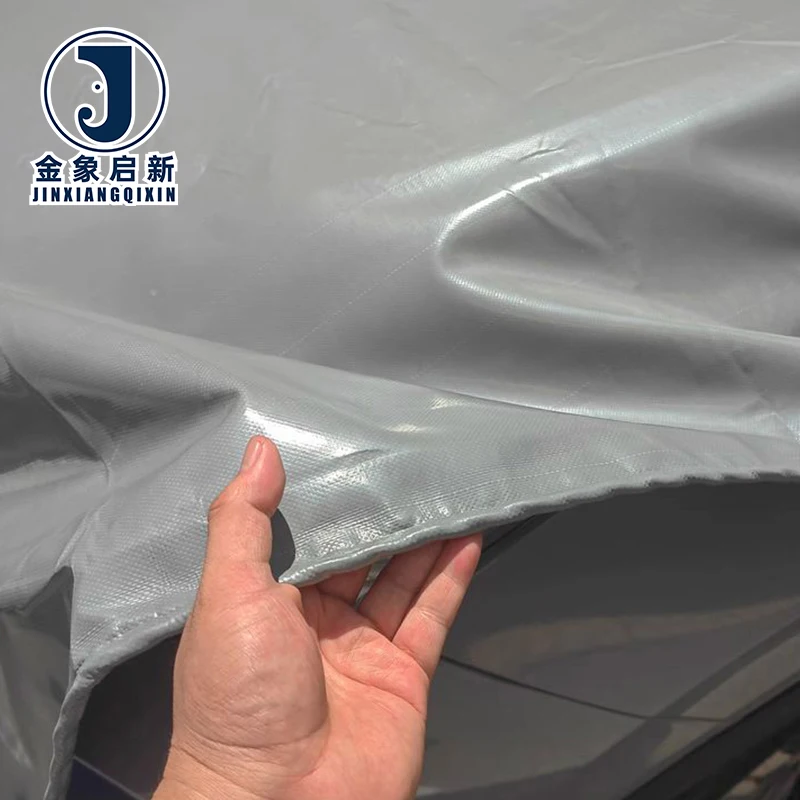
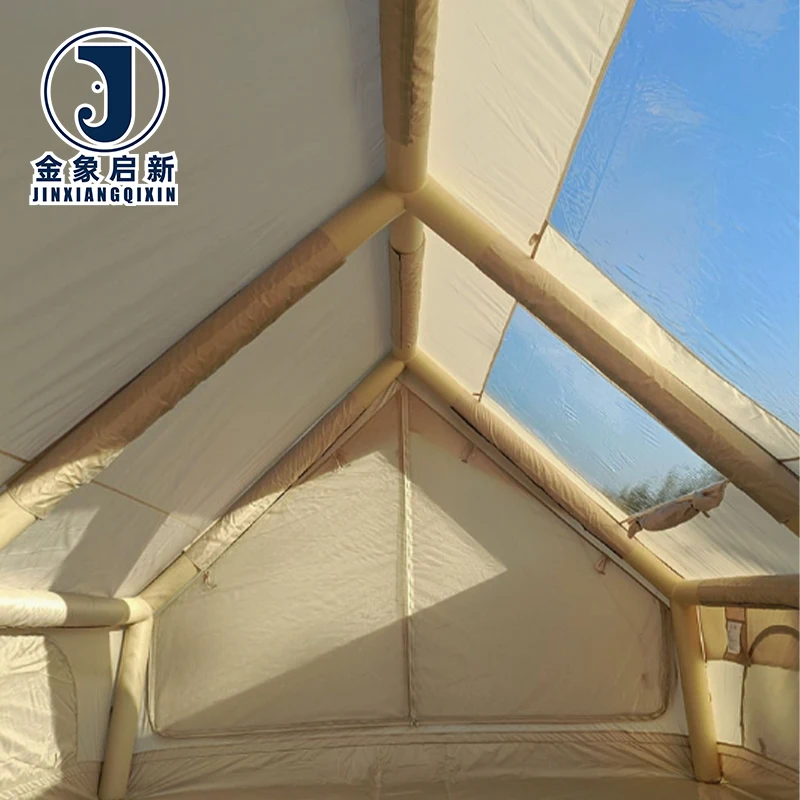
Coating Process Control — Every roll of PVC inflatable tent fabric undergoes strict coating weight and adhesion monitoring across three full production lines to ensure batch-to-batch consistency for air-holding structures.
Technical Specifications
| Parameter | Value |
|---|---|
| Product Type | Inflatable Tent |
| Core Material | PVC tarpaulin |
| Key Performance | Waterproof, UV-resistant (test basis not stated in source), tear-resistant |
| Tear Strength | 300N per ISO 13934-1 |
| Temperature Range | -20°C to 60°C |
| Construction | Single-layer |
| Hydrostatic Pressure Resistance | Exceeding industry standards (specific rating not stated in source) |
| Certifications | ISO9001, ISO14001, ISO45001, CE |
| Customization | OEM & ODM (dimensions, color, pattern printing, reinforcement locations) |
| Sample Lead Time | 7-10 business days |
| Pre-shipment Testing | 24-hour pressure retention testing |
Application Suitability
| Application | Exposure & Requirement |
|---|---|
| Commercial outdoor events | Rapid inflation cycles, repeated pack-and-deploy, direct sunlight, crowd proximity |
| Temporary exhibition spaces | Multi-day continuous inflation, indoor fire compliance, branding surface clarity |
| Emergency response command centers | All-weather deployment, sub-zero to high-heat shifts, wind-load stability |
| Industrial site temporary facilities | Dust, chemical splash proximity, long-term inflation under UV exposure |
| Four-season family camping | Freeze-thaw cycles, condensation buildup, ground abrasion at base seams |
Why Material Certification Gaps Put Inflatable Shelters at Risk
An inflatable tent that loses pressure in high wind or fails a fire inspection is a liability, not a shelter.
When sourcing certified inflatable structure material for commercial or industrial use, a supplier claim of "flame retardant" without a stated grade leaves site safety auditors with nothing to verify. The same applies to anti-static requirements in mining or aviation ground support zones — compliance demands documentation, not assurances. Inflatable tent fabric fire retardant performance must be backed by test reports tied to the specific batch you receive. [NEED_CITE: fire classification standards for temporary structures and tents]
Pressure Integrity and Thermal Stability
Inflatable structures depend entirely on the coated fabric maintaining air-tight seams and dimensional stability across temperature swings. This PVC inflatable tent material is validated through temperature cycling from -20°C to 60°C, covering deployment in winter industrial sites and summer outdoor events without the coating becoming brittle or softening at weld lines. The single-layer construction reduces trapped moisture between plies that can cause delamination during repeated inflation cycles.
Tear Resistance Under Wind Load
An inflatable shelter acts as a large sail surface when deployed in open terrain. Tear resistance tested to 300N per ISO 13934-1 means the fabric can resist propagation from a small puncture or seam stress point before it becomes a structural failure. This is critical for emergency response command centers and four-season camping tents where wind gusts are unpredictable and repair access is limited. [NEED_CITE: ISO 13934-1 tensile and tear testing methodology for coated fabrics]
Reading the Spec Sheet Beyond Surface Claims
Coated fabric performance depends on how the PVC compound bonds to the base weave, not just the stated weight. A coating that sits on the surface without penetrating the yarn interstices will peel at welded seams under inflation pressure. Hydrostatic pressure resistance exceeding industry benchmarks indicates that the coating thickness and adhesion are sufficient to hold back sustained water contact during heavy rainfall without bleed-through at stitch or weld lines. UV-stabilized additives must be integrated into the PVC matrix rather than applied as a topcoat to provide lasting protection — surface treatments wear off with pack-and-deploy friction. The available fire-retardant grades should be confirmed against the specific standard your market requires, whether that is M2, B1, or NFPA 701, before placing a production order.
What Happens When Specification Shortcuts Reach the Site
A tent that arrives with a lighter coating than quoted will hold pressure on day one but develop micro-leaks at flex points within weeks of repeated inflation. Seam welds on under-specified material fail first because the heat needed to bond the layers exceeds what the thin coating can tolerate without burning through. Fire-retardant claims unsupported by batch-specific test reports lead to failed site inspections, forcing the contractor to remove the structure and source replacement fabric under project deadline pressure. [NEED_CITE: common failure modes in welded PVC inflatable structures]
Why Contractors Specify This Fabric Source
Three full production lines running 36 sets of professional processing equipment give the capacity to fill container-volume orders of inflatable tent fabric without splitting across multiple coating batches that introduce colour or weight variation. The 10-person R&D team handles OEM sample development — custom dimensions, reinforcement point placement, and pattern printing — with samples delivered within 7-10 business days for buyer sign-off before bulk runs. Every inflatable structure undergoes 24-hour pressure retention testing before dispatch, catching seam leaks and valve-seat failures at the factory rather than on the event site. Full-process quality inspection with dedicated QA and QC staff on site means raw material certificates of analysis and batch-specific test results ship with the order.
Documentation & Verification
- Tear strength test report per ISO 13934-1 included with each batch shipment
- Fire-retardant grade documentation matched to the standard specified at order (M2, B1, or NFPA 701 — confirm grade required)
- Temperature cycling validation records from -20°C to 60°C per production lot
- Raw material certificate of analysis tied to order number
- 24-hour pressure retention test log for each inflatable unit before dispatch
- Certificate of origin and customs documentation for international project clearance
Fabrication, Handling & Storage
- Hot-air welding temperature must match the PVC coating formulation to avoid burning through the single-layer construction at seam overlaps
- Reinforcement patches at valve seats and tie-down points should be welded before final inflation test to ensure adhesion
- Store rolls vertically on end caps to prevent flat-spot creasing that weakens the coating at fold lines
- Deploy in sub-zero conditions gradually — allow the fabric to reach ambient temperature before full inflation to avoid brittle cracking
- Clean with mild detergent only; solvents can degrade the UV-stabilized additive layer integrated into the PVC matrix
- Repair field punctures with compatible PVC patch material heat-welded at edges, not adhesive-only bonding
Before You Request a Quote
Specify the deployment environment — temperature extremes, expected wind loads, and whether the structure will be permanently inflated or cycled through repeated pack-and-deploy. State the fire-retardant grade or anti-static standard required by your local site regulations so the correct PVC compound is selected at coating. Confirm whether you need roll stock for your own fabrication or finished inflatable units with custom dimensions and reinforcement layouts.
Frequently Asked Questions
Q: What fire-retardant grades are available for inflatable structure fabric?
A: The fabric is available in multiple fire-retardant grades, but the specific grade must match your local regulatory requirement. Common standards include M2, B1, and NFPA 701. Confirm which standard applies to your project at inquiry stage so the correct PVC compound is formulated and tested before production begins.
Q: How is anti-static compliance verified for mining and aviation inflatable applications?
A: Anti-static compliance requires surface resistance testing to the standard specified by your site safety protocol. This testing is conducted on the coated fabric before fabrication and documented in the batch inspection report. Provide the target resistance range at inquiry to ensure the PVC formulation includes the correct conductive additive loading.
Q: What pressure retention testing is performed before shipment?
A: Every inflatable structure undergoes a continuous 24-hour pressure retention test at the factory. The unit is inflated to operating pressure and monitored for seam leaks, valve-seat failures, and coating micro-fractures. Test logs documenting start pressure, end pressure, and ambient temperature ship with each unit.
Q: Can inflatable tent dimensions and reinforcement points be customized?
A: Yes. OEM and ODM customization covers overall dimensions, air-beam layout, valve placement, reinforcement patch locations at high-stress points, color selection, and pattern printing. The R&D team produces samples within 7-10 business days for buyer approval before full production commences.
Q: What documentation is included for site safety audits and regulatory inspections?
A: Each shipment includes material specification sheets, tear strength test reports per ISO 13934-1, fire-retardant grade certificates where applicable, raw material certificates of analysis, pre-shipment pressure test logs, ISO and CE certificates, and certificate of origin for customs clearance.