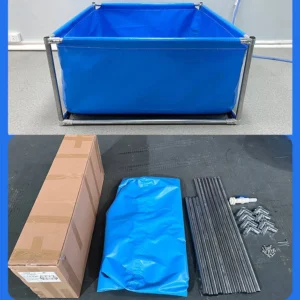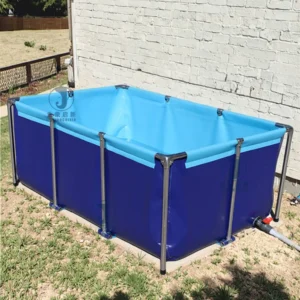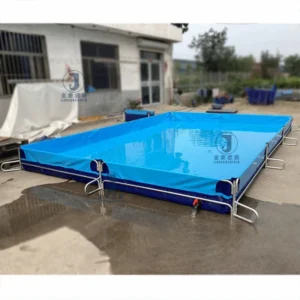
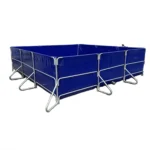
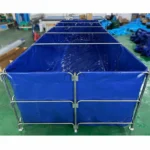

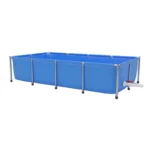
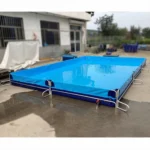
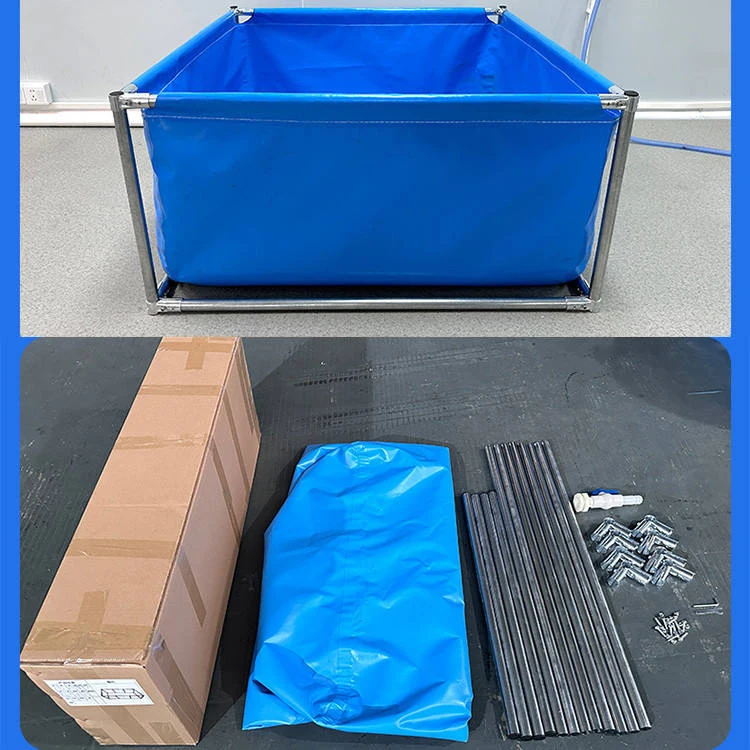
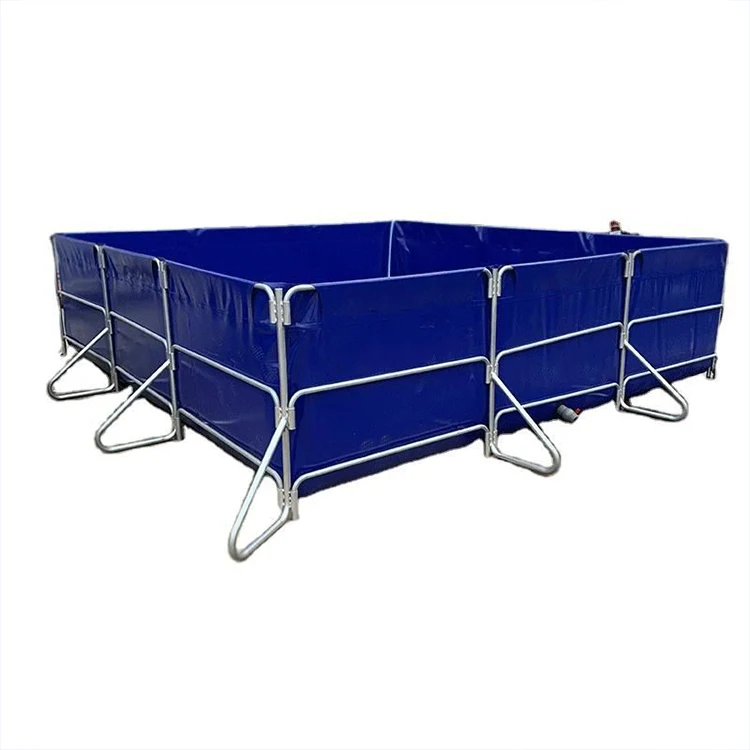
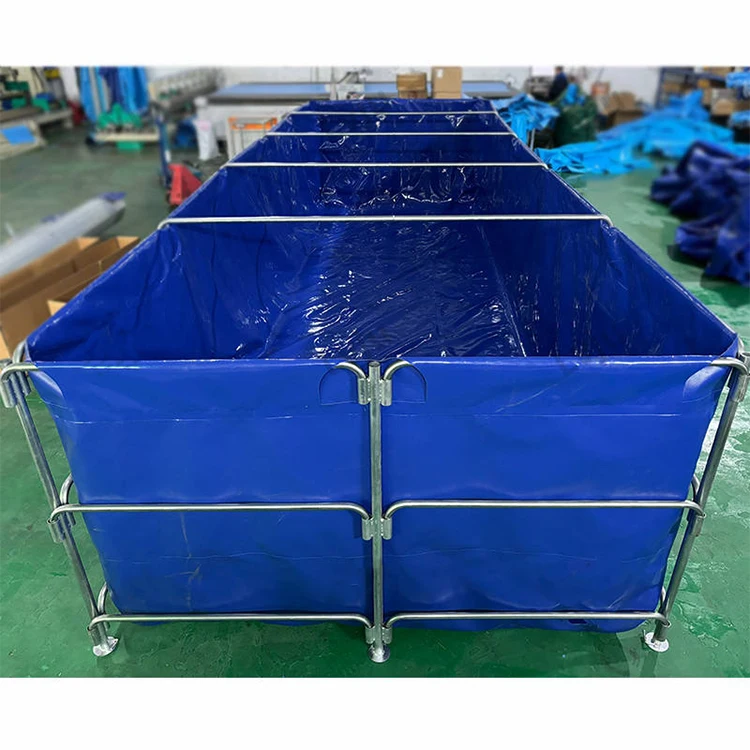
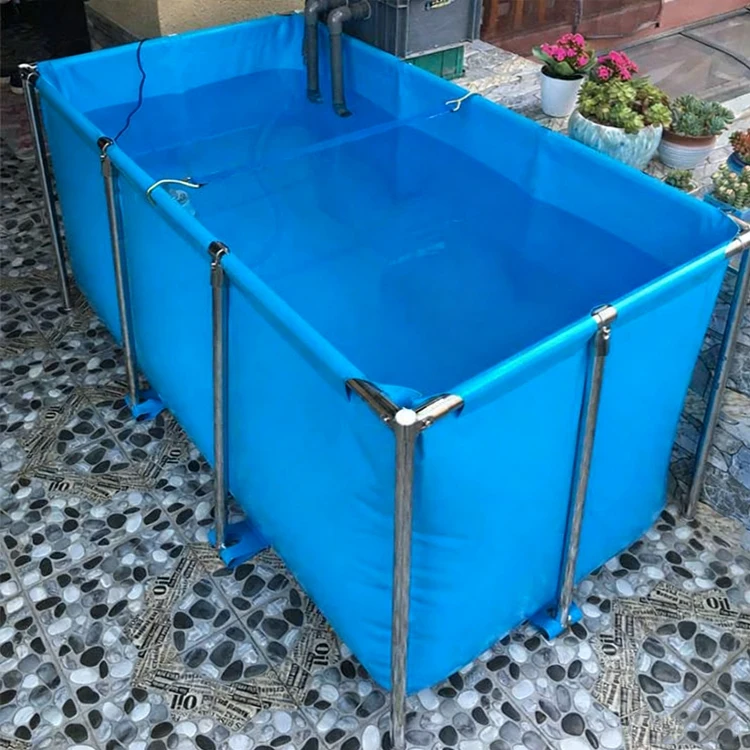
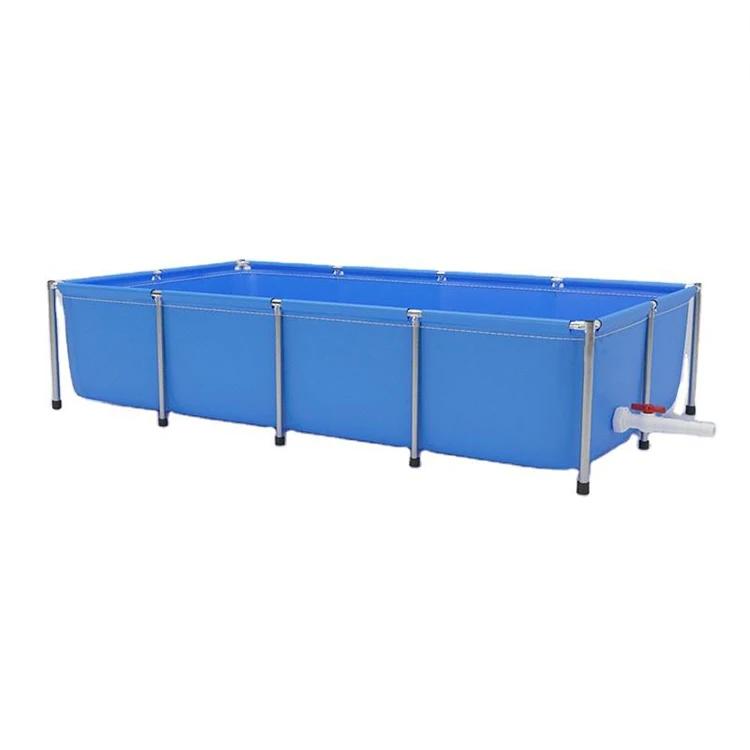
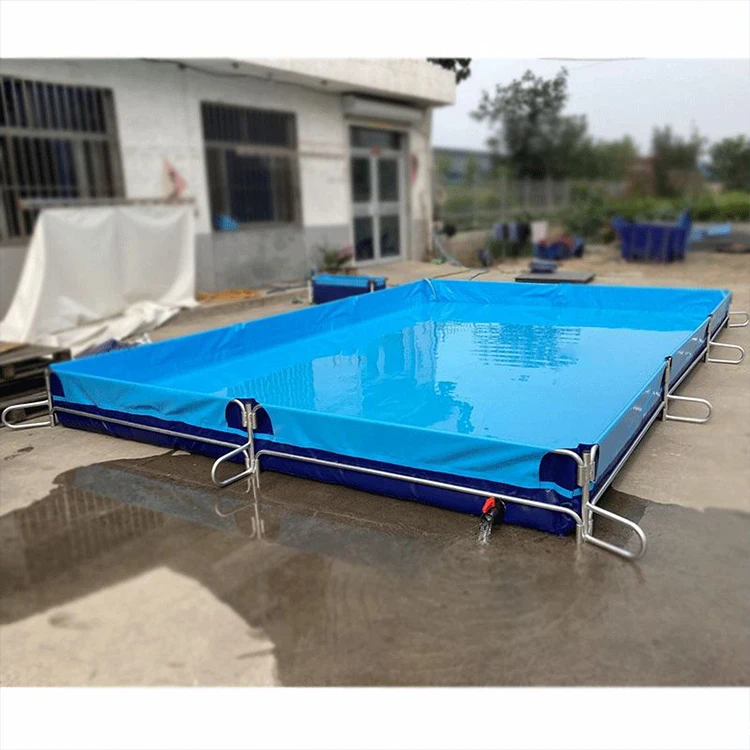
Process Control — deep coating expertise applied to PVC tarpaulin fish pond liners, where consistent adhesion and weld integrity matter more than thickness claims.
Technical Specifications
| Parameter | Value |
|---|---|
| Product Type | PVC Fish Pond Tarpaulin |
| Shape Options | Circular / Rectangular |
| Coating Material | PVC |
| Feature | Foldable |
| Application | Fish tank / Fish Pond |
| Custom Size | Available |
| Standards | ISO, CE |
Application Suitability
| Application | Exposure & Requirement |
|---|---|
| Commercial fish farming grow-out ponds | Continuous hydrostatic pressure, biological load, soil contact, UV exposure |
| Hatchery and nursery basin containment | Water-tight seams, frequent cleaning, chemical disinfectant exposure |
| Temporary or seasonal fish holding ponds | Rapid deployment, repeated folding and unfolding, transport abrasion |
| Agricultural water storage and reservoir lining | Long-term water retention, puncture risk from substrate, weather cycling |
Why Welded Seams Fail Before the Pond Liner Fabric Does
Seam failure in aquaculture ponds originates from inconsistent heat-weld parameters, not from the PVC tarpaulin fabric itself.
When a pond liner splits under constant water load, operators lose stock and face downtime that extends well beyond the repair window. I have reviewed failed liner samples where the tear path ran exactly along the weld line — the fabric on either side remained intact, but the fused joint had insufficient peel strength to resist hydrostatic pressure at depth. PVC tarpaulin fish pond liners require controlled heat input matched to the specific coating formulation; too little heat leaves a cold bond that delaminates under load, while excessive heat degrades the polymer and creates a brittle zone that cracks when the pond flexes. [NEED_CITE: tensile and tear test methods for coated fabrics per ISO 1421]
Coating Weight Consistency Across Every Panel
A PVC fish pond tarpaulin holds water because the coating forms a continuous barrier through the base fabric. When coating weight varies between panels in the same pond, the lighter areas become the first points of failure under sustained hydrostatic pressure. Manufacturing control over the coating process — ensuring uniform PVC application across the full width of each roll — eliminates the weak spots that lead to premature leakage. This level of process discipline is what separates a liner that holds for a season from one that holds across multiple production cycles.
Shape Geometry and Structural Load Distribution
Circular pond configurations distribute water pressure evenly around the perimeter, reducing stress concentration at corners. Rectangular layouts offer higher volumetric efficiency for site planning but place greater demand on seam integrity at the junctions. Selecting between circular and rectangular formats depends on the frame structure, site footprint, and the operator’s harvest workflow. Foldable PVC tarpaulin fish ponds in either configuration can be fabricated with reinforced corner patches and perimeter hems to manage the specific load paths each geometry creates. [NEED_CITE: hydrostatic load distribution in flexible membrane containment structures]
Reading the Specification Sheet Beyond GSM
Grams per square metre indicates total weight but does not describe how that weight is distributed between the base fabric and the PVC coating. A high GSM achieved through heavy coating over a light base fabric will have different tear propagation behaviour than a lower GSM built on a dense woven scrim. The denier of the yarn and the thread count per inch determine how effectively the fabric resists puncture from sharp substrate or equipment contact. For pond liners, the balance between base fabric density and coating thickness governs both flexibility for folding and rigidity for maintaining shape when filled.
The Hidden Cost of Underspecified Pond Liners
Operators who source pond liners on price per square metre often discover the real cost after installation. Material lighter than the quoted GSM stretches under water load, pulling seams apart at the weld line. Coating that lacks UV treatment — without a test report to confirm the claim — degrades under direct sun, becoming brittle and cracking within a season. Colour variation between rolls in the same order becomes visible once adjacent panels are installed side by side in a multi-pond facility. These failures are not random; they trace back to specifications that were not verified before shipment. [NEED_CITE: field failure analysis of flexible pond containment membranes]
Sourcing PVC Fish Pond Tarpaulin from a Coating Specialist
Pond liner performance starts at the coating stage, where adhesion between PVC and base fabric determines whether the material fails at the surface or holds under sustained water pressure. Production runs go through dedicated QA checkpoints at each stage, with inspection covering coating uniformity, weld seam integrity, and dimensional accuracy before any roll ships. Custom sizing — circular or rectangular, with specific diameter, depth, and hem configurations — is developed from pattern templates rather than generic cut sheets, ensuring the liner matches the pond frame exactly. Sample development for custom dimensions and fabric grades is completed within days, allowing operators to validate fit and weld behaviour before committing to a full production order. Documentation including material specification sheets, pre-shipment inspection records, and test reports for applicable treatments ships with every consignment.
Documentation & Verification
- Material specification sheet confirming PVC coating type, base fabric denier, and GSM for each roll
- Pre-shipment inspection record documenting seam weld integrity and dimensional accuracy
- ISO and CE certification documentation supporting import compliance across target markets
- UV and flame retardant test reports supplied for applicable fabric grades
- Packing list matching roll or cut-size quantities for container loading verification
Fabrication, Handling & Storage
- Heat-weld seams at temperatures matched to the PVC coating formulation to ensure full polymer fusion
- Fold pond liners along reinforced hem lines to prevent crease damage to the PVC coating layer
- Store folded liners in shaded, ventilated areas to avoid UV degradation before deployment
- Clean PVC surfaces with non-solvent detergents to preserve coating integrity and surface finish
- Inspect weld seams after initial filling to identify any cold-bond points requiring re-welding
- Cut liner panels from roll stock using the pond frame template to minimise material waste and seam count
Requesting a Quotation for Your Pond Project
Provide the intended pond dimensions, shape preference, and site exposure conditions so the correct base fabric and PVC coating weight can be recommended. If your market requires specific UV or flame retardant treatment, state the applicable standard so test reports can be prepared with the shipment. Confirm whether you need finished pond liners with welded seams and reinforced hems, or roll stock for on-site fabrication.
Frequently Asked Questions
Q: How do you verify the GSM matches what I ordered?
A: Every roll is weighed and measured during pre-shipment inspection, and the results are recorded against the material specification sheet. The documented GSM value ships with your consignment so you can confirm on arrival that the PVC fish pond tarpaulin weight matches the quotation, not just the claim.
Q: Can the pond liner be custom-cut to my exact pond dimensions?
A: Yes. Circular and rectangular pond liners are fabricated from patterns based on your frame dimensions, including depth allowance and hem reinforcement. Custom sizing is developed as a sample first, so you can verify fit and seam construction before full production runs.
Q: What test reports come with UV-treated or flame retardant grades?
A: Where UV treatment or flame retardant grades are specified, the relevant test reports are included in the shipping documentation. Confirm the specific standard required for your market at the inquiry stage so the correct fabric grade is selected and documented.
Q: How are welded seams reinforced at high-stress flex points?
A: Heat-welded seams are applied using parameters matched to the PVC coating weight and base fabric density. At junctions and corner areas where hydrostatic load concentrates, additional overlap width or patch reinforcement is used to prevent delamination under sustained water pressure.
Q: What documentation ships with the order for customs and compliance?
A: Each shipment includes a material specification sheet, pre-shipment inspection record, ISO and CE certificates, packing list, and certificate of origin. For pond liners requiring specific treatment grades, the corresponding test reports are also included for import clearance.