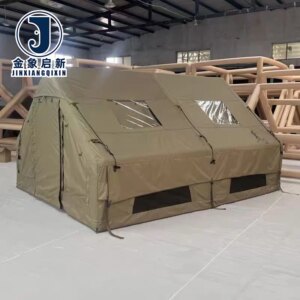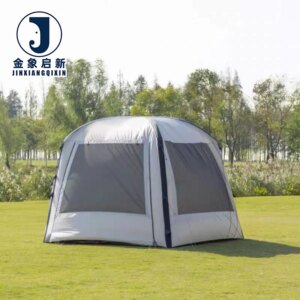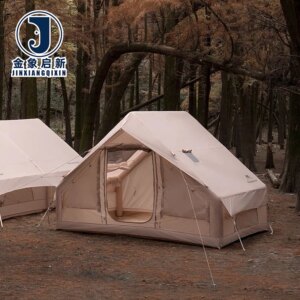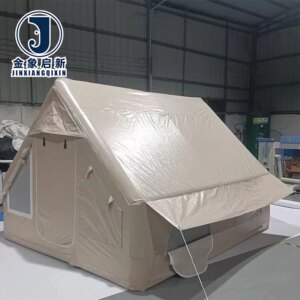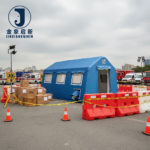
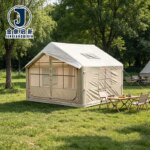
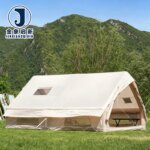
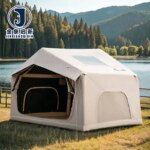
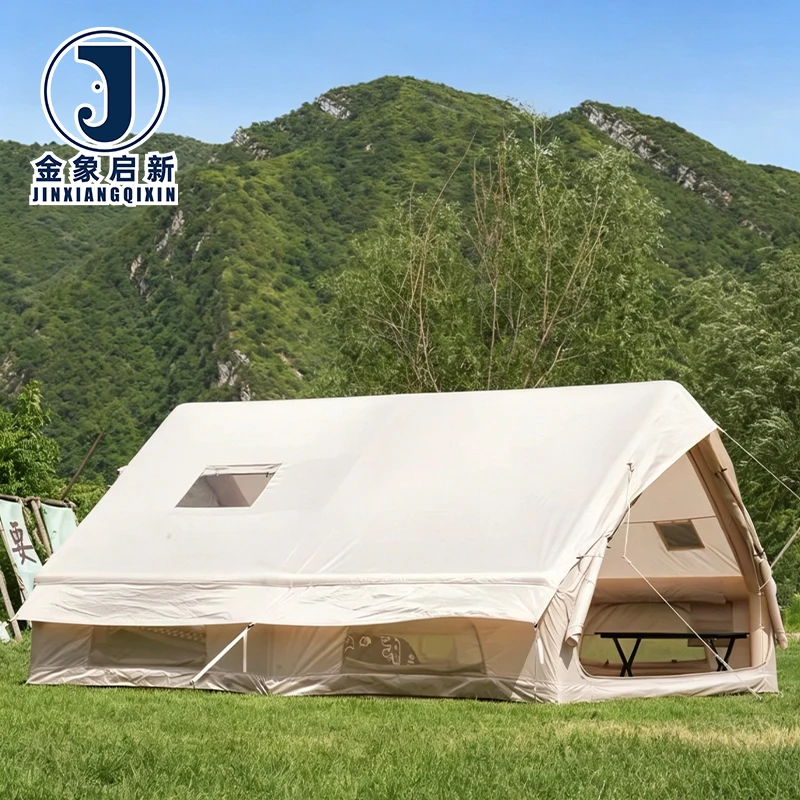
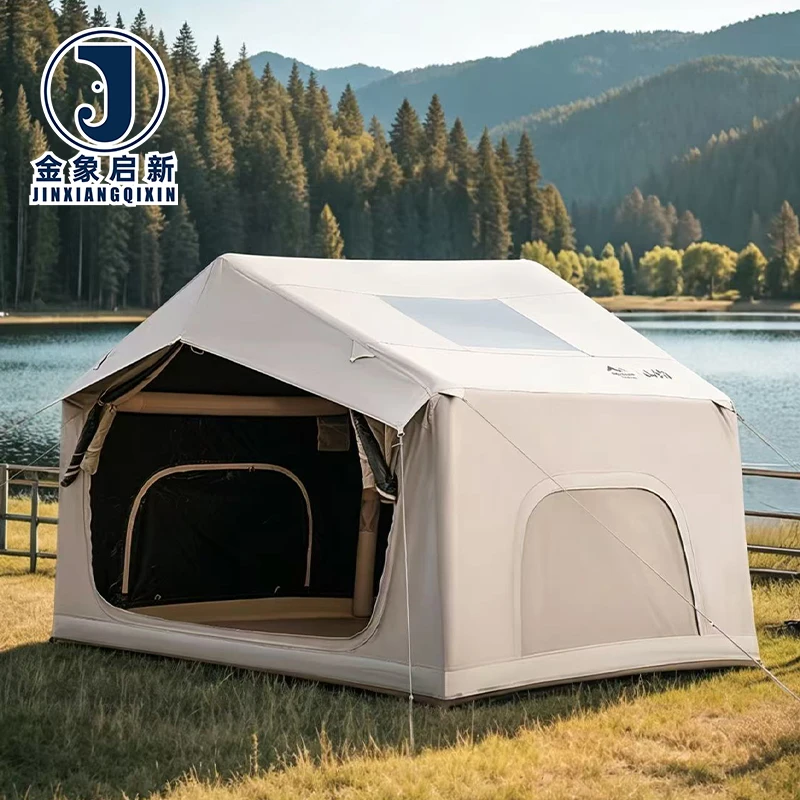
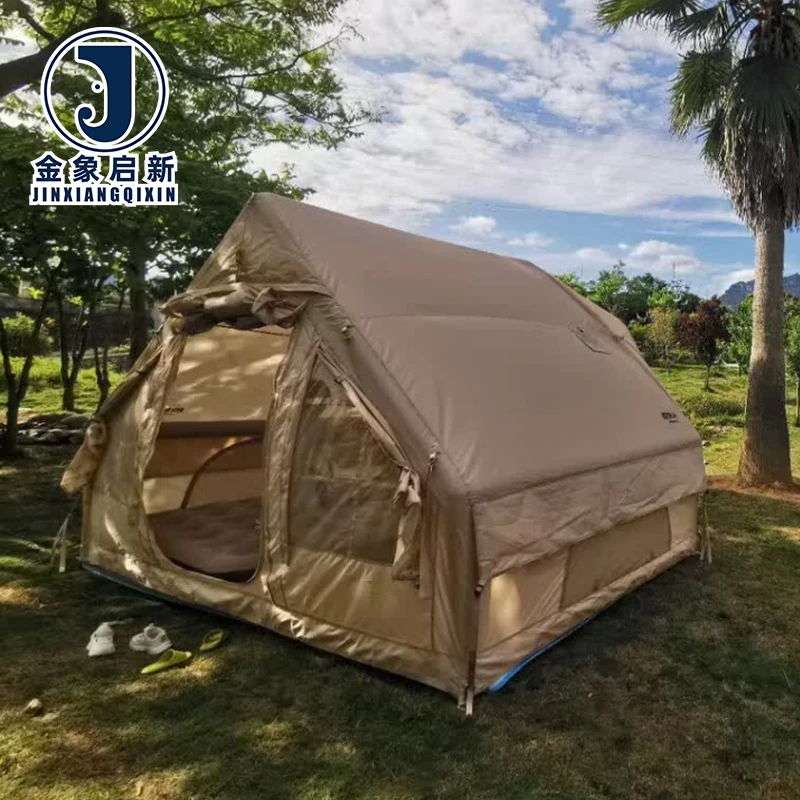
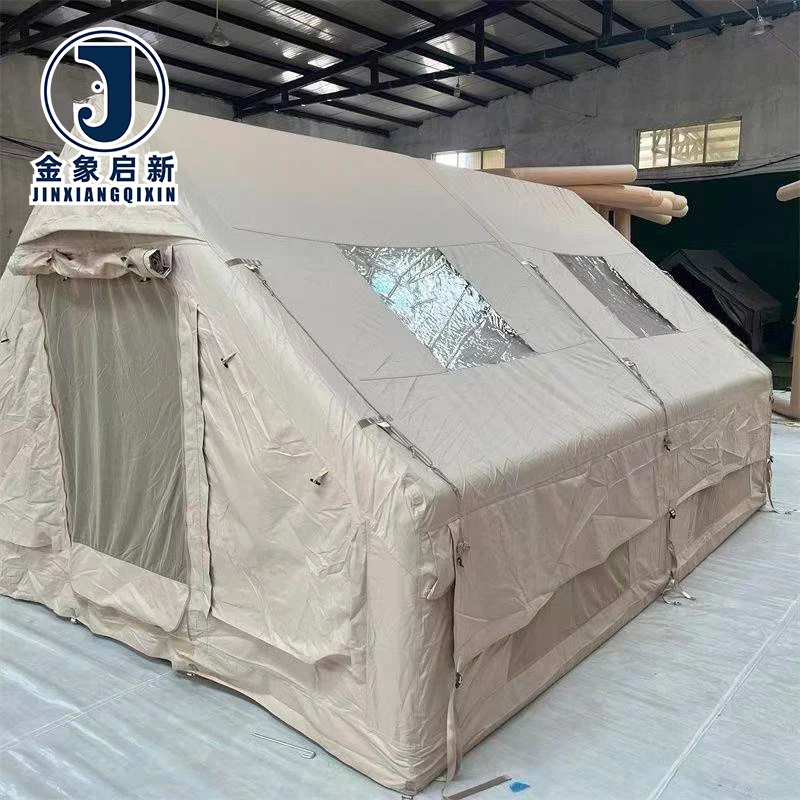
Production Consistency Across Rolls — Every roll of PVC inflatable tent fabric we produce carries batch-specific inflation and water column test documentation, eliminating the compliance and performance gaps that plague unverified membrane supplies.
Technical Specifications
| Parameter | Value |
|---|---|
| Product Type | Inflatable Tent |
| Core Material | PVC tarpaulin |
| Waterproof Rating | >3000mm |
| Design | 4-season, quick automatic opening |
| Construction | Single layer |
| UV Treatment | UV-resistant PVC material (test basis not stated) |
| Flame Retardant Grade | Available in flame retardant grades — confirm the grade required for your market |
| Customization Service | OEM & ODM (sample customization, pattern printing, size adjustment, color customization, logo application) |
| Sample Lead Time | 7-10 business days |
| Bulk Production Lead Time | 15-20 business days |
| Standards | ISO9001, ISO14001, ISO45001, CE |
Application Suitability
| Application | Exposure & Requirement |
|---|---|
| Mining and tunnelling site shelters | Rapid deployment, compliance with fire-retardant and anti-static site regulations, repeated inflation cycles |
| Aviation membrane structures | Certified inflatable membrane fabric, wind load resistance, long-duration inflation stability |
| Construction site temporary offices | Weather exposure across seasons, UV degradation resistance, transport and re-deployment abrasion |
| Commercial event enclosures | Frequent assembly and teardown, surface appearance consistency, branding and print clarity |
| Logistics auxiliary storage | Waterproof integrity under rain and snow, single-layer weight efficiency for transport |
What "Certified" Means When Inflatable Structure Fabric Fails Compliance
Buying custom inflatable structure fabric that arrives without the fire-retardant or anti-static certification your site demands creates immediate project delays and re-procurement costs.
Documentation that matches the material delivered is the only verification that matters at the gate.
Technical buyers on mining, tunnelling, and aviation projects specify inflatable membrane structures for rapid deployment, but the fabric that arrives often carries generic certificates that do not cover the specific flame retardant grade or anti-static threshold the site safety officer requires. The result is failed site inspections, halted installations, and emergency re-sourcing under compressed timelines. We have seen contractors absorb weeks of downtime because the inflatable tent fabric manufacturer could not produce a batch-specific test report aligned to the project’s regulatory framework [NEED_CITE: fire classification standards for temporary inflatable structures in mining environments].
Inflation Testing as the Primary Quality Gate
Every unit of PVC inflatable tent fabric leaving our facility undergoes full inflation testing before shipment, with documented airtightness and pressure retention data recorded against the batch. This is not a spot-check procedure. The 10-person R&D team sets the inflation parameters for each custom inflatable structure fabric order based on the specified size, seam configuration, and valve layout. Airtightness under sustained pressure confirms that welded seams hold across the entire structure, not just at sample stage. For commercial shelters deployed in remote mining sites or aviation hangars, a structure that loses pressure after hours of inflation is a safety liability, not a minor inconvenience.
Temperature Resilience Across Deployment Environments
The 4-season PVC construction maintains structural integrity across high and low temperature environments, which is critical for inflatable tent fabric deployed in desert mining camps or alpine tunnelling projects. Single-layer design reduces overall weight for transport and rapid deployment while the PVC tarpaulin core resists the thermal expansion and contraction cycles that cause delamination in multi-layer alternatives. UV-resistant PVC material addresses prolonged sun exposure on outdoor event enclosures and construction site shelters, though buyers specifying long-duration outdoor deployment should confirm the UV test basis applicable to their target climate zone [NEED_CITE: UV degradation test methods for PVC coated fabrics].
Reading the Specification Sheet Beyond the Surface
The >3000mm waterproof rating verified through batch-specific water column testing tells you how the PVC tarpaulin performs under direct hydrostatic pressure, which matters when inflatable shelters sit in standing water or driving rain on construction sites. Waterproof rating alone, however, does not predict seam behaviour under inflation load. The relationship between base fabric denier, weave density, and coating weight determines whether the fabric stretches evenly under pressure or develops stress concentrations at welded joints. Single-layer PVC construction reduces the risk of inter-layer delamination that multi-layer laminates experience after repeated inflation and deflation cycles, but it also means the coating adhesion must be precise — too thin and the fabric abrades at contact points, too thick and it becomes rigid and difficult to fold for transport.
The Cost of Underspecified Inflatable Membrane Fabric
When inflatable structure fabric is sourced on price alone, the failures appear in predictable patterns. Welded seams split at the points of highest flex stress during inflation, typically where the structure curves or where valve fittings concentrate load. Fabric that lacks verified flame retardant documentation gets rejected at the site gate, forcing the contractor to source replacement material under emergency timelines and premium logistics costs. Colour variation between rolls in the same order becomes visible once panels are installed side by side on a commercial event enclosure, requiring partial teardown and panel replacement. These are not edge cases — they are recurring outcomes when the inflatable tent fabric manufacturer does not control coating weight, seam parameters, and batch consistency from raw material through to dispatch [NEED_CITE: common failure modes in welded PVC inflatable structures].
Why Procurement Teams Source Inflatable Fabric Here
Nearly 30 years of coated fabric process control means coating weight and adhesion are managed at every production stage, not left to supplier defaults. Three full production lines and 36 sets of professional equipment give us the capacity to deliver bulk custom inflatable structure fabric orders on schedule without subcontracting coating operations. The 10-person R&D team handles material selection, pattern printing, custom sizing, and sample development in-house, so the sample you approve is produced on the same equipment as the bulk order. Dedicated QA and QC staff conduct 100% pre-shipment inspection with inflation testing, meaning every unit ships with documented airtightness data rather than a generic pass certificate. ISO9001, ISO14001, ISO45001, and CE certifications are provided as part of the order documentation package, not as marketing claims on a website.
Documentation & Verification
- Batch-specific quality inspection report with waterproof testing and tensile strength data for each inflatable tent fabric order
- ISO9001, ISO14001, ISO45001, and CE certificates included with every commercial shipment
- Pre-shipment inflation test records documenting airtightness and pressure retention per unit
- Material specification sheet stating PVC coating type, base fabric reference, and colour code
- Third-party testing at accredited laboratories available prior to production commencement
- Certificate of origin and customs documentation supporting international dispatch
Fabrication, Handling & Storage
- Heat welding parameters must match the single-layer PVC construction to avoid burn-through at seam intersections
- Store rolled inflatable tent fabric upright on pallets to prevent permanent creasing across the coating surface
- Use PVC-compatible cleaners only — solvent-based products degrade the UV-resistant coating layer
- Allow fabric to reach ambient temperature before unfolding in cold conditions to prevent low-temperature cracking
- Reinforce valve and fitting attachment points with additional welded patches to distribute inflation load
- Cut patterns with sealed edges to prevent moisture ingress into the base fabric weave at raw edges
Starting Your Inflatable Fabric Specification
Provide the deployment environment and exposure conditions — whether the inflatable structure will sit in a mining site, aviation facility, or outdoor event venue — along with the fire-retardant or anti-static grade your site regulations require. Specify the target dimensions, colour references, and whether you need pattern printing or logo application. Confirm if you require finished inflatable units or roll stock for your own fabrication line, and whether a sample approval stage is needed before bulk production begins.
Frequently Asked Questions
Q: What fire-retardant grades are available for inflatable structure fabric used on mining and aviation sites?
A: Our inflatable tent fabric is available in flame retardant grades suitable for mining, tunnelling, and aviation applications. The specific grade required depends on your site’s regulatory framework and the target market’s fire safety standards. Confirm the classification your project demands — such as the applicable DIN, NFPA, or local building code reference — and we will provide the corresponding test documentation with your order.
Q: How is UV resistance verified for inflatable tent fabric used in extended outdoor deployments?
A: The PVC material carries UV-resistant treatment, but the test basis for quantified outdoor exposure duration is not stated in our standard specification. For projects requiring documented UV performance data, we arrange third-party testing at accredited laboratories before production commences. Share your deployment climate and expected exposure duration so we can align the test protocol accordingly.
Q: What are the minimum order quantities for custom-sized inflatable structures with OEM printing?
A: OEM and ODM customization covers sample development, pattern printing, size adjustment, colour matching, and logo application. Minimum order quantities vary based on the complexity of the custom specification and the production line allocation required. Submit your target dimensions, print artwork, and colour references so we can provide a precise quotation with lead time and minimums.
Q: How do you ensure welded seam integrity under inflation pressure?
A: Every inflatable unit undergoes full inflation testing before shipment, with airtightness and pressure retention documented per unit. Welded seams are the most common failure point in inflatable structures under sustained pressure. Our QA team inspects seam integrity at each production stage and sets welding parameters specific to the single-layer PVC construction to ensure seams hold under operational inflation loads.
Q: Is anti-static certification available for inflatable fabric used in mining and tunnelling?
A: Anti-static treatment and certification are available for inflatable structure fabric destined for mining and tunnelling environments where static discharge poses a safety risk. Specify the anti-static standard your project requires during the inquiry stage so the treatment can be integrated into the coating formulation and the corresponding test report included in your shipment documentation.