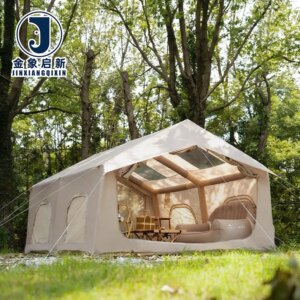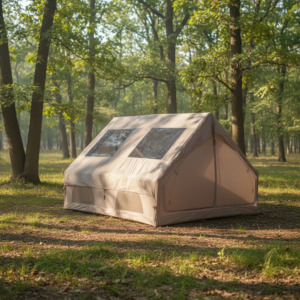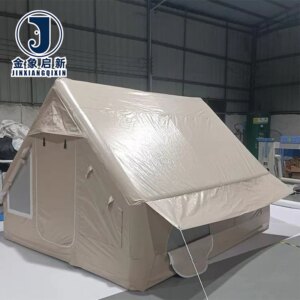

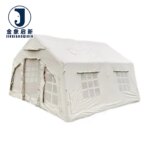
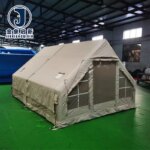
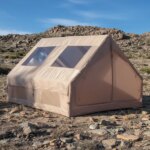

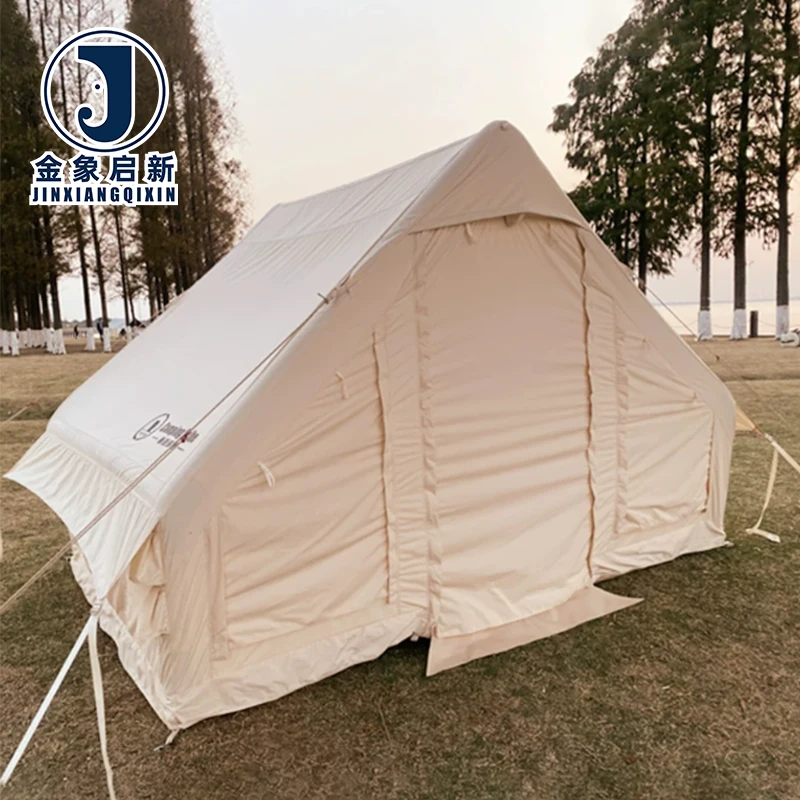
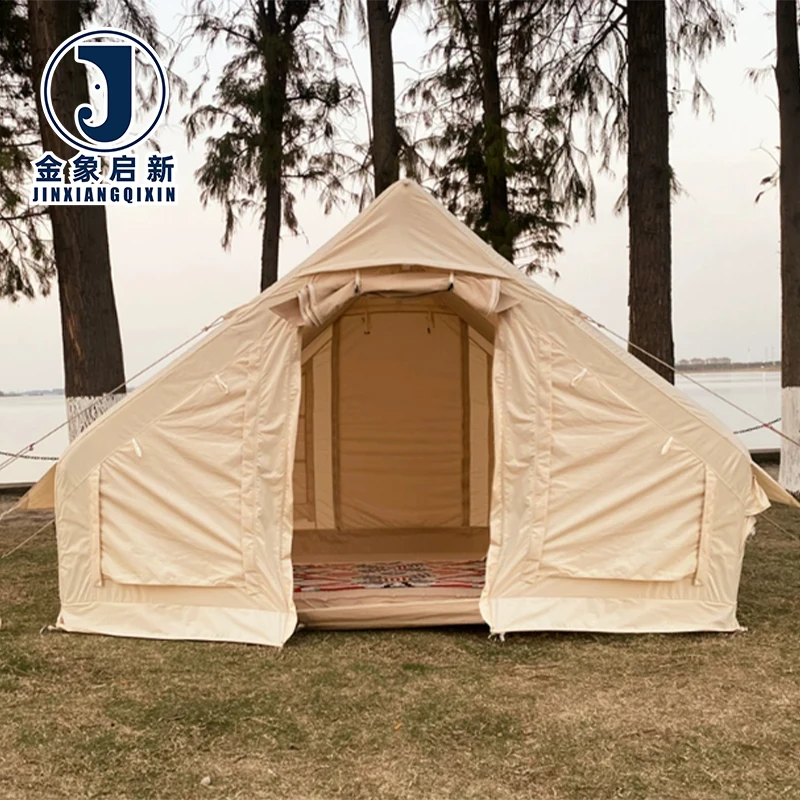
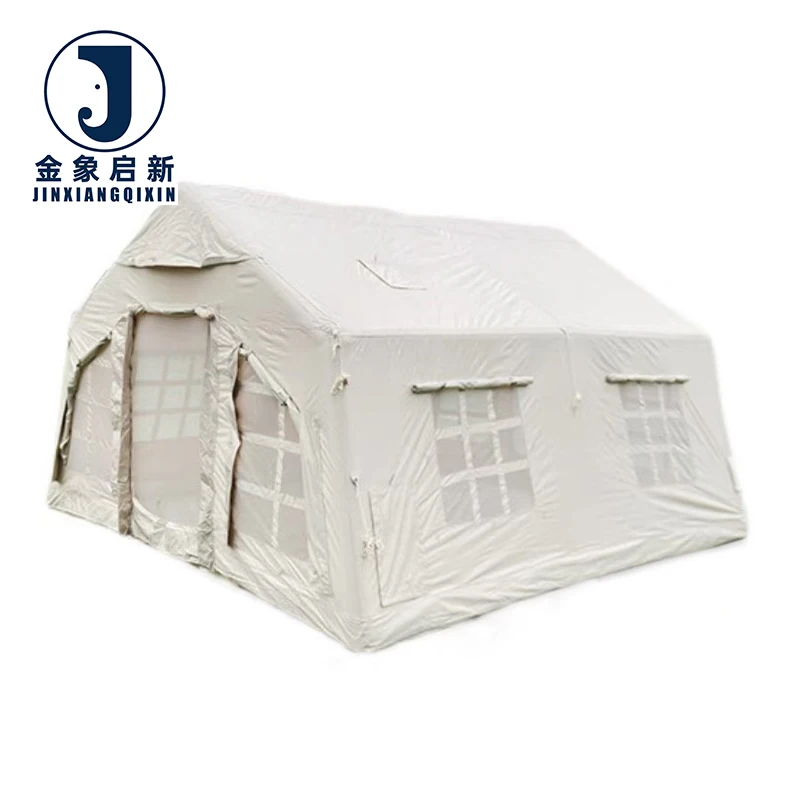
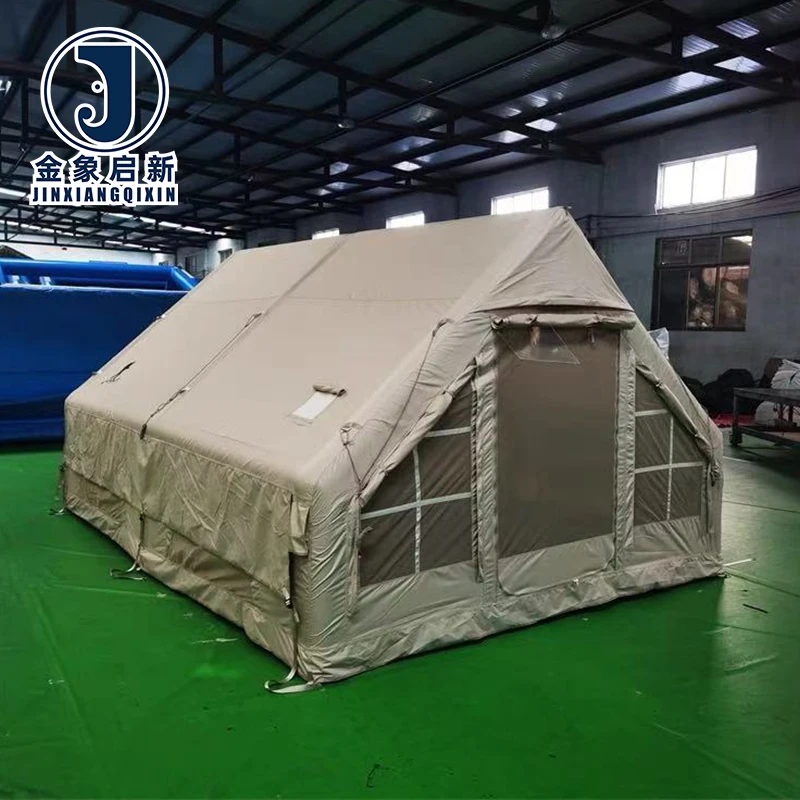
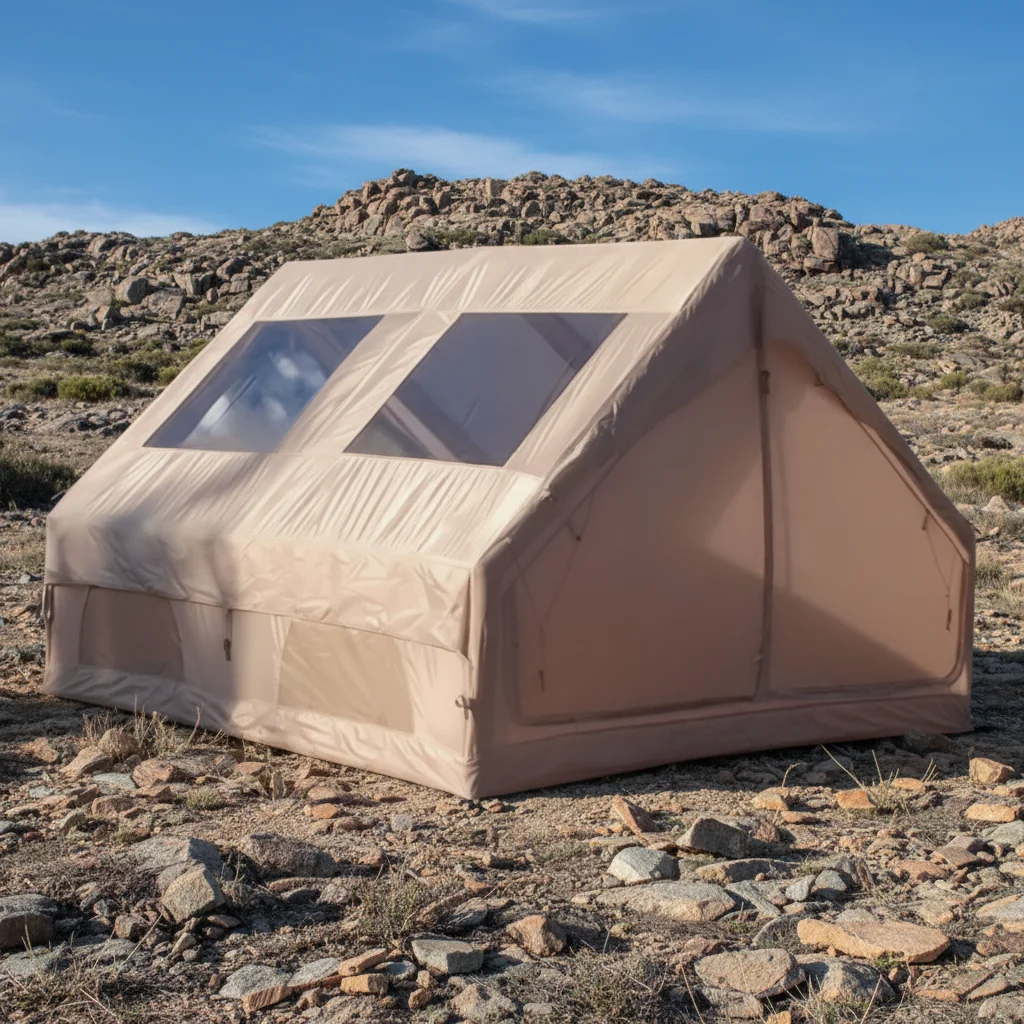

Coated Fabric Depth — Nearly 30 years of PVC coating process control ensures inflatable tent fabric arrives with consistent adhesion, verified weight, and full batch traceability for technical structure projects.
Technical Specifications
| Parameter | Value |
|---|---|
| Product Type | PVC Inflatable Tent |
| Core Material | PVC Tarpaulin |
| Product Forms | Inflatable Camping Tent |
| Capacity | 2–8 Person |
| Season Rating | 4-Season |
| Construction | Single-layer |
| Opening Mechanism | Quick Automatic Opening |
| Key Features | Waterproof, UV-Resistant, Tear-Resistant |
| Fire Retardant / Anti-Static | Available in certified grades — confirm the grade required for your market |
| Customization | OEM & ODM: sample customization, pattern printing, size adjustments, material thickness modifications |
| Certifications | ISO 9001, ISO 14001, ISO 45001, CE |
Application Suitability
| Application | Exposure & Requirement |
|---|---|
| Mining and tunnelling site shelters | Constant contact with dust, moisture, and mechanical abrasion; fire-retardant compliance often mandated on-site |
| Aviation ground support membrane structures | Exposure to jet fuel vapour, wind loading, and strict anti-static requirements for ground operations |
| Large-scale outdoor events and exhibitions | Rapid deployment cycles, UV exposure, crowd safety standards, and multi-season weather swings |
| Emergency response and disaster relief | Fast inflation without specialist tools, waterproof integrity, and transport durability across rough terrain |
| Commercial camping and glamping grounds | Repeated inflation and deflation, guest safety expectations, and long-term outdoor weathering |
What Happens When Inflatable Tent Fabric Lacks a Verified Fire Rating
A site inspector rejects the entire structure if the fabric certificate does not match the jurisdiction’s fire classification — regardless of how well the tent performs in every other respect.
Commercial and industrial procurement teams frequently specify fire-retardant inflatable tent fabric on paper, only to discover at delivery that the accompanying documentation references a generic statement rather than a test report tied to a recognised standard. The result is a stalled project, idle crews, and an urgent resubmission cycle that compresses the deployment timeline. For mining, aviation, and public-event sites, the compliance gap is not a paperwork inconvenience — it is a hard stop [NEED_CITE: fire classification requirements for temporary membrane structures].
Batch-to-batch consistency compounds the problem. A contractor may receive a first shipment that passes site inspection, then a second roll that varies in coating formulation and fails the same test. Without full traceability from coating line to dispatch, the buyer absorbs the rework cost and the schedule penalty.
Airflow, Inflation Pressure, and Fabric Behaviour Under Load
Inflatable structures depend on continuous internal pressure to maintain their geometry. The PVC tarpaulin used for this inflatable tent fabric must resist creep under sustained load while remaining flexible enough for rapid inflation. When the base fabric denier and weave density are matched to the expected internal pressure, the structure holds its shape without over-stressing the welded seams.
Inflation cycles also introduce repeated flex at every panel junction. Coated fabric with poor adhesion between the PVC layer and the base textile will delaminate at these flex points long before the coating itself degrades. The inflatable tent fabric production process controls coating adhesion through calibrated temperature and pressure at every lamination stage.
Weld Integrity and Seam Engineering for Inflatable Structures
Unlike stitched tent panels, inflatable chambers rely entirely on heat-welded seams to contain air pressure. A weld that fails under load compromises the entire structure in seconds. The thermal profile during welding must match the specific PVC formulation and coating thickness of the inflatable tent fabric being joined.
Our 10-technician R&D team establishes the weld parameters — temperature, dwell time, and pressure — for each material variant before production begins [NEED_CITE: heat welding parameters for PVC coated fabrics]. Pre-production weld samples undergo peel and shear testing so that the fabrication team works from verified settings, not assumptions. This step is critical when the inflatable tent fabric carries fire-retardant or anti-static additives, as these compounds can shift the optimal weld window.
Reading the Specification Sheet Beyond the Headline Weight
GSM alone tells a buyer very little about how inflatable tent fabric will perform under inflation pressure. A heavier coating applied to a low-density base fabric may register a high GSM while offering limited tear resistance. The denier of the yarn and the warp-weft count per centimetre determine how effectively the base textile distributes load and resists tear propagation once a puncture occurs.
Coating method matters equally. Knife-coated fabrics typically deliver stronger adhesion between PVC and base cloth, which translates directly to better weld performance and longer service life under repeated inflation cycles. Surface finish — whether glossy or matte — affects cleanliness in field conditions and the adhesion of printed branding applied after fabrication. Anti-UV treatment, where specified, must be confirmed by test data rather than a general claim, since UV degradation manifests first as surface chalking and loss of flexibility before any visible tearing occurs.
The Cost of Specifying the Wrong Inflatable Tent Fabric Grade
Selecting a lower-grade material to reduce unit cost often surfaces as a far larger expense during installation or site inspection. A fabric that lacks the required fire-retardant certification halts the project until replacement material arrives — and the original stock becomes unsaleable inventory [NEED_CITE: site rejection costs for non-compliant temporary structures].
Colour variation between rolls in a single order becomes visible the moment panels are inflated side by side, forcing selective replacement or an entire reorder. Weld failures traced to incorrect thermal settings for a given coating thickness cause chambers to deflate mid-use, creating safety incidents and liability exposure. Each of these outcomes is avoidable when the buyer verifies material documentation before committing to production.
Why Procurement Teams Source Inflatable Tent Fabric Here
Process control starts at the coating line. Three full production lines and 36 sets of professional processing equipment allow parallel runs with dedicated quality checkpoints, so bulk orders maintain roll-to-roll consistency.
Every batch passes through a dedicated QA and QC inspection sequence before packing. The pre-shipment record covers weight verification, coating adhesion, and visual defect screening — documentation that travels with the shipment.
The 10-person R&D team handles material selection, thickness adjustment, and pattern printing proofs, delivering custom samples within days rather than weeks. ISO 9001, ISO 14001, ISO 45001, and CE certifications underpin the management systems behind each order.
Documentation & Verification
- Material specification sheet stating base fabric denier, coating type, and verified GSM for each roll
- Fire-retardant and anti-static test reports matched to the specific batch and grade supplied
- Pre-shipment inspection record covering weight, coating adhesion, and surface defect count
- ISO and CE certificates current at the date of dispatch
- Roll packing list with individual roll weights and dimensions for container load planning
- Certificate of origin and customs documentation aligned to destination country requirements
Fabrication, Handling & Storage
- Set heat-weld temperature and dwell time to match the specific PVC tarpaulin coating thickness of each roll before joining inflatable chambers
- Reinforce tie-down and anchor points with additional welded patches to distribute load across the single-layer construction
- Store rolls horizontally on pallets in a dry, shaded area to prevent compression marks on the PVC tarpaulin coating surface
- Allow cold-stored inflatable tent fabric to reach ambient temperature before unrolling to avoid coating cracking during inflation
- Use only PVC-compatible cleaners to preserve the surface finish and any applied UV-resistant or fire-retardant treatment
- Plan panel cutting layout against roll width to minimise offcuts and maintain pattern alignment across welded seams
Preparing Your Inflatable Tent Fabric Inquiry
Provide the deployment environment — mining site, aviation ground operation, commercial event — along with the specific fire-retardant or anti-static classification your jurisdiction requires. Specify the tent dimensions, target capacity within the 2–8 person range, and whether you need OEM pattern printing or size adjustments.
Indicate your annual volume and preferred roll or finished-unit delivery format. Confirming these details at inquiry stage allows the team to return a matched specification and sample for approval before production begins.
Frequently Asked Questions
Q: Which fire-retardant grades are available, and how do they align with different market regulations?
A: The inflatable tent fabric can be produced in fire-retardant grades aligned to standards commonly required across European, North American, and Asia-Pacific jurisdictions. Provide the specific classification your site authority or insurance provider demands, and the team will supply the corresponding test report with your shipment documentation.
Q: Can the fabric meet anti-static requirements for mining or aviation ground operations?
A: Anti-static treatment is available for inflatable tent fabric destined for environments where static discharge poses a safety risk. Share the surface resistance range or test standard specified by your site safety protocol so that the correct formulation is applied and verified before dispatch.
Q: How is weld strength ensured on inflatable chambers made from this PVC tarpaulin?
A: Weld parameters are established through pre-production peel and shear tests matched to the exact coating thickness and additive package of the fabric batch. The 10-person R&D team documents the verified thermal profile, and QA staff inspect weld samples during each production run.
Q: What is the process for customising dimensions, thickness, or branding before committing to a bulk order?
A: Submit your required dimensions, material thickness preference, and any pattern printing artwork. The team develops a physical sample covering the full specification, which you review and approve before the production run is scheduled.
Q: How is UV-resistant performance substantiated for long-term outdoor deployment?
A: Where UV-resistant treatment is specified, the inflatable tent fabric is accompanied by a test report detailing the exposure methodology and results. Provide the climate zone and expected deployment duration so the appropriate treatment level is recommended and documented.