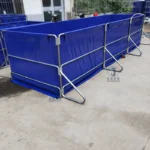

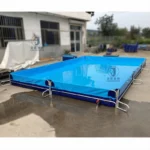
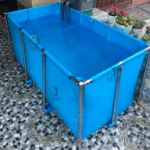

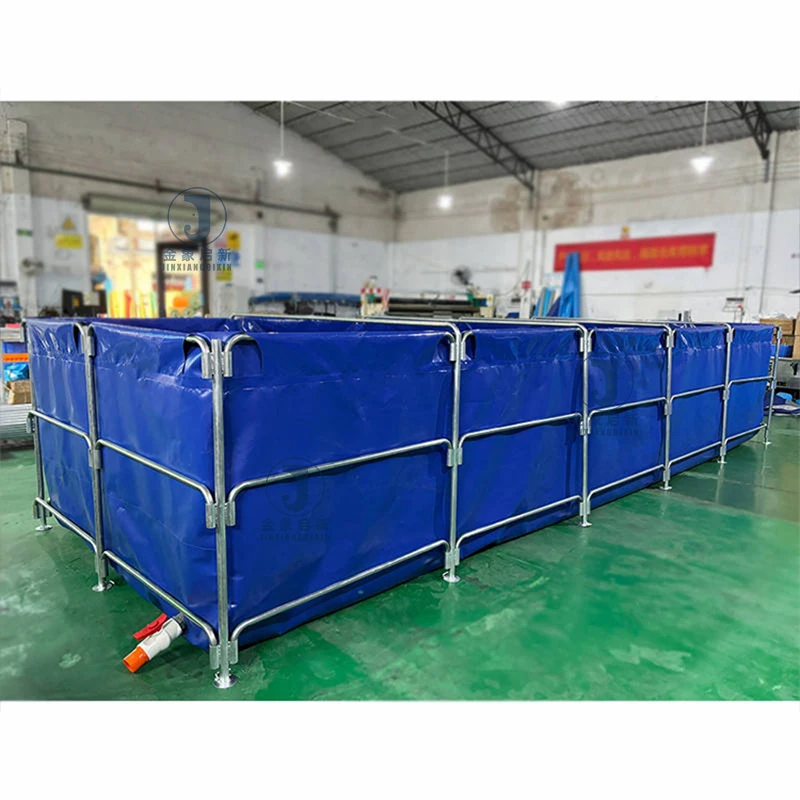
Deep coating process control — Every PVC tarpaulin fish pond liner roll is produced on lines with strict coating-weight monitoring, ensuring the stated GSM and adhesion performance match across your entire order.
Technical Specifications
| Parameter | Value |
|---|---|
| Product Type | PVC Tarpaulin Fish Pond Liner |
| Base Fabric Yarn Count | 500D×840D / 500D×1000D / 1000D×1000D / 1000D×1300D / 1300D×1300D / 1000D×2000D |
| Weight Range | 350 – 900 g/m² |
| Thickness Range | 0.29 mm – 0.65 mm |
| Density (Mesh Count) | 30×19 / 20×20 / 30×15 |
| Tensile Strength (Warp) | 1650 – 3900 N |
| Tensile Strength (Weft) | 1600 – 3500 N |
| Coating Material | PVC & Polyester |
| Key Features | Water resistant, waterproof, flame retardant (grade not stated in source), anti-UV (test basis not stated in source) |
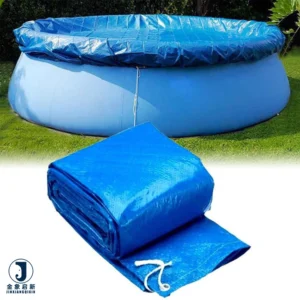
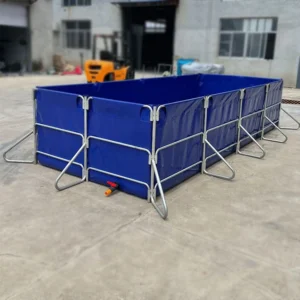
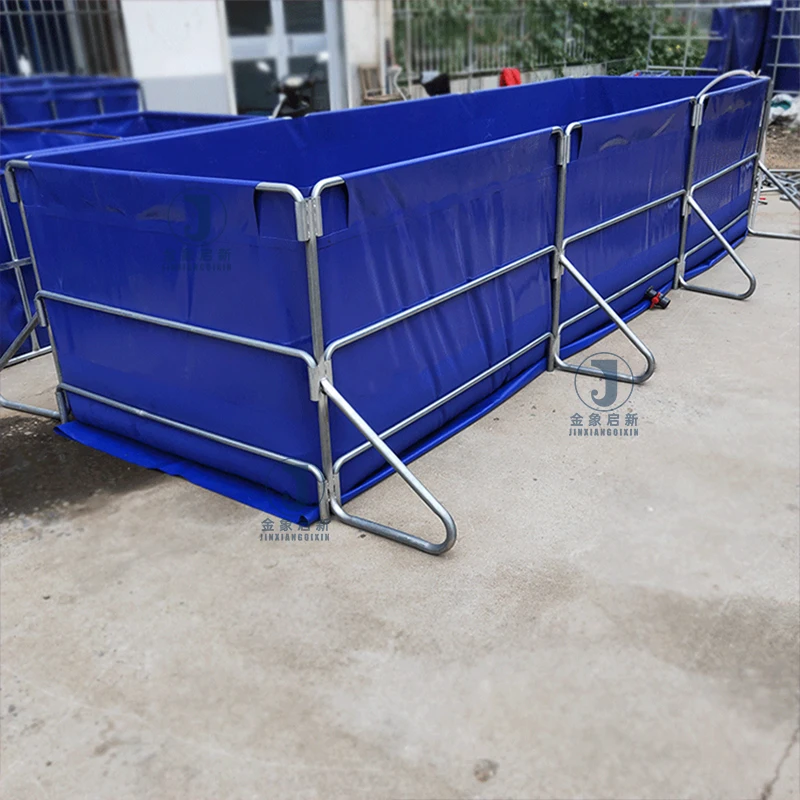
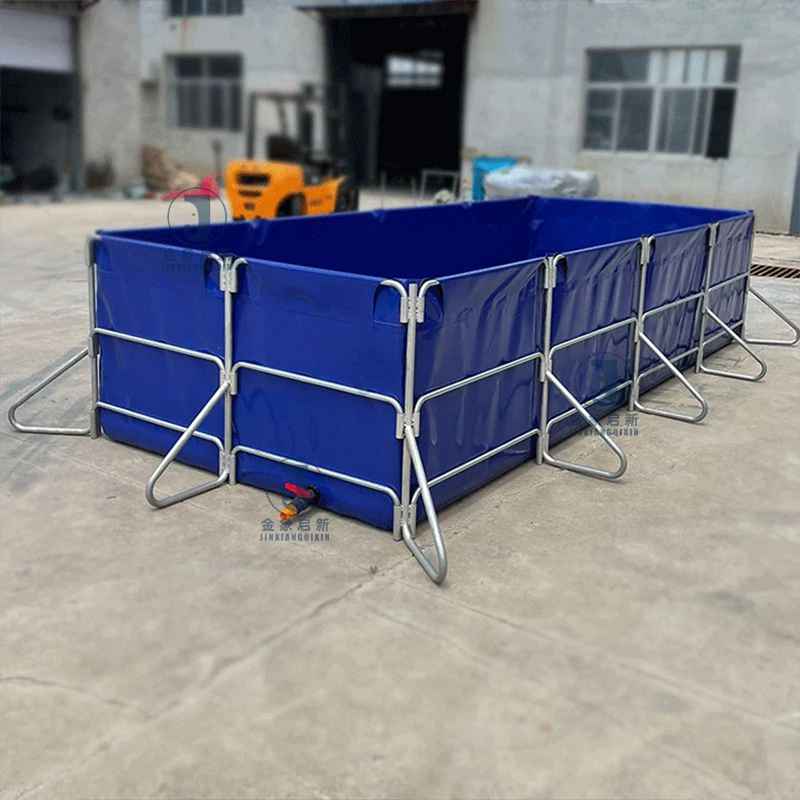
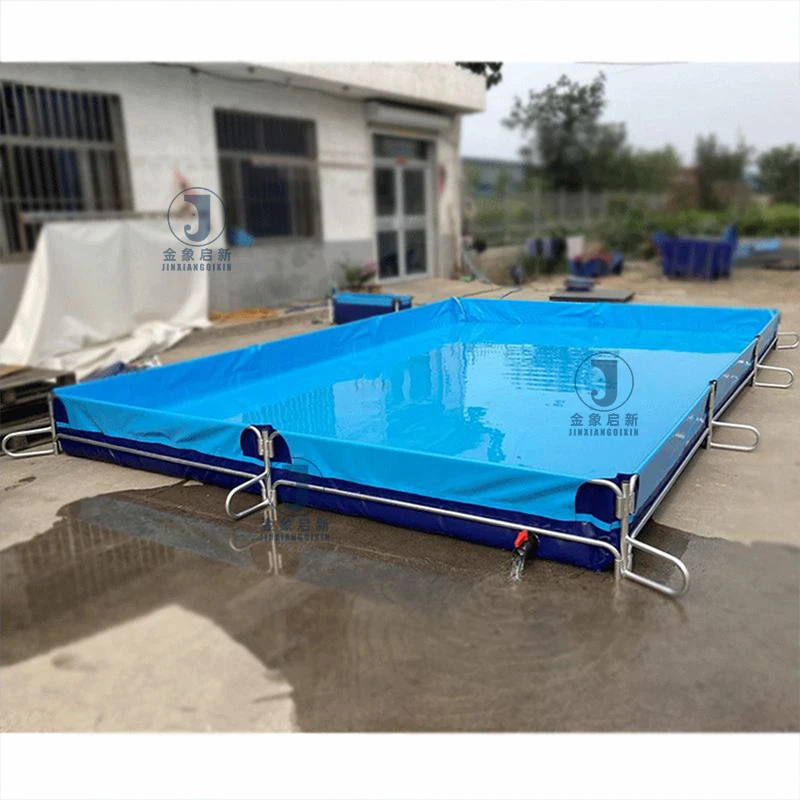
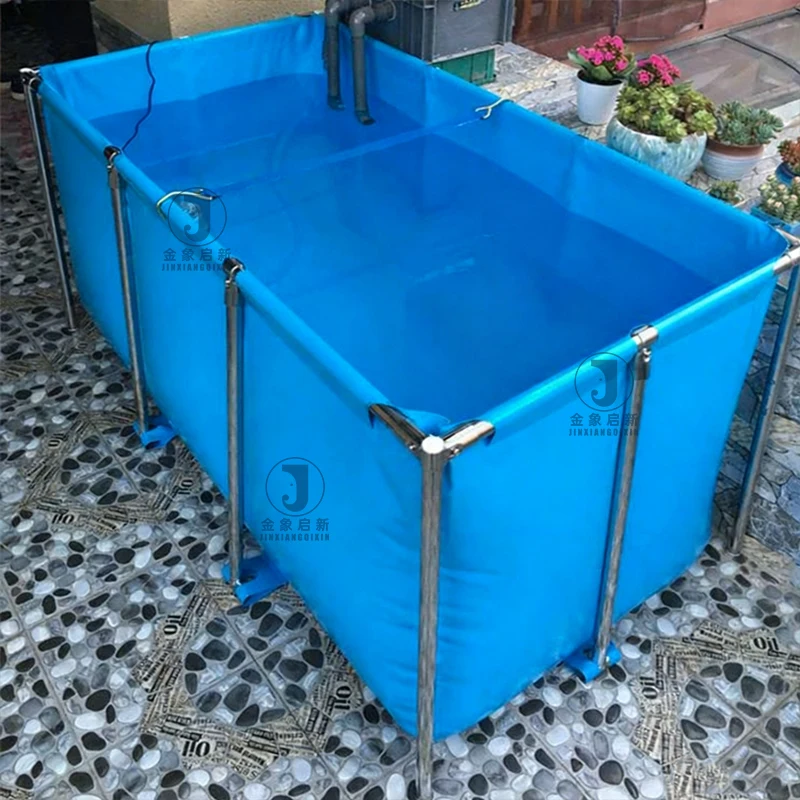
| Shape Options | Foldable, Circular, Rectangular |
| Package Options | Roll packing, bale packing, carton |
Application Suitability
| Application | Exposure & Requirement |
|---|---|
| Commercial fish and shrimp ponds | Permanent water immersion, hydrostatic pressure, biological and algal contact, puncture risk from substrate |
| Agricultural irrigation reservoirs | UV exposure, seasonal temperature swings, mechanical stress from pumping equipment |
| Water storage tanks and livestock containment | Continuous water contact, abrasion from animal movement, chemical exposure from feed and waste |
| Specialist membrane structures | Certified fire-retardant compliance, dimensional stability under tension, welded seam integrity |
Why Specified GSM Must Be Verified Against Actual Roll Weight
The PVC tarpaulin fish pond liner you receive must weigh exactly what the quotation states, roll by roll.
Procurement teams regularly face a gap between the GSM written on the purchase order and the material that arrives on site. A liner that is lighter than specified delivers lower tensile strength and reduced puncture resistance — both critical when a pond is filled to capacity. In aquaculture, a seam or panel failure means lost stock, contaminated water, and emergency repairs under time pressure. [NEED_CITE: tensile and tear test methods for coated fabrics per ISO 1421] The only reliable defence is a documented pre-shipment inspection that checks weight and thickness per roll before the container is sealed.
Fire-Retardant and Anti-Static Compliance for Regulated Sites
Ventilation duct or liner fabric supplied without the fire-retardant or anti-static certification a site requires is not just a paperwork gap — it can halt installation. Our compliant grades ship with the test documentation your inspector needs. For aquaculture and specialist water containment projects, available flame retardant grades can be confirmed against your local building or site safety code before production begins. Request the specific test report for the PVC tarpaulin fish pond liner grade you are specifying so compliance is verified in advance.
Ventilation, Membrane and Inflatable Structure Fabric
Mining, tunnelling and aviation ventilation systems demand fabric that meets strict fire and static-dissipation thresholds. The same coating technology extends to membrane structures and inflatable containment where dimensional stability and welded seam strength are non-negotiable. Base fabric denier and weave density are matched to the structural load, while the PVC coating weight is controlled to maintain flexibility at the operating temperature range of the installation. [NEED_CITE: DIN 4102 fire classification for building materials]
How Yarn Count, Density and Coating Weight Interact
The tensile and tear performance of a PVC tarpaulin fish pond liner is not set by GSM alone. The base fabric yarn count — ranging from 500D×840D to 1000D×2000D across the available grades — determines how much load individual yarns carry before breaking. Mesh density, whether 30×19 or 20×20, governs how that load is distributed across the weave. Coating weight then adds puncture resistance and waterproof integrity, but it also adds stiffness. A 900 GSM liner with a 1000D×2000D base achieves warp tensile strength up to 3900 N, making it suited to large-span ponds under high hydrostatic pressure, while a 350 GSM option with a 500D×840D base remains flexible enough for foldable tank applications. Choosing the correct combination depends on pond depth, water volume, substrate conditions and whether the liner will be permanently installed or seasonally deployed.
The Hidden Cost of Specifying the Wrong Liner Grade
Selecting a pond liner grade that is too light for the water depth results in panels that stretch under hydrostatic load, stressing welded seams beyond their peel strength. Batch-to-batch colour variation across rolls becomes visible once adjacent panels are installed, forcing unplanned replacement of entire sections. When flame retardant treatment is claimed but no test report accompanies the shipment, site inspectors can reject the installation — delaying the project and incurring re-certification costs. [NEED_CITE: PVC coated fabric weld peel strength and seam failure modes] Welded seams are typically the first failure point; if the hot-air temperature and feed speed are not matched to the specific coating weight and thickness, the seam degrades before the fabric body does.
Why Source This Fabric Through Jinxiang
Nearly three decades of focused coated-fabric production means process parameters — coating temperature, knife gap, curing time — are locked in for every grade. Three full production lines and 36 sets of professional equipment support bulk roll output while maintaining delivery schedules. The 10-person R&D team handles material selection, sample development and custom sizing for pond liner projects, delivering samples within days rather than weeks. A dedicated QA/QC protocol inspects every roll before dispatch, catching GSM deviations, coating defects and colour drift before they reach your site.
Documentation & Verification
- Material specification sheet listing exact GSM, base fabric denier, coating weight and thickness per grade
- Test reports for flame retardant and anti-UV grades applicable to your installation requirements
- Pre-shipment inspection record with roll-by-roll weight and visual check before container loading
- Certificate of origin and full customs documentation for international aquaculture and construction shipments
Fabrication, Handling & Storage
- Hot-air welding parameters must be matched to the specific 350–900 GSM coating weight to avoid seam delamination
- Store rolls horizontally on pallets to prevent permanent creasing in the PVC coating layer
- Allow folded liners to acclimatise and fully flatten before welding, especially in low-temperature conditions
- Use compatible PVC adhesive or patch material for field repairs on the polyester base fabric
- Cut patterns should account for the fabric’s dimensional stability to maximise roll utilisation and minimise weld seams
What to Include in Your Enquiry
Specify the pond dimensions, water depth and substrate type so the correct GSM and base fabric denier can be recommended. State any fire-retardant or anti-static compliance grades required by your local regulations. Indicate whether you need liner fabric supplied by the roll or pre-cut to circular or rectangular dimensions with welded seams.
Frequently Asked Questions
Q: How do I verify the GSM of pond liner fabric on arrival against the quotation?
A: Every roll undergoes a weight and thickness check during pre-shipment inspection, and the results are recorded in the inspection report shipped with your order. You can cross-reference these figures against the material specification sheet provided with the documentation package.
Q: What fire-retardant grade is required for aquaculture installations in my market?
A: Requirements vary by region and application. Share your local building or site safety code with our team before ordering, and we will confirm which flame retardant grades are available with supporting test reports that satisfy your inspector.
Q: How is batch-to-batch colour consistency controlled across multiple rolls?
A: Colour matching is monitored at the coating stage, and rolls destined for the same installation are grouped for a side-by-side visual check during the pre-shipment inspection to flag any visible variation before dispatch.
Q: What hot-air welding methods are recommended for joining PVC pond liner panels on site?
A: Hot-air welding temperature and feed speed must be calibrated to the specific GSM and coating thickness of the liner grade you are using. Request our welding guideline sheet for the exact grade ordered to ensure seam peel strength matches the fabric body.
Q: Can custom pond dimensions be cut and hemmed with reinforced eyelets before shipment?
A: Yes. Circular, rectangular and foldable shapes can be fabricated to your specified dimensions. Reinforced hems and eyelet placement are configured based on the tie-down and anchoring method used at your installation site.