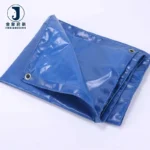
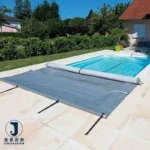
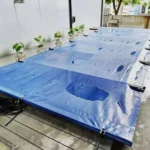
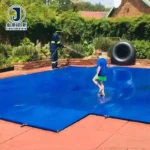
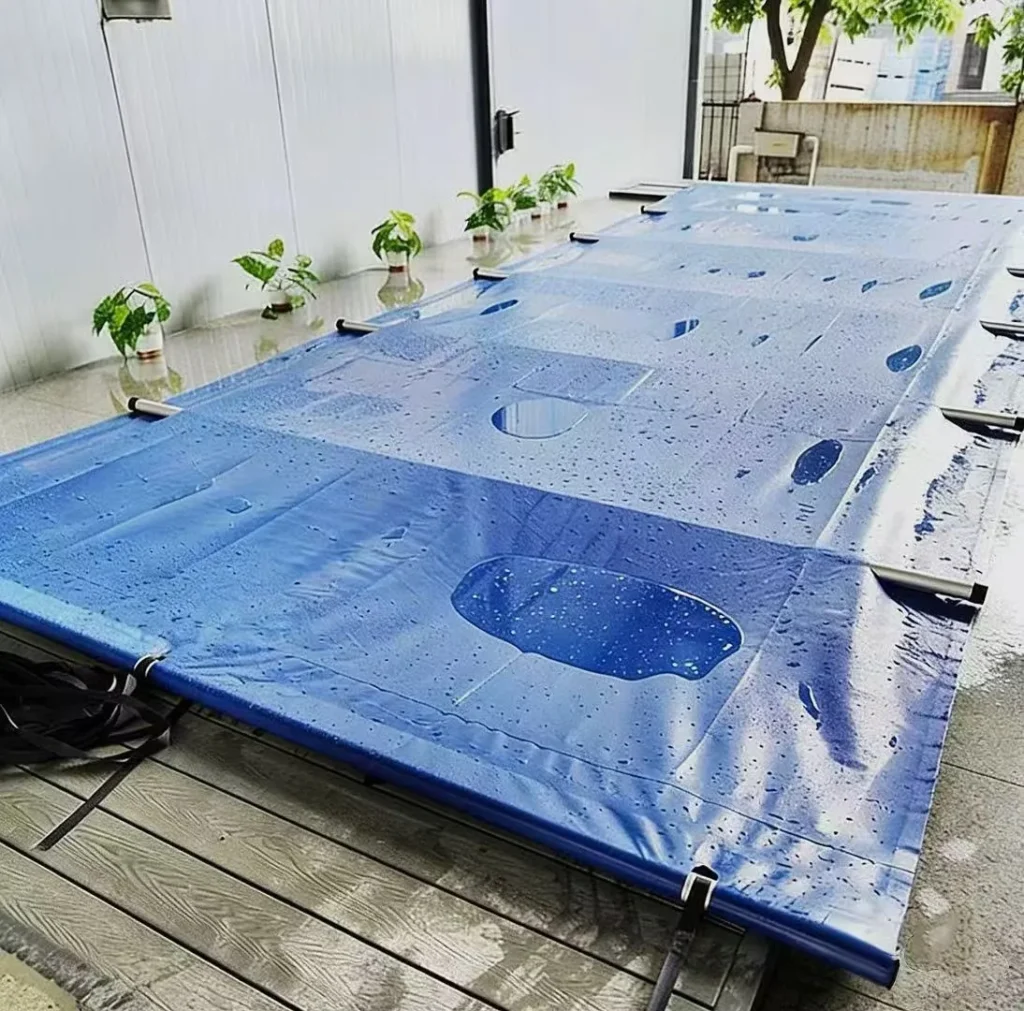
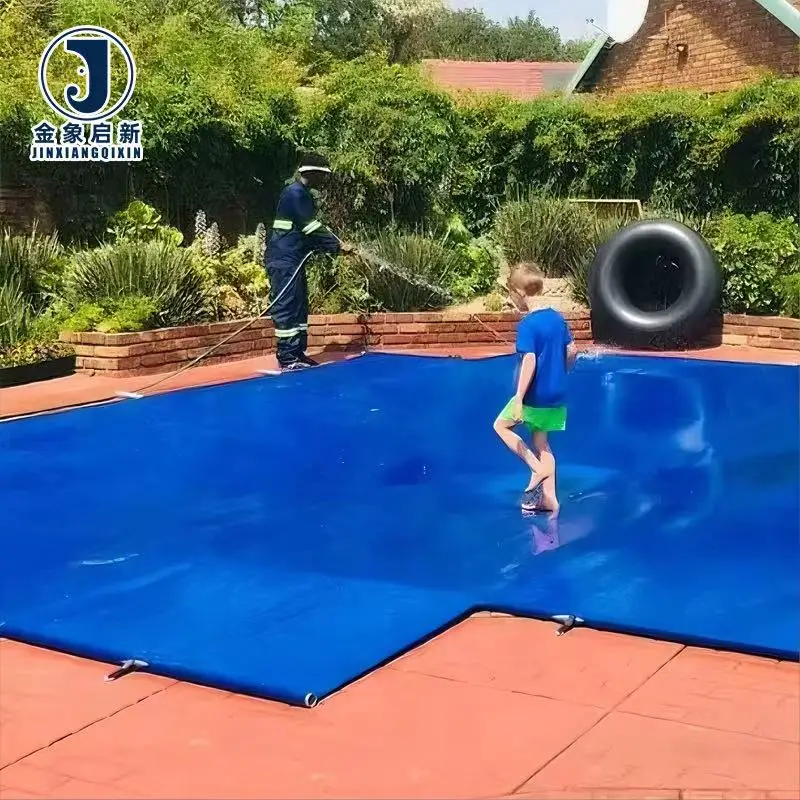
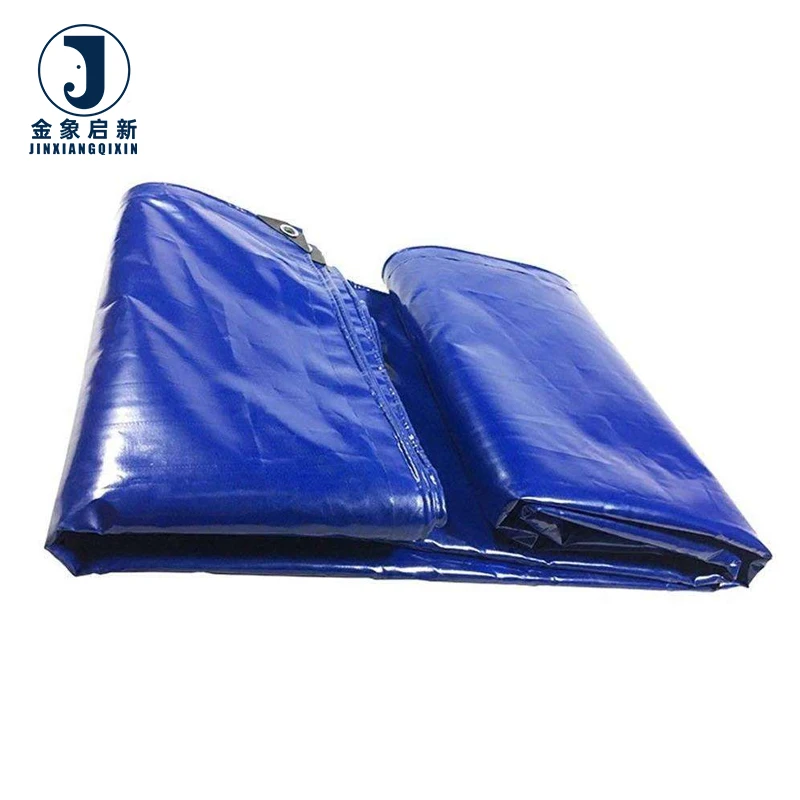
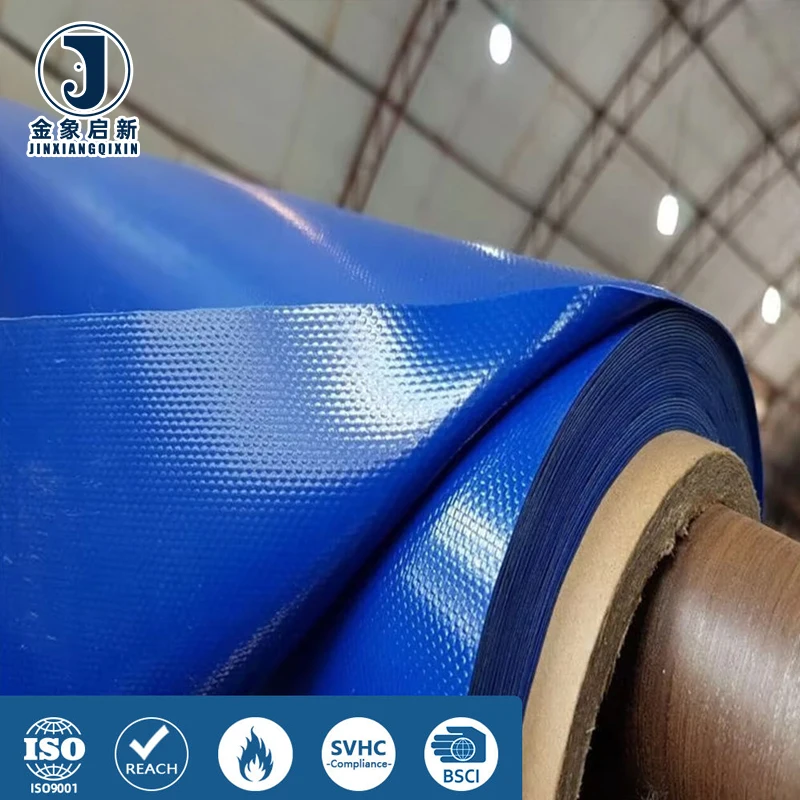
Coated Fabric Specialists — three full production lines and dedicated QA verify every roll of pool cover material against its stated specification before it leaves the factory.
Technical Specifications
| Parameter | Value |
|---|---|
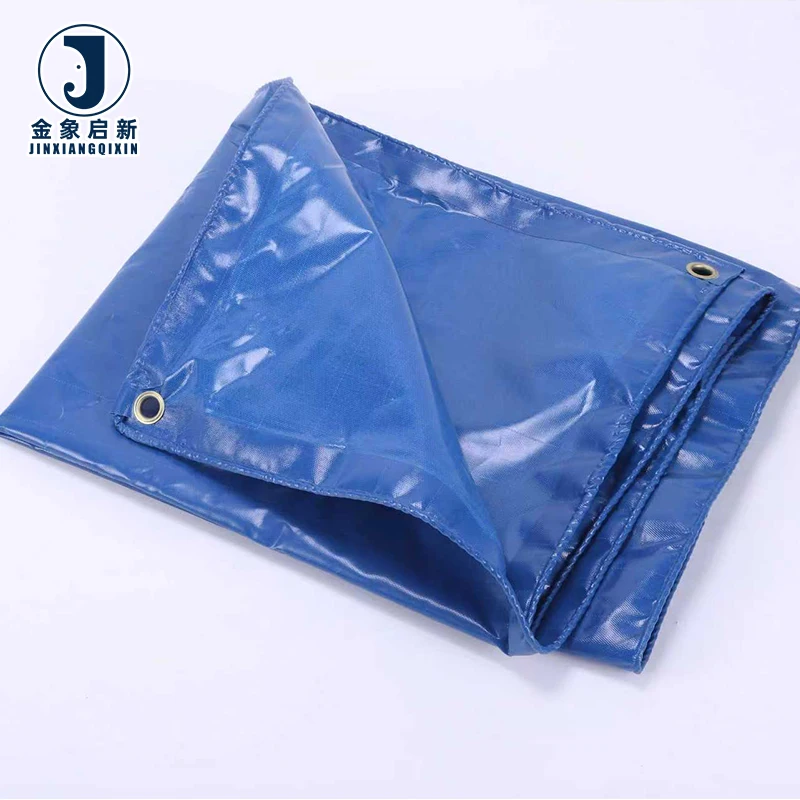
| Product Type | PVC Tarpaulin Swimming Pool Cover |
| Coating Material | PVC |
| Coating Method | Knife Coated |
| Waterproof | Yes |
| Windproof | Yes |
| UV Treatment | Available — confirm the grade required for your market (test basis not stated in source) |
| Fire-Retardant Grade | Available in flame retardant grades — confirm the grade required for your market |
| Anti-Static Treatment | Available with surface resistance data on request |
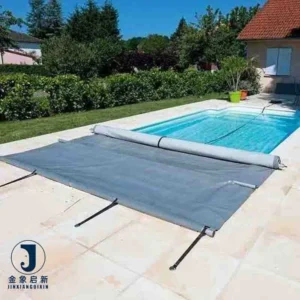
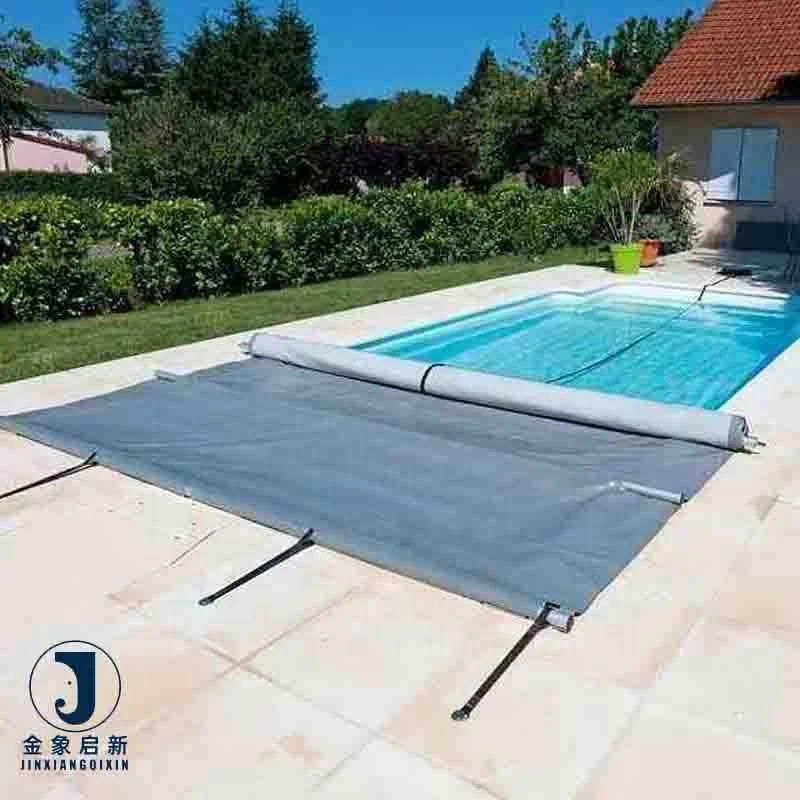
| Hardware Options | Brass Anchor, Triangular Hook, Ratchet System, Aluminium Poles |
| Operation | Manual or motorized winders |
| Attachment | Self-sinking stainless steel connections (six points) |
| Color | Customizable |
| Standards | ISO 9001, ISO 14001, ISO 45001, CE |
Application Suitability
| Application | Exposure & Requirement |
|---|---|
| Commercial and municipal pool enclosures | High humidity, chemical vapour, fire code compliance for public access buildings |
| Resort and hospitality pool covers | Continuous UV exposure, aesthetic consistency across large surface areas, guest safety |
| Indoor pool membrane structures | Condensation, ventilation integration, fire-retardant and anti-static certification for enclosed spaces |
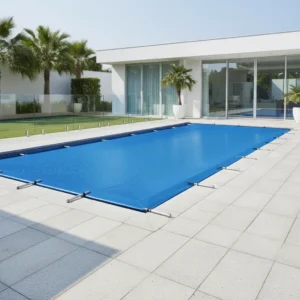
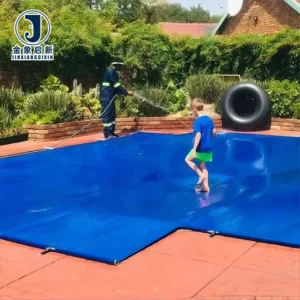
| Residential outdoor pools | Seasonal weather, wind load, debris accumulation, child safety requirements |
What Fire-Retardant Certification Actually Means for Pool Cover Compliance
A fire-retardant claim without a documented grade and test report is a liability, not a specification.
When a commercial pool project requires fire code compliance, the contractor submits material documentation to the building inspector — not a brochure. Pool environments concentrate chemical vapour from chlorination, and enclosed pool structures demand verified flame-retardant fabric that matches the jurisdiction’s classification system. Contractors who source PVC pool cover fabric fire retardant certified to a named standard avoid failed inspections and costly replacement cycles. The gap between "flame treated" and independently tested to a recognised classification is where project delays originate [NEED_CITE: fire classification standards for textile membranes in public buildings].
Ventilation, Air Quality and the Role of Anti-Static Treatment
Enclosed pool structures generate persistent moisture and chemical aerosols. Fabric surfaces in these environments attract particulate contamination when static charge accumulates, accelerating biological growth and reducing light transmission through translucent membrane sections. Anti-static treatment modifies surface resistivity to limit charge build-up. For the PVC pool cover fabric fire retardant certified for indoor installations, anti-static specification should be confirmed alongside the flame-retardant grade, as the two treatments interact during the coating process.
Hardware Integration and Load Distribution at Fixing Points
Pool covers experience concentrated stress where fabric meets hardware. Brass anchors and ratchet systems transfer wind uplift loads into the fabric at discrete points, and the coating adhesion at these junctions determines whether the cover deforms or pulls free. Knife-coated PVC construction produces a mechanical bond between coating and base fabric that withstands the cyclical tension of daily deployment and retraction. The self-sinking stainless steel connections distribute load across six attachment points rather than concentrating force at a single grommet, reducing the risk of tear propagation at the fixing line [NEED_CITE: tensile and tear test methods for coated fabrics per ISO 1421].
Reading the Specification Sheet Beyond the Headline GSM
GSM indicates total mass per square metre but does not isolate base fabric density from coating weight. Two fabrics at the same GSM can differ substantially in tensile strength depending on whether the mass sits in a dense polyester weave or in a thick coating layer. Knife coating applies PVC in controlled passes, building coating weight incrementally and allowing each layer to bond before the next is applied. This method supports higher adhesion values than lamination, which is relevant when the pool cover fabric undergoes repeated flexing during winder operation. Base fabric denier and thread count determine how a tear behaves once initiated — a high-density weave arrests tear propagation, while a loose weave allows it to run. Fire-retardant grades add mineral or halogenated compounds to the coating formulation, which can influence low-temperature flexibility; confirming the operating temperature range for the specified grade is necessary before finalising material selection for outdoor pools in cold climates.
The Cost of Undocumented Material Claims
A pool cover specified with anti-UV treatment that arrives without a supporting test report leaves the contractor exposed when premature fading or embrittlement appears within the first season. Colour variation between rolls in a single order becomes visible once the cover is installed over a large pool surface, requiring panel replacement to achieve visual consistency. Fire-retardant fabric supplied without the grade documentation that the local authority requires stalls the project at the inspection stage, with the cover already fabricated and installed. These are not material failures — they are specification and verification failures that originate before production begins [NEED_CITE: pre-shipment inspection protocols for coated technical textiles].
Why Source Pool Cover Fabric From This Production Facility
Deep process control over coating weight and adhesion is maintained across three full production lines, ensuring that knife-coated PVC applied for pool cover applications meets the specified GSM at pre-shipment inspection rather than at the quotation stage only. A 10-person R&D team develops custom sizing, colour matching and hardware integration samples within days, allowing contractors to verify fit and finish before committing to bulk production. Every roll undergoes dedicated QA/QC at each production stage with full inspection before dispatch, supported by documentation that includes material specification sheets and test reports for UV and flame-retardant grades where applicable. The facility holds ISO 9001, ISO 14001, ISO 45001 and CE certification, providing the compliance framework that regulated pool projects demand. Custom widths, colours and printed branding are supported with lead times and minimums confirmed at the sample approval stage.
Documentation & Verification
- Material specification sheet stating GSM, base fabric construction, coating weight and applicable fire-retardant grade
- Test report for UV resistance and flame-retardant classification where treatment is specified
- Pre-shipment inspection record confirming weight verification per roll against stated GSM
- Certificate of origin and customs documentation for international pool project shipments
- Roll packing list with colour reference and batch identification for traceability
Fabrication, Handling & Storage
- Heat-weld seams using temperature and dwell settings matched to knife-coated PVC thickness to maintain coating adhesion at joint lines
- Reinforce brass anchor and ratchet fixing points with additional PVC patches to distribute load beyond the base fabric weave
- Store rolls horizontally on padded racking to prevent compression marks on the coated surface
- Allow cold-stored rolls to reach ambient temperature before unrolling to avoid coating crack at low-temperature flex points
- Use non-solvent cleaners compatible with PVC coating to preserve fire-retardant and anti-static surface treatments
Specifying the Right Material for Your Pool Project
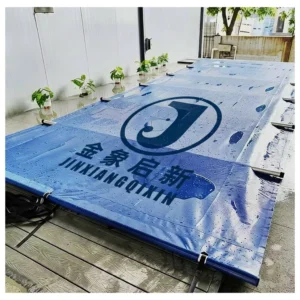
Provide the pool dimensions, installation environment — indoor or outdoor, climate zone and expected wind exposure — and any fire code classification your local authority requires. Confirm whether you need roll stock for on-site fabrication or finished covers with hardware kits including brass anchors and aluminium poles. Colour requirements, custom width and any branding or pattern printing should be communicated at inquiry stage so that samples can be developed for approval before production.
Frequently Asked Questions
Q: What fire-retardant grade is available for pool cover fabric and does it meet local fire codes?
A: Fire-retardant grades are available for the knife-coated PVC pool cover fabric, with the specific classification confirmed against your market’s building code requirements. Request the applicable test report at inquiry stage to verify compliance with your local authority’s standards before specifying the material for commercial or municipal pool installations.
Q: Is anti-static treatment necessary for indoor pool environments?
A: Indoor pool structures generate high humidity and chemical aerosols that promote particulate adhesion on statically charged surfaces. Anti-static treatment reduces this effect and is recommended for enclosed membrane structures. Surface resistance data is available on request to confirm the treatment level matches your project specification.
Q: How is GSM verified on arrival and what is the pre-shipment inspection process?
A: Every roll undergoes weight verification against the stated GSM during pre-shipment inspection, with results documented in the inspection record provided before dispatch. This process confirms that the material received matches the quotation specification, addressing the common concern of fabric arriving lighter than agreed.
Q: Can the pool cover fabric be supplied with custom hardware?
A: Brass anchors, triangular hooks, ratchet systems and aluminium poles are available as hardware options, configured to your pool cover design. Self-sinking stainless steel connections at six attachment points distribute load evenly. Confirm your hardware specification at sample stage to ensure compatibility with the fabric weight and coating type.
Q: What documentation is provided for compliance-sensitive pool projects?
A: Documentation includes a material specification sheet, test reports for UV and flame-retardant grades where applicable, pre-shipment inspection records, certificate of origin and roll packing list. This package supports building inspector submissions and customs clearance for international pool enclosure projects requiring verified material provenance.