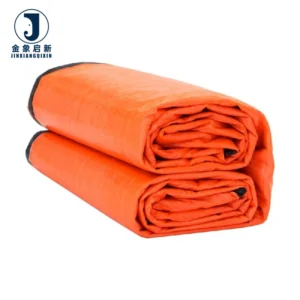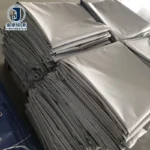
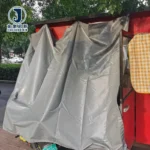
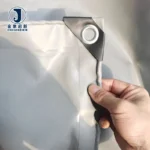
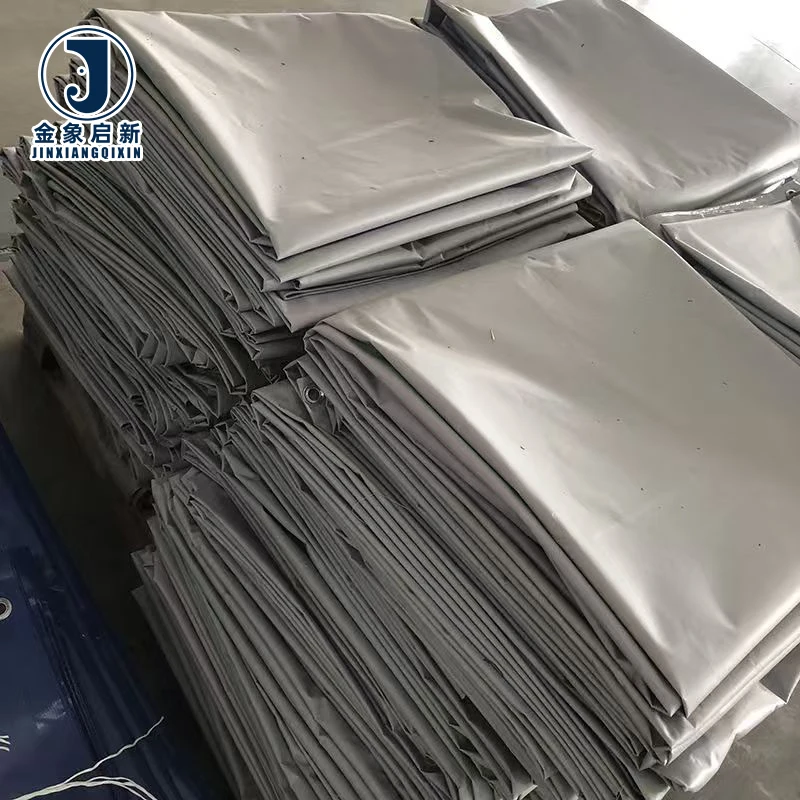
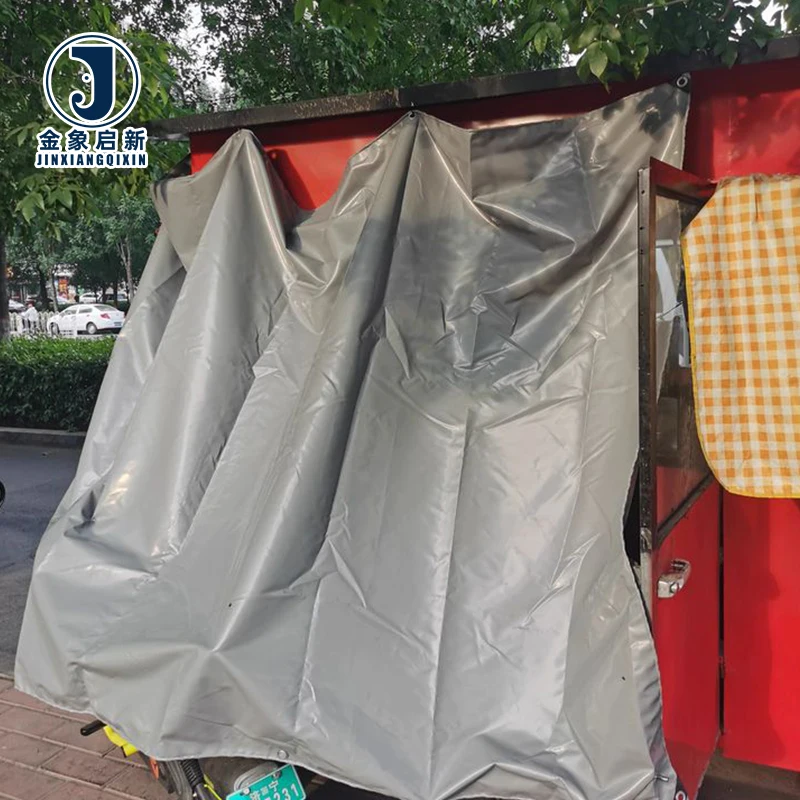
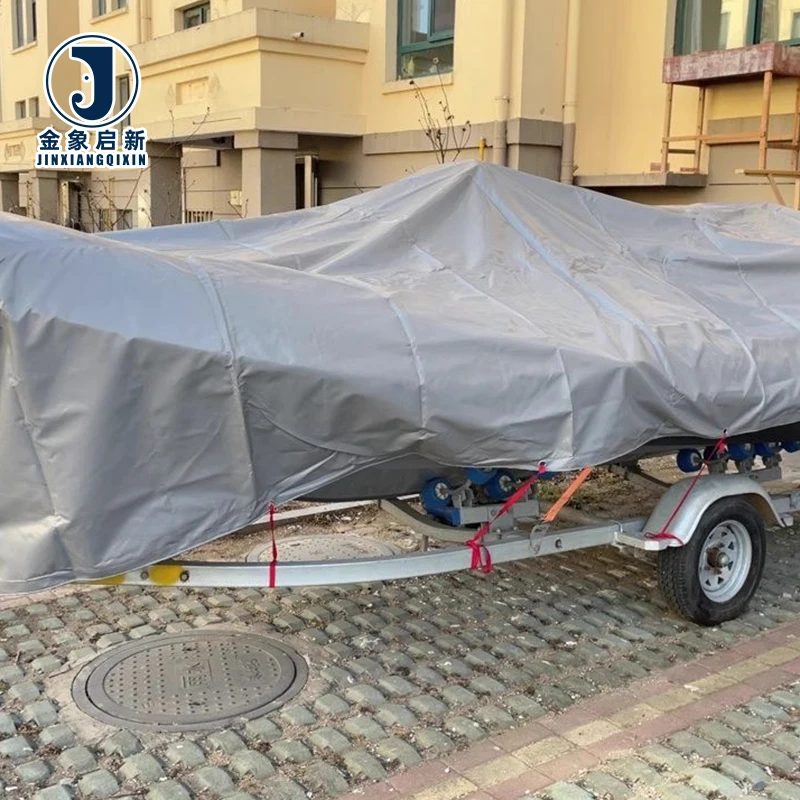
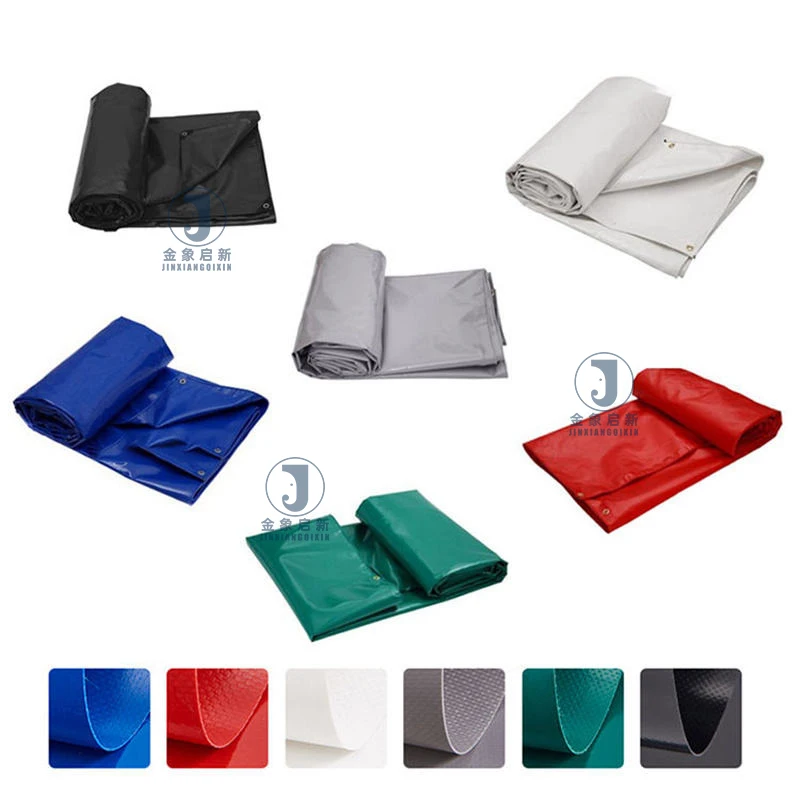
Three full production lines — each monitored for coating adhesion and hot-melt penetration consistency on every PVC coated fabric roll, ensuring technical fabric buyers receive uniform performance from first meter to last.
Technical Specifications
| Parameter | Value |
|---|---|
| Product Type | PVC Coated Fabric |
| Base Fabric | 100% high-toughness polyester yarn |
| Coating Method | Lamination and hot-melt coating |
| Weight | 650 GSM |
| Thickness Range | 0.35 mm – 1.5 mm |
| Knitting Density Options | 500D, 1000D, up to 500D–2000D |
| Tensile Strength (N/5cm) | Longitude 1500–3000 / Latitude 1200–2800 |
| Key Features | Waterproof, cold-resistant, mold-proof, anti-static treatment (grade not stated), flame retardant (grade not stated), UV treatment (grade not stated) |
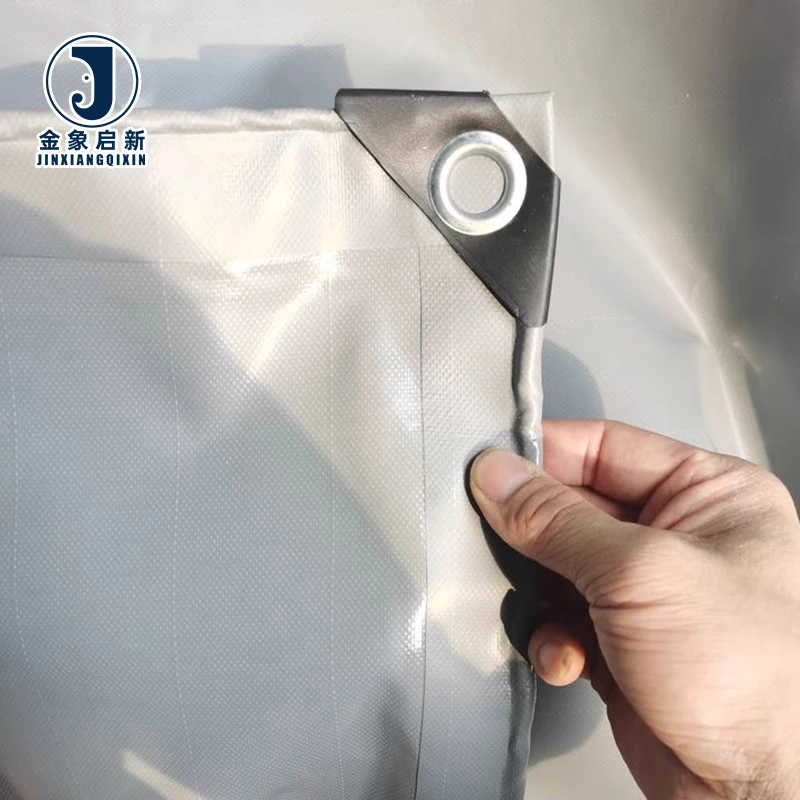
| Finish Options | Eyelets and reinforced hems available, custom dimensions |
| Standards Held | ISO, CE |
Application Suitability
| Application | Exposure & Requirement |
|---|---|
| Mining ventilation ducts | Continuous air pressure cycling, underground humidity, mandatory fire-retardant and anti-static compliance |
| Tunnelling air duct systems | Abrasive dust-laden airflow, confined-space safety codes, duct flex under positive pressure |
| Inflatable membrane structures | Wind uplift tension, UV degradation at seams, certified flame retardant for public-occupancy permits |
| Aviation ground-support ducts | Fuel-vapor environment requiring anti-static surface, frequent deployment and retraction |
| Construction site ventilation | Temporary ducting exposed to weather, mechanical handling damage, and debris impact |
Why "Fire Retardant" Without a Grade Leaves Your Ventilation Project Unpermitted
A fabric labeled flame retardant without a cited test standard cannot satisfy a mining inspector or building code official.
Ventilation duct and membrane structure contractors regularly receive material safety data sheets that declare "flame retardant" in generic terms. When the site inspector asks for the classification — B1 per DIN 4102, M2 per NF P 92-507, or NFPA 701 pass — the quotation collapses. The PVC coated fabric for ventilation and technical fabric applications must carry documentation tied to a specific standard before it reaches the site. Ordering without that clarity delays commissioning and, in underground mining, can halt production entirely. [NEED_CITE: fire classification standards for coated technical textiles in mining and construction ventilation]
Base Fabric Denier Selection and What It Means for Duct Integrity
The knitting density — expressed as denier ratings of 500D, 1000D, or up to 2000D — determines how individual yarns resist tearing once a puncture begins. In mining ventilation ducts, a rock chip or bolt head can initiate a tear that propagates under positive air pressure. Higher denier warp yarns arrest that propagation. Matching denier to the duct’s operating pressure and handling frequency is the core engineering decision when specifying PVC coated fabric for ventilation and technical fabric applications, not simply choosing the heaviest weight available.
Hot-Melt Coating and Weld Seam Behaviour in Duct Fabrication
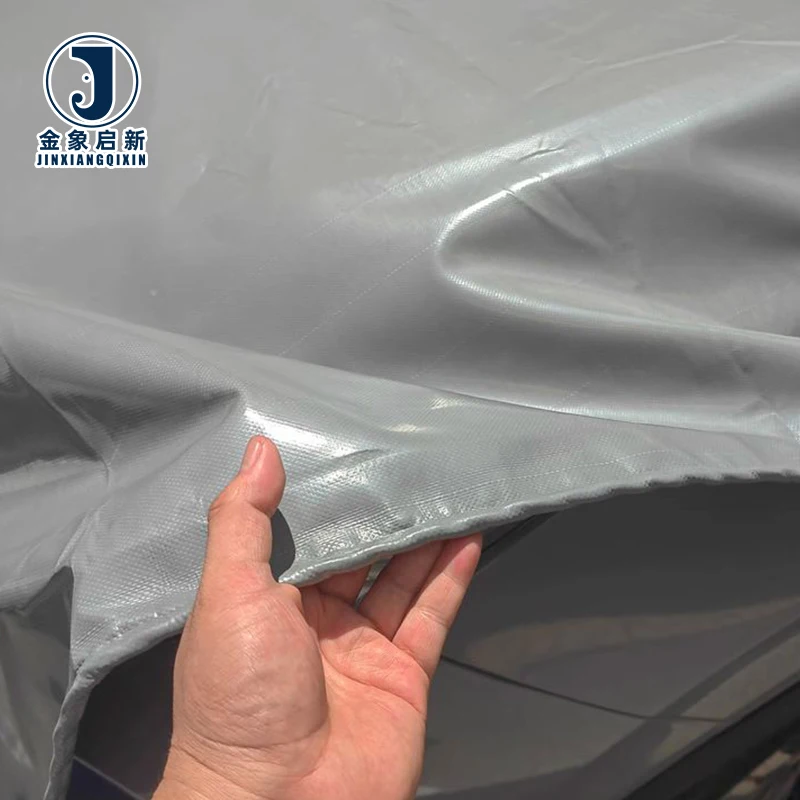
Hot-melt coating technology forces PVC into the interstices of the polyester weave rather than sitting as a surface film. This penetration depth directly governs how the fabric behaves during high-frequency welding — the standard method for joining duct sections. A well-impregnated base yields a weld zone where the coating fuses continuously across the seam, and the peel strength at the joint approaches the tear strength of the parent fabric. Poor coating penetration produces a weld that delaminates before the base yarn fails, which is the most common failure mode reported in underground duct installations. [NEED_CITE: weld peel strength testing for PVC coated polyester per ISO 1421]
How GSM, Denier, and Coating Weight Interact to Define Real Strength
The stated 650 GSM represents the combined mass of base fabric and PVC coating, yet two rolls at the same GSM can perform very differently. A heavier coating on a lighter base yields good waterproofing but lower tear resistance, because the yarn count is thinner. Conversely, a dense 1000D base with a leaner coating produces higher tensile and tear values at the same total weight. The lamination and hot-melt coating process used here allows the coating weight and base density to be balanced independently. Tensile strength ranges from 1500 to 3000 N/5cm longitude and 1200 to 2800 N/5cm latitude across the product family; the exact value depends on the denier and weave density selected for your order. Buyers specifying material for high-pressure ventilation ducts should request the tensile and tear values corresponding to their chosen denier rather than relying on GSM alone.
What Happens When Anti-Static and Flame-Retardant Grades Are Not Confirmed Before Shipment
The most costly outcome is not fabric failure in service — it is fabric rejection at the gate. Mining sites require documented anti-static surface resistance values that match the regulation cited in the ventilation plan. Aviation ground-support areas follow a parallel requirement tied to fuel-handling zones. When the PVC coated fabric for ventilation and technical fabric applications arrives without a test report citing the applicable standard, the duct cannot be installed, the shift stands down, and the contractor absorbs both the delay penalty and the cost of emergency replacement material. Flame-retardant grades face the same scrutiny; a generic claim does not satisfy a fire marshal reviewing a membrane structure permit. [NEED_CITE: anti-static surface resistance requirements for underground mining ventilation ducts]
Why Technical Buyers Source This Fabric Through Jinxiang
Three dedicated production lines run PVC coated fabric continuously, giving the capacity to fill duct-fabrication orders in full rather than partial shipment. The 10-person R&D team develops material samples against a buyer’s specific denier, coating weight, and treatment requirement before production begins, eliminating guesswork. Hot-melt coating penetration is monitored at each stage, not only at final inspection, so adhesion consistency holds across every roll in a multi-roll order. Pre-shipment inspection covers 100 percent of output — GSM verification, coating peel test, and weld-seam trial on the actual fabric being shipped. Anti-static and flame-retardant treatments are available in multiple grades; the specific grade is confirmed during sampling so that the test report matches the buyer’s site regulation. Custom widths, lengths, and eyelet configurations are developed through the same sample process, with lead times stated at quotation.
Documentation & Verification
- Material specification sheet stating exact 650 GSM, base denier, and coating type for this fabric
- Flame-retardant test report citing the specific standard required by your ventilation project
- Anti-static surface resistance test result matched to mining or aviation regulation
- Pre-shipment inspection record confirming GSM, coating adhesion, and weld-seam integrity
- Certificate of origin and customs documentation for cross-border shipment
Fabrication, Handling & Storage
- High-frequency welding at recommended power settings suits the hot-melt PVC coating on this 650 GSM fabric for clean duct seams
- Eyelet spacing should account for tensile load distribution across the polyester base at reinforced hem lines
- Store rolls horizontally on pallets to prevent permanent creasing of the coated surface
- Allow cold-stored rolls to reach ambient temperature before unrolling to avoid coating micro-cracking
- Use mild detergent without solvents to preserve the anti-static treatment applied to the fabric surface
- Cut duct panels with allowance for weld overlap; hot-melt coating provides reliable fusion at seam edges
Before You Request a Quote — What We Need From You
Specify the ventilation or membrane application, the operating pressure or wind load the duct will face, and the fire-retardant or anti-static standard your site mandates. Indicate whether you require roll stock for your own fabrication or finished cut-to-size panels with eyelets and welded hems. Provide the target width, roll length, and annual volume so the quotation reflects the correct production run and pricing tier.
Frequently Asked Questions
Q: What fire-retardant grade does this fabric carry and which test standard applies?
A: Flame-retardant treatment is available in multiple grades. The specific standard — such as DIN 4102 B1, NFPA 701, or M2 — is confirmed during sampling based on your site requirement. We supply a test report citing the agreed standard before shipment so the material passes inspection.
Q: How is anti-static performance verified and what surface resistance is achieved?
A: Anti-static treatment is applied during coating, and the surface resistance value is measured per the test method your regulation cites. The test report accompanies the shipment documentation. Confirm your site’s required resistance range during inquiry so we match the correct formulation.
Q: Can the fabric be supplied with both certifications for mining ventilation compliance?
A: Yes. Flame-retardant and anti-static treatments can be combined on the same fabric. Both test reports are issued under the product batch number, allowing you to present a complete compliance package to the mine safety authority at installation.
Q: How does the weld seam strength compare to the base fabric tear strength?
A: Hot-melt coating penetration into the polyester base allows high-frequency welds where the fused seam approaches the tear resistance of the parent fabric. We conduct peel-strength tests on production samples and include results in the pre-shipment inspection record.
Q: How are custom dimensions and eyelet placements specified for duct fabrication?
A: Provide a fabrication drawing or dimensional schedule. Our R&D team produces a sample panel with your specified eyelet spacing, hem reinforcement, and weld allowance for approval before full production runs begin.