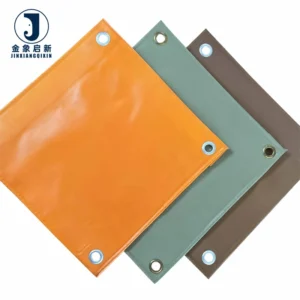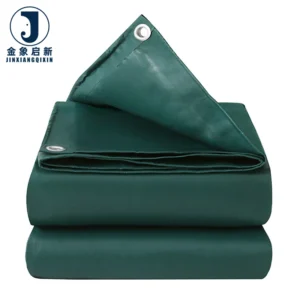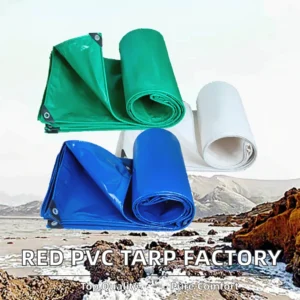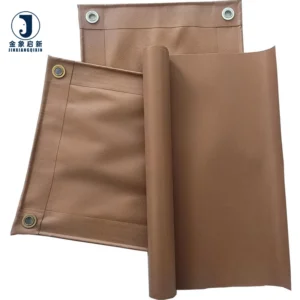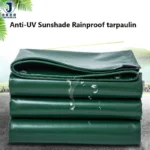
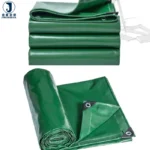

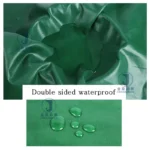
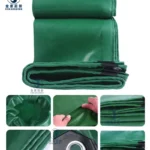
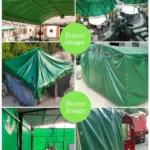
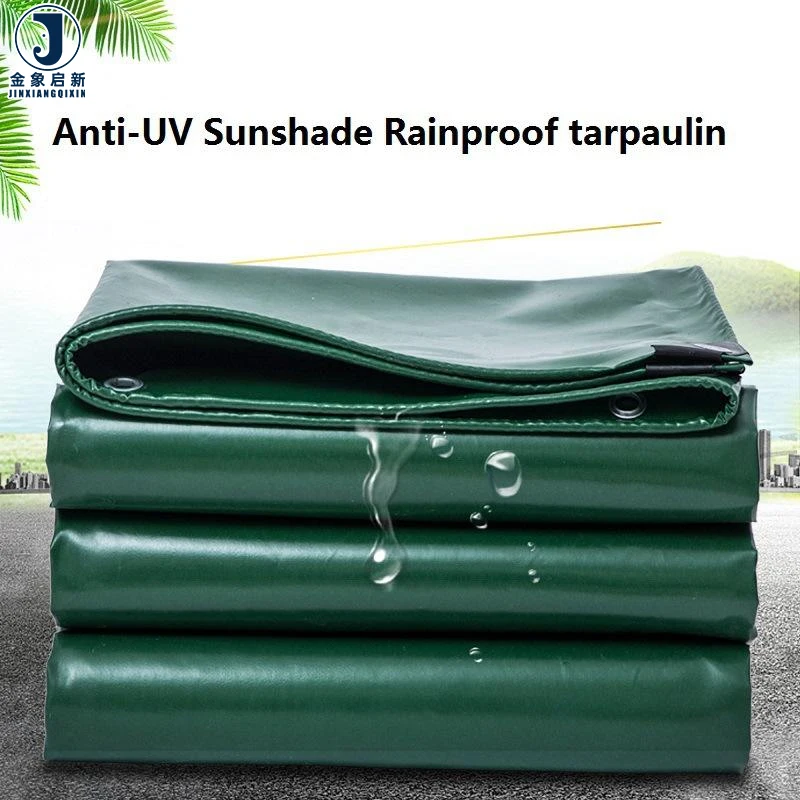
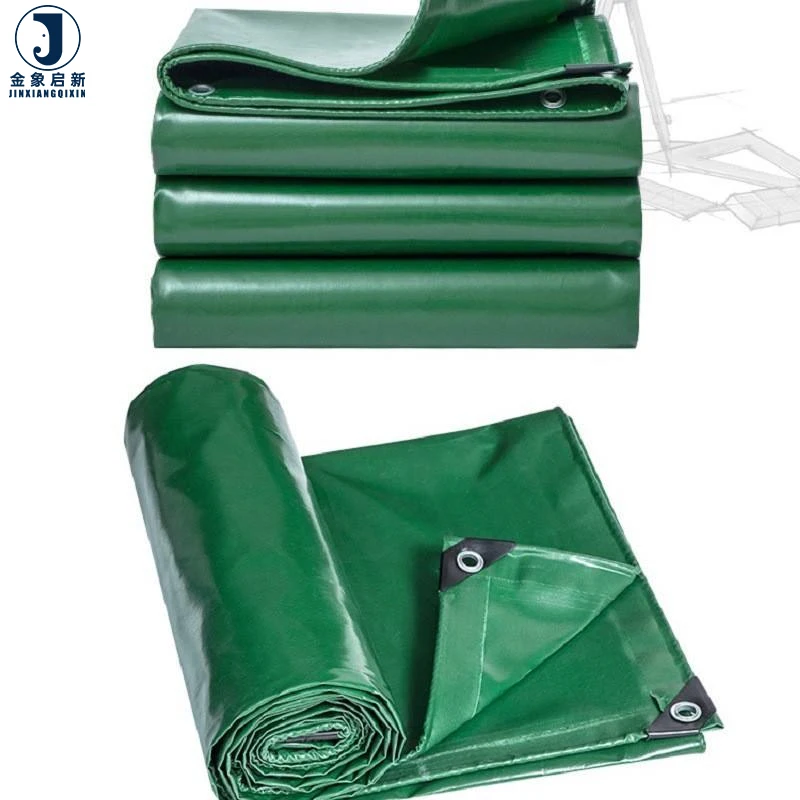

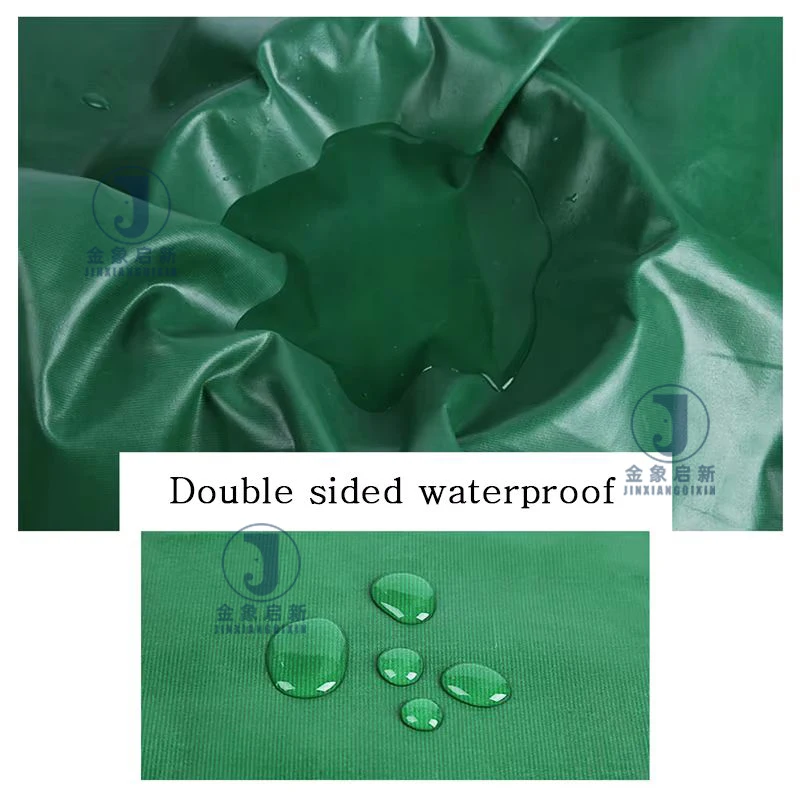
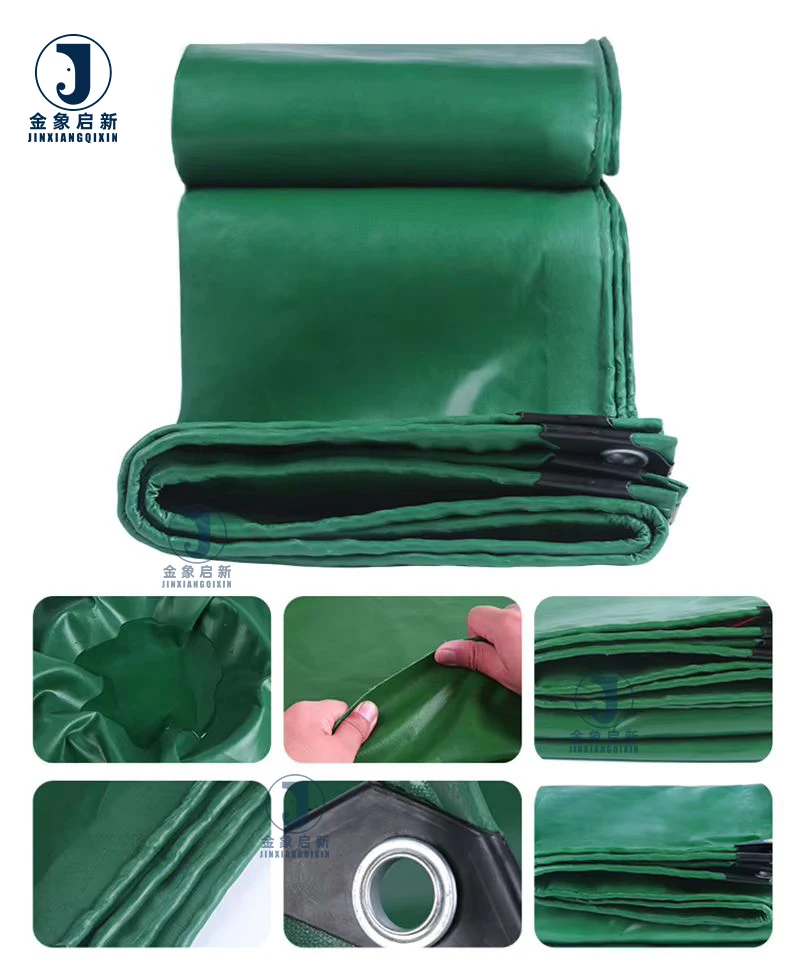
Precision Coating Control — three full production lines with dedicated QA at every stage ensure 500D polyester base fabric receives consistent double-sided PVC coverage for reliable weld and seam performance.
Technical Specifications
| Parameter | Value |
|---|---|
| Product Type | PVC Coated Tarpaulin |
| Base Fabric | 500D-500D Polyester |
| Coating Method | Double-sided PVC coating |
| Weight Range | 450-900 g/m² |
| Surface Characteristics | Smooth, leather-like texture |
| Water Resistance | Fully waterproof coated construction |
| Abrasion Resistance | Very strong |
| UV Resistance | Anti-UV treatment available — confirm grade required for your market |
| Flame Retardancy | Flame-retardant grades available — confirm the grade required for your market |
| Service Life | Suited to extended outdoor exposure (3-5 years typical) |
| Repairability | Repairable by hot air welding |
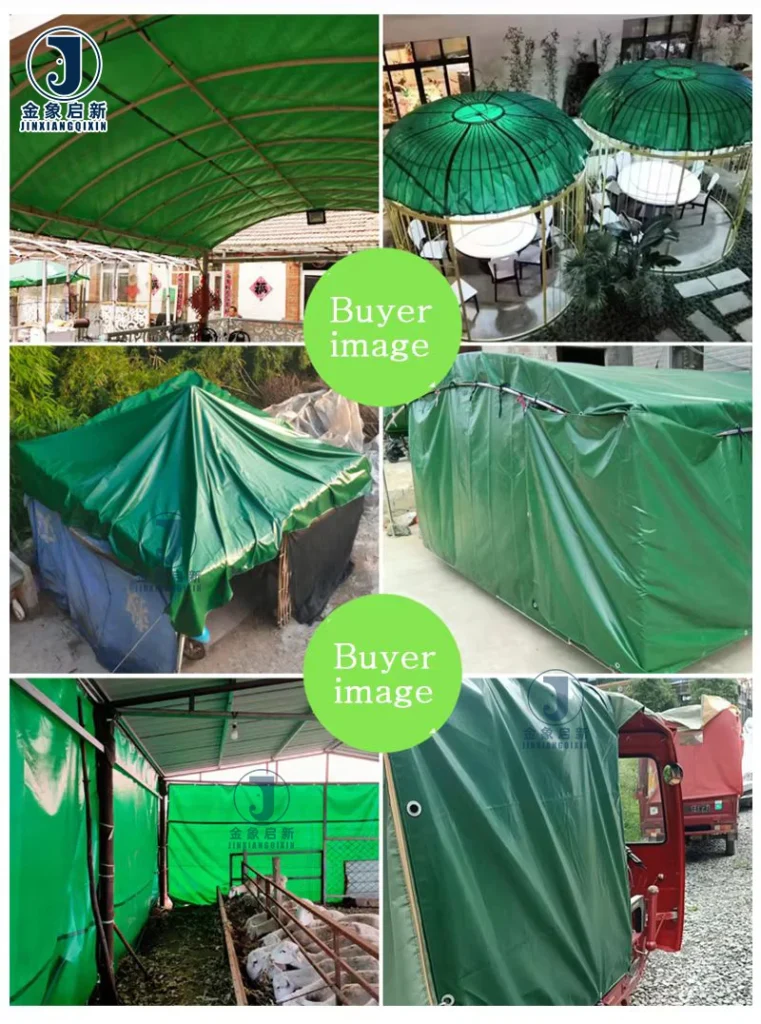
| Usage | Truck, trailer, machine, wood cover, awning, tent, inflatable and membrane structures |
Application Suitability
| Application | Exposure & Requirement |
|---|---|
| Mining and tunnelling ventilation duct | Continuous airflow, fire-retardant and anti-static compliance, duct flexing and abrasion |
| Inflatable and membrane structure fabric | Coating adhesion under tension, weld strength at stress points, long-term UV exposure |
| Specialist awning and tent | Sustained sun exposure, rain ingress prevention, repeated folding and tension cycles |
| Industrial equipment and machine covers | Dust, moisture and chemical splash, frequent removal and reinstallation abrasion |
Why "Fire Retardant" Means Nothing Without a Certified Grade Behind It
A flame-retardant claim without a test standard leaves your project open to site rejection and compliance failure.
When a ventilation duct or membrane structure arrives on site, the safety inspector does not read marketing copy — they ask for the test certificate. PVC coated tarpaulin for ventilation and specialist application is supplied in flame-retardant grades, but the applicable standard varies by market and by site: DIN 4102 B1 in parts of Europe, NFPA 701 in North America, M2 in France. Ordering fabric labelled simply "fire retardant" without specifying the grade means you risk failing the site inspection, pulling down installed ductwork and replacing it at your own cost [NEED_CITE: fire classification standards for coated fabrics in mining and construction ventilation]. The grade must match the regulation your project is audited against, and the test report must travel with the shipment documentation.
Coating Adhesion and Weld Integrity Under Structural Tension
Inflatable structures and membrane roofs place sustained tension on every welded seam. This PVC coated tarpaulin fabric uses a 500D-500D polyester base with double-sided PVC coating, producing a bond that holds through hot air welding at fabrication and through field stress once installed. The smooth leather-like surface allows clean weld lines without coating lift, which is critical when duct diameters or membrane panels require long continuous seams.
Fire-Retardant and Anti-Static Compliance for Confined-Space Ventilation
Mining shafts and tunnelling faces require ventilation duct that meets both fire-retardant and anti-static thresholds enforced by the site operator and the governing authority. PVC coated tarpaulin for ventilation and specialist application is available in grades formulated for these environments — confirm the exact classification your project demands before placing the order. The test report must cite the standard, the test date and the fabric batch so the documentation package is audit-ready [NEED_CITE: anti-static and fire-retardant requirements for underground mine ventilation ducting].
Reading the Specifications: Denier, Coating Weight and Tensile Behaviour
The 500D-500D polyester base fabric provides the tensile skeleton; the double-sided PVC coating adds waterproof sealing and surface durability. GSM alone does not define strength — a heavier coating on a low-density weave can produce a stiff fabric that cracks at the fold rather than flexing. The 500D yarn count in both warp and weft directions balances tear resistance with pliability, which matters when the fabric is formed into duct sections or tensioned across a membrane frame. Coating weight in the 450-900 g/m² range lets you select a lighter grade for temporary awnings or a heavier grade for permanent membrane structures where wind load and snow load demand higher tensile margins. Surface finish — the smooth leather-like texture noted in the specification — supports consistent hot air welding parameters across the roll, reducing the trial-and-error that slows fabrication.
The Cost of Specifying on Price Per Metre Instead of Coating Structure
When procurement selects coated fabric on unit cost alone, the delivered roll may carry the correct GSM but achieve it with a thicker coating on a weaker base fabric. The result shows up months later: the coating peels at the weld line, the base fabric tears from the eyelet, or the flame-retardant treatment washes out after the first rain cycle because it was a surface spray rather than a compounded additive. For ventilation duct and specialist structures, these failures are not cosmetic — a duct seam splitting underground or a membrane panel losing tension in high wind carries safety and liability consequences that far outweigh the initial saving per linear metre [NEED_CITE: premature coating delamination and seam failure in coated technical fabrics].
Why Fabricators Source This PVC Coated Tarpaulin Here
Production runs on three dedicated lines with 36 sets of professional equipment, so roll-to-roll coating consistency is maintained across bulk orders for large membrane or duct projects. The 10-person R&D team handles material selection, custom width and sample development — a custom-colour membrane fabric or a non-standard duct diameter can be sampled within days for your approval before full production begins. QA/QC runs at every production stage, not only at final inspection, which means coating weight and adhesion are checked during the coating pass rather than discovered missing at the loading dock. ISO and CE certified processes underpin the documentation package, and pre-shipment inspection records are generated for every batch. Custom widths and flame-retardant grades are produced to order with realistic lead times communicated at the quotation stage.
Documentation & Verification
- Material specification sheet confirming base fabric denier, coating method, weight and GSM for each roll
- Flame-retardant and anti-UV test reports supplied per the grade specified on your purchase order
- Pre-shipment inspection record documenting 100 percent QC at every production stage
- ISO and CE certificates included in the shipment documentation package
- Certificate of origin and customs support documents prepared for export clearance
Fabrication, Handling & Storage
- Hot air welding parameters should be set to the double-sided PVC coating thickness; test a scrap piece before production runs
- Store rolls upright on pallets to prevent flat-spot creases that show through the smooth surface finish
- Allow cold-stored rolls to reach workshop temperature before unrolling to avoid coating crack at low-temperature flex
- Use compatible PVC-based repair patches and hot air for field repair of membrane or duct seam damage
- Cut patterns with the warp direction aligned to the primary tension axis of the installed structure
- Avoid solvent-based cleaners on the leather-like surface which can soften the PVC coating layer
Requesting a Quotation That Matches Your Project
Provide the end-use application — ventilation duct, membrane structure, awning or specialist cover — along with the compliance standard your site or market requires. Specify the target GSM, roll width and whether you need the fabric in stock colour or a custom match. State your annual volume and whether you require finished cut sizes or roll stock only, so the quotation reflects accurate lead times and packing format.
Frequently Asked Questions
Q: What flame-retardant grade and test standard can be supplied for this fabric?
A: PVC coated tarpaulin fabric is available in flame-retardant grades formulated for different markets. The applicable standard — such as DIN 4102, NFPA 701 or M2 — must be specified at inquiry stage so the correct additive package is compounded into the PVC coating. A test report citing the standard and batch number ships with the order.
Q: How is UV resistance measured and what test basis supports the anti-UV claim?
A: Anti-UV treatment is incorporated during the PVC coating process to extend service life under sustained sun exposure. The specific test basis varies by treatment grade. Request the UV test report at the sampling stage so you can verify the exposure rating against your project’s expected outdoor duration before confirming bulk production.
Q: What is the difference between PVC coated polyester and PE laminated tarpaulin in weld strength?
A: PVC coated polyester with double-sided coating produces a bonded layer that hot air welds into a continuous seam. PE laminated tarpaulin relies on heat-sealed layers that can delaminate at the weld under flexing. For ventilation duct and membrane structures where seam integrity is structural, PVC coated construction delivers more reliable long-term weld performance.
Q: Can custom width and GSM be produced for large membrane or duct projects?
A: Custom widths and specific GSM values within the 450-900 g/m² range can be produced on dedicated coating lines. The R&D team develops a sample roll for your approval before full production. Lead times depend on the custom specification and order volume and are confirmed in the formal quotation.
Q: What certifications and test reports ship with the material?
A: Each shipment includes a material specification sheet, pre-shipment inspection record, ISO and CE certificates, and certificate of origin. Where flame-retardant or anti-UV grades are specified, the corresponding test report citing the applicable standard is included in the documentation package for site compliance verification.