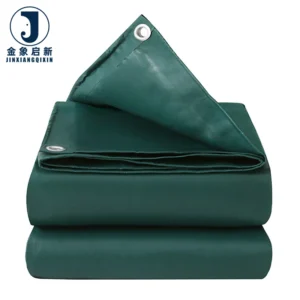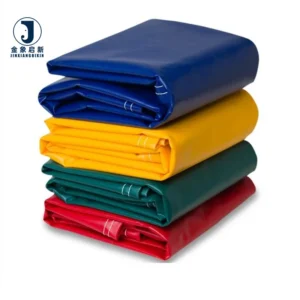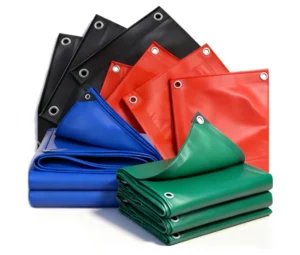
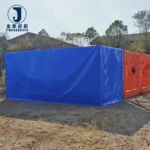
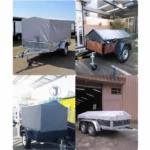
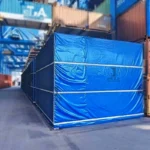
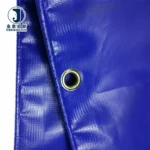
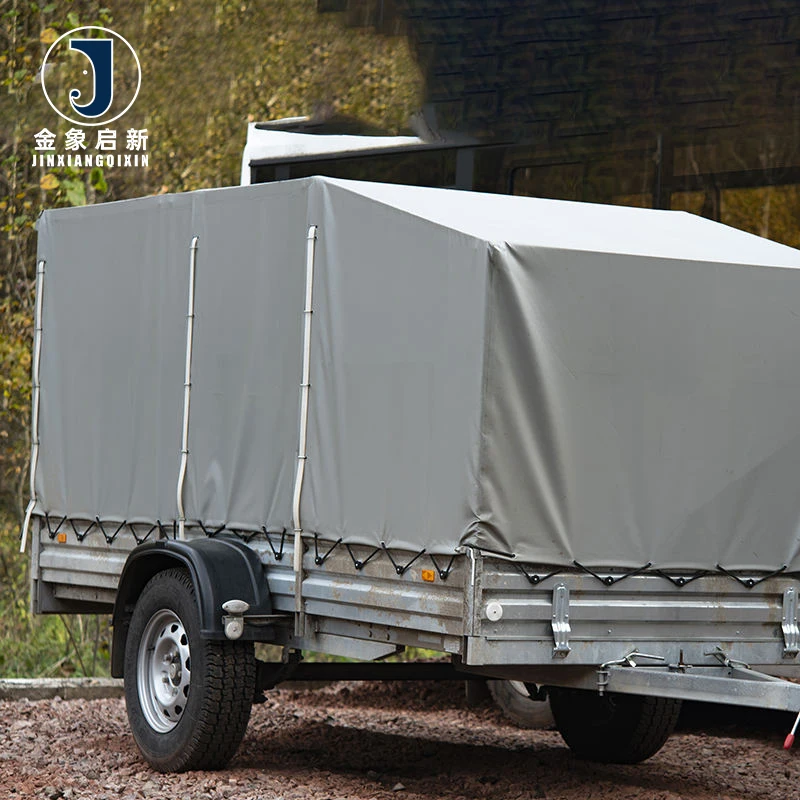
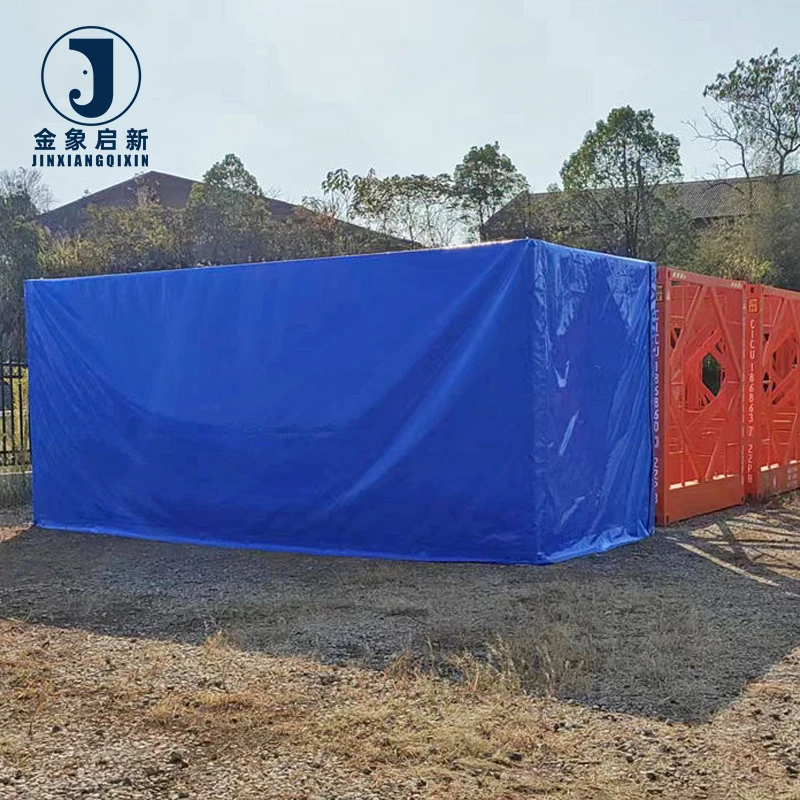
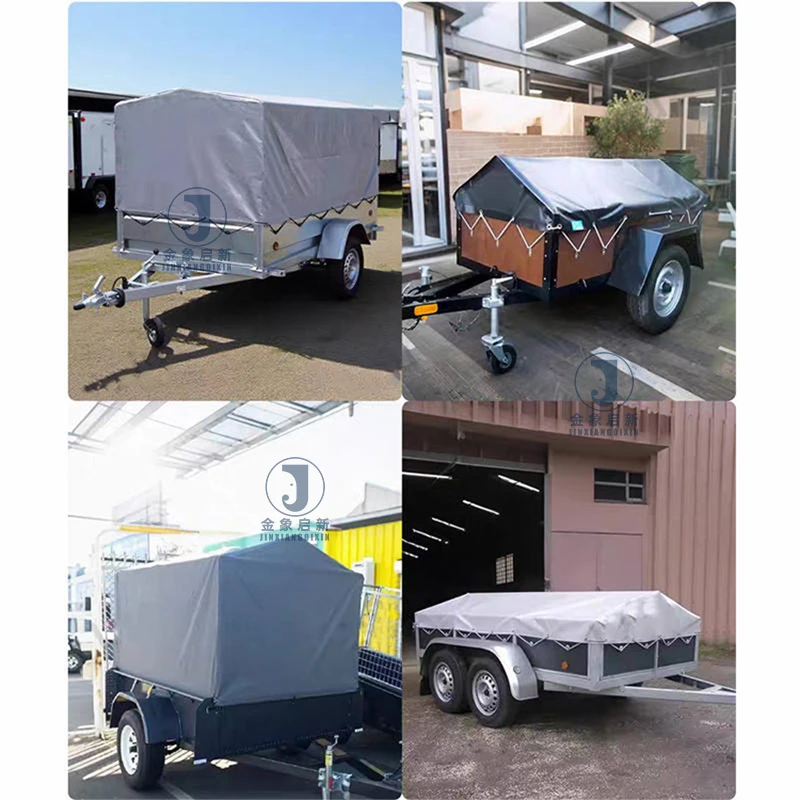
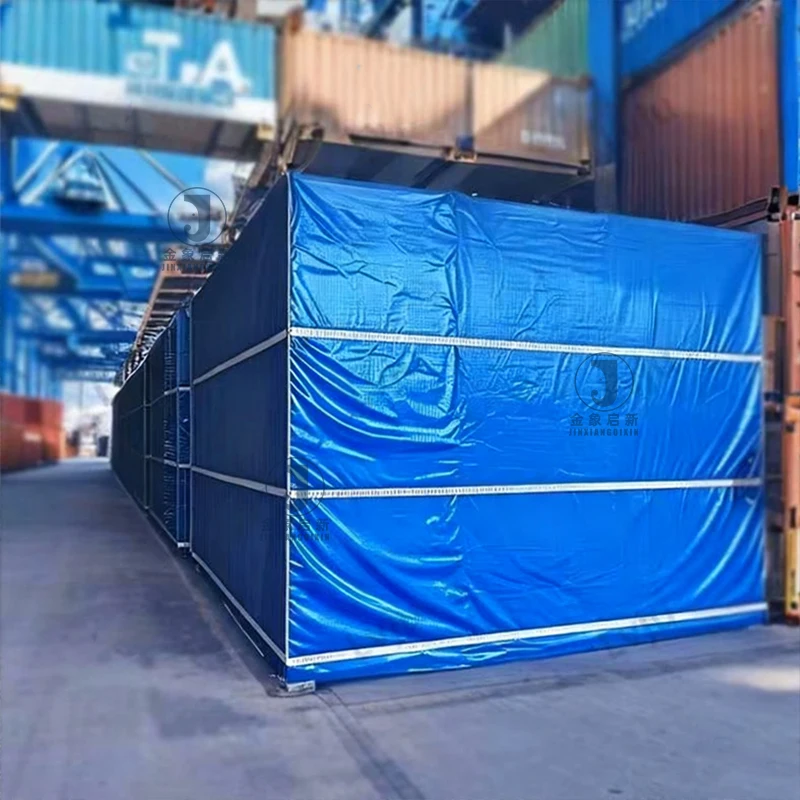
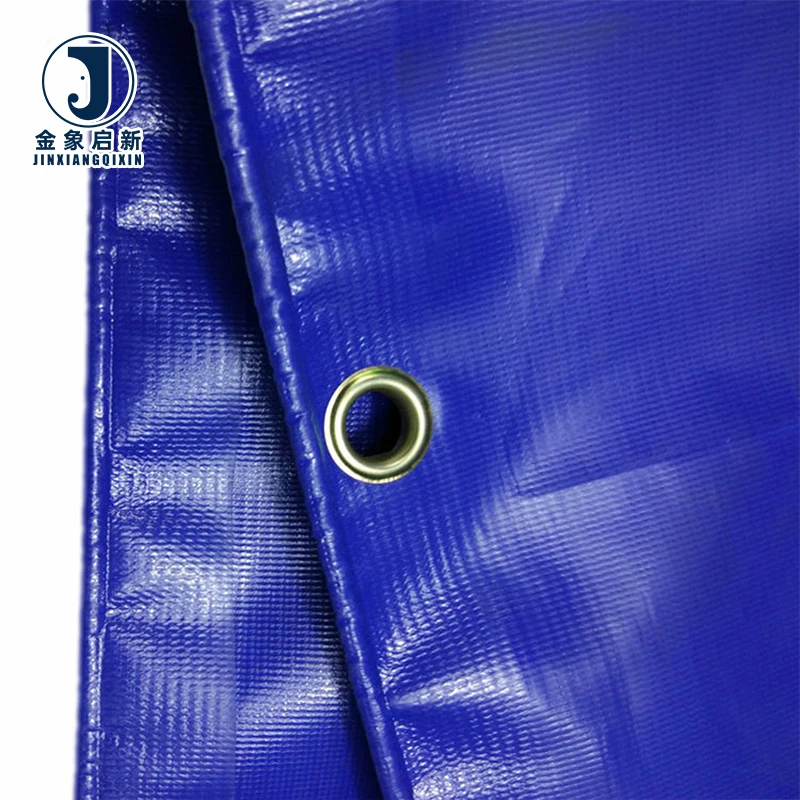
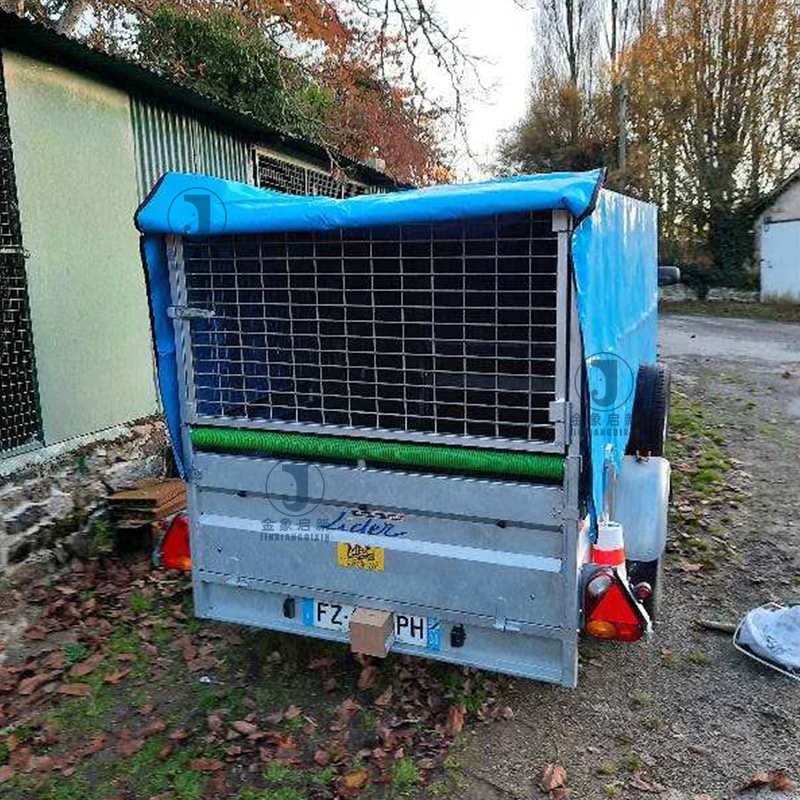
Process-Controlled Coating — Hot melt coating and lamination technology ensures precise GSM and adhesion consistency across every roll of fire retardant PVC tarpaulin fabric.
Technical Specifications
| Parameter | Value |
|---|---|
| Product Type | PVC Coated Tarpaulin Fabric |
| Material | 100% high toughness polyester yarn with PVC coating |
| Coating Technology | Lamination technology and hot melt coating technology |
| Weight (Medium-duty) | 400-500 g/m² |
| Thickness (Medium-duty) | 0.35-0.45 mm |
| Knitting Density (Medium-duty) | 500D |
| Tensile Strength (Medium-duty) | Warp 1500-2000 N/5cm / Weft 1200-1800 N/5cm |
| Weight (Heavy-duty) | 700-1000 g/m² |
| Thickness (Heavy-duty) | 0.70-1.0 mm |
| Knitting Density (Heavy-duty) | 1000D |
| Tensile Strength (Heavy-duty) | Warp 2000-2500 N/5cm / Weft 1800-2200 N/5cm |
| Weight (Super Heavy-duty) | 1100-1500 g/m² |
| Thickness (Super Heavy-duty) | 1.2-1.5 mm |
| Knitting Density (Super Heavy-duty) | 500D-2000D |
| Tensile Strength (Super Heavy-duty) | Warp 2500-3000 N/5cm / Weft 2200-2800 N/5cm |
| Flame Retardant Grade | B1 (DIN 4102) |
| Anti-Static | Treated (surface resistance value — confirm with test report) |
| Cold Resistance | Cold resistant cracking formulation |
| Anti-Mildew | Mold proof treatment |
| Waterproof | Fully waterproof coated construction |
| Key Features | Fire retardant, anti-static, cold resistant, mold proof, excellent welding tear strength, good color fastness |
| Certification | ISO, CE |
Application Suitability
| Application | Exposure & Requirement |
|---|---|
| Mining ventilation duct | Underground fire risk, dust accumulation, mandatory flame retardant and anti-static compliance |
| Tunnelling air duct | Confined space ventilation, continuous flex under positive pressure, abrasive rock dust contact |
| Aviation hangar duct | High-volume airflow, fuel vapour environment, anti-static surface requirement |
| Warehouse cover | Prolonged sun and rain exposure, wind uplift stress on seams |
| Construction site enclosure | Temporary weather protection, daily folding and relocation, UV and rain resistance |
| Tensioned membrane structure | Permanent tension loads, wind-induced oscillation, weld seam integrity under movement |
| Inflatable structure fabric | Internal positive pressure, repeated inflation cycles, flex fatigue at fold lines |
What B1 Flame Retardant Actually Means for Your Site Inspector
A B1 rating to DIN 4102 is the threshold that site inspectors in mining, tunnelling and aviation environments require before fabric enters the work zone.
Ventilation duct or site cover fabric arrives on site without documented flame retardant classification, and the safety officer halts installation. This happens frequently when procurement specifies "fire retardant" as a general term without pinning down the exact grade and standard. A fire retardant PVC tarpaulin for warehouse cover that lacks a traceable test report is indistinguishable from untreated fabric in the eyes of a compliance auditor [NEED_CITE: DIN 4102 fire classification for building materials]. The cost of rejection includes not only replacement material but also project delay and re-inspection fees.
Coating Technology and Adhesion Under Duct Pressure
The hot melt coating and lamination technology used on this PVC coated tarpaulin controls how firmly the PVC layer bonds to the polyester base fabric. In ventilation duct applications, the fabric flexes continuously under positive air pressure, and any separation between coating and yarn creates a failure point that spreads rapidly. Hot melt coating achieves deeper penetration into the yarn structure compared to simple knife-coating, which is why welded seams on hot melt coated fabric tend to hold at the flex point longer than the base material itself [NEED_CITE: coating adhesion and weld tear strength test methods for coated fabrics per ISO 1421].
Anti-Static Treatment for Dust and Fume Environments
Anti-static treatment on this fire retardant PVC tarpaulin addresses a specific hazard in mining and aviation duct systems: static charge build-up on the fabric surface attracts combustible dust and can create ignition risk. The treatment modifies surface resistivity to dissipate charge rather than accumulate it. For buyers specifying duct fabric for underground or fuel-adjacent installations, requesting the measured surface resistance value and the test method behind it is essential before approving a production run.
How Base Fabric Denier and Coating Weight Interact
The knitting density options from 500D to 2000D across the weight ranges determine the mechanical skeleton of the fabric, while the PVC coating weight adds mass, waterproofing and chemical resistance. A heavier coating on a lower-denier base may achieve the target GSM but will show weaker tear propagation resistance because the yarn structure, not the coating, arrests a tear once it starts. Conversely, a high-denier base with insufficient coating weight will have strong tensile values but poor weld seam integrity because there is not enough PVC material at the overlap to form a continuous bond. Matching denier to coating weight is where process control matters [NEED_CITE: tensile and tear test methods for coated fabrics per ISO 1421].
When the Wrong Grade Reaches the Job Site
Specifying a medium-duty grade for an application that demands heavy-duty or super heavy-duty performance shows up as early weld seam failure, typically at the point where the duct or cover flexes most under load. Flame retardant grade B1 to DIN 4102 documented on the quotation but not verified with a batch-specific test report on arrival leads to site rejection. Anti-static treatment claimed without measurable surface resistance data fails the same compliance gate. These gaps between quotation language and delivered documentation are the most common reason coated fabric orders are refused at inspection [NEED_CITE: common causes of coated fabric rejection at site inspection in mining and construction].
Production Control Behind the Specification Sheet
Three full production lines and 36 sets of professional equipment handle bulk roll output with in-process QA checkpoints at every coating and lamination stage. A 10-person R&D team supports material selection, custom sizing and sample development, typically producing samples within days for non-stock grades. Dedicated QA/QC runs 100% inspection before shipment, verifying GSM, coating adhesion, colour consistency and treatment performance against the agreed specification sheet. ISO and CE certified processes underpin the documentation package that accompanies each dispatch.
Documentation & Verification
- Material specification sheet stating GSM, base fabric denier, coating method and colour reference per roll
- Test report for B1 flame retardant grade per DIN 4102 with batch traceability
- Anti-static surface resistance value and test method included with dispatch papers
- ISO and CE certificates with pre-shipment inspection record for each order
- Roll packing list with individual roll weights and dimensions for receiving verification
- Certificate of origin and customs documentation for international shipments
Fabrication, Handling & Storage
- Hot melt coated fabric supports high-frequency and hot air welding; set temperature to match PVC coating thickness range
- Avoid folding heavy-duty rolls at sharp angles during transport to prevent permanent coating crease marks
- Store rolls upright on pallets in shaded, ventilated areas to prevent pressure deformation of the coating surface
- Use compatible PVC adhesive for field repairs on cold resistant cracking formulation surfaces
- Clean with mild detergent only; solvent-based cleaners can degrade the anti-static treatment layer
- Plan cutting layout to minimise weld seams in high-flex zones of duct and membrane structures
Requesting a Quotation That Matches Your Compliance Requirements
Provide the ventilation duct diameter or membrane panel dimensions, the fire retardant classification your site inspector requires, and the annual roll volume you anticipate. Specify whether anti-static treatment is mandatory for your installation environment, and include any colour or custom print requirements for roll identification. Confirm whether you need fabric supplied in full rolls or pre-cut panels with hem and eyelet finishing.
Frequently Asked Questions
Q: What fire retardant standard does this fabric meet and can I see the test report?
A: This PVC coated tarpaulin carries a B1 flame retardant grade per DIN 4102. A batch-specific test report is included with dispatch documentation, showing the classification result. If your site requires NFPA 701 or another regional standard, provide the reference at inquiry stage so the R&D team can confirm equivalence or adjust formulation before production begins.
Q: How is anti-static performance measured and documented?
A: Anti-static treatment is applied during coating and the surface resistance value is measured per the agreed test method. The result is recorded on the specification sheet that accompanies each shipment. For mining and aviation duct installations, share your site’s required surface resistance threshold at the quotation stage to ensure the treatment formulation meets the compliance target.
Q: How do you verify GSM across a production run?
A: GSM is measured at multiple points across each roll during in-process quality checks, not only at the start of the run. Coating weight is controlled through the hot melt and lamination process parameters, and a pre-shipment inspection record confirms the delivered weight matches the specification sheet. Buyers can request the inspection data before container loading.
Q: Can you supply custom widths and roll lengths for duct fabrication?
A: Custom width and roll length are available across the weight range. The 10-person R&D team develops samples within days for non-standard dimensions. Provide the required width, roll length and annual volume at inquiry, and the quotation will confirm minimum order and lead time for your specific configuration.
Q: How do welded seams perform compared to the base fabric under flex?
A: Hot melt coating technology produces strong PVC-to-yarn adhesion, which supports weld seams that match or approach the base fabric strength at overlap joints. In duct applications where the fabric flexes under positive pressure, weld tear strength depends on coating thickness at the seam and the welding parameters used. Request a welded sample panel to test with your own fabrication equipment before approving a bulk order.