



Specialist Fabrication Expertise — ventilation ducts and technical covers requiring certified fire-retardant and anti-static performance, with process control over coating weight and seam integrity.
Technical Specifications
| Parameter | Value |
|---|---|
| Product Type | Canvas Tarpaulin |
| Base Fabric | Polyester cotton industrial textile, 8-12 strand fine cotton yarn |
| Weight | 600gsm |
| Total Thickness | 0.5mm / 0.6mm / 0.7mm |
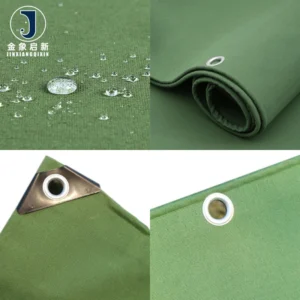
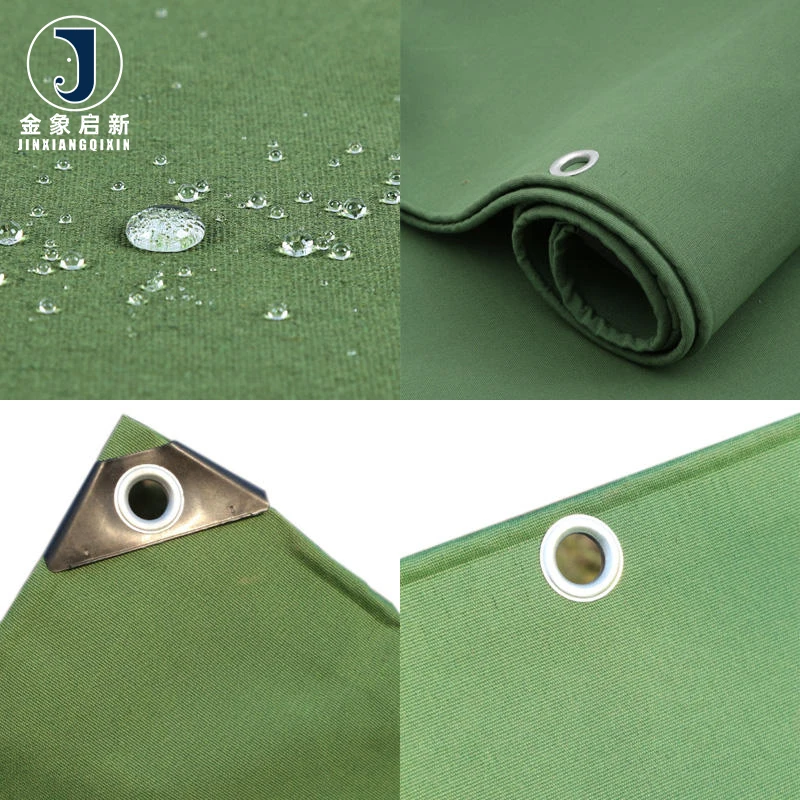
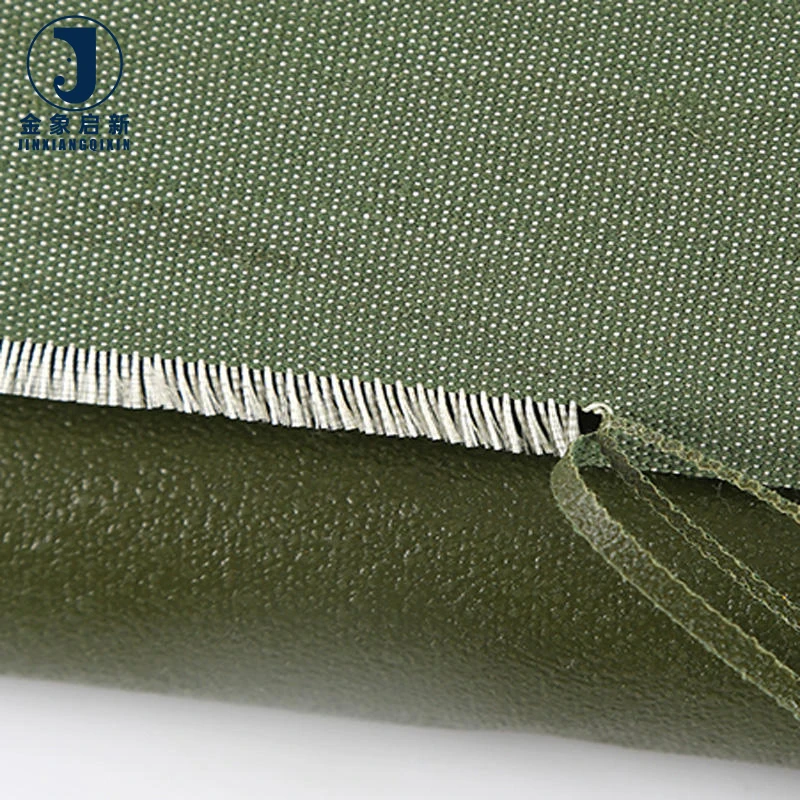
| Coating | Silicone waterproof coating |
| Roll Width | 2m |
| Roll Length | 100m |
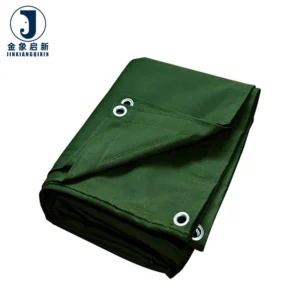
| Colour | Army Green Camouflage / Custom |
| Key Features | Wear-resistant, corrosion-resistant, tensile-resistant, high- and low-temperature resistant, UV resistant* |
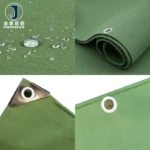
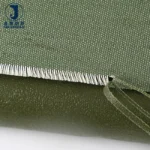
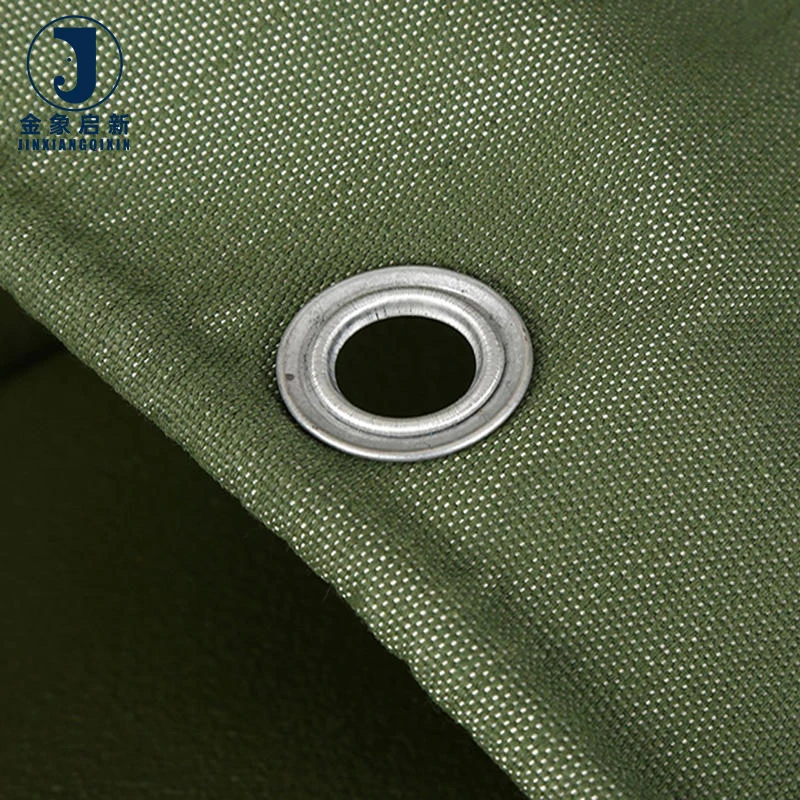
| Edge Reinforcement | Rust-proof aluminum eyelets every 1m at corners and hem; welded and poly-rope sewn seams |
| Standards | CE, ISO (general certification) |
*UV resistant and waterproof claims are stated by source; specific test basis and standards are not cited. Request test documentation to confirm performance levels for your application.
Application Suitability
| Application | Exposure & Requirement |
|---|---|
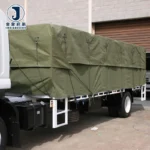
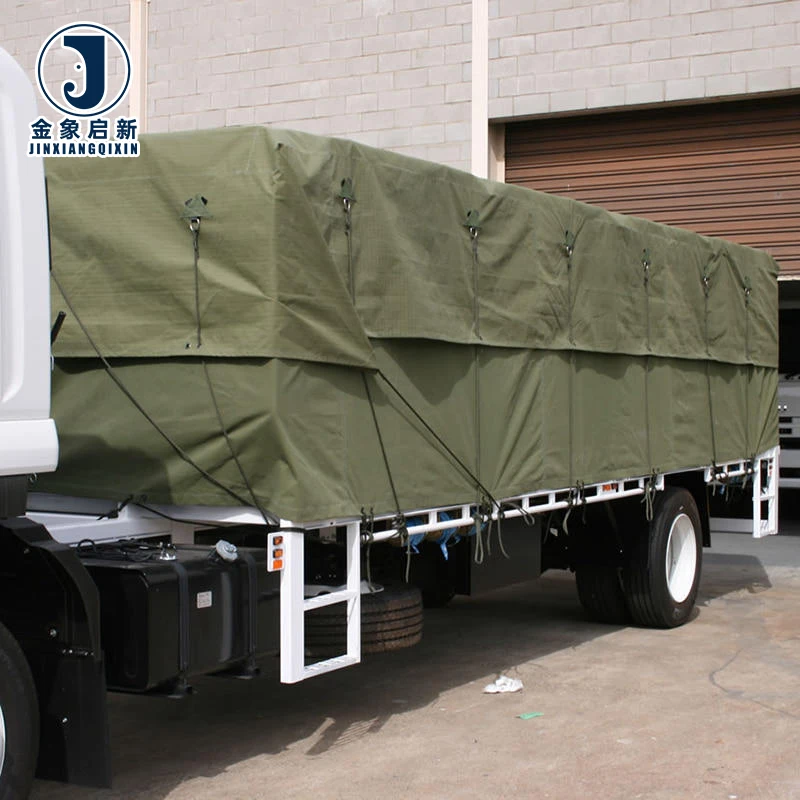
| Asphalt truck cover | High-temperature contact with hot bitumen, severe abrasion from aggregate, constant UV exposure |
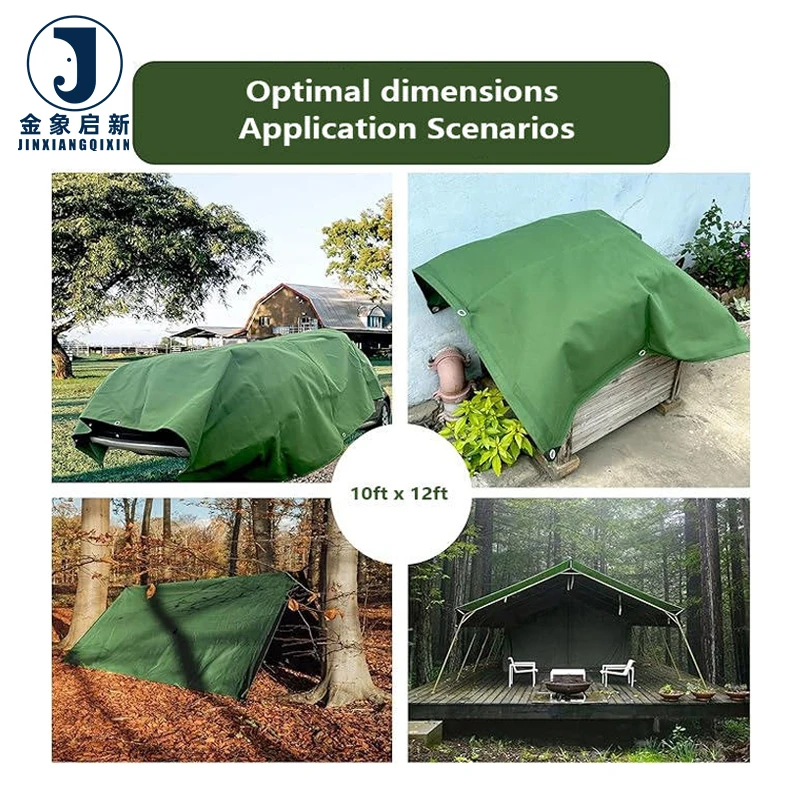
| Construction site equipment cover | Prolonged outdoor weather exposure, wind load on tie-downs, UV degradation risk |
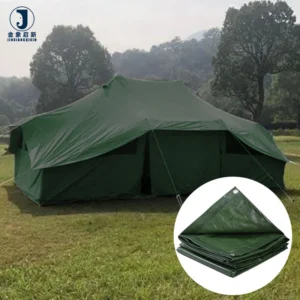
| Tent and temporary structure | Ground moisture, UV exposure, mechanical stress from framing and wind |
| Open-air material stockpile cover | Continuous weathering, wind uplift, requirement for secure long-term tie-down |
| Industrial and mining cover | Abrasive dust and particulate contact, temperature variation, chemical corrosion exposure |
Why Coated Canvas Fails at the Seams Before the Fabric Does
Seam failure is a coating adhesion and construction problem, not a base fabric problem.
When a heavy-duty canvas tarpaulin is specified for truck covers or construction environments, the base fabric often outlasts the points where it is joined. Welded seams and sewn hems carry the tie-down load and the flex load. If the heat-weld temperature does not match the silicone coating characteristics, the bond weakens and peels away under tension. Eyelets placed without adequate reinforcement pull through the fabric under wind gust, leaving the field of the material intact but the edge destroyed. Buyers who specify only by weight often discover that a 600gsm canvas with poor hem construction fails faster than a lighter fabric with proper edge engineering [NEED_CITE: seam failure modes in coated industrial textiles per ISO 1421 test methods].
Silicone Coating Chemistry and Temperature Stability
The silicone waterproof coating on this heavy-duty canvas tarpaulin provides a distinct advantage in high-temperature contact scenarios such as asphalt transport. Unlike standard PVC plastisol coatings that soften at elevated temperatures, silicone maintains its structural integrity across a broader thermal range. This makes the material suitable for loads that retain heat after production, where a conventional coating might become tacky, transfer to the load surface, or degrade at the contact interface. The coating also resists stiffening in cold conditions, which preserves flexibility during winter deployment and folding.
Hem and Eyelet Engineering for Wind-Loaded Covers
Edge failure accounts for a significant proportion of tarpaulin replacement events in transport and construction. This canvas tarpaulin addresses the problem through rust-proof aluminum eyelets spaced at every 1 meter along the corners and hem, with folding seams that are both welded and sewn with poly ropes. The dual-construction approach distributes tie-down force across the rope-reinforced edge rather than concentrating it at individual grommet points. In high-wind environments such as exposed construction sites or motorway transport, this construction method prevents the progressive tearing that begins when a single eyelet pulls free and shifts load to its neighbour [NEED_CITE: tensile and tear test methods for coated fabrics per ISO 1421].
Weight, Yarn Construction and the Limits of GSM
A 600gsm specification tells you the mass per square metre but does not alone define the mechanical performance of the base fabric. The tensile and tear behaviour of this canvas tarpaulin depends on the interplay between the 8-12 strand fine cotton yarn weave and the polyester cotton industrial textile composition. Higher strand count in the weft increases resistance to tear propagation, while the polyester component provides dimensional stability that pure cotton lacks. The three available thickness grades — 0.5mm, 0.6mm and 0.7mm — allow specification matched to abrasion severity: thinner grades for temporary covers where weight and pack size matter, heavier gauge for asphalt contact and sustained aggregate abrasion. Coating adhesion to the woven base is the third variable; a heavy base fabric with poor coating bond will delaminate under flex, regardless of its gsm reading.
What Happens When Batch Consistency Breaks Down
Colour variation between rolls in the same shipment becomes visible only after installation, when two panels of Army Green Camouflage are mounted side by side on a structure or vehicle. For fleet operators covering multiple trailers, or construction contractors deploying covers across a visible site, inconsistent shading signals poor quality control and draws client complaints. Similarly, if the stated 600gsm weight is not verified roll by roll before dispatch, underweight material enters the supply chain and fails prematurely under the expected load. Buyers who do not require pre-shipment inspection records carry this risk on every order [NEED_CITE: pre-shipment inspection standards for coated textile rolls].
Why Source This Canvas Tarpaulin Here
The 10-person R&D team handles material selection and custom sizing for technical canvas requirements, developing samples within days rather than weeks. Three full production lines with 36 sets of equipment provide capacity for bulk roll orders without extended lead time compromises. Every roll undergoes dedicated QA/QC at each production stage with 100% inspection before shipment, catching coating defects and GSM deviations before they reach the container. The team provides material specification sheets stating base fabric denier, coating type and weight, and colour reference — documentation that supports your own incoming inspection. CE and ISO certified production processes underpin the quality system.
Documentation & Verification
- Material specification sheet stating 600gsm weight, base fabric composition and silicone coating type
- Pre-shipment inspection record with measured GSM values per roll against quotation
- Colour reference standard for Army Green Camouflage or custom colour batch matching
- Roll packing list detailing roll count, dimensions and net weight for customs clearance
- Certificate of origin and customs documentation for international shipment
- ISO and CE certification records available for buyer compliance review
Fabrication, Handling & Storage
- Weld temperature must match silicone coating characteristics to avoid adhesion loss at seams on 0.5–0.7mm grades
- Poly-rope sewn hems distribute tie-down load across the 2m roll width, preventing point stress at eyelets
- Store 2m×100m rolls vertically on pallets to prevent flat-spot deformation of the woven base
- Allow cold-stored rolls to reach ambient temperature before unrolling to prevent silicone coating crack
- Clean with mild detergent only; solvents may degrade the silicone waterproof coating surface
- Patch field damage with compatible silicone-coated canvas patches heat-bonded at matching temperature
Request a Specification Match for Your Application
To receive an accurate recommendation, share the intended application environment, expected temperature range and exposure conditions. Specify whether you require roll stock in 2m×100m or custom cut-to-size panels with defined eyelet spacing. If your market requires fire-retardant or anti-static certification, confirm the grade and standard your project specifies so the correct material can be proposed.
Frequently Asked Questions
Q: How do I verify the 600gsm canvas weight when the rolls arrive?
A: Request the pre-shipment inspection record showing measured GSM values per roll. On receipt, cut a measured sample from each roll and weigh it to confirm the 600gsm specification matches your quotation. Any deviation should be reported before fabrication begins, as underweight material will not deliver the expected abrasion and tensile performance in service.
Q: What test documentation supports the UV resistance claim for outdoor use?
A: The source states UV resistant properties but does not cite a specific test standard or exposure duration. Before specifying for prolonged outdoor deployment, request the UV test report to confirm the test method and results. This ensures the canvas tarpaulin meets the exposure requirements of your climate zone and application duration.
Q: Can I order custom cut sizes with specific eyelet placement for high-wind tie-down?
A: Custom cut sizes are available alongside the standard 2m×100m roll stock. Specify panel dimensions, eyelet spacing intervals, and hem reinforcement requirements during the inquiry stage. The R&D team develops samples within days for approval, and lead times depend on order volume and the complexity of the cutting and reinforcement specification.
Q: How is batch colour consistency controlled across multiple rolls of camouflage canvas?
A: Army Green Camouflage and custom colours are produced with colour reference standards documented on the material specification sheet. Request the colour reference for your batch and inspect rolls side by side upon receipt. Pre-shipment inspection includes colour consistency checks to prevent visible variation when panels are installed adjacent to one another on trucks or structures.
Q: Do you supply roll stock for distributors, and what are the minimum order quantities?
A: Roll stock in 2m×100m is available for distributors and fabricators cutting to custom sizes. Minimum order quantities depend on whether the requirement is for standard inventory grades or custom colour and finish specifications. Share your annual volume and preferred delivery schedule during inquiry to receive volume-based lead time and packing details.