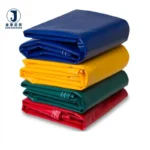
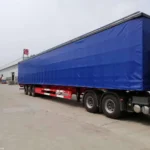
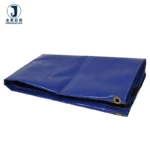
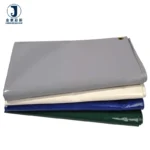
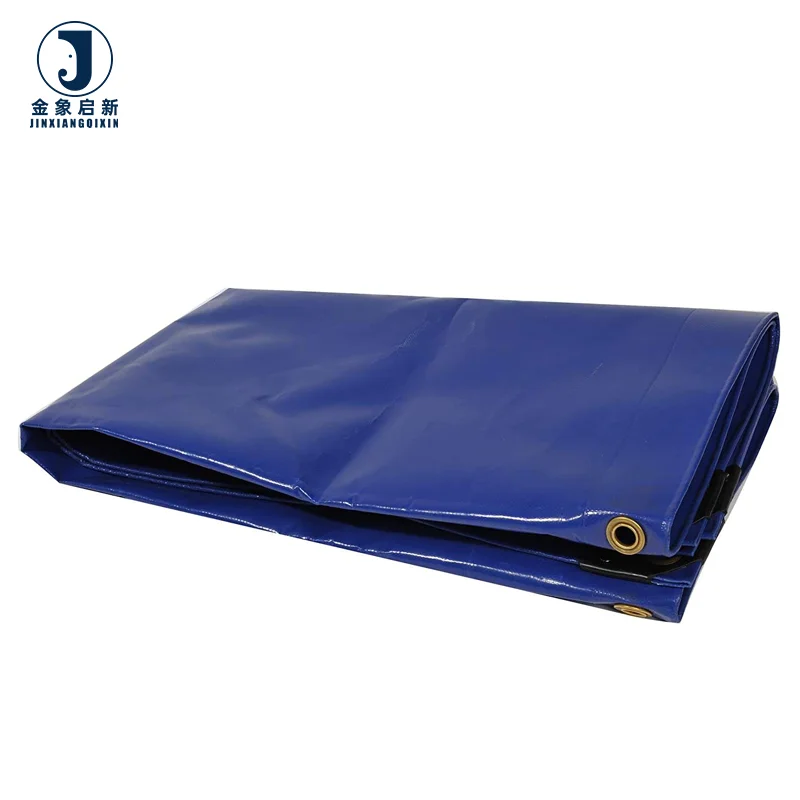
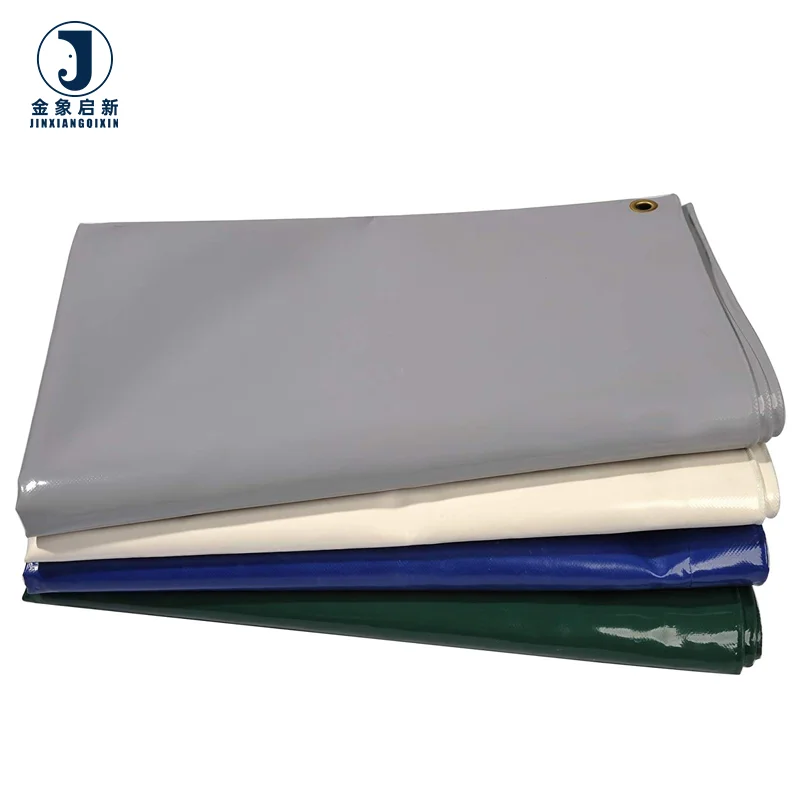
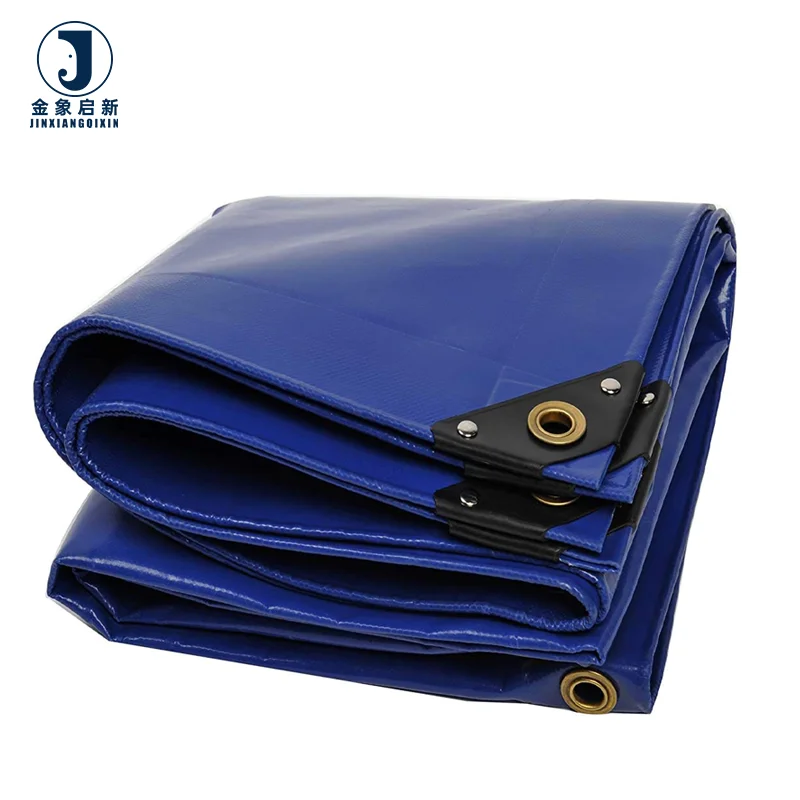
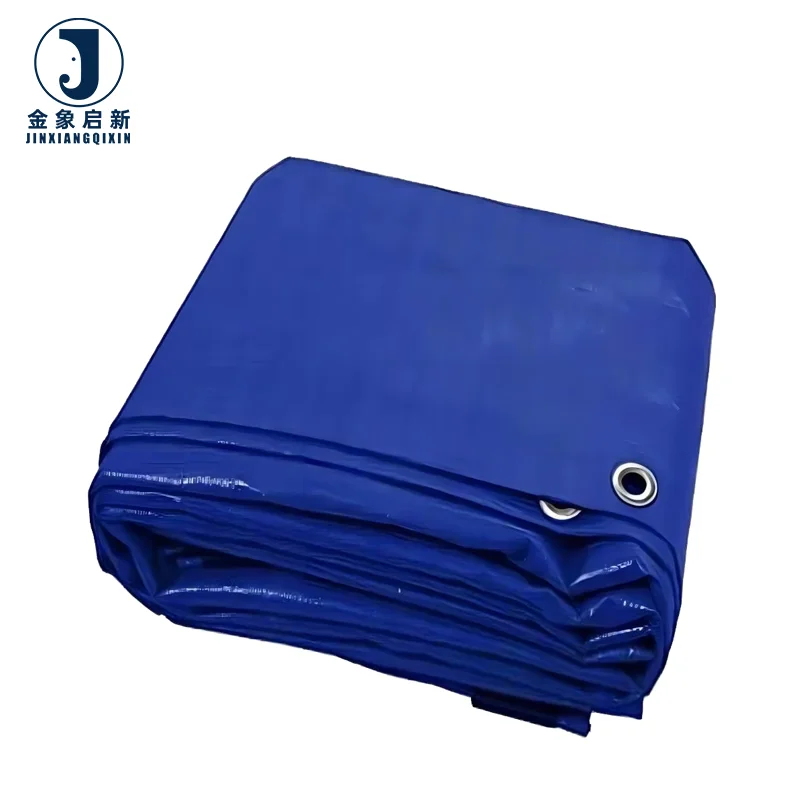
Specification Transparency — full denier, thickness, tensile and coating data published per grade so technical buyers can cross-check incoming material against the quoted PVC coated tarpaulin 1000D material specification without relying on generic claims.
Technical Specifications
| Parameter | Value |
|---|---|
| Product Type | PVC Coated Tarpaulin |
| Base Fabric Denier Options | 500D×840D, 500D×1000D, 1000D×1000D, 1000D×1300D, 1300D×1300D, 1000D×2000D |
| Weight (GSM) Options | 350, 400, 420, 500, 600, 650, 750, 900 |
| Total Thickness Range | 0.29mm, 0.32mm, 0.38mm, 0.44mm, 0.46mm, 0.55mm, 0.65mm |
| Coating Material | PVC |
| Coating Method | Double-sided PVC coating |
| Mesh Count Options | 30×19, 20×20, 30×15 |
| Tensile Strength Warp | 1650N, 1800N, 1850N, 2050N, 2500N, 2550N, 2750N, 3900N (test basis not stated in source) |
| Tensile Strength Weft | 1600N, 1700N, 1750N, 1900N, 2200N, 2250N, 2850N, 3500N (test basis not stated in source) |
| Key Features | Waterproof, Fire Retardant (grade not stated), Anti UV (test basis not stated), Anti Mildew, Heavy Metal Free, Self Clean |
| Joining Methods | High frequency hot melt, Hot air welding, Sewing |
| Temperature Range | Brittle ≤ -50~-60°C, Softening ≥ 80°C, Melting point 212°C |
| Density | 1.15–2.00 g/cm³ |
Application Suitability
| Application | Exposure & Requirement |
|---|---|
| Inflatable and membrane structures | Precise tensile data for structural load calculation, weld seam integrity under sustained internal pressure |
| Industrial ventilation duct (mining, tunnelling) | Fire-retardant and anti-static compliance documentation, abrasion from particulate-laden airflow |
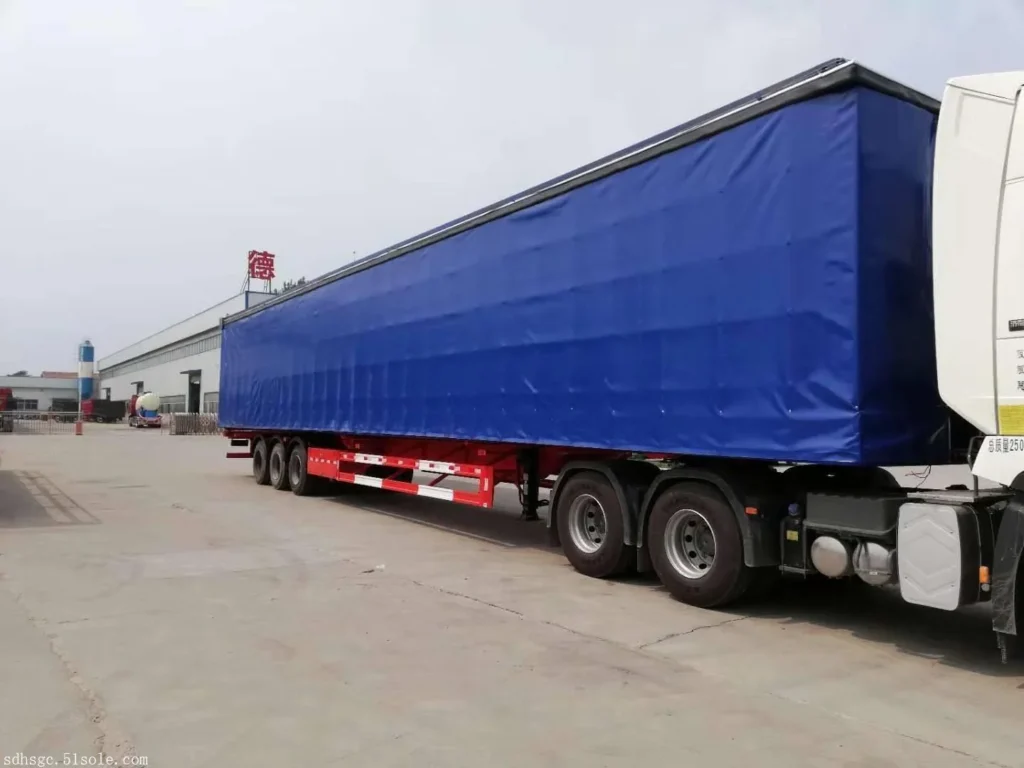
| Truck side curtains and trailer top covers | Constant flexing at load points, road abrasion, UV exposure, weather ingress prevention |
| Aviation ventilation systems | Documented flame-retardant performance for airside compliance, lightweight yet tear-resistant fabric |
| Construction temporary enclosures | Wind loading, puncture risk from scaffolding contact, fire safety on site |
Why Base Fabric Denier Matters More Than GSM Alone
Tensile strength in a PVC coated tarpaulin 1000D material specification is governed by the denier and weave density of the base fabric, not the coating weight alone.
Procurement teams frequently specify by GSM and assume the mechanical performance follows. In practice, two rolls at the same 650 GSM can carry vastly different warp and weft tensile values depending on whether the base fabric is 500D×1000D or 1000D×1000D. The coating contributes weight and waterproofing but adds limited structural strength. When a technical buyer needs fabric for membrane structures or pressurised ventilation ducts, the denier construction and its corresponding tensile data are the values that determine whether the material holds under load. [NEED_CITE: tensile and tear test methods for coated fabrics per ISO 1421]
Denier Progression and Its Structural Implications
The available base fabric denier options progress from 500D×840D through 1000D×1000D up to 1000D×2000D. Each step increases the yarn mass per unit length in both warp and weft directions, which directly lifts the tensile strength values. For PVC coated tarpaulin 1000D material specification buyers engineering inflatable structures, the 1000D×2000D construction delivers the highest warp tensile reading of 3900N — a critical figure when the fabric must sustain internal air pressure across large spans without excessive stretch.
Coating Weight, Thickness and Weld Parameter Selection
Thickness increases with GSM across the range: 0.29mm at 400 GSM through to 0.65mm at 900 GSM. This relationship matters during fabrication because hot air and high frequency welding parameters must be calibrated to the coating thickness. Too little energy on a 900 GSM grade leaves an incomplete bond; too much on a 350 GSM grade burns through the PVC layer and exposes the base fabric. Publishing the thickness-to-weight ratio for each grade allows fabricators to set weld temperatures and dwell times before running production samples. [NEED_CITE: hot air versus high frequency welding parameters for PVC coated fabrics]
Reading the Specification Sheet for Incoming Verification
Four parameters on the material specification sheet allow incoming QC to verify the PVC coated tarpaulin 1000D material specification matches the purchase order. First, the base fabric denier can be confirmed by counting yarns in a cut swatch under magnification. Second, GSM is checked by weighing a precisely cut sample and calculating weight per square metre. Third, total thickness is measured with a calibrated micrometre at multiple points across the roll width. Fourth, the colour reference is matched visually and, where specified, with a spectrophotometer against the approved sample. Together these checks catch the most common incoming discrepancies before the material reaches the cutting table.
Specification Errors That Surface After Installation
When the denier on arrival is lighter than what the quotation stated, the fabric may pass initial visual inspection but fail once installed under load. A side curtain specified at 1000D×1000D but supplied at 500D×840D will show excessive stretch at tie-down points and may tear along the hem when the trailer flexes. Similarly, if a ventilation duct is fabricated from material without the fire-retardant grade the site contract demands, the installation fails inspection and the entire duct run must be replaced — a rework cost that far exceeds the savings of an incorrect specification. [NEED_CITE: DIN 4102 fire classification for building materials]
Why Technical Buyers Source This Range Here
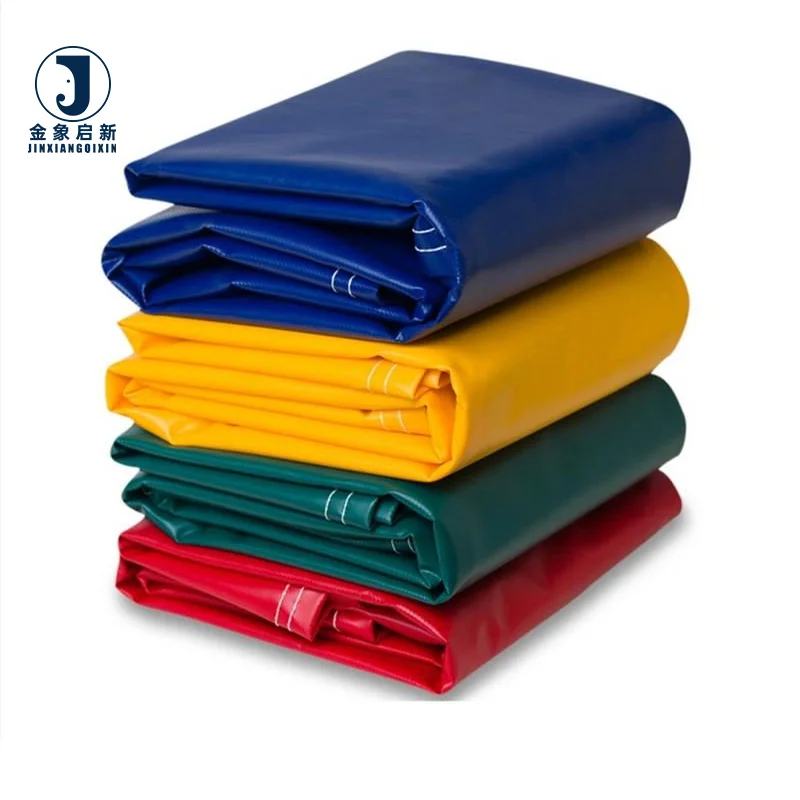
Three full production lines and 36 sets of professional equipment support bulk roll output with on-time dispatch across the entire GSM and denier matrix. A 10-person R&D team develops custom samples within days, covering pattern printing, custom width and colour matching for membrane and duct projects. Dedicated QA/QC stages run from coating weight verification through to 100% pre-shipment inspection, catching adhesion or colour deviations before rolls are packed. Nearly 30 years of focused coated fabric production provides the process control needed to hold batch consistency roll-to-roll within the same dye lot. Documentation packages include material specification sheets, test reports for UV and flame-retardant grades where applicable, and ISO and CE certificates — so compliance paperwork is ready when the fabric arrives on site.
Documentation & Verification
- Material specification sheet stating GSM, base fabric denier and coating weight per roll for incoming QC cross-check
- Test reports for UV and flame-retardant grades supplied with the relevant standard reference where applicable
- Colour reference documented per order to enable side-by-side batch consistency verification
- 100% pre-shipment inspection record confirming roll count, dimensions and surface condition
- ISO and CE certificates included in the dispatch documentation package
- Certificate of origin and customs documentation provided for international shipments
Fabrication, Handling & Storage
- Hot air welding at temperatures matched to the 0.29mm–0.65mm thickness range prevents burn-through on lighter grades
- High frequency hot melt joining suits the double-sided PVC coating for clean, flexible seams on inflatable structures
- Reinforced hems and brass eyelets every 1 metre distribute tie-down loads across the base fabric weave
- Store rolls horizontally on pallets in a shaded area to prevent flat-spotting on the 900 GSM heavy grades
- Field repairs by hot air welding restore seam integrity without returning the panel to the factory
- 5mm spliced-free rope in the hem maintains continuous load transfer around the perimeter of cut panels
Specifying Your Requirement
Provide the target application, the mechanical or environmental loads the fabric must withstand, and any fire-retardant or anti-static grades your site contract requires. State the roll width, GSM preference and annual volume so the production team can confirm batch consistency and lead time. If finished panels with printing or custom eyelet spacing are needed, share the cut dimensions and reinforcement layout for a fabrication-ready quotation.
Frequently Asked Questions
Q: How do I verify GSM on arrival against the quoted specification?
A: Cut a sample of known area from the roll edge, weigh it on a calibrated scale and calculate grams per square metre. Compare the result against the GSM stated on your material specification sheet. Minor tolerance exists, but significant deviation indicates the wrong grade was shipped. Request the pre-shipment inspection record for the production batch as a secondary check.
Q: Which fire-retardant test standards can be supplied with certification?
A: Flame-retardant grades are available — confirm the specific standard your market requires, such as M2, B1, NFPA 701 or DIN 4102. The applicable test report is included with the documentation package when the grade is specified at inquiry stage. Always verify the required standard with your site compliance officer before placing the order.
Q: How is batch colour consistency controlled across multiple rolls?
A: Coating weight and pigment dosing are controlled through process monitoring on each production line. Rolls within the same dye lot are inspected side by side before packing to identify any visible shade variation. For large orders spanning multiple production runs, request that all rolls be allocated from a single dye lot to ensure visual uniformity once installed.
Q: Which joining method suits different thickness and denier combinations?
A: High frequency hot melt welding works well across the full denier range and produces clean, flexible bonds on the double-sided PVC coating. Hot air welding is preferred for field repairs and suits thicker grades up to 0.65mm. Sewing with sealed needle holes is an option for lighter grades where thermal methods may compromise the coating layer.
Q: What documentation accompanies anti-static grades for mining ventilation duct?
A: Anti-static grades are available upon specification — confirm the test standard required for your mining or tunnelling contract. The test report documenting the surface resistivity reading is supplied with the shipment, along with ISO and CE certificates and the standard material specification sheet for the base fabric grade ordered.