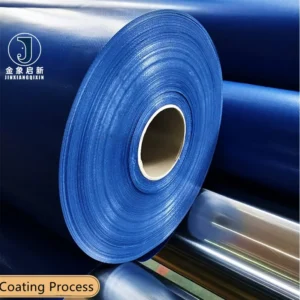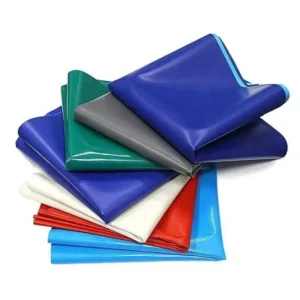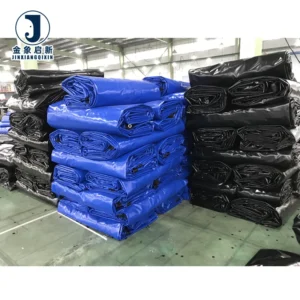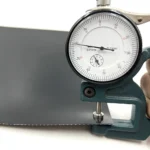
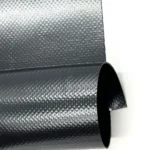
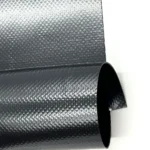
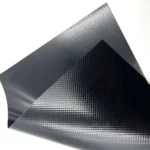
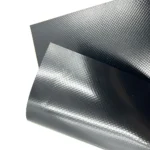
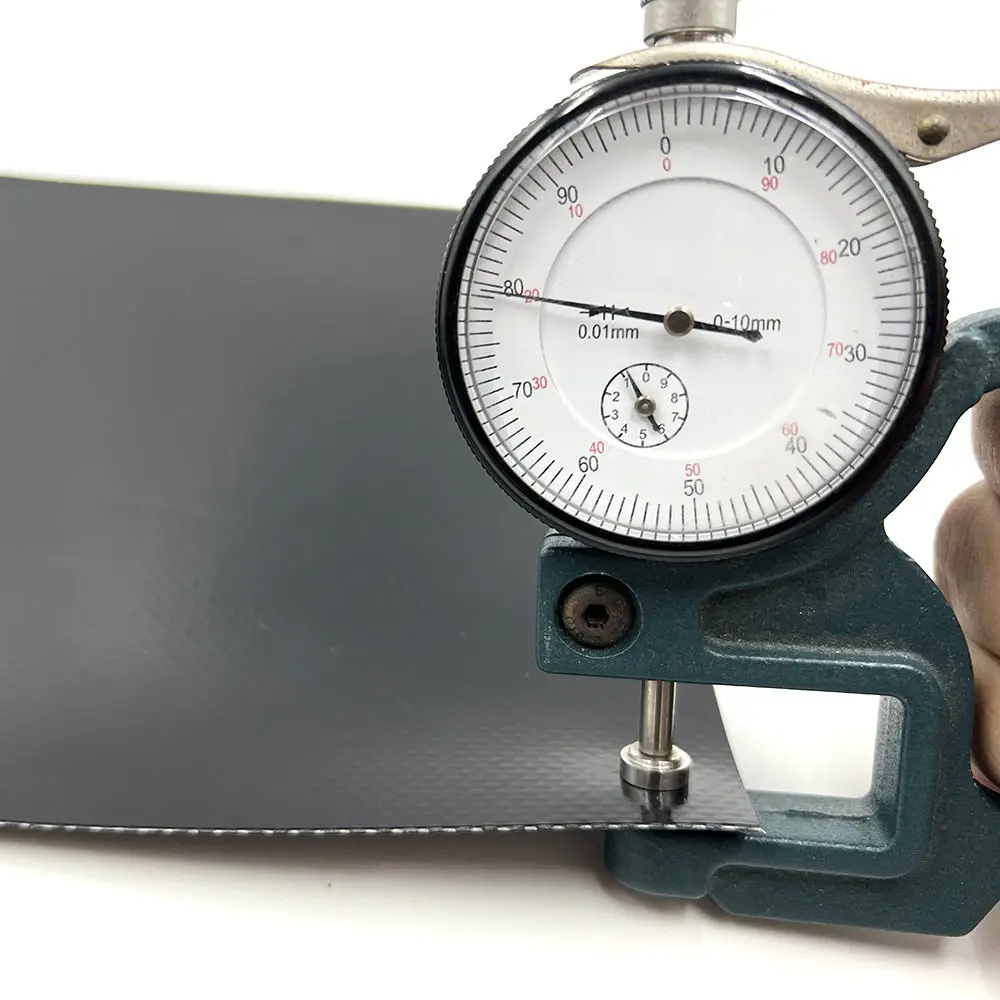
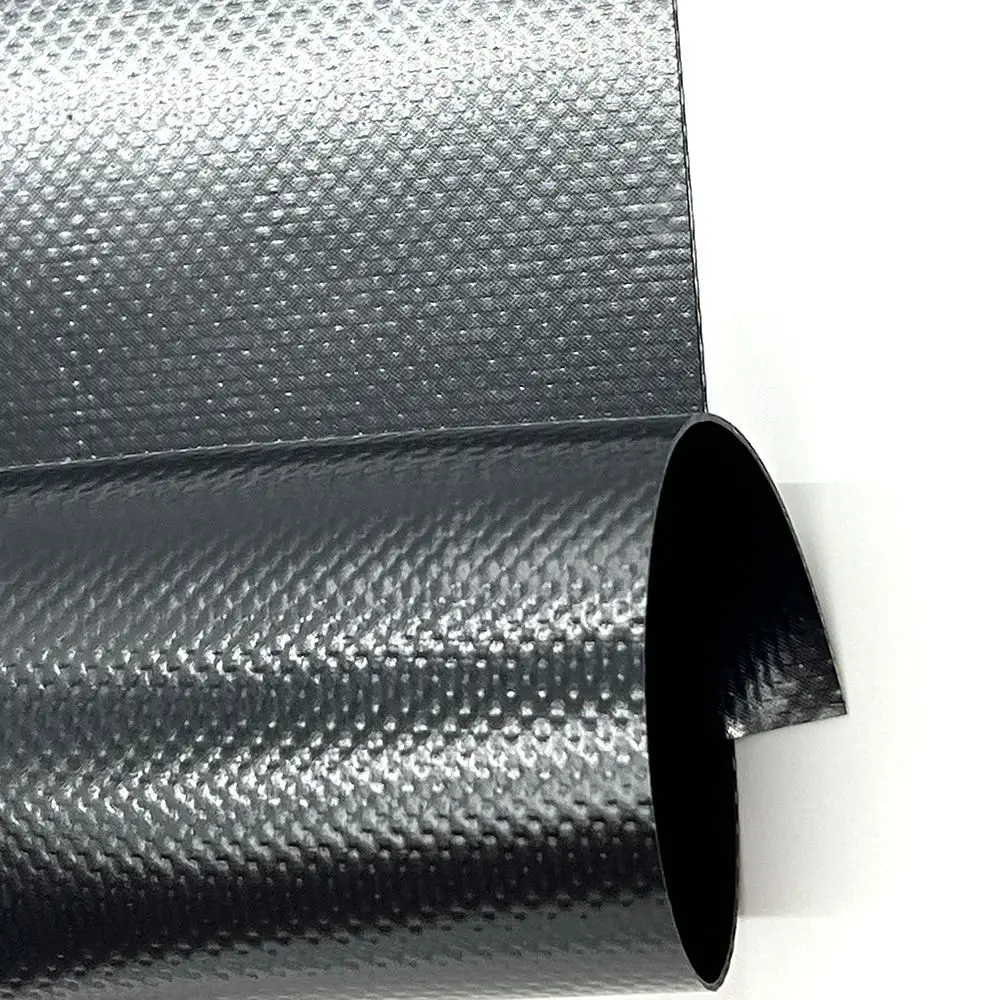
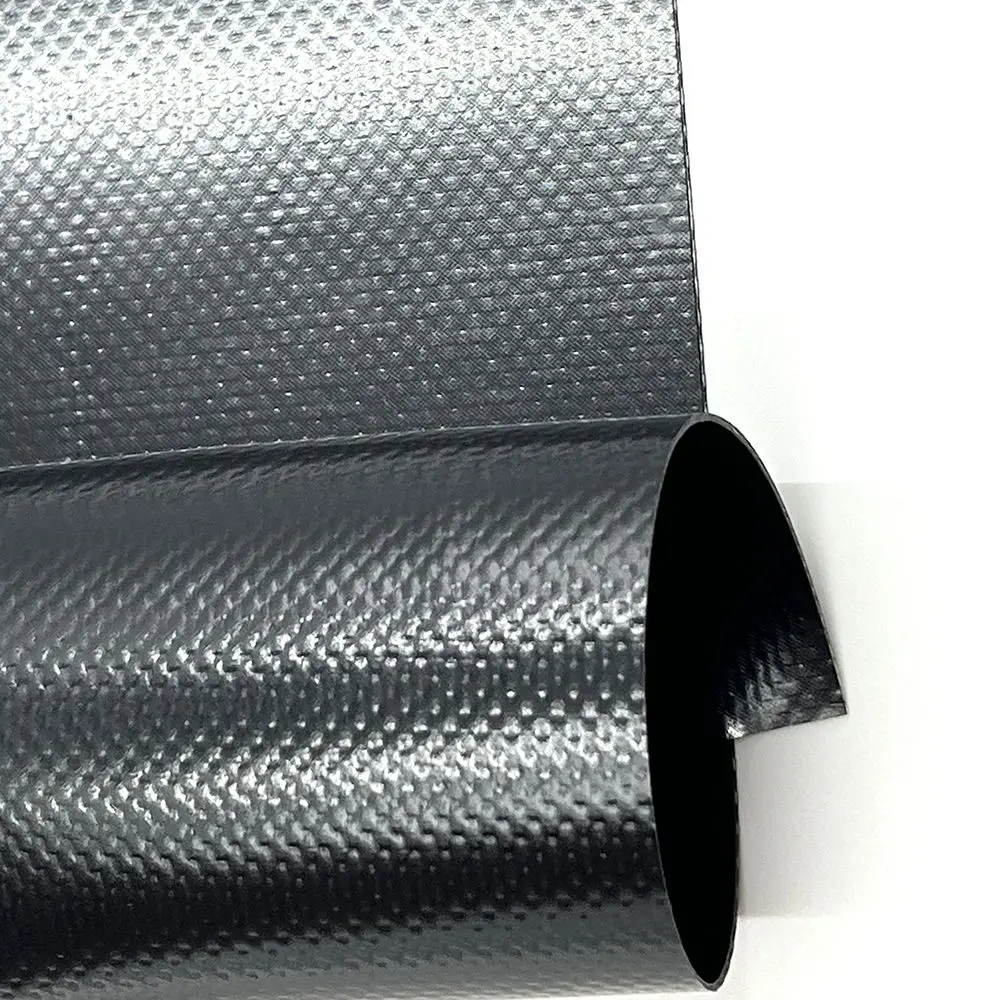
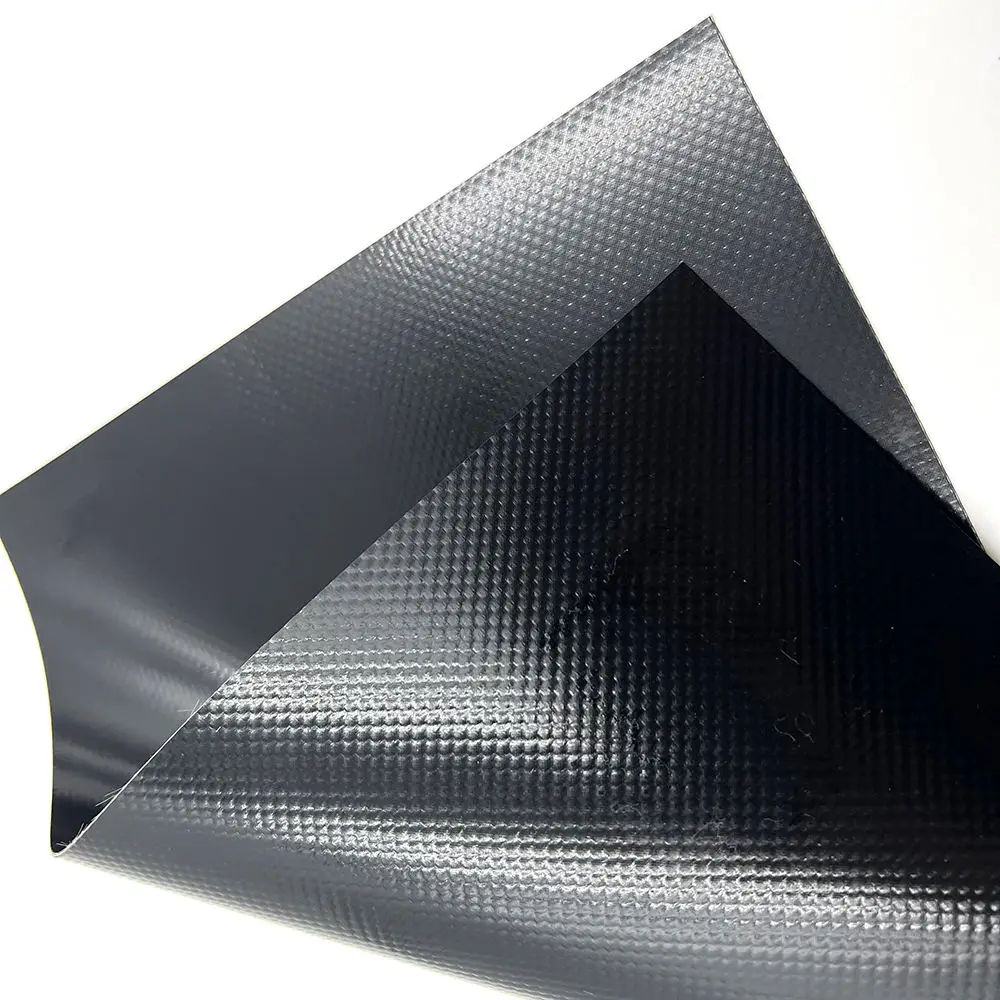
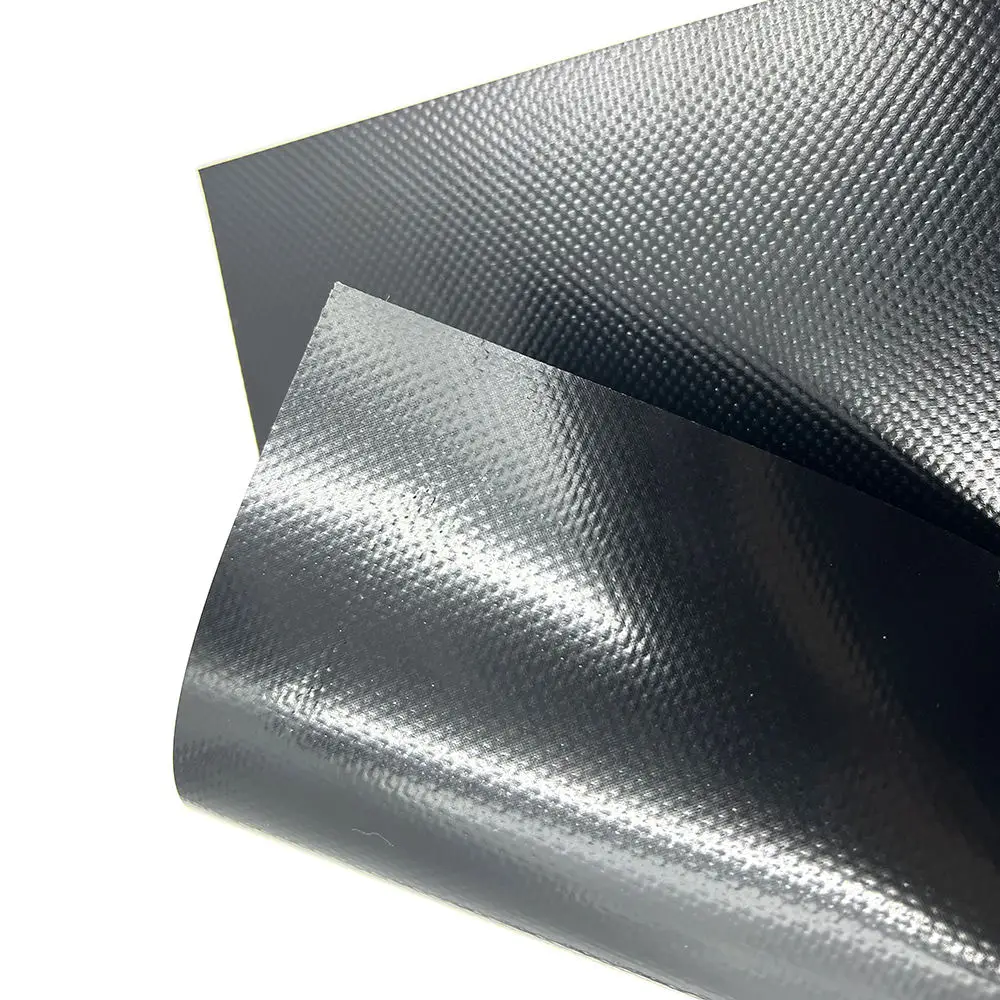
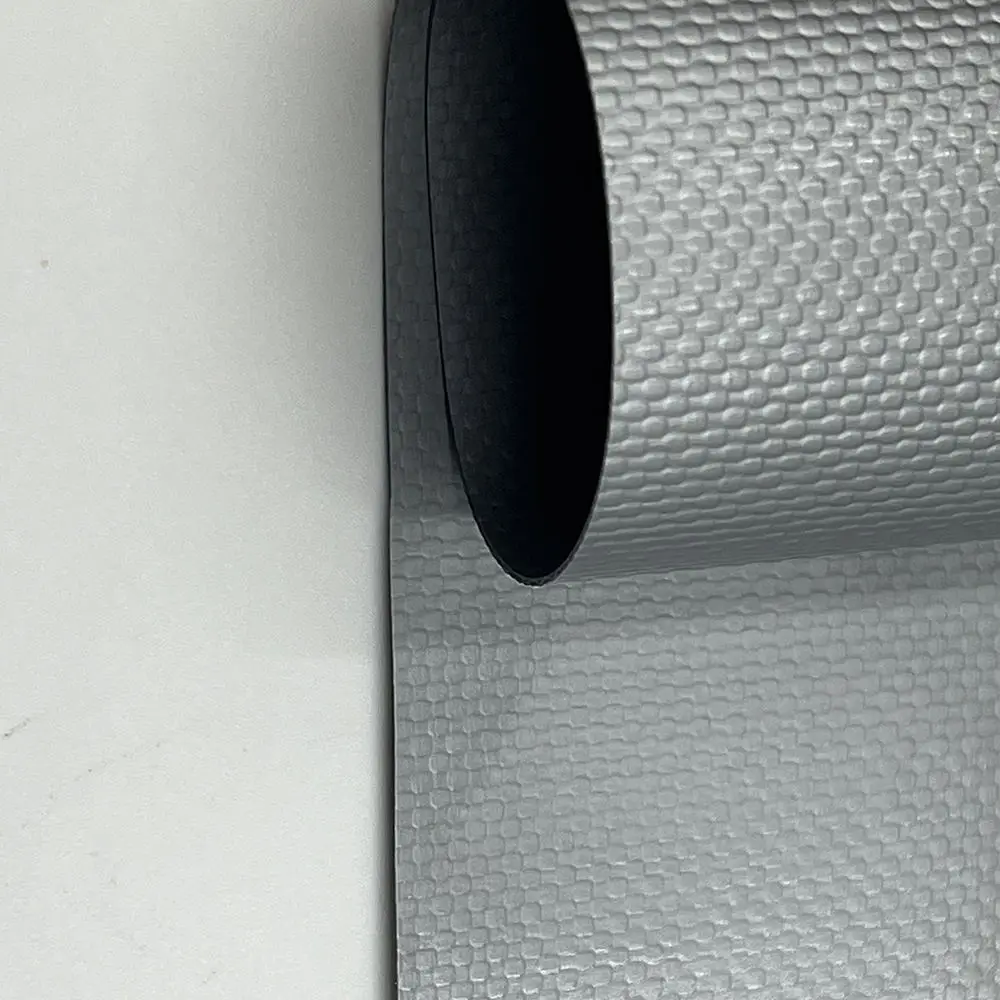
Coated Fabric Expertise — Nearly 30 years of process control over PVC knife coating weight and adhesion, applied to every roll of technical membrane fabric leaving our Jinan facility.
Technical Specifications
| Parameter | Value |
|---|---|
| Product Type | PVC Knife Coated Tarpaulin Heavy Duty Truck Cover Fabric |
| Coating Method | Knife coated |
| Coating Material | PVC |
| Color | Gray |
| Flame Retardant | Available in flame retardant grades — confirm the grade required for your market |
| UV Treatment | UV resistant treatment available — test basis to be confirmed per project |
| Anti-Mildew | Mildew proof |
| Antibacterial | Antibacterial treatment |
| Chemical Resistance | Oil and stain resistant, acid and alkali resistant |
| Temperature Resistance | High temperature and cold resistance |
| Flexibility | Highly flexible, resistant to cracking |
| Welding Options | HF, Hot Air, Sewing |
| Surface | Self-cleaning |
| Maintenance | Easy maintenance |
Application Suitability
| Application | Exposure & Requirement |
|---|---|
| Airport hangar membrane structures | Fire-retardant compliance, wind uplift loads, prolonged UV and thermal cycling |
| Stadium tensile architecture | High tensile and tear strength at seam points, certified flame retardant, long-term colour stability |
| Mining and tunnelling ventilation ducts | Anti-static and fire-retardant certification, abrasion from particulate-laden airflow, underground humidity |
| Portable storage structures | Weather and UV exposure, mechanical stress from assembly and disassembly, ground-level moisture |
| Shade systems and awnings | Continuous solar exposure, wind loading, requirement for self-cleaning surface |
Why a Test Certificate Matters More Than a "Fire Retardant" Label on PVC Knife Coated Tarpaulin
A fire-retardant claim without a named standard and grade is a liability on any job site subject to inspection.
Project engineers specify membrane and duct fabric by referencing DIN 4102, NFPA 701, or M2 classifications — not by supplier adjectives. When the PVC knife coated tarpaulin fire retardant certified documentation does not match the local authority’s required grade, the entire installation can be rejected at commissioning, regardless of how well the material performs in other respects [NEED_CITE: fire classification standards for architectural membrane and ventilation fabrics]. Sourcing teams that accept a generic "fire retardant" label without verifying the underlying test standard expose their contractors to rework costs and schedule delays that far exceed any initial fabric savings.
Knife Coating Process and What It Means for Structural Fabricators
The knife coated construction method applies liquid PVC directly onto the base fabric under precise blade gap control, producing a uniform coating layer that bonds mechanically and chemically to the yarn. This is distinct from laminated or calendered methods, and it yields higher peel strength at the coating-to-substrate interface — a property that matters when fabricators heat-weld seams under tension. For tensile structures and ventilation ducts where seam integrity under load is non-negotiable, the knife coated PVC tarpaulin provides a reliable base for high-frequency, hot air, and sewing operations.
Welding Compatibility Across HF, Hot Air, and Sewing
Fabricators working on membrane architecture and industrial duct systems need the flexibility to choose their joining method based on structural load and site conditions. This PVC knife coated tarpaulin supports high-frequency welding for continuous airtight seams on inflatable and duct applications, hot air welding for field repairs and complex geometry, and traditional sewing with sealed stitch lines for heavy-load panels. The self-cleaning surface does not interfere with weld adhesion when standard preparation procedures are followed, allowing shops to maintain throughput without additional surface treatment steps [NEED_CITE: welding methods for PVC coated technical textiles].
Reading Between the Specs: Coating, Treatment, and Temperature Range
GSM weight alone does not determine how a coated fabric will behave under structural load — the base fabric denier, mesh count, and coating adhesion all contribute to tensile and tear performance, which is why a complete material specification sheet is essential for engineering sign-off. The knife coating process used here ensures consistent coating weight distribution across the roll width, reducing the risk of thin spots that can become failure initiation points under sustained tension. Anti-mildew and antibacterial treatments address biological degradation in humid environments such as underground mining ventilation or tropical storage structures, while the stated high temperature and cold resistance range supports installation in climates where thermal expansion and contraction cycle the fabric daily. The self-cleaning surface characteristic reduces maintenance intervals on shade systems and architectural membranes where dust accumulation can accelerate UV degradation of the coating layer.
What Happens When Weld Parameters Do Not Match the Coating
When fabricators apply hot air or HF welding settings calibrated for a different PVC formulation, the seam can fail before the body of the fabric does — typically at the point where the installed structure flexes most under wind or load. This failure mode is common when shops switch between material suppliers without re-validating their welding temperature, speed, and pressure settings. Batch-to-batch consistency in coating weight and formulation is what allows a fabricator to lock in weld parameters and run production without destructive testing every roll. Inconsistent coating thickness forces operators to constantly adjust, introducing variability that shows up as seam failures in the field [NEED_CITE: weld failure analysis in PVC coated fabric structures].
Why Technical Buyers Source This PVC Knife Coated Tarpaulin Here
Three full production lines and 36 sets of professional equipment support bulk roll output with delivery scheduling that respects project timelines. The 10-person R&D team handles material selection, custom width development, and sample turnaround within days rather than weeks. Every roll undergoes dedicated QA and QC at each production stage, with 100 percent inspection before shipment — not a sampling protocol that leaves defects in the container. ISO and CE certified production systems provide the traceability framework that international project specifications demand. Custom width, length, and colour requirements are handled on the same lines as standard stock, avoiding the extended lead times and high minimums that buyers typically face on non-standard orders.
Documentation & Verification
- Material specification sheet stating GSM, base fabric, and coating weight for this gray knife coated grade
- Fire-retardant test report with applicable grade for aviation or public venue membrane compliance
- Pre-shipment inspection record confirming 100 percent QC check on every roll before dispatch
- Certificate of origin and customs documentation supporting export to North America, Europe, and Asia
- UV treatment verification documentation aligned with the test basis required by your project engineer
Fabrication, Handling & Storage
- Validate HF and hot air weld temperature, speed, and pressure on a sample piece from each new roll before running production seams
- Store rolls upright on end caps in a dry, shaded area to prevent flat-spot deformation of the PVC coating layer
- Allow cold-stored rolls to reach ambient temperature before unrolling to prevent coating micro-cracking in the knife coated surface
- Use compatible PVC-based cleaners only; solvent-based products may degrade the self-cleaning surface treatment
- Plan panel cutting layout to minimise off-cuts and ensure welded seams align with primary structural load paths
What We Need From Your Enquiry
Provide the intended application — whether tensile membrane, ventilation duct, or portable structure — along with the fire-retardant classification your local authority or project engineer requires. Specify the roll width, colour, and total linear metres needed so we can confirm stock availability or custom production lead time. If your project demands anti-static surface resistance for mining compliance or a specific UV treatment test basis, state that requirement upfront so the correct grade is quoted and documented from the start.
Frequently Asked Questions
Q: Which fire-retardant grades can be supplied for aviation or public venue projects?
A: We supply this PVC knife coated tarpaulin in flame retardant grades aligned with standards such as DIN 4102, NFPA 701, and M2. The specific grade must match your project’s fire safety specification and local authority requirements. Provide your target classification at enquiry stage so the correct formulation is produced, tested, and documented with a grade-specific test report included in your shipment paperwork.
Q: What welding method is recommended for high-load tensile membrane seams?
A: High-frequency welding typically delivers the strongest continuous seam on this knife coated PVC fabric for structural applications, producing a bond that approaches the base fabric strength. Hot air welding suits field repairs and complex geometries, while sewing with sealed stitch lines handles heavy-load panel joins. We recommend running test welds on a sample from your production roll to confirm temperature and speed settings.
Q: How is UV treatment verified and what does it mean for outdoor durability?
A: UV resistant treatment is available on this PVC knife coated tarpaulin, with the specific test basis confirmed per your project requirement. UV stabilisers are compounded into the PVC coating to resist degradation from continuous solar exposure. Request the applicable UV test documentation at quotation stage to ensure the treatment level matches the expected outdoor service environment of your tensile or shade structure.
Q: Can anti-static surface resistance be provided for mining ventilation duct compliance?
A: Anti-static treatment is available for this PVC knife coated fabric where mining and tunnelling ventilation regulations require controlled surface resistivity. The treatment must be specified at enquiry stage so the correct formulation is applied during coating. We supply test documentation confirming the surface resistance value against the standard required by your site safety specification.
Q: What is the lead time and minimum order for custom width or colour?
A: Custom widths and colours are produced on the same three full production lines as standard gray stock, avoiding the extended delays typical of dedicated custom runs. Lead times and minimums depend on the specific width, total roll quantity, and whether fire-retardant or anti-static treatment is required. Provide your project dimensions and volume at enquiry stage for a confirmed schedule.