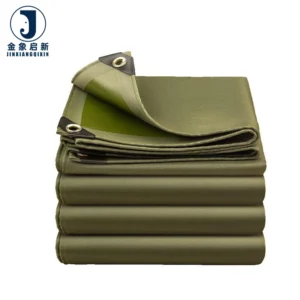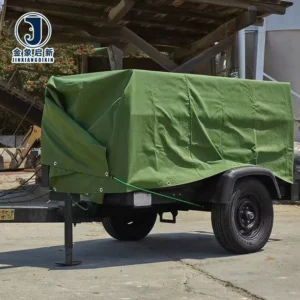

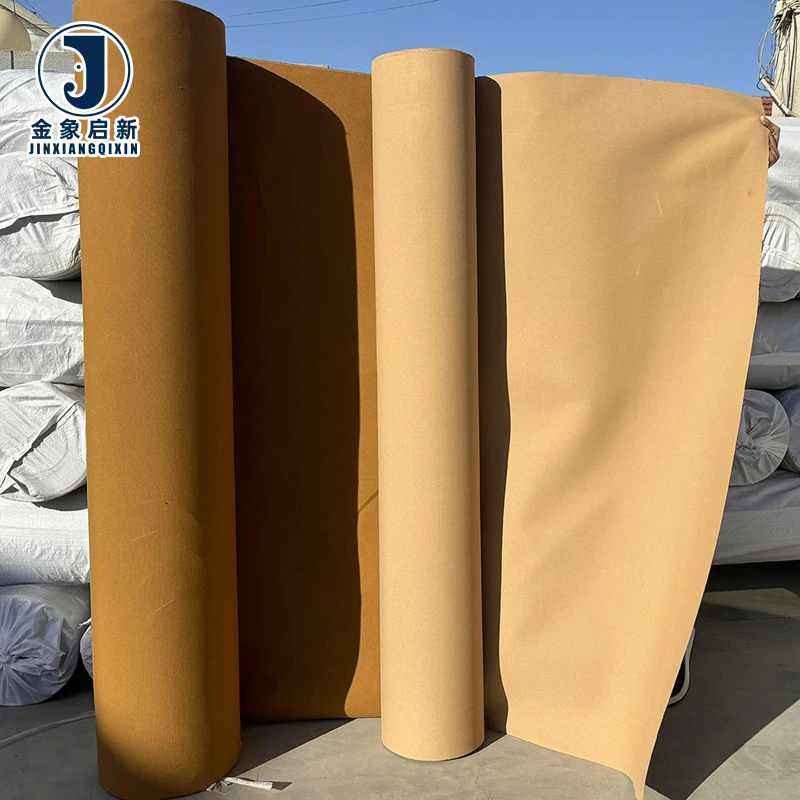
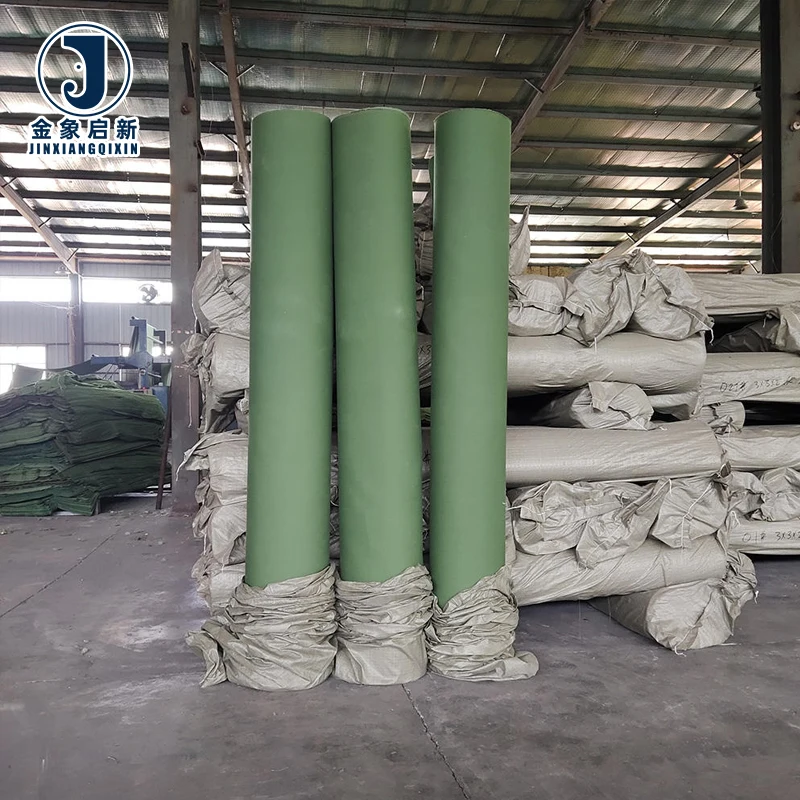
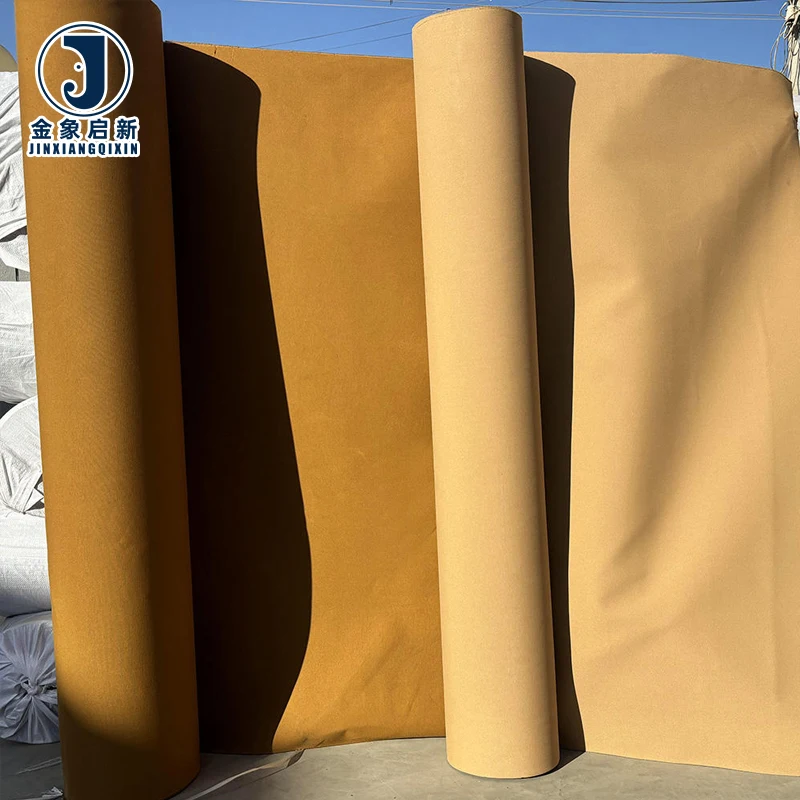

Nearly Three Decades of Coated Fabric Focus — This PVC laminated woven canvas tarpaulin is produced under dedicated QA/QC protocols with 100% pre-shipment inspection, ensuring technical-grade consistency for industrial and ventilation-adjacent applications.
Technical Specifications
| Parameter | Value |
|---|---|
| Product Type | Heavy Duty PVC Laminated Woven Canvas Tarpaulin |
| Coating Method | Laminated |
| Coating Material | PVC |
| Base Fabric | Woven canvas (ripstop construction) |
| Waterproof | Yes — fully coated construction |
| Heat Resistant | Yes (grade not stated — request test certification) |
| Key Features | Waterproof, tear resistant, heat resistant, high breathability |
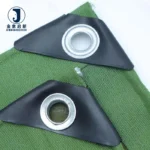
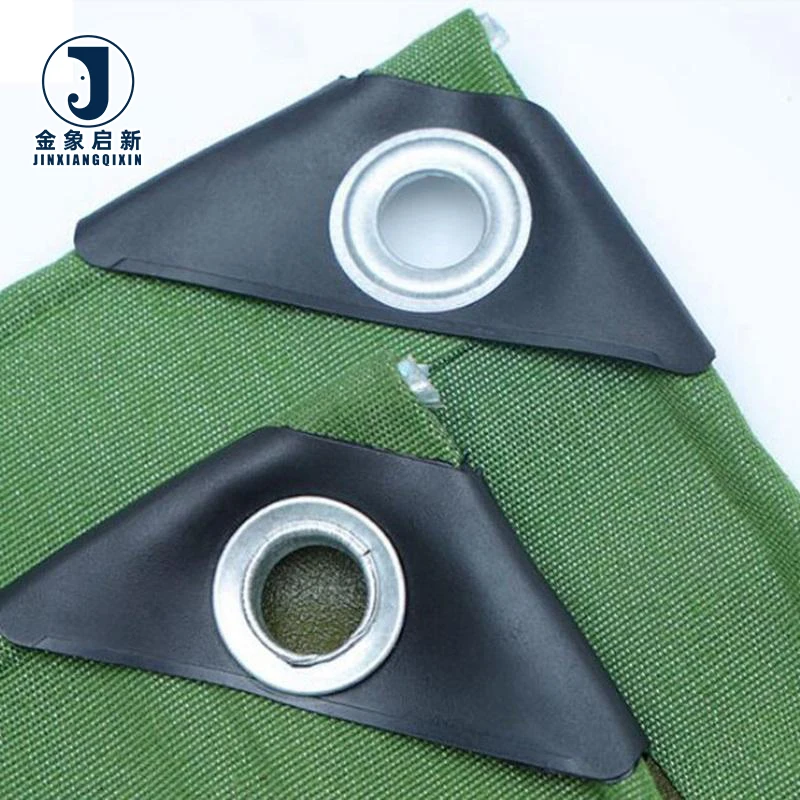
| Eyelets | Installed on all four sides |
| Edge Finish | Reinforced hems with eyelet placement |
| Assembly State | Cut-to-size with reinforced hems and eyelets |
Application Suitability
| Application | Exposure & Requirement |
|---|---|
| Mining and construction site equipment covers | Abrasion from particulate matter, UV and thermal cycling, secure tie-down under wind loads |
| Ventilation duct outer protection | Proximity to heat sources, need for tear-resistant outer layer, potential anti-static compliance |
| Aviation ground support shelters | Wide temperature swings, fuel and chemical splash exposure, rapid deployment and removal |
| Tunnel entrance weather barriers | Continuous moisture contact, high wind pressure, structural integrity over extended spans |
| Inflatable and membrane structure fabric panels | Internal pressure stress, thermal expansion and contraction, weld seam reliability |
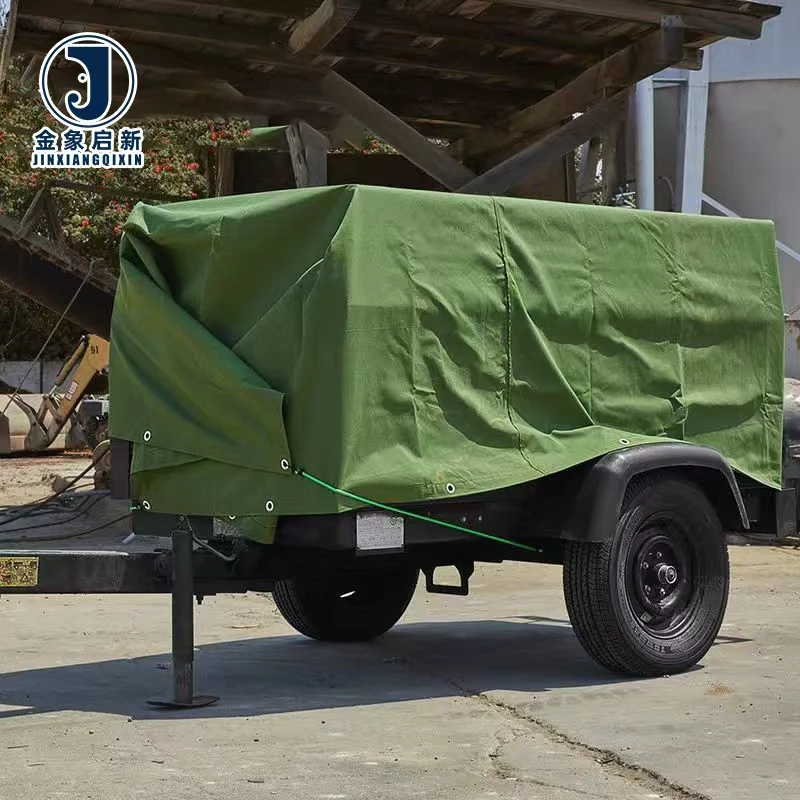
| Engine hood and vehicle covers | Direct heat exposure from machinery, road-borne debris impact, repeated fitting and removal |
Why PVC Laminated Canvas Tarpaulin for Industrial Use Demands More Than a Thickness Claim
Thickness alone does not guarantee structural survival when heat, wind load, and abrasion converge on a single panel.
Industrial tarps specified purely by weight frequently fail at stress concentrations — around eyelets, along hem lines, or at the weld seams where two panels join. A heavy-grade laminated canvas that lacks proper adhesion between the PVC film and the woven base will delaminate under thermal cycling long before the base fabric reaches its tear limit. For mining and tunnelling contractors, specifying a PVC laminated canvas tarpaulin without verified lamination bond strength is a common source of premature field replacement [NEED_CITE: peel adhesion test methods for laminated fabrics per ISO 2411]. The result is unplanned downtime on a project site where the fabric is load-bearing or safety-critical.
Laminated Construction and Its Role in Technical Fabric Performance
The lamination process bonds a pre-formed PVC film to the woven canvas base under heat and pressure, creating a distinct coating-to-fabric interface. For technical applications such as ventilation duct outer wraps or membrane structure panels, this construction method delivers consistent coating thickness across the full panel width. PVC laminated canvas tarpaulin built this way avoids the variable coating weight that can occur with alternative methods, which matters when the fabric must perform under sustained thermal load.
Base Fabric Architecture and Tear Propagation Control
The ripstop woven construction introduces reinforcement threads at regular intervals within the canvas grid. When a puncture or cut occurs in field conditions — common on mining sites where sharp aggregate is present — the ripstop pattern limits how far the tear can propagate before it encounters a heavier yarn. This structural redundancy is critical for inflatable structures and tunnel barriers, where a running tear can compromise the entire installation. Each panel of this PVC laminated canvas tarpaulin benefits from that built-in tear arrest mechanism [NEED_CITE: tear propagation testing for coated technical textiles per ISO 13937-4].
Specification Interpretation for Procurement Decisions
The interplay between base fabric density and coating weight determines whether a laminated canvas will hold up under mechanical stress or simply add dead weight. A tightly woven canvas base provides the tensile skeleton; the PVC laminate supplies waterproofing, heat resistance, and surface durability. Neither compensates for a deficiency in the other. For lamination specifically, the bond strength between film and fabric governs long-term performance under thermal cycling — if the adhesive interface fails, the coating lifts and moisture penetrates the base fabric. The ripstop weave pattern adds a secondary defence by interrupting tear paths, which is particularly relevant for applications where the fabric is tensioned across a frame or inflated structure. Buyers specifying material for ventilation-adjacent use should also verify whether heat-resistant formulation extends across the full product range or applies only to specific grades, as this affects consistency across a multi-panel order. Surface finish and breathability characteristics influence how the fabric behaves when sealed into a structure — trapped moisture between the fabric and the substrate can accelerate degradation if breathability is not matched to the application environment.
The Hidden Cost of Specifying Without Full Material Data
When a PVC laminated canvas tarpaulin is ordered based on a general description without a material specification sheet, the delivered product may meet the thickness expectation but fall short on lamination bond strength or base fabric density. On a mining ventilation project, this can mean the outer duct wrap delaminates within the first seasonal temperature swing, exposing the inner duct to debris ingress. For membrane structures, inconsistent ripstop weave density between rolls can cause uneven tension distribution, leading to panel distortion once installed. These failures rarely show up in pre-shipment visual inspection — they emerge under field stress [NEED_CITE: common failure modes in laminated technical fabrics under thermal cycling]. The cost of replacement in remote project sites far exceeds the cost of thorough pre-purchase verification.
Why Source This PVC Laminated Canvas Tarpaulin Through Jinan Jinxiang
Three dedicated production lines and 36 sets of professional equipment support volume orders with controlled lead times, whether the requirement is roll stock or cut-to-size panels with finished eyelets. The 10-person R&D team handles material selection and sample development for specific project conditions — including custom widths, eyelet spacing, and hem reinforcement configurations. Every roll undergoes dedicated QA/QC at each production stage, with 100% inspection before dispatch, reducing the risk of receiving fabric that deviates from the agreed specification. The lamination process itself is subject to in-process controls on temperature, pressure, and dwell time to maintain consistent bond strength across the production run. For projects requiring documentation for site compliance, full material specification sheets, test reports, and pre-shipment inspection records are prepared as standard.
Documentation & Verification
- Material specification sheet stating base fabric construction, lamination method, and coating material for each roll
- Heat resistance test report confirming performance grade for the specific batch supplied
- Pre-shipment inspection record verifying eyelet placement, hem reinforcement, and panel dimensions
- Certificate of origin and customs documentation prepared for cross-border project site delivery
- Roll packing list with individual roll weights and dimensions for container loading verification
Fabrication, Handling & Storage
- Heat sealing parameters must match PVC laminate thickness to prevent delamination at weld seams during fabrication
- Eyelet reinforcement plates should distribute load across the ripstop weave to prevent pull-through under tension
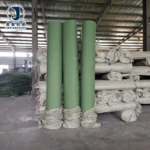
- Store rolls on pallets in a dry environment to protect the laminated surface from compression marks and moisture ingress
- Avoid dragging cut-to-size panels across abrasive surfaces to preserve the PVC laminate coating integrity
- Use mild detergent for cleaning; solvent-based cleaners may degrade the PVC laminate surface bond
- Allow laminated panels to acclimatise before installation to reduce thermal stress at fixing points
What to Include With Your Enquiry
Provide the application environment, including exposure to heat sources, wind load expectations, and whether the fabric will be tensioned, inflated, or used as a loose cover. Specify the target market and any fire-retardant or anti-static compliance requirements your project site mandates. Indicate whether you need roll stock or finished cut-to-size panels with eyelets, and include the required dimensions and annual volume to support accurate lead time planning.
Frequently Asked Questions
Q: What heat resistance certification is available for this PVC laminated canvas tarpaulin?
A: Heat resistance is a stated feature of this laminated canvas, but the specific test basis and grade are not published in the standard specification. For projects requiring documented thermal performance — such as proximity to ventilation ducts or engine bays — request the test report and certification grade before placing your order to ensure site compliance.
Q: Are fire-retardant grades such as M2, B1, or NFPA 701 available for this fabric?
A: Fire-retardant formulations are available within the product range, but the applicable grade depends on the specific material configuration ordered. Confirm the fire classification required by your project specification — such as DIN 4102 B1 or NFPA 701 — and request the corresponding test report before production to ensure the supplied fabric meets your site’s compliance standard.
Q: How does PVC laminate construction compare to knife-coated PVC for structural applications?
A: Laminated construction bonds a pre-formed PVC film to the woven base, delivering uniform coating thickness. Knife coating applies liquid PVC directly to the fabric, which can penetrate deeper into the weave. For high-stress structural use where consistent peel adhesion and thermal stability matter, laminated construction is generally preferred — confirm your application requirements with the technical team.
Q: Can this PVC laminated canvas tarpaulin be supplied with anti-static treatment for mining use?
A: Anti-static treatment is available within the broader product capability for mining and tunnelling ventilation applications. Specify this requirement during the enquiry stage so the treatment can be integrated during production and verified with a test report before dispatch, ensuring compliance with your site’s safety regulations.
Q: What customisation options are available for width, eyelet spacing, and hem reinforcement?
A: Custom widths, eyelet spacing intervals, and reinforced hem configurations can be produced to match your project specifications. The R&D team develops samples for custom requirements, allowing you to verify dimensions and finishing details before full production proceeds. Include your exact panel dimensions and fixing requirements with your enquiry.