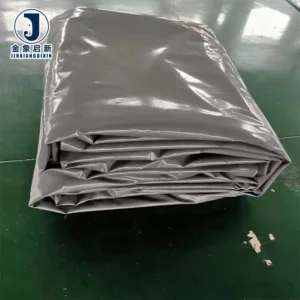


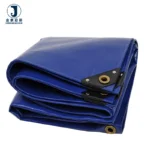
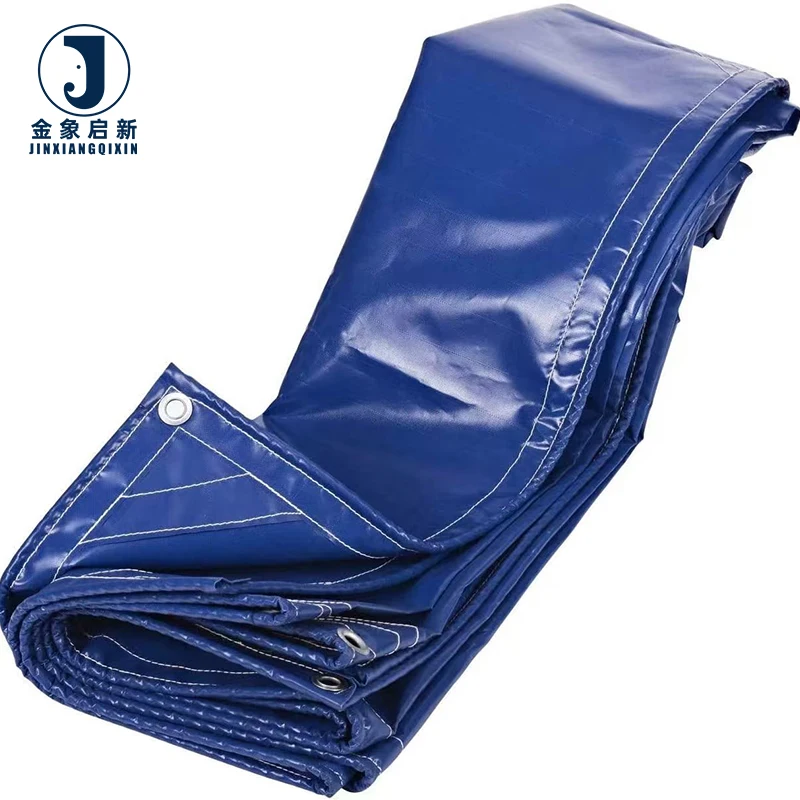
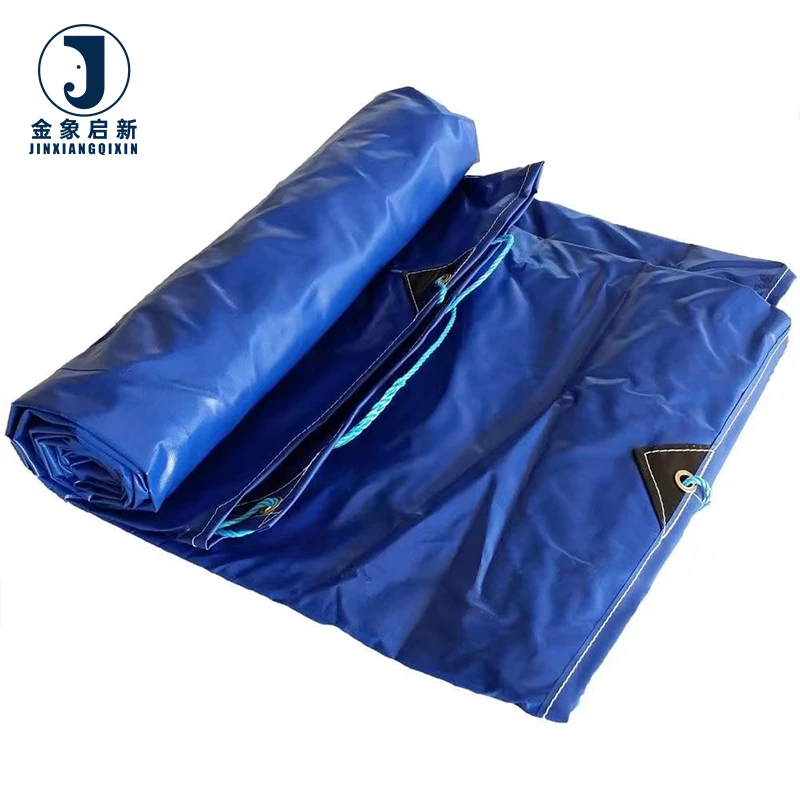
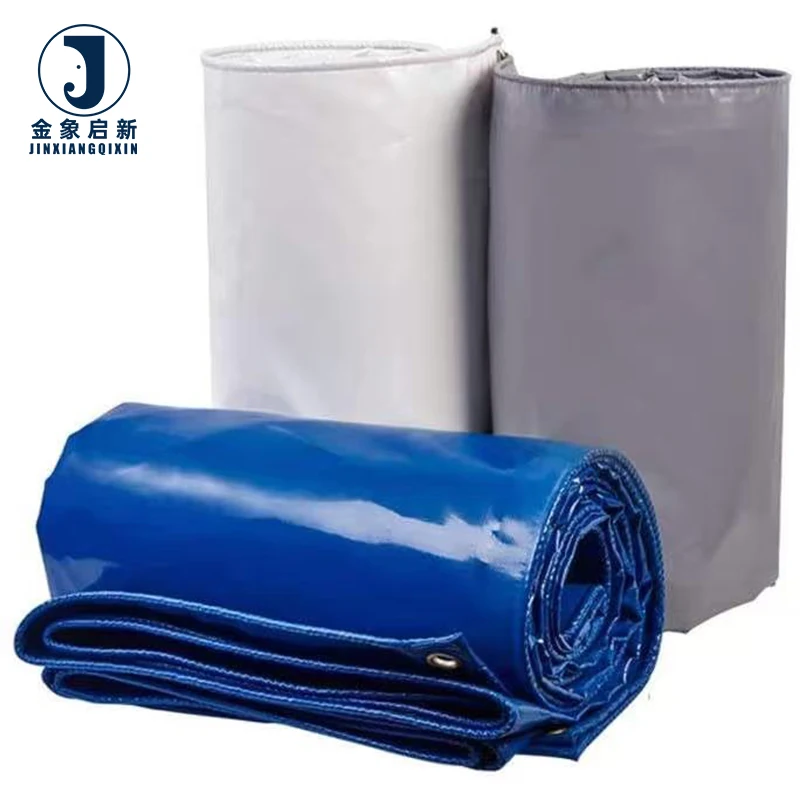
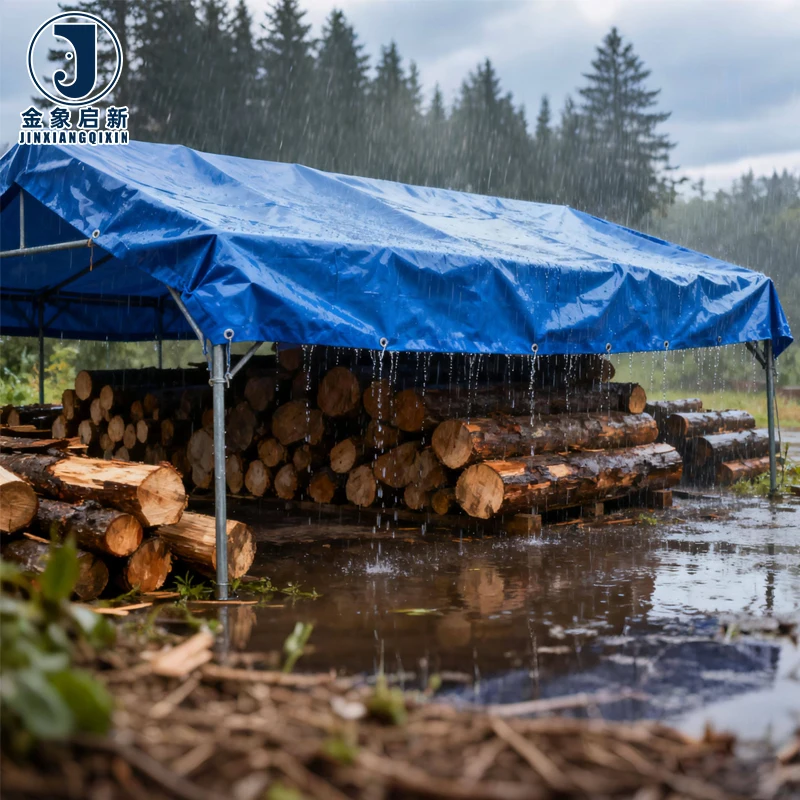
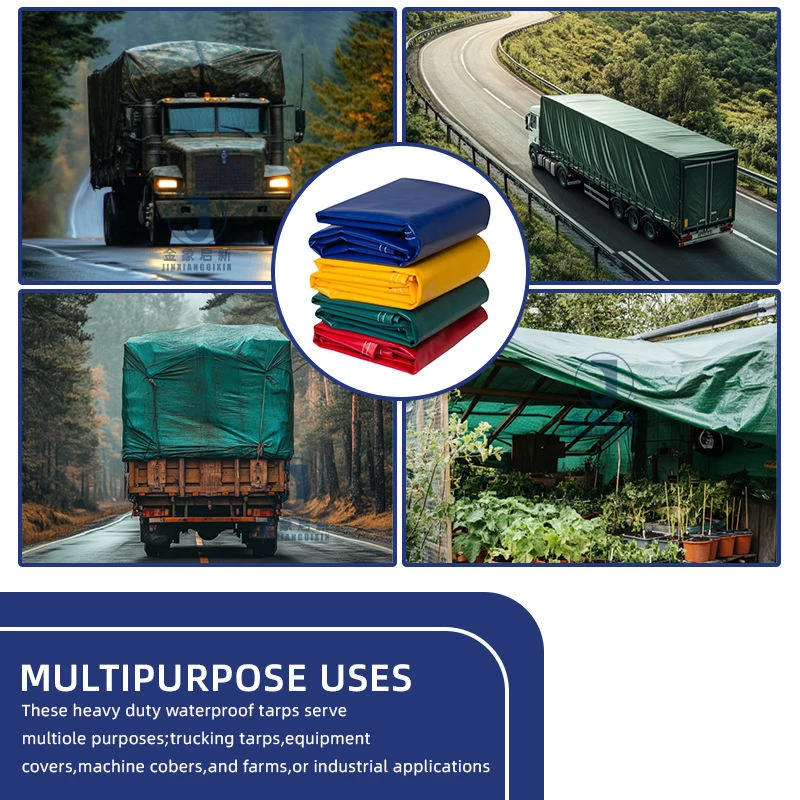
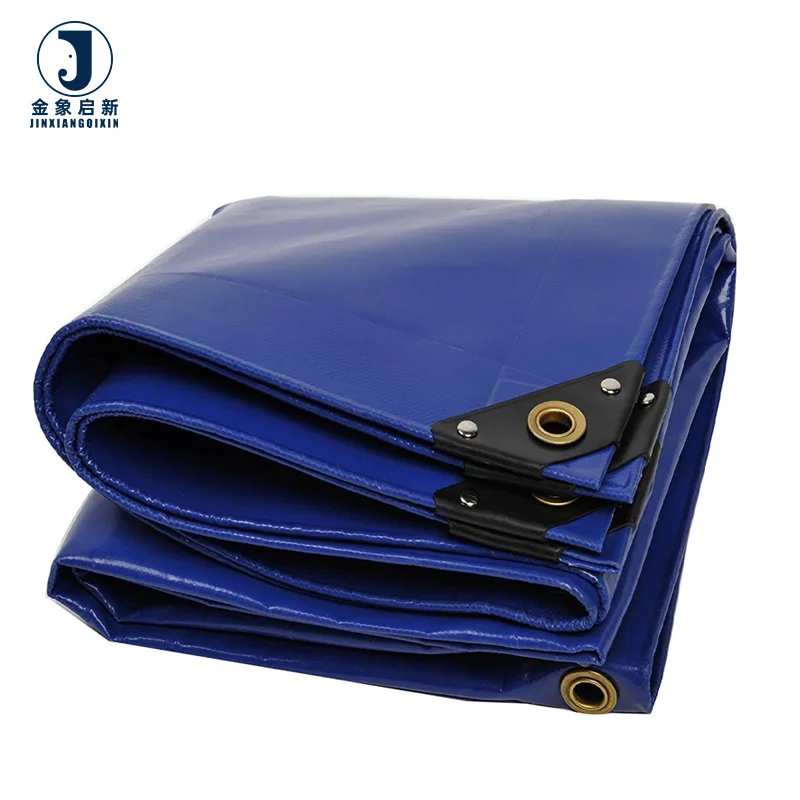
Coating Weight Control — verified GSM against quoted specification before every roll leaves the facility, ensuring the 680GSM ripstop PVC coated tarpaulin arrives exactly as engineered for ventilation and specialist structure compliance.
Technical Specifications
| Parameter | Value |
|---|---|
| Product Type | PVC Coated Tarpaulin |
| Identifier | 680GSM RIPSTOP PVC Tarpaulin |
| Weight | 680 GSM |
| Base Fabric Construction | Ripstop weave |
| Coating Material | PVC |
| Surface Finish | Available in glossy or matte finish |
| Temperature Range | -15ºC to 70ºC |
| Waterproof | Fully waterproof coated construction |
| UV Treatment | Customized (test basis not stated in source) |
| Flame Retardant Grade | FR treated (grade not stated in source) |
| Anti-Fungal | Anti fungal treated |
| Anti-Static | Available with surface resistance testing on request |
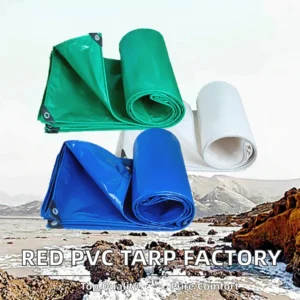
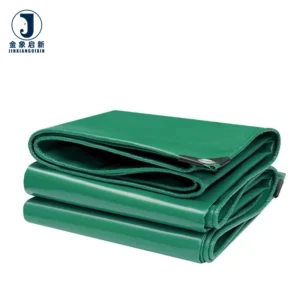
| Colour Options | Blue / Yellow / Black / Green / White / custom |
| Size Options | 3x4m / 6x8m / 8x10m / 10x12m or custom made |
| Printing | Custom brand printing accepted |
| OEM / ODM | Accepted |
| Certifications | ISO, CE |
Application Suitability
| Application | Exposure & Requirement |
|---|---|
| Mining and tunnelling ventilation ducts | Continuous airflow, abrasive dust, mandatory fire retardant and anti-static compliance underground |
| Aviation ground ventilation systems | Fuel vapour proximity, strict anti-static surface resistance, regulatory audit documentation |
| Membrane and inflatable structures | Permanent tension loading, UV exposure, weld integrity at stress concentrations |
| Construction site temporary enclosures | Wind loading, rain ingress, site safety colour coding, rapid deploy and strike |
| Specialist industrial air handling | Chemical-laden exhaust, temperature fluctuation, duct flexing at bends and transitions |
What Certified Fire Retardant Actually Means for Your Site
Compliance documentation travels with the fabric — not as an afterthought, but as part of the dispatch package.
Ventilation duct fabric arriving on a mining or tunnelling site without a verifiable fire retardant grade creates an immediate compliance gap. Site inspectors require test documentation matched to local regulatory frameworks, and a generic "FR treated" label does not satisfy that audit. The 680GSM PVC Coated Tarpaulin is available in flame retardant grades — confirm the grade required for your market before production begins. Anti-static treatment follows the same principle: surface resistance must be measured and documented to meet the thresholds your project specifies [NEED_CITE: anti-static surface resistance thresholds for underground ventilation per regional mining codes]. Without verified test data, the fabric may pass visual inspection but fail the regulatory review that determines whether work proceeds or halts.
Base Fabric Architecture and Tear Propagation
The ripstop construction in this PVC Coated Tarpaulin introduces a reinforcement grid that interrupts tear propagation. When a puncture or cut occurs in a standard plain-weave base fabric, the tear follows the warp or weft line with minimal resistance. Ripstop interlacing creates periodic thick yarn intersections that absorb and redirect tear energy, containing damage to a localised zone rather than allowing a full-length split. This matters in ventilation duct applications where a single rock strike or equipment contact can initiate a tear that, in a non-ripstop fabric, would unzip along the entire duct section.
Coating Adhesion Under Duct Flex Cycling
Ventilation ducts flex continuously as airflow pressure fluctuates and as temporary installations are repositioned across site phases. The bond between the PVC coating and the ripstop base fabric determines whether the material delaminates at these flex points before the fabric itself reaches its mechanical limit. Coating weight at 680 GSM provides a substantial PVC layer, but adhesion strength depends on the coating method and the preparation of the base fabric before the coating is applied [NEED_CITE: peel adhesion test methods for coated fabrics per ISO 2411]. Delamination at a duct bend or junction is a failure mode that no amount of base fabric strength can compensate for — once the coating separates, the exposed yarn degrades rapidly in abrasive underground environments.
Reading the Specification Sheet Beyond GSM
GSM tells you the total weight per square metre of the finished coated fabric, but it does not distinguish between base fabric contribution and coating contribution. A 680 GSM fabric could achieve that weight through a heavy coating on a light base, or a lighter coating on a dense ripstop base — and the two constructions behave very differently under tensile and tear loading. The base fabric denier and weave density determine the mechanical skeleton; the coating adds waterproofing, chemical resistance, and surface properties. For duct fabrication, the balance between these two components affects weld behaviour: a coating-heavy construction may weld easily but tear at lower loads, while a base-heavy construction offers higher strength but requires more precise heat and pressure settings at the weld seam [NEED_CITE: tensile and tear test methods for coated fabrics per ISO 1421]. Temperature range from -15ºC to 70ºC defines the operating envelope — below this range, PVC stiffens and becomes susceptible to crack initiation at fold lines; above it, the coating softens and weld seams may creep under sustained load.
The Compliance Gap That Stops a Project Cold
Fabric specified as flame retardant arrives on site, but the shipment carries no test report matching the grade the local inspector requires. The duct installation halts. The contractor sources replacement material at emergency pricing while the original rolls sit in storage awaiting a resolution. This scenario repeats across mining, aviation and construction ventilation projects where the specification conversation stopped at "FR treated" without drilling into the specific standard, the test method, or the pass threshold. Anti-static requirements follow the same pattern — a surface resistance value must be measured, documented, and matched to the regulatory framework governing the site [NEED_CITE: fire classification and anti-static standards for ventilation ductwork in underground and aviation environments]. Colour inconsistency across rolls in the same order creates a secondary problem: visible variation once sections are joined side by side on a membrane structure or temporary enclosure, triggering a cosmetic rejection that delays handover. Welded seams failing before the fabric body is a third failure mode, concentrated at the points where the duct flexes most under pressure cycling.
Why Procurement Teams Specify Through This Facility
Nearly 30 years of focused coated fabric production means the coating weight and adhesion parameters for this 680GSM ripstop PVC material are controlled through established process recipes, not trial runs. Three full production lines and 36 sets of professional equipment support bulk volume with the capacity to hold delivery dates that mining and tunnelling contracts depend on. A 10-person R&D team handles the technical dialogue around fire retardant grade selection, anti-static threshold matching, and custom sizing for duct fabrication — converting compliance requirements into production parameters before the order enters the line. QA inspection runs at every production stage with 100% pre-shipment verification, so the roll that arrives on site matches the specification sheet that was signed off at sample approval. Samples for custom width, colour, or treatment combinations are developed within days, allowing procurement to validate the material against site requirements before committing to production volume.
Documentation & Verification
- Material specification sheet stating 680 GSM, ripstop base fabric construction, and PVC coating details
- Fire retardant grade test report aligned to the standard specified in your purchase order
- Anti-static surface resistance measurement recorded and included where treatment is applied
- Pre-shipment inspection record with weight verification per roll against quoted GSM
- ISO and CE certificates included in the dispatch documentation package
- Roll packing list with batch traceability for site audit trail
Fabrication, Handling & Storage
- Heat weld parameters must account for the 680 GSM coating thickness — confirm temperature, pressure and dwell time on test pieces before production welding
- Store rolls horizontally on a flat surface to prevent permanent creasing in the PVC coating layer
- Allow cold-stored rolls to acclimatise to ambient temperature before unrolling to avoid coating crack initiation at fold lines
- Use compatible PVC weld tape or adhesive for field repairs on duct seams and puncture damage
- Plan cut patterns against roll width to minimise offcut waste and reduce the number of welded joints in the finished duct
- Clean surfaces with mild detergent only — solvent-based cleaners may degrade the PVC coating and compromise anti-static treatment
What to Include With Your Enquiry
Provide the ventilation or structure application, the specific fire retardant and anti-static standards your site inspector requires, and the target compliance framework for your market. Confirm the roll width and length needed for your duct fabrication process, along with annual or project volume to align production scheduling. If custom colour or brand printing is required for site identification, specify the Pantone or RAL reference and the print repeat dimensions.
Frequently Asked Questions
Q: What fire retardant grade does this 680GSM fabric meet, and does it satisfy local mining or aviation compliance?
A: The fabric is available in flame retardant grades, but the specific grade must be confirmed against your local regulatory requirement before production. Provide the standard your site inspector references — such as a regional mining code or aviation ground equipment specification — and the test report will be aligned to that framework and included with shipment documentation.
Q: Is anti-static treatment available with a measured surface resistance value?
A: Anti-static treatment can be applied to this 680GSM ripstop PVC material, and the surface resistance value is measured and documented when specified on the purchase order. Share the threshold your project requires so the treatment formulation and testing protocol are set before production begins.
Q: How is GSM verified on arrival — do you provide a pre-shipment weight test record?
A: Every roll undergoes weight verification as part of 100% pre-shipment inspection. The recorded GSM value per roll is included in the dispatch documentation, allowing you to cross-check the material against the quoted 680 GSM specification when the shipment arrives at your facility or site.
Q: Can custom width and roll length be supplied for duct fabrication with consistent coating adhesion?
A: Custom width and roll length are available, with coating adhesion maintained through controlled process parameters across the production run. Samples are produced for your approval before bulk manufacturing, allowing you to test weld behaviour and fabrication handling on the exact construction you will receive.
Q: What certification documents are included in the shipment for site inspection and regulatory approval?
A: The dispatch package includes the material specification sheet, fire retardant and anti-static test reports where applicable, pre-shipment inspection record, ISO and CE certificates, roll packing list, and certificate of origin. Additional customs documentation is prepared based on your destination market requirements.