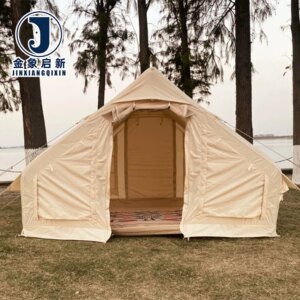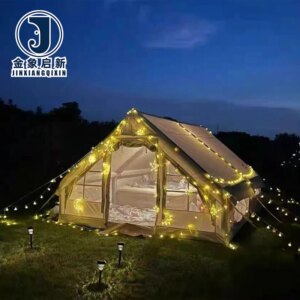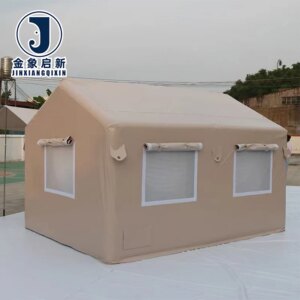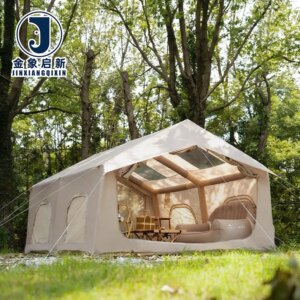
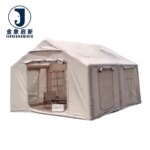
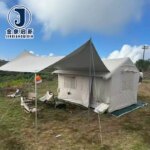
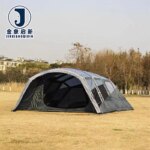
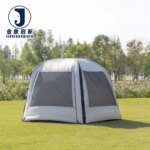
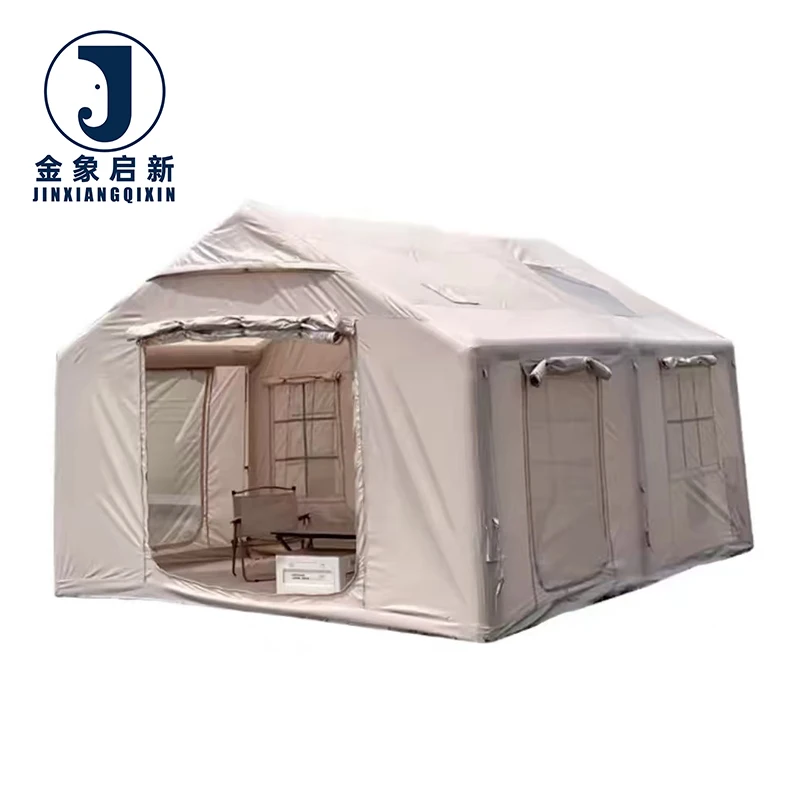
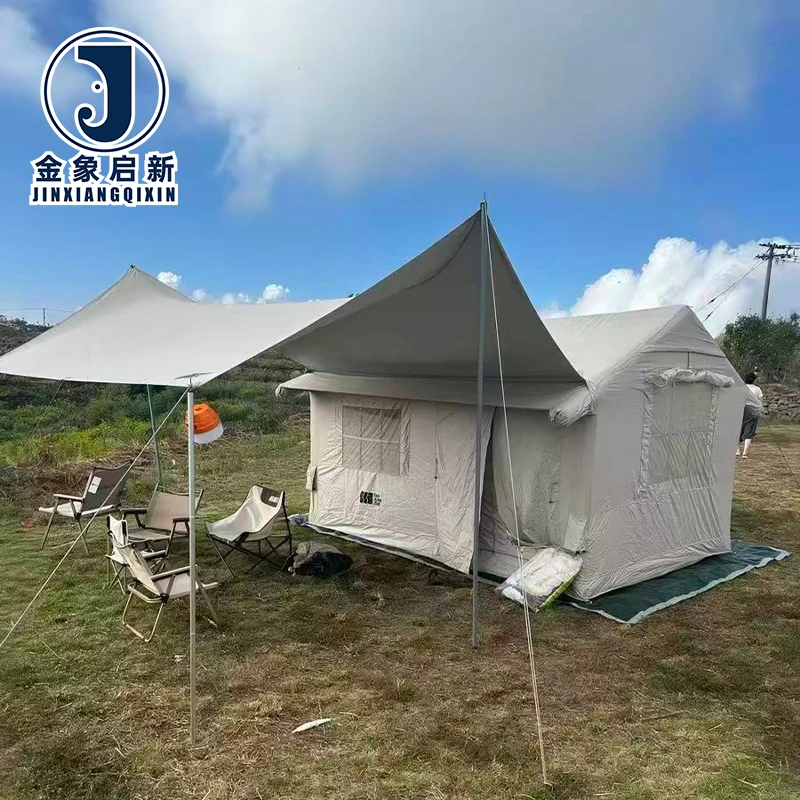
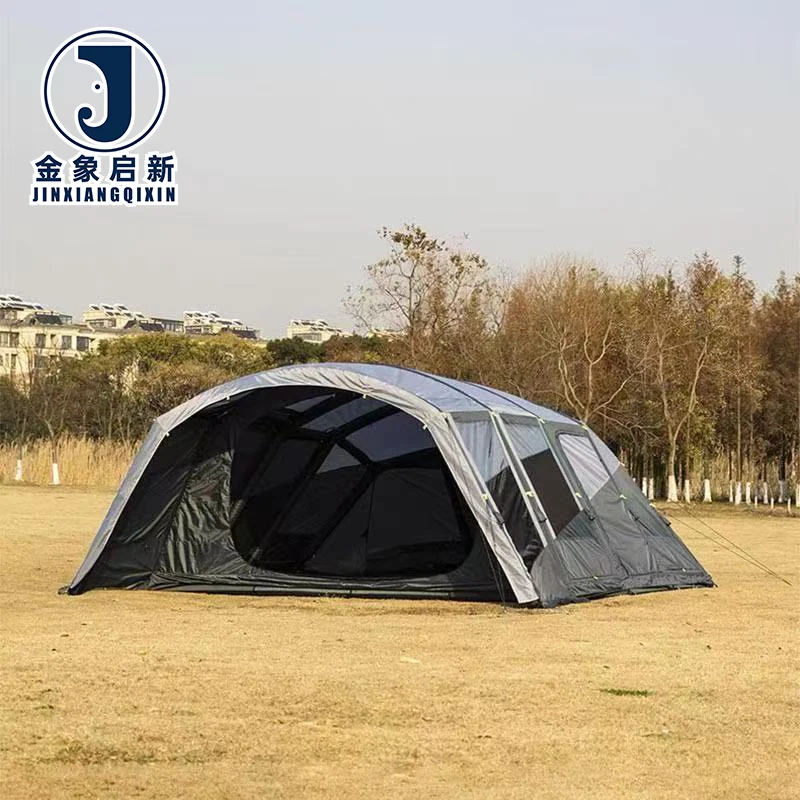
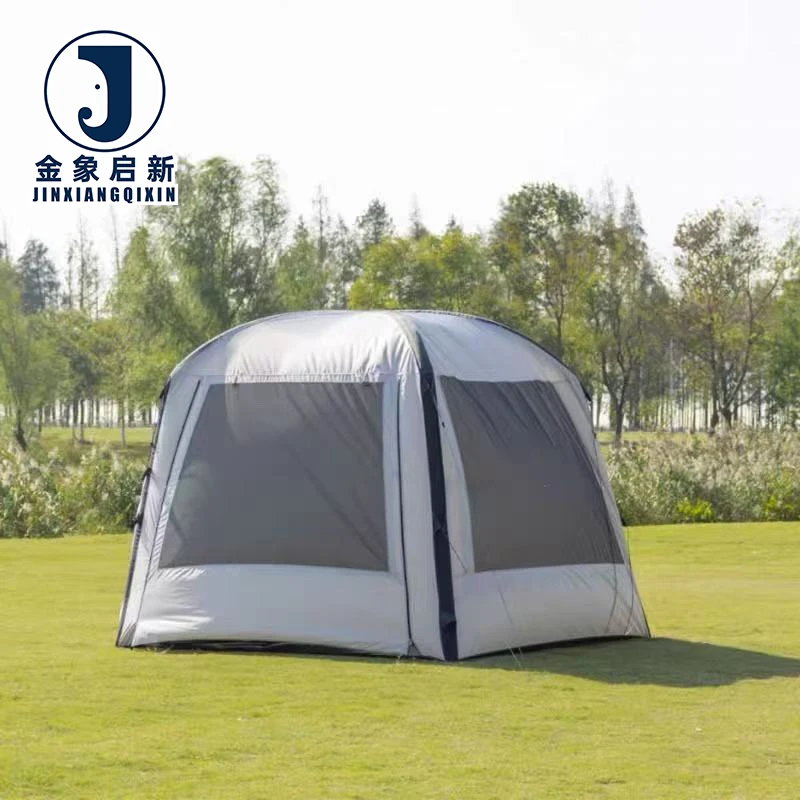
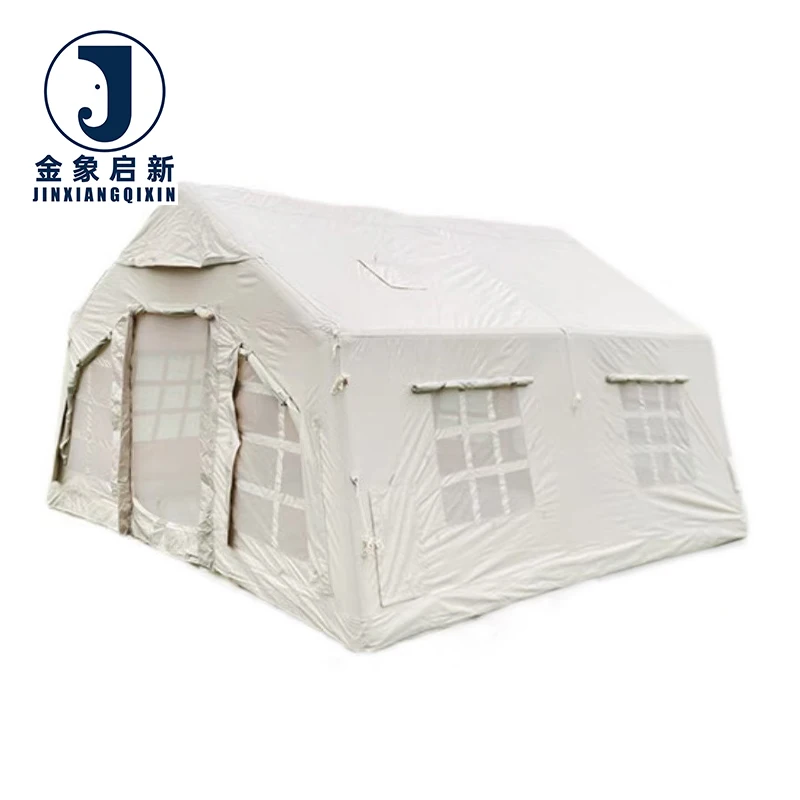
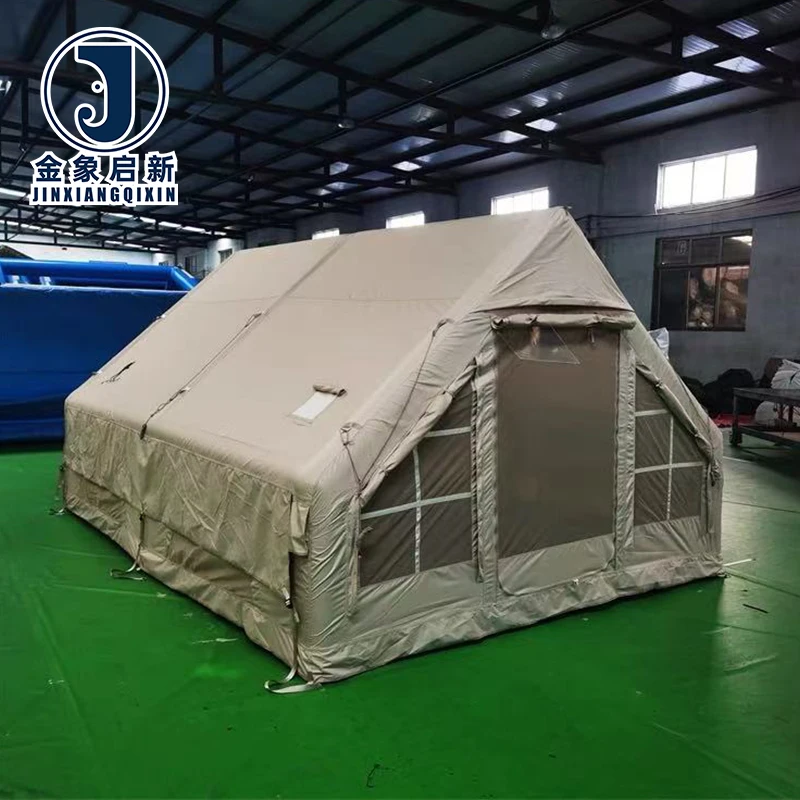
Near three-decade coating expertise — applied to inflatable emergency shelter fabric, delivering verified material consistency and full compliance documentation for disaster response procurement.
Technical Specifications
| Parameter | Value |
|---|---|
| Product Type | Inflatable Tent Fabric / Emergency Shelter |
| Core Material | PVC tarpaulin (PVC knife-coated fabric) |
| Capacity | 3–5 person |
| Design Configuration | Single Layer Construction, Extended Type |
| Seasonal Rating | Four-Season Use |
| Key Performance Features | Waterproof, tear-resistant, quick automatic opening |
| UV Resistance | Available with UV-resistant treatment — test basis not stated in source, confirm the standard required for your market |
| Customization Service | OEM & ODM support (size adjustments, material thickness variations, custom color options) |
| Quality Control System | Full-process quality inspection with dedicated QA&QC staff |
| Certifications | ISO9001, ISO14001, ISO45001, CE |
Application Suitability
| Application | Exposure & Requirement |
|---|---|
| Temporary site offices during infrastructure recovery | Prolonged outdoor weathering, wind loading, repeated inflation cycles, need for rapid deployment without heavy equipment |
| Equipment storage shelters in post-disaster operations | Continuous UV exposure, water ingress prevention, tear resistance against debris impact and handling abrasion |
| Emergency command centers for large-scale industrial facilities | High-visibility requirements, multi-day continuous occupancy, structural stability under variable wind and temperature |
| Industrial disaster response staging areas | Rapid assembly under time pressure, four-season thermal performance, compatibility with portable heating and lighting systems |
Why Certified Material Matters More Than Tent Weight in Emergency Procurement
Certification documentation determines whether the shelter passes site compliance inspection, not the stated fabric weight.
When disaster response procurement specifies flame-retardant or safety-compliant shelters without verifying the underlying test basis, the entire shipment can be rejected at the point of deployment. I have seen emergency staging areas delayed because the inflatable emergency tent manufacturer could not produce batch-specific test reports matching the regulatory framework of the receiving jurisdiction. The fabric may perform adequately, but without traceable documentation tied to recognized standards, procurement officers cannot close the compliance loop. [NEED_CITE: ISO and CE certification frameworks for temporary industrial shelters]
How Knife-Coated PVC Supports Rapid Inflation Cycles
The knife-coating process embeds PVC compound directly into the base fabric weave, producing a bond that resists delamination during the repeated stress of inflation and deflation. For inflatable emergency shelters that may deploy and collapse multiple times across a single disaster response operation, this coating method maintains structural integrity at the seam lines where air pressure concentrates. An inflatable emergency tent manufacturer using knife-coated construction ensures the fabric flexes without micro-cracking at the coating-substrate interface.
Single-Layer Extended Design and Deployment Speed
The single-layer extended-type construction eliminates the need for inner tent assembly, reducing total deployment time to the inflation cycle alone. In post-disaster industrial scenarios where command centers must be operational within hours, this design choice removes a variable that often causes field delays. The PVC tarpaulin shell serves as both the structural envelope and the weather barrier, with waterproof performance derived from the continuous coated surface rather than layered fabric interfaces that can separate under wind load.
Understanding Fabric Selection for Inflatable Shelter Procurement
The relationship between PVC coating weight and base fabric denier determines how the material behaves under inflation pressure. A heavier coating does not automatically translate to higher tear resistance if the base fabric weave density is insufficient to distribute stress across the yarn structure. [NEED_CITE: tensile and tear test methods for coated fabrics per ISO 1421] Knife-coated PVC achieves consistent coating adhesion across the fabric surface, which directly influences how welded seams perform when the inflatable structure reaches full internal pressure. The four-season rating requires the material to remain flexible at low temperatures without becoming brittle, while resisting softening and loss of dimensional stability under high ambient heat. UV-resistant treatment, where specified and verified against an applicable test standard, protects the polymer chains in the PVC compound from degradation that would otherwise reduce tensile strength over weeks of continuous sun exposure. Procurement specifications should reference the exact test standard required rather than relying on generic performance claims.
The Cost of Undocumented Material Specifications
Shelters procured on generic descriptions without batch-specific verification often fail at the compliance stage rather than in physical performance. A shipment arriving without fire classification documentation matching the destination market’s regulatory framework faces rejection regardless of how the material actually behaves in flame testing. Similarly, UV-resistant claims without a cited test basis leave the buyer unable to predict service life under continuous outdoor deployment. [NEED_CITE: fire classification standards applicable to temporary inflatable structures in industrial settings] Color inconsistency between production batches becomes visible only when multiple units are deployed side by side at a staging area, creating an impression of uncontrolled quality even when structural performance is unaffected.
What Jinxiang Brings to Inflatable Emergency Shelter Fabric
Nearly 30 years of focused coated fabric production provides process control over coating weight adhesion that directly affects inflatable structure longevity. Three full production lines and 36 sets of professional equipment support the volume requirements of large-scale disaster preparedness procurement without extended lead times. A 10-person R&D team handles sample development for custom dimensions, material thickness variations, and color specifications before full-scale manufacturing begins. Dedicated QA and QC staff conduct full-process inspection, including 100 percent inflation testing and structural integrity verification before shipment. Pre-production sample confirmation ensures the buyer validates material feel, coating thickness, and welded seam quality prior to committing the order.
Documentation & Verification
- Material specification sheet stating PVC coating type, base fabric construction, and color reference for each batch
- Test report for UV-resistant grades where applicable, citing the specific test standard used
- ISO9001, ISO14001, ISO45001, and CE certificates supporting international procurement compliance
- Pre-shipment inspection record documenting inflation test results and structural integrity checks
- Roll packing list with batch identification for traceability across the procurement cycle
- Certificate of origin and customs documentation supporting cross-border logistics
Fabrication, Handling & Storage
- Heat-welding parameters must match the specific PVC knife-coated formulation to prevent seam failure under inflation pressure
- Store rolls vertically in climate-controlled conditions to prevent permanent creasing in the PVC coating layer
- Avoid dragging PVC tarpaulin across abrasive surfaces during field deployment to protect the coated finish
- Confirm material thickness with the supplier before specifying welding temperature and dwell time for custom seams
- Use PVC-compatible cleaners only, as solvent-based products can degrade the knife-coated surface bond
- Repair minor field punctures with compatible PVC adhesive patches matched to the original coating compound
What to Include in Your Inquiry
Provide the intended deployment environment, including expected temperature range, wind exposure classification, and duration of continuous inflation. Specify the regulatory framework your destination market requires for fire classification and safety compliance. Indicate whether you need finished tent units with custom dimensions or roll stock for your own fabrication line. Confirm whether pre-production samples are required for material approval before bulk manufacturing commences.
Frequently Asked Questions
Q: What customization options are available for dimensions, material thickness, and color?
A: OEM and ODM services cover size adjustments, material thickness variations, and custom color specifications. The 10-person R&D team develops pre-production samples reflecting your exact requirements before full-scale manufacturing begins. Confirm target dimensions, preferred color reference, and any thickness parameters with your inquiry to receive a matched sample.
Q: How are UV resistance and weathering performance verified and documented?
A: UV-resistant treatment is available for this PVC knife-coated fabric. The specific test standard applied depends on your destination market requirements. Request the applicable test report during the inquiry stage so the correct verification protocol is established before production. Batch-specific documentation accompanies each shipment for traceability.
Q: What fire-retardant or safety certifications apply to inflatable emergency shelters in different markets?
A: The product carries ISO9001, ISO14001, ISO45001, and CE certification. Fire-retardant classifications vary by jurisdiction, and the applicable standard must be confirmed based on your deployment region. Communicate your local regulatory requirements during the specification phase to ensure the correct material grade is selected and documented.
Q: What is the sample development and approval process for custom emergency tent orders?
A: Submit your specification requirements including dimensions, material thickness, and color. The R&D team produces a pre-production sample for your evaluation. Once you approve the sample, full-scale manufacturing proceeds with dedicated QA and QC inspection at each production stage, concluding with 100 percent inflation testing before dispatch.
Q: How is batch-to-batch material consistency ensured across large procurement volumes?
A: Full-process quality inspection with dedicated QA and QC staff governs every production stage. Each batch undergoes material specification verification and pre-shipment inspection including inflation testing. Batch-specific documentation and packing lists enable traceability across multi-container orders, ensuring consistent performance across your entire procurement volume.