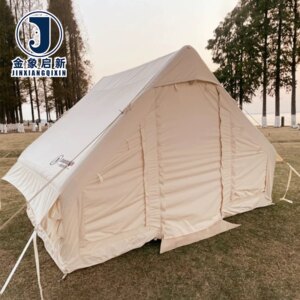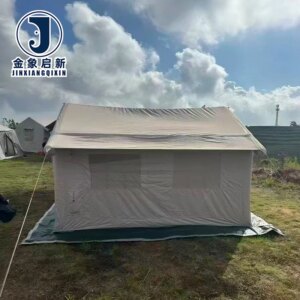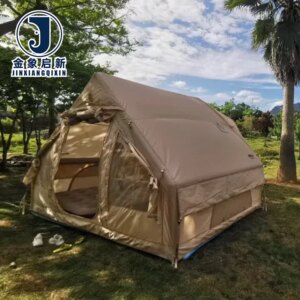

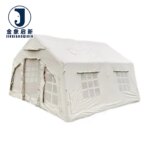
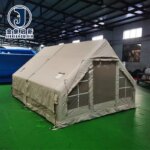
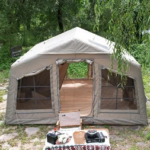

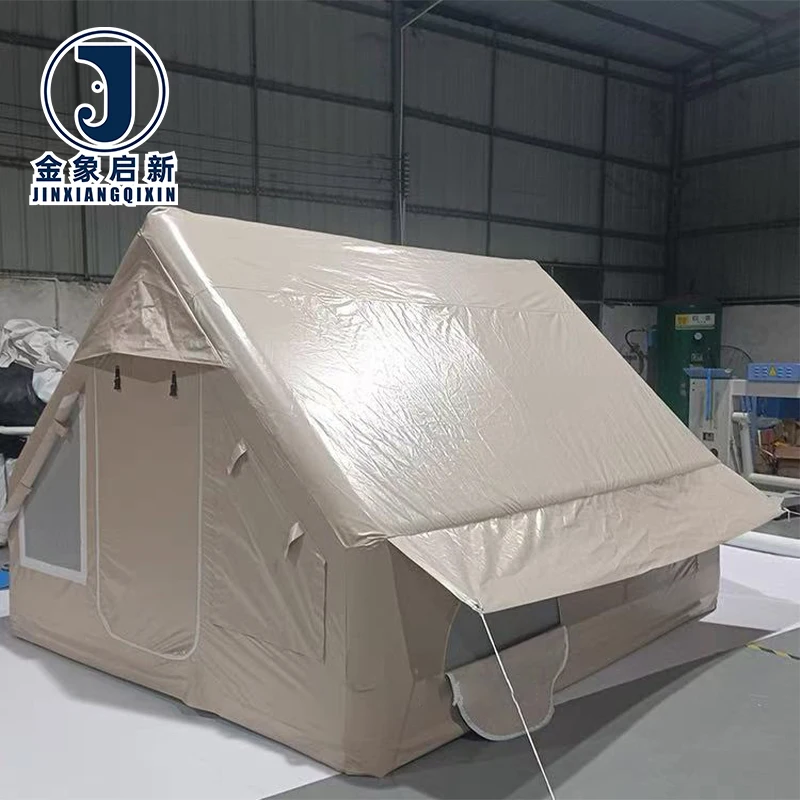
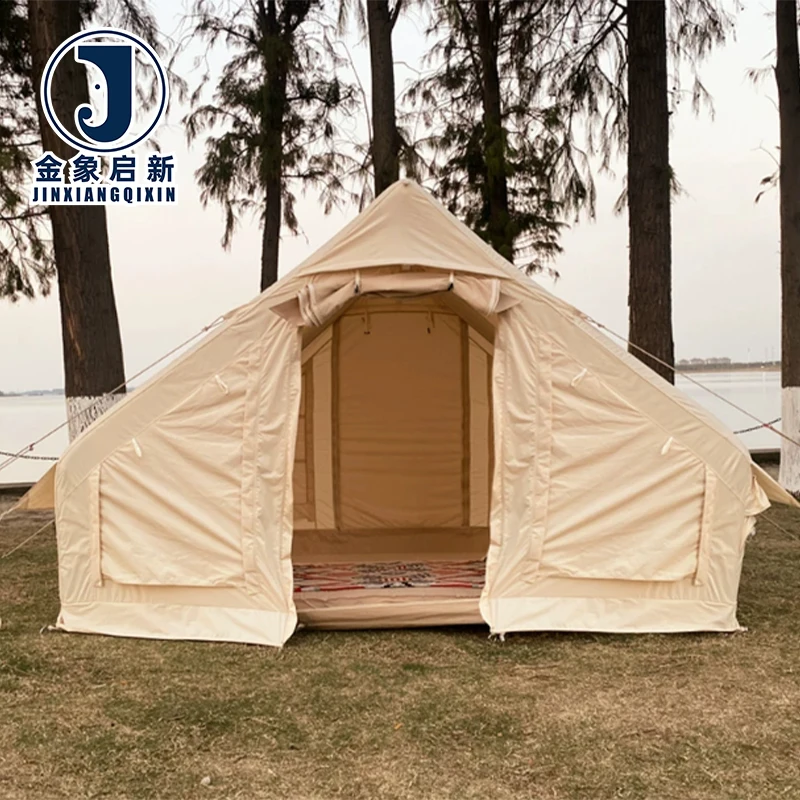
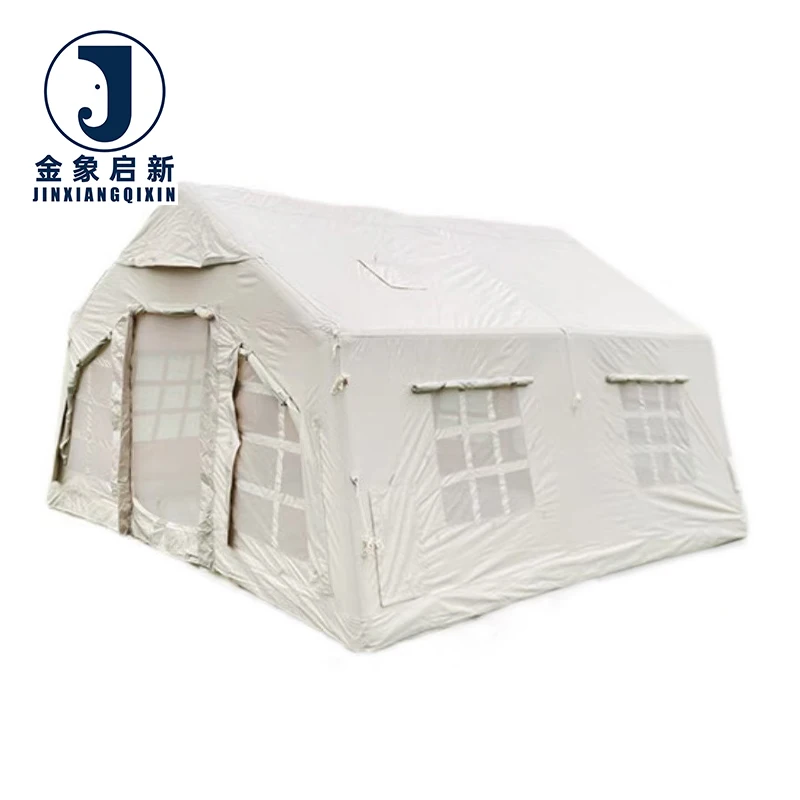
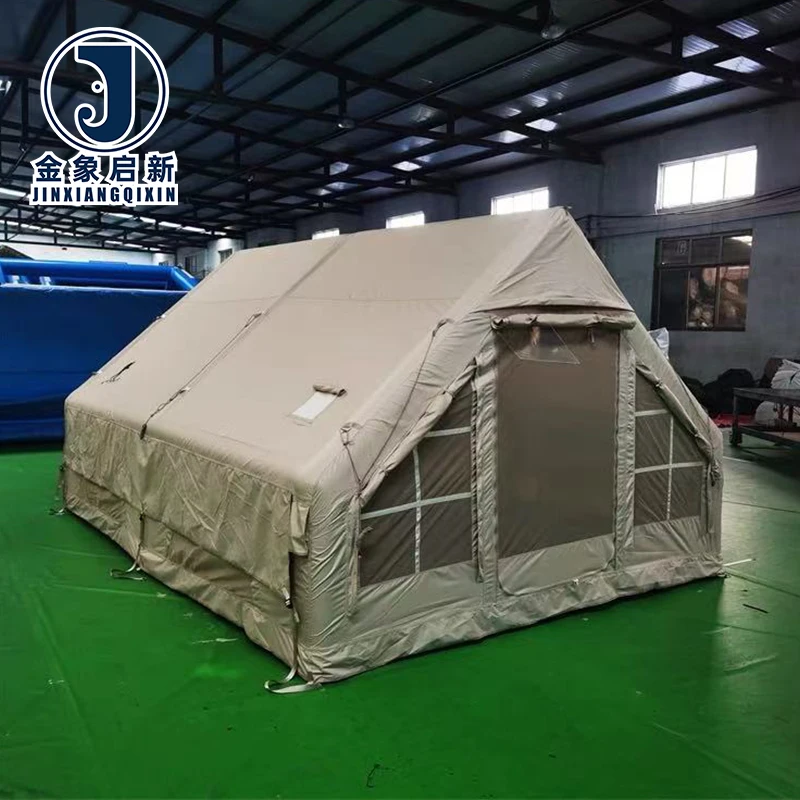

Full Process QA — Dedicated quality inspectors verify fire-retardant and anti-static performance at every production stage, shipping only tents with traceable batch test documentation matching your site compliance requirements.
Technical Specifications
| Parameter | Value |
|---|---|
| Product Type | Inflatable Tent |
| Core Material | PVC tarpaulin |
| Capacity | 5-8 Person |
| Key Performance | Waterproof, tear-resistant; fire-retardant (grade not stated in source), anti-static (standard not stated in source), UV-resistant (test basis not stated in source) |
| Opening Mechanism | Quick automatic opening |
| Season Rating | All-season |
| Production Facility Area | 9180 square meters |
| Production Lines | 3 full production lines |
| Processing Equipment | 36 sets of professional processing equipment |
| R&D Team Scale | 10 technicians |
| Customization Service | OEM & ODM, sample customization, pattern printing |
| Quality Control System | Strict full-process quality inspection with dedicated QA&QC staff on site |
| Certifications | ISO9001, ISO14001, ISO45001, CE |
Application Suitability
| Application | Exposure & Requirement |
|---|---|
| Mining and tunnelling site temporary shelters | Confined underground environments demanding fire-retardant and anti-static compliance, high humidity, mechanical abrasion from equipment movement |
| Emergency response and disaster management structures | Rapid deployment under extreme weather, repeated inflation and deflation cycles, exposure to chemical contaminants |
| Large-scale event and infrastructure project field accommodation | Continuous UV exposure, wind loading, high foot traffic, requirement for branded or colour-coded zones |
| Mobile field operations bases for engineering teams | Remote locations with limited maintenance access, temperature extremes, requirement for quick assembly without specialized labour |
Why Certification Documentation Matters More Than the Fabric Label
A fire-retardant claim without a traceable test report is a compliance liability, not a safety feature.
Ventilation and temporary structure contractors frequently receive inflatable fabric that carries a fire-retardant or anti-static label but arrives without the batch-specific test documentation required to pass a site safety audit. The fabric may perform adequately in a bench test, yet the paperwork gap forces project delays or rejection at inspection. When deploying an inflatable tent in a regulated mining or aviation environment, the auditor checks the certificate trail before they check the material itself [NEED_CITE: fire classification standards for temporary industrial structures].
How Fire-Retardant and Anti-Staric Treatments Are Verified on the Line
Our PVC inflatable tent fabric undergoes fire-retardant treatment during the coating stage, with the specific grade confirmed per batch test report. Anti-static performance is achieved through additive integration into the PVC compound, targeting the surface resistance range required for hazardous environment deployment. Both properties are verified by our on-site QA team before the material proceeds to cutting and welding. The test standard applicable to your jurisdiction must be confirmed at inquiry stage, as mining, tunnelling and aviation sites each reference different compliance frameworks.
Rapid Deployment Without Compromising Structural Integrity
The quick automatic opening mechanism allows a single operator to inflate the 5-8 person structure within minutes, eliminating the need for specialized rigging crews. The PVC tarpaulin core provides dimensional stability under wind load, while the welded seam construction distributes stress across the joint rather than concentrating it at stitch holes. This matters in emergency response scenarios where the inflatable tent must be operational before secondary weather events arrive [NEED_CITE: deployment time benchmarks for emergency shelter structures].
Reading the Specification Sheet Beyond the Headline Numbers
The PVC tarpaulin core functions as both the structural membrane and the weather barrier, meaning coating weight and base fabric denier together determine how the inflatable tent handles sustained inflation pressure. A heavier coating improves puncture resistance but adds mass that the inflation system must support; a tighter base fabric weave limits air permeability and improves seam adhesion during high-frequency welding. Fire-retardant additives can influence the low-temperature flexibility of the PVC compound, so the operating temperature range must be validated against your site’s coldest expected conditions. UV-resistant treatment is integrated into the coating formulation to slow polymer degradation during extended all-season outdoor exposure, though the specific test basis should be confirmed for your regional solar irradiance profile.
The Compliance Gap That Stops Projects at Inspection
Contractors who specify fire-retardant inflatable tents based on supplier marketing claims, without securing batch-specific test reports tied to their order number, regularly face rejection at site compliance audits. The fabric may be chemically identical to a certified batch, but the documentation chain is broken. Anti-static performance is similarly vulnerable: without a stated surface resistance standard and corresponding test result, the inflatable tent cannot be approved for deployment in explosive atmosphere zones. This documentation gap typically surfaces weeks after delivery, when the structure is already on site and replacement lead times threaten the project schedule [NEED_CITE: site audit rejection rates for temporary industrial structures].
Why Sourcing This Inflatable Tent From Jinan Jinxiang Works for Your Project
Our 10-person R&D team handles material selection and sample development specifically for industrial inflatable structures, not generic consumer tents. Three full production lines and 36 sets of processing equipment provide the capacity to fulfil multi-unit orders for large-scale event or infrastructure projects without sacrificing per-unit QA oversight. Dedicated QA and QC staff inspect every production stage, generating a pre-shipment inspection record that travels with your documentation package. We develop custom samples within days when your project requires non-standard sizing or branded pattern printing. Our documentation system ties fire-retardant and anti-static test reports to your specific order number, closing the traceability gap that causes audit failures.
Documentation & Verification
- Material specification sheet stating PVC base fabric denier, coating weight, and treatment parameters for this inflatable tent batch
- Batch-specific fire-retardant test report accessible using your order number for auditor traceability
- Anti-static surface resistance test result referencing the standard applicable to your deployment environment
- ISO9001, ISO14001, ISO45001 and CE certificates supporting your site compliance submission
- 100% pre-shipment inspection record documenting dimensional and visual checks on every unit
Fabrication, Handling & Storage
- High-frequency welding parameters must be adjusted for PVC tarpaulin thickness to prevent seam delamination under inflation pressure
- Store deflated units flat or loosely rolled to avoid permanent crease marks in the PVC coating
- Clean with mild detergent only; solvents degrade fire-retardant and anti-static surface treatments
- Inspect welded seams before each redeployment, as flex fatigue concentrates at air chamber junctions
- Repair minor punctures with compatible PVC patch kits, ensuring adhesive cure time before reinflation
What We Need to Quote Your Inflatable Tent Project Accurately
Provide the deployment environment classification so we can confirm the fire-retardant grade and anti-static standard applicable to your jurisdiction. Specify the number of units, any custom dimensional requirements beyond the standard 5-8 person capacity, and whether pattern printing or colour coding is required for zone identification. Indicate your project timeline so we can align production scheduling and documentation preparation with your site mobilization date.
Frequently Asked Questions
Q: What fire-retardant grade and test standard does the inflatable tent fabric carry?
A: The PVC tarpaulin is treated with fire-retardant additives during coating, with the specific grade confirmed per batch test report. Different jurisdictions and site operators reference different standards — mining, tunnelling, and aviation environments each have distinct requirements. Provide your target compliance framework at inquiry stage so we can match the test documentation to your audit needs.
Q: How is anti-static performance verified and what surface resistance standard applies?
A: Anti-static treatment is integrated into the PVC compound to target the surface resistance range required for hazardous environment deployment. The applicable standard depends on your site classification — explosive atmosphere zones, underground mining, and aviation fuel proximity each specify different thresholds. We supply a batch-specific test result tied to your order number for compliance verification.
Q: Can the inflatable tent be custom-sized for specific site accommodation or shelter requirements?
A: Yes. Our 10-person R&D team develops custom samples within days for non-standard dimensions, layout modifications, or project-specific branding requirements. Pattern printing and colour coding are available for zone identification on large-scale event or infrastructure sites. Provide your dimensional specifications and quantity at inquiry stage for sample development and lead time confirmation.
Q: What documentation is provided to satisfy mining, tunnelling or aviation site compliance audits?
A: Each shipment includes a material specification sheet, batch-specific fire-retardant and anti-static test reports traceable to your order number, ISO9001, ISO14001, ISO45001 and CE certificates, and a 100% pre-shipment inspection record. This documentation package is structured to satisfy auditor requirements for temporary structure deployment in regulated industrial environments.
Q: How does the factory ensure batch-to-batch consistency in coating weight and fabric performance?
A: Dedicated QA and QC staff inspect every production stage, from raw PVC compound mixing through coating, cutting, and welding. Our 9,180 square meter facility operates 3 full production lines with standardized process parameters, and every unit undergoes pre-shipment inspection before dispatch. Batch test reports are generated per order, not per product family, ensuring your documentation matches your specific material.