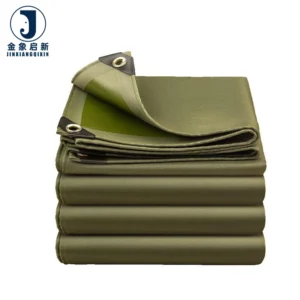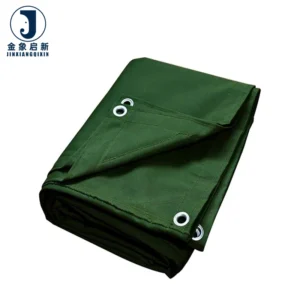

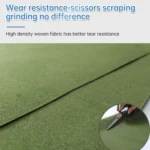




Coating Weight Precision — Our 10-person R&D team controls lamination parameters at every stage to ensure the stated 600gsm matches the fabric you receive on the dock.
Technical Specifications
| Parameter | Value |
|---|---|
| Product Type | PVC Laminated Canvas Tarpaulin |
| Material | Polyester cotton industrial textile with 8-12 strands of fine cotton yarn |
| Coating Method | Laminated |
| Total Thickness | 0.5mm / 0.6mm / 0.7mm |
| Weight | 600gsm |
| Roll Width | 2m |
| Roll Length | 100m |
| Colour | Army Green Camouflage / Custom |
| Eyelet Configuration | Rust-proof aluminium eyelets every 1 meter at corners and hem |
| Edge Reinforcement | Folded and seams welded and sewn with poly ropes |
| Finish Product Sizing | Custom cut items or inventory roll stock |
| UV Resistance | UV resistant (test basis not stated — request report) |
| Flame Retardant Grade | Available in flame retardant grades — confirm the grade required for your market |
| Anti-Static | Available in anti-static grades — confirm surface resistance requirement |
| Service Life Expectancy | Extended outdoor service capability (verify against project conditions) |
| Standards | CE, ISO |
Application Suitability
| Application | Exposure & Requirement |
|---|---|
| Mine and tunnelling ventilation duct | Continuous airflow, particulate abrasion, fire-retardant and anti-static compliance mandatory |
| Inflatable and membrane structure fabric | Wind loading, cyclic inflation stress, UV exposure, welded seam integrity |
| Aviation ground support ductwork | Regulated environment, static discharge control, flame-spread limitation |
| Truck canopy and transport cover | Road weather, load flex at seams, tie-down tension on eyelets, UV and rain exposure |
| Industrial site and equipment cover | Standing water, dust ingress, temperature fluctuation, mechanical abrasion |
Why Certification Gaps Cost More Than the Fabric Itself
Specifying PVC laminated canvas tarpaulin for ventilation or structural applications without verified test documentation leads to site rejection and costly replacement.
Ventilation duct contractors regularly discover after installation that the fire-retardant or anti-static certification the site demands was never supplied with the material. The duct is already hung, the inspector asks for paperwork, and the entire run must come down. This happens because the quotation stated "flame retardant" without naming the grade, and nobody checked before the rolls left the factory [NEED_CITE: fire classification requirements for underground ventilation ductwork]. The cost of replacing installed duct far exceeds the original fabric purchase.
How 600gsm Laminated Canvas Performs in Duct and Membrane Applications
The 600gsm weight places this PVC laminated canvas tarpaulin in a range suited to medium-duty ventilation duct and temporary membrane structures. Laminated construction bonds the PVC layers to the polyester-cotton base fabric under heat and pressure, producing a material that holds welded seams without delamination under cyclic flex. For mine ventilation duct, where the fabric must resist internal airflow pressure and particulate abrasion simultaneously, the bond strength between coating and base fabric determines whether the weld line outlasts the material itself.
What Fire-Retardant and Anti-Static Compliance Actually Requires
Stating "fire retardant" on a data sheet means nothing without the specific grade and test method. Mining jurisdictions typically mandate M2, B1 per DIN 4102, or NFPA 701 depending on the region, and aviation duct applications require separate anti-static surface resistance certification [NEED_CITE: anti-static surface resistance standards for aviation duct materials]. Before you commit to a purchase order, request the exact test report matching your jurisdiction. A supplier who cannot produce the report for the grade they claim should not be on your shortlist.
Reading the Specification Sheet Beyond the Weight Number
The 600gsm figure alone does not tell you how the fabric will behave under load. The polyester-cotton base fabric with 8-12 strands of fine cotton yarn provides the tensile skeleton; the PVC lamination contributes waterproofing and surface protection. Laminated construction, as opposed to knife-coated, tends to produce a stiffer hand and higher peel strength at the coating-to-fabric interface, which matters when welded seams carry structural loads in inflatable and duct applications. The 0.5mm to 0.7mm thickness range lets you select a grade that balances flexibility for folding and transport against rigidity for duct shape retention. Rust-proof aluminium eyelets at one-meter intervals distribute tie-down loads across the hem rather than concentrating stress at single points, reducing tear initiation at the grommet hole.
When the Wrong Specification Reaches the Job Site
Supplying ventilation duct without the correct fire-retardant grade does not become apparent until the site inspector reviews the documentation package. By that stage the duct is fabricated, hung, and connected to the fan system. Removal and replacement costs compound quickly [NEED_CITE: rework costs for non-compliant ventilation installations in tunnelling projects]. Similarly, specifying a material without anti-static certification for aviation or underground use can halt operations until compliant fabric arrives. The lesson from repeated field failures is that the documentation package matters as much as the fabric itself.
Why Specialist Contractors Source This Fabric Here
Three full production lines and 36 sets of professional equipment support consistent output across multiple concurrent duct and membrane orders. The 10-person R&D team handles material selection and sample development, producing test samples within days when a project specification demands a particular fire-retardant grade or colour match. Dedicated QA/QC at every production stage with full pre-shipment inspection means each roll is checked for weight, coating adhesion, and visual consistency before it leaves the facility. Custom widths and cut sizes are handled on the same lines as bulk roll stock, so lead times remain predictable whether you need ten rolls or a hundred.
Documentation & Verification
- Material specification sheet stating exact 600gsm, polyester-cotton base, and lamination method per roll
- Fire-retardant test report naming the specific grade (M2 / B1 / NFPA 701) where applicable
- Anti-static surface resistance certificate for mining and aviation duct compliance
- Pre-shipment inspection record confirming weight, eyelet spacing, and weld seam integrity
- Roll packing list with batch reference for traceability across the order
- Certificate of origin and customs documentation included with every dispatch
Fabrication, Handling & Storage
- Weld temperature and dwell time must match 600gsm laminated construction to avoid delamination at flex points
- Poly-rope hem reinforcement distributes tension across the aluminium eyelets during duct suspension
- Store rolls horizontally on pallets to prevent permanent creasing in the 0.5–0.7mm laminated material
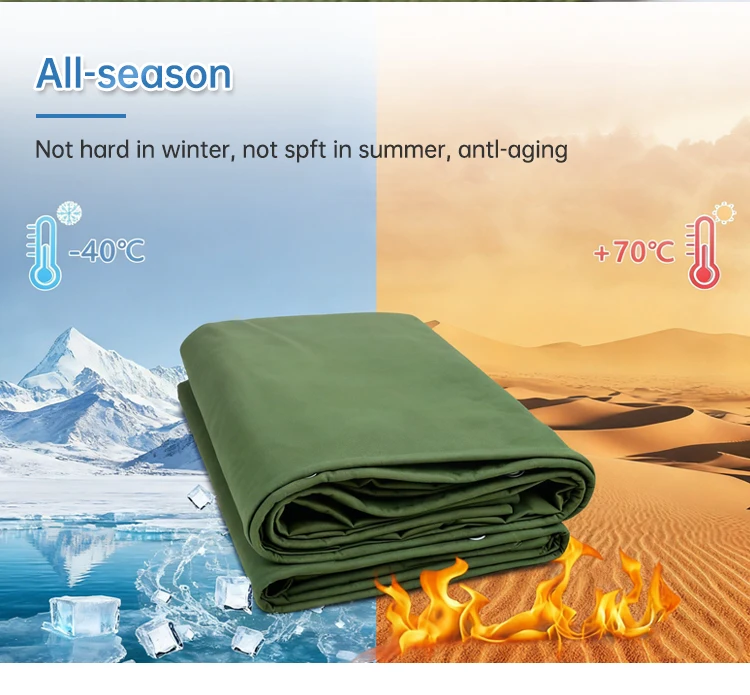
- Unroll in moderate temperatures; cold PVC lamination becomes brittle and may crack at the fold line
- Clean with mild detergent only — solvent-based cleaners degrade the laminated PVC surface layer
- Field repair of punctures requires compatible PVC lamination patches heat-bonded to the base fabric
What We Need to Quote Accurately
Tell us the ventilation or membrane application, the fire-retardant or anti-static grade your jurisdiction mandates, and the annual volume you expect to draw. Specify whether you need full rolls at 2m width or custom cut panels with finished eyelets and welded hems. If colour matching or custom branding is required, we will develop a sample for approval before production begins.
Frequently Asked Questions
Q: What fire-retardant grade is required for mining ventilation duct in my jurisdiction?
A: Requirements vary by region — common standards include M2, B1 per DIN 4102, and NFPA 701. Confirm the exact grade with your site safety officer before ordering. We supply the test report for the grade you specify, ensuring the PVC laminated canvas tarpaulin meets your compliance documentation package on arrival.
Q: How is anti-static compliance verified for aviation and tunnelling duct applications?
A: Anti-static performance is measured by surface resistance testing to the standard your project specifies. Request the test certificate before placing the order so you can verify the PVC laminated canvas tarpaulin meets the threshold required. We provide documentation with every certified roll shipment.
Q: Can the 600gsm PVC laminated canvas be customised in width and colour for membrane structures?
A: Yes. The standard roll width is 2m, and custom widths are available subject to line capability. Army green camouflage is stocked, and custom colours are developed with sample approval before production. Minimum quantities apply for non-stock colours.
Q: What test reports and certifications are provided before shipment?
A: Every order includes a material specification sheet, pre-shipment inspection record, roll packing list, and certificate of origin. Fire-retardant and anti-static test reports are supplied when those grades are specified and confirmed at inquiry stage.
Q: How are welded seams validated for structural integrity in inflatable and duct fabrication?
A: Welded seams on this PVC laminated canvas tarpaulin are inspected during pre-shipment QC for adhesion and continuity. For structural membrane and duct applications, we recommend fabricating test panels from the delivered rolls to validate your welding parameters against the specific material batch before full production.