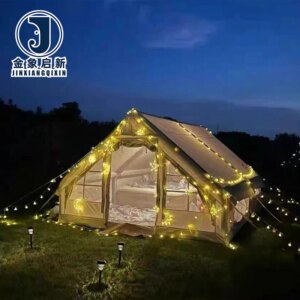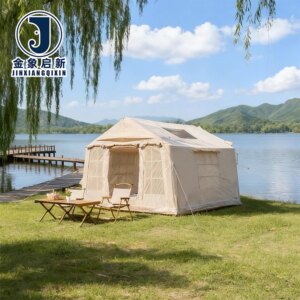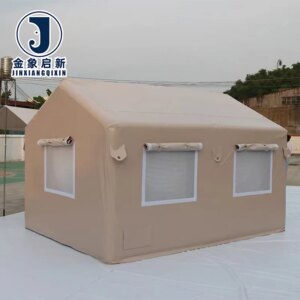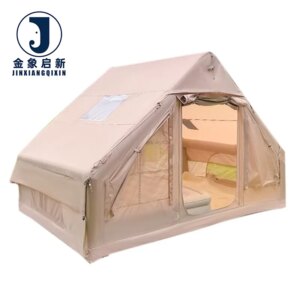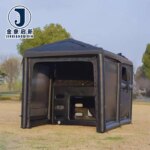
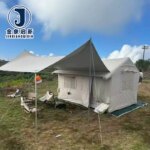
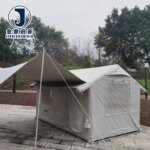
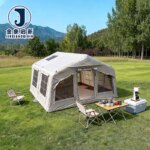
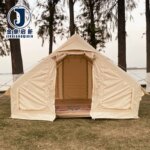
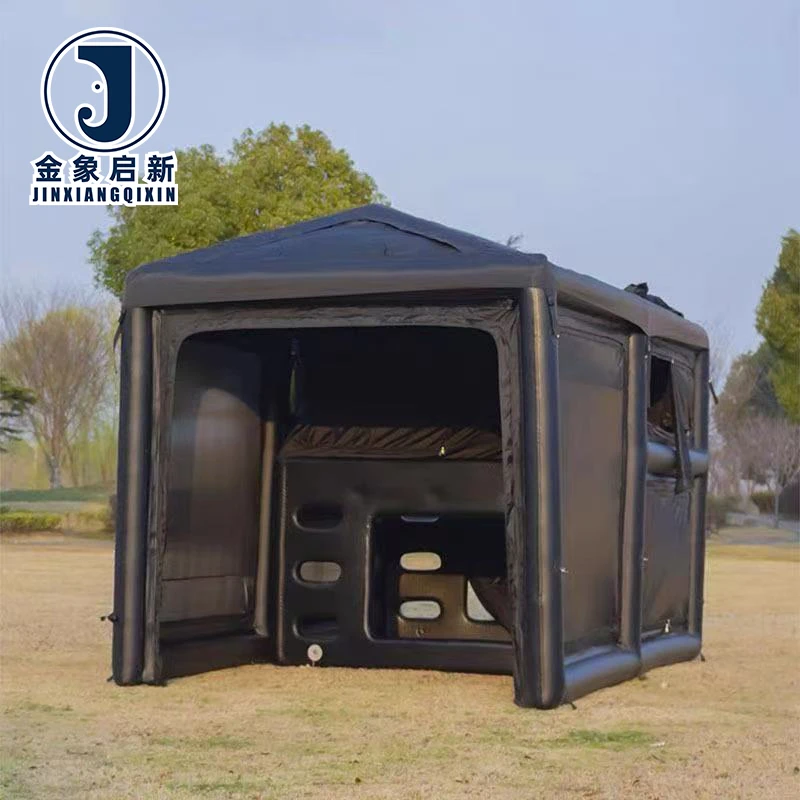
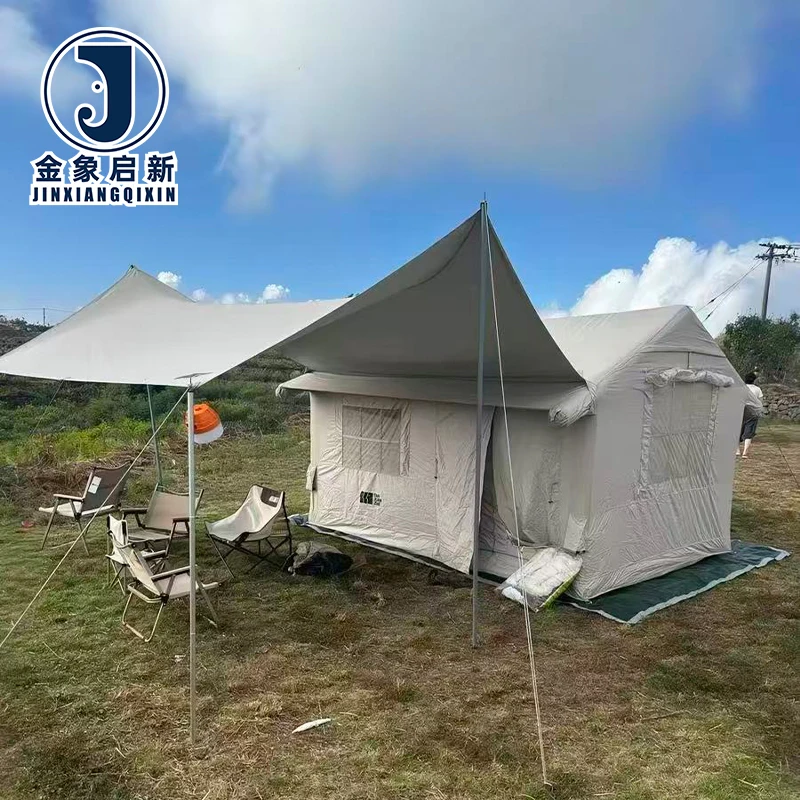
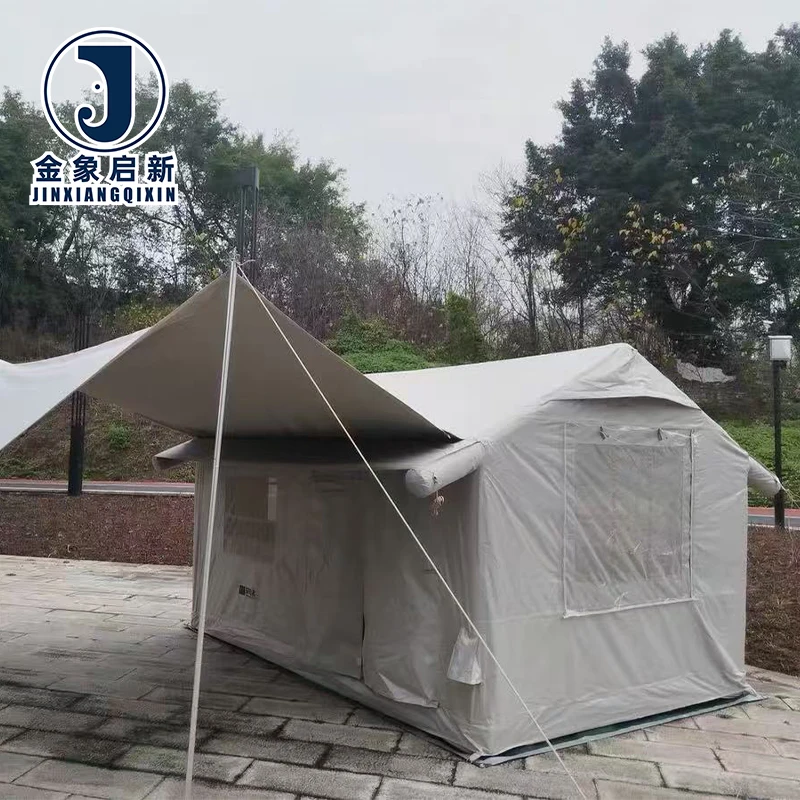
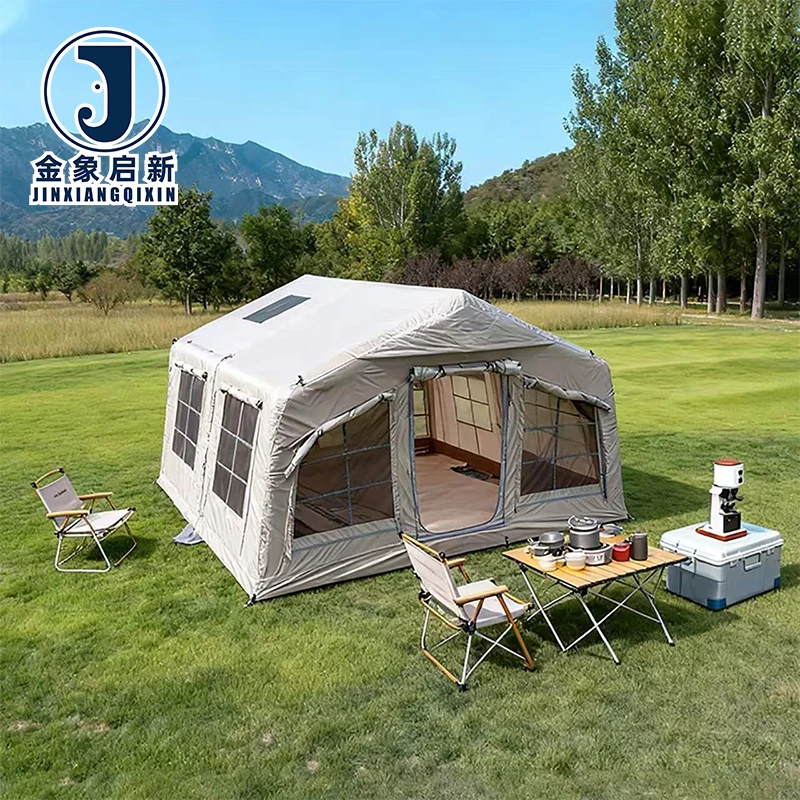
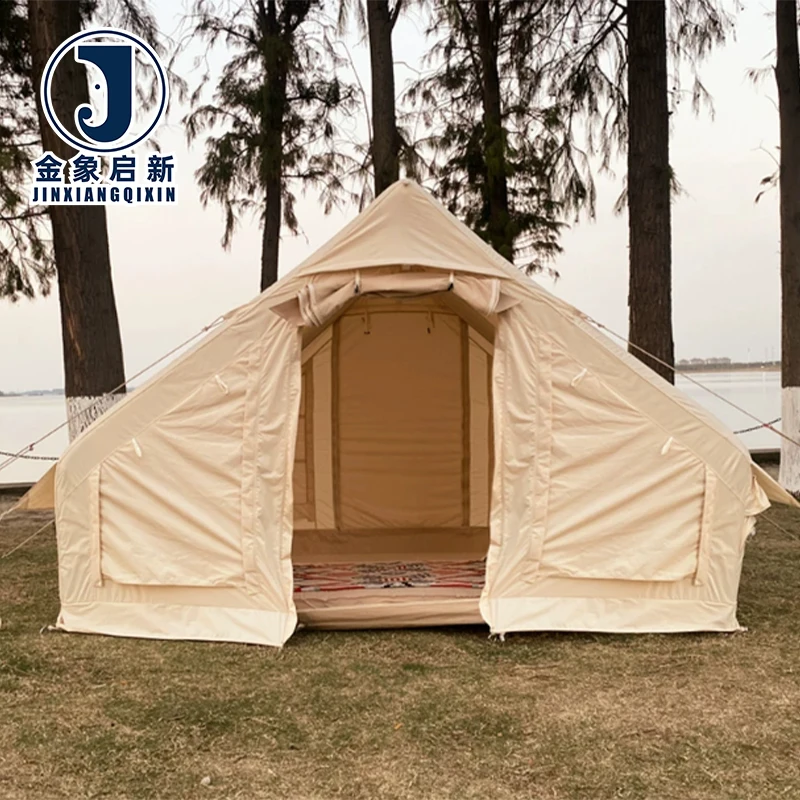
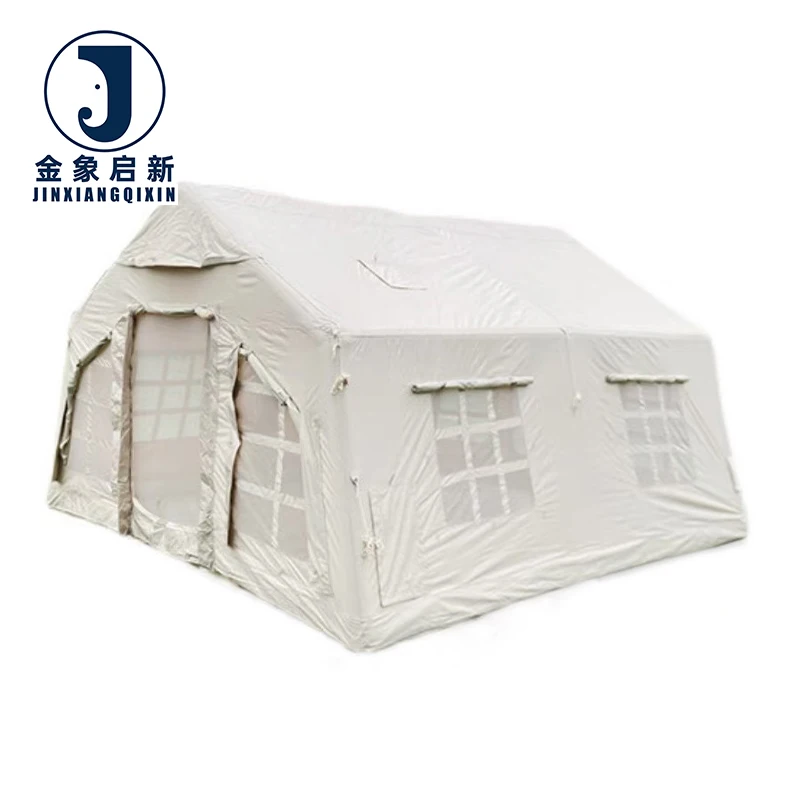
Specialist structure fabric capability — Our 10-person R&D team engineers inflatable tent fabric to your project’s airflow, fire compliance, and dimensional requirements, not off-the-shelf roll stock.
Technical Specifications
| Parameter | Value |
|---|---|
| Product Type | Inflatable Tent |
| Core Material | PVC knife-coated fabric |
| Waterproof Integrity | Fully waterproof coated construction |
| UV Resistance | UV-resistant treatment (test basis not stated in source — confirm requirement) |
| Fire Retardant | Available in fire-retardant grades (grade not stated — specify compliance target) |
| Anti-Static | Available (certification level to be confirmed per site audit) |
| Product Forms | Single Layer Construction, Extended Type |
| Customization | OEM & ODM including sample customization and pattern printing |
| Quality System | ISO9001, ISO14001, ISO45001, CE |
Application Suitability
| Application | Exposure & Requirement |
|---|---|
| Membrane and inflatable structure contractors | Permanent or semi-permanent commercial installations requiring certified fabric and structural load validation |
| Mining and tunnelling operations | Underground or surface deployment demanding fire-retardant compliance and resistance to mechanical abrasion |
| Emergency response and logistics support | Rapid-deployment temporary enclosures exposed to variable weather and repeated inflation cycles |
| Industrial site temporary shelters | Equipment protection and workforce cover on active construction sites with dust, impact, and UV exposure |
When "Fire Retardant" Is Claimed Without the Grade to Prove It
Site inspectors need the certificate, not the marketing claim — every batch we ship includes matched documentation.
Commercial operators sourcing inflatable tent fabric for mining, aviation, or public event sites regularly face a compliance gap: the supplier quotes fire-retardant material, but the documentation arriving with the rolls does not match the classification the site safety officer requires. This is not a paperwork inconvenience; it halts deployment and can invalidate site insurance [NEED_CITE: fire classification standards for temporary structures in mining and public assembly]. The consequence is project delay, re-procurement cost, and eroded trust with the end client.
Rapid Inflation Compatibility and Structural Integrity
The PVC knife-coated construction provides the dimensional stability that inflatable structures demand during high-pressure inflation cycles. When air beams are pressurised, the fabric must resist stretching at the seam lines while maintaining its coated surface integrity across repeated deployments. Certified inflatable structure fabric must perform consistently whether the shelter is inflated for a four-hour emergency response window or a multi-week industrial site operation.
Compliance Documentation That Matches the Physical Shipment
Fire-retardant and anti-static certifications are only valuable when they trace directly to the batch installed on site. Our production process generates batch-specific inspection records so that the test certificate, the roll label, and the packing list all reference the same manufacturing run. This traceability is what site auditors in aviation, mining, and tunnelling environments verify during compliance reviews [NEED_CITE: batch traceability requirements for fire-rated fabric in underground operations].
How Coating Method and Base Fabric Determine Real-World Performance
Knife coating forces PVC paste into the interstices of the base fabric under blade pressure, creating a mechanical bond that is substantially more resistant to delamination than simple laminating. For inflatable tent structures that flex during inflation and deflate cycles, this adhesion quality directly determines whether the coating separates from the yarns at stress concentration points. The base fabric denier and weave density work together with the coating weight: a high-GSM coating on a low-density base will still tear along the yarn path, while a tightly woven base with balanced coating weight distributes load across multiple yarn intersections and resists tear propagation. Surface finish — whether glossy or matte — affects both field cleaning behaviour and the adhesion of printed branding or pattern graphics applied during OEM customisation.
The Hidden Cost of Specifying on Price Per Kilogram Alone
When procurement decisions reduce inflatable structure fabric to a cost-per-kilogram comparison, the failure mode almost always appears at the weld line. Under-specifying the base fabric density means the heat weld penetrates through to a substrate that cannot carry the structural load once the beam is pressurised. The weld fails before the fabric does, typically at the point the load flexes most during wind loading or internal pressure fluctuation [NEED_CITE: weld seam failure modes in pressurised coated fabric structures]. Batch colour variation across rolls in the same order becomes visible once panels are installed side by side on a commercial membrane structure, triggering rejection and rework that erases any per-kilogram saving.
Why Procurement Teams Source Inflatable Structures Through Jinan Jinxiang
Nearly 30 years of coated fabric production means our process control over coating weight and adhesion is built into the line, not inspected in after the fact. Three full production lines and 36 sets of professional equipment give us the capacity to fulfil large-volume project orders without splitting your batch across different machines with different calibration histories. Our 10-person R&D team handles material selection, pattern printing, and custom sizing, developing samples within days so you can validate inflation behaviour before committing to full production. Dedicated QA/QC staff conduct 100% inspection before shipment, and every roll ships with a pre-shipment inspection record matched to the batch-specific test documentation your site requires.
Documentation & Verification
- Material specification sheet stating base fabric denier, coating weight, and colour reference per roll
- Test reports for UV and fire-retardant grades matched to the specific batch shipped
- ISO and CE certificates referenced against the production facility, not a trading intermediary
- Pre-shipment inspection record with dimensional tolerances and coating adhesion verification
- Roll packing list with net weight and roll count aligned to container loading plan
Fabrication, Handling & Storage
- Heat welding parameters must account for PVC knife-coated thickness; test welds on batch offcuts before full production runs
- Store rolls upright on cores to prevent permanent creasing in the PVC coated surface layer
- Clean with neutral pH detergents only; solvent-based cleaners can degrade the plasticiser in the PVC coating
- Inflate test each custom-cut panel before final seam sealing to verify dimensional accuracy under pressure
- Pattern printing adhesion should be validated on a pre-production sample before committing the full roll batch
Before You Send an Enquiry
To specify the correct inflatable tent fabric for your project, we need the deployment environment (underground mining, surface industrial, public event), the fire-retardant or anti-static classification your site safety plan mandates, and the target dimensions for each inflatable panel or beam section. If pattern printing or OEM branding is required, provide artwork files and specify whether you need rolls for your own fabrication or finished cut-and-welded panels. Sample development is available for design confirmation before production commitment.
Frequently Asked Questions
Q: What fire-retardant grades and anti-static certifications are available for inflatable structure fabric?
A: Fire-retardant grades are available to match market-specific compliance frameworks; the exact grade must be confirmed against your site safety plan or local building code for temporary structures. Anti-static treatment is available for environments where dust ignition or electrostatic discharge is a documented risk. Specify the standard your auditor requires so we can supply matched test certificates with the shipment.
Q: How is UV resistance validated and what test basis supports outdoor lifespan claims?
A: UV-resistant treatment is applied during the coating process and is available with supporting test documentation on request. Because UV exposure intensity varies drastically by geography and installation angle, we recommend requesting the specific test basis and evaluating it against your deployment region’s solar radiation data rather than relying on a generic lifespan claim.
Q: What customization options exist for inflatable tent dimensions, material thickness, and printing?
A: OEM and ODM customisation covers cut dimensions, panel geometry, material thickness selection, and pattern printing for branding or identification. Our R&D team develops samples within days so you can physically test inflation behaviour, seam integrity, and print adhesion before approving mass production. Custom widths and lengths are subject to minimum order quantities that vary by specification.
Q: How does the sample approval and pre-production validation process work?
A: After initial enquiry and specification discussion, we produce a sample reflecting your target material, dimensions, and any print or treatment requirements. You evaluate the sample for inflation performance, coating hand feel, and compliance documentation alignment. Once approved, production proceeds with in-process QA checkpoints and 100% pre-shipment inspection against the approved sample standard.
Q: What documentation is provided to support site compliance audits and regulatory submissions?
A: Each shipment includes a material specification sheet, batch-specific quality inspection records, test reports for any fire-retardant or anti-static grades specified, ISO and CE certificates, a packing list with roll-level detail, and a certificate of origin. This documentation package is structured to satisfy auditor requirements in mining, tunnelling, aviation, and public assembly environments.