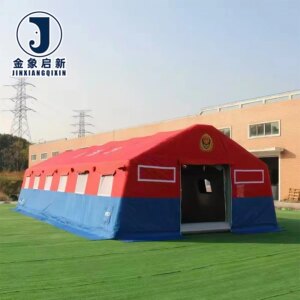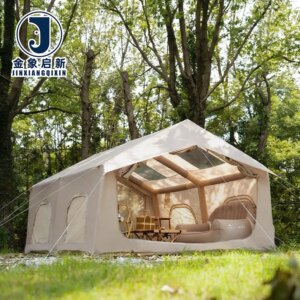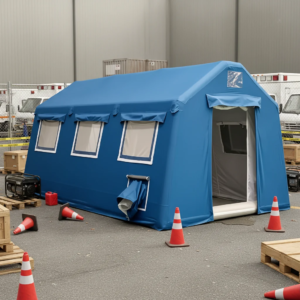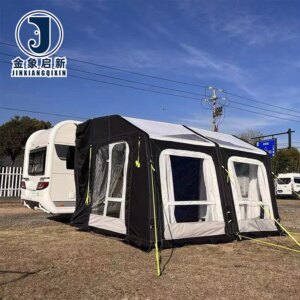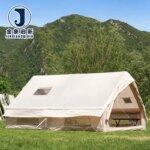
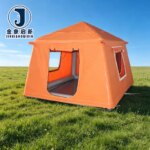
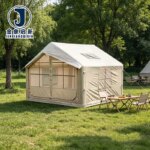
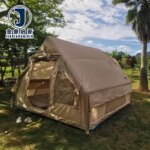
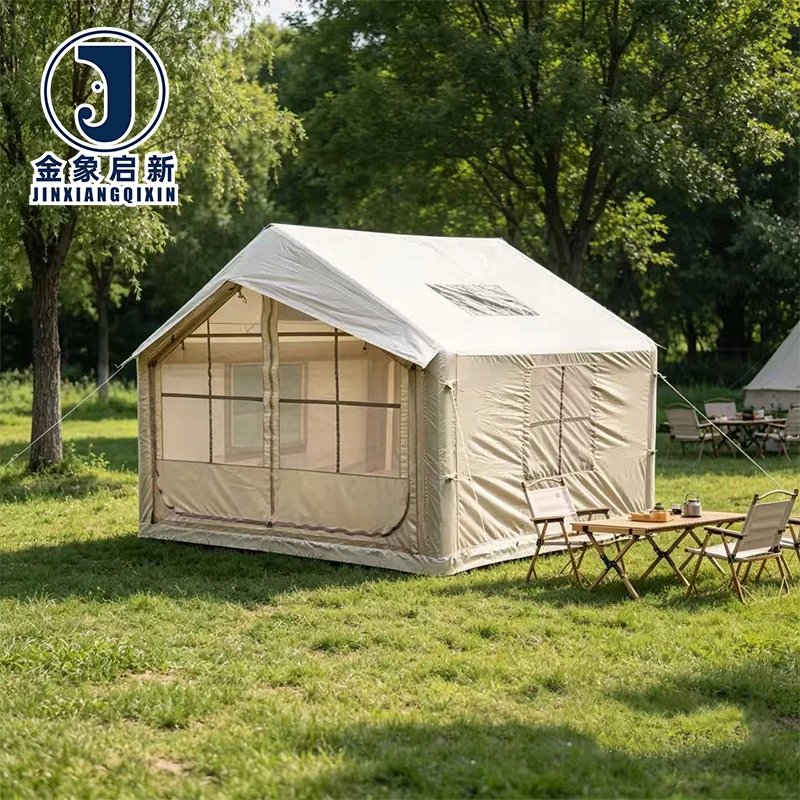
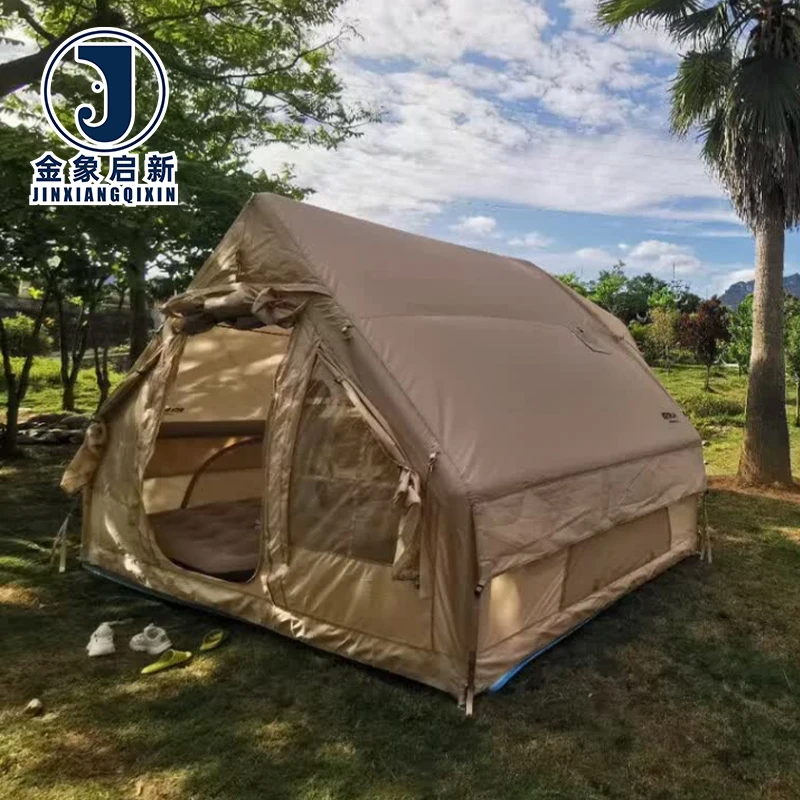
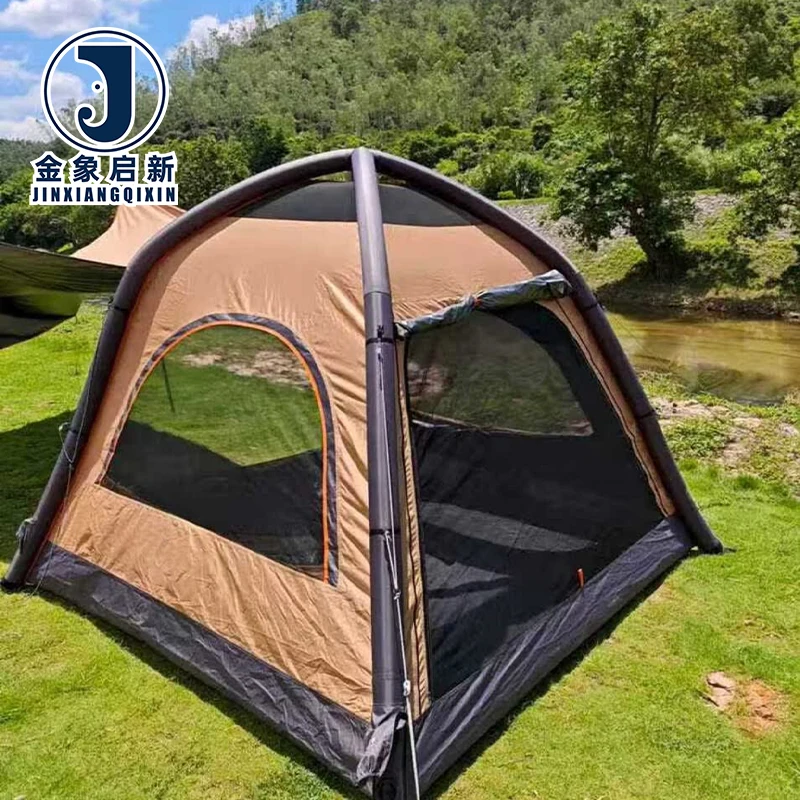
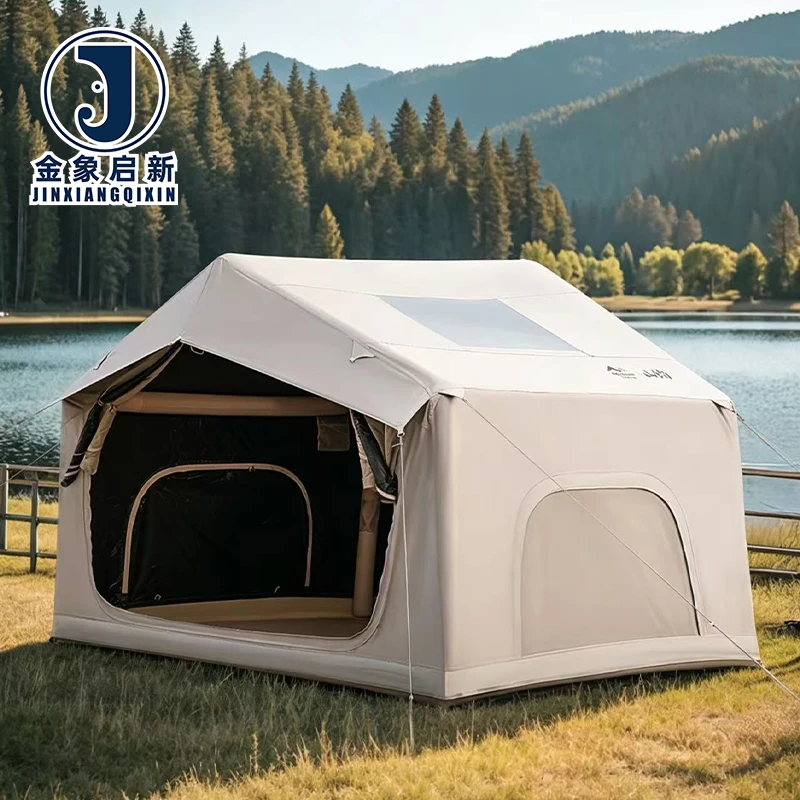
Process-Controlled Coating Expertise — nearly three decades of PVC coated fabric production applied to inflatable structure materials, with full-process QA and 100% pre-shipment air pressure testing to verify inflation integrity.
Technical Specifications
| Parameter | Value |
|---|---|
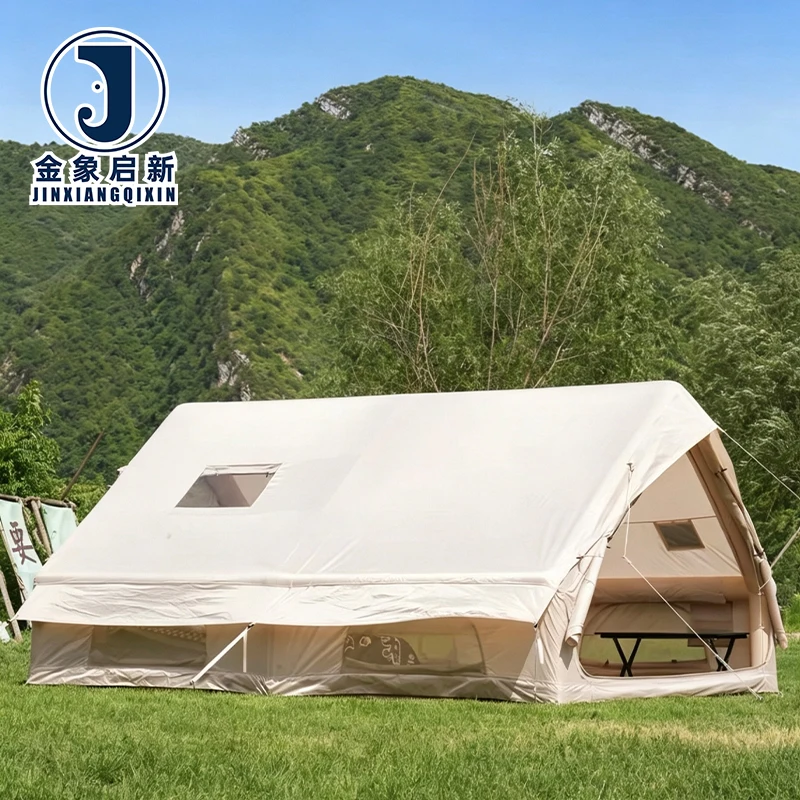
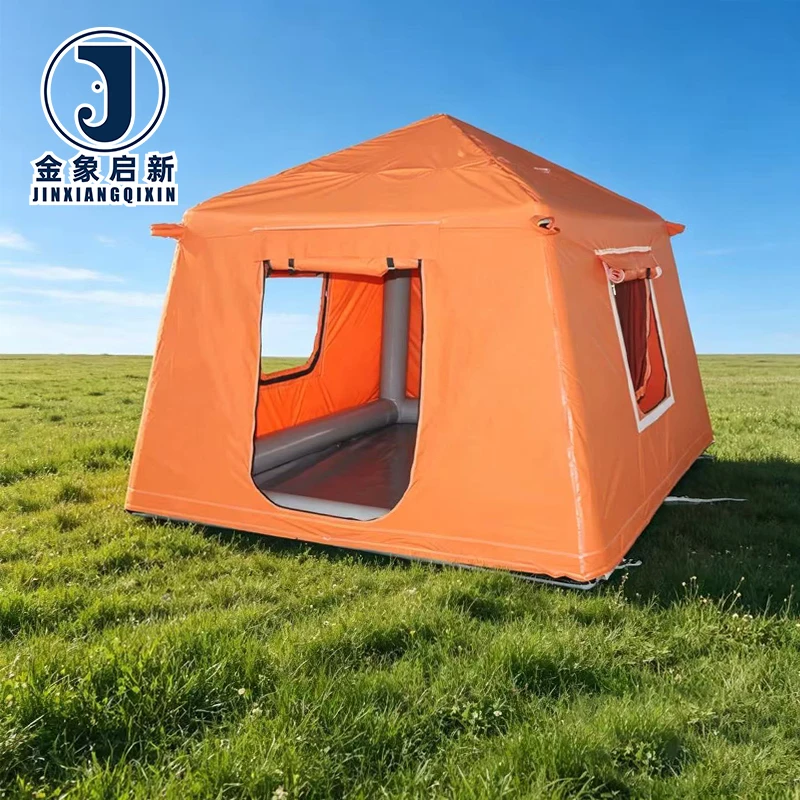
| Product Type | Inflatable Tent |
| Core Material | PVC tarpaulin |
| Key Performance | Waterproof, tear-resistant |
| UV Treatment | UV-resistant (test basis not stated in source) |
| Design | Four-season, quick automatic opening |
| Capacity | 2-3 Person |
| Customization | OEM & ODM, sample customization, pattern printing |
| Production Facility | 9,180 m² with 3 full production lines |
| Processing Equipment | 36 sets of professional equipment |
| R&D Team | 10 technicians |
| Quality Control | Full-process QA & QC with 100% pre-shipment inspection |
| Certifications | ISO 9001, ISO 14001, ISO 45001, CE |
Application Suitability
| Application | Exposure & Requirement |
|---|---|
| Mining and tunnelling site shelters | Continuous inflation pressure, dust ingress, rapid deployment under shift schedules |
| Outdoor event management structures | Repeated inflation/deflation cycles, UV exposure across seasons, public safety compliance |
| Construction site auxiliary shelters | Abrasion from equipment movement, wind load on membrane surfaces, temporary utility connections |
| Commercial camping ground facilities | Extended outdoor weathering, guest turnover requiring quick setup, four-season temperature variation |
| Aviation temporary deployment structures | Regulatory compliance for airfield use, fire safety requirements, rapid assembly in remote locations |
| Outdoor exhibition booths | Brand visibility with printed graphics, frequent transport and redeployment, structural stability under inflation |
Why Certified Inflatable Structure Fabric Matters More Than Stated Weight Alone
Inflatable structures fail at the compliance check long before they fail in the field — documentation closes the gap between what is claimed and what the site auditor accepts.
Mining contractors and event safety officers do not inspect fabric by feel. They request test reports, fire classification certificates, and batch traceability records before allowing an inflatable shelter onto a regulated site. When an inflatable tent fabric manufacturer supplies material without matching documentation, the entire structure can be rejected at inspection regardless of how well it performs physically [NEED_CITE: fire safety compliance requirements for temporary membrane structures on regulated sites].
We have seen projects stalled because the ventilation duct or inflatable shelter arrived without the fire-retardant or anti-static certification the site required. The delay cost more than the fabric itself. Specifying the grade upfront and receiving documented proof with each shipment eliminates this risk entirely.
Coating Adhesion and Inflation Pressure Integrity
The PVC coating on inflatable tent fabric must bond to the base fabric strongly enough to resist delamination under sustained internal pressure. When the air beams of an inflatable structure remain pressurised for days or weeks, any weakness in coating adhesion manifests as blistering or peeling at stress concentration points — typically around valve openings and seam overlaps.
Our custom inflatable structure fabric is produced on three full production lines with controlled coating weight application. The 10-technician R&D team monitors adhesion during development, adjusting coating parameters to match the inflation pressure requirements of the intended structure. Each production batch undergoes inspection for coating uniformity before release.
Seaming Behaviour Under Repeated Inflation Cycles
Inflatable tents used in commercial camping or event management are inflated and deflated repeatedly across their service life. Every cycle flexes the welded seams, and the heat-welded joints must tolerate this fatigue without cracking or separating. Seam failure in an inflatable structure is not a slow leak — it is a sudden loss of structural form.
The PVC tarpaulin base used in our inflatable tent fabric supports thermal welding at controlled temperature and dwell time settings. Fabricators working with this material should validate weld parameters on sample pieces before committing to full production runs, particularly when joining sections that will form pressurised air beams [NEED_CITE: thermal welding parameters for PVC coated fabrics in inflatable applications].
Reading the Specifications That Actually Determine Performance
The PVC tarpaulin base fabric provides the structural backbone of any inflatable membrane. Waterproof performance comes from the continuous coating layer rather than the weave alone — a tightly woven but uncoated base fabric will absorb water, while the PVC coating creates a continuous barrier. Tear resistance depends on both the base fabric denier and the coating’s ability to hold yarns in place once a tear initiates; coating adhesion quality directly influences how far a puncture will propagate before the surrounding coating arrests it.
UV-resistant treatment extends the fabric’s usable life under continuous sunlight, though the specific test basis should be confirmed per project to match the climate zone of deployment. The four-season design intent means the PVC formulation maintains flexibility across temperature variation — a critical factor when inflatable structures deploy in cold mornings and heat up under midday sun. Quick automatic opening mechanisms depend on the fabric’s ability to unfold without crease memory causing permanent deformation at fold lines.
What Specification Shortcuts Cost at the Installation Stage
When a buyer selects inflatable structure fabric based solely on price per metre without verifying coating adhesion or seam compatibility, the consequences appear during fabrication or first deployment. Heat welds that hold on a flat sample may fail once the structure is inflated and the seams are placed under biaxial tension. Coating that appears adequate in a hand sample may prove too thin to prevent water penetration under sustained rainfall on a deployed tent.
Batch colour inconsistency across rolls becomes visible when panels from different rolls are joined into a single inflatable structure — a problem that only reveals itself after the fabric has been cut and welded, making rework extremely costly [NEED_CITE: batch colour consistency standards for coated fabrics in membrane structures]. Fire classification mismatches discovered at the final inspection stage can result in complete order rejection with no possibility of on-site remediation.
Why Technical Buyers Source Inflatable Fabric Here
Three full production lines dedicated to coated fabric mean capacity is available for both sampling and volume production without scheduling conflicts between product families. The 36 sets of processing equipment handle coating, laminating, and finishing operations in-house, reducing lead time variability caused by outsourced process steps.
The 10-technician R&D team develops samples within days for custom inflatable structure specifications, allowing fabricators to test weld parameters and inflation behaviour before committing to a production order. Full-process quality inspection with dedicated QA and QC staff catches coating weight deviations and adhesion weaknesses during production rather than at the pre-shipment stage. ISO 9001, ISO 14001, ISO 45001, and CE certifications provide the documentation framework that regulated sites require for temporary structure approval.
Documentation & Verification
- Material specification sheet stating PVC grade, base fabric type, and coating weight for each inflatable fabric batch
- Test reports for UV-resistant and flame-retardant grades where applicable, matched to production batch number
- ISO 9001, ISO 14001, ISO 45001, and CE certificates included with shipment for site compliance submissions
- Pre-shipment inspection record covering coating adhesion, air pressure test results, and waterproof verification
- Certificate of origin and customs documentation prepared for international procurement of inflatable structure fabric
Fabrication, Handling & Storage
- Heat weld temperature and dwell time should be validated on sample pieces of this PVC tarpaulin before full production of inflatable air beams
- Store rolls flat or on core supports to prevent permanent creasing in the PVC coating layer that affects inflation uniformity
- Cut panels with allowance for weld overlap width; seam placement should avoid high-flex zones on the inflated structure geometry
- Use PVC-compatible adhesives for field repairs on the coated surface; solvent-based patches bond to the PVC layer directly
- Avoid dragging fabric across abrasive surfaces during deployment to protect the waterproof coating from scoring and puncture
- Clean the PVC surface with mild detergent solutions; harsh solvents may degrade the coating adhesion over repeated cleaning cycles
What to Include in Your Enquiry for Inflatable Structure Fabric
To specify the right inflatable tent fabric for your project, share the intended deployment environment, expected inflation pressure range, and any fire safety or regulatory classifications required by the installation site. If pattern printing or custom colour matching is needed for brand or visibility requirements, provide reference samples or colour standards with your enquiry.
Indicate whether you require raw roll stock for your own fabrication facility or need sample development through our R&D team to validate performance before ordering. Confirming the target market and applicable compliance standards upfront allows us to match the correct test documentation to your shipment.
Frequently Asked Questions
Q: How is PVC coating adhesion verified for inflatable structure fabric?
A: Coating adhesion is checked during in-process quality inspection on our production lines. The QA team tests peel strength at intervals throughout each run to confirm the PVC layer bonds to the base fabric sufficiently for sustained inflation pressure. Pre-shipment inspection includes additional adhesion verification before rolls are released for dispatch.
Q: What fire-retardant certifications are available for inflatable membrane applications?
A: Flame-retardant grades are available for inflatable and membrane structure fabric — confirm the specific classification required for your market and installation site. Test reports matched to the production batch number accompany orders where fire performance is specified. Our documentation supports regulatory submissions for mining, aviation, and public event sites.
Q: How is batch colour consistency maintained across large custom inflatable fabric orders?
A: Colour matching is controlled at the coating preparation stage with reference standards checked against each production batch. Rolls destined for a single project are grouped and inspected side by side before dispatch. This process prevents visible colour variation when panels from different rolls are joined into one inflatable structure.
Q: What does the sample development process look like for custom inflatable specifications?
A: The 10-technician R&D team develops samples within days based on your application requirements, including material grade, colour, and any pattern printing needs. Samples are shipped for your evaluation of weld behaviour, inflation characteristics, and surface finish before production begins. This step confirms performance before volume commitment.
Q: How does the pre-shipment air pressure inspection work for each batch?
A: Selected samples from each production batch undergo air pressure testing to verify inflation integrity and waterproof performance under simulated deployment conditions. The QA team records results and includes them in the pre-shipment inspection report. Only batches passing both air retention and waterproof criteria are cleared for packing and dispatch.