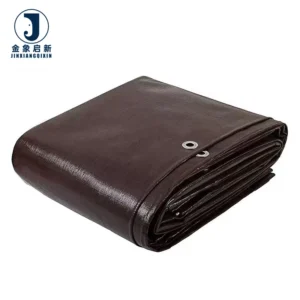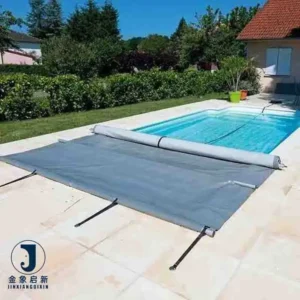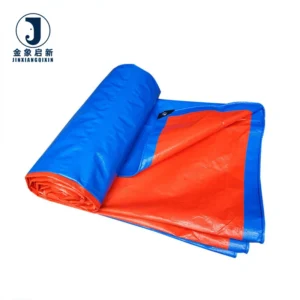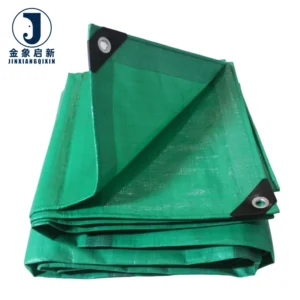
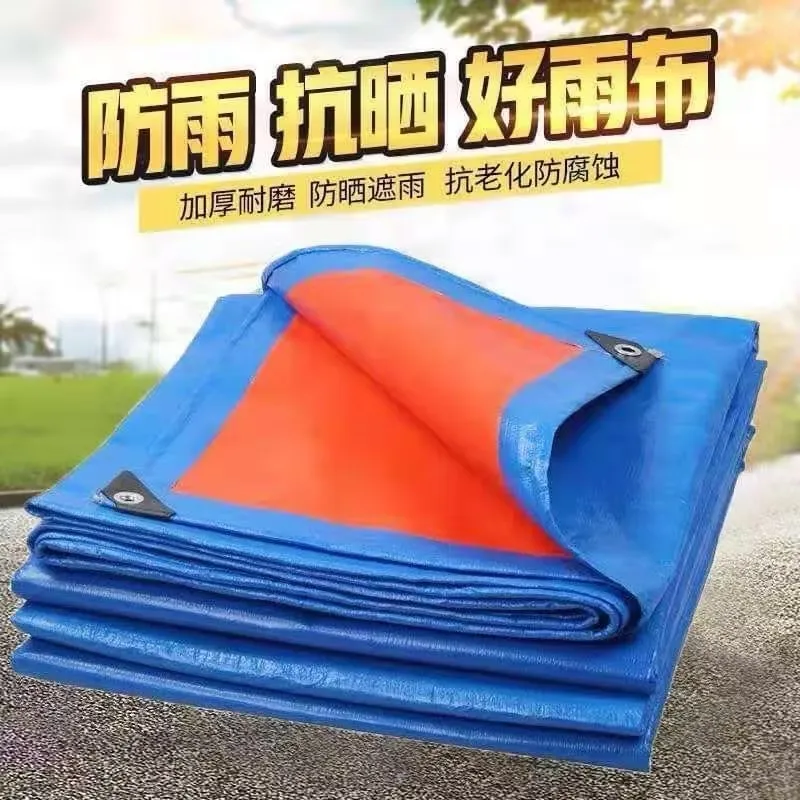
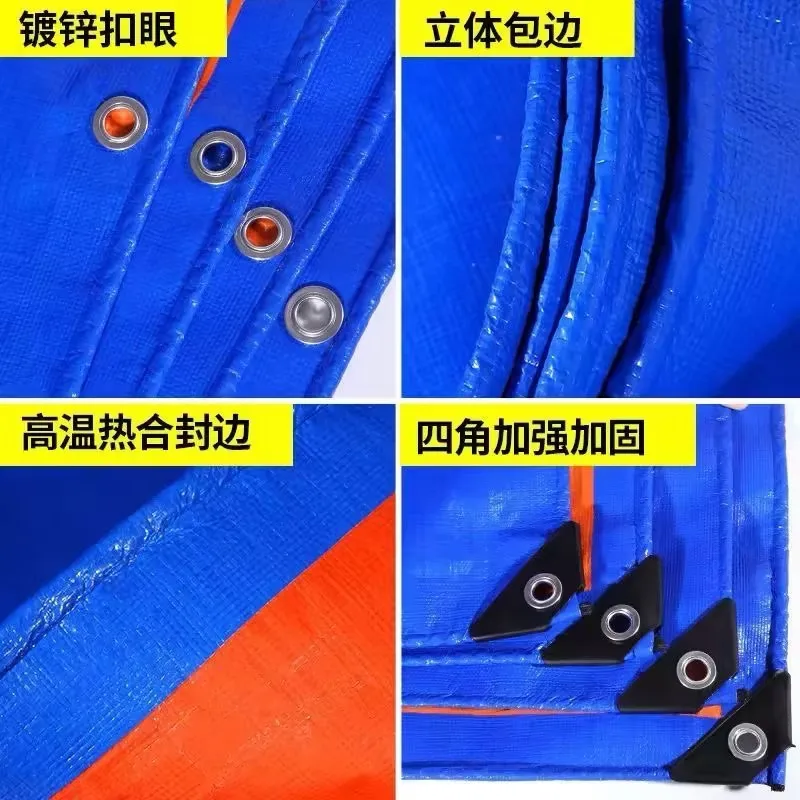
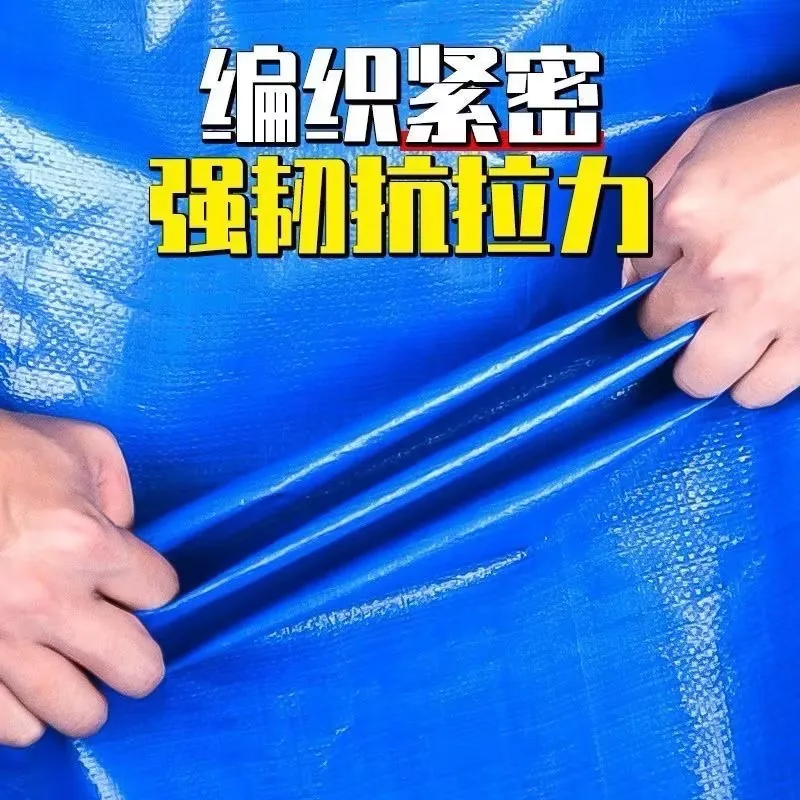
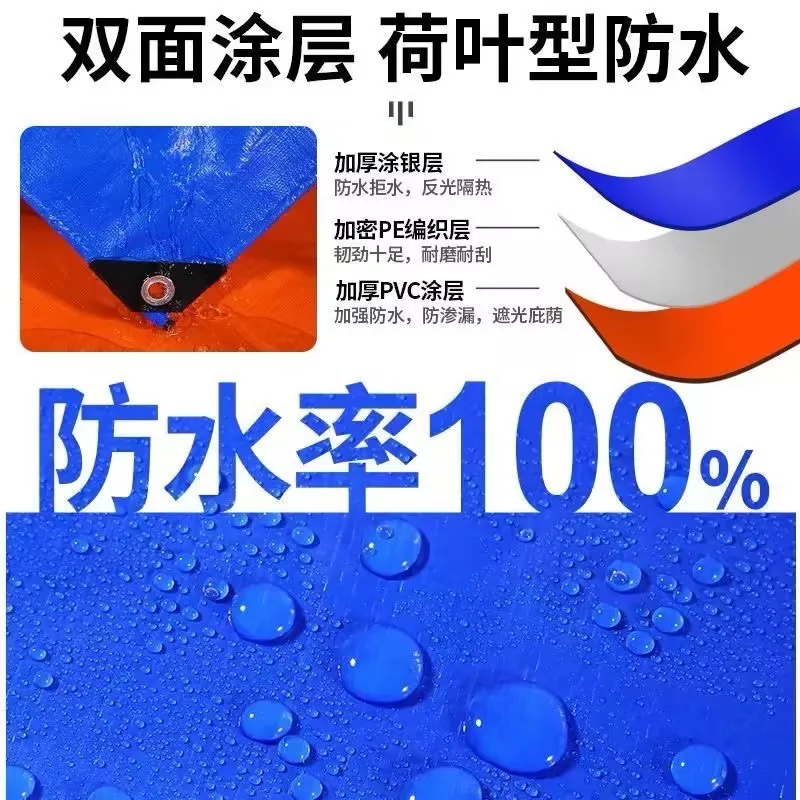
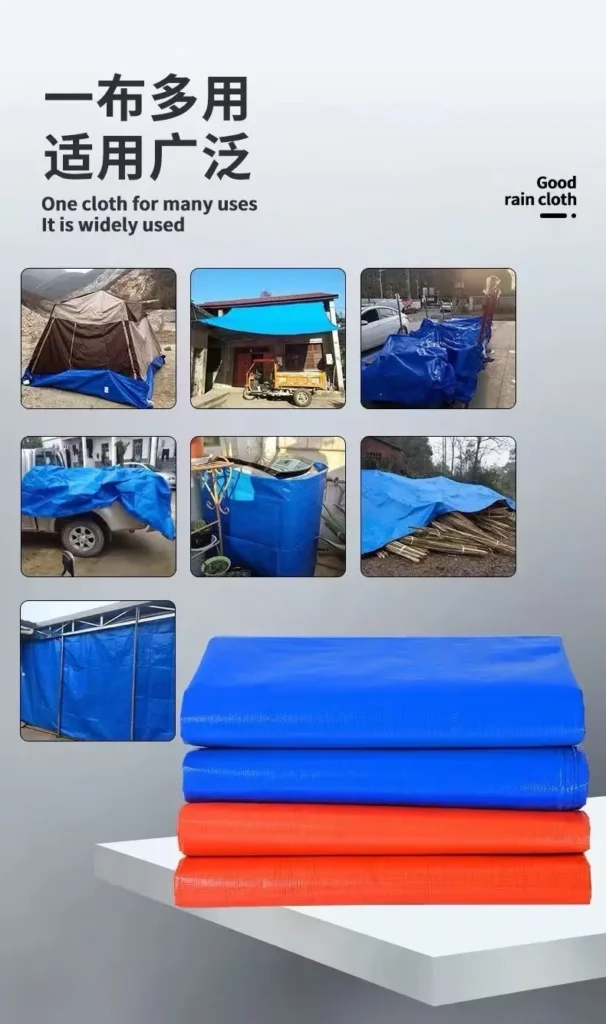
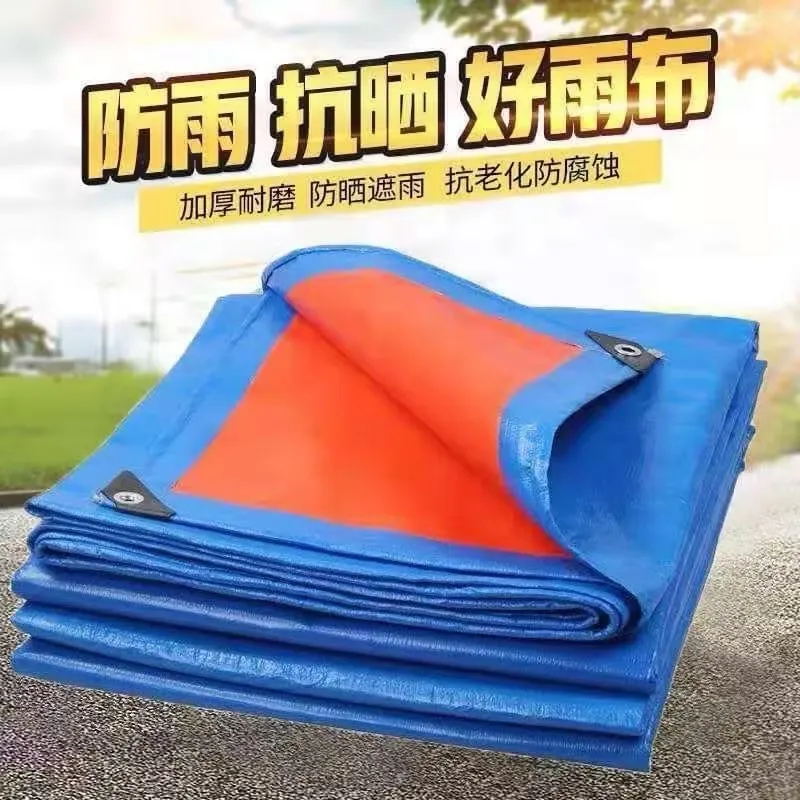
Precision Coating Control — nearly 30 years of coated fabric production delivering consistent coating weight and adhesion across every roll of PE tarpaulin we ship.
Technical Specifications
| Parameter | Value |
|---|---|
| Product Type | PE Tarpaulin |
| Coating Material | PE (Polyethylene) |
| Weight Grade | Medium Weight (exact GSM not stated in source) |
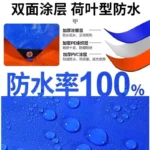
| Waterproof Rating | Waterproof |
| UV Treatment | Anti-UV (test basis not stated) |
| Color | Available on request |
| Finish | Available on request |
| Key Features | Waterproof, rainproof, anti-UV treated |
Application Suitability
| Application | Exposure & Requirement |
|---|---|
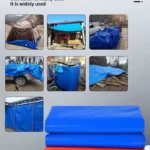
| Outdoor awning structures | Sustained sun exposure, wind loading, rain ingress prevention at tension points |
| Shade sail installations | High UV exposure, constant tension stress at corner grommets, flex under wind gusts |
| Canopy covers | Overhead rain and debris protection, thermal expansion cycles, UV degradation risk |
| Pet and animal shelters | Constant moisture contact, frequent cleaning, moderate UV exposure |
| Temporary membrane structures | Variable weather exposure, tension and flex during installation and service |
Why Anti-UV Claims Fail Once the PE Tarpaulin Is Unrolled on Site
Anti-UV treatment only matters when a test report confirms the exposure hours your installation will face.
I have seen PE tarpaulin orders arrive on site with the quotation stating anti-UV treatment, only for the fabric to show visible fading and embrittlement within one season. The problem is rarely the coating chemistry itself — polyethylene accepts UV stabilisers well. The failure happens when the treatment level is not matched to the actual installation environment, or when the stabiliser concentration varies between rolls in the same shipment. A shade sail in southern Spain faces very different UV loading than a pet shelter in northern Germany, yet both may receive the same generic anti-UV PE tarpaulin if the supplier does not differentiate [NEED_CITE: UV stabiliser migration and depletion rates in polyethylene coatings].
Coating Adhesion and the Waterproof Barrier
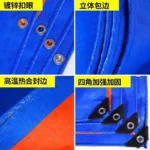
PE coating bonds to the base fabric through heat and pressure during the lamination process. For a PE tarpaulin used in awning or canopy applications, the coating must remain fully bonded at the fold lines and grommet points where the fabric flexes repeatedly. When adhesion is insufficient, moisture penetrates between the coating and the base weave, causing delamination that spreads from the stress point outward. Our production lines maintain controlled temperature and pressure profiles across the full web width to prevent this failure mode.
Tension, Flex and the Demands of Shade Sail Geometry
Shade sails and tensioned canopies place unusual demands on coated fabric. The PE tarpaulin must resist creep — gradual stretching under constant tension — while also flexing without cracking at the corner reinforcement zones. Medium weight grades offer a balance between handling ease during installation and sufficient dimensional stability once tensioned. Fabricators cutting custom geometries need rolls with consistent thickness so that heat-welded seams behave predictably across the entire structure [NEED_CITE: tensile and tear test methods for coated fabrics per ISO 1421].
Reading the Specification Sheet Beyond the Weight Number
The weight grade alone does not define how a PE tarpaulin performs in the field. Base fabric denier and weave density determine how the material resists tear propagation once a puncture occurs — a loosely woven base will tear easily even with a heavy PE coating on top. Coating weight relative to base fabric weight affects hand feel and flexibility; a heavily coated lightweight base feels stiff and cracks at fold points, while a thinly coated heavy base may allow water penetration through the weave. For awning and canopy fabricators, understanding this balance matters more than the headline GSM number. The coating method — whether extrusion lamination or film bonding — also influences how well the fabric heat-welds during fabrication, since different methods produce different melt behaviours at the seam.
The Cost of Underspecifying for Tensioned Structures
When a shade sail or canopy is fabricated from PE tarpaulin that lacks sufficient tear strength at the grommet zone, the first failure is rarely dramatic — it appears as a small tear radiating from the corner ring, growing with each wind event. By the time the client notices, the structure must be taken down, returned to the fabricator, and remade. The material cost of the original roll becomes a small fraction of the total loss once installation labour, crane hire and client reputation are factored in. Colour variation between rolls compounds the problem when a replacement panel must be matched to the existing installation [NEED_CITE: colour consistency standards for coated fabrics in architectural applications].
Why Fabricators and Contractors Source PE Tarpaulin Through Jinxiang Tech
Our 10-person R&D team develops samples within days when you need a specific width, colour or weight grade confirmed for your awning or canopy project. Three full production lines with 36 sets of professional equipment give us the capacity to deliver roll stock on schedule for large membrane structure projects. Every roll undergoes dedicated QA and QC at each production stage, with full pre-shipment inspection verifying weight and colour consistency before dispatch. We provide material specification sheets that state exact GSM, base fabric construction and coating weight — not a range that covers the entire product family. ISO and CE certified production supports import documentation for projects across multiple regulatory markets.
Documentation & Verification
- Material specification sheet stating exact GSM, base fabric denier and PE coating weight per roll
- UV test report confirming exposure hours and test standard for anti-UV treated grades
- Pre-shipment inspection record verifying roll-to-roll colour and weight consistency
- ISO and CE certificates accompanying shipment for customs and site compliance
- Roll packing list with individual roll weights and dimensions for warehouse receiving
Fabrication, Handling & Storage
- Heat welding temperature must match PE coating melt point; test a scrap piece from each roll before running production seams
- Store rolls horizontally on racking to prevent permanent creasing in the medium weight PE tarpaulin coating
- Allow cold-stored rolls to reach ambient temperature before unrolling to avoid coating crack at the fold
- Use UV-stable thread if sewing is required at grommet reinforcement zones, since standard thread degrades faster than the PE coating
- Clean with mild detergent only; solvent-based cleaners can soften the PE coating surface and reduce waterproof performance
- Plan cutting layout to minimise offcut waste, especially on custom width rolls ordered for large canopy projects
What We Need From Your Enquiry
Tell us the structure type — awning, shade sail, canopy or shelter — and the expected wind and UV exposure at the installation site. Specify the roll width and total linear metres required so we can confirm availability and production scheduling. If your project requires fire-retardant compliance or a specific anti-UV test standard, state the regulation or certification body so we can match the correct grade.
Frequently Asked Questions
Q: What GSM is right for an outdoor awning versus a shade sail?
A: Shade sails generally require a higher GSM than simple awnings because the fabric is under constant biaxial tension and must resist tear propagation at corner grommets. Awning fabric sees more folding and rolling, so flexibility matters alongside strength. Request our material specification sheet for the exact GSM and base fabric denier of each available grade.
Q: How do I verify anti-UV treatment on arrival?
A: Request a UV test report with your shipment that states the test standard and exposure hours achieved. On site, compare the surface condition of an unopened roll against a sample that was exposed during installation. If no test report accompanies the shipment, the anti-UV claim cannot be independently verified.
Q: Is this PE tarpaulin suitable for heat welding or does it require sewing?
A: PE coated tarpaulin heat-welds effectively when the welding temperature matches the coating melt characteristics. We recommend running a test weld on a scrap from each roll to confirm seam strength before full production. Sewn seams should use UV-stable thread and sealed needle holes to maintain waterproof integrity.
Q: Can custom widths and colours be produced for membrane structure projects?
A: Yes. Custom widths and colours are available for PE tarpaulin orders meeting the stated production minimum. Our R&D team develops samples within days for approval before bulk production runs. Colour consistency across all rolls in a single order is verified during pre-shipment inspection.
Q: What fire-retardant certification is available if the site requires compliance?
A: Fire-retardant grades are available in our PE tarpaulin range, but the specific certification required depends on your installation market and building code. State the regulation or standard your project must meet, and we will confirm which grade and test report we can supply with your shipment.