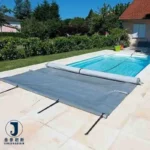
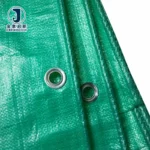
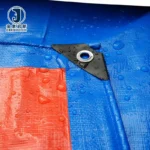
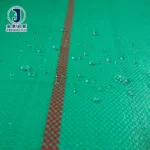

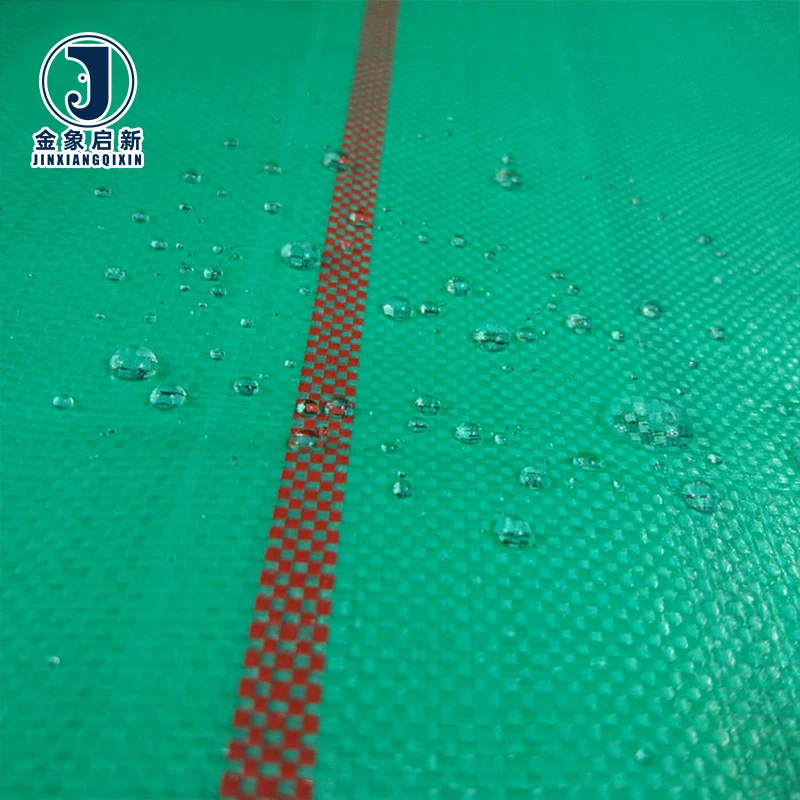
Precision Coating Control — Every roll of HDPE woven and LDPE laminated PE tarpaulin is verified against the stated GSM before dispatch, ensuring the material you specify is the material you receive.
Technical Specifications
| Parameter | Value |
|---|---|
| Product Type | PE Tarpaulin Roll / Finished PE Tarpaulin |
| Base Fabric | HDPE weaving |
| Coating / Lamination | LDPE lamination on both sides |
| GSM Range | 50gr/m² to 300gr/m² (confirm the grade required for your project) |
| Thickness | 0.2–0.4 mm / 8 mil–16 mil |
| Weave Density (6×6 or 6×7) | 50gsm ~ 60gsm |
| Weave Density (7×7 or 7×8) | 60gsm ~ 80gsm |
| Weave Density (8×8 or 9×9) | 80gsm ~ 90gsm |
| Weave Density (8×10) | 90gsm ~ 100gsm |
| Weave Density (10×10) | 100gsm ~ 120gsm |
| Weave Density (12×12) | 120gsm ~ 150gsm |
| Weave Density (14×14) | 150gsm ~ 250gsm |
| Weave Density (14×16) | 250gsm ~ 300gsm |
| Roll Width Options | 6ft, 8ft, 10ft, 12ft / 2m, 4m, 6m |
| Roll Length Options | 100 yards, 100 meters, or custom |
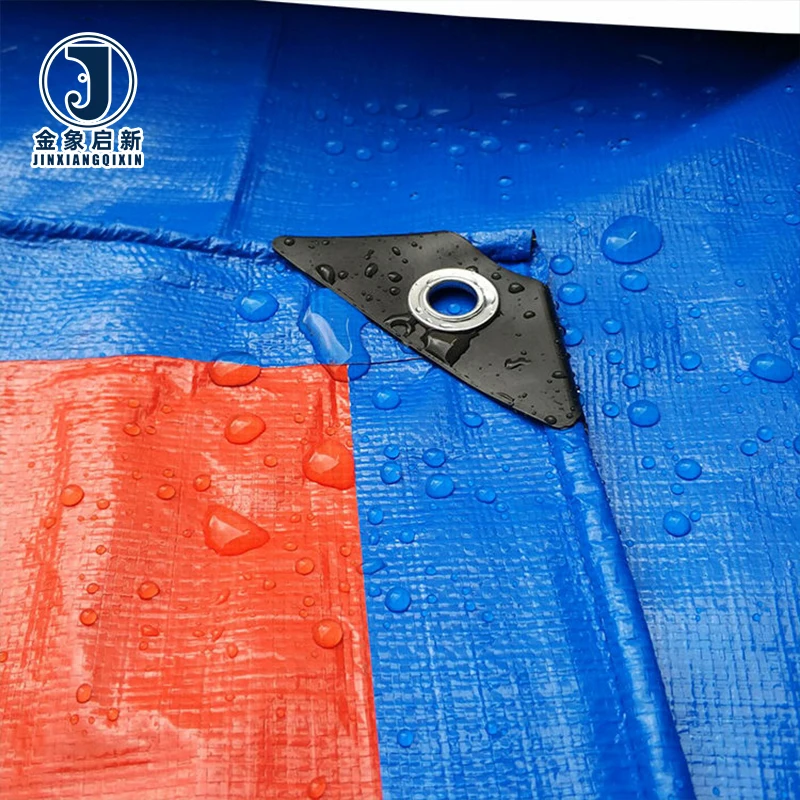
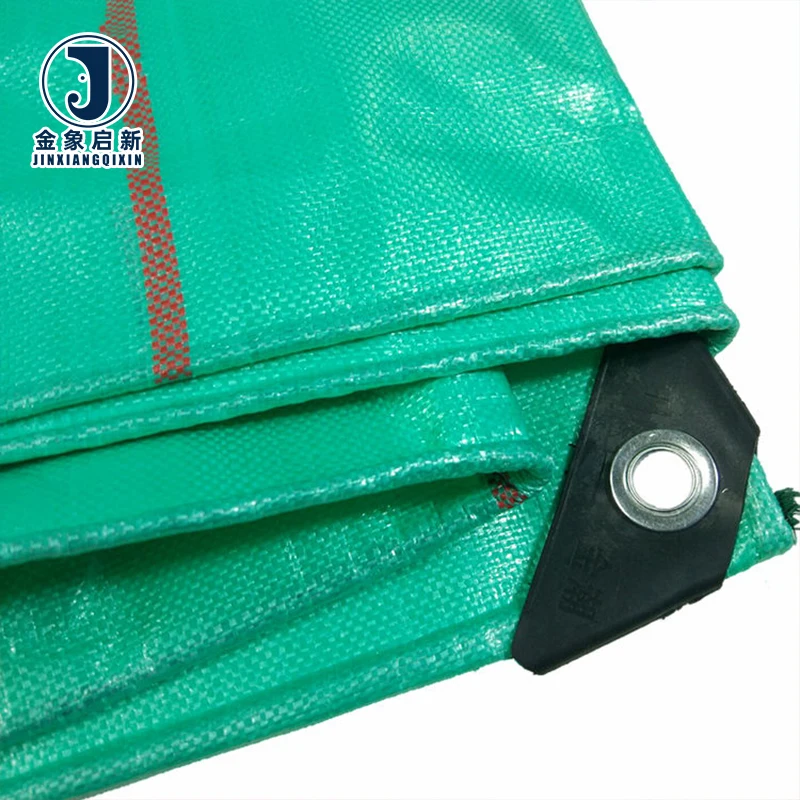
| Finished Edges | All four edges reinforced with PP rope in hem |
| Finished Eyelets | Galvanized, every 3ft or 1 meter interval |
| Finished Corners | Reinforced plastic corners |
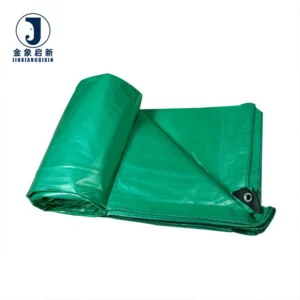
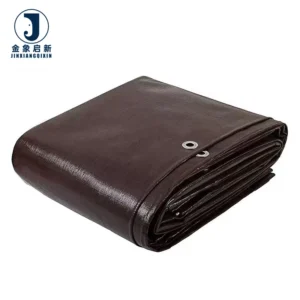
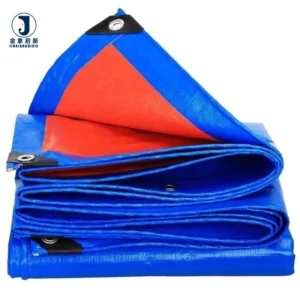
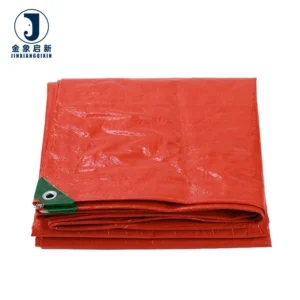
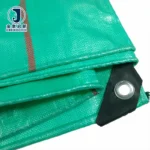
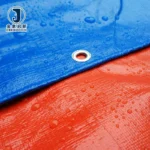
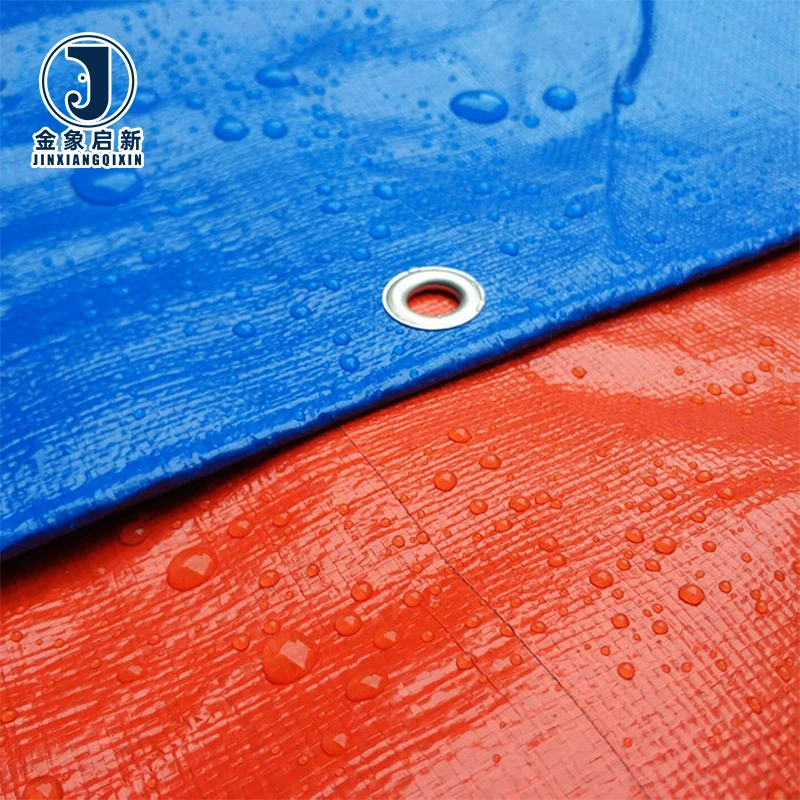
| Available Colours | Blue, Blue/Orange, Green, Grey, Black, Clear, Grey/Green, Orange, or custom |
| UV Treatment | Available (test basis not stated — confirm the standard required for your market) |
| Key Features | Waterproof, washable, tear resistant, weather proof, sunproof, mildew proof, anti-aging |
Application Suitability
| Application | Exposure & Requirement |
|---|---|
| Mining and construction pond liners | Permanent water contact, soil chemistry exposure, puncture risk from aggregate sub-base |
| Sediment containment and silt control | Continuous moisture, UV exposure on open sites, repeated deployment and folding |
| Agricultural and aquaculture pond lining | Standing water, organic acid exposure, algal growth resistance, fish-safe material |
| Temporary industrial site enclosures | Wind load on scaffold attachments, rain ingress prevention, dust containment |
| Specialist ventilation duct base material | Airflow pressure cycling, fire-retardant compliance per site regulation, anti-static in underground use |
| Inflatable and membrane structure fabric | Tensile load from inflation pressure, UV exposure, welded seam integrity |
Why Fire-Retardant and Anti-Static Claims Fail at the Gate Without a Certificate
A PE tarpaulin labelled "fire retardant" without a named grade is a compliance risk waiting to surface during site inspection.
Mining and tunnelling contractors specifying ventilation duct or temporary enclosure fabric face a recurring problem: the material arrives with a generic fire-retardant claim on the invoice but no test report tied to a recognised standard such as DIN 4102 or NFPA 701. The site safety officer rejects the shipment, the duct never goes up, and the project stalls. Anti-static requirements for underground environments follow the same pattern — claimed on paper, unverified in practice. PE Tarpaulin for specialist structure and ventilation application must ship with documentation that names the exact grade and test method, not a vague assurance. [NEED_CITE: fire classification standards for temporary structures in mining environments]
Material Construction for Technical and Specialist Fabrication
The HDPE woven base fabric provides the dimensional stability required when the material is fabricated into ventilation ducts or inflatable structures. LDPE lamination on both sides seals the weave, delivering waterproof integrity and a surface that accepts heat-welded seams during duct assembly. PE Tarpaulin for specialist structure and ventilation application benefits from this dual-lamination approach because the coating weight and adhesion are controlled at the coating stage, reducing the risk of delamination under airflow pressure cycling.
Weave Density as a Structural Design Variable
Selecting the correct weave density is not about choosing the heaviest option available — it is about matching the fabric to the structural load and fabrication method. A 6×6 weave at 50gsm serves lightweight temporary covers where the material is deployed and removed frequently. A 14×14 or 14×16 weave at higher GSM grades provides the tear resistance needed for permanent or semi-permanent membrane structures and ventilation ducts that experience continuous tensile stress. [NEED_CITE: tensile and tear test methods for coated fabrics per ISO 1421]
Reading GSM and Weave Density Together for Procurement Decisions
GSM alone tells you how much material is in each square metre, but it does not tell you how that material is distributed between warp and weft yarns. A 12×12 weave at 120gsm has a tighter, more balanced construction than an 8×10 weave at the same weight, resulting in different tear propagation behaviour and seam-holding strength. For ventilation duct fabrication, a balanced weave resists the cyclic loading from airflow surges more effectively than an unbalanced one. Thickness — ranging from 0.2 mm to 0.4 mm in this product family — correlates with LDPE coating thickness, which directly influences heat-welding parameters. Thicker coatings require higher weld temperatures and longer dwell times; applying a generic weld recipe across different thickness grades produces inconsistent seam strength. Roll width options from 2m to 6m determine how many longitudinal welds are needed for large-diameter ducts, directly affecting fabrication labour and potential failure points. Available colour options allow colour-coding of duct runs or structure zones for site identification without additional painting or tagging.
What Happens When the Wrong Grade Reaches the Site
A ventilation duct fabricated from a 6×6 weave grade specified for a high-pressure mining application will stretch under airflow load, distorting the duct profile and restricting volume delivery. Welded seams on a lightweight grade may fail at the flex points where the duct bends around tunnel corners, because the coating adhesion on thinner laminations has less tolerance for repeated bending. On the structure side, a membrane installed with a GSM lower than the engineering specification will sag between support frames under wind load or snow accumulation, creating water pooling points that accelerate degradation. [NEED_CITE: premature failure modes in coated fabric structures under cyclic loading]
Why Technical Buyers Source This Fabric Through Jinxiang Tech
Three full production lines and 36 sets of professional equipment support bulk roll output with on-time delivery scheduling, critical when a mining ventilation project has a fixed commissioning date. The 10-person R&D team handles material selection and sample development for custom width, colour, and treatment requirements, producing samples within days rather than weeks. Dedicated QA/QC at every production stage — from base fabric weaving through LDPE lamination to final slitting and packing — catches GSM deviation and colour variation before the roll leaves the facility. ISO and CE certified production processes provide the documentation trail that site compliance officers require. Full pre-shipment inspection with records means every roll in a container load is verified against the purchase specification, eliminating the surprise of lightweight material arriving in place of the agreed grade.
Documentation & Verification
- Material specification sheet stating exact GSM, HDPE base weave density, and LDPE coating weight per roll
- UV and anti-aging treatment test report — confirm the standard required for your application
- Pre-shipment inspection record confirming GSM, dimensions, eyelet spacing, and hem reinforcement
- Roll packing list with certificate of origin and customs documentation for export clearance
- ISO and CE certificates available with each shipment for compliance submissions
Fabrication, Handling & Storage
- Heat-weld LDPE laminated surfaces at temperatures matched to the selected thickness grade — thicker coatings need longer dwell times
- Galvanized eyelets at 1-meter intervals distribute tie-down loads across the HDPE weave; reinforce corners for high-wind enclosure use
- Store rolls upright on pallets to prevent flat-spotting and permanent creasing in the LDPE coating layer
- Unroll and allow the fabric to relax for several hours before welding to release tension from transport winding
- Cut patterns to maximise yield from the selected roll width — wider rolls reduce longitudinal seam count in duct fabrication
- Clean with mild detergent only; solvent-based cleaners may degrade the LDPE lamination surface over repeated use
What to Include in Your Enquiry
Specify the ventilation duct diameter, operating pressure, and whether fire-retardant or anti-static certification is required for your site. For membrane and inflatable structures, provide the span dimensions, expected wind or snow load, and your preferred seam fabrication method. Indicate whether you need roll stock by the container load for in-house fabrication, or finished tarpaulin sheets cut to size with hem and eyelet reinforcement.
Frequently Asked Questions
Q: How is the GSM and weave density verified for structural and technical specifications?
A: Every roll undergoes GSM measurement during the pre-shipment inspection stage. The measured value is recorded against the stated specification and included in the inspection documentation. Base fabric weave density is verified at the weaving stage, with in-process checks ensuring the warp and weft count per inch matches the technical data sheet for the selected grade.
Q: What fire-retardant or anti-static certifications are available for mining and tunnelling compliance?
A: Fire-retardant and anti-static treatments are available for this PE tarpaulin range — the specific grade and test standard depend on the compliance requirements of your site or jurisdiction. Confirm the exact standard your project mandates, such as a regional mining safety regulation, and the appropriate treatment and test report will be arranged before production.
Q: How does the HDPE/LDPE construction behave in welding and seam fabrication for duct or structure assembly?
A: The LDPE lamination on both sides provides a thermoplastic surface suited to hot-air or hot-wedge welding. Welding parameters — temperature, speed, and pressure — must be adjusted to the coating thickness of the selected grade. A sample weld test on the actual roll stock before full production is recommended to confirm seam peel strength meets the project specification.
Q: What custom widths and roll lengths are available to optimise material yield for large-scale technical projects?
A: Standard roll widths are available in 6ft, 8ft, 10ft, and 12ft (or 2m, 4m, 6m). Custom widths can be produced to reduce offcut waste for specific duct diameters or structure panel dimensions. Roll lengths beyond the standard 100-yard or 100-meter options are available on request — provide your cut schedule so the roll length can be matched to minimise splice joints during fabrication.
Q: How do you ensure roll-to-roll consistency across a container load for a single project?
A: All rolls in a production batch are manufactured on the same production line using the same raw material lot. In-process QA checks monitor coating weight and colour at defined intervals. The 100% pre-shipment inspection verifies GSM, colour, and dimensions on every roll before loading, and the inspection record accompanies the shipment documentation.