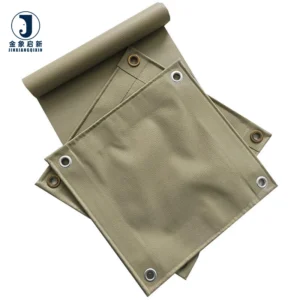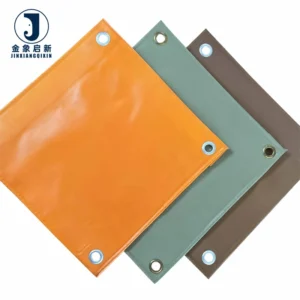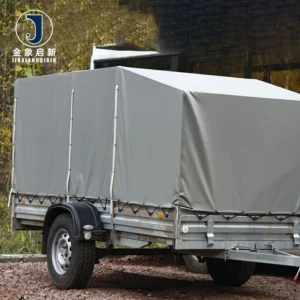


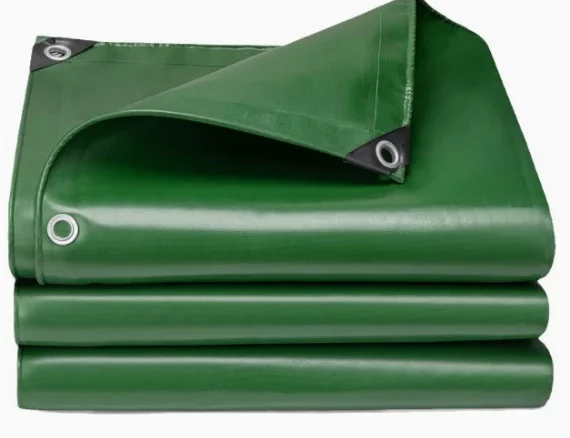
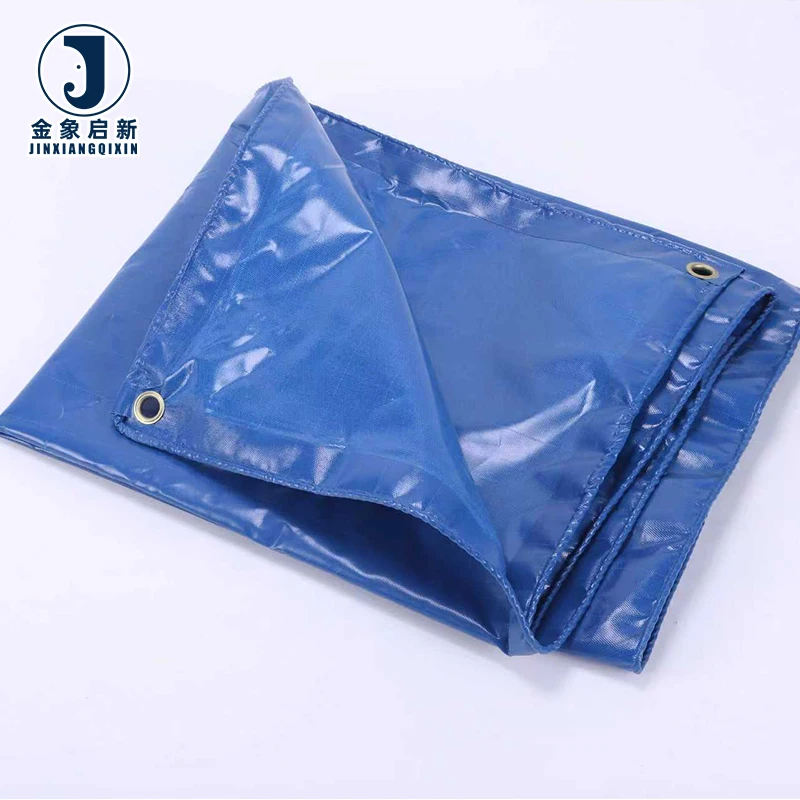
Woven PVC coated fabric engineered for industrial ventilation and specialist structural applications where fire-retardant, anti-static or compliance documentation is mandatory — backed by nearly 30 years of coated fabric process control and dedicated QA at every production stage.
Technical Specifications
| Parameter | Value |
|---|---|
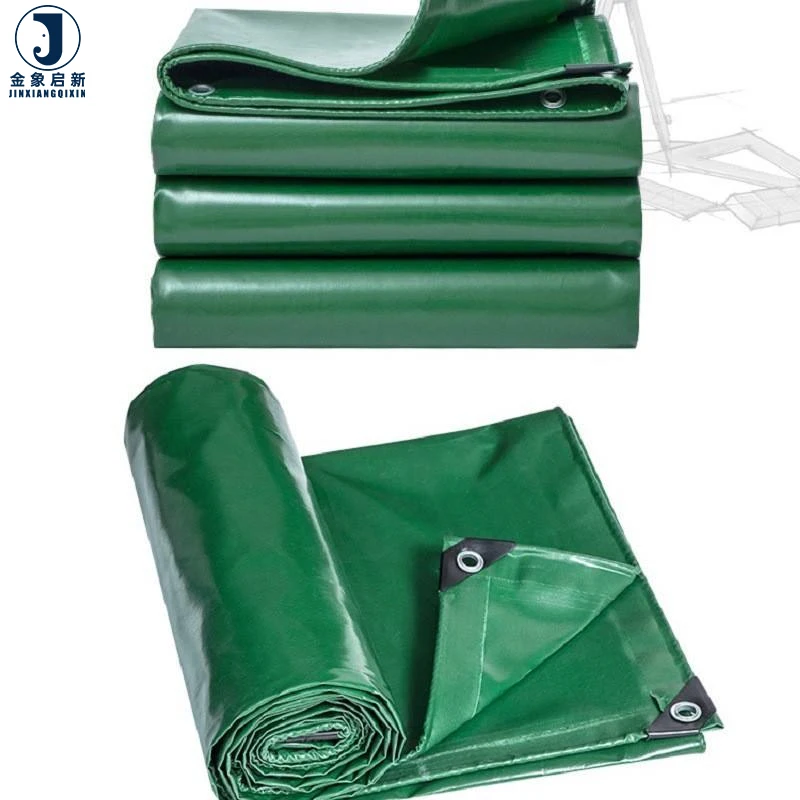
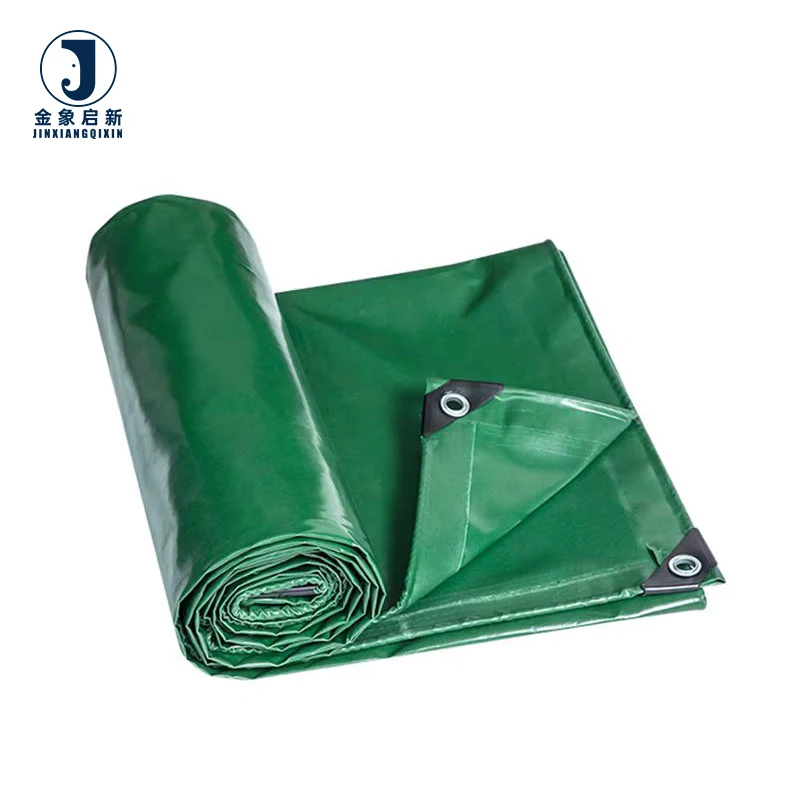
| Product Type | PVC Coated Fabric |
| Coating Material | PVC Vinyl |
| Base Fabric Structure | Woven Fabric |
| Weight | At least 450 grams (source value — verify against manufacturer catalog) |
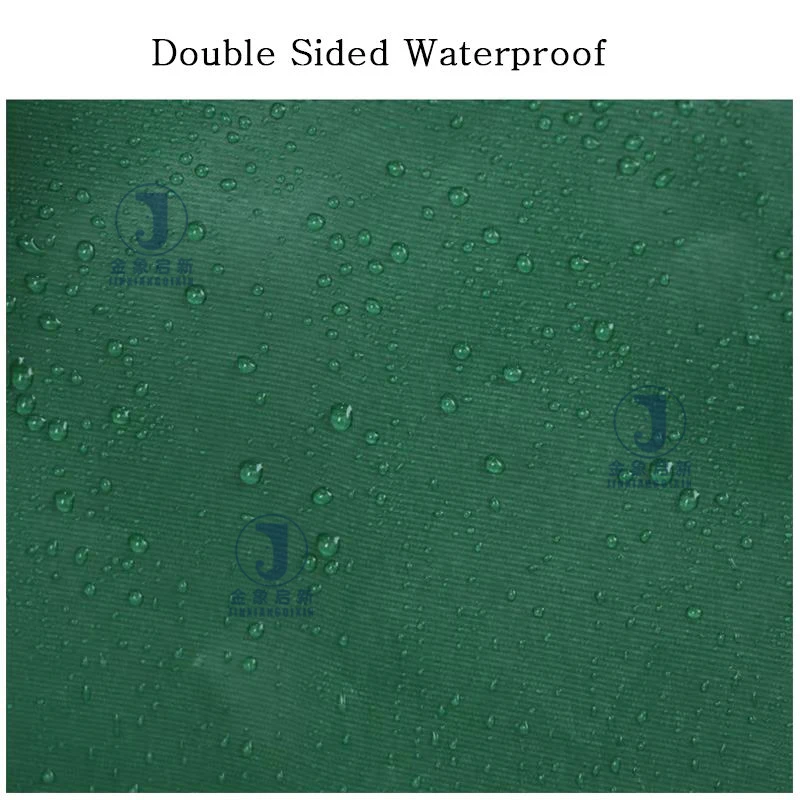
| Waterproof Performance | Fully waterproof coated construction |
| Flame Retardant Grade | Available in flame retardant grades — confirm the grade required for your market (grade not stated) |
| Anti-Static Treatment | Available with surface resistance data — confirm requirements for your site (test basis not stated) |
| UV Treatment | Available in anti-UV grades — request test report for your exposure conditions (test basis not stated) |
| Tensile Strength | (test basis not stated) |
| Tear Strength | (test basis not stated) |
| Width | Custom widths available — specify to match your duct or membrane panel layout |
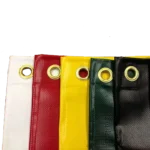
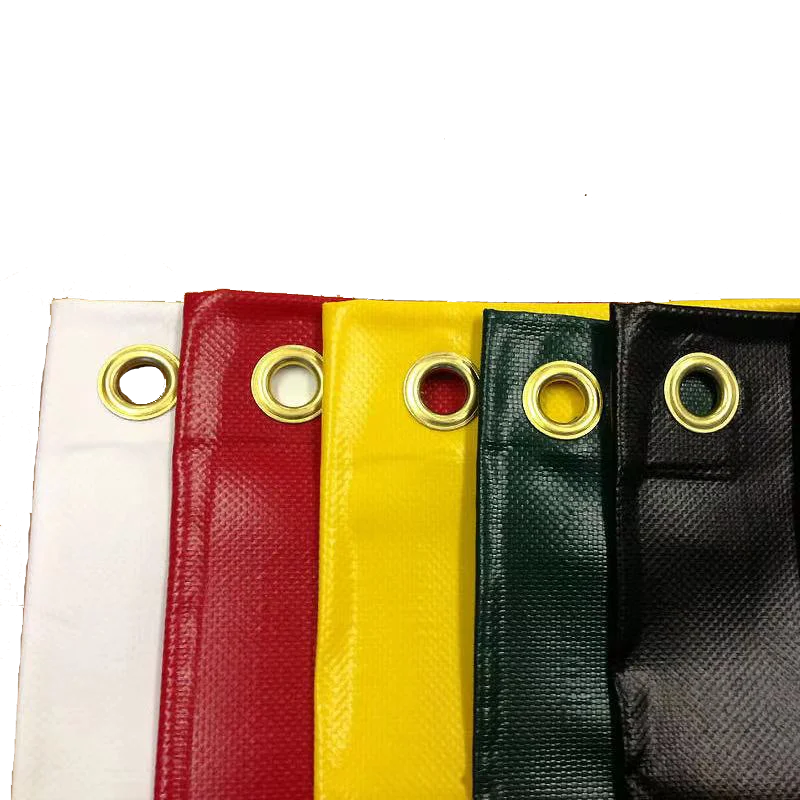
| Color | Custom colors available — specify reference for batch consistency |
| Certification | ISO and CE certified production |
Application Suitability
| Application | Exposure & Requirement |
|---|---|
| Mining ventilation duct | Continuous airflow, dust loading, fire-retardant and anti-static compliance underground |
| Tunnelling duct | High humidity, rock dust abrasion, strict site safety classification |
| Aviation ground ducting | Fuel vapour zones, flame-retardant certification required for ground support equipment |
| Membrane structure enclosure | Tensile loading at anchor points, wind uplift, weather exposure on semi-permanent spans |
| Inflatable structure fabric | Internal pressure, repeated inflation cycles, seam integrity under flex |
| Temporary industrial enclosure | Rain, snow, UV exposure, quick deployment and strike |
What Compliance Documentation Means When the Site Inspector Asks for It
We ship test reports and compliance paperwork with every roll, not after the auditor arrives.
Too many specialist fabric shipments land on site without the paperwork the safety officer actually needs. The material may perform adequately, but if the fire-retardant certificate names a different product code or the anti-static test is missing entirely, the installation gets held until the documentation catches up. For mining and tunnelling contractors, a missing certificate does not just delay the job — it triggers a compliance review that can shut down ventilation for an entire shift [NEED_CITE: site safety documentation requirements for underground ventilation]. The PVC coated fabric you specify must arrive with the exact test reports, material spec sheets and batch inspection records your site demands.
Fire-Retardant and Anti-Static Grades Aligned to Site Requirements
Different jurisdictions and industries reference different flame classification systems. A duct fabric accepted on a European construction site under DIN 4102 B1 may not satisfy a mining authority that specifies NFPA 701 or a local M2 equivalent. The PVC coated fabric supplied for these applications must be tested against the exact standard your contract references, and the test report must identify the product by the same name and GSM that appears on your purchase order. Our R&D team reviews your compliance requirements before production begins, matching coating formulation and base fabric selection to the grade you need.
Welded Duct Seams That Outlast the Fabric at Flex Points
Ventilation ducts flex with every pressure change in the system. The seam where two panels join bears concentrated stress each time the duct inflates, deflates, or pulses under fan surge. If the welding temperature or pressure is wrong for the coating formulation, the seam delaminates before the body fabric shows any wear [NEED_CITE: seam peel strength test methods for coated fabrics per ISO 1421]. We calibrate weld parameters to the specific PVC coating weight and base fabric denier of each production run, ensuring the seam is the last point to fail rather than the first.
Reading the Spec Sheet: What GSM, Weave and Coating Weight Actually Tell You
The stated weight of at least 450 grams per square metre describes the combined mass of base fabric and PVC coating — it does not, on its own, predict tear resistance or tensile performance. A heavier coating can add grammage without improving strength if the woven base fabric has a low denier or open weave. Conversely, a tighter weave with a thinner coating may outperform a heavier product in tear propagation tests. What matters for duct and membrane applications is the ratio between coating adhesion and base fabric density: strong adhesion keeps the coating locked to the yarns under flex, while dense warp and weft yarns prevent a small puncture from extending into a full-panel tear [NEED_CITE: tensile and tear test methods for coated fabrics per ISO 1421]. Request the base fabric denier and weave density alongside the GSM to understand how this PVC coated fabric will behave under the loads your structure or duct will see.
The Cost of a Specification Mismatch on Specialist Applications
When the fire-retardant grade on the delivery note does not match what the site contract requires, the entire shipment can be rejected at the gate — regardless of how well the fabric performs in every other respect. Similarly, anti-static treatment that lacks a surface resistance test report leaves the buyer unable to demonstrate compliance during a mining audit, even if the fabric was treated correctly at the factory. Colour variance between rolls becomes visible the moment two panels hang side by side on a membrane structure, forcing selective re-cutting or full replacement of the affected panels [NEED_CITE: batch colour consistency standards for architectural membrane fabric]. These failures do not reflect material quality in isolation; they reflect a gap between what was specified, what was produced and what documentation followed the shipment.
Why Technical Buyers Source This PVC Coated Fabric Here
Three full production lines and 36 sets of professional equipment give us the capacity to run specialist grades without displacing standard stock orders — your fire-retardant duct fabric does not wait behind a container of generic tarpaulin. A dedicated 10-person R&D team handles material selection, coating formulation adjustments and sample development for custom widths, colours and treatment requirements, typically delivering samples within days rather than weeks. Every roll undergoes dedicated QA/QC at each production stage, with 100 percent pre-shipment inspection against the material specification sheet. ISO and CE certified production underpins the documentation package that ships with every order, giving your compliance team the paper trail they need before the fabric ever reaches site.
Documentation & Verification
- Material spec sheet confirming GSM, base fabric denier and weave for each roll
- Fire-retardant test report matching the grade specified in your contract
- Anti-static surface resistance data where mining or tunnelling compliance requires it
- ISO and CE certificates included in the dispatch documentation package
- Pre-shipment inspection record with roll-by-roll verification before container loading
Fabrication, Handling & Storage
- Weld temperature and dwell time must match the PVC coating weight to avoid delamination at seams
- Store rolls upright on a flat surface to prevent permanent creasing in the woven base fabric
- Unroll at ambient temperature — cold PVC vinyl coating becomes brittle and may crack if flexed below recommended handling range
- Cut panels with allowance for thermal expansion in membrane structures exposed to direct sun
- Clean with mild detergent only; solvent-based cleaners can degrade the PVC coating surface
- Repair minor field damage with compatible PVC adhesive patches matched to the coating formulation
Requesting a Quote: What to Include
Send your application description — duct, membrane, inflatable or enclosure — along with the compliance standards your site contract references. Specify required roll widths, colour references and annual volume so we can confirm production scheduling and batch consistency. If you need finished panels rather than roll stock, include panel dimensions and seam layout requirements. We will return a specification recommendation, sample development timeline and quotation with lead time and minimum order details.
Frequently Asked Questions
Q: What fire-retardant grades are available for this PVC coated fabric and how are they tested?
A: We produce PVC coated fabric in fire-retardant grades aligned to standards including M2, B1, NFPA 701 and DIN 4102. The coating formulation is adjusted to meet the specific classification your project contract requires. Each grade is verified by a test report that identifies the product by name and GSM, shipped with your order documentation so your compliance team can cross-reference it directly against the site specification.
Q: Is anti-static treatment available with surface resistance data for mining ventilation ducts?
A: Yes. Anti-static treatment can be applied to this woven PVC coated fabric for underground ventilation applications where static discharge presents an ignition risk. We supply surface resistance test data with the shipment, referenced to the same product specification on your purchase order. Confirm your site’s acceptable resistance range during inquiry so the treatment level is matched before production begins.
Q: How is GSM verified — do you support third-party inspection before shipment?
A: Every roll is checked against the stated GSM during our pre-shipment inspection, and the results are recorded in the dispatch documentation. We also accommodate third-party inspection agencies nominated by the buyer. The inspection record, material spec sheet and any applicable test reports ship together so the receiving team can verify weight and specification without delay.
Q: What custom widths, colours and roll lengths are available for specialist grades?
A: Our production lines handle custom widths, roll lengths and colour references for fire-retardant and anti-static PVC coated fabric. Minimum quantities depend on the specific treatment and colour requested. Samples are typically developed within days so you can confirm colour match, coating feel and weld behaviour before committing to a full production run.
Q: What certification documentation ships with each order for compliance audits?
A: Each dispatch includes a material specification sheet, fire-retardant or anti-static test reports where applicable, ISO and CE certificates, a pre-shipment inspection record, roll packing list and certificate of origin. This package is assembled per shipment, not per product family, so the documentation references the exact batch, GSM and treatment grade that your site received.