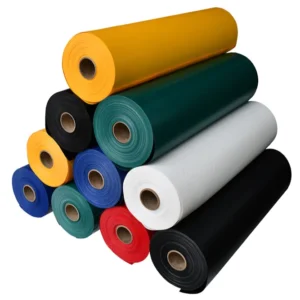


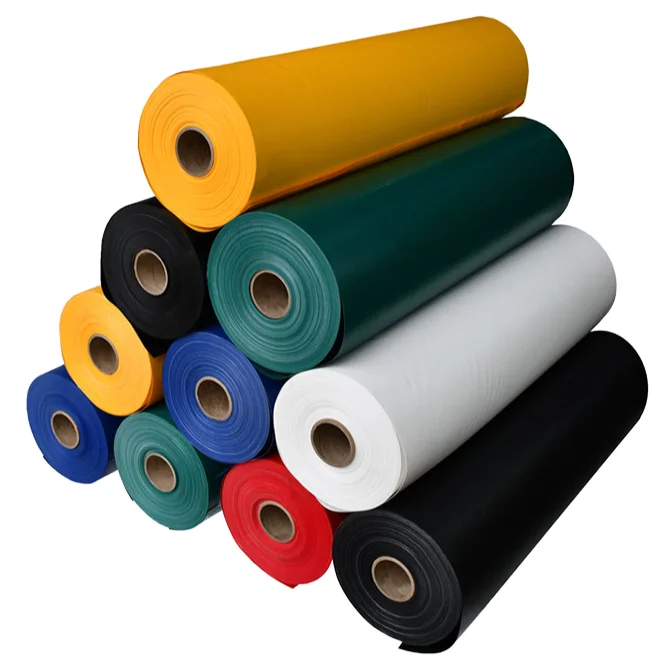
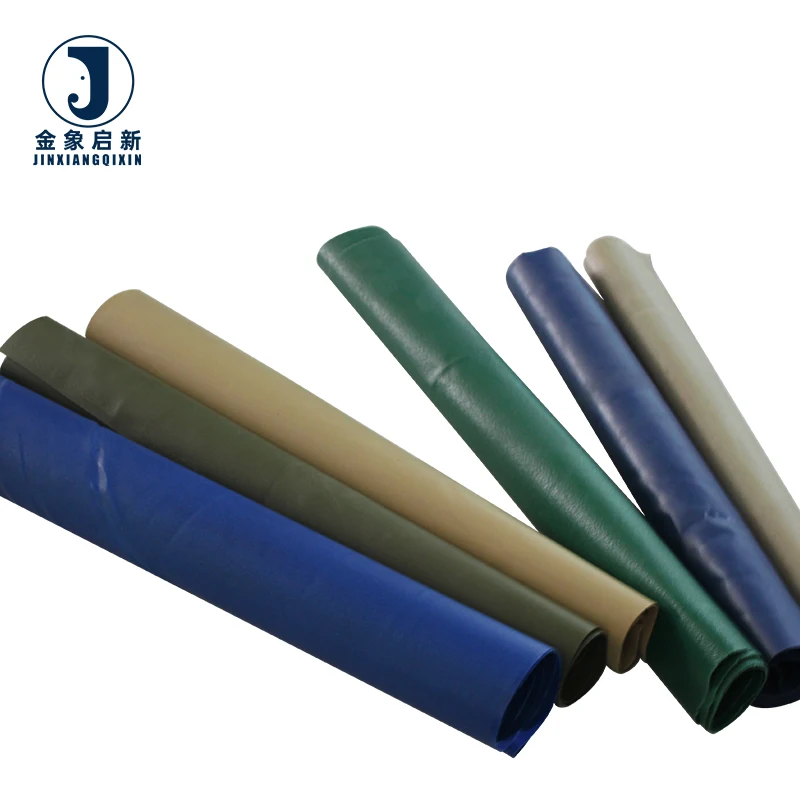
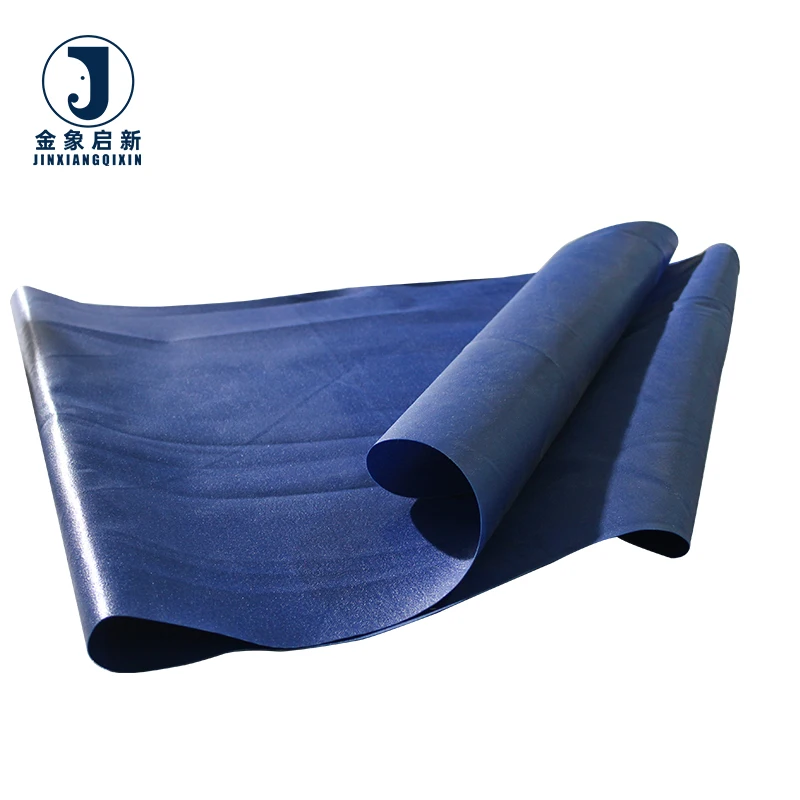
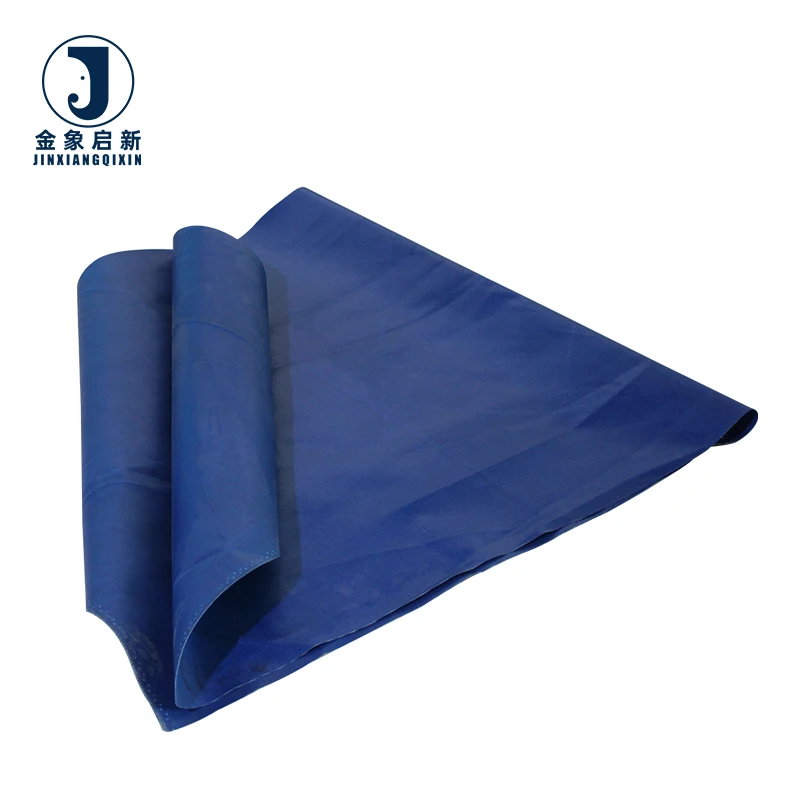
Process Control Over Coating Weight — Every roll of PVC coated tarpaulin fabric undergoes in-process QA at the coating head, ensuring the stated GSM matches what leaves the facility.
Technical Specifications
| Parameter | Value |
|---|---|
| Product Type | PVC Coated Tarpaulin Fabric |
| Base Fabric | High-strength polyester mesh fabric |
| Coating Material | PVC |
| Coating Method | Laminated technology & Hot-melt coating technology |
| Weight Options | 350gsm / 420gsm / 500gsm / 550gsm / 600gsm / 750gsm |
| Total Thickness | 0.32mm / 0.35mm / 0.4mm / 0.45mm / 0.5mm / 0.65mm |
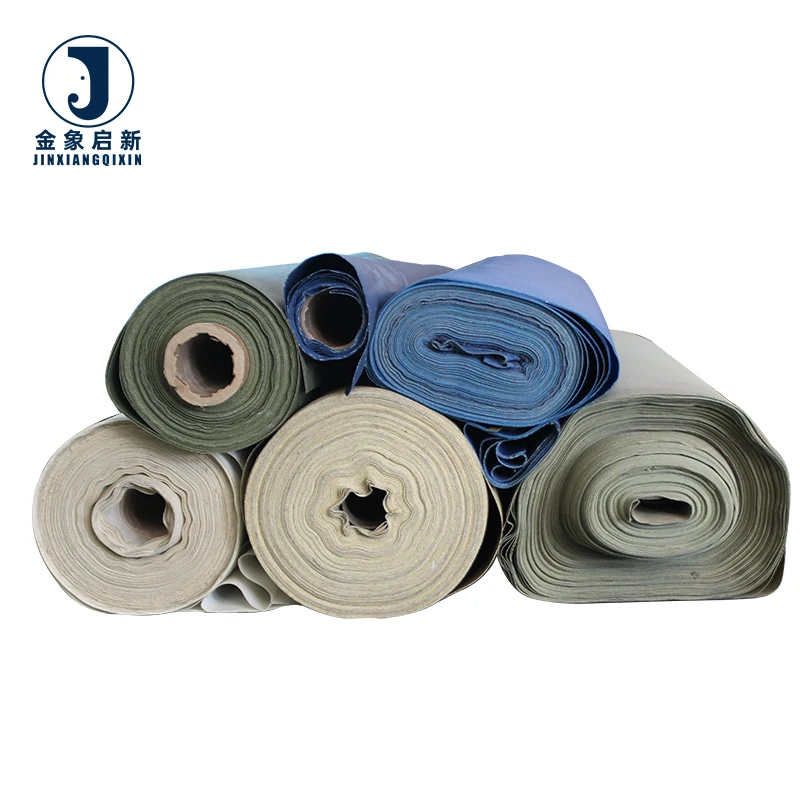
| Roll Size | 2m × 75m / 2.1m × 50m |
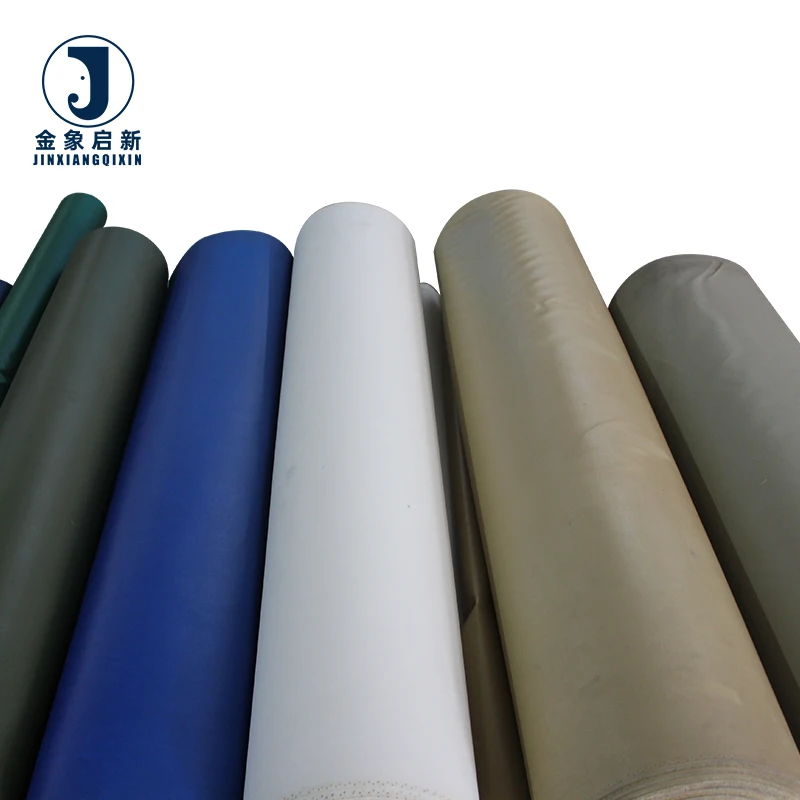
| Color Options | Blue, Red, Yellow, Light blue, Grey (custom available) |
| Key Features | Waterproof, sunproof, anti-mildew, anti-static treatment available, cold crack resistant, weldable seams |
Application Suitability
| Application | Exposure & Requirement |
|---|---|
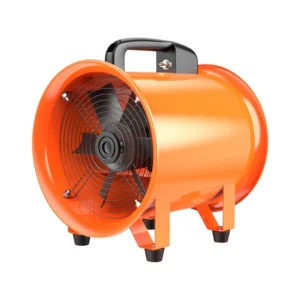
| Industrial ventilation duct | Continuous airflow abrasion, fire-retardant and anti-static compliance on mining and tunnelling sites |
| Membrane and inflatable structures | Tensile load at anchor points, UV exposure, wind-driven flex cycles |
| Aviation ground-support ducting | Flame retardancy and surface conductivity for fuel-proximate environments |
| Temporary specialist enclosures | Weather sealing, rapid deploy and strike, repeated fold and unfold stress |
What Compliance Documentation Should Arrive With Your Ventilation Duct Fabric
The fabric must ship with test reports that cite the specific standard your site inspector will check, not a generic claim of compliance.
Ventilation duct projects in mining, tunnelling and aviation are halted more often by missing paperwork than by failing material. A fire-retardant claim without the applicable standard — M2, B1, NFPA 701 or the local equivalent — is meaningless at the pre-start safety audit. [NEED_CITE: fire classification standards for ventilation duct materials in underground mining per regional regulation] The same applies to anti-static performance: a site engineer needs the surface resistance value and the test method, not a product brochure statement. PVC coated tarpaulin fabric specified for these applications must carry documentation that matches the regulatory framework of the destination market, and that documentation must arrive before the first roll is unrolled on site.
Coating Adhesion and Duct Seam Integrity
Hot-melt coating and laminated technology produce a bond between the PVC layer and the polyester mesh that holds through the thermal stress of high-frequency welding. When the base fabric separates from the coating at a weld line, the duct leaks before the fabric itself fails. This PVC coated tarpaulin fabric maintains coating adhesion through the heat cycle of seam welding, keeping the joint intact where flex loads concentrate at bends and reducer sections.
Anti-Static and Fire-Retardant Treatment Options
Anti-static treatment is available for environments where dust ignition or electrostatic discharge presents a hazard. Fire-retardant grades can be matched to the standard required by your project specification — confirm the applicable grade for your market before placing the order. [NEED_CITE: anti-static surface resistance test methods for industrial ventilation fabric] Each treatment is verified through testing, and the corresponding report ships with the documentation package so that compliance is demonstrable at handover.
Reading the Specification Sheet Beyond the GSM Figure
GSM tells you what the fabric weighs, not how it will behave when a 600mm duct inflates and deflects under fan pressure. The high-strength polyester mesh base provides the tensile skeleton; the PVC coating adds mass, weather resistance and weldability. A 550gsm grade with a tight weave will resist tear propagation better than a 750gsm grade built on a loose mesh, because tear strength depends on yarn denier and weave density as much as on coating weight. Thickness correlates with puncture resistance and flex life — a 0.5mm fabric will generally handle more fold cycles than a 0.32mm fabric, but at the cost of added weight per running metre of duct. Hot-melt coating delivers higher peel strength than simple lamination, which matters when the duct flexes at every fan start-up and shutdown cycle. Cold crack resistance ensures the PVC remains pliable in low-temperature environments such as high-altitude tunnel portals or winter mining operations, preventing brittle fracture at fold points.
The Cost of Specifying Without Verification
A ventilation duct that fails a site fire marshal inspection because the fabric carries no recognised flame retardant grade means a full replacement order, idle crews, and delayed project milestones. [NEED_CITE: project delay costs from non-compliant ventilation materials in underground construction] Anti-static fabric supplied without a surface resistance test report gets rejected at the gate, regardless of how well the material itself performs. Colour variation between rolls becomes a secondary concern in duct applications, but GSM shortfall means thinner coating, reduced abrasion life on the duct interior, and premature pinhole formation at particle-laden airflow contact points.
Why Procure This Fabric Here
Nearly three decades of continuous operation on coated fabric gives this production team direct control over coating weight and adhesion parameters at the machine. Three full production lines and 36 sets of professional equipment support bulk roll output without sacrificing the batch-to-batch consistency your duct fabrication shop depends on. A 10-person R&D team handles material selection and sample development, so custom width, colour or treatment requirements are addressed at the formulation stage rather than patched at dispatch. Dedicated QA and QC runs at every production stage, with 100 percent inspection before any roll is packed for shipment. Samples for custom duct specifications are developed within days, letting you verify weld behaviour and coating adhesion before committing to a production run.
Documentation & Verification
- Material specification sheet stating base fabric denier, coating method and GSM verified per roll
- Fire-retardant test report citing the applicable standard matched to your destination market
- Anti-static surface resistance test report or certification for site compliance
- Pre-shipment inspection record confirming 100 percent QA/QC at every production stage
- Roll packing list with certificate of origin and customs documentation support
Fabrication, Handling & Storage
- Set high-frequency welder dwell time to suit the coating thickness — 0.5mm grades need longer energy input than 0.32mm for full seam fusion
- Store rolls upright on pallets to prevent flat-spot deformation that shows as a visible crease on the duct surface after inflation
- Allow cold-stored rolls to acclimatise before unrolling; PVC becomes stiff below freezing and can crack at the fold line
- Clean the duct interior with pH-neutral detergent only; solvents degrade the plasticiser in the PVC coating layer
- When splicing narrow stock to achieve wider duct circumference, overlap welds by a minimum of 50mm to distribute the peel load
Specifying for Your Project
Provide the ventilation duct diameter, operating pressure range, and the fire-retardant or anti-static standard your site inspector will audit against. Include the required roll width and total linear metres so that production scheduling and batch consistency can be planned around your delivery window. If the duct will be fabricated in-house, request a sample roll to validate your welder settings before the full order enters production.
Frequently Asked Questions
Q: What fire-retardant grades are available and which standard does each meet?
A: Fire-retardant treatment is formulated to match specific standards such as M2, B1 or NFPA 701 depending on your destination market. Confirm the grade required by your project specification or local regulation at the inquiry stage so that the correct formulation is applied and the matching test report ships with your order.
Q: How is anti-static performance verified for site compliance?
A: Anti-static treatment is tested for surface resistance using methods appropriate to the application environment. The test report stating the measured resistance value and the test standard ships as part of the documentation package, allowing your site safety team to verify compliance against the project specification before installation.
Q: Can this fabric be welded into duct shapes without seam failure?
A: The hot-melt coating and laminated technology produce high peel strength between the PVC and the polyester mesh, which is the critical factor in weld integrity. Seam failure typically occurs when coating adhesion is insufficient for the thermal cycle. Request a sample to validate your high-frequency welder settings on the specific GSM grade you intend to use.
Q: What documentation ships with each order for compliance audits?
A: Each shipment includes a material specification sheet, applicable fire-retardant or anti-static test reports, pre-shipment inspection record, roll packing list, certificate of origin and customs support documents. All reports reference the specific standard tested against, not a generic compliance statement.
Q: What is the lead time for custom width or treatment requirements?
A: Custom width, colour and treatment grades require formulation setup and sample approval before full production begins. Typical lead times run across several weeks depending on order volume and specification complexity. Submit your requirements early to allow time for sample development and weld testing.