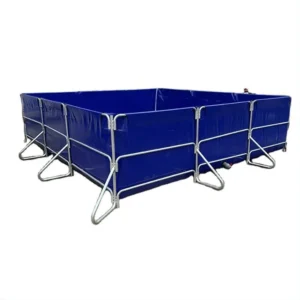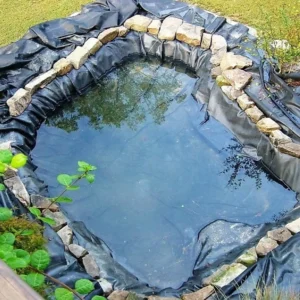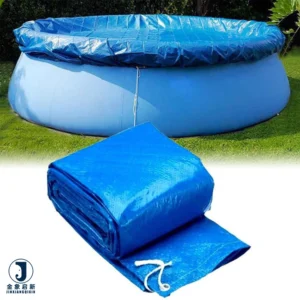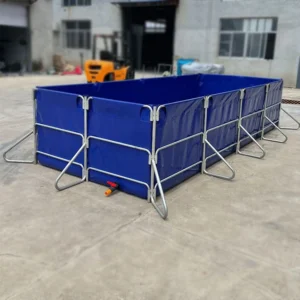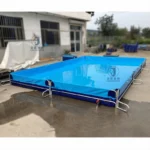
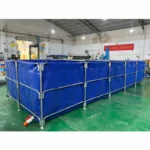
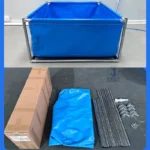
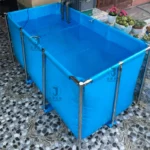
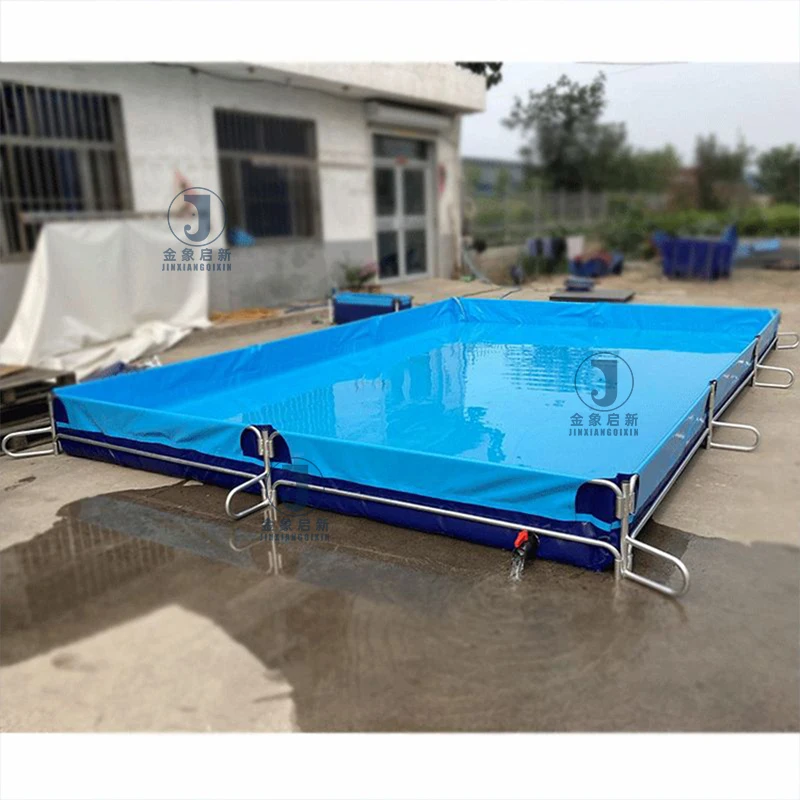
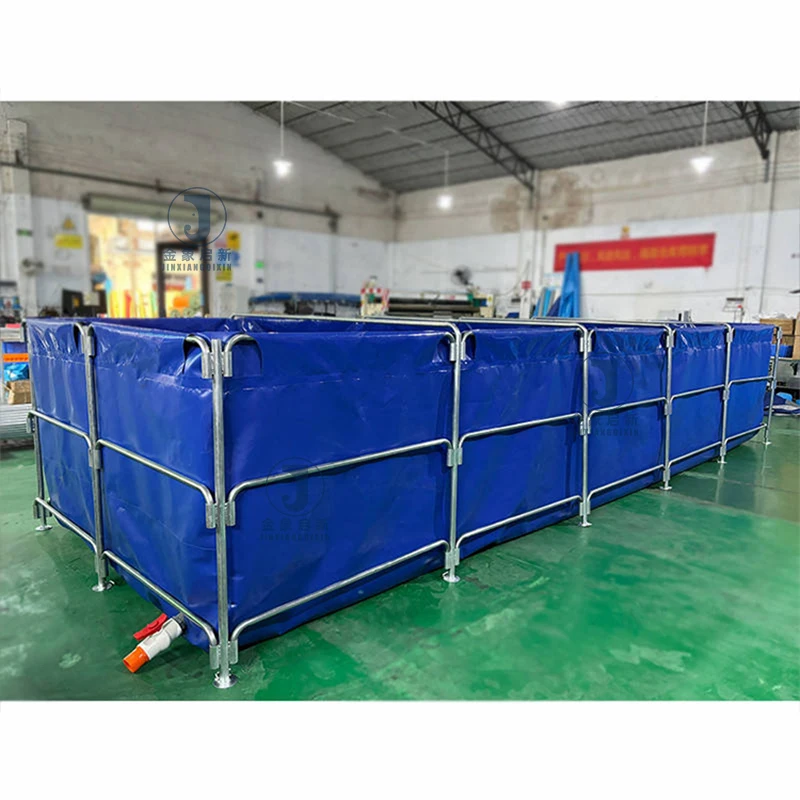
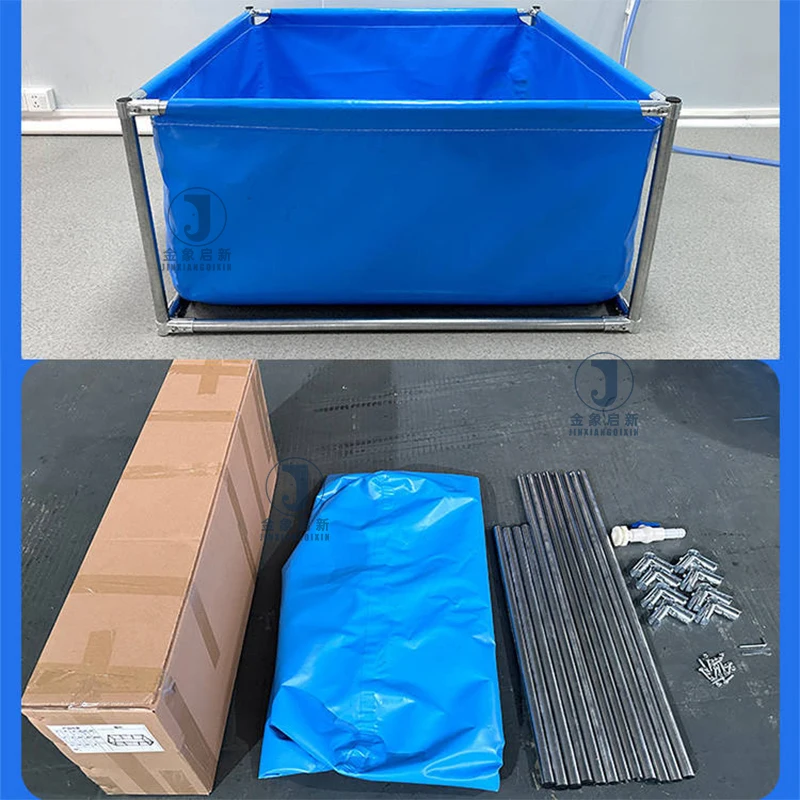
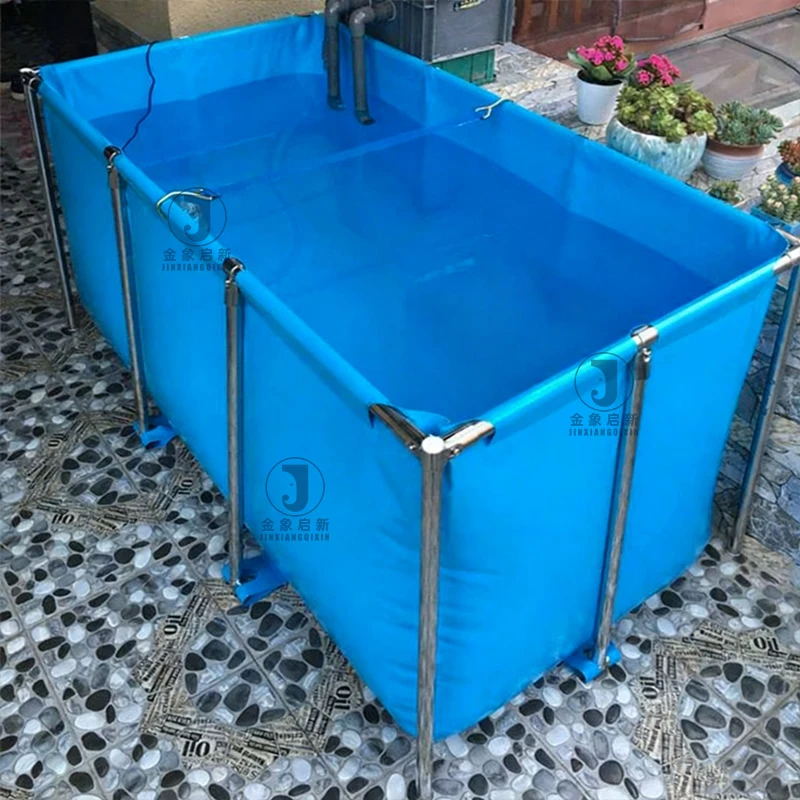
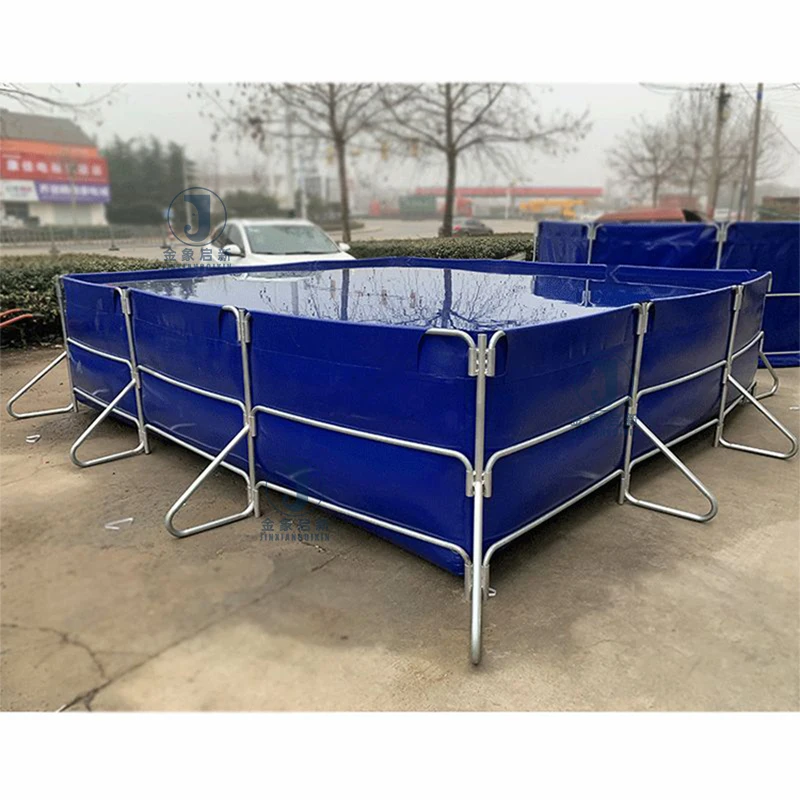
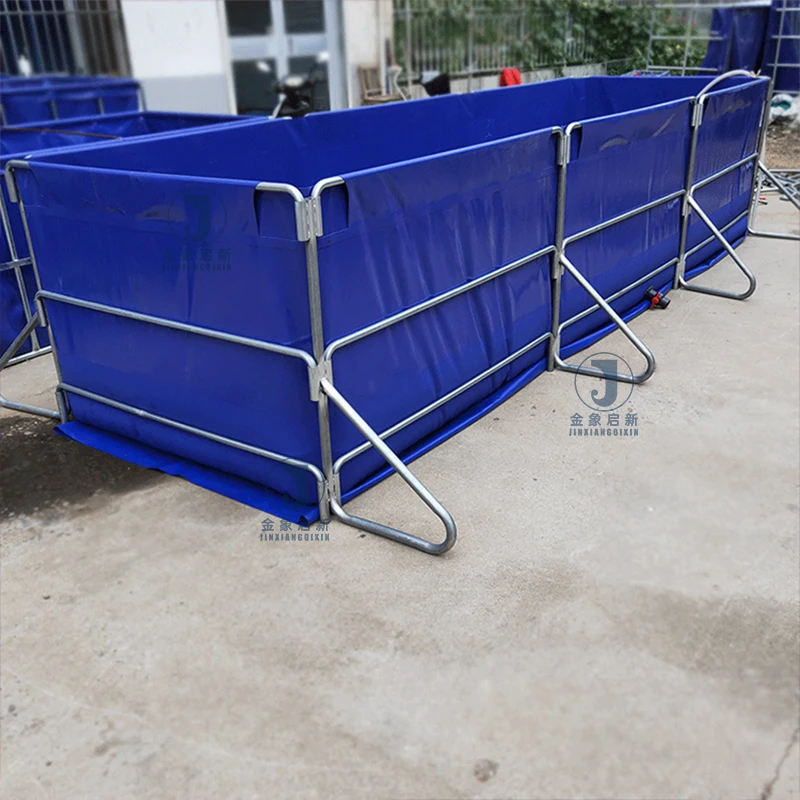
Deep process control over coating — we verify coating weight and adhesion at every production stage, ensuring each PVC pond liner roll leaves the line matching the specification you approved.
Technical Specifications
| Parameter | Value |
|---|---|
| Product Type | Pond Liner |
| Coating Material | PVC (double-sided) |
| Base Fabric | Polyester, 500D-500D yarn count |
| Weight Range | 450-900 g/m² |
| Surface Characteristics | Smooth, leather-like texture |
| Flame Retardancy | Flame-retardant type customizable (grade not stated — confirm the grade required for your market) |
| UV Treatment | Anti-UV treatment available (test basis not stated — request test report for your region) |
| Water Resistance | Fully waterproof coated construction |
| Repairability | Repairable by hot air welding |
Application Suitability
| Application | Exposure & Requirement |
|---|---|
| Aquaculture breeding ponds | Permanent water contact, substrate movement, UV exposure in open-air installations |
| Nursery and grow-out tanks | Continuous water containment, chemical exposure from feed and waste, frequent draining |
| Agricultural irrigation reservoirs | Long-term water storage, soil chemistry contact, seasonal temperature variation |
| Foldable pond tanks | Repeated assembly and disassembly, fold-line stress, portable setup conditions |
Why Liner Weight Verification Matters More Than the Quoted GSM
A quoted GSM is only meaningful when you can prove it arrived that way.
Buyers routinely receive pond liner rolls that weigh less than what was agreed on the purchase order. The PVC pond liner manufacturer you choose should verify coating weight at every production stage, not just at the quoting stage. When a roll arrives lighter than specified, the tensile and tear margins shrink, and the liner is more likely to fail under hydrostatic load or substrate shift [NEED_CITE: tensile and tear test methods for coated fabrics per ISO 1421]. I have seen operations lose entire growing cycles because the liner split at the seam under water pressure that a correctly weighted roll would have handled without issue.
How PVC Coating Bonds to Polyester for Long-Term Containment
The double-sided PVC coating on a 500D-500D polyester base creates a composite structure where the fabric carries the mechanical load and the coating provides the water barrier. A custom aquaculture pond liner built this way resists delamination under prolonged immersion because the coating penetrates the weave and locks to the yarn on both faces. This construction is what allows the liner to handle the lateral pressure of several metres of water depth without stretching beyond its recovery point.
Seam Integrity Under Hydrostatic Pressure
Stitched seams puncture the waterproof layer and create leak paths that worsen with every fill-and-drain cycle. Heat-welded joins fuse the PVC coating across the seam line, producing a bond that matches or exceeds the parent material strength. For aquaculture operators running multiple growing cycles per year, this means the PVC pond liner aftermarket supplier you select must use welding parameters matched to the exact coating thickness, otherwise the seam fails before the fabric does [NEED_CITE: hot air welding parameters for PVC coated polyester].
Reading the Specification Sheet Beyond the Weight Number
The 450-900 g/m² range covers multiple grades, each suited to different pond depths and installation conditions. A heavier grade provides more coating mass between the water and the base fabric, which directly affects puncture resistance against sharp substrate stones or root intrusion. The 500D-500D yarn count in the polyester base determines how the liner distributes point loads — a denser weave limits tear propagation if a local puncture does occur. Surface texture also plays a role: the smooth, leather-like finish reduces biofilm adhesion, making end-of-cycle cleaning faster and less abrasive on the coating surface. The flame-retardant and anti-UV options should always be confirmed with a test report matching your local compliance requirements, as classification systems vary between markets.
The Cost of Ordering on Weight Alone
Specifying a PVC pond liner only by GSM ignores how the base fabric construction and coating adhesion together determine field performance. A roll that meets the weight target but uses a looser weave will tear more easily during installation over uneven ground. Coating that sits on the surface without penetrating the yarn structure will peel at the edges after a single season of UV and water exposure. Buyers who skip the sample approval stage and rely on the quotation number alone often discover the mismatch only when the liner is already cut, welded, and filled with water [NEED_CITE: common failure modes in PVC coated fabric installations].
Why Procurement Teams Source This Liner From Jinxiang
Three full production lines and 36 sets of professional equipment support bulk pond liner orders with consistent coating weight across every roll in the batch. The 10-person R&D team develops samples within days when you need a specific width, colour, or treatment combination validated before committing to a production run. Dedicated QA/QC at every production stage catches coating weight deviations before the roll reaches packing, not after it arrives at your site. Nearly 30 years of focused coated fabric production means the process parameters for PVC-to-polyester adhesion are dialled in, not guessed. Every custom aquaculture pond liner order ships with a pre-shipment inspection record, so you know what was measured before the container was sealed.
Documentation & Verification
- Material specification sheet stating exact GSM, 500D-500D base fabric, and PVC coating weight per roll
- Pre-shipment inspection record with roll-by-roll weight verification against the purchase order
- Test reports for UV and flame-retardant grades where specified, tied to batch number
- ISO and CE certificates, certificate of origin, and full customs documentation for liner shipments
- Roll packing list with dimensions and net weight for container loading reconciliation
Fabrication, Handling & Storage
- Hot air weld temperature must match the specific PVC coating weight grade to avoid burn-through on lighter rolls
- Store rolls upright on pallets to prevent flat-spot deformation on the 450-900 g/m² coated surface
- Avoid dragging liner panels over sharp substrate; the smooth leather-like finish can scuff on exposed aggregate
- Repair field punctures using compatible PVC patches and hot air welding at matching temperature settings
- Unfold liner panels at moderate temperatures; PVC stiffens in cold conditions and may crack if forced
What to Include in Your Inquiry
Provide your pond dimensions, including depth and side slope angle, so the liner panel can be calculated with sufficient overlap for anchoring. Specify whether the installation is permanent in-ground or a foldable above-ground tank, as this determines the grade and reinforcement needed. Confirm any UV or flame-retardant compliance your local authority requires, and note the annual volume if you plan repeat orders across multiple sites.
Frequently Asked Questions
Q: How do you verify the GSM of each pond liner roll before shipment?
A: Every roll is weighed and measured during pre-shipment inspection. The actual GSM is recorded against the purchase order specification, and the inspection report travels with the shipment. Any roll outside tolerance is held back before packing.
Q: What welding method keeps seams from leaking under water pressure?
A: Heat-welded joins fuse the PVC coating across the seam, eliminating needle holes that cause stitch-line leaks. Welding parameters are adjusted to the exact coating weight so the bond matches the parent material strength.
Q: Can you cut liners to custom pond shapes?
A: Liners are produced in custom widths and lengths to match round, rectangular, or irregular pond geometries. Provide your exact dimensions and side slope angles so the panel can be sized with proper anchoring overlap.
Q: What UV treatment options are available, and how are they verified?
A: Anti-UV treatment is available for open-air pond installations. The specific grade and test basis depend on your regional compliance requirements. Request the test report during sample approval to confirm suitability.
Q: How does PVC tarpaulin compare to PE film for long-term pond use?
A: PVC coated polyester offers substantially higher tear resistance and is repairable by hot air welding on site, extending service life without full liner replacement. PE film cannot be welded in the field and typically requires complete removal when damaged.