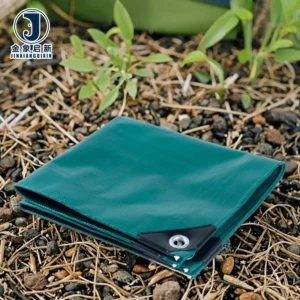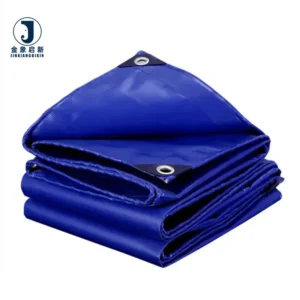
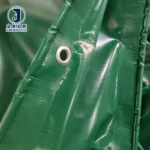
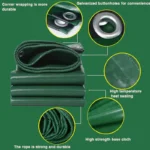

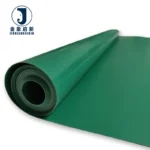
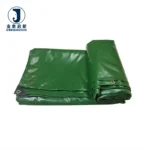
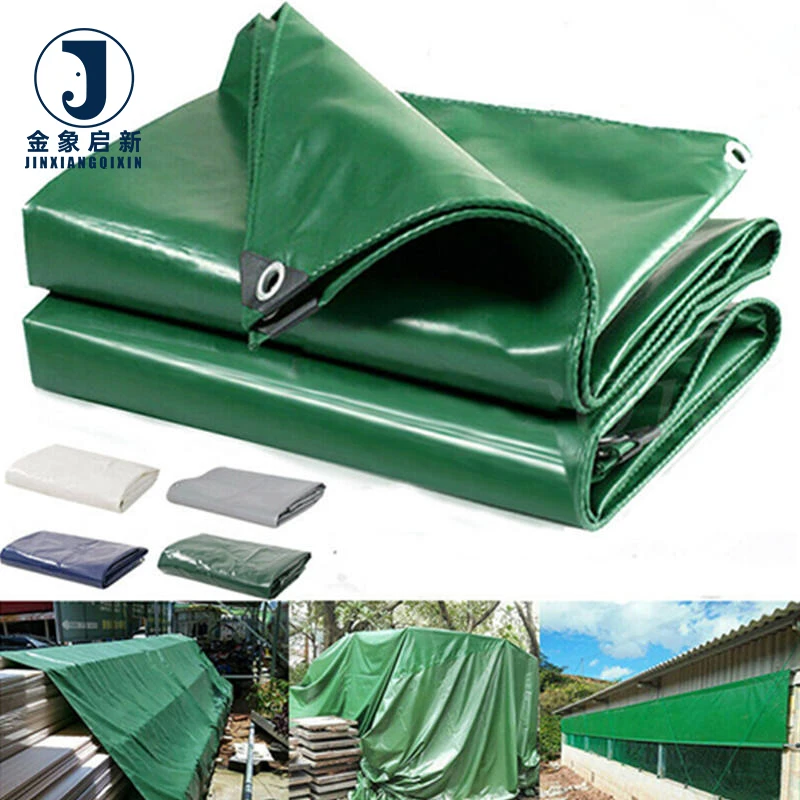

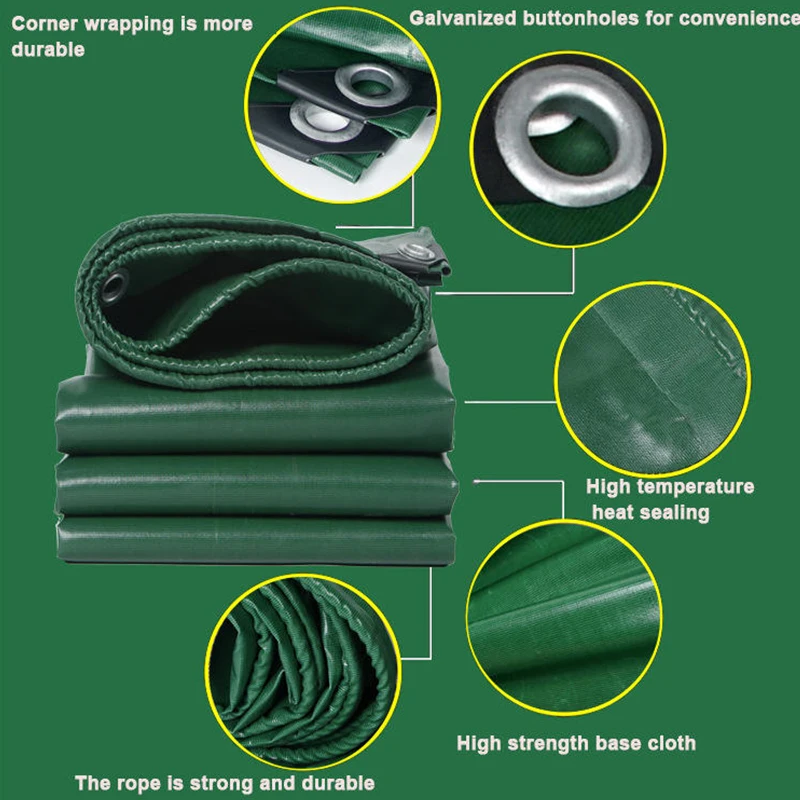
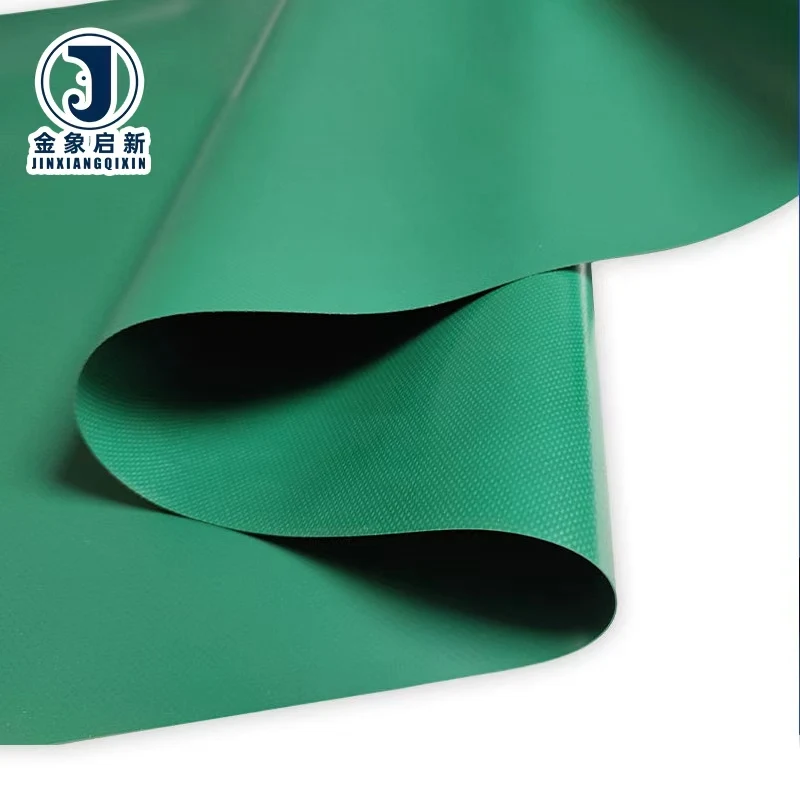
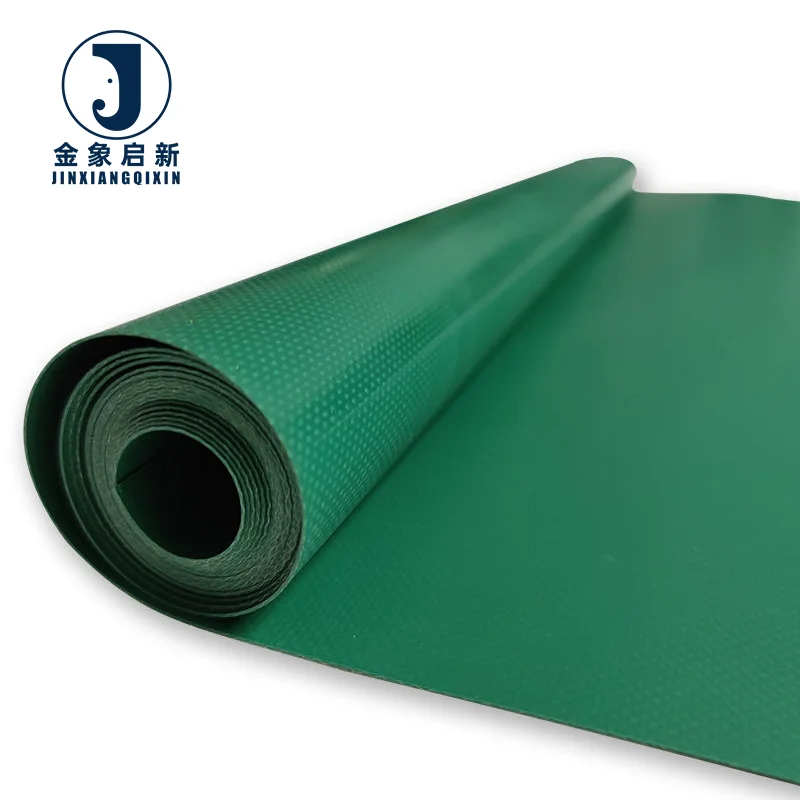
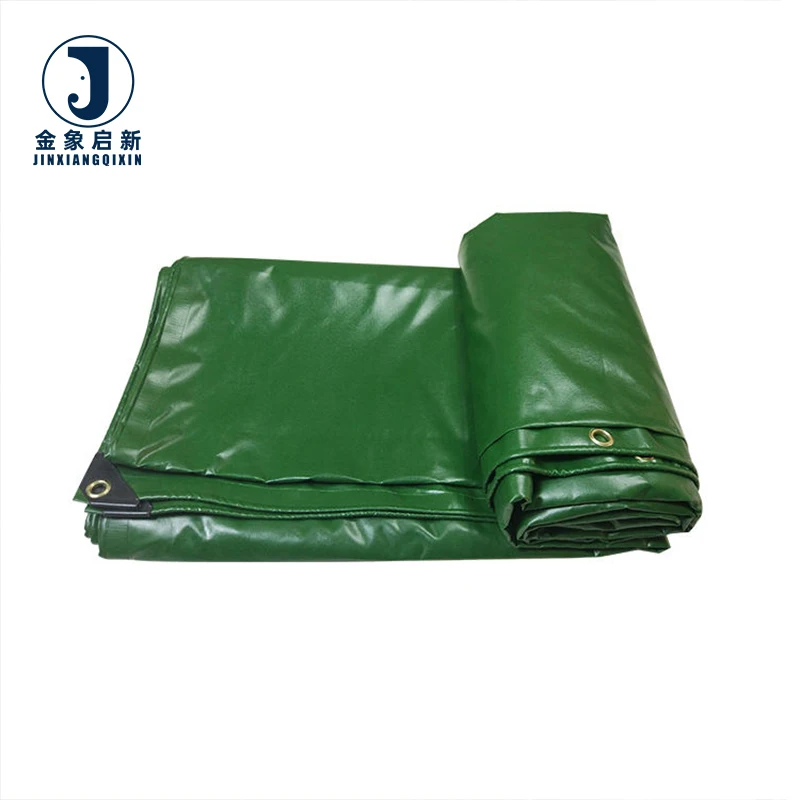
Process Control Over Coating Weight — Every roll of PVC knife-coated fabric undergoes dedicated QA/QC at every production stage, ensuring the stated GSM matches what you receive, with adhesion and weld behaviour characterised before dispatch.
Technical Specifications
| Parameter | Value |
|---|---|
| Product Type | PVC Knife-Coated Fabric |
| Coating Material | PVC |
| Coating Method | Knife coated |
| Base Fabric Denier (Medium-duty) | 500D |
| Base Fabric Denier (Heavy-duty) | 1000D |
| Base Fabric Denier (Super Heavy-duty) | 500D–2000D |
| Total Thickness (Medium-duty) | 0.35–0.45 mm |
| Total Thickness (Heavy-duty) | 0.70–1.0 mm |
| Total Thickness (Super Heavy-duty) | 1.2–1.5 mm |
| Weight (Medium-duty) | 400–500 g/m² |
| Weight (Heavy-duty) | 700–1000 g/m² |
| Weight (Super Heavy-duty) | 1100–1500 g/m² |
| Tensile Strength (Medium-duty) | Warp 1500–2000 / Weft 1200–1800 N/5cm |
| Tensile Strength (Heavy-duty) | Warp 2000–2500 / Weft 1800–2200 N/5cm |
| Tensile Strength (Super Heavy-duty) | Warp 2500–3000 / Weft 2200–2800 N/5cm |
| Roll Width | 2 m, 4 m, 6 m or custom |
| Roll Length | 100 yards, 100 meters, or custom |
| Surface Treatment | UV treatment available |
| Key Features | Waterproof, tear resistant, mildew proof, anti-aging |
| Flame Retardant | Available in flame retardant grades — confirm the grade required for your market |
| Standards | ISO, CE |
Application Suitability
| Application | Exposure & Requirement |
|---|---|
| Tensioned membrane structures | Sustained tensile load, solar UV, wind uplift, long-term weathering |
| Inflatable and temporary buildings | Internal air pressure, cyclic flexing, rapid deployment and teardown |
| Industrial pipe canopy covers | Chemical-laden moisture, heat exposure from process lines, abrasion |
| Mining ventilation ducts | Sub-surface humidity, rock dust, fire safety compliance, anti-static requirement |
| Aviation ground ventilation | Jet blast proximity, fuel vapour exposure, strict fire retardant specification |
| Tunnelling airflow ducts | Continuous moisture, confined space fire codes, mechanical abrasion from rock bolts |
Why a Material Specification Sheet Matters More Than a Brochure Weight Claim
GSM on paper means nothing if it does not survive verification on arrival.
Technical buyers specifying PVC knife-coated fabric for membrane structures routinely receive rolls where the stated weight does not match the actual coated output. A roll quoted at a given g/m² can arrive lighter because the coating weight was adjusted during production, or because the base fabric denier was substituted without notice. For membrane and inflatable structure applications where tensile load calculations depend on verified material properties, this discrepancy is not a paperwork issue — it is a structural risk. [NEED_CITE: material property verification for tensioned fabric structures per ISO 1421]
The PVC knife-coated fabric membrane structure supply chain has historically relied on trust over documentation. Buyers accept the quoted GSM, install the fabric, and only discover the shortfall when a welded seam fails under load or the membrane sags prematurely. This is why we treat the material specification sheet as a contractual document, not a marketing handout.
Coating Adhesion and Weld Integrity for Technical Fabricators
When fabricators heat-weld PVC knife-coated fabric into membrane panels or duct sections, the weld must hold at least as long as the parent material. Knife coating achieves deeper penetration into the base fabric weave than lamination, creating a mechanical bond that resists delamination at the weld zone. This matters most at flex points — the ridges of an inflatable structure or the curves of a tensioned canopy — where cyclic loading concentrates stress along the seam.
The consistency of coating weight directly affects weld parameter settings. If one roll runs thicker than the next, the fabricator must adjust temperature and dwell time for every panel, increasing rejection rates on the shop floor. Controlled PVC knife-coated fabric membrane structure grades eliminate this variable, giving fabricators a repeatable process window across an entire project order.
Fire Safety and Static Control for Regulated Environments
Mining, tunnelling and aviation ventilation ducts operate under fire codes that demand documented flame retardant performance, not generic claims. [NEED_CITE: fire classification standards for ventilation duct fabric in underground mining] The base PVC compound can be formulated with flame retardant additives to meet specific market requirements, but the grade must be named and supported by a test report that the site safety auditor will accept.
Anti-static treatment is equally critical in sub-surface environments where dust ignition is a real hazard. Surface resistivity must fall within a defined range, and the treatment must survive the flexing and abrasion that a ventilation duct endures during installation and service. We supply PVC knife-coated fabric membrane structure grades with these treatments available — confirm the specific certification your project requires before ordering.
Reading the Specification Sheet: What the Numbers Actually Mean
Tensile strength values expressed in N/5cm describe the force required to break a 5 cm wide strip of fabric, measured separately in the warp (machine direction) and weft (cross direction). The gap between warp and weft figures reflects the weave construction — a tighter warp gives higher longitudinal strength but may trade off lateral tear resistance. For membrane structures, both directions matter because the fabric is tensioned biaxially.
Base fabric denier indicates the linear mass density of the yarn. A 1000D base uses thicker yarns than a 500D base, producing a heavier, stronger substrate before any PVC is applied. However, denier alone does not determine final performance: the coating weight and the coating-to-yarn adhesion are what translate raw yarn strength into usable panel strength. A 500D fabric with generous, well-adhered PVC coating can outperform a poorly coated 1000D fabric in tear propagation tests.
Knife coating applies liquid PVC directly onto the base fabric under a doctor blade, forcing the compound into the interstices of the weave. This produces superior adhesion compared to calendering or hot-melt lamination, and it allows precise control over total coated weight. The trade-off is a higher unit cost for the coating process itself, which is why knife-coated grades are specified for applications where delamination failure is unacceptable.
Total thickness correlates with puncture resistance and flex life but does not map linearly to tensile strength. A 1.2 mm super heavy-duty fabric is not simply "twice as strong" as a 0.35 mm medium-duty fabric — the relationship depends on the base fabric construction and the coating formulation. [NEED_CITE: relationship between coating thickness and tensile performance in knife-coated PVC fabrics] Selecting the correct grade requires matching the structural load case to the tensile and tear data, not just choosing the thickest option available.
What Happens When Material Properties Are Not Verified Before Fabrication
A membrane structure contractor who installs fabric with lower-than-stated GSM faces two failure modes. The first is immediate: the tensioning hardware pulls through the fabric because the tear strength falls below the design load. The second is delayed: UV degradation accelerates in a thinner-than-specified coating, and the membrane requires replacement well before the planned service interval. [NEED_CITE: premature coating degradation in under-weight PVC fabric installations]
Colour variation between rolls is a separate but equally costly problem. When two rolls of PVC knife-coated fabric membrane structure material from the same order show a visible shade difference after installation side by side, the entire facade may need re-cladding to meet the architect’s visual specification. Batch consistency in both colour and coating weight is not a luxury — it is a project requirement that must be controlled at the production stage, not caught at the receiving dock.
Sourcing Confidence Built on Process Evidence
Three full production lines and 36 sets of professional equipment support bulk output of PVC knife-coated fabric without sacrificing coating consistency. Each line is calibrated for specific grade tiers, so medium-duty and super heavy-duty runs do not share tooling that could introduce cross-contamination or thickness drift.
A 10-person R&D team handles material selection, custom width development and sample production, typically turning around samples within days for membrane and duct applications. This team also manages the relationship between base fabric denier and coating formulation, ensuring that each grade tier delivers the tensile and tear performance stated on the specification sheet.
Dedicated QA/QC operates at every production stage — base fabric inspection, coating weight measurement, adhesion testing, and colour matching — culminating in 100% pre-shipment inspection. Rolls that fall outside the stated GSM tolerance or show surface defects are held before they reach the dispatch bay.
ISO and CE certification underpins the documentation package, giving technical buyers and fabricators the compliance framework they need for regulated environments such as mining ventilation and aviation ground support.
Documentation & Verification
- Material specification sheet stating exact GSM, base fabric denier, coating method and colour reference for each roll
- Test reports for UV stability and flame retardant grades provided where the grade is specified in the purchase order
- Pre-shipment inspection record with weight verification per roll against the stated g/m² tolerance
- Certificate of origin and customs documentation included for cross-border roll shipments
- ISO and CE certificates available to support project compliance submissions
- Roll packing list detailing width, length, batch number and colour code per item
Fabrication, Handling & Storage
- Heat-weld temperature and dwell time must be set per the grade tier — heavier PVC knife-coated fabric grades require higher energy input at the weld bar
- Store rolls upright on pallets to prevent flat-spotting on the coating surface, especially for the 0.70–1.0 mm heavy-duty grades
- Cut panels with a rotary blade rather than shears to avoid edge fraying on 1000D and 2000D base fabric constructions
- Unroll at ambient temperature — cold PVC knife-coated fabric below 5°C becomes stiff and may crack at the fold line if forced
- Clean finished membrane surfaces with mild detergent and soft cloth; solvent-based cleaners can soften the PVC coating layer
- Allow for 2–3% dimensional change during the first tensioning cycle of membrane structures before final hardware lock-off
What to Include in Your Material Enquiry
To specify the correct PVC knife-coated fabric membrane structure grade for your project, share the structural load case or duct operating conditions, including any fire safety or anti-static standards your site must meet. Indicate the roll widths and lengths you need, the annual or project volume, and whether you require custom colour matching against a reference sample. If your application demands fabrication-ready certification — such as a specific flame retardant test report for a mining authority — name the standard in your initial enquiry so we can confirm availability before sampling begins.
Frequently Asked Questions
Q: How do I choose between medium, heavy and super heavy-duty grades for my membrane structure?
A: Match the grade to the structural load case. Medium-duty suits lightweight canopies and temporary covers. Heavy-duty handles tensioned architecture with moderate spans. Super heavy-duty is reserved for large-span permanent membranes with high wind or snow loads. Share your engineer’s tensile requirements and we will recommend the corresponding denier and GSM tier.
Q: Can you supply flame retardant fabric with a test report acceptable to my site safety auditor?
A: Flame retardant grades are available across the PVC knife-coated fabric range. Name the fire safety standard your project requires — such as a specific national mining code or aviation ground specification — and we will confirm which grade meets it, supported by the corresponding test report in the documentation package.
Q: What is the maximum custom width and roll length you can produce?
A: Standard widths are 2 m, 4 m and 6 m, with custom widths available subject to production line capability. Roll lengths are supplied as 100 yards, 100 meters, or to a custom length that optimises your cutting layout. Provide your panel dimensions and we will calculate the roll length that minimises offcut waste.
Q: How do you ensure colour consistency across multiple rolls in one order?
A: All rolls in a single order are produced from the same coating batch using matched colour references. Our 100% pre-shipment inspection includes a side-by-side colour check before dispatch. If your project requires colour matching against an architect’s approved sample, send the physical reference and we will confirm the match before full production.
Q: Do you provide material samples before I commit to a full roll order?
A: Yes. Samples are developed within days for custom requirements, including specific denier, GSM and treatment combinations. Use the sample to verify hand feel, weld parameters and colour on your own equipment before authorising the full production run.