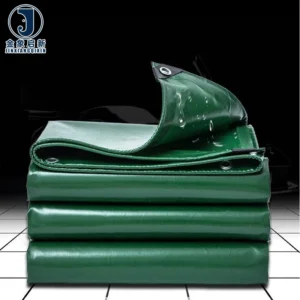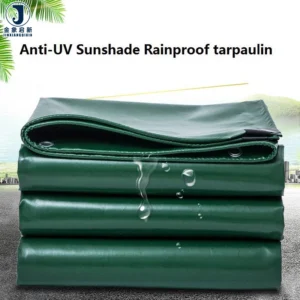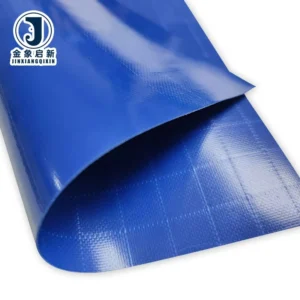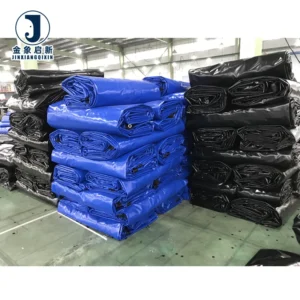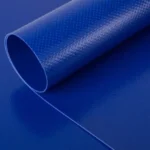
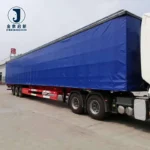
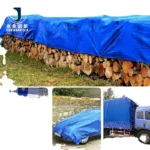
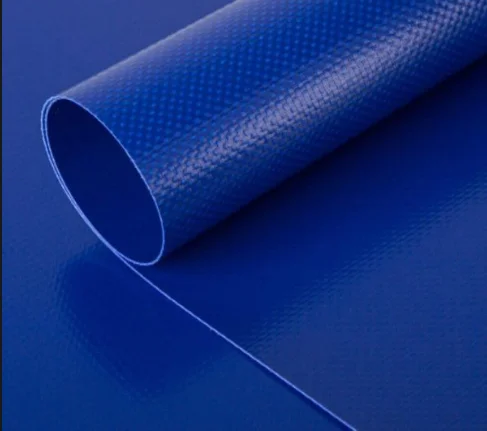
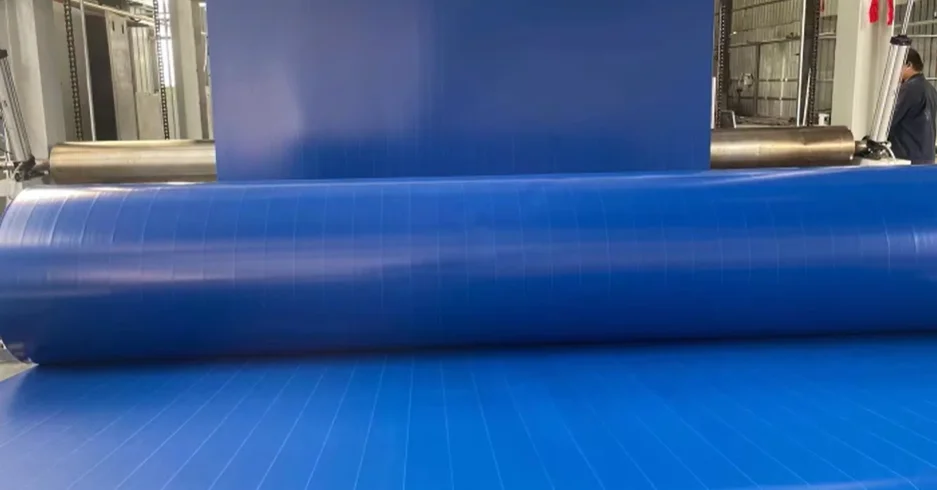
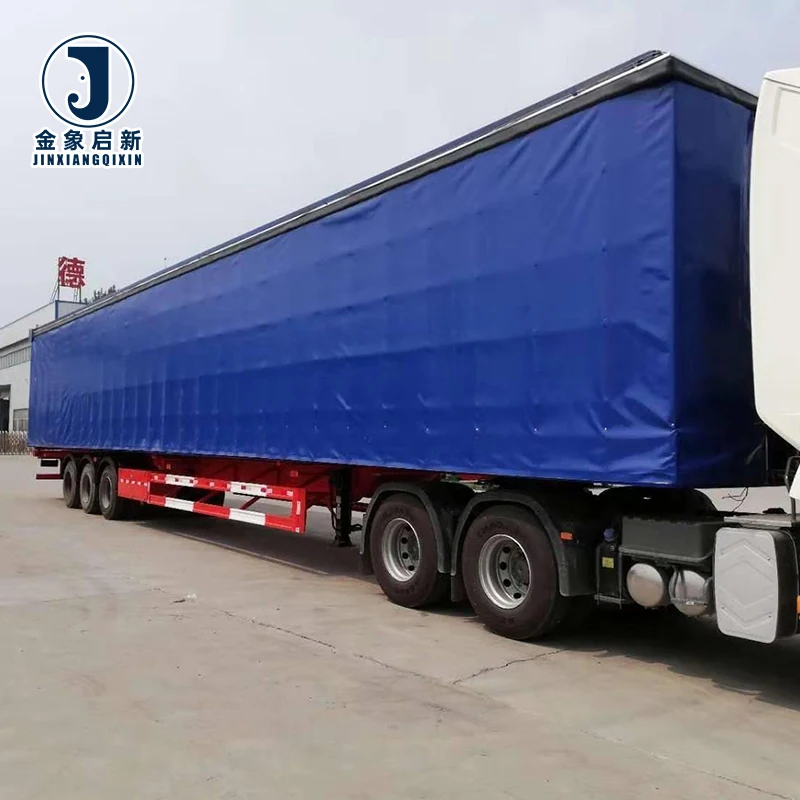
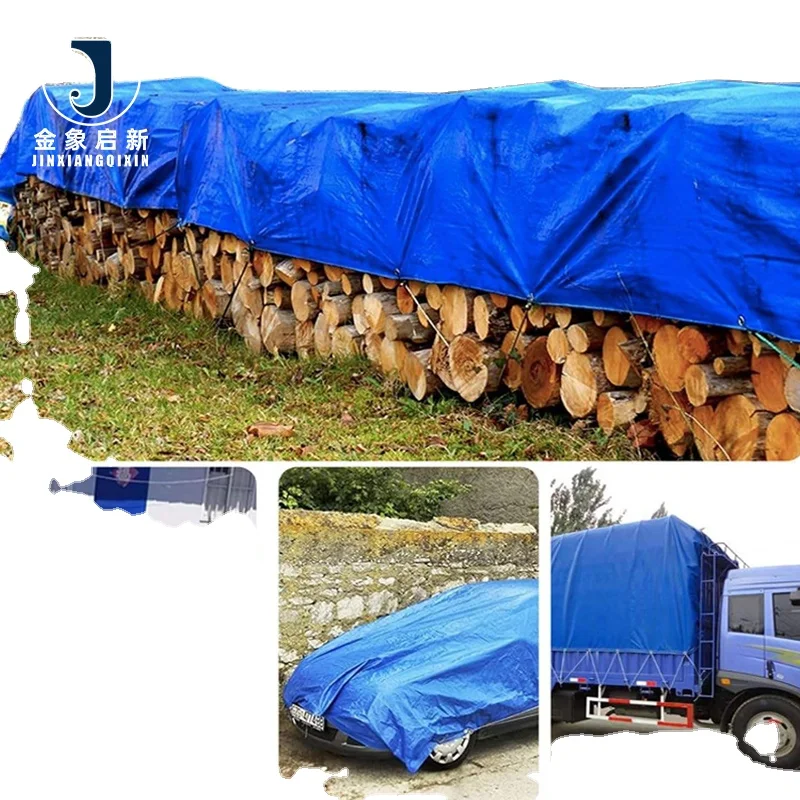
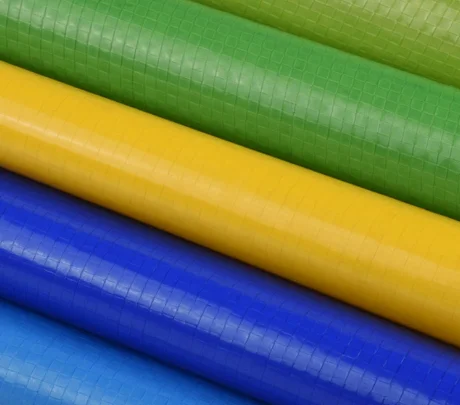
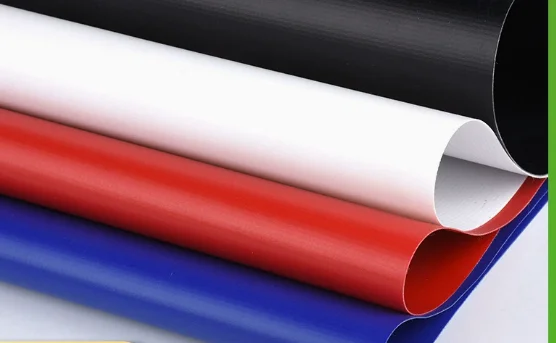
Consistent Coating Adhesion — Knife coating process controlled at every stage ensures uniform PVC bonding across the full roll width, verified before dispatch for structural membrane fabrication.
Technical Specifications
| Parameter | Value |
|---|---|
| Product Type | PVC Coated Tarpaulin Roll |
| Coating Method | Knife coated |
| Coating Material | PVC |
| Key Features | Tensile, tearing and peeling resistance; highly flexible and crack resistant; self-cleaning surface |
| Fire Retardant | Available in flame retardant grades — confirm the grade required for your market |
| UV Treatment | Available with UV resistance — test basis to be confirmed per project |
| Anti-Mildew | Antibacterial and mildew proof |
| Chemical Resistance | Oil, stain, acid and alkali resistance |
| Temperature Resistance | High temperature and cold resistance |
| Weather Resistance | Anti-oxidation and weather resistance |
| Welding Options | HF welding, hot air welding, sewing |
Application Suitability
| Application | Exposure & Requirement |
|---|---|
| Stadium roof and canopy membranes | Long-span tensile loading, sustained wind uplift, public fire safety compliance |
| Airport hangar fabric enclosures | Large-panel tension, aviation-grade flame retardant requirements, fuel and chemical exposure |
| Tensile architectural structures | Continuous structural tension, UV exposure, aesthetic surface consistency across panels |
| Portable storage structures | Repeated assembly and dismantling, fold-line stress, weather exposure |
| Shade systems and shadings | Extended solar exposure, thermal expansion cycles, colour fastness over time |
Why Flame Retardant Claims Fail at Project Handover
A fabric labelled "flame retardant" without a documented grade will not satisfy a building inspector reviewing tensile membrane structures in public venues.
PVC Knife Coated Tarpaulin for tensile structures and architectural membrane projects frequently stall at the approval stage because the fire classification does not match the local building code. Stadium roofs, airport hangars and public shade structures each fall under different fire safety frameworks, and a generic claim on a data sheet does not substitute for a recognised test report [NEED_CITE: fire classification systems for tensile membrane structures in public buildings]. Procurement teams discover this mismatch too late — often after the fabric has been cut and welded, when returning the material is no longer practical. Specifying the exact fire classification early in the design phase prevents costly re-fabrication and project delays.
Knife Coating Process and Structural Coating Integrity
Knife coating deposits a precise PVC layer onto the base fabric under controlled blade pressure, producing uniform coating weight from edge to edge across the roll. This consistency matters for tensile structures where uneven coating thickness creates weak zones under sustained membrane tension. PVC Knife Coated Tarpaulin for tensile structures and architectural membrane fabrication benefits directly from this controlled deposition, as the coating-to-fabric bond must survive years of wind-induced flexing without delamination. The resulting surface supports HF welding, hot air welding and sewing, giving fabricators flexibility in choosing their preferred joining method.
Weld Compatibility Across Fabrication Methods
Tensile and membrane structures rely on welded seams that carry structural loads, not just water sealing. HF welding produces a molecular bond between overlapping PVC layers, creating a joint whose strength approaches the base fabric itself. Hot air welding suits curved or three-dimensional seams common in stadium canopy geometry, while sewing remains relevant for temporary structures or edge detailing. The self-cleaning surface finish reduces dirt accumulation on installed membranes, lowering the maintenance burden on large-format architectural installations [NEED_CITE: welding method selection for PVC coated architectural fabrics]. Fabricators working with PVC Knife Coated Tarpaulin for tensile structures and architectural membrane projects should confirm the welding parameters — temperature, speed and pressure — against the specific roll batch before committing to full production.
Reading the Specification Sheet Beyond GSM
Coating weight and base fabric denier work together to define how a membrane performs under tension. A high GSM reading alone does not guarantee tear resistance if the base fabric uses a low-density weave; conversely, a tightly woven base with insufficient coating will expose yarns to UV degradation and moisture ingress. Knife coating builds adhesion through mechanical bonding into the weave structure, which is why peel strength often separates structural-grade fabric from general-purpose tarpaulin. The self-cleaning surface treatment affects how dirt and biological growth interact with the membrane over time, influencing both appearance and light transmission on shade structures. Fire retardant grades must be matched to the occupancy classification of the structure — what passes for a warehouse enclosure may not satisfy a public stadium roof [NEED_CITE: relationship between base fabric denier, coating weight and tensile performance in PVC membranes]. Width and roll length determine how many welded seams a large tensile panel requires, directly affecting both fabrication labour and the visual continuity of the finished structure.
The Hidden Cost of Colour Variation Across Rolls
When a tensile membrane structure uses multiple rolls installed side by side, even subtle colour shifts between batches become visible under natural light. This inconsistency forces fabricators to either reject entire rolls or accept a patchwork appearance on a high-profile architectural project. The issue traces back to coating formulation and pigment dispersion during production — a process control challenge that compounds with order volume. Beyond aesthetics, coating weight variation between rolls can alter welding behaviour, requiring fabricators to recalibrate hot air or HF equipment mid-production [NEED_CITE: roll-to-roll colour and coating consistency in bulk PVC tarpaulin orders]. These disruptions delay project timelines and inflate labour costs at the fabrication stage.
Sourcing From a Dedicated Coated Fabric Facility
Three full production lines and 36 sets of professional equipment support bulk roll output with stable lead times for structural membrane projects. A 10-person R&D team handles custom width, colour matching and sample development specific to tensile architecture requirements. Every roll undergoes dedicated QA/QC inspection at each production stage, with 100% pre-shipment verification of coating weight, colour consistency and surface finish. Samples are developed within days for projects requiring custom specification confirmation before bulk commitment. ISO and CE certified processes underpin the production workflow, with documentation packages matched to export requirements across North American, European and Asian markets.
Documentation & Verification
- Material specification sheet confirming GSM, base fabric denier and coating weight per roll for structural load calculations
- Fire retardant test report with stated grade matching the building code applicable to the project jurisdiction
- UV resistance test documentation indicating the test basis and exposure duration relevant to the installation environment
- Pre-shipment inspection record verifying roll-to-roll colour and coating weight consistency across the order quantity
- Roll packing list with individual roll identification for traceability from production batch to installed panel
Fabrication, Handling & Storage
- HF welding parameters should be tested on a sample cut from the actual PVC Knife Coated Tarpaulin Roll batch before full membrane fabrication
- Store rolls upright on end caps to prevent flat-spot deformation that transfers into visible surface marks on installed tensile panels
- Hot air welding speed and temperature must be adjusted for the specific coating thickness of each roll batch to avoid under- or over-melting
- Self-cleaning surface finish tolerates mild detergent cleaning; avoid solvent-based cleaners that may degrade the PVC coating layer
- Unroll and allow the knife coated fabric to relax at ambient temperature before cutting to minimise dimensional drift during panel assembly
Preparing Your Enquiry for Structural Membrane Fabric
Provide the intended structure type, span dimensions and the fire classification required by the local building authority so we can recommend the correct grade. Specify the roll width and colour needed to minimise seam count on your panel layout, along with the project quantity in square metres or roll count. If the installation site has specific UV exposure conditions or chemical contact risks, include these so the treatment package can be matched accordingly.
Frequently Asked Questions
Q: What fire retardant grades are available for tensile membrane structures?
A: Flame retardant grades are available and must be matched to the building code applicable in your project market. We provide the test report with the stated grade upon request. Confirm the classification your local authority requires — stadium roofs, airport hangars and public shade structures often fall under different fire safety frameworks.
Q: How do I confirm UV resistance suitability for permanent architectural installations?
A: UV resistance treatment is available with test documentation indicating the test basis and exposure parameters. Share your installation location and expected exposure conditions so we can confirm the appropriate treatment level and provide the relevant test data with your shipment.
Q: Which welding process suits membrane structure fabrication — HF or hot air?
A: Both HF and hot air welding are compatible with this PVC knife coated fabric. HF welding produces strong molecular bonds for flat and linear seams, while hot air welding suits curved and three-dimensional panel geometries. We recommend running weld tests on sample cuts from your production batch to dial in the correct parameters.
Q: What roll widths and lengths are available to minimise seams on large tensile panels?
A: Custom widths and lengths are available to reduce seam count on large-format membrane panels. Provide your panel layout dimensions and project quantity so we can recommend the optimal roll configuration and confirm lead times for custom sizing.
Q: How does the self-cleaning surface perform in high-humidity architectural applications?
A: The self-cleaning surface finish reduces dirt and biological accumulation on installed membranes. Combined with the antibacterial and mildew proof treatment, this supports lower maintenance requirements in humidity-exposed environments such as tropical shade structures or enclosed agricultural facilities.