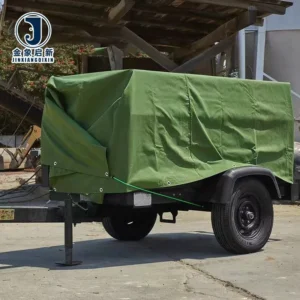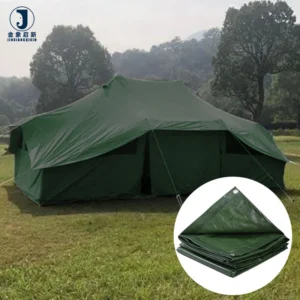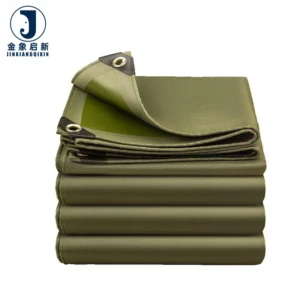

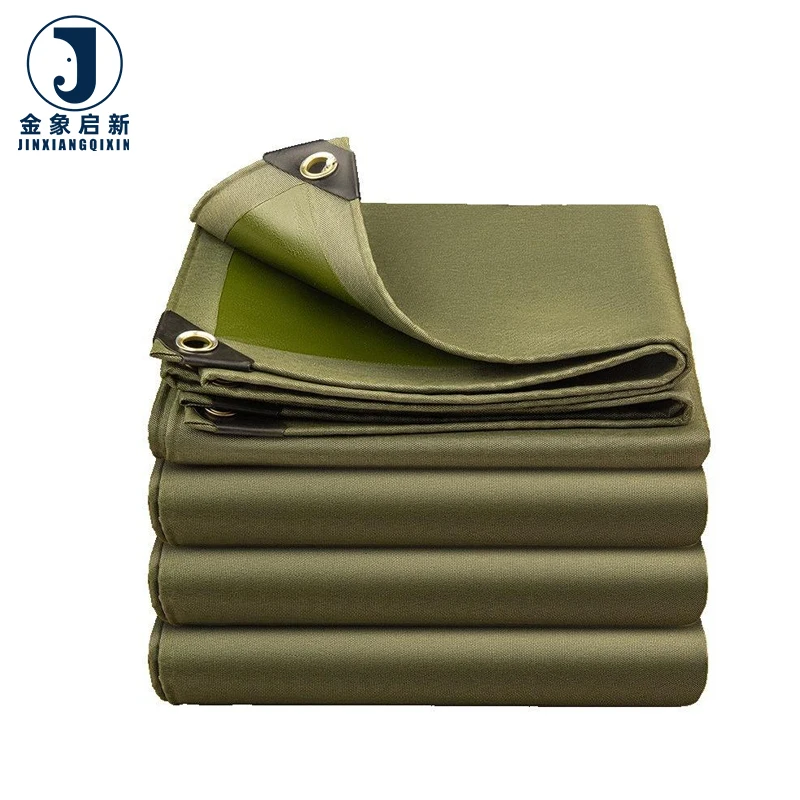
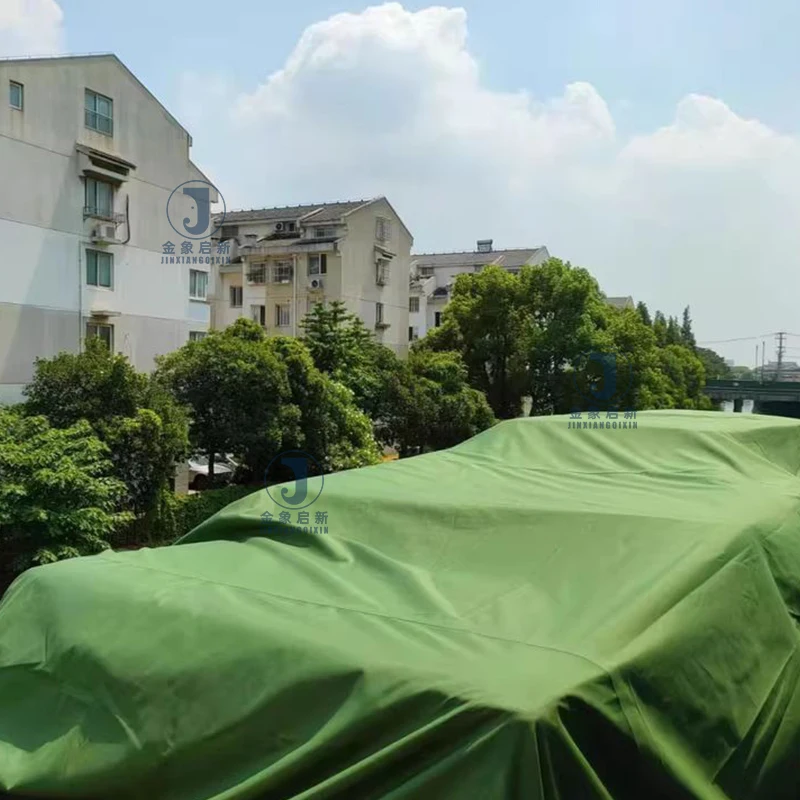
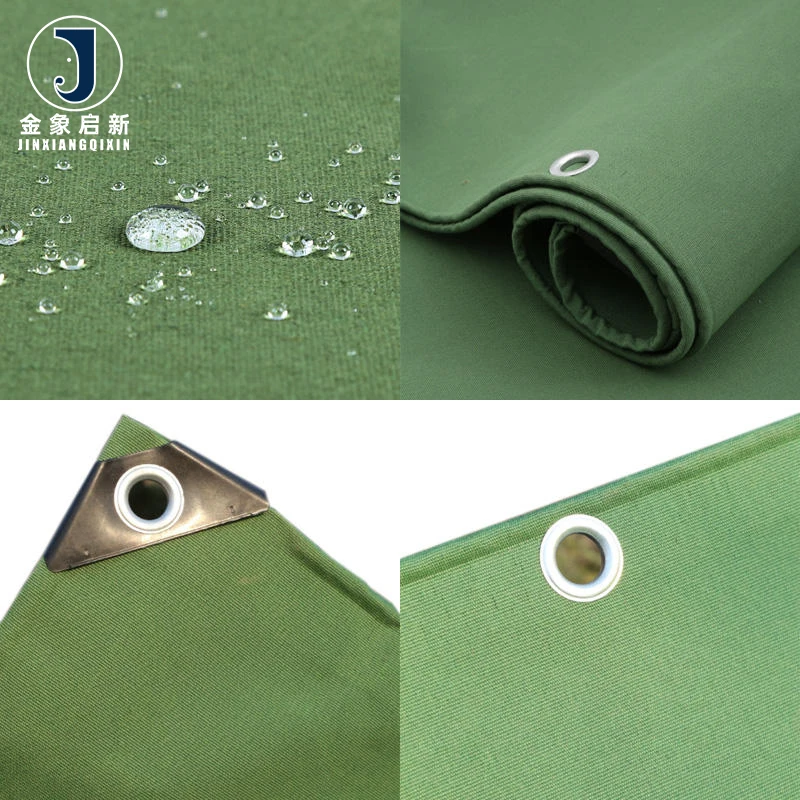
Proven coating control — Every roll of PVC laminated canvas tarpaulin leaving our facility is verified for coating adhesion and GSM consistency before dispatch, ensuring the compliance documentation matches the physical material arriving at your specialist structure or ventilation project site.
Technical Specifications
| Parameter | Value |
|---|---|
| Product Type | PVC Laminated Canvas Tarpaulin |
| Material | Polyester cotton industrial textile with 8–12 strands of fine cotton yarn |
| Weight | 600gsm |
| Total Thickness | 0.9mm |
| Coating Method | Laminated |
| Roll Width | 2m |
| Roll Length | 100m |
| Colour | Army Green Camouflage / Custom options available |
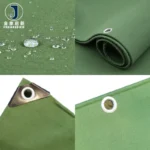
| Eyelets | Rust-proof aluminum, spaced every 1 meter at corners and hem |
| Edge Finish | Folded and welded seams, sewn with poly ropes |
| UV Treatment | UV resistant (test basis not stated — confirm applicable standard) |
| Flame Retardant Grade | Available in flame retardant grades — confirm the grade required for your market |
| Anti-Mildew | Mold resistant |
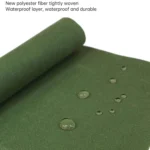
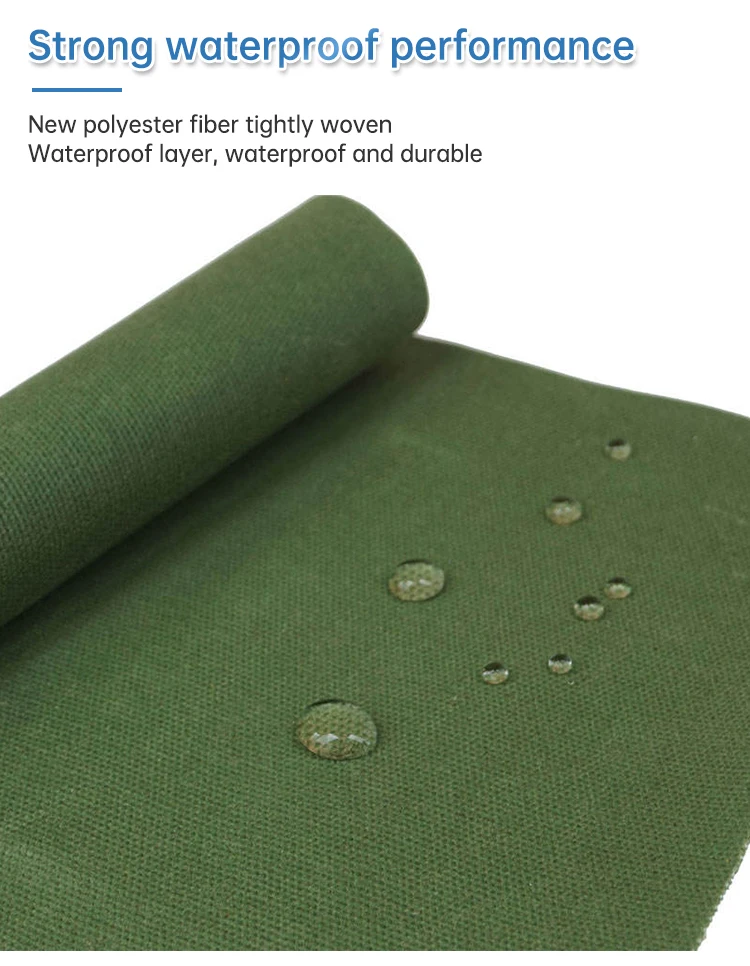
| Waterproof Rating | Waterproof (hydrostatic rating not stated) |
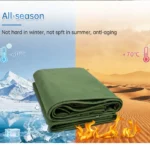
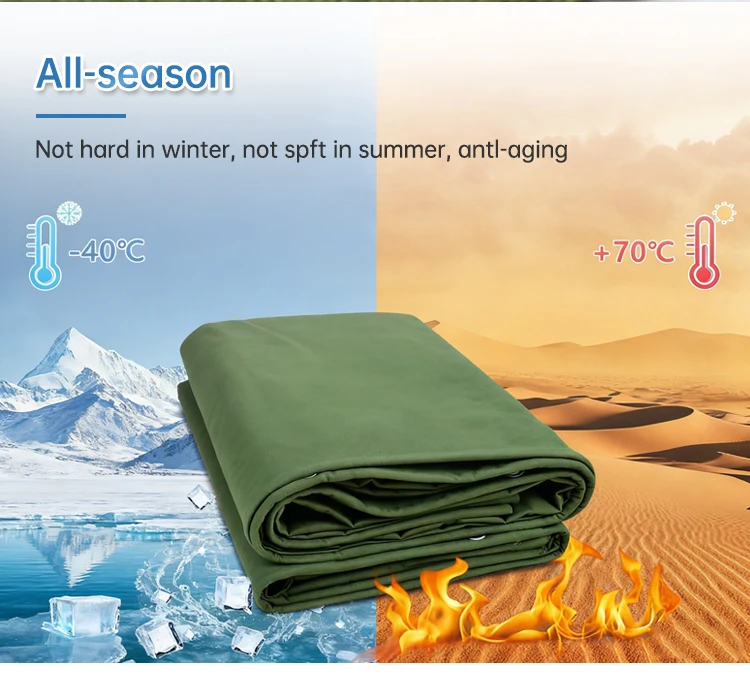
| Temperature Resistance | High and low temperature resistant (test basis not stated) |
| Service Life | Suited to extended outdoor exposure (confirm expected duration for your climate) |
| Certification | CE, ISO |
Application Suitability
| Application | Exposure & Requirement |
|---|---|
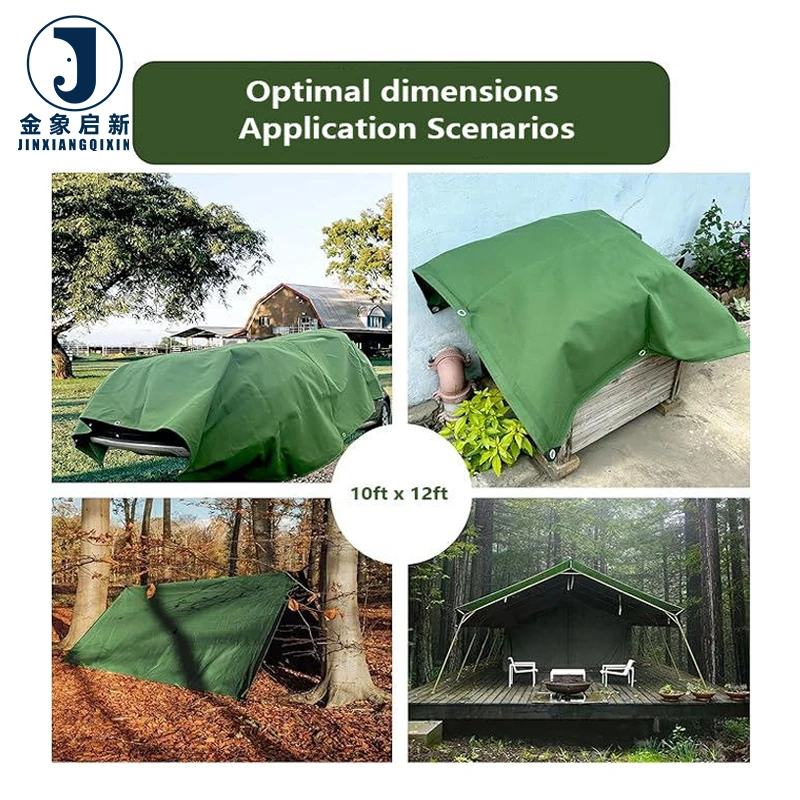
| Membrane and inflatable structures | Sustained wind load, UV exposure, structural tension at seams and anchor points |
| Mining and tunnelling ventilation enclosures | Dust, moisture, confined-space compliance, potential fire-risk environment |
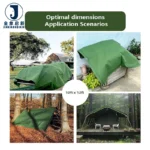
| Aviation and construction support covers | Outdoor weathering, equipment abrasion, frequent deployment and removal |
| Heavy-duty awning and shading installations | Prolonged solar exposure, wind uplift forces, water runoff |
| Temporary industrial enclosures | Variable temperature, chemical dust, repeated assembly cycles |
Why "Flame Retardant" Without a Certified Grade Creates Project Risk
A fabric labelled flame retardant but shipped without a matching test certificate can halt a site inspection and delay an entire project handover.
When a mining ventilation contractor or a membrane structure installer specifies PVC laminated canvas tarpaulin for a compliance-regulated environment, the fire classification on paper must match the material on site. We see procurement teams receive fabric where the quotation states flame retardant treatment, but the delivered roll carries no test report aligned to the jurisdiction’s recognised standard [NEED_CITE: fire classification standards for temporary structures and ventilation ductwork]. The consequence is not merely a documentation gap — it can mean a failed site audit, a stopped installation, and weeks of delay while replacement material is sourced and shipped. The PVC laminated canvas tarpaulin you specify must be matched to the exact fire performance grade your local authority or site safety officer requires, and the test report must travel with the shipment.
Compliance Documentation Built Into the Order, Not Added After
For specialist structure and ventilation applications, the PVC laminated canvas tarpaulin must arrive with paperwork that satisfies the site safety officer before the fabric is ever unrolled. Our quotation stage requires you to declare the fire performance standard, anti-static requirement, or membrane certification your project mandates. This triggers a sample development cycle where the correct treatment chemistry is selected and tested against your stated standard before bulk production begins. The material specification sheet shipped with your order names the exact GSM, base fabric construction, and coating method, giving your compliance team a traceable reference from inquiry through to installation.
Ventilation and Membrane Fabrication Demand Predictable Seam Behaviour
Inflatable structures and ventilation ducts place the highest stress at welded seams and eyelet anchor points, not at the field of the fabric itself. The laminated coating method used on this canvas creates a bond between the PVC layer and the woven polyester-cotton base that responds predictably to hot-air and wedge welding [NEED_CITE: weld peel strength test methods for laminated coated fabrics per ISO 2411]. Rust-proof aluminum eyelets set at every meter along the hem distribute tie-down and inflation loads across a wide edge zone, while the poly-rope sewn and folded seam construction prevents edge peel under sustained tension. For membrane structures that must hold internal pressure or ventilation ducts that resist collapse under negative pressure, this edge reinforcement system is where structural integrity is won or lost.
Reading the Specifications Beyond the GSM Number
The 600gsm weight of this PVC laminated canvas tarpaulin tells you the mass per square metre, but the structural performance in a membrane or duct application depends on how that mass is distributed. The polyester-cotton base woven from 8–12 strands of fine cotton yarn provides the tensile skeleton; the laminated PVC coating adds waterproofing, abrasion resistance, and the surface chemistry needed for reliable heat welding. A laminated construction bonds the coating to the base under heat and pressure, producing a flat, uniform surface that feeds consistently through automated welding equipment — critical when fabricating long duct runs or large membrane panels where seam consistency determines airtight performance. The 0.9mm total thickness places this fabric in a range suited to semi-permanent structures that must resist puncture during installation and sustain wind load over extended deployment. The 2m roll width influences panel layout and the number of transverse welds required to span a given structure dimension; wider panels reduce seam count but increase handling weight on site.
What Specification Mismatches Cost in the Field
When a ventilation duct is supplied without the fire-retardant certification the mine site requires, the entire duct run may be rejected at commissioning, forcing a full strip-out and replacement under time pressure. Similarly, if anti-static treatment is needed for a confined-space installation but was never specified at inquiry stage, the fabric can accumulate surface charge that poses an ignition risk in dust-laden environments [NEED_CITE: anti-static requirements for ventilation ductwork in mining and tunnelling]. Colour inconsistency between rolls in the same membrane structure order becomes visible once panels are heat-welded side by side, triggering aesthetic rejection even when structural performance is uncompromised. These failures trace back to incomplete specification at the quotation stage, not to material defect.
Why Procurement Teams Source This Fabric Here
Our three full production lines and 36 sets of professional equipment support bulk roll output with the batch-to-batch consistency that membrane fabricators depend on — a colour shift or GSM drift between production runs can invalidate a welded seam protocol. The 10-person R&D team develops custom sizing, eyelet spacing, and edge reinforcement patterns in-house, producing samples within days so you can validate weld parameters and structural fit before committing to a full order. Dedicated QA and QC checkpoints at every production stage, with 100% inspection before shipment, mean the roll you receive matches the specification sheet that accompanied your sample approval. CE and ISO certification frameworks are maintained across our facility, providing the documentation backbone that specialist structure and ventilation projects require for audit trails.
Documentation & Verification
- Material specification sheet naming 600gsm weight, base fabric denier, and laminated coating method
- UV and flame-retardant test reports matched to the standard declared at inquiry stage
- Pre-shipment inspection record confirming GSM, colour, and eyelet placement before dispatch
- CE and ISO certification documentation included in the shipping package
- Roll packing list with batch reference for traceability across multi-roll orders
Fabrication, Handling & Storage
- Hot-air welding temperature and speed must be calibrated to the 0.9mm laminated thickness before full production runs
- Aluminum eyelets at one-meter spacing require reinforced patch backing when inflation loads exceed standard tie-down forces
- Store 2m rolls upright on pallets to prevent edge compression marks that distort the laminated surface
- Allow cold-stored rolls to acclimatise to workshop temperature before unrolling to avoid coating stiffness cracks
- Use mild detergent for field cleaning; solvent-based cleaners may degrade the laminated PVC surface bond
What to Include in Your Inquiry
Provide the fire performance standard or anti-static classification your site authority requires so the correct treatment grade is selected during sample development. Specify whether you need finished panels with welded seams and eyelets or roll stock for in-house fabrication, along with the total linear metres and colour reference. Declaring your project timeline at the inquiry stage allows us to align sample approval, production scheduling, and documentation preparation with your installation window.
Frequently Asked Questions
Q: What flame-retardant grade is available and which standards does it meet for my jurisdiction?
A: The fabric is available in flame-retardant grades, but the specific grade must be matched to the standard your local authority or site safety officer mandates. State your required classification at the inquiry stage so the correct treatment chemistry is applied and the corresponding test report is generated and shipped with your order.
Q: What test basis supports the UV resistance claim and how does it relate to long-term outdoor exposure?
A: The material carries a UV-resistant treatment, though the specific test method and exposure hours are not stated in the base specification. For projects where long-term solar exposure is a compliance factor, request the applicable UV test report during the sample approval stage to confirm alignment with your project’s durability requirements.
Q: How can I verify the 600gsm weight on arrival and what does pre-shipment inspection cover?
A: Every roll undergoes 100% inspection before dispatch, including GSM verification against the stated specification. On arrival, you can confirm weight using a calibrated scale and a measured sample cut. The pre-shipment inspection record shipped with your order documents the results for your audit trail.
Q: Is anti-static treatment available and what certification supports mining or tunnelling requirements?
A: Anti-static treatment can be applied to meet the requirements of mining and tunnelling ventilation environments. The applicable standard and certification must be declared at inquiry so the treatment is validated and documented before production. Confirm your site’s specific anti-static classification with your safety officer.
Q: How are custom dimensions, eyelet spacing, and edge reinforcement specified for structure projects?
A: Custom panel sizes, eyelet intervals, and reinforcement patterns are developed during the sample stage based on your structural drawings and load requirements. Our R&D team produces physical samples for your weld testing and fitment validation before bulk production begins, ensuring the finished fabric meets your installation parameters.