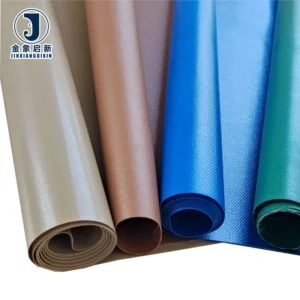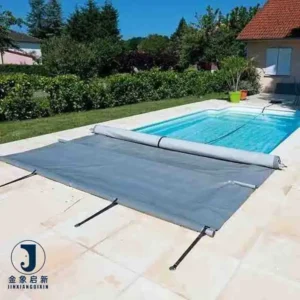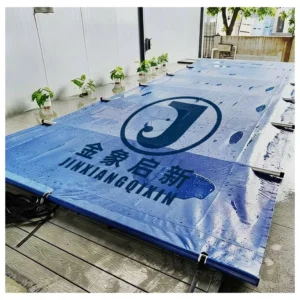
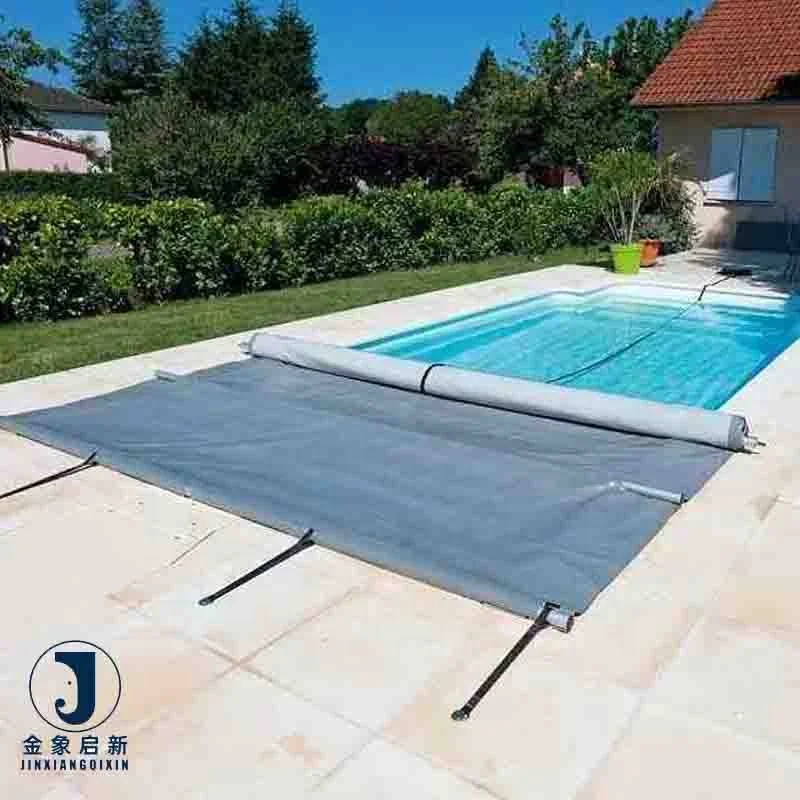
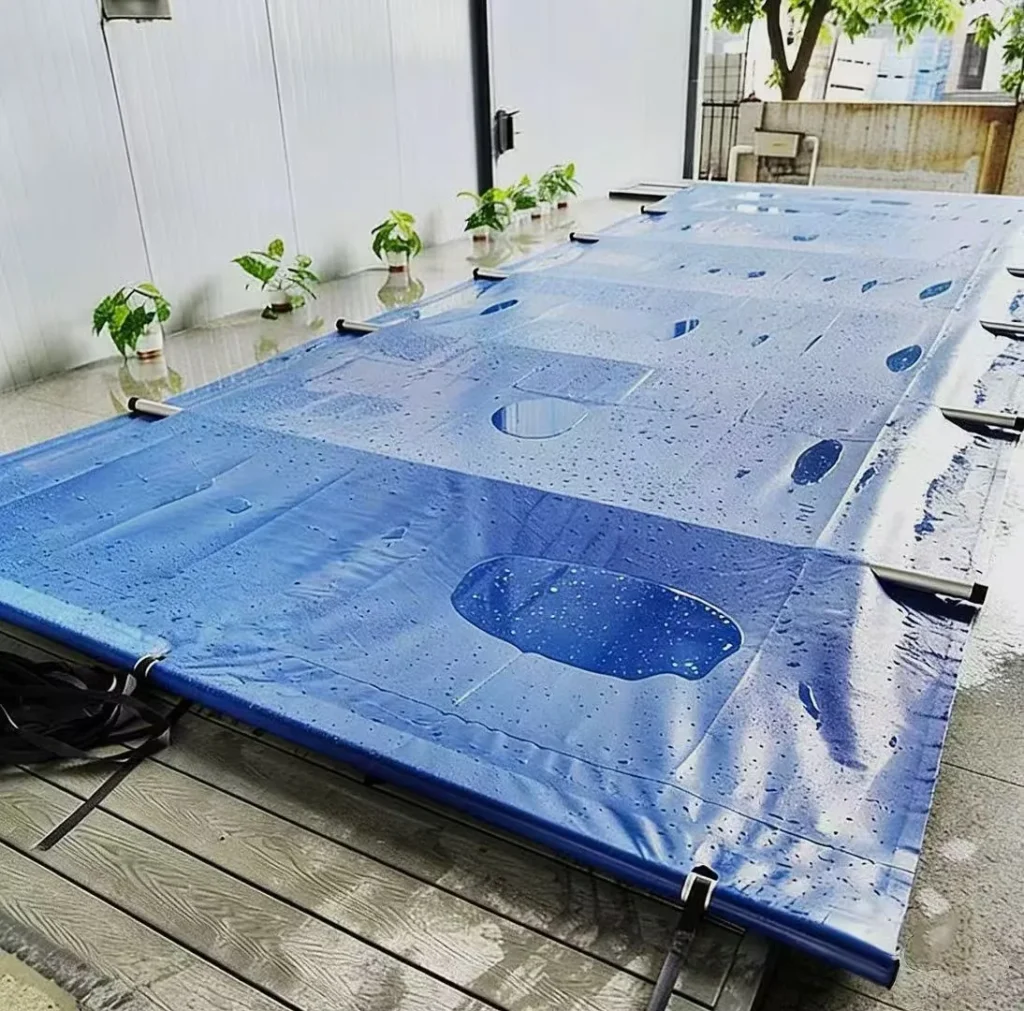
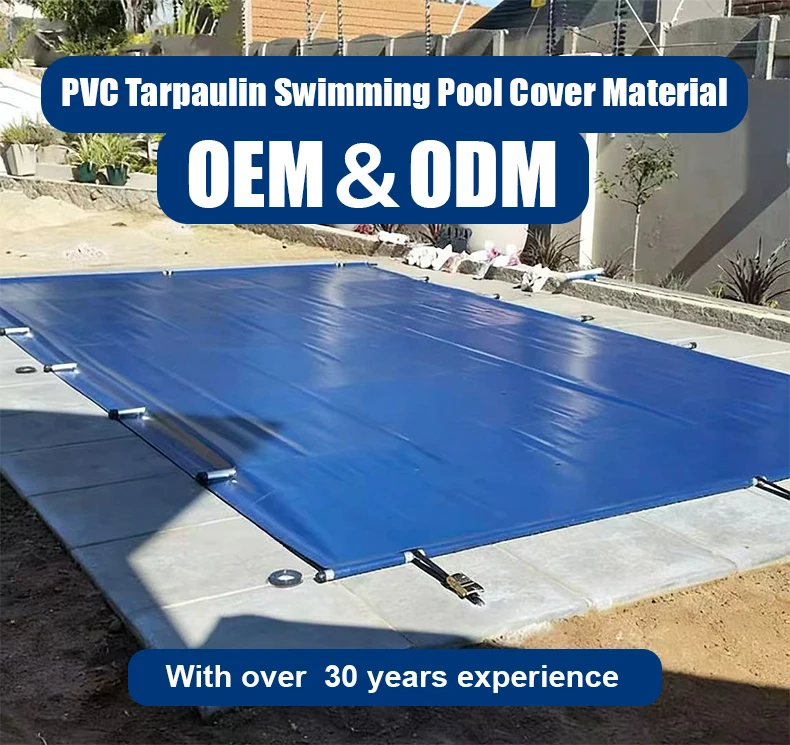
Precision-Coated Fabric Sourcing — every roll of PVC pool cover tarpaulin is matched to verified GSM, coating weight, and compliance documentation before dispatch, eliminating the guesswork technical buyers face when specifying material for aquatic environments.
Technical Specifications
| Parameter | Value |
|---|---|
| Product Type | PVC Coated Tarpaulin |
| Coating Material | PVC |
| Coating Method | Knife Coated |
| Waterproof | Yes — fully coated barrier |
| UV Treatment | Anti-UV (test basis not stated in source) |
| Windproof | Yes |
| Anti-Mildew | Yes |
| Tear Resistance | High strength base fabric |
| Color | Customizable |
| Size | Customizable |
| Fire-Retardant Grades | Available in flame retardant grades — confirm the grade required for your market |
| Anti-Static Grades | Available — certification provided where applicable |
Application Suitability
| Application | Exposure & Requirement |
|---|---|
| Residential outdoor pools | Seasonal UV exposure, rain, wind, leaf and debris accumulation; requires waterproof barrier and anti-mildew surface |
| Hotel and resort pools | Year-round weather exposure, high guest turnover demanding clean appearance; material must resist staining and biological growth |
| Commercial aquatic facilities | Regulatory compliance for fire safety in enclosed or semi-enclosed pool structures; documented test reports required on site |
| Specialist membrane structures | Integration of pool cover fabric into broader technical fabric procurement; fire-retardant and anti-static certification may apply |
Why Pool Cover Fabric Fails Compliance Inspection After Delivery
The material arrives without the fire-retardant or anti-static test report the site inspector requires.
Ventilation duct and membrane structure contractors routinely specify PVC coated fabric for pool enclosures and covers, only to discover that the shipment documentation does not include the certification grade their local authority demands. The fabric itself may perform adequately, but without a verifiable test basis tied to a recognized standard, the installation cannot pass inspection. This delays project handover and forces emergency re-sourcing at premium cost. PVC Pool Cover fabric fire retardant / anti-static / certified grades are available from our production lines with documented test reports — the critical step is confirming the exact standard your market requires before placing the order [NEED_CITE: fire classification standards for textile materials used in recreational facilities].
Knife Coated Construction and Pool Environment Demands
Knife coated PVC construction delivers a consistent coating layer bonded directly to the base fabric, producing a uniform waterproof barrier that resists delamination under repeated wet-dry cycling. For pool covers, this matters because the material sits in continuous contact with chlorinated water vapor, humidity, and standing moisture. A PVC Pool Cover Tarpaulin built through knife coating maintains its structural integrity across seasons without the coating separating from the substrate at stress points.
Anti-Mildew Formulation for Continuous Moisture Exposure
Pool environments generate persistent humidity that promotes fungal and bacterial growth on untreated fabric surfaces. The anti-mildew treatment applied to this PVC coated tarpaulin inhibits biological colonization, reducing discoloration and odor development during extended cover deployment. This is particularly relevant for hotel and resort operators who store covers folded for months between seasons — untreated fabric can develop mildew stains that are visible to guests upon redeployment [NEED_CITE: mildew resistance testing methods for coated textiles in humid environments].
Reading the Specification Sheet Beyond Surface Claims
Coating method and base fabric construction work together to determine how pool cover material performs under real conditions. Knife coating produces higher adhesion strength compared to dip or spray methods, which directly affects how well the PVC layer resists peeling when the cover is dragged across pool decking or subjected to wind uplift. The base fabric denier and weave density govern tear propagation — a higher denier yarn in a tight weave limits how far a puncture or cut will spread before the load is redistributed across adjacent threads.
UV treatment availability should always be confirmed with a documented test basis rather than assumed from marketing language. Anti-UV additives function differently depending on concentration and incorporation method, and their effectiveness degrades over time based on cumulative solar exposure. Requesting the test report before production allows you to verify that the treatment level matches the expected service environment of your pool installation.
The Hidden Cost of Undocumented Material Claims
When a pool cover fabric quotation states a specific GSM but the delivered rolls measure lighter, the entire performance calculation shifts — lower coating weight means reduced waterproof integrity, weaker UV protection, and diminished tear resistance. Buyers who do not request pre-shipment weight verification per roll accept this risk unknowingly. Similarly, claiming fire retardancy without providing a test report leaves contractors exposed during compliance audits. Batch color variation between rolls becomes visible once multiple covers are installed side by side at a resort complex, triggering aesthetic rejection even though the material is functionally sound [NEED_CITE: GSM verification and batch consistency standards for coated fabrics].
Why Technical Buyers Source Pool Cover Fabric Here
Our 10-person R&D team develops custom pool cover samples within days, allowing buyers to evaluate coating weight, color accuracy, and anti-mildew performance before committing to bulk production. Three full production lines and 36 sets of professional equipment provide the capacity to fulfill large-volume orders with consistent roll-to-roll quality. Dedicated QA/QC inspection at every production stage catches GSM deviations, coating adhesion failures, and color inconsistencies before material reaches the packing area. ISO and CE certified production ensures that documentation accompanying each shipment meets international trade requirements. The specialization in coated fabric spanning nearly three decades means process parameters for knife coating are controlled from experience rather than trial and error.
Documentation & Verification
- Material specification sheet detailing base fabric denier, coating method, and GSM for each pool cover order
- Fire-retardant or anti-static test report provided with shipment where applicable to meet site compliance
- Pre-shipment inspection record confirming roll-by-roll GSM verification against quoted specifications
- ISO and CE certificates included in shipping documentation package
- Certificate of origin and full customs documentation support for international dispatch
Fabrication, Handling & Storage
- Heat welding parameters should be adjusted to the specific knife coated PVC thickness to avoid seam failure at flex points
- Reinforced hems and eyelet placement must account for wind uplift loads on large pool cover spans
- Store rolls upright on pallets in dry conditions to prevent edge creasing that affects unrolling and installation
- Use mild detergent for cleaning — avoid solvent-based products that may degrade the PVC coating surface
- Allow custom-sized covers to acclimate to ambient temperature before tensioning to reduce stress on welded seams
- Repair minor punctures with compatible PVC adhesive patches matching the knife coated surface chemistry
What We Need to Prepare Your Quotation
Provide the pool dimensions and required overlap allowance so we can calculate custom cover sizing and material utilization. Specify whether your project requires fire-retardant or anti-static certification and which standard your local authority recognizes. Indicate preferred color and whether you need rolls for in-house fabrication or finished covers with hems and eyelets already installed.
Frequently Asked Questions
Q: What fire-retardant grades are available for pool cover installations in regulated facilities?
A: We offer PVC pool cover fabric in flame retardant grades with test reports provided upon confirmation of your specific requirement. Different markets reference different standards for recreational facility textiles. Share the regulation or standard your local inspector cites, and we will match the appropriate grade and supply the corresponding documentation with your shipment.
Q: How is GSM verified to ensure the delivered pool cover matches the quotation?
A: Every roll undergoes weight verification during our pre-shipment inspection process. The QA team samples each roll and compares actual coating weight against the stated GSM on your order specification. Results are recorded in the inspection report included with your shipping documentation, so you can confirm material grade on arrival.
Q: What is the process for developing a custom color or size pool cover sample?
A: Submit your pool dimensions, color reference, and any treatment requirements such as anti-UV or anti-mildew. Our R&D team prepares a sample within days for your evaluation. Once approved, the confirmed specifications are locked into production to ensure batch consistency across all rolls in your order.
Q: How does knife coated PVC compare to alternative coating methods for pool cover durability?
A: Knife coated PVC produces a thicker, more uniform coating layer with stronger adhesion to the base fabric compared to dip or spray methods. This results in better resistance to delamination under the repeated moisture exposure and mechanical handling that pool covers experience during seasonal deployment and removal cycles.
Q: What UV-resistance documentation can be provided with the pool cover fabric?
A: Anti-UV treatment is available for our PVC pool cover tarpaulin with test basis provided upon request. We recommend confirming the specific UV performance standard required for your installation environment before production so the appropriate additive concentration can be incorporated and documented in your shipment test report.