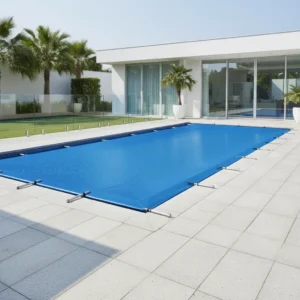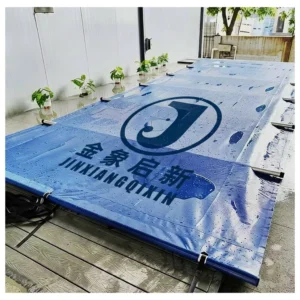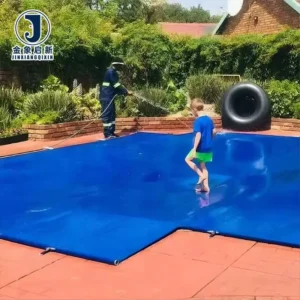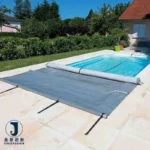
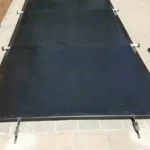
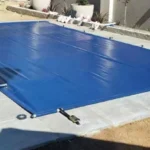
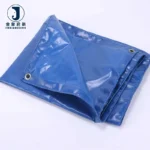
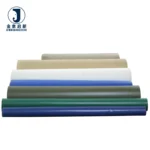
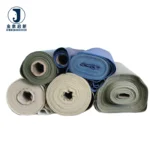
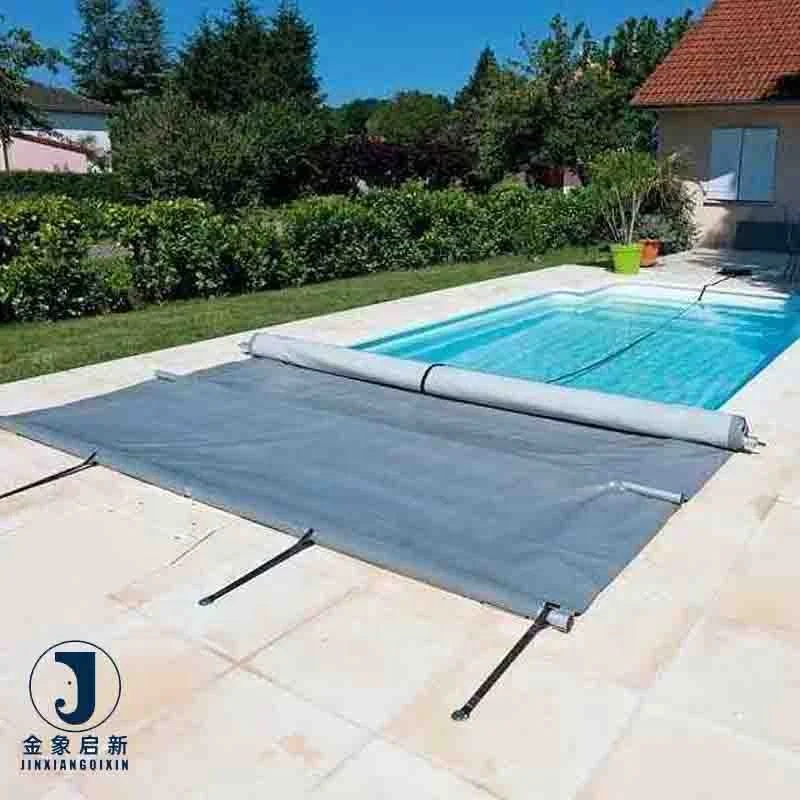
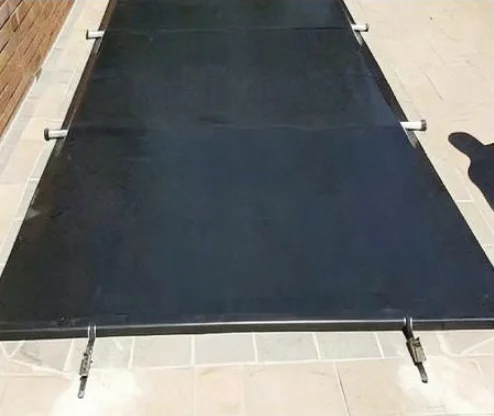
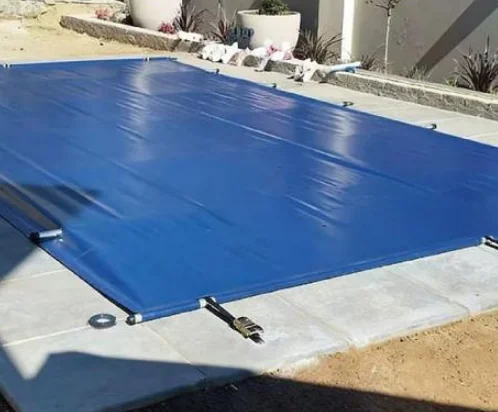
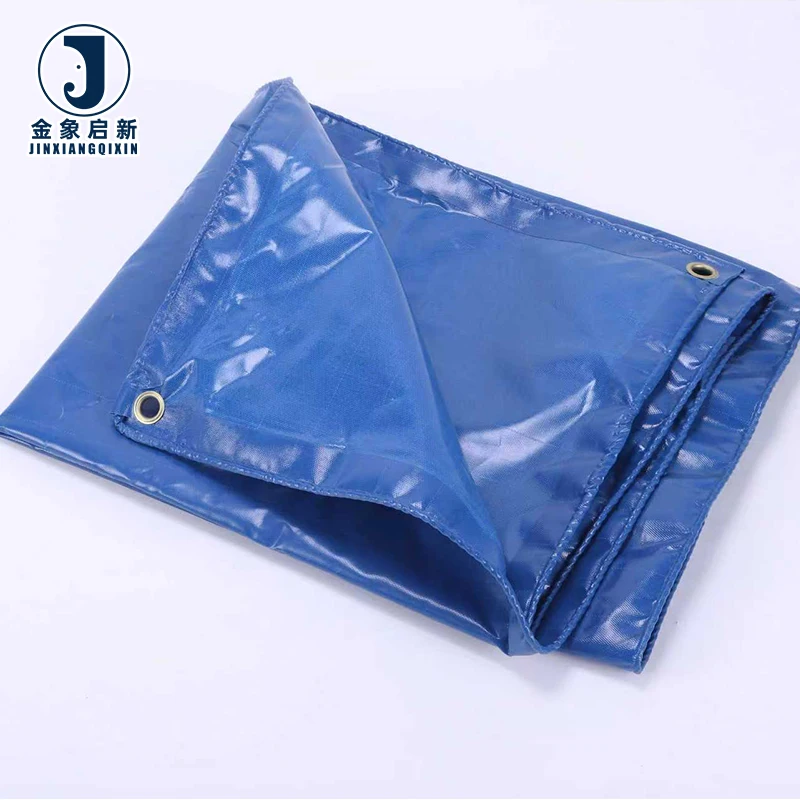
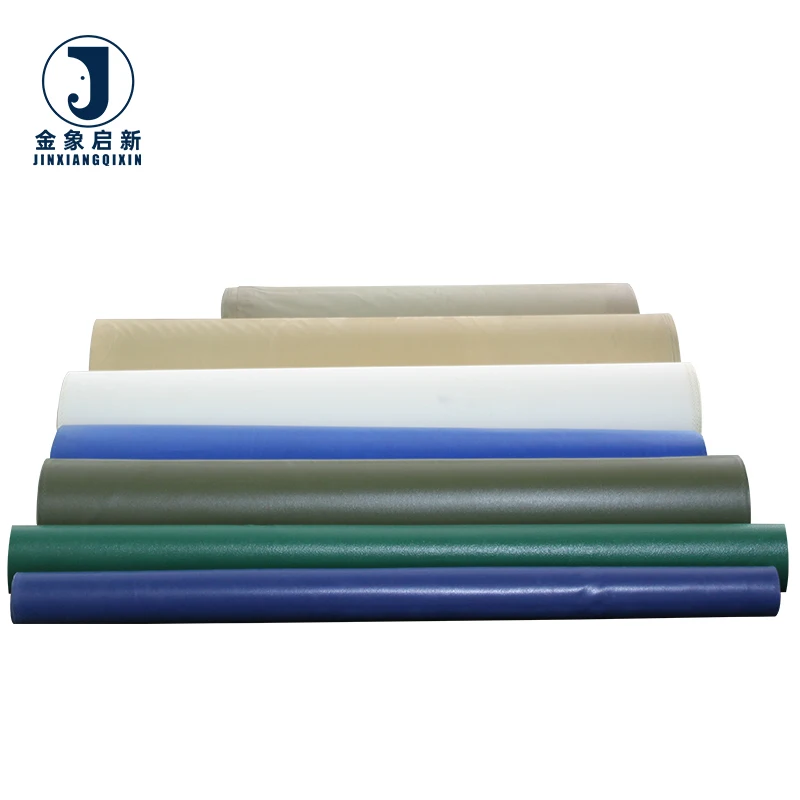
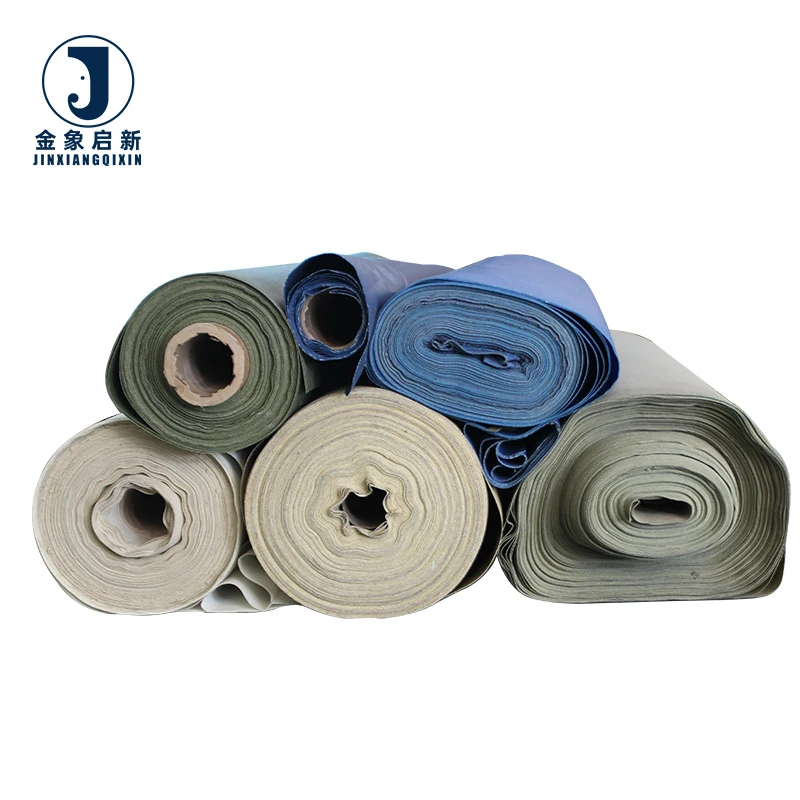
Proven Coating Expertise — Nearly 30 years of focused PVC fabric production informs every roll of PVC Pool Cover Tarpaulin fire retardant / anti-static / certified, with process control over adhesion, weight, and finish consistency across laminated and hot-melt coated grades.
Technical Specifications
| Parameter | Value |
|---|---|
| Product Type | PVC Pool Cover |
| Base Fabric | High-strength polyester mesh fabric |
| Coating Material | PVC |
| Coating Method | Laminated technology & Hot-melt Coating technology |
| Weight (GSM) | 350gsm / 420gsm / 500gsm / 550gsm / 600gsm / 750gsm (confirm the grade for this item) |
| Total Thickness | 0.32mm / 0.35mm / 0.4mm / 0.45mm / 0.5mm / 0.65mm (confirm the grade for this item) |
| Roll Size | 2m × 75m / 2.1m × 50m |
| Finished Product Size | Custom cut to pool dimensions or sold as inventory roll |
| Color Options | Blue / Red / Yellow / Light blue / Grey (custom colors available) |
| Special Treatments | Flame retardant, Anti-static, Anti-cold, Anti-mildew (grade not stated — confirm the grade required for your market) |
| Key Features | Waterproof, cold crack resistance, anti-mildew, sunproof (UV test basis not stated — confirm rating), outstanding tearing strength for welding, color fastness |
| Standards | ISO, CE (specific certificate numbers available on request) |
Application Suitability
| Application | Exposure & Requirement |
|---|---|
| Commercial swimming pool covers | Constant water contact, UV exposure, debris loading, tensioned hook or aluminium bar systems |
| Custom-shaped pool enclosures | Complex contour fitting, repeated installation and removal cycles, abrasion at anchor points |
| Large rectangular municipal pools | High span tension, wind uplift, chemical splash from pool treatment systems |
| Aquaculture and fish tank covers | Permanent water immersion, algae and biological growth, mildew resistance |
| Water containment and reservoir liners | Soil chemistry contact, puncture risk from substrate, long-term hydrostatic load |
What Certified PVC Pool Cover Tarpaulin fire retardant / anti-static / certified Really Demands from Your Supplier
A test report matched to the batch, not a generic claim on a data sheet.
Pool cover fabrics specified for commercial or municipal facilities often carry fire-retardant and anti-static requirements written into the project specification. Yet fabricators routinely receive rolls with no accompanying documentation, leaving them to source certification independently or face rejection at site inspection [NEED_CITE: fire classification standards for tensile membrane and pool cover structures]. When the PVC Pool Cover Tarpaulin fire retardant / anti-static / certified grade is selected, every roll ships with the test documentation that corresponds to the treatment applied during that production run — eliminating the gap between what was quoted and what can be proven on site.
Laminated Coating Consistency Across the Mesh Base
The laminated and hot-melt coating process bonds the PVC layer to the high-strength polyester mesh under controlled heat and pressure. This method produces uniform adhesion across the full width of the roll, which matters directly when the fabric is welded at seam lines during pool cover fabrication. Inconsistent coating thickness creates weak points where the heat weld penetrates the PVC but fails to bond fully with the base fabric — a failure mode that shows up after the first season of tensioning and removal.
Anti-Static Treatment for Regulated Environments
Static discharge on pool cover surfaces is a compliance concern in facilities where chemical vapours from water treatment systems are present. The anti-static treatment option modifies the surface resistivity of the PVC coating to reduce charge accumulation [NEED_CITE: anti-static test methods for coated technical textiles]. When this treatment is specified, request the corresponding test report to confirm the grade matches your facility’s safety requirements — the treatment level varies by end-use environment and regulatory jurisdiction.
Reading GSM and Thickness Together for Pool Cover Selection
Weight in GSM and total thickness in millimetres are often treated as interchangeable indicators of durability, but they measure different properties. GSM reflects the total mass per square metre — base fabric plus coating — while thickness captures the cross-section including the coating profile on each side. A 500gsm fabric with a dense polyester mesh base will behave differently under tension than a 500gsm fabric that achieves its weight through heavier coating on a lighter mesh. For pool covers spanning large rectangular pools with aluminium bar tensioning, the base fabric density matters more for resisting deformation over the span. For custom-shaped pools with hook systems, the coating thickness at the anchor points determines how well the fabric resists abrasion where it contacts the fixing hardware. Select the grade based on the structural requirement of the installation method, not on GSM alone.
The Cost of Specifying the Wrong Grade for the Installation Method
Pool covers fail most often not in the field of the fabric but at the points where the material is fixed, folded, or welded. A cover specified at a lighter GSM for a large-span rectangular pool will stretch beyond recovery under sustained ratchet tension, causing the aluminium bar clamps to lose grip. Conversely, an over-specified heavy grade on a small custom-shaped pool with a hook system makes the fabric too stiff to contour tightly, leaving gaps where debris and water collect [NEED_CITE: tension and deformation behaviour of PVC coated polyester under sustained load]. Colour variation between rolls in the same order becomes visible once multiple panels are installed side by side over the pool surface — a problem that originates in coating batch inconsistency, not in the pigment itself.
Why Fabricators and Contractors Source This Fabric Here
Deep process control over coating weight and adhesion is maintained across three full production lines with 36 sets of professional equipment, supporting consistent output whether the order is a single custom-colour roll or a container load. The 10-person R&D team develops samples within days when a pool contractor needs a specific colour match or a non-standard width to reduce seam count on a large installation. Dedicated QA and QC checks run at every production stage, with 100% inspection before shipment — catching coating adhesion defects, colour drift, and GSM deviation before the roll leaves the facility. ISO and CE documentation accompanies each dispatch, and the material specification sheet states the exact GSM, base fabric, coating weight, and colour reference for traceability on site.
Documentation & Verification
- Material specification sheet stating exact GSM, base fabric denier, coating weight, and colour reference per roll
- Test reports for flame-retardant and anti-static grades matched to the specific production batch
- ISO and CE certificates provided with each shipment for regulatory submissions
- Pre-shipment inspection record confirming 100% visual and weight check before dispatch
- Roll packing list with individual roll numbers for on-site traceability
Fabrication, Handling & Storage
- Weld temperature and dwell time must be calibrated to the specific GSM grade and laminated coating method used
- Hook system installations require reinforced edge hems sized to the fabric thickness to prevent pull-through
- Store rolls upright on pallets to avoid flat-spotting and permanent creasing on the PVC coating surface
- Allow cold-stored rolls to reach ambient temperature before unrolling to prevent coating crack at low-flex points
- Cut panels should be laid flat and welded within the same shift to avoid contamination of the coating surface
How to Structure Your Enquiry
Provide the pool dimensions, installation method (hook system or aluminium bar tensioning), and the environmental conditions the cover will face — including whether fire-retardant or anti-static certification is required by the facility operator or local building code. Specify the target GSM or thickness range, colour preference, and whether you need finished cut panels with edge finishing or roll stock for in-house fabrication. Confirm your annual volume and container loading preference so the production schedule can be aligned to your project timeline.
Frequently Asked Questions
Q: What fire-retardant and anti-static certifications are available for pool cover fabric?
A: Flame-retardant and anti-static treatments are available as options during production. The specific grade and corresponding test standard depend on the regulatory requirements of your market and facility type. Request the test report matched to your selected grade at the quotation stage to confirm compliance before placing a bulk order.
Q: How is GSM verified on arrival and what documentation accompanies each shipment?
A: Each roll is weighed and inspected during pre-shipment QC, and the material specification sheet states the exact GSM for that batch. The packing list includes roll-level identification so you can cross-reference weight against the stated specification on arrival at your fabrication facility.
Q: What is the difference between hook system and aluminium bar tensioning for pool covers?
A: Hook systems suit custom-shaped pools where the fabric must contour to irregular edges, requiring flexible material with reinforced anchor points. Aluminium bar methods use ratchet tensioners across large rectangular pools, demanding higher tensile stability and a GSM grade that resists stretch under sustained clamping pressure.
Q: How are custom-shaped pool covers sized and what is the sampling process?
A: Provide the pool outline dimensions and fixing point locations. A sample panel is developed in the selected GSM and colour within days for fit verification before bulk production proceeds, allowing you to confirm edge detailing and tension behaviour on the actual contour geometry.
Q: What UV and weathering data supports the service life of this pool cover fabric?
A: The fabric is formulated for extended outdoor water and sun exposure with sunproof and anti-mildew treatments. UV test basis varies by grade — confirm the specific weathering test standard and rating required for your climate zone and project specification when requesting the material data sheet.