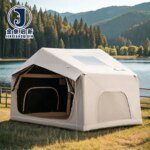


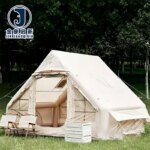
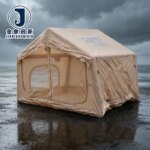

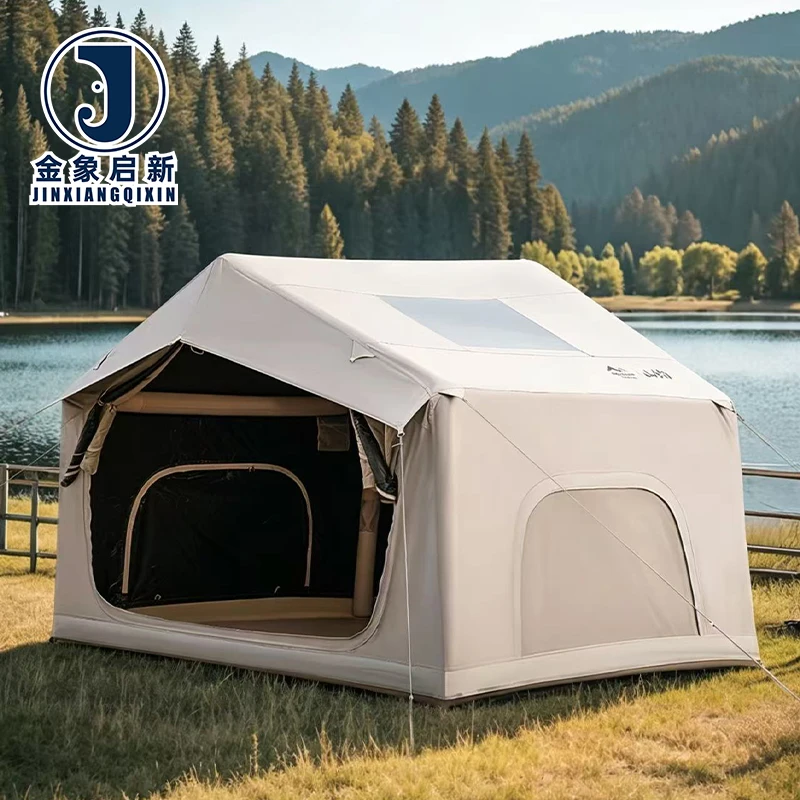
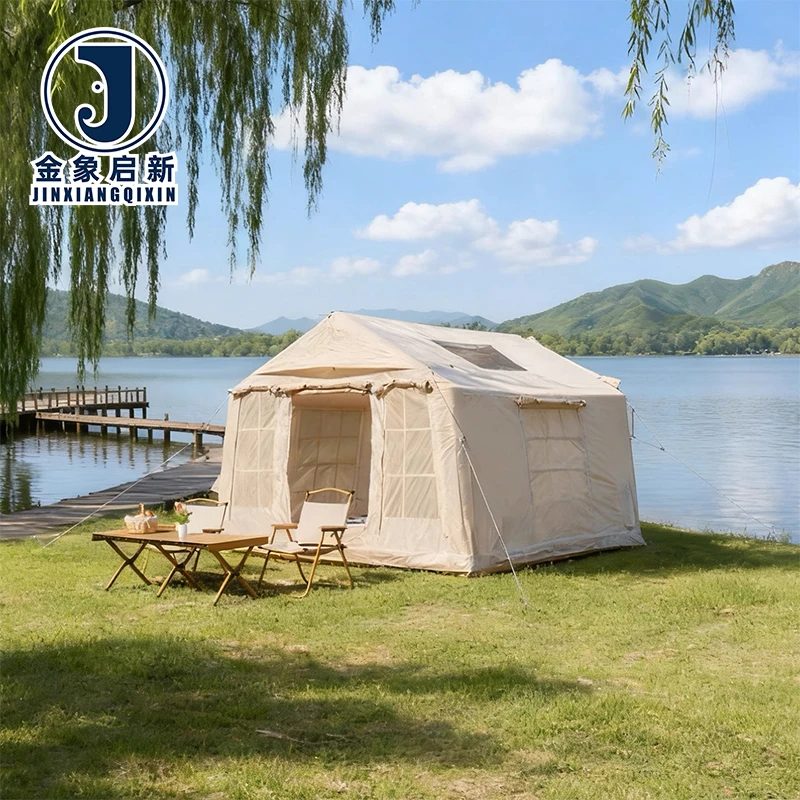
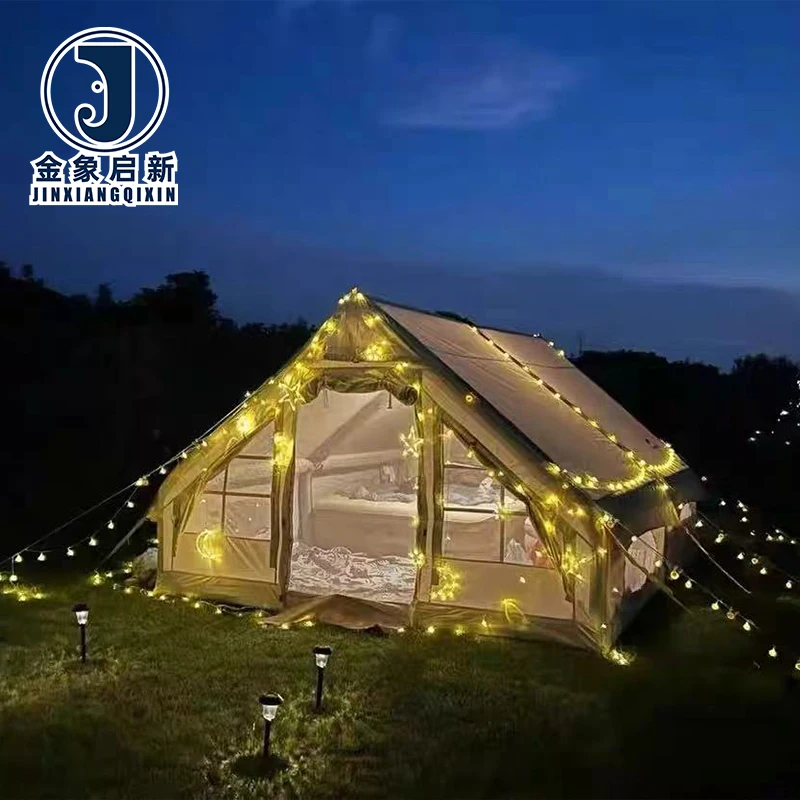
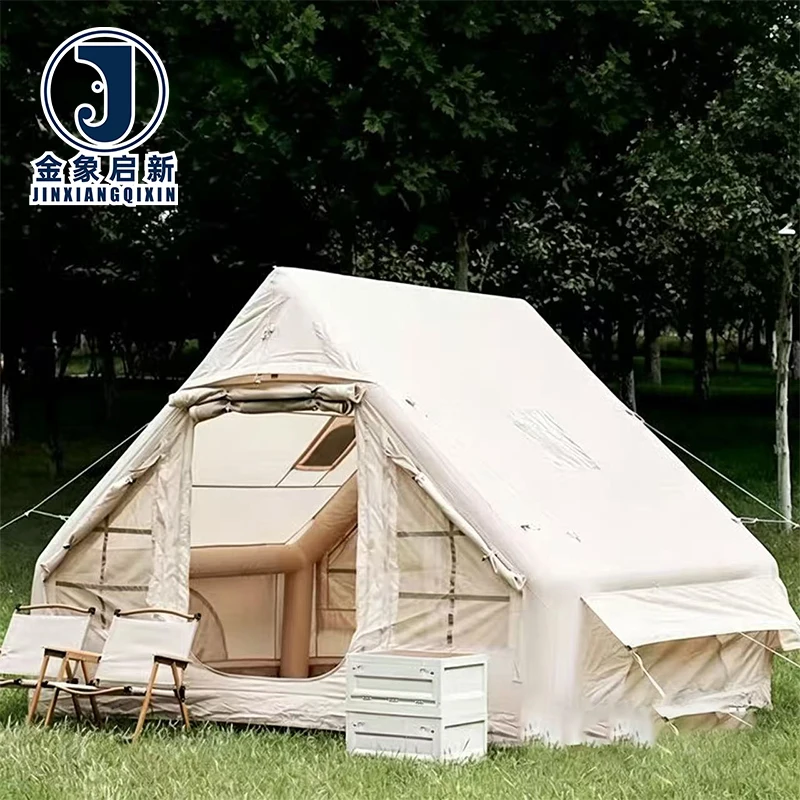
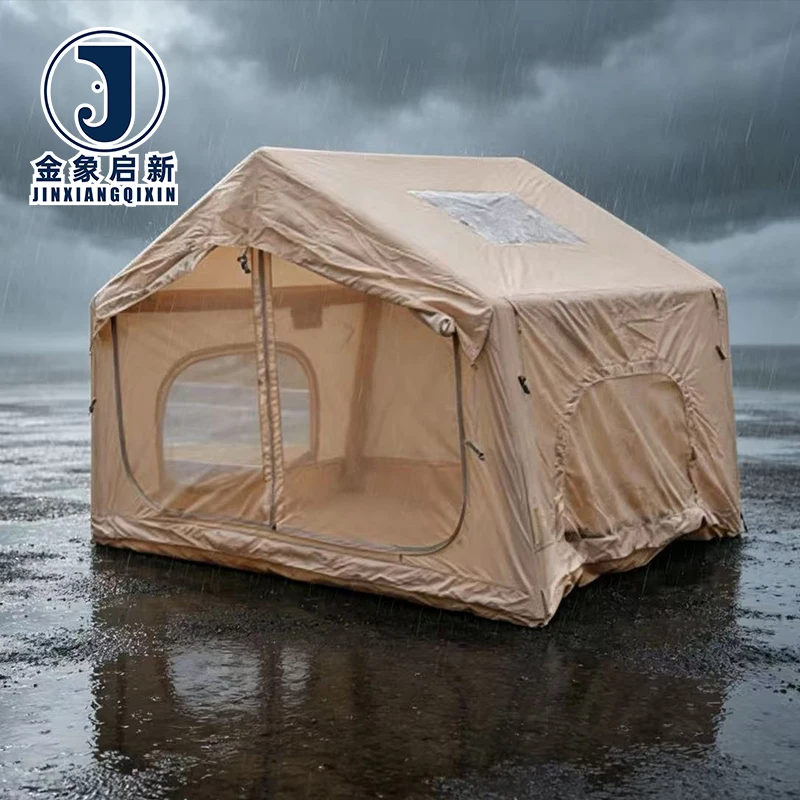
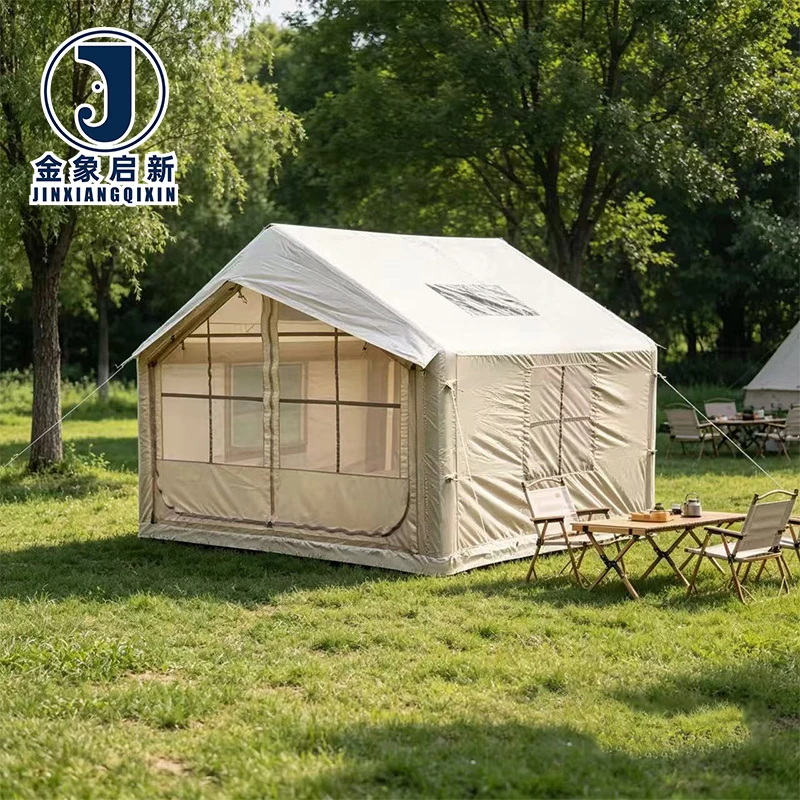
Process-Controlled Coating — every roll of inflatable tent fabric we ship carries a batch-specific QA record that tracks coating weight, adhesion and surface finish from the first metre to the last.
Technical Specifications
| Parameter | Value |
|---|---|
| Product Type | PVC Tarpaulin for Inflatable Tent |
| Core Material | PVC tarpaulin |
| Key Performance | Waterproof, tear-resistant |
| UV Resistance | Available with UV-resistant treatment — confirm the grade required for your market (test basis not stated in source) |
| Flame Retardancy | Available in flame retardant grades — confirm the grade required for your market |
| Anti-Static | Available in anti-static grades — confirm the surface resistance value required for your site |
| Customization | OEM & ODM including sample customization and pattern printing |
| Quality System | ISO 9001, ISO 14001, ISO 45001, CE certified production |
| Production Capacity | 3 full production lines, 36 sets of professional processing equipment |
| R&D Support | 10 technicians handling material selection and sample development |
Application Suitability
| Application | Exposure & Requirement |
|---|---|
| Commercial glamping equipment manufacturing | Repeated inflation/deflation cycles, outdoor UV and rain exposure, guest safety compliance, visible weld seam integrity |
| Temporary event and festival shelters | Rapid deployment and teardown, wind loading on inflated walls, crowd-proximity fire safety requirements |
| Construction site inflatable storage enclosures | Abrasion from stored materials, dust and moisture ingress, on-site fire code compliance for enclosed spaces |
| Aviation and mining ventilation structures | Fire-retardant and anti-static regulatory mandates, continuous air pressure on membrane panels |
Why PVC Tarpaulin for Inflatable Tent Fails — and What Specification Actually Prevents It
Welded seams that part under inflation pressure are almost always a coating adhesion problem, not a fabric weight problem.
Inflatable tent panels live under continuous positive pressure. Every seam is a stress concentration that flexes thousands of times across a single season. When the coating adhesion to the base fabric is inconsistent, the bond line degrades before the fabric itself, and the failure appears as a clean peel at the weld. This is the single most common field complaint I encounter when reviewing failed inflatable structures on site. [NEED_CITE: peel adhesion testing for coated fabrics per ISO 2411]
Specifying Inflatable Tent Fabric certified only by weight leaves the most critical variable — coating-to-yarn adhesion — completely uncontrolled. The PVC tarpaulin for inflatable tent aftermarket supplier you choose must demonstrate adhesion control as a measured parameter, not an assumed one.
Coating Adhesion and Heat Weld Performance
For inflatable tent manufacturing, the weld zone must carry the full inflation load without peeling. Coating adhesion strength determines whether a heat-welded joint holds under sustained internal pressure. On this PVC tarpaulin for inflatable tent material, coating weight and adhesion are controlled across each production run so that welding parameters set on the first roll remain valid on the last. This eliminates the trial-and-error recalibration that fabricators face when adhesion varies batch to batch.
Batch Consistency Across Multi-Roll Orders
When a glamping equipment manufacturer orders enough rolls to produce an entire season’s inventory, visible colour drift or GSM variation between rolls creates rejects on the cutting table. Our PVC tarpaulin for inflatable tent production runs through dedicated QA and QC checkpoints at every stage. Rolls from the same order are matched for colour and weight before dispatch, so panels cut from adjacent rolls install without visible mismatch. [NEED_CITE: colour measurement and batch matching standards for coated textiles]
Reading the Specification Sheet Correctly
GSM alone tells you nothing about the base fabric’s contribution to tear resistance. A PVC tarpaulin can carry a high coating weight while sitting on a loosely woven base scrim, producing a heavy but easily torn material. The interplay between base fabric denier, weave density, and coating penetration determines how a puncture propagates under inflation load. Similarly, surface finish — whether glossy or matte — is not purely cosmetic. Glossy surfaces shed water and dirt more readily but can show scuff marks on high-traffic glamping floors, while matte finishes diffuse light better for interior comfort. UV-resistant treatment and flame retardant grades are available — request the specific test report that matches your destination market before committing to a production run.
The Hidden Cost of Under-Specifying Inflatable Structure Fabric
Ordering material without verified fire-retardant documentation creates a project-stopping problem at the inspection stage. Mining and tunnelling sites enforce mandatory flame-retardant and anti-static compliance; arriving without matching test reports means the structure cannot be commissioned. Similarly, GSM stated on the quotation but not verified on delivery means the fabric may lack the tensile reserve to hold inflation pressure in wind. Batch colour variation across a single order forces the fabricator to either accept mismatched panels or scrap entire cuts, both of which erode margin far beyond the unit savings of a cheaper roll. [NEED_CITE: fire classification requirements for temporary membrane structures]
Why Source This PVC Tarpaulin for Inflatable Tent Here
Coating weight and adhesion are held within tolerance by a QA process that inspects every roll before it leaves the line — not a sampling protocol that checks one in ten. Three full production lines and 36 sets of processing equipment give the capacity to fill container-quantity orders without splitting across outsourced facilities where process control diverges. The 10-technician R&D team develops pre-production samples for custom thickness, colour and pattern printing requirements within days, so you validate the material against your welding setup before bulk commitment. ISO 9001, ISO 14001, ISO 45001 and CE certification underpin the management system, meaning documentation is traceable and auditable rather than reconstructed after the fact.
Documentation & Verification
- Material specification sheet confirming base fabric, coating type, and colour reference for each roll
- Fire-retardant and anti-static test reports matched to batch — request the grade your site requires
- Pre-shipment inspection record showing GSM verification per roll against the stated value
- ISO and CE certification documents supporting quality management system claims
- Certificate of origin and customs documentation for cross-border shipment
Fabrication, Handling & Storage
- Heat weld parameters must be validated on each new roll of PVC tarpaulin for inflatable tent before full-panel production begins
- Store rolls upright on pallets to prevent flat-spotting and coating crease marks that show through inflated panels
- Cut panels with clean blade tools to avoid frayed base fabric edges that compromise weld seam integrity
- Use compatible PVC-based repair patches matching the coating chemistry for on-site field repairs
- Avoid dragging rolls across abrasive surfaces during workshop handling to protect the coating finish
Request a Technical Proposal
To move from enquiry to sample, specify the inflation pressure your structure operates at, the fire-retardant or anti-static grade your destination market requires, and the roll width that fits your cutting table. Let us know if you need pattern printing or custom colour matching across a multi-roll order, and whether you require finished cut panels or raw roll stock. Pre-production samples are developed against your technical brief so you can validate weld settings and seam performance before committing to bulk volume.
Frequently Asked Questions
Q: What fire-retardant grades and anti-static surface resistance values are available for inflatable structure fabric?
A: Flame retardant and anti-static treatments are available across multiple grades. The specific grade required depends on your site’s regulatory framework — mining, aviation and tunnelling each enforce different standards. Request the test report that matches your compliance requirement, and we will confirm availability and lead time for that specification before you commit to a production order.
Q: How do you verify waterproof and UV-resistance performance with test documentation?
A: Waterproof performance is inherent in the PVC tarpaulin coated construction. UV-resistant treatment is available and can be supplied with supporting test documentation. Specify the UV stability level your application demands based on expected outdoor exposure duration, and we will match the treatment grade and provide the corresponding test report with your shipment.
Q: Can you supply material compliant with mining, tunnelling or aviation ventilation standards?
A: Fire-retardant and anti-static PVC tarpaulin for inflatable tent and ventilation structures can be produced to meet sector-specific compliance mandates. Provide the exact standard or surface resistance value your project specification calls for, and our R&D team will confirm the formulation and supply matching certification documentation with each delivery.
Q: What OEM and ODM customisation options exist for thickness, colour and pattern printing?
A: Full OEM and ODM capability covers custom thickness, colour matching and pattern printing on inflatable tent fabric. Our 10-technician R&D team develops pre-production samples so you can evaluate hand feel, weld behaviour and colour accuracy. Once approved, the confirmed specification is locked into the production run to ensure batch-to-batch consistency across your order volume.
Q: How is batch-to-batch consistency and colour uniformity controlled across large production runs?
A: Dedicated QA and QC staff inspect every roll at multiple production stages, not just at final packing. GSM is verified per roll, colour is matched across rolls within the same order, and coating adhesion is monitored to ensure welding parameters remain consistent. This prevents the visible mismatch and weld-line variability that causes rejects on the fabrication floor.