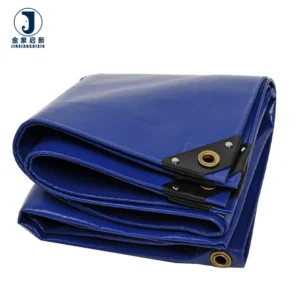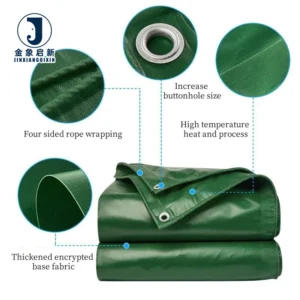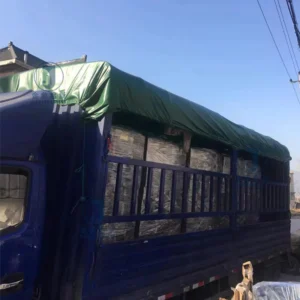

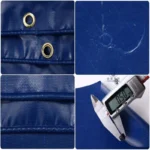
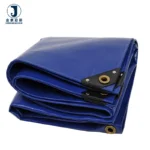
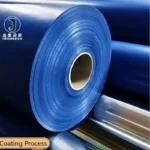
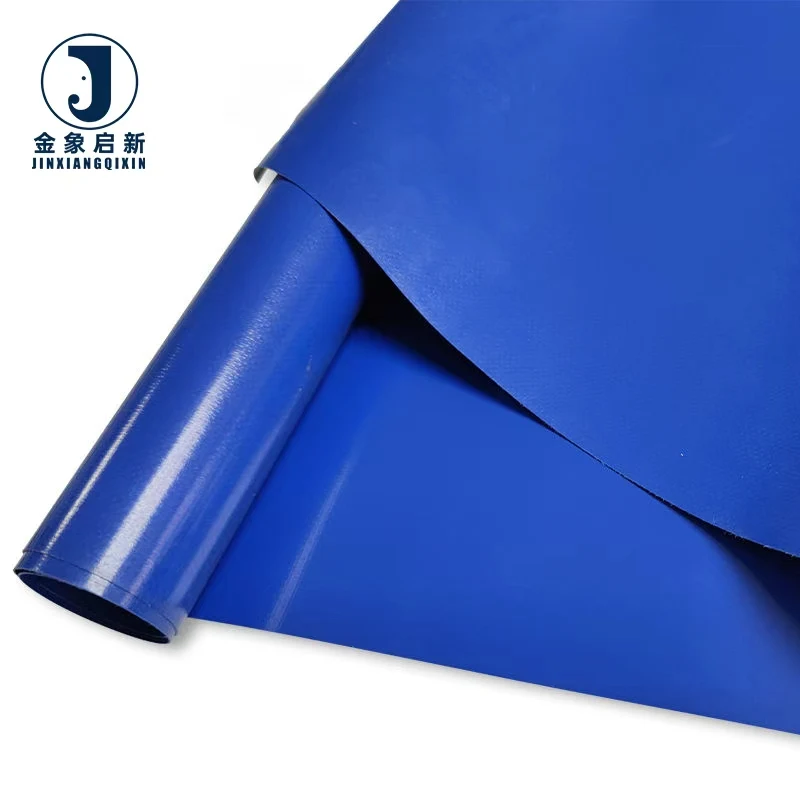
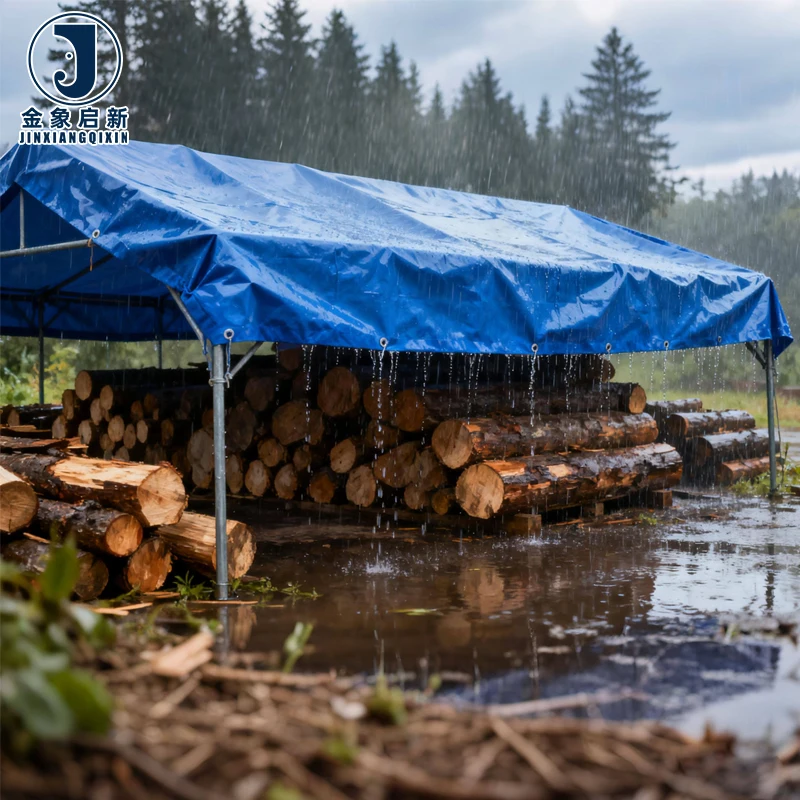
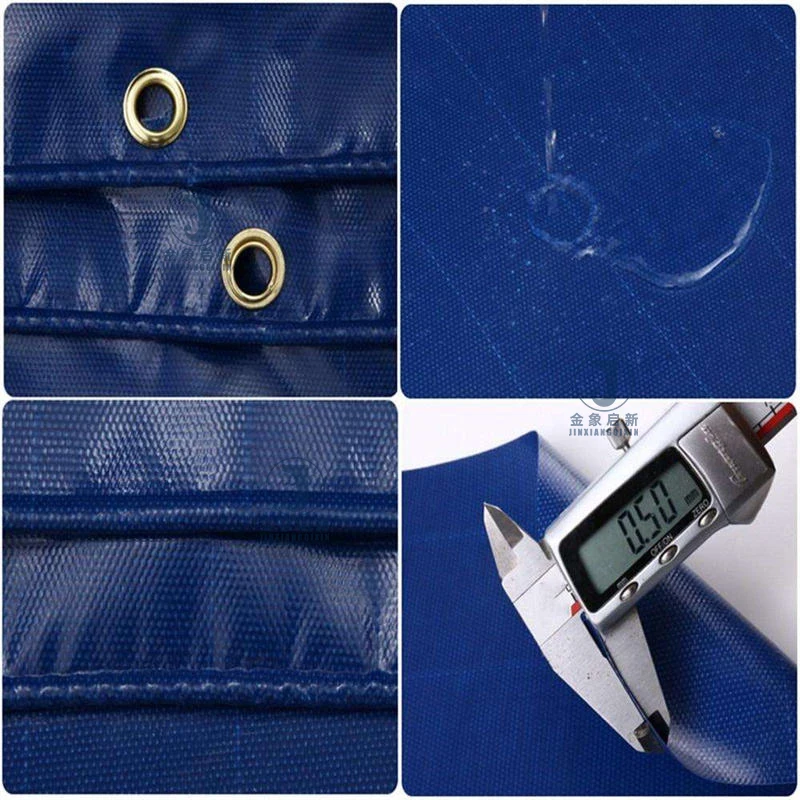
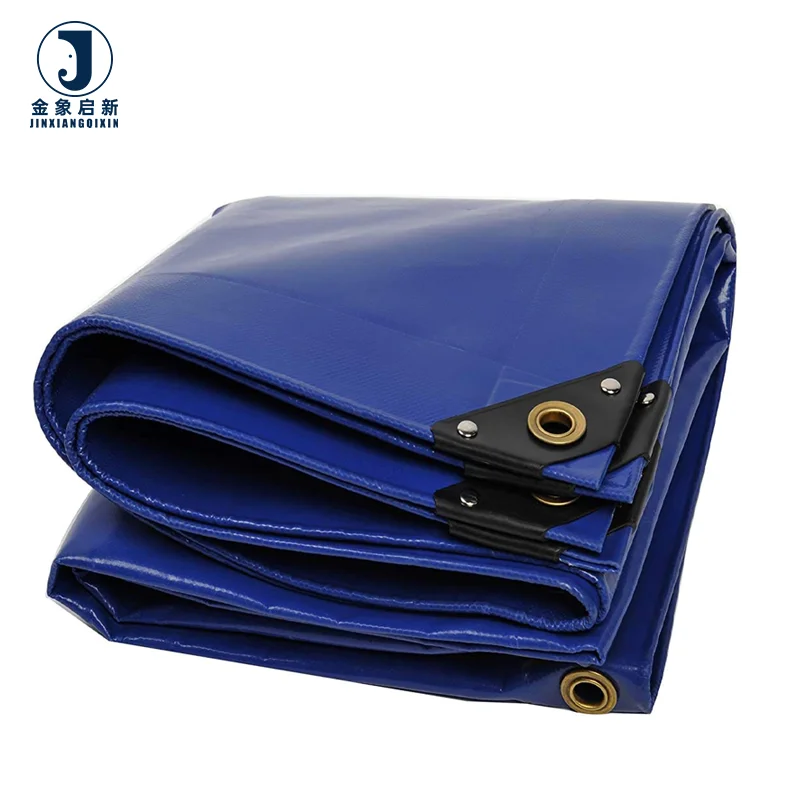
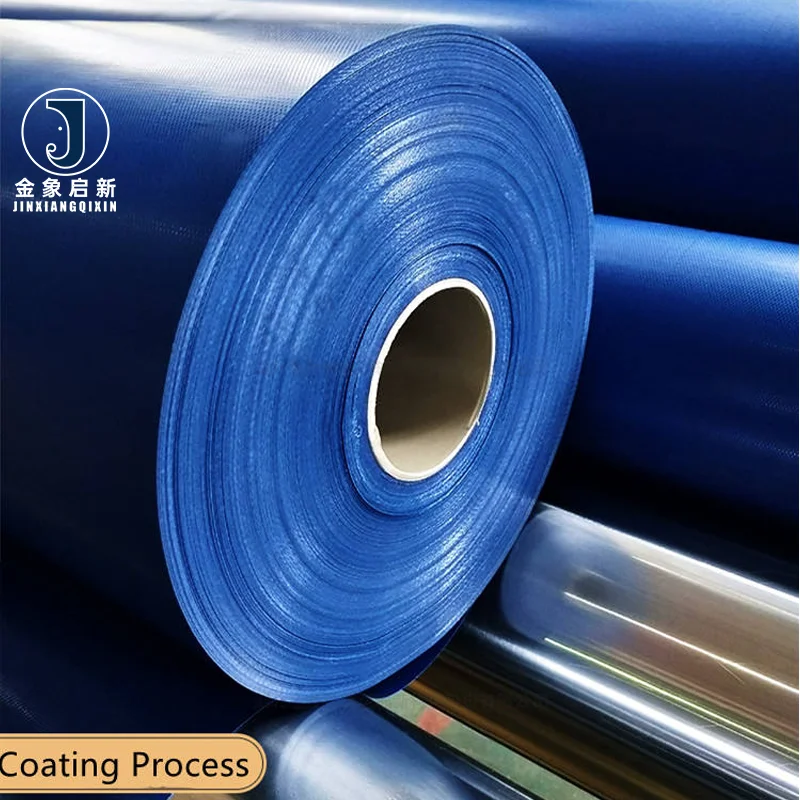
Deep Process Control Over Coating Weight and Adhesion — Nearly 30 years focused on coated fabric production, with dedicated QA/QC at every stage ensuring material integrity for industrial ventilation and specialist structure applications.
Technical Specifications
| Parameter | Value |
|---|---|
| Product Type | PVC Coated Tarpaulin Roll / PE Tarpaulin Roll |
| Coating Material | PVC dipping coating (PES) / LDPE lamination (PE variant) |
| Base Fabric Denier | 500D / 1000D / 500D-2000D |
| Weight (GSM) | 400-500 (medium) / 700-1000 (heavy-duty) / 1100-1500 (super heavy) / 50-220 (PE variant) |
| Total Thickness | 0.35-0.45 mm (medium) / 0.70-1.0 mm (heavy-duty) / 1.2-1.5 mm (super heavy) / 0.2-0.4 mm (PE) |
| Tensile Strength (N/5cm) | Warp 1500-2000 / Weft 1200-1800 (medium); Warp 2000-2500 / Weft 1800-2200 (heavy-duty); Warp 2500-3000 / Weft 2200-2800 (super heavy) (test basis not stated in source) |
| Roll Width | 2 m, 4 m, 6 m / 6 ft, 8 ft, 10 ft, 12 ft / Custom |
| Roll Length | 100 yards, 100 meters, or custom |
| Color Options | Blue, Blue/Orange, Green, Grey, Black, Clear, Grey/Green, Orange, or custom |
| Waterproof Rating | Fully waterproof coated construction |
| UV Treatment | Available (test basis not stated in source) |
| Flame Retardant Grade | Available in flame retardant grades — confirm the grade required for your market |
| Anti-Static | Available — confirm certification requirements for your application |
| Anti-Mildew | Mildew proof and anti-aging stated (test basis not stated in source) |
| Certification | ISO and CE certified facility |
Application Suitability
| Application | Exposure & Requirement |
|---|---|
| Mining and tunnelling ventilation ducts | Continuous airflow pressure, underground moisture, mandatory fire-retardant and anti-static compliance for site inspection |
| Inflatable and tensioned membrane structures | Sustained biaxial tension loads, wind uplift cycles, UV exposure on architectural and temporary shelters |
| Industrial pipe canopy and protective enclosures | Weather exposure, abrasion from wind-driven debris, thermal cycling on outdoor plant infrastructure |
| Aviation ground ventilation systems | Strict fire classification standards, fuel vapour exposure, static discharge control |
| Specialist fabric fabrication | Weld and seam integrity under flex cycles, roll-to-roll batch consistency for multi-panel assemblies |
Why Certification Gaps Halt Specialist Fabric Projects On Site
A ventilation duct or membrane structure fails inspection the moment the fire-retardant or anti-static certificate does not match the local regulatory standard.
Mining safety officers and aviation compliance teams do not accept generic "flame retardant" claims. They require test reports mapped to specific codes — NFPA 701, DIN 4102 B1, or regional mining ventilation regulations. When a PVC coated tarpaulin roll arrives on site without documentation that matches the specified grade, the entire installation stalls. [NEED_CITE: fire classification standards for textile materials in underground mining ventilation]
I have seen project timelines slip by weeks because the fabric supplier shipped material described as fire-retardant without attaching a grade-specific test report. The contractor had no basis to present to the safety auditor, and the duct fabrication had to pause pending verification. For PVC Coated Tarpaulin Roll used in regulated environments, the paperwork is as critical as the coating itself.
Selecting the Correct Weight Tier for Duct and Membrane Duty
The three-tier GSM structure — medium at 400–500 g/m², heavy-duty at 700–1000 g/m², and super-heavy at 1100–1500 g/m² — maps directly to the mechanical demands of different specialist applications. Flexible ventilation ducts for mining and tunnelling typically draw from the heavy-duty range, where the base fabric must resist internal air pressure without excessive stretch. Tensioned membrane panels for architectural or temporary shelters often require super-heavy grades to sustain biaxial loads under wind uplift. A PVC Coated Tarpaulin Roll chosen below the structural requirement will deform under sustained tension, compromising both the geometry and the seam integrity of the finished installation.
Base Fabric Denier and Its Role in Flex-Cycle Endurance
The denier range from 500D to 2000D determines how the base polyester weave behaves under repeated flex cycles — a factor that directly affects duct skin longevity in ventilation applications. Lower denier fabrics flex more readily and suit ducts that undergo frequent inflation and deflation cycles. Higher denier constructions resist creep under static loads, making them appropriate for membrane structures that remain tensioned for extended periods. The interaction between denier, knitting density, and PVC coating adhesion defines the tear propagation resistance at seam lines [NEED_CITE: tensile and tear test methods for coated fabrics per ISO 1421]. Specifying denier independently of the coating method risks selecting a fabric that performs well in tensile tests but fails at the weld line in service.
Reading GSM, Thickness, and Tensile Strength Together
GSM alone does not predict how a coated fabric will perform in a structurally loaded application. A 1000 g/m² PVC coated tarpaulin roll with low knitting density may weigh the same as a tighter weave at identical GSM, but the tighter construction delivers superior tear resistance at stress concentration points — exactly where ducts flex and membrane panels anchor. Thickness indicates coating mass above the base fabric; thicker coatings improve abrasion resistance and waterproofing but add stiffness that complicates fabrication on tight-radius duct bends. Tensile strength values across the medium, heavy-duty, and super-heavy grades show a progression from 1500 N/5cm warp up to 3000 N/5cm warp, reflecting the combined contribution of base fabric density and coating penetration. Engineers specifying material for tensioned structures should cross-reference all three parameters rather than selecting on GSM alone.
The Cost of Specifying the Wrong Grade for Regulated Installations
When a contractor installs ventilation duct fabric that lacks the required anti-static certification in an underground mining environment, the consequence is not a minor paperwork delay — it is a site shutdown until compliant material replaces the non-conforming installation. Similarly, membrane structures erected with fabric that does not carry the fire-retardant grade demanded by local building codes face demolition orders at the inspection stage. [NEED_CITE: compliance enforcement for textile materials in mining and construction ventilation]
Batch inconsistency compounds the risk: if multiple rolls in a single duct run show colour variation, the visual mismatch signals poor quality control to the inspector, triggering demands for additional test samples. Weld seams that fail before the fabric body indicate a mismatch between the heat-sealing parameters and the actual coating thickness — a problem that surfaces only after the duct is pressurised in service.
Why Procurement Through This Facility Supports Specialist Compliance
Three full production lines and 36 sets of professional equipment provide the capacity to supply long continuous rolls — up to 6 m wide and 100 m long — reducing the number of field welds in large duct runs and membrane panels. The 10-person R&D team handles material selection matched to specific compliance environments, recommending base fabric denier and coating weight combinations that align with the structural calculations for your project.
Dedicated QA/QC inspection at every production stage, with 100% pre-shipment inspection records, means the GSM stated on your quotation is verified against physical roll weight before dispatch. Samples for custom width, colour, and treatment requirements are developed within days, allowing you to validate weld behaviour and coating adhesion before committing to a production run. [NEED_CITE: pre-shipment inspection protocols for industrial coated fabrics]
Documentation & Verification
- Material specification sheet stating base fabric denier, coating method, and confirmed GSM per roll
- Test reports for flame-retardant and anti-static grades matching the standard required by your site authority
- ISO and CE certificates confirming facility-level quality management compliance
- Pre-shipment inspection record with weight verification against quoted GSM for every roll
- Roll packing list with individual roll dimensions and batch traceability codes
- Certificate of origin and customs documentation for cross-border project delivery
Fabrication, Handling & Storage
- Heat-seal parameters must match the specific PVC coating thickness — thicker super-heavy grades require adjusted dwell time and pressure to achieve full weld penetration without burning through the base fabric.
- Store rolls horizontally on padded racks to prevent creasing; creases in heavy-duty grades become permanent deformation lines visible on tensioned membrane panels.
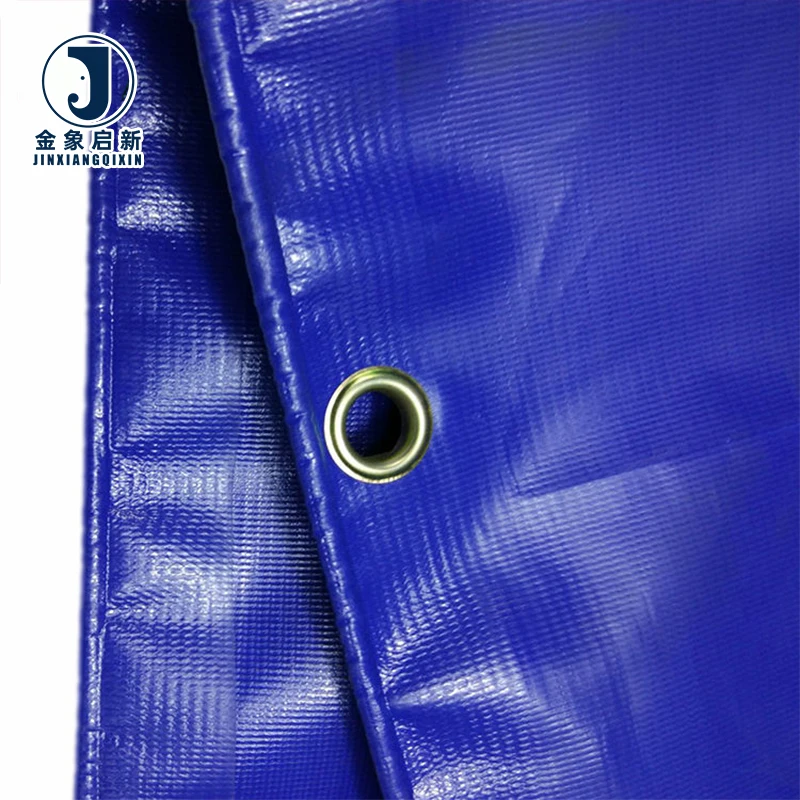
- Galvanized eyelets at 1 m intervals and PP rope-reinforced hems distribute load at anchor points — verify eyelet pull-through strength matches the design load for your structure.
- Unroll heavy-grade material in ambient temperatures above 10°C to avoid coating micro-cracking; cold PVC becomes brittle and fractures at fold lines during handling.
- Custom brand printing on PVC coated surfaces requires solvent-based inks compatible with the coating formulation — confirm ink adhesion with a test print before full production.
- Field repairs on PVC coated tarpaulin rolls should use compatible PVC adhesive patches; LDPE-coated PE variants require different repair chemistry and will not bond with PVC repair kits.
Requesting a Specification Match for Your Project
Provide the target fire-retardant or anti-static standard required by your site authority, along with the structural load calculations for your duct or membrane installation. Specify the roll width and length that minimises field welds in your panel layout, and indicate whether you require finished cut sizes with eyelets and reinforced hems or raw roll stock for in-house fabrication. If colour consistency across multiple rolls is critical for visible membrane panels, request batch samples before confirming production volume.
Frequently Asked Questions
Q: Which fire-retardant standards apply to mining and aviation ventilation duct fabric?
A: Requirements vary by jurisdiction and site operator. Common standards include DIN 4102 B1 for European construction and mining applications, NFPA 701 for North American installations, and local mining authority specifications for underground use. Confirm the exact standard with your site safety officer before ordering, and request a grade-specific test report with your PVC Coated Tarpaulin Roll shipment.
Q: How is anti-static compliance verified for underground ventilation duct installations?
A: Underground mining regulations typically specify a maximum surface resistivity value for ventilation duct fabric to prevent static discharge in potentially explosive atmospheres. Request the surface resistivity test report for the anti-static grade you are considering, and verify that the reported value falls within your site authority’s acceptable range before approving material for production.
Q: How can I confirm the actual GSM matches the specification on delivery?
A: Every roll undergoes weight verification as part of the 100% pre-shipment inspection process. On receipt, you can independently verify by cutting a measured sample from the roll edge and weighing it to calculate grams per square metre. The pre-shipment inspection record supplied with your documentation provides the baseline measurement for comparison.
Q: What are the key welding considerations for duct and inflatable structure fabrication?
A: Coating thickness and method directly affect heat-sealing parameters. PVC dipping coated fabric requires different temperature and dwell settings than LDPE laminated PE variants. Super-heavy grades with thicker coatings need higher energy input for full weld penetration. Always run test welds on sample material and perform peel tests to confirm seam strength before beginning full production.
Q: What lead times apply to custom width and specialist grade rolls?
A: Custom widths up to 6 m and specialist treatments such as specific flame-retardant grades require dedicated production scheduling. Lead times depend on the grade, treatment combination, and order volume. Request a timeline quotation with your specification, and order batch samples early to allow time for fabrication trials before the main production run.