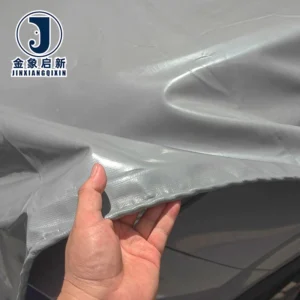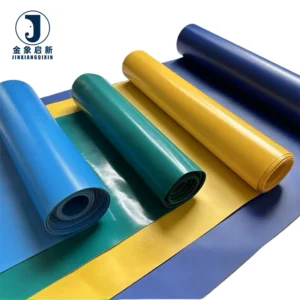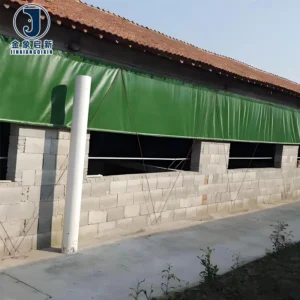

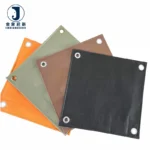
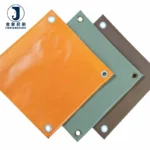
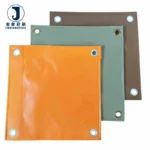
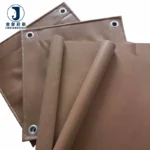
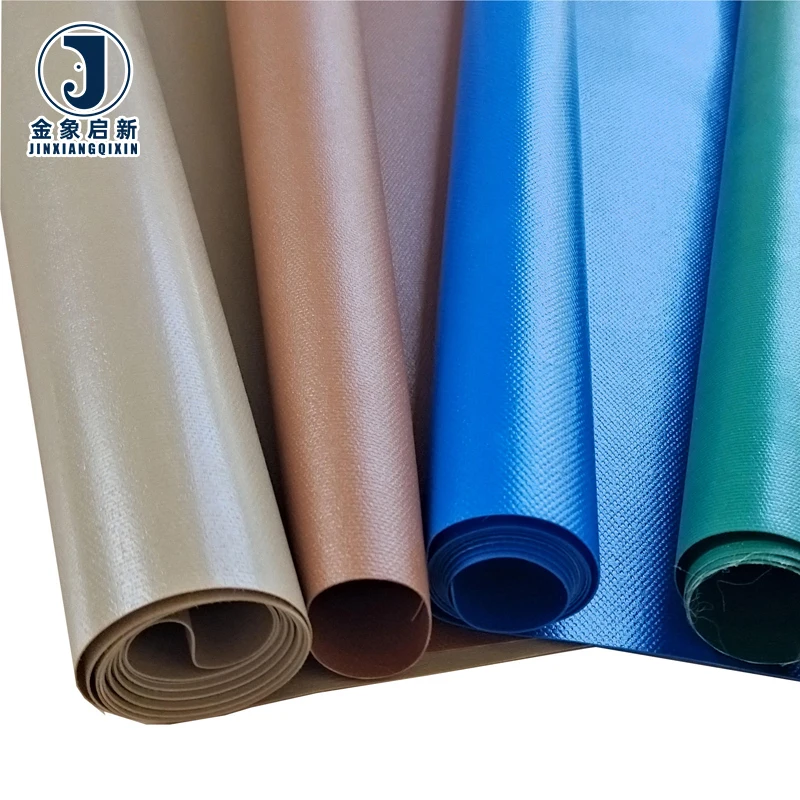
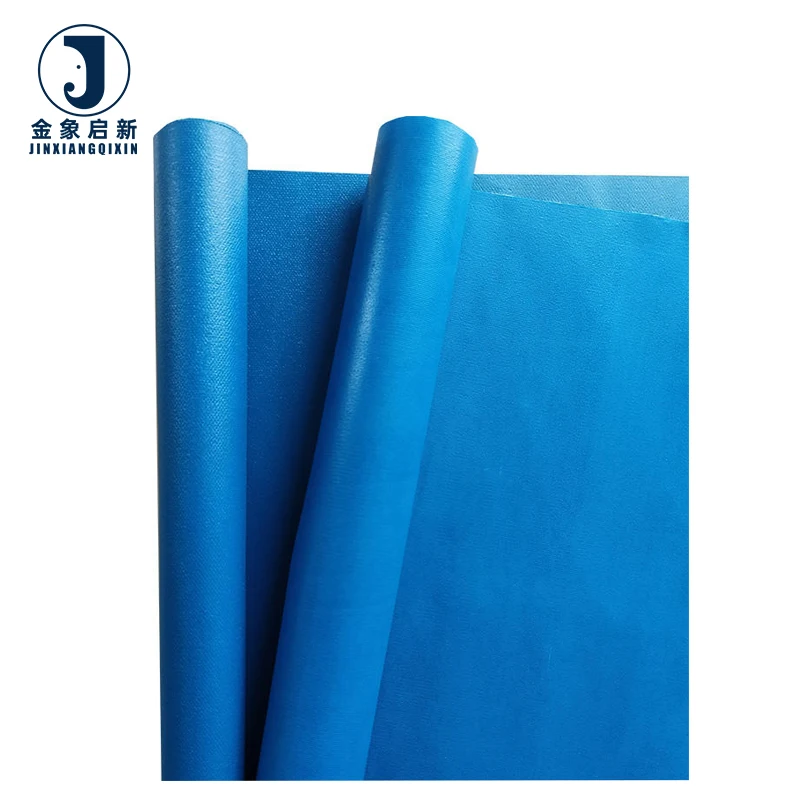
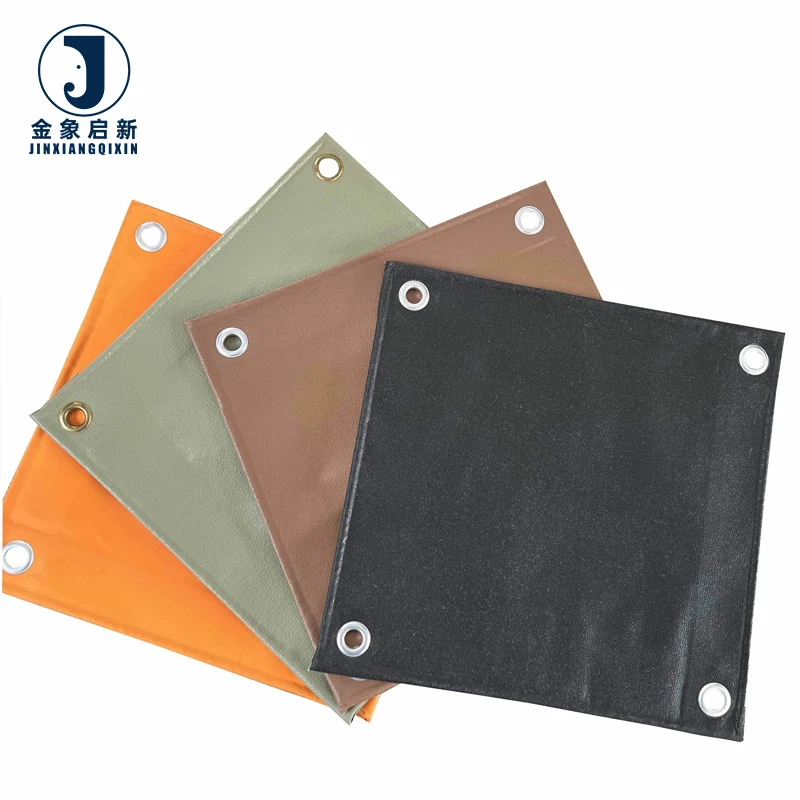
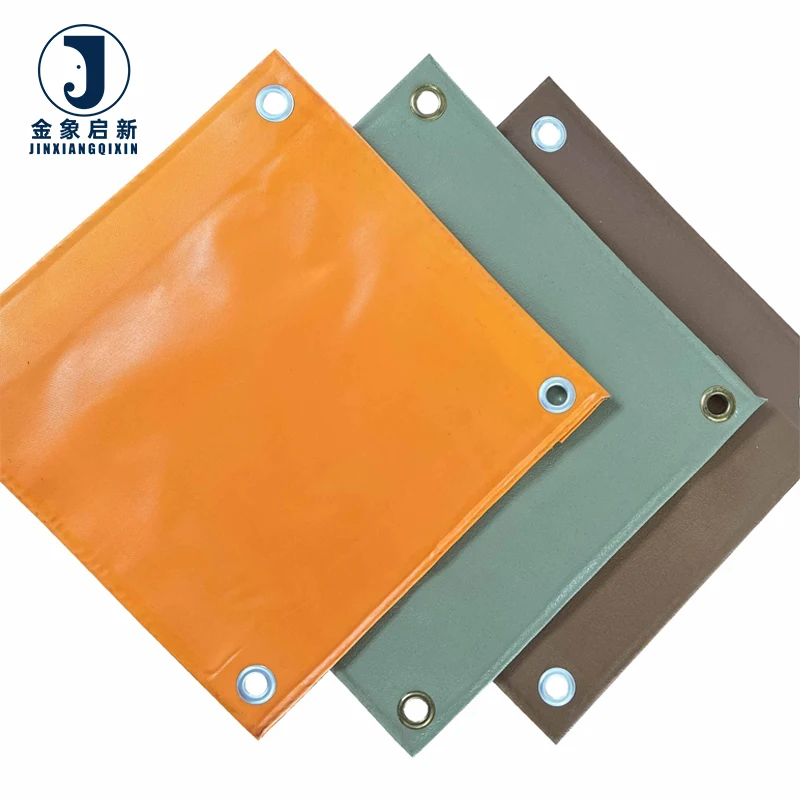
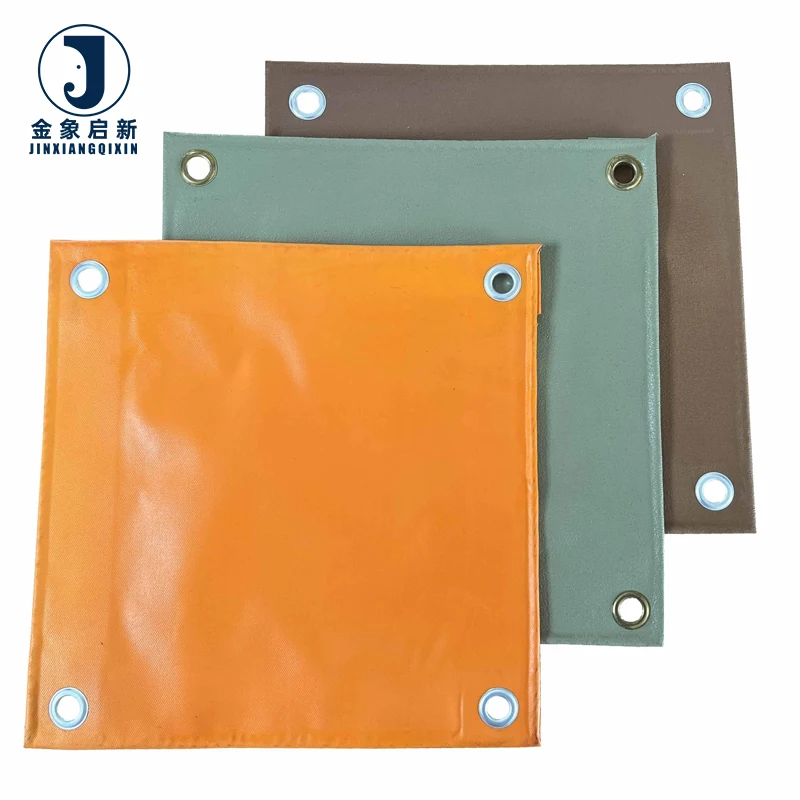
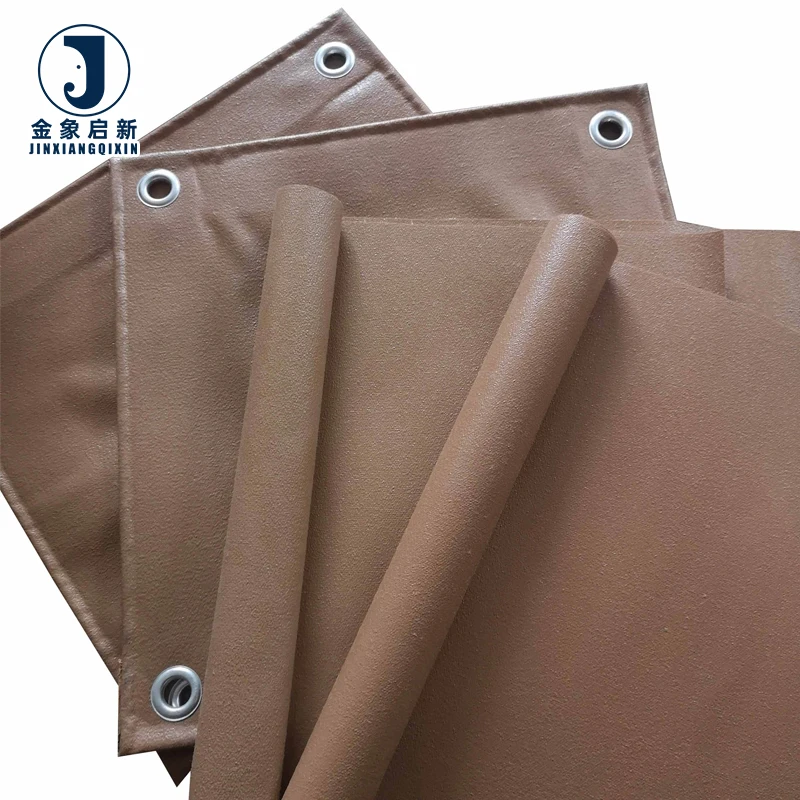
Technical Fabric Accountability — every roll dispatched with documentation that site inspectors can verify, not just marketing claims on a data sheet.
Technical Specifications
| Parameter | Value |
|---|---|
| Product Type | PVC Coated Tarpaulin |
| Weight | 500gsm |
| Base Fabric | 1000D polyester |
| Waterproof Rating | anti-permeable ≥20KPa |
| Flame Retardant | ≤10 seconds (confirm grade and test standard per order) |
| Low-Temperature Flexibility | -30°C, no fracture under plier bend |
| Coating Method | High-frequency heat combined |
| Water Absorption | Almost no absorbable water, quick drying |
| Corrosion Resistance | Acid, alkali, brine (test standard available on request) |
| Mildew Resistance | Mildew proofing treatment applied (test basis available on request) |
| Seam Integrity | High-frequency heat combined, water tight, will not crack |
Application Suitability
| Application | Exposure & Requirement |
|---|---|
| Mining ventilation duct | Continuous airflow, fire-retardant and anti-static compliance mandatory on site, mechanical abrasion from suspended installation |
| Tunnelling ventilation system | Confined environment, strict flame-retardant documentation required by safety authorities, high humidity exposure |
| Aviation temporary enclosures | Rapid deployment, weather exposure, documented material certification for airfield compliance |
| Membrane and inflatable structures | Tension loading on fabric, high-frequency welded seams under constant stress, UV and weather exposure |
| Industrial temporary shelters | Wind loading, chemical environment, requirement for documented material properties for site approval |
Why Documentation Matters More Than a Data Sheet Claim for PVC Tarpaulin Roll Fire Retardant and Anti-Static Compliance
A flame-retardant claim without a named grade and test standard is not compliance — it is a liability waiting to be discovered at site inspection.
Contractors in mining, tunnelling and aviation regularly specify ventilation duct and enclosure fabric based on supplier assurances, only to discover during site audit that the fire-retardant certification does not match the local regulatory framework. The fabric may perform adequately in a lab test, but if the test standard is not the one your safety officer or client requires, the entire installation can be rejected. I have reviewed rejected shipments where the material itself was sound, but the accompanying test report referenced a standard that the project specification did not accept [NEED_CITE: fire classification standards for ventilation duct materials in underground mining].
Certification Traceability from Roll to Project File
When sourcing PVC tarpaulin roll for technical applications, the chain of evidence must run from the coating line through to the project compliance file. This means the material specification sheet must state the exact test standard — whether M2, B1 per DIN 4102, NFPA 701 or another framework — and the test report must be traceable to the specific production batch. Suppliers who provide only a generic statement of flame-retardant behaviour leave the fabricator exposed at the point where compliance is verified. We provide the test report that names the grade and standard, matched to the batch number on your packing list.
Anti-Static Requirements for Underground and Confined-Space Ductwork
Anti-static treatment is not a single specification. Surface resistivity standards differ between mining jurisdictions, and the acceptable range must be stated in the project specification before production begins. For mining and tunnelling ventilation duct, we confirm the required surface resistance range and supply the corresponding test documentation [NEED_CITE: anti-static surface resistance standards for underground ventilation fabric]. This prevents the situation where duct is installed and then must be removed because the static dissipation rate does not meet the site safety authority’s threshold.
Seam Behaviour Under Continuous Air Pressure and Flex
Ventilation duct fabric operates under constant internal pressure and is subject to movement from ventilation cycles and mechanical handling. High-frequency heat-combined seams on this 500gsm PVC coated tarpaulin produce a water-tight bond that does not crack under repeated flex, which is critical where duct sections are suspended and subject to vibration. Stitched seams in duct applications create needle holes that compromise both air retention and flame-retardant continuity at the join — a failure mode that becomes apparent only after the duct has been pressurised over time.
How Base Fabric Denier and Coating Weight Determine Real-World Performance
The 1000D base fabric provides the structural backbone, while the 500gsm total weight reflects the combined mass of yarn and PVC coating. A higher denier base fabric resists tear propagation because the individual yarns are thicker and require more energy to break, but denier alone does not determine tensile strength — the weave density (ends and picks per centimetre) controls how load is distributed across the fabric. The coating weight determines waterproof integrity, abrasion resistance at contact points and the thickness available for a high-frequency weld to penetrate. When evaluating PVC tarpaulin roll for technical applications, requesting the base fabric specification alongside the total GSM allows you to understand whether the weight is carried in the yarn structure or predominantly in the coating layer [NEED_CITE: relationship between base fabric denier, weave density and coated fabric tensile performance per ISO 1421].
The Cost of Specification Gaps in Technical Fabric Procurement
When a ventilation duct is fabricated and installed without verified fire-retardant documentation, the financial exposure extends well beyond the material cost. Removal and reinstallation of duct in an active mining or tunnelling operation involves downtime that compounds daily. Similarly, when multiple rolls are ordered for a membrane structure and colour varies between batches, the visual inconsistency becomes apparent only after panels are welded side by side at height — at which point selective replacement disrupts the entire installation sequence. We address these risks through 100% pre-shipment inspection and roll-to-roll consistency checks before container loading.
Specification Errors That Surface After Installation
A roll that arrives lighter than the quoted 500gsm may still be waterproof, but the reduced coating thickness compromises abrasion resistance at suspension points and reduces the material available for a reliable high-frequency weld. In membrane and inflatable structure applications, underweight coating can also mean lower resistance to UV degradation over time, though this failure mode develops gradually and is difficult to attribute without batch-level UV test data. Flame-retardant grades claimed without a supporting test report create a different category of risk: the fabric may pass one standard but fail the one your project actually specifies, and this discrepancy is typically discovered during compliance audit rather than at the point of delivery [NEED_CITE: common causes of coated fabric specification non-compliance in industrial ventilation projects].
What We Bring to Technical Fabric Orders
Three full production lines and 36 sets of professional equipment support the volume requirements of ventilation duct and membrane structure projects without sacrificing the process control needed for consistent coating weight and adhesion. The 10-person R&D team handles material selection for projects that demand specific fire-retardant grades, anti-static ranges or low-temperature flexibility, developing samples within days so that fabricators can confirm weld parameters and drape behaviour before committing to production volume. Dedicated QA/QC at every production stage, with 100% inspection before shipment, means the roll that arrives at your fabrication facility matches the specification sheet that accompanied your order.
Documentation & Verification
- Material specification sheet stating 500gsm, 1000D base fabric and coating weight per roll
- Flame-retardant test report naming the specific grade and standard applicable to your project
- Pre-shipment inspection record with GSM verification and roll-to-roll colour consistency check
- Certificate of origin and customs documentation package for international dispatch
- UV and mildew resistance test basis documented where treatment is specified
Fabrication, Handling & Storage
- High-frequency welding parameters should be calibrated to the 500gsm coating thickness for full bond penetration without scorch
- Store rolls horizontally on padded racking to prevent permanent creasing in the PVC coating layer
- Allow rolls to acclimatise before unrolling in cold conditions, as the -30°C flexibility rating applies to the installed state
- Use compatible PVC-based repair patches and solvent cement for field repairs on duct seams
- Plan panel cutting layout to minimise offcuts, accounting for the roll width and weld seam allowance
How to Scope Your Technical Fabric Inquiry
Provide the application type, operating environment and any fire-retardant or anti-static standards your project specification mandates, along with the required roll width and estimated annual volume. If your fabrication process relies on specific weld parameters or the end use demands a confirmed low-temperature flexibility threshold, state these requirements so that sample development can address them directly. We will respond with a material specification sheet, available test documentation and lead time for your review before sample approval.
Frequently Asked Questions
Q: Which flame-retardant standard can you certify this 500gsm PVC tarpaulin roll against?
A: We supply test reports against multiple frameworks including M2, B1 per DIN 4102 and NFPA 701. Specify the standard required by your project or local authority, and we will confirm the matching grade and provide the test report with your batch documentation.
Q: How do you verify 500gsm weight before shipment and what record do I receive?
A: Every roll undergoes GSM verification during our 100% pre-shipment inspection. You receive an inspection record documenting the measured weight against the stated 500gsm specification, included with the packing list and dispatched alongside your order.
Q: What anti-static surface resistance range is available for mining ventilation duct?
A: Anti-static treatment is formulated to meet the surface resistance range specified in your project documentation. Provide the required standard or resistance range, and we will confirm formulation suitability and supply the corresponding test report with your shipment.
Q: Can high-frequency welding be used on this 500gsm material for duct fabrication?
A: Yes. The high-frequency heat-combined coating method produces seams that are water tight and resistant to cracking under flex. We recommend weld parameter trials on the sample we provide to confirm optimal settings for your specific equipment and duct construction method.
Q: What is the minimum order for custom width or colour on technical fabric rolls?
A: Minimums depend on the specific width, colour and treatment combination. Provide your required specification and annual volume, and we will confirm the minimum order quantity and lead time alongside the material specification sheet and sample availability.