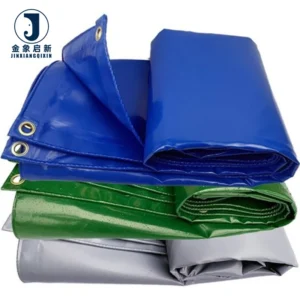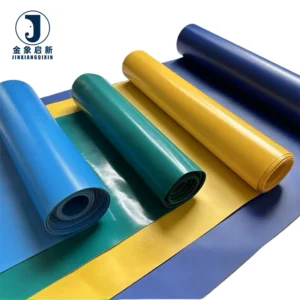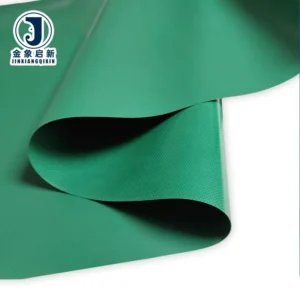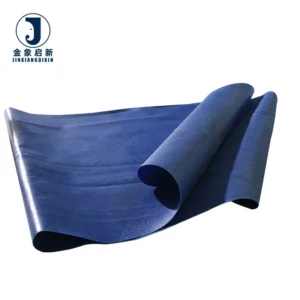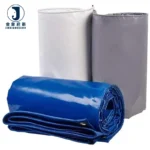
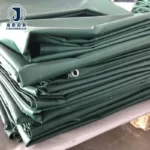
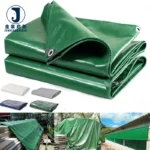
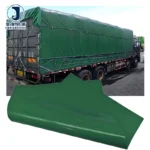
Coated Fabric Expertise — nearly three decades of process control over PVC coating weight and adhesion, applied to industrial air duct and specialist structure fabric production.
Technical Specifications
| Parameter | Value |
|---|---|
| Product Type | PVC Coated Tarpaulin |
| Coating Material | PVC |
| Waterproof | Yes |
| Anti-Shrink | Yes |
| Flame Retardant Grade | Available in flame retardant grades — confirm the grade required for your market |
| UV Treatment | UV-resistant formulation available — test basis to be confirmed per order |
| Application Grade | Industrial heavy duty |
| Certification | ISO, CE |
Application Suitability
| Application | Exposure & Requirement |
|---|---|
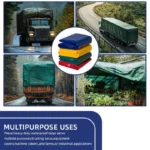
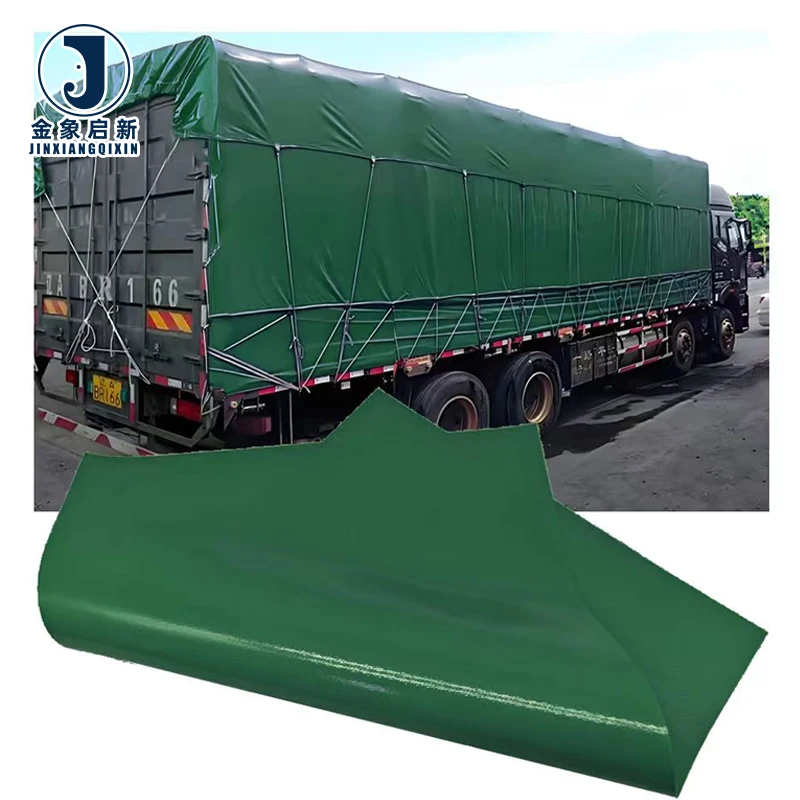
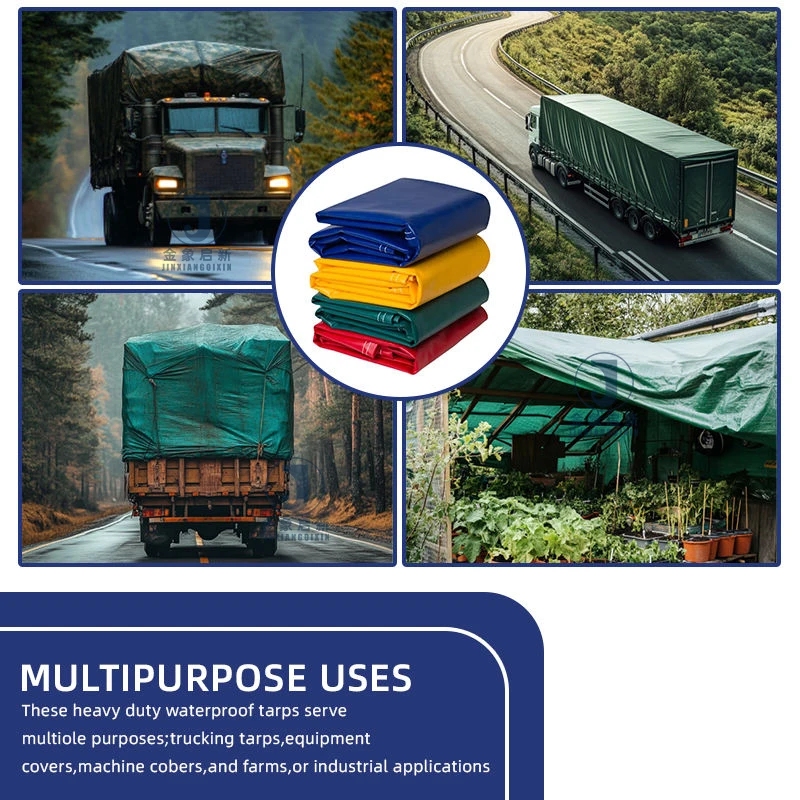
| Truck side curtain and lorry cover | Constant flexing at tie-down points, road debris abrasion, prolonged UV and weather exposure |
| Mining and tunnel ventilation duct wrapping | Fire-retardant and anti-static compliance, abrasive dust, mechanical handling stress |
| Tent and temporary structure fabric | Wind loading, repeated erection and dismantling, seasonal UV exposure |
| Industrial equipment and load cover | Outdoor weathering, chemical splash risk, puncture from sharp edges |
| Inflatable and membrane structure | Air pressure tension, seam integrity under sustained load, UV stability |
Why Flame Retardant Claims Without a Grade Cause Site Rejection
A fabric described as "flame retardant" means nothing at the inspection gate without a test report naming the standard and grade achieved.
Mining and tunnelling contractors regularly face the situation where ventilation duct or protective cover arrives on site, but the safety officer rejects it because the supplier provided no verifiable fire classification document. The PVC coated tarpaulin fire retardant specification must reference a recognized standard — whether M2, B1, or NFPA 701 — and the test report must trace back to the batch delivered. [NEED_CITE: fire classification standards for coated fabrics in mining ventilation] Without that documentation, the material sits idle while the project clock runs, and replacement orders add weeks of delay.
Airflow Containment and Duct Integrity
Industrial ventilation systems in mining, aviation maintenance, and tunnelling depend on fabric that holds its shape under sustained negative or positive pressure. This PVC coated tarpaulin is produced with coating weight and base fabric adhesion controlled throughout the run, so the material does not delaminate when the duct flexes under airflow variation. The anti-shrink treatment maintains dimensional stability across the temperature swings encountered between surface installations and underground workings.
Fire and Static Compliance for Regulated Environments
In underground mining and confined-space construction, ventilation fabric must meet both fire-retardant and anti-static thresholds before it passes the site safety audit. This PVC coated tarpaulin fire retardant option is available with documented test results — the grade and the standard are stated on the report that ships with the roll. [NEED_CITE: anti-static surface resistance requirements for underground ventilation ducts] Buyers specifying fabric for aviation fuel-handling areas or grain-storage ventilation should confirm the exact classification their local regulation demands before placing the order.
How Base Fabric and Coating Weight Interact
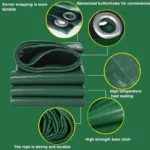
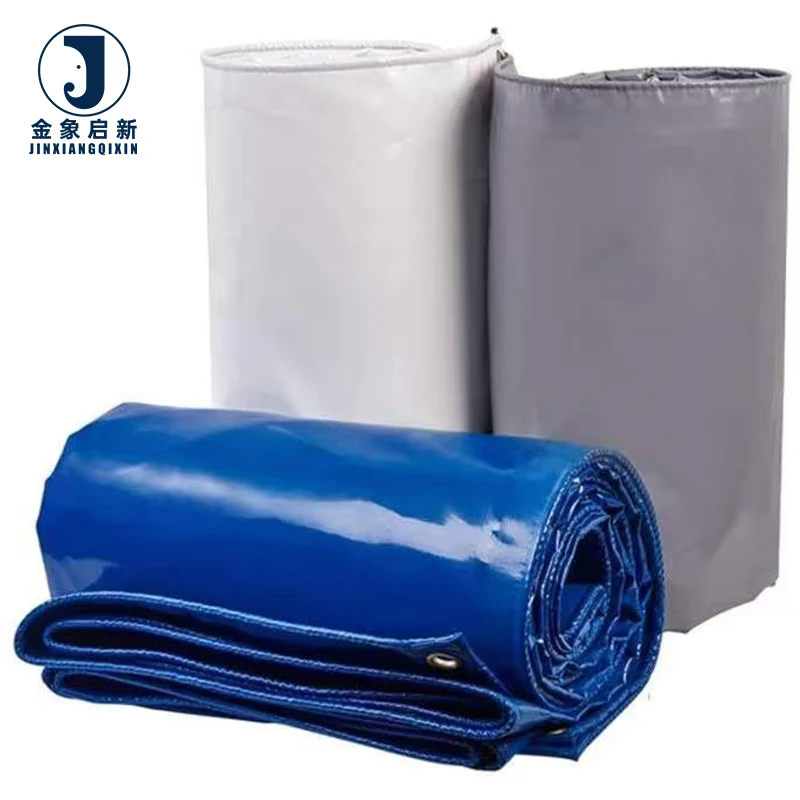
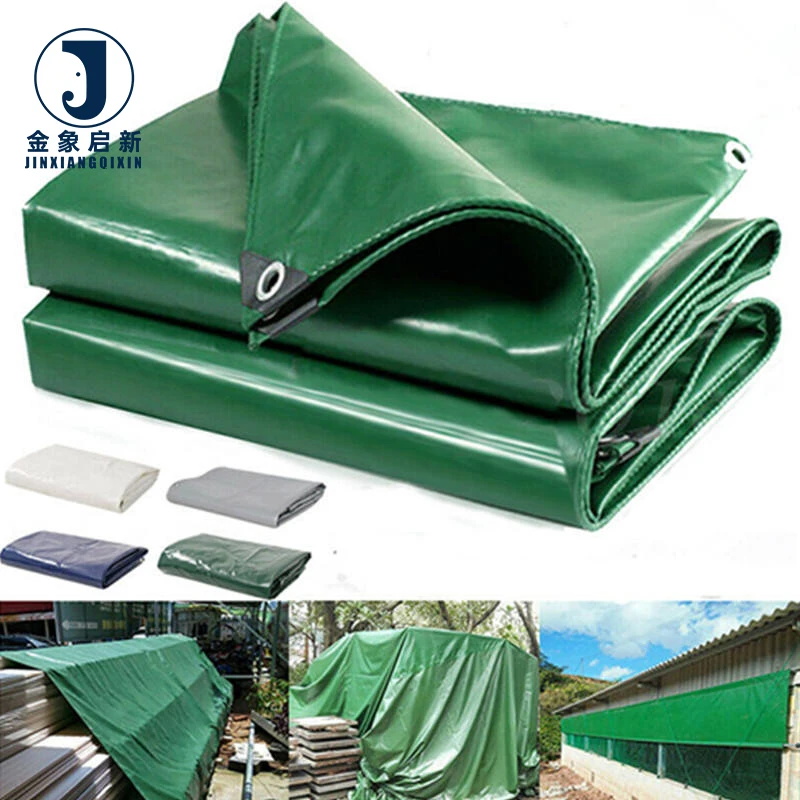
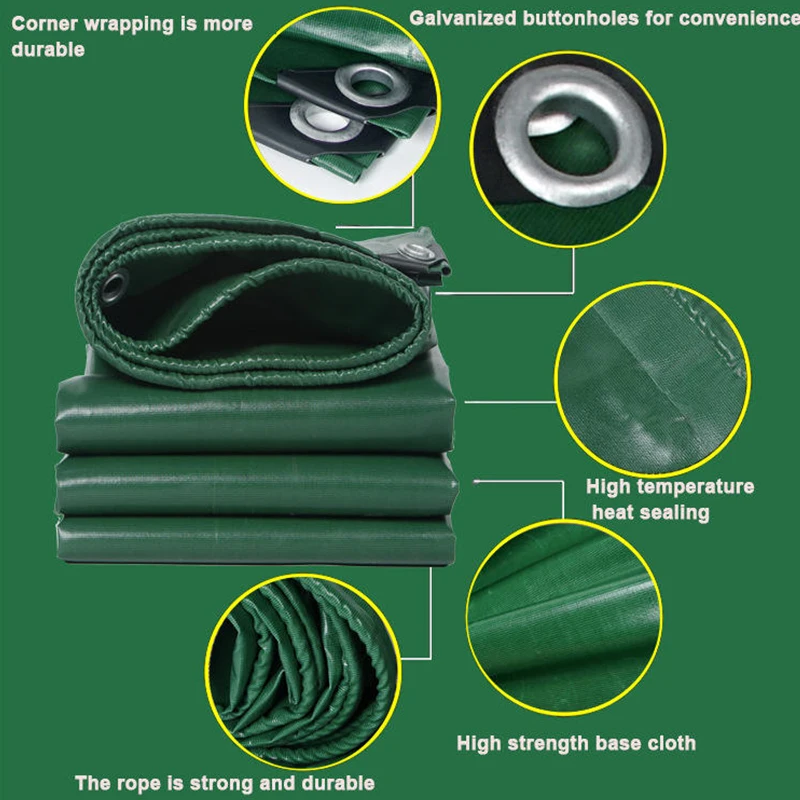
The tensile and tear performance of any PVC coated tarpaulin depends on the combined effect of base fabric denier, weave density, and coating weight — not on GSM alone. A heavier coating does not compensate for a loosely woven base when the material is subjected to point-load tearing at seam lines. The knife-coated or laminated construction method also determines peel strength, which directly affects how well heat-welded seams hold under the cyclic loading that truck side curtains and duct joints experience in service. Glossy surfaces shed dust and moisture more readily, while matte finishes reduce glare in temporary structure applications.
What Happens When the Specification Is Wrong
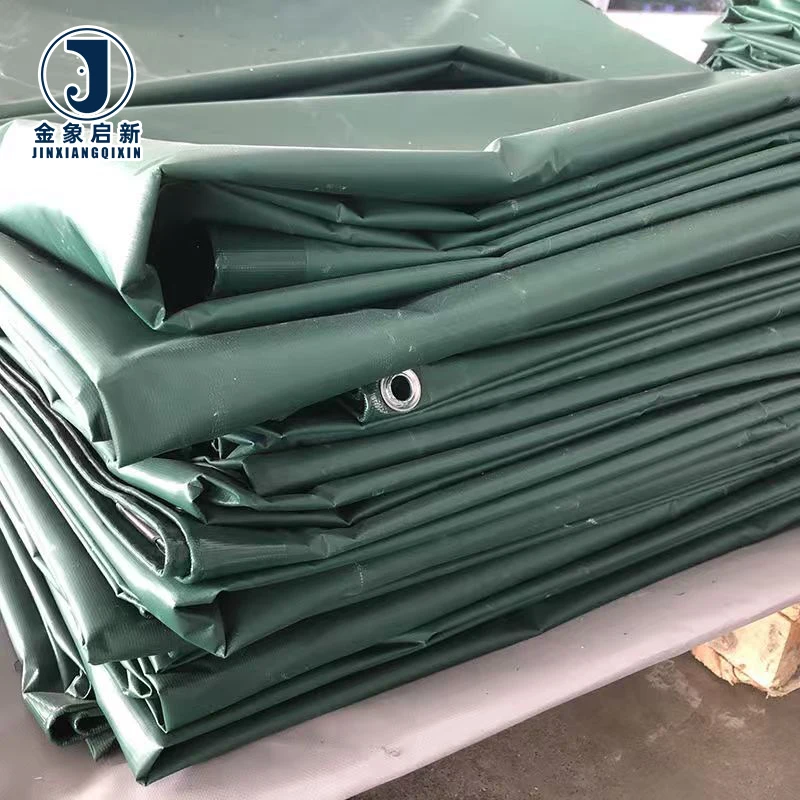
Specifying a general-purpose PVC coated tarpaulin for a mining ventilation application where fire-retardant certification is mandatory leads to outright rejection at the compliance check — the fabric never gets installed, and the entire roll stock must be returned or scrapped. Similarly, ordering material without confirming batch-to-batch colour consistency means that when two rolls are heat-welded side by side on a truck side curtain, the visible colour shift forces a rework that delays fleet delivery. Welded seams on material with insufficient peel strength fail at the joint before the fabric body shows any wear. [NEED_CITE: coated fabric peel strength and weld seam failure modes per ISO testing]
Why Procurement Teams Source This Fabric Here
The 10-person R&D team handles material selection, custom width, and sample development in-house, which means a ventilation duct wrap or truck side curtain fabric can move from enquiry to approved sample within days rather than weeks. Three full production lines and 36 sets of professional equipment provide the capacity to fulfil container-load orders with consistent on-time dispatch. Every roll undergoes 100% inspection before shipment, with coating weight, colour, and dimensional accuracy verified against the purchase specification. The QA record travels with the shipment so the receiving warehouse can cross-check without waiting for separate correspondence.
Documentation & Verification
- Material specification sheet stating GSM, base fabric denier, coating type, and colour reference
- Flame-retardant and UV test reports matched to the batch and the standard requested
- ISO and CE certificates included in the shipping document set
- Pre-shipment inspection record with roll-by-roll weight and dimension verification
- Certificate of origin and customs-ready packing list for cross-border shipment
Fabrication, Handling & Storage
- Heat-weld seams using temperature and dwell settings matched to the PVC coating thickness to avoid burn-through or cold joints
- Reinforce tie-down eyelet zones with additional PVC patches to distribute load across the base fabric weave
- Store rolls upright on pallets in a dry, shaded area to prevent flat-spot deformation and UV pre-exposure
- Allow cold-stored rolls to reach ambient temperature before unrolling to avoid coating crack at low temperatures
- Use mild detergent and soft brush for cleaning; avoid solvent-based cleaners that attack the PVC coating surface
- Plan cutting layout to minimise transverse welds on truck side curtains, keeping seam lines parallel to the flex axis
What to Include in Your Enquiry
Provide the end-use application and the specific compliance standard your site or market requires — whether that is a fire classification for underground mining ventilation or an anti-static threshold for aviation maintenance areas. State the roll width, colour reference, and estimated annual volume so the quotation reflects your actual procurement pattern. If you need finished cut sizes or fabricated duct sections rather than raw roll stock, include the dimensional drawings at the enquiry stage.
Frequently Asked Questions
Q: Can you supply a test report for the flame-retardant grade I need?
A: Yes. Specify the standard and grade your market requires — such as M2, B1, or NFPA 701 — and the test report covering the production batch will ship with the documentation set. If you are unsure which classification applies, share the end-use environment and local regulation reference so the correct grade can be recommended before sampling.
Q: How do you ensure colour and weight consistency across multiple rolls in one order?
A: Every roll is inspected against the confirmed colour reference and weighed to verify GSM before packing. The pre-shipment inspection record lists each roll individually, so your receiving team can cross-check on arrival. For large orders spanning multiple production runs, batch numbering ensures traceability.
Q: What are the heat-welding considerations for this PVC coated fabric?
A: Welding temperature, pressure, and dwell time must match the coating thickness and formulation. Overheating degrades the PVC and weakens the joint; insufficient heat leaves a cold weld that peels under flex load. We recommend running test welds on sample pieces and documenting the parameters before starting full production.
Q: What documentation ships with each order?
A: Each shipment includes a material specification sheet, relevant test reports for flame-retardant or UV treatment where ordered, ISO and CE certificates, a roll-by-roll packing list, pre-shipment inspection record, and certificate of origin. Additional customs documentation can be prepared on request.
Q: What information do you need to develop a sample for a custom requirement?
A: Share the target GSM, colour reference, width, and any treatment requirement such as flame-retardant grade or anti-static specification. Include the end-use application so the R&D team can recommend the appropriate base fabric and coating combination. Samples are typically ready within days for evaluation.