
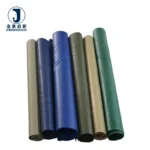
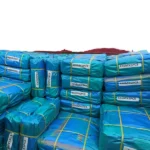

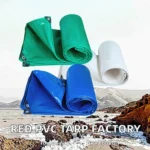
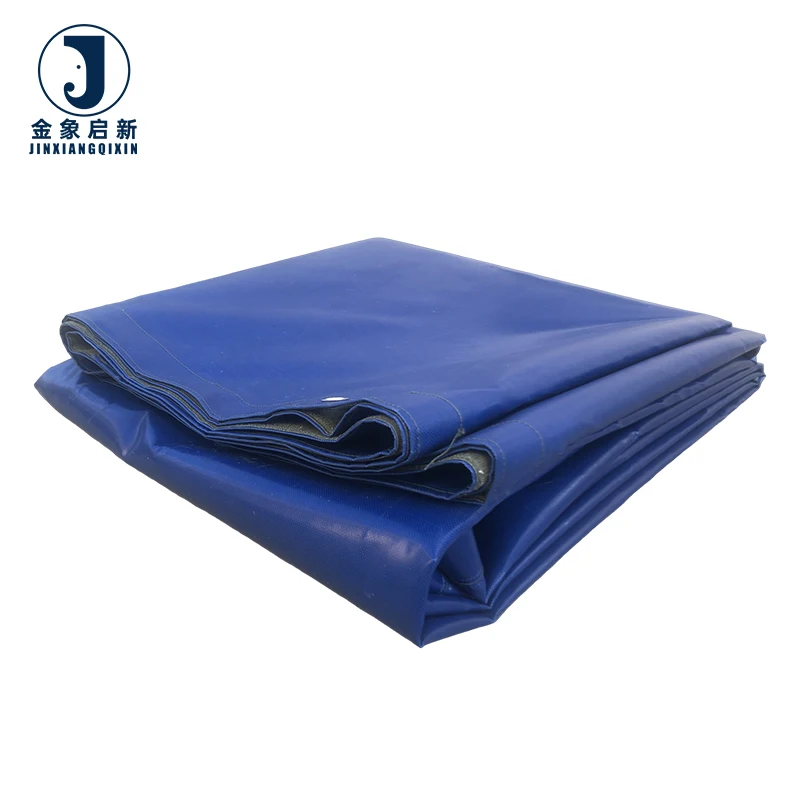
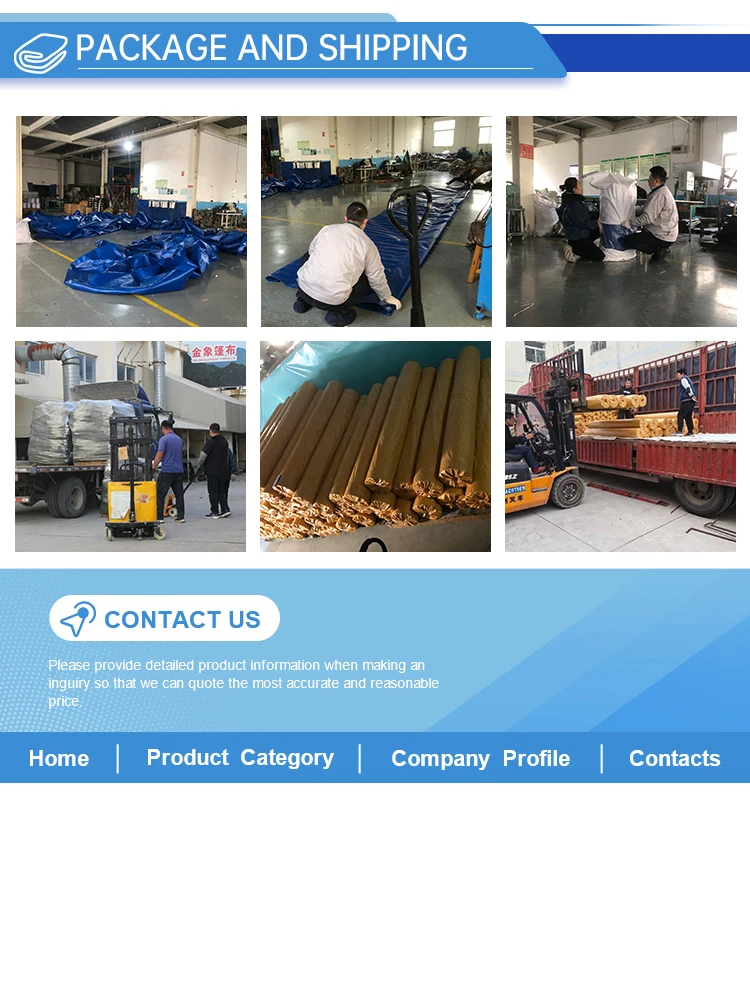
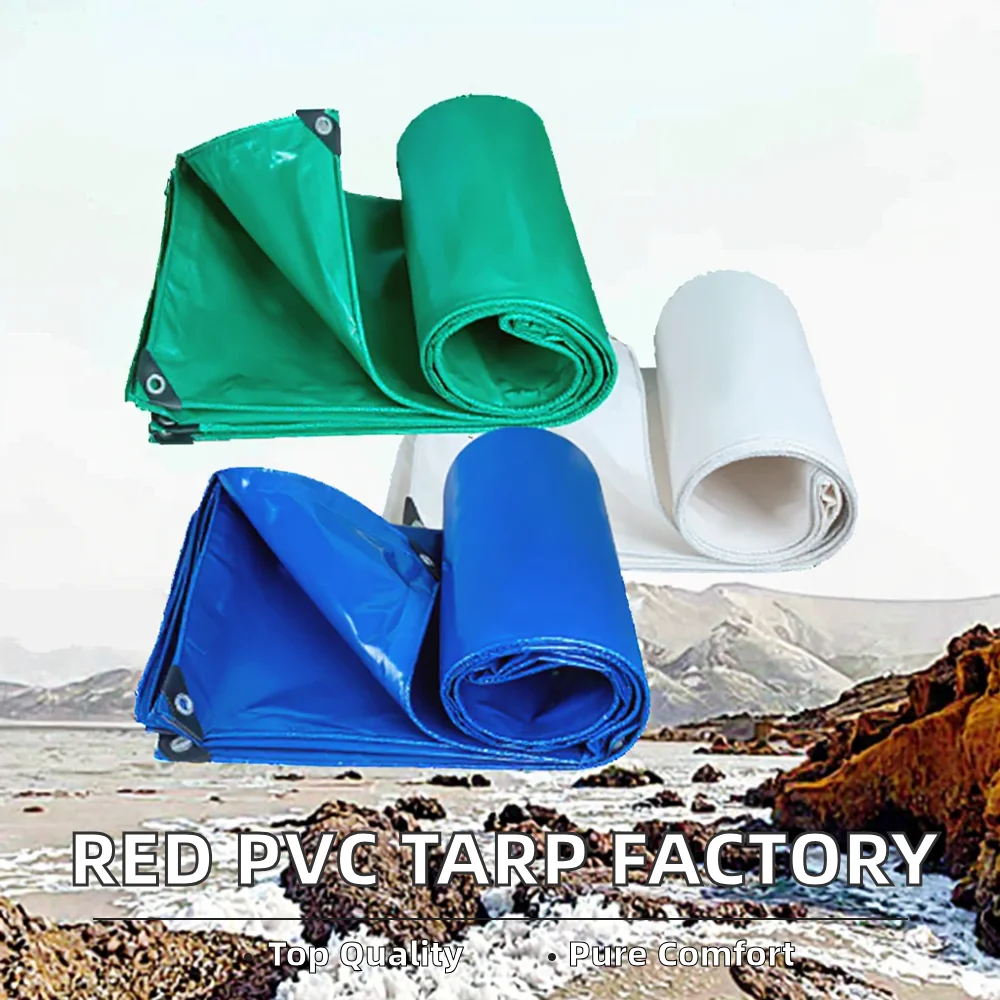
Batch Consistency Control — every roll of PVC coated tarpaulin produced on our three dedicated lines is measured for coating weight and adhesion before it leaves the facility, so technical-grade fabricators receive material that matches the specification sheet roll after roll.
Technical Specifications
| Parameter | Value |
|---|---|
| Product Type | PVC Coated Tarpaulin |
| Base Fabric | 100% high toughness polyester yarn |
| Coating Material | PVC |
| Coating Method | Lamination technology and hot melt coating technology |
| Weight (Medium-duty) | 400-500 g/m² |
| Weight (Heavy-duty) | 700-1000 g/m² |
| Weight (Super heavy-duty) | 1100-1500 g/m² |
| Base Fabric Denier (Medium-duty) | 500D |
| Base Fabric Denier (Heavy-duty) | 1000D |
| Base Fabric Denier (Super heavy-duty) | 500D-2000D |
| Total Thickness (Medium-duty) | 0.35-0.45 mm |
| Total Thickness (Heavy-duty) | 0.70-1.0 mm |
| Total Thickness (Super heavy-duty) | 1.2-1.5 mm |
| Tensile Strength (Medium-duty) | Warp 1500-2000 / Weft 1200-1800 N/5cm (test basis not stated) |
| Tensile Strength (Heavy-duty) | Warp 2000-2500 / Weft 1800-2200 N/5cm (test basis not stated) |
| Tensile Strength (Super heavy-duty) | Warp 2500-3000 / Weft 2200-2800 N/5cm (test basis not stated) |
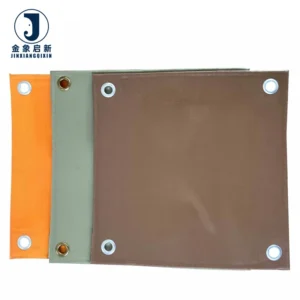
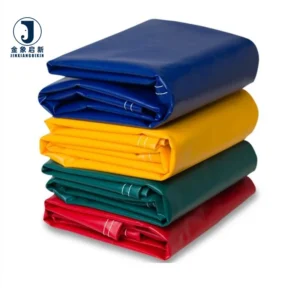
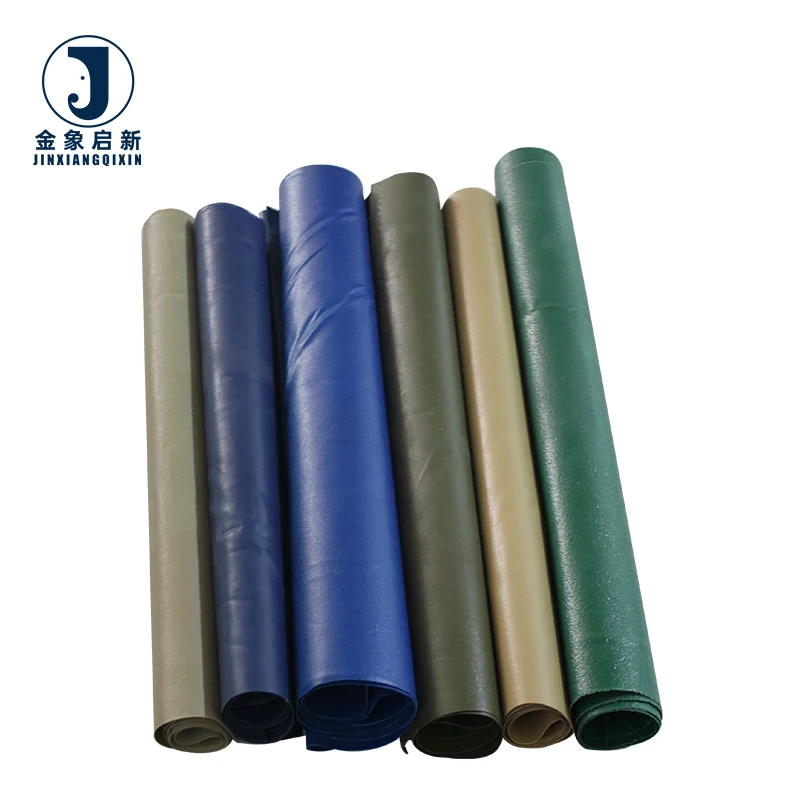
| Color Options | Blue, Blue/Orange, Green, Grey, Black, Clear, Grey/Green, Orange, or custom |
| Key Features | Waterproof, cold resistant, mold proof, excellent welding tear strength, best color fastness |
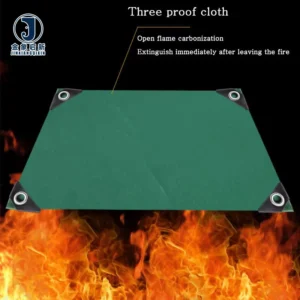
| Special Treatments Available | Flame retardant, anti-static electricity, cold prevention, mold prevention, 3P |
| Weather Resistance | 3-5 years outdoor guarantee |
| Certification | ISO, CE |
Application Suitability
| Application | Exposure & Requirement |
|---|---|
| Fire-retardant ventilation duct (mining & tunnelling) | Continuous airflow, dust-laden atmosphere, mandatory site-specific fire safety compliance |
| Anti-static ventilation duct (aviation & grain handling) | Combustible particulate environment, static discharge risk, regulatory certification required |
| Membrane and inflatable structure fabric | Tensile load under wind uplift, welded seam integrity, long-term UV exposure |
| Industrial pipe canopy and tensioned structures | Weather exposure on construction sites, mechanical abrasion from steelwork contact |
| Heavy truck tarpaulin and side curtain | Constant flexing at load points, road debris abrasion, highway-speed wind load |
Why a Fire Test Certificate Matters More Than the Words "Flame Retardant"
Material must ship with a documented test report that matches the compliance standard your site inspector will check.
Specifying a PVC coated tarpaulin roll fire retardant grade without naming the standard leaves the door open to misinterpretation. A fabric marketed as flame retardant may pass one regional test and fail the one your site safety officer actually enforces. The result is material rejected on arrival, work stopped, and a replacement order placed under emergency lead times. [NEED_CITE: common fire classification standards for coated textiles in mining and construction]
Lamination Bond and Weld Integrity in Duct Fabrication
Ventilation ducts are fabricated by welding panels into cylindrical or rectangular runs. The adhesive bond between the polyester base and the PVC coating determines whether the weld holds under flexing. Our lamination technology and hot melt coating process produces a bond that resists delamination at the seam, so the weld does not fail before the fabric itself when the duct is pressurised or moved during installation.
Anti-Static Processing for Hazardous Atmospheres
In mining, tunnelling, and grain-handling environments, static accumulation on duct surfaces can ignite airborne particulates. Anti-static electricity treatment is available as a special processing option on this PVC coated tarpaulin roll — confirm the resistivity range and certification required for your jurisdiction before placing the order so the test report aligns with the standard your safety auditor will reference. [NEED_CITE: anti-static fabric requirements in underground ventilation standards]
Reading the Spec Sheet Beyond GSM
Coating weight alone does not predict how a fabric performs under load. A 700 g/m² material woven from 500D yarn will stretch and tear differently than a 700 g/m² fabric built on 1000D yarn, even if the PVC coating is identical. The base fabric denier and the weave density set the tensile floor, while the PVC coating mass contributes to puncture resistance and weld strength. Hot melt coating technology fuses the polymer into the weave interstices, which improves peel strength at welded seams compared to simple knife-over-roll methods — a factor that matters when fabricators heat-weld duct sections or membrane panels. Thickness ranges from 0.35 mm in medium-duty grades to 1.5 mm in super heavy-duty options, giving fabricators a clear path from lightweight ducting to tensioned structural covers without switching suppliers.
When the Wrong Specification Stops a Project
Choosing a duct fabric without verifying fire classification against site regulations is one of the most expensive specification errors in ventilation procurement. The material arrives, the installer begins welding, and the site inspector requests the test certificate — which either does not exist or references a standard the local authority does not recognise. Entire duct runs must be removed and replaced. The same pattern applies to tensile specification: a membrane structure designed around an assumed tear strength that was never tested will show its weakness at the first high-wind event, usually at a welded corner where stress concentrates. [NEED_CITE: tensile and tear test methods for coated fabrics per ISO 1421]
Why Technical Fabricators Source This Material Here
Our 10-person R&D team develops samples within days when a project calls for a non-standard width, colour, or fire-retardant grade, letting you validate fabric behaviour before committing to a production run. Three full production lines and 36 sets of professional equipment give us the capacity to supply multiple container loads of PVC coated tarpaulin roll fire retardant stock while keeping lead times predictable. Dedicated QA/QC operates at every coating and winding stage, producing a pre-shipment inspection record that travels with your documentation package. Nearly three decades of coated fabric process control means the GSM you see on the spec sheet is the GSM measured on the roll. ISO and CE certification is held at the factory level and included in export documentation, simplifying customs clearance across North American, European, and Asian markets.
Documentation & Verification
- Material specification sheet listing exact GSM, base fabric denier, and coating method for each roll
- Fire-retardant test report matched to the classification standard required at your project site
- Anti-static resistivity certificate included with treated batches for mining and tunnelling compliance
- Pre-shipment inspection record documenting visual and dimensional checks on every roll
- ISO and CE certificates provided with the shipping documentation package
- Certificate of origin and customs support documents prepared per destination-country requirements
Fabrication, Handling & Storage
- Heat-weld at temperatures suited to the coating thickness; heavier grades (1100-1500 g/m²) require higher dwell times for full seam fusion
- Store rolls vertically on pallets in a shaded area to prevent flat-spotting on the PVC coating surface
- Avoid dragging rolls on concrete floors; the 0.70-1.0 mm heavy-duty coating can be scored by sharp aggregate
- Use compatible PVC welding tape for field repairs on duct seams to maintain fire-retardant continuity
- Allow cold-stored rolls to acclimatise before unrolling to prevent cracking of the PVC layer in low temperatures
Starting a Technical Enquiry
Provide the ventilation or structure application, the fire-retardant or anti-static classification your site requires, and the total linear metres needed. If you require a non-standard roll width or custom colour, include the target specification so we can confirm feasibility and minimum order. Sample rolls are available for fabrication trials before full production is scheduled.
Frequently Asked Questions
Q: Which fire-retardant grades are available, and how do I match them to my market?
A: Flame retardant treatment is offered as a special processing option. Because fire classification standards differ by country and industry — such as DIN 4102 B1 in parts of Europe or NFPA 701 in North America — provide the standard your site inspector or building code references. We will confirm the applicable grade and include the corresponding test report with your shipment.
Q: How is anti-static certification documented for mining ventilation duct orders?
A: Anti-static electricity treatment is applied during coating. When you specify the resistivity range or standard required by your mine safety authority, we process the PVC coated tarpaulin roll accordingly and include the test certificate in the documentation package. Confirm the exact standard at enquiry stage so production can be scheduled with the correct additive formulation.
Q: How do I verify the GSM of each roll on arrival?
A: Every shipment includes a pre-shipment inspection record showing measured weight per square metre. On receipt, cut a measured sample from the roll edge, weigh it on a calibrated scale, and calculate grams per square metre. Any discrepancy outside the stated tolerance should be reported immediately with the roll number from the packing list.
Q: What are the welding parameters for fabricating ducts from heavy-duty grades?
A: Heavier coatings such as the 700-1000 g/m² and 1100-1500 g/m² grades require adjusted temperature and dwell time on hot-air or wedge welders. Request our fabrication guideline sheet with your sample order — it covers recommended heat settings, pressure, and speed for both lamination-bonded and hot melt coated constructions to achieve full peel strength at the seam.
Q: What is the minimum order for a custom width or non-standard colour?
A: Custom widths and colours are produced on dedicated runs, and the minimum order depends on the selected grade and treatment combination. Provide the required width, colour reference, and total linear metres at enquiry. We will confirm feasibility, lead time, and the minimum quantity before sample development begins.