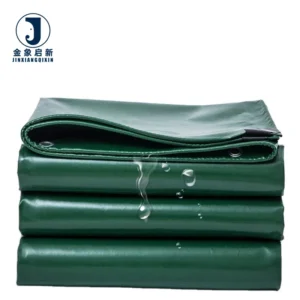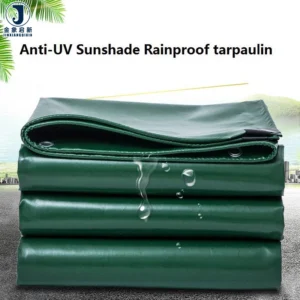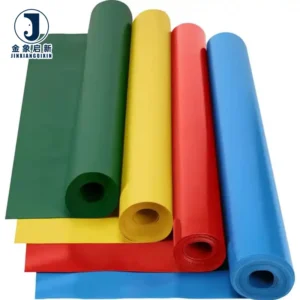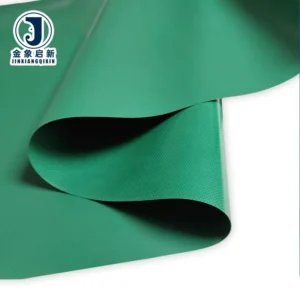
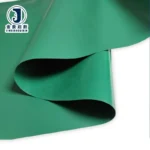
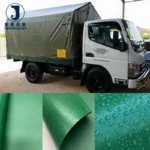
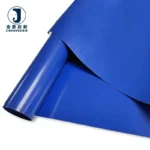
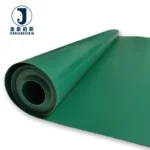
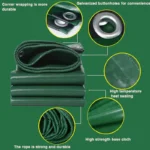
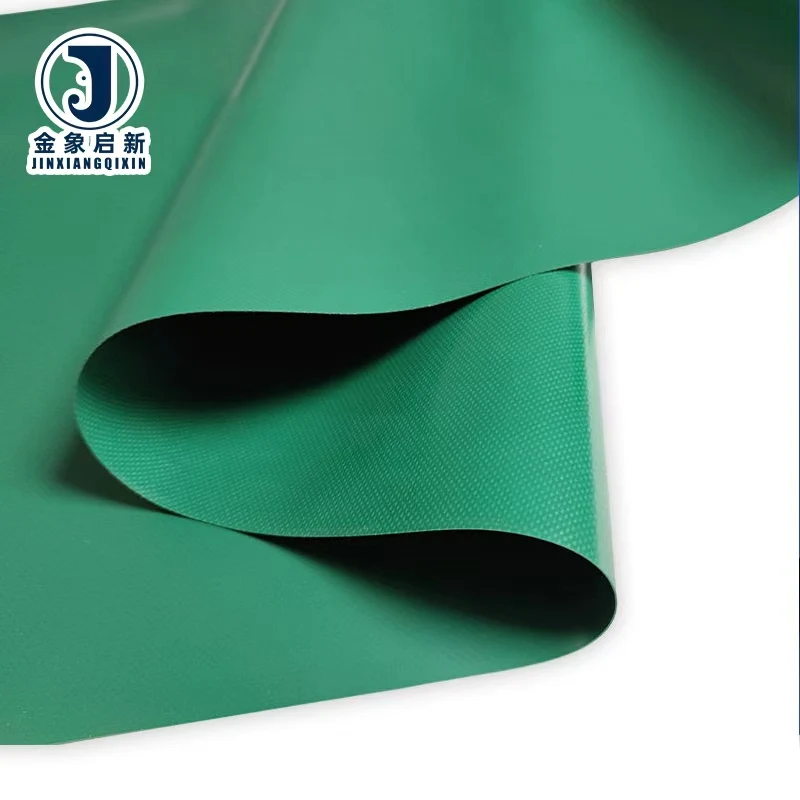
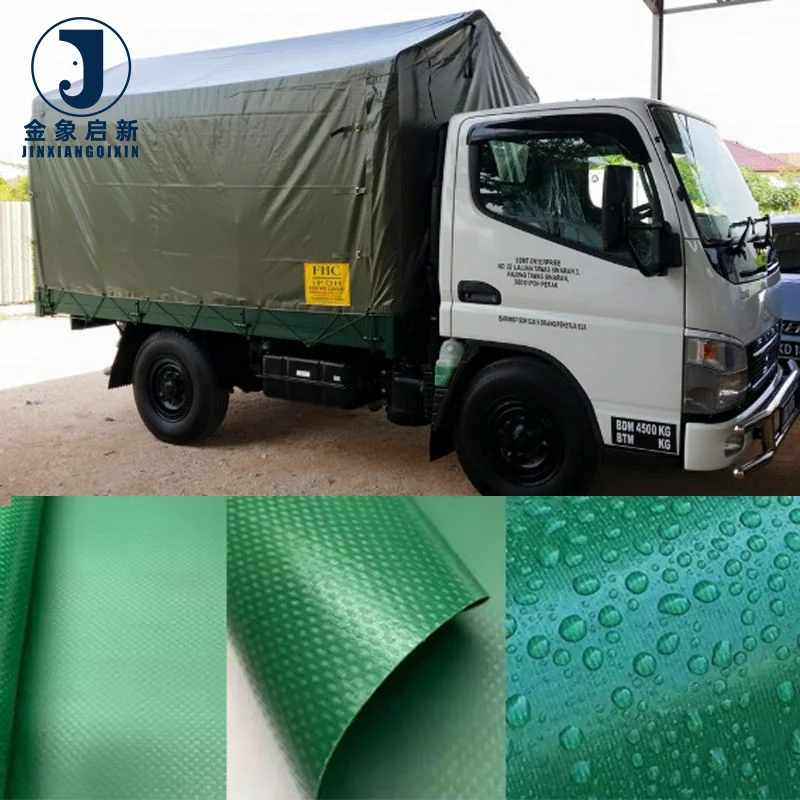
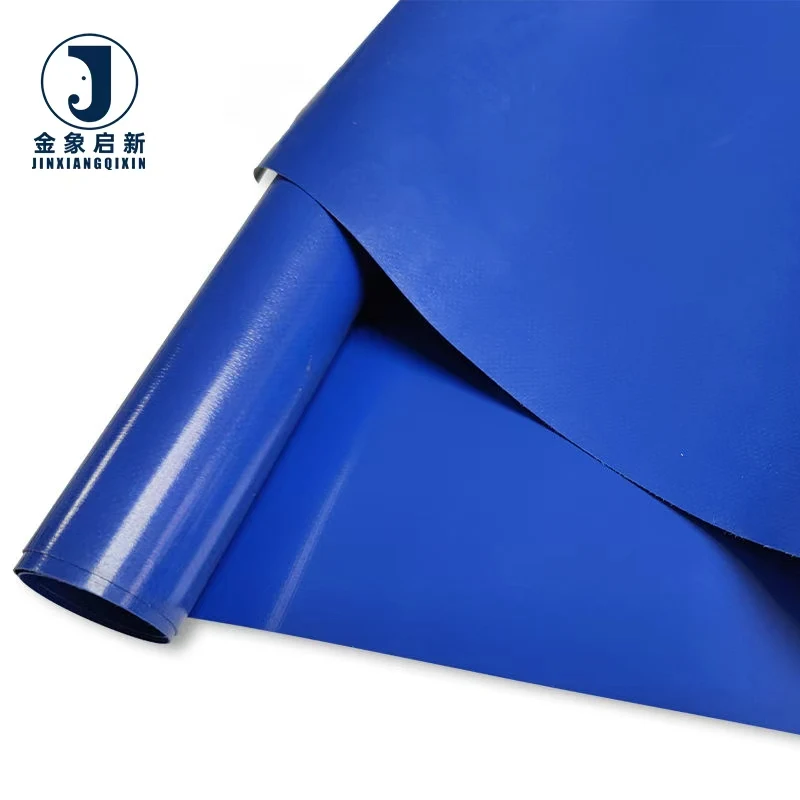
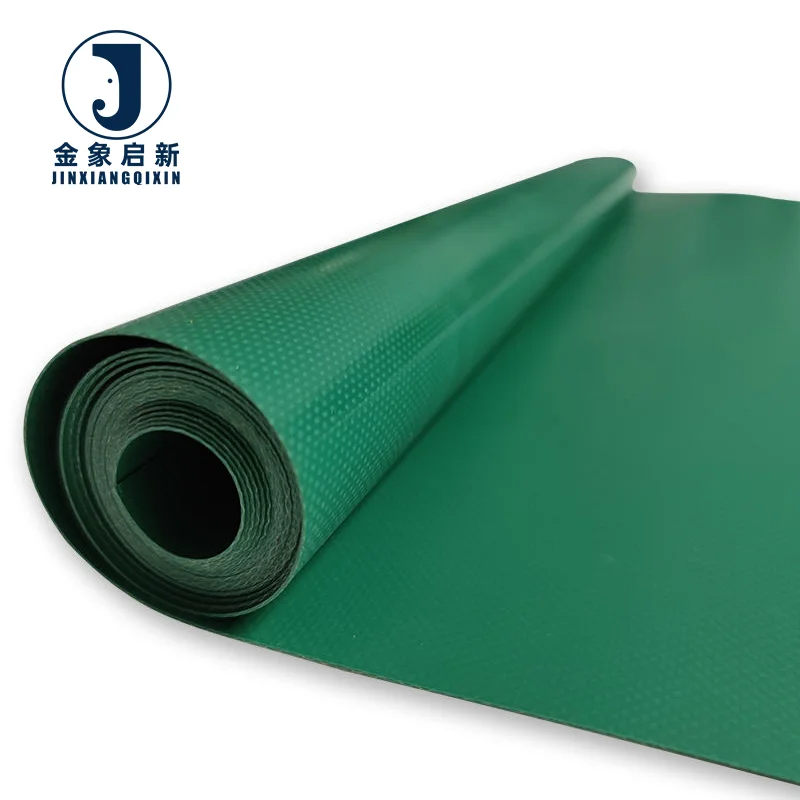
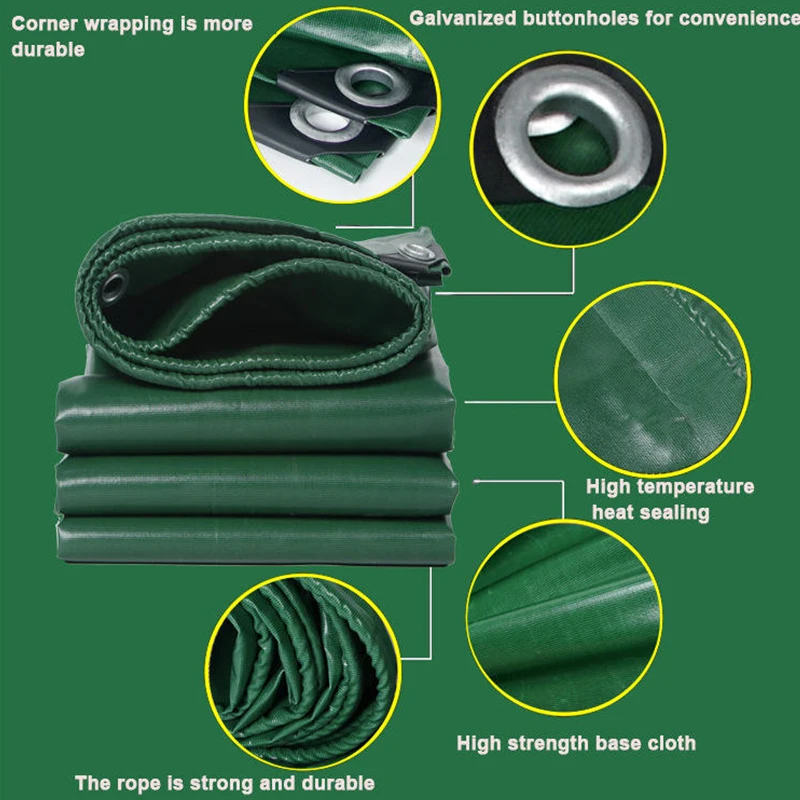
Technical Fabric Expertise — 510Gsm 15OZ 500D*1000D PVC coated tarpaulin roll verified per production stage for ventilation duct, membrane and inflatable structure fabrication.
Technical Specifications
| Parameter | Value |
|---|---|
| Specification | 510Gsm 15OZ 500D*1000D |
| Product Type | PVC Coated Tarpaulin Roll |
| Base Fabric Material | Polyester |
| Base Fabric Denier | 500D*1000D |
| Mesh Count | 30*19 |
| Coating Material | PVC (double-side) |
| Weight | 510 GSM |
| Total Thickness | 0.38mm |
| Tensile Strength Warp | 2050 N (test basis not stated in source) |
| Tensile Strength Weft | 1900 N (test basis not stated in source) |
| Tensile Strength (Material) | 50-80 MPa (test basis not stated in source) |
| Brittle Temperature | ≤ -50 ~ -60 °C |
| Softening Temperature | ≥ 80 °C |
| Melting Point | 212 °C |
| Key Features | Waterproof, flame retardant (grade not stated), UV treatment (test basis not stated) |
Application Suitability
| Application | Exposure & Requirement |
|---|---|
| Mining ventilation duct fabrication | Continuous airflow, underground fire safety compliance, flexing at duct joints |
| Tunnelling ventilation systems | High humidity, particulate abrasion, fire-retardant certification requirements |
| Inflatable and membrane structures | Tensile load under inflation pressure, UV exposure during outdoor deployment |
| Aviation ground support ducting | Anti-static specification to prevent discharge near fuel and avionics environments |
| Technical fabric for custom fabrication | Weld seam integrity at stress points, batch colour consistency across panels |
Why GSM Verification Matters More Than the Quotation Number
A 510 GSM PVC Coated Tarpaulin Roll ventilation and technical fabric performs as specified only when the areal density arriving on your dock matches the datasheet — coating weight, base fabric denier and mesh count all contribute, and a shortfall in any one layer compromises tensile balance and weld integrity.
Many technical buyers have received rolls that feel lighter on the hand, then discovered during fabrication that heat-weld seams pull through at lower load than expected. The base fabric may meet the 500D×1000D denier claim, but if the PVC coating is applied thinner to save material cost, the total GSM drops and the coating no longer fills the weave fully — leaving micro-channels that wick moisture and weaken bonded seams over time [NEED_CITE: ISO 1421 tensile and tear test methods for coated fabrics].
Base Fabric Construction and Its Influence on Structural Load
The 500D×1000D polyester base with a 30×19 mesh count creates an asymmetric tensile balance: the heavier weft yarns carry load across the roll width while the tighter warp count holds longitudinal stability. For ventilation duct fabricators, this means circumferential welds bear different stress than longitudinal seams, and heat-weld parameters should be adjusted per direction to achieve uniform peel strength.
Coating Adhesion and the Weld-Line Reality
Double-side PVC coating at 0.38mm total thickness provides sufficient material for hot-air welding without burn-through. The critical factor is coating adhesion to the base fabric — if the bond between PVC and polyester fails before the coating itself tears, the seam delaminates under flex load [NEED_CITE: peel strength test methods for PVC coated polyester fabrics]. This is the failure mode most commonly reported at flex points on ventilation ducts that cycle between pressurised and collapsed states.
Decoding the Specification: What Each Parameter Controls
Areal density of 510 GSM results from three contributors: the polyester yarn mass, the weave density at 30×19, and the PVC coating weight on both faces. Increasing GSM by adding more coating without raising base fabric denier will improve abrasion resistance but will not raise tear strength — which is governed primarily by yarn count and mesh geometry. The 500D×1000D construction with its differential warp and weft denier means that warp-direction tensile reads at 2050 N while weft sits at 1900 N, a gap that fabricators must account for when orienting pattern pieces on the roll. The brittle temperature of ≤ -50 ~ -60 °C indicates the PVC compound retains flexibility in cold deployment, but the softening threshold at ≥ 80 °C sets the upper boundary for hot-air weld temperature windows.
The Cost of Underspecified Fire-Retardant Documentation
Ordering flame-retardant PVC fabric without specifying the grade leads to site rejection during compliance inspection. Underground mining and tunnelling projects typically require test reports referencing recognised classification systems — supplying a roll that claims retardancy without supporting documentation for the required grade forces costly replacement mid-project and delays ventilation commissioning [NEED_CITE: fire classification standards for underground ventilation duct materials].
Fabrication Capability Backed by Process Control
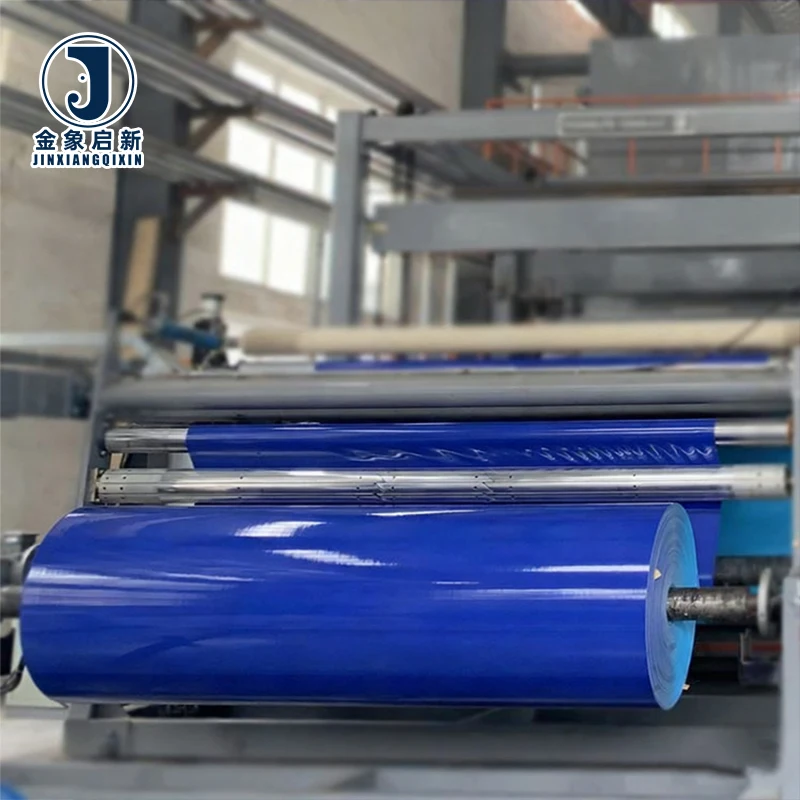
Three full production lines and 36 sets of equipment allow this 510Gsm 15OZ 500D*1000D roll to be produced in volume while maintaining coating weight consistency across the batch. The 10-person R&D team handles custom width slitting, colour matching and sample development within days — critical when membrane structure fabricators need trial panels before committing to full roll stock. A dedicated QA/QC team inspects every roll before shipment, verifying areal density against the stated 510 GSM so the material you weld performs as the specification sheet promises.
Documentation & Verification
- Material specification sheet confirming 510 GSM, 500D×1000D denier, 30×19 mesh and coating type
- Fire-retardant test report matching the grade required for your mining or aviation compliance framework
- Pre-shipment inspection record with roll-to-roll GSM verification and colour consistency check
- ISO and CE certificates included with export shipment documentation
- Certificate of origin for customs clearance in destination market
Fabrication, Handling & Storage
- Set hot-air weld temperature below 80 °C softening threshold to avoid PVC coating distortion at seam zones
- Orient pattern pieces accounting for warp 2050 N vs weft 1900 N tensile differential to optimise panel strength
- Store rolls vertically on end caps to prevent flat-spot creasing across the 0.38mm coated surface
- Allow cold-stored rolls to acclimatise above brittle temperature before unrolling to prevent coating micro-cracking
- Use mild detergent only — solvent cleaners may degrade the PVC coating adhesion to the polyester base
Before You Enquire — What We Need to Quote Accurately
Provide the fire-retardant or anti-static grade your project specification calls for, along with the test standard your site auditor will reference at inspection. Specify the roll width required for your duct or membrane panel layout to minimise weld seams, and indicate your annual volume so production scheduling can secure capacity. If colour consistency across multiple rolls is critical for visible membrane panels, confirm the RAL or Pantone reference at inquiry stage.
Frequently Asked Questions
Q: Can you supply fire-retardant certified PVC fabric for underground mining ventilation duct?
A: Flame-retardant treatment is available in multiple grades. Confirm which classification your mine safety authority requires — M2, B1, NFPA 701 or another standard — and the matching test report will be provided with your shipment. Contact us with your compliance requirement before ordering.
Q: How is the 510 GSM verified before the rolls leave the factory?
A: Each roll undergoes areal density verification against the stated 510 GSM during pre-shipment inspection. The inspection record documents actual measured weight and is included with your shipment documentation so you can cross-check on arrival.
Q: What UV test basis supports the treatment claim on this PVC tarpaulin roll?
A: UV treatment is applied during the coating process, but the specific test basis and exposure duration rating are not stated in the current product data. Request the UV test report for the grade you need, and we will provide the supporting documentation.
Q: How do warp and weft tensile differences affect my weld seam strength?
A: With warp at 2050 N and weft at 1900 N, seams running parallel to the warp carry higher load. Orient critical structural seams along the warp direction and adjust hot-air weld parameters per direction to achieve balanced peel strength across the joint.
Q: What custom widths and roll lengths can be supplied for membrane structure fabrication?
A: Custom slitting is handled by the in-house R&D team. Provide your required width and roll length at inquiry stage along with quantity. Samples can be developed within days for fabrication trials before full production is committed.