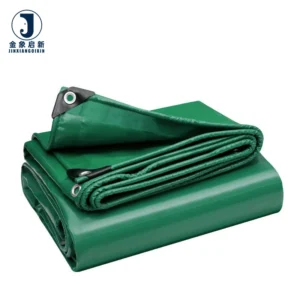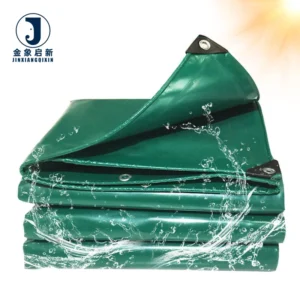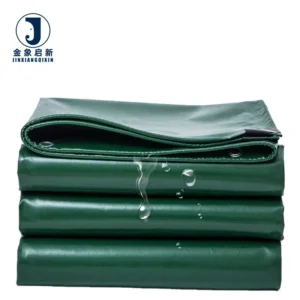
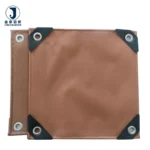
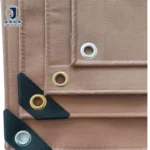
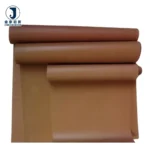
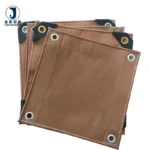

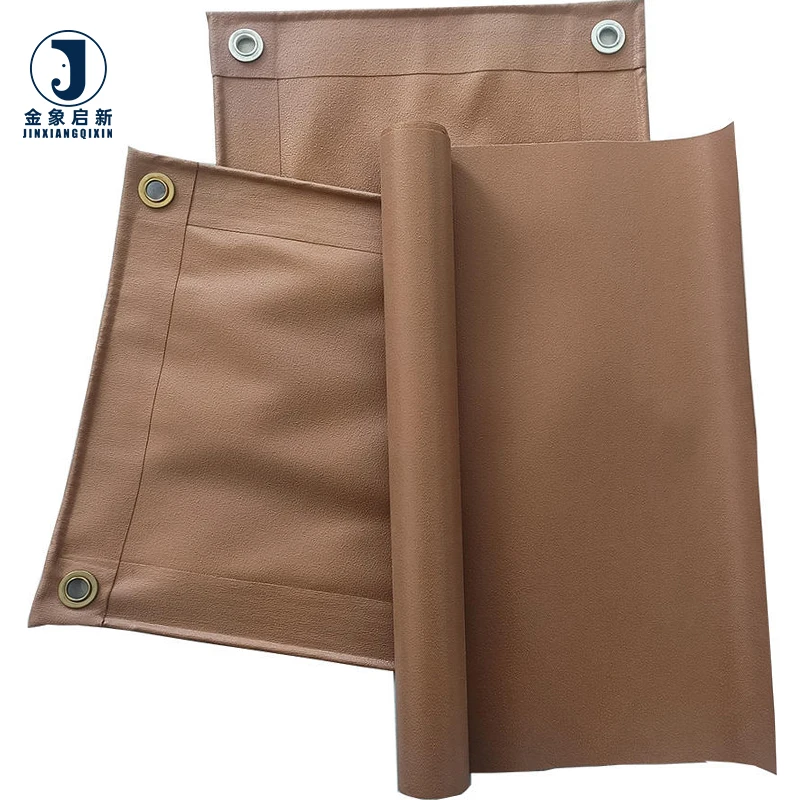
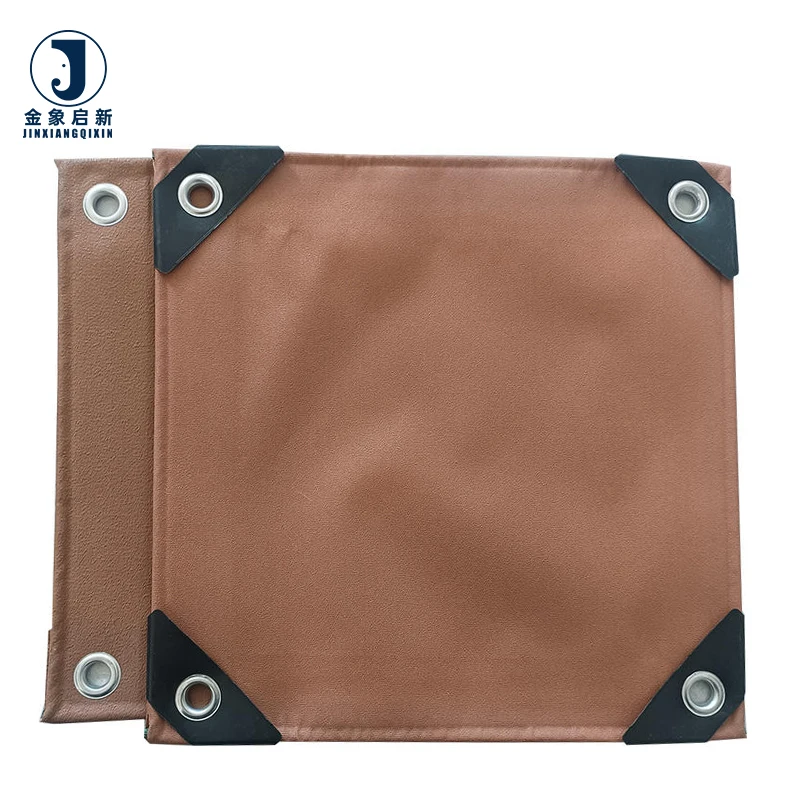
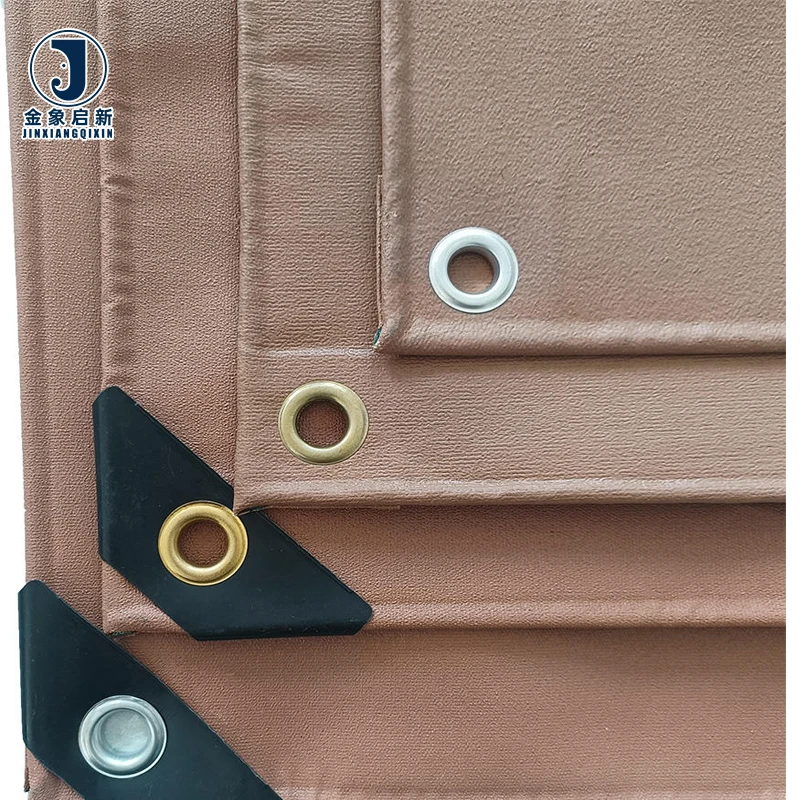
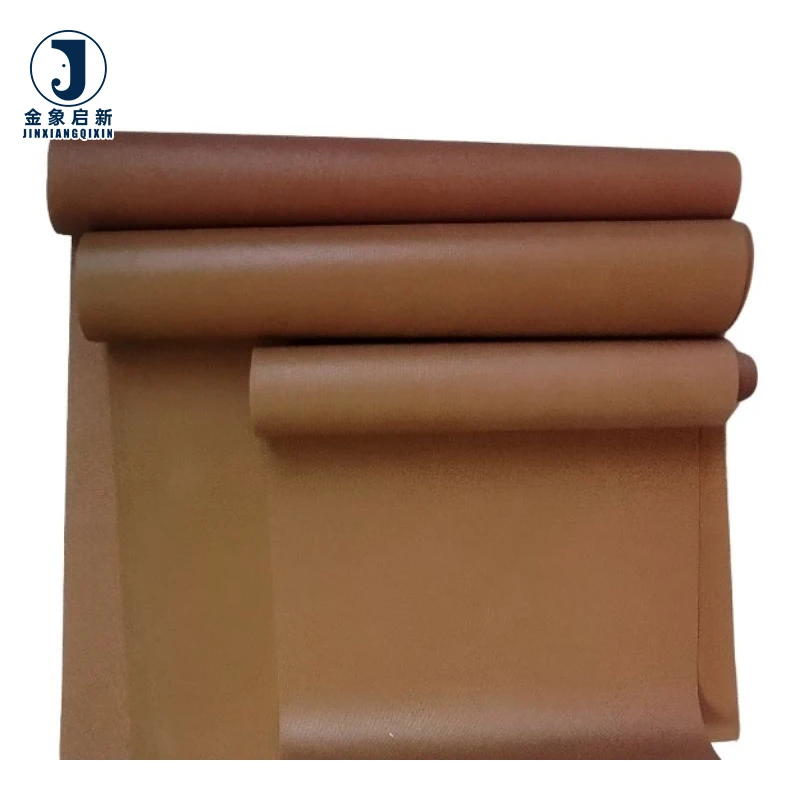

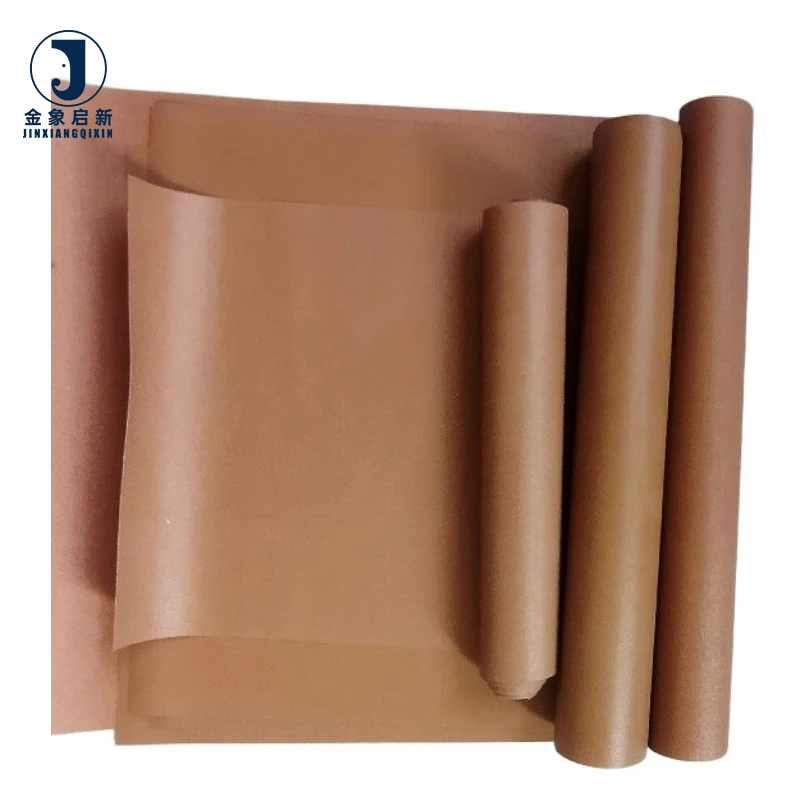
Deep Process Control — Nearly 30 years focused on coated fabric production, with dedicated QA/QC at every stage ensuring coating weight, adhesion and treatment consistency are verified before dispatch.
Technical Specifications
| Parameter | Value |
|---|---|
| Product Type | PVC Coated Tarpaulin |
| Specification | 1000D 550GSM/900GSM |
| Base Fabric Denier | 1000D |
| Weight (GSM) | 550GSM/900GSM (confirm grade required for your application) |
| Coating Material | PVC |
| Flame Retardant | Available in flame retardant grades — confirm the grade required for your market |
| Anti-Static | Available in anti-static grades — confirm the surface resistivity standard required |
| Anti-Mildew | Treated against mildew formation |
| Waterproof | Fully waterproof coated construction |
| Custom Size | Available upon request |
Application Suitability
| Application | Exposure & Requirement |
|---|---|
| Mining and tunnelling ventilation ducts | Sustained airflow pressure, rock dust abrasion, mandatory fire-retardant and anti-static compliance on site |
| Membrane and inflatable structures | Structural wind loads, UV and thermal cycling, seam integrity under continuous tension |
| Aviation ground support ducting | Fuel-rich environments, strict anti-static and flame-retardant site regulations, repeated handling |
| Flood barrier and emergency containment | Prolonged water contact, debris impact, rapid deployment and retrieval cycles |
| Truck covers and side curtains | Constant flexing at load points, road abrasion, weather exposure during transit |
What Certified PVC Coated Tarpaulin Actually Means on a Job Site
A flame-retardant claim without a test standard is a liability waiting for the first site safety audit.
Fabric specified for ventilation ducting in mining or tunnelling must carry a documented fire classification matched to local regulation. Procurement teams regularly receive material described simply as "flame retardant" with no accompanying test report referencing DIN 4102, NFPA 701 or the relevant local standard. When the site safety officer requests documentation, the supply chain stalls. The PVC Coated Tarpaulin fire retardant grade must be confirmed against the specific classification your project requires before the order enters production. [NEED_CITE: DIN 4102 fire classification for building materials]
Airflow, Pressure and Duct Construction Demands
Ventilation ducts operate under continuous positive or negative pressure. The 1000D base fabric provides the tensile backbone to resist circumferential stress in larger-diameter duct runs. Whether you specify 550GSM or 900GSM depends on the static pressure rating the duct must hold and the handling frequency it will endure. Heavier grades resist puncture during drag-along installation in tunnelling headings.
Compliance Documentation as a Deliverable
On industrial and mining projects, the material test report is as critical as the fabric itself. Anti-static performance must be verified through a surface resistivity measurement referenced to a recognised standard. Without this documentation, the PVC coated tarpaulin cannot pass commissioning inspections in environments where static discharge poses a detonation risk. We supply test reports matched to the grade produced for your batch.
Base Fabric, Coating Weight and the Relationship to Real Performance
Coated fabric performance is governed by the interaction between base fabric construction and coating mass. The 1000D denier indicates the linear mass of the yarns forming the woven scrim — a heavier denier generally provides higher tear propagation resistance because each yarn bundle absorbs more energy before rupture. However, tensile and tear performance cannot be judged from denier alone; the weave density and the adhesion between PVC coating and base fabric are equally decisive. Coating weight, expressed as GSM, accounts for both the scrim and the PVC layers applied to each face. A 550GSM grade may suit lighter-duty membrane covers and short-run ducting, while 900GSM provides additional coating mass for applications demanding higher abrasion resistance and greater stiffness to resist flutter in high-velocity airflow. The coating method — whether knife-over-roll, lamination or calendering — determines how deeply the PVC penetrates the scrim, directly affecting peel strength and the reliability of heat-welded seams. [NEED_CITE: tensile and tear test methods for coated fabrics per ISO 1421]
Specification Mismatches That Surface After Installation
Selecting a PVC coated tarpaulin without confirming the treatment package against site requirements leads to failures that appear only after installation. Fabric lacking documented flame-retardant certification fails the first safety audit and must be replaced at the contractor’s expense. Anti-static treatment applied without a verifiable surface resistivity test creates false confidence in environments where electrostatic discharge control is mandatory. Inconsistent coating adhesion between rolls in the same batch causes heat-welded seams to delaminate under flex load while the surrounding fabric remains intact — a failure mode that traces back to process control, not material selection. [NEED_CITE: common weld failure modes in PVC coated fabric installations]
Why Procurement Teams Source This Grade Here
Three full production lines and 36 sets of professional equipment support bulk orders with consistent coating weight across every roll in a batch. A 10-person R&D team handles material selection, treatment specification and sample development for project-specific requirements, producing samples within days rather than weeks. Dedicated QA/QC inspection at each production stage — from base fabric intake through coating, treatment application and final winding — means the PVC coated tarpaulin shipped matches the specification agreed. Every roll undergoes 100% pre-shipment inspection with documented weight verification against the quoted GSM. ISO and CE certified production processes are supported with a full documentation package including certificate of origin and customs paperwork for international project sites.
Documentation & Verification
- Material specification sheet confirming GSM, 1000D base fabric denier and PVC coating type for each roll
- Flame retardant test report citing the classification standard applicable to your project jurisdiction
- Anti-static surface resistivity test report matched to the treatment grade produced for your order
- Pre-shipment inspection record verifying coating weight, adhesion and treatment consistency per batch
- Certificate of origin and customs documentation prepared for international project site delivery
Fabrication, Handling & Storage
- Heat-weld seams using temperature and dwell settings matched to 550GSM or 900GSM coating thickness to ensure full adhesion
- Store rolls horizontally on racking to prevent flat spots that create permanent creases in the PVC coating
- Unroll and allow the 1000D PVC coated tarpaulin to acclimatise before fabrication in cold conditions to avoid coating micro-cracking
- Use compatible PVC solvent or hot-air welding for field repairs, matching the repair patch GSM to the parent fabric
- Plan cutting layouts to maximise yield from roll width and minimise cross-grain seams in duct fabrication
Preparing Your Enquiry
Provide the specific fire-retardant classification or anti-static standard your site safety plan requires, along with the duct diameter, membrane dimensions or cover sizes you are fabricating. Confirm whether you need rolls at standard width or a custom width to reduce waste in your cutting layout. Let us know the target colour and whether you require batch-consistent colour across multiple rolls for a single project installation.
Frequently Asked Questions
Q: What fire-retardant grade does your PVC tarpaulin carry, and which test standard is it measured against?
A: Flame retardant treatment is available in multiple grades. The specific classification — such as B1 per DIN 4102 or an NFPA 701 rating — depends on the formulation applied during production. We confirm the grade and supply the corresponding test report once your target standard is specified at enquiry stage.
Q: How is anti-static performance verified — do you supply a surface resistivity test report?
A: Yes. Anti-static treatment is applied during coating and verified through surface resistivity testing. We supply a test report documenting the measured values against the relevant standard. Specify the resistivity range your project requires so the correct treatment formulation is selected.
Q: Can you confirm the exact GSM of the roll I receive matches the GSM on the quotation?
A: Every roll undergoes weight verification during pre-shipment inspection. The inspection record documents the measured GSM against the quoted 550GSM or 900GSM specification. This record ships with your order so the received material is traceable to the agreed standard.
Q: Do you provide documentation packages suitable for mining, tunnelling or aviation project audits?
A: Yes. Documentation packages include the material specification sheet, flame retardant and anti-static test reports, pre-shipment inspection records, ISO and CE certificates, and certificate of origin. These documents are formatted to satisfy contractor and regulatory audit requirements on industrial project sites.
Q: What is the lead time for custom width or colour on specialist-grade PVC coated fabric?
A: Custom widths and colours involve dedicated production runs on our coating lines. Lead times depend on current line scheduling and the specific treatment package required. We confirm the timeline at quotation stage once your width, colour and certification requirements are defined.