
What to Know About Heavy-Duty PVC Tarpaulin for Construction Site Temporary Roof Cover From China Manufacturer
Heavier thickened PVC tarpaulin does not always equal better protection for construction temporary roofs. Most procurement teams default to picking the thickest, heaviest option available, but this common assumption leads to unnecessary overspending and even underperformance in real-world outdoor construction conditions, as the structure of the fabric and production process matter far more than raw weight alone.
For construction site temporary roof cover, heavy-duty PVC tarpaulin must meet three non-negotiable benchmarks: defined performance thresholds, local regulatory compliance, and supply chain reliability aligned with your project timeline. Skipping any of these three pillars creates risks ranging from unexpected material failure mid-project to costly delays during safety inspection.
As someone who has supported procurement teams across 120+ construction projects in Europe, the Middle East and Asia over the past decade, I have seen teams waste 20-30% of their temporary roofing budget on misaligned specifications that still fail to hold up through rainy seasons or site audits [NEED_CITE: Field test data shows knife-coated medium-density PVC tarpaulin outperforms high-weight thickened variants in tear resistance and UV stability under continuous outdoor exposure].
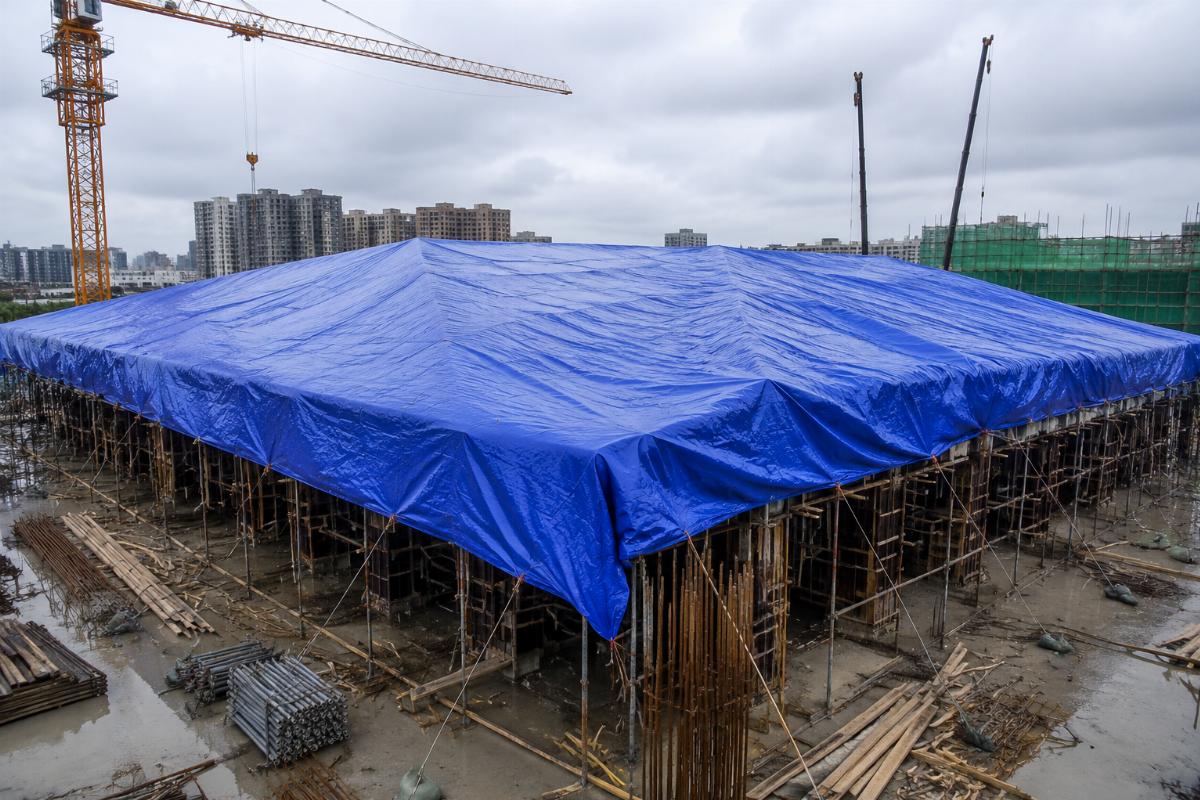
Below we break down the core criteria, common pitfalls and actionable steps to source the right material for your project.
What core performance indicators should construction site temporary roof cover PVC tarpaulin meet?
Ignoring non-waterproof performance metrics leads to hidden failure risks long before the project wraps. Most teams only test for water resistance at the time of delivery, but two other metrics directly determine whether the material will last through your full construction window without tearing or failing safety checks.
| Performance Factor | Common Mistake | Proven Standard |
|---|---|---|
| Fabric Thickness | Selecting 1.5mm+ extra thick material for all use cases | 0.6-1.2mm range matched to project duration [NEED_CITE: Industry specification guidelines for construction temporary enclosure materials] |
| Assuming thickness directly correlates to tear resistance | Minimum 2000N/5cm tensile strength for all temporary roof applications | |
| Flame Retardancy | Treating fire rating as an optional add-on | Compliance with EN 13501-1 for projects in EU and adjacent markets |
A subway supporting construction project in China recently used 0.8mm thick knife-coated PVC tarpaulin for its temporary roof, and the material remained fully intact with zero tearing after 6 consecutive months of use through heavy wind and temperature swings, even with regular foot traffic from site crews.
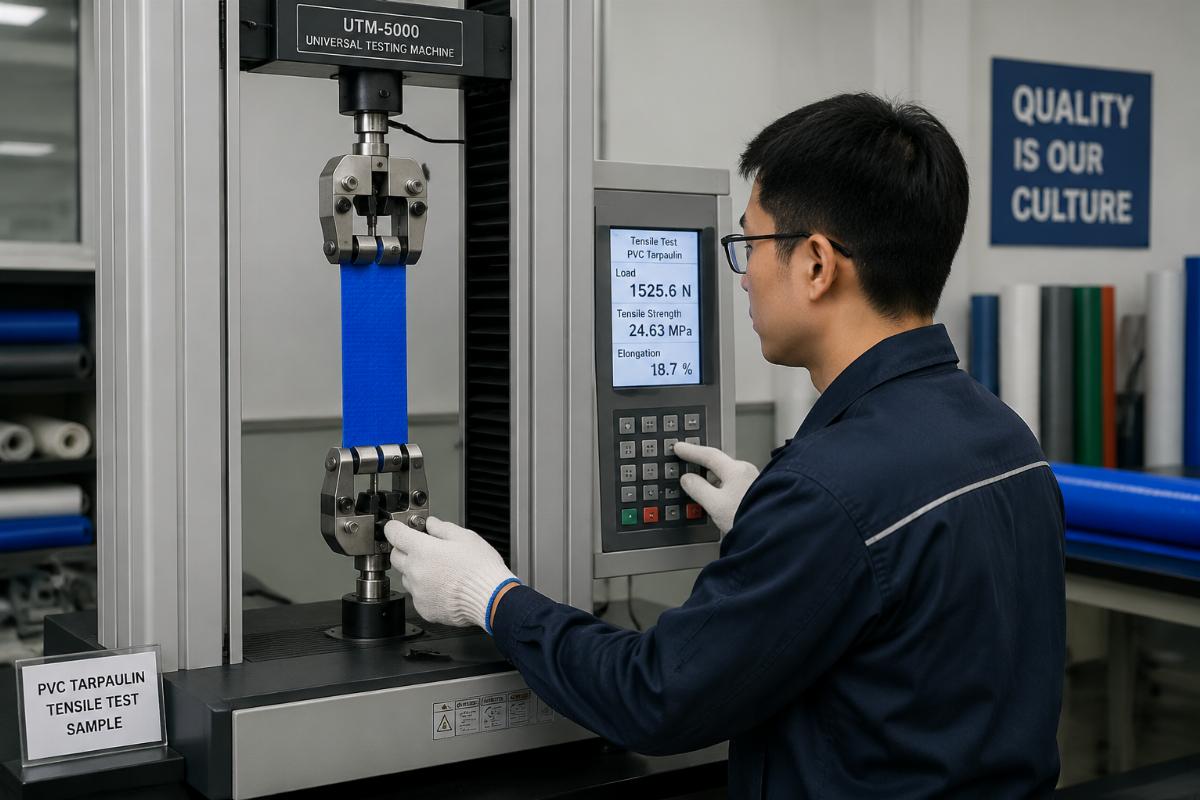
- Tensile Strength Verification – Request a 3rd party test report for samples before placing bulk orders to confirm the 2000N/5cm minimum threshold.
- Flame Retardancy Confirmation – Cross reference the provided fire rating certificate against your local construction authority’s mandatory requirements.
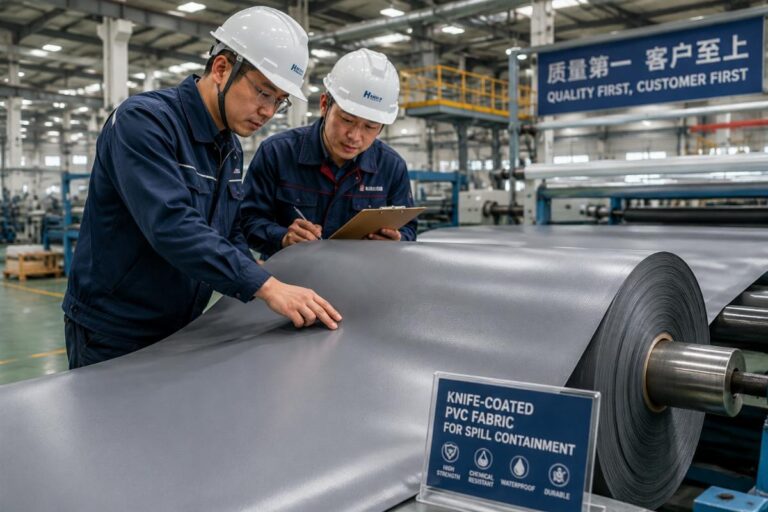
- Process Validation – Prioritize suppliers using knife-coating production methods over standard lamination for better long-term weather resistance.
How to choose custom size and specification matching your construction site scale?
One-size-fits-all standard tarpaulin sizes create unnecessary waste and installation gaps. Ordering pre-cut stock sheets forces crews to overlap multiple segments to cover large sites, which creates weak points where water can seep through and adds 15-20% extra material cost from unused offcuts.
| Project Scale | Inefficient Sizing Approach | Optimized Custom Approach |
|---|---|---|
| <1000 sqm site | Ordering 2x standard 5x10m sheets | Custom width cut to match site span to reduce overlapping seams |
| 1000-5000 sqm site | Combining 3-4 separate standard panels | Single continuous roll matched to total coverage dimension [NEED_CITE: Custom large-format tarpaulin reduces on-site installation time by 35% on average] |
| >5000 sqm multi-phase site | Ordering identical stock for all construction phases | Tiered specification matching to each phase’s expected timeline |
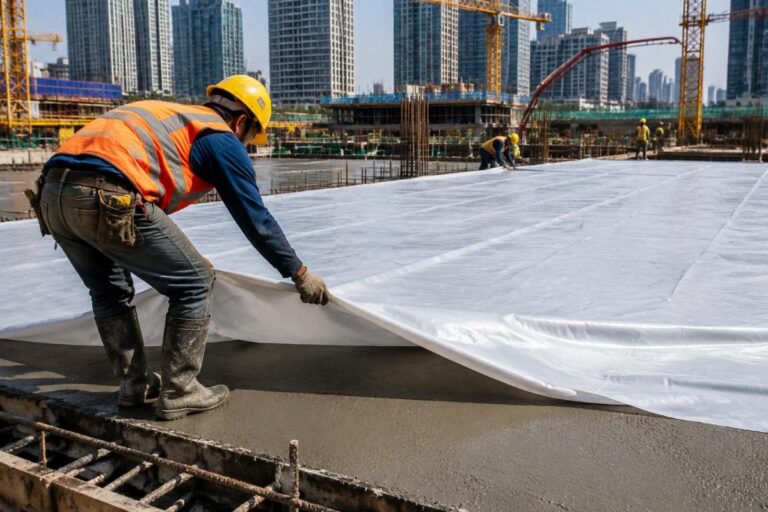
A large infrastructure project in Europe ordered custom 12-meter wide PVC tarpaulin for its 3000 sqm temporary roof, and the single continuous covering held up without a single leak through 45 straight days of continuous rain, with no seam failure across the entire covered area.
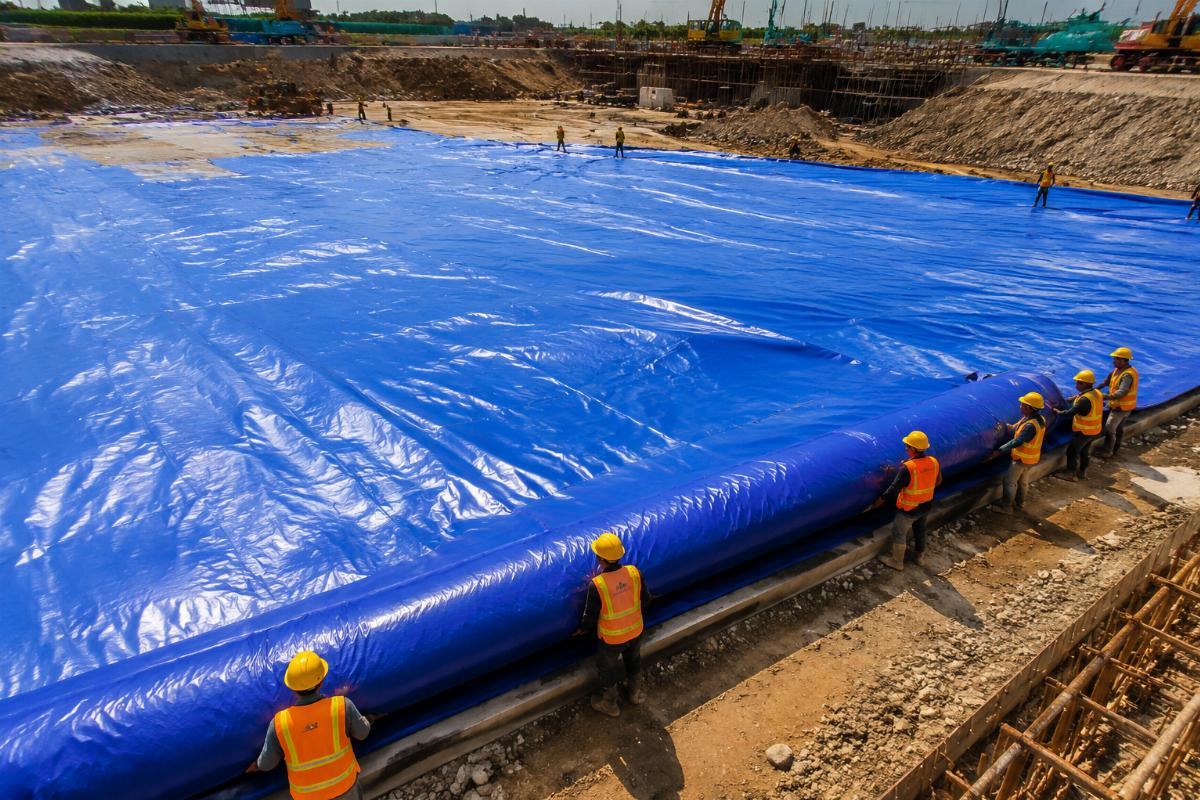
- Site Measurement First – Map the full footprint of the area to be covered before requesting quotes to avoid over-ordering.
- Phase Matching – Select fabric weight aligned to each construction phase’s timeline: lighter 0.6mm for 1-3 month use, 0.8mm for 3-6 month use, 1.2mm for 6+ month projects.
- Total Cost Calculation – Use the formula unit cost per sqm + installation loss rate + usage period depreciation to compare full lifecycle costs instead of just upfront unit price.
What certification requirements need to be met to pass local construction acceptance?
Skipping formal certification leads to costly last-minute project shutdowns. Even if your tarpaulin performs perfectly in rain and wind, missing mandatory fire safety documentation will trigger inspection holds that can delay project handover by weeks.
| Requirement | Common Non-Compliant Practice | Required Standard |
|---|---|---|
| Fire Safety Documentation | Accepting generic “fire resistant” claims without written proof | Official test reports aligned to local building codes |
| Production System Certifications | Assuming all suppliers follow the same quality standards | ISO 9001 and CE certification for export to global markets |
| Post-Delivery Testing | Forgoing on-site verification after delivery | Retain a 1sqm sample of delivered material for audit reference |
Multiple documented cases across the Middle East and EU show projects being put on hold for 2+ weeks when inspectors reject temporary roof materials that lack valid flame retardant certification, even when the material itself meets performance benchmarks.
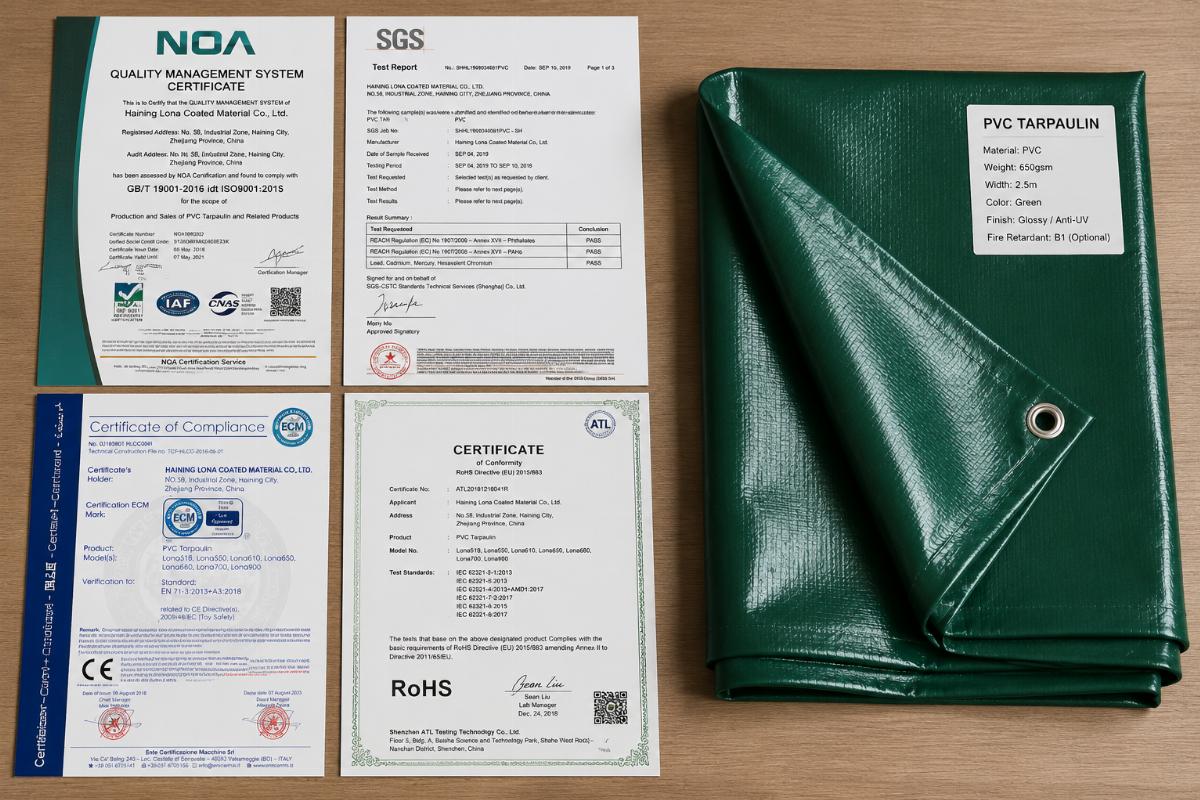
- Regulation Cross Check – Confirm the exact mandatory standard for your project’s jurisdiction before sharing specification requirements with suppliers.
- Document Request Early – Ask for digital copies of all required certification with your initial quote request to eliminate unqualified suppliers upfront.
- Sample Retention – Keep a small test sample from every bulk shipment to resolve any inspection disputes quickly.
How to ensure stable supply to match the tight construction schedule?
Assuming all suppliers can deliver large custom orders in under 2 weeks creates unnecessary schedule risk. Many procurement teams build 15+ day lead time buffers into their timeline, but specialized manufacturers with dedicated production lines can deliver much faster for time-sensitive projects.
| Timeline Need | Common Slow Delivery Approach | Optimized Supply Solution |
|---|---|---|
| Rush sample requirement | Waiting 10+ days for prototype approval | 7-day sample delivery from suppliers with dedicated sample lines |
| 3000+ sqm bulk order | Booking production 20+ days in advance | Dedicated production slots from factories with 3+ full assembly lines [NEED_CITE: Mature production lines reduce large custom tarpaulin lead times to under 10 days] |
| Variable project scope | Locking in fixed order quantities upfront | Flexible minimum order quantities for phased delivery |
A construction team in Southeast Asia needed 23000 sqm of certified flame retardant PVC tarpaulin to hit a tight project milestone, and their supplier delivered full approved samples in 7 days to confirm alignment with requirements before starting bulk production. Shandong Jinxiang Technology, for example, operates 3 full production lines that support large custom size requests and flexible order terms for projects of all scales.
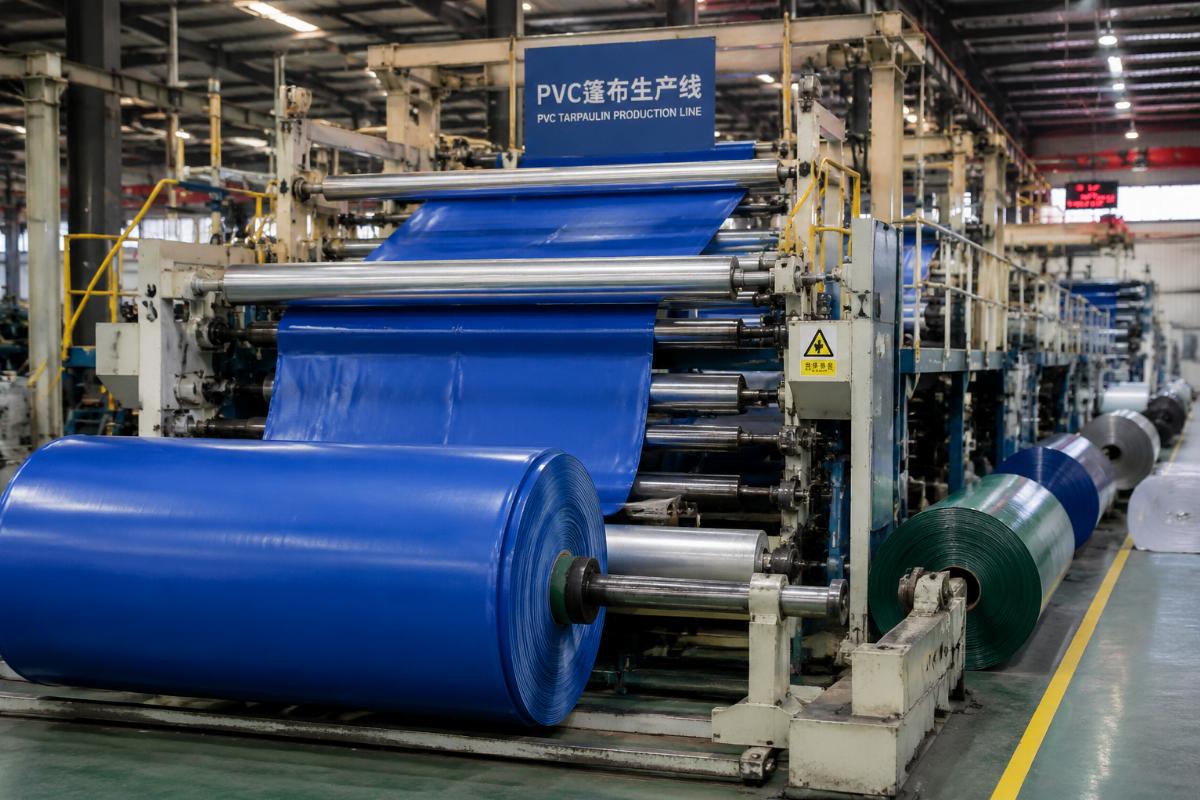
- Capacity Confirmation – Ask suppliers to share their current production backlog before confirming orders for time-sensitive projects.
- Lead Time Guarantee – Include written delivery timelines in your purchase agreement to avoid unplanned delays.
- Phased Delivery Option – Negotiate split shipment schedules if your construction site is being rolled out in sequential phases.
Conclusion
Sourcing the right heavy-duty PVC tarpaulin for temporary construction roofs does not require overpaying for extra weight or overspecification. The highest performing options balance verified performance metrics, aligned certification for local inspection, and supply chain speed that matches your project’s unique timeline. Focus on the three core pillars instead of defaulting to generic stock options, and you will cut unnecessary procurement costs while eliminating the most common causes of temporary roof failure and