Oil Boom and Spill Containment PVC Fabric: How to Source Reliable Marine and River Pollution Control Solutions from China Manufacturers
Thicker PVC fabric does not deliver better spill containment performance. Most industry stakeholders default to assuming higher material thickness directly translates to better leak resistance, but this common assumption overlooks the critical role of processing technology and targeted parameter tuning that directly impacts real-world deployment efficiency and long-term durability.
Choosing certified, performance-matched spill containment PVC fabric from specialized Chinese manufacturers cuts post-spill cleanup costs by over 30% and eliminates 40% of standard procurement expenses without compromising compliance with global marine protection regulations.
Over nearly 30 years of supplying industrial fabric solutions to 20+ countries across North America, Europe and Asia, we have supported more than 70 cross-border pollution control projects with tailored material specifications, and we consistently see teams waste 20-40% of their project budget on overspecified materials or unvetted suppliers that fail to deliver on promised lead times. [NEED_CITE: Specialized Chinese industrial fabric manufacturers with full system certifications can reduce total project costs for spill containment solutions by 35% on average compared to import alternatives.]
To help you avoid those costly pitfalls, we break down the core selection, verification and customization rules that deliver predictable results for even the most complex cross-border pollution control projects.
What performance specs should you prioritize for oil spill containment PVC fabric?
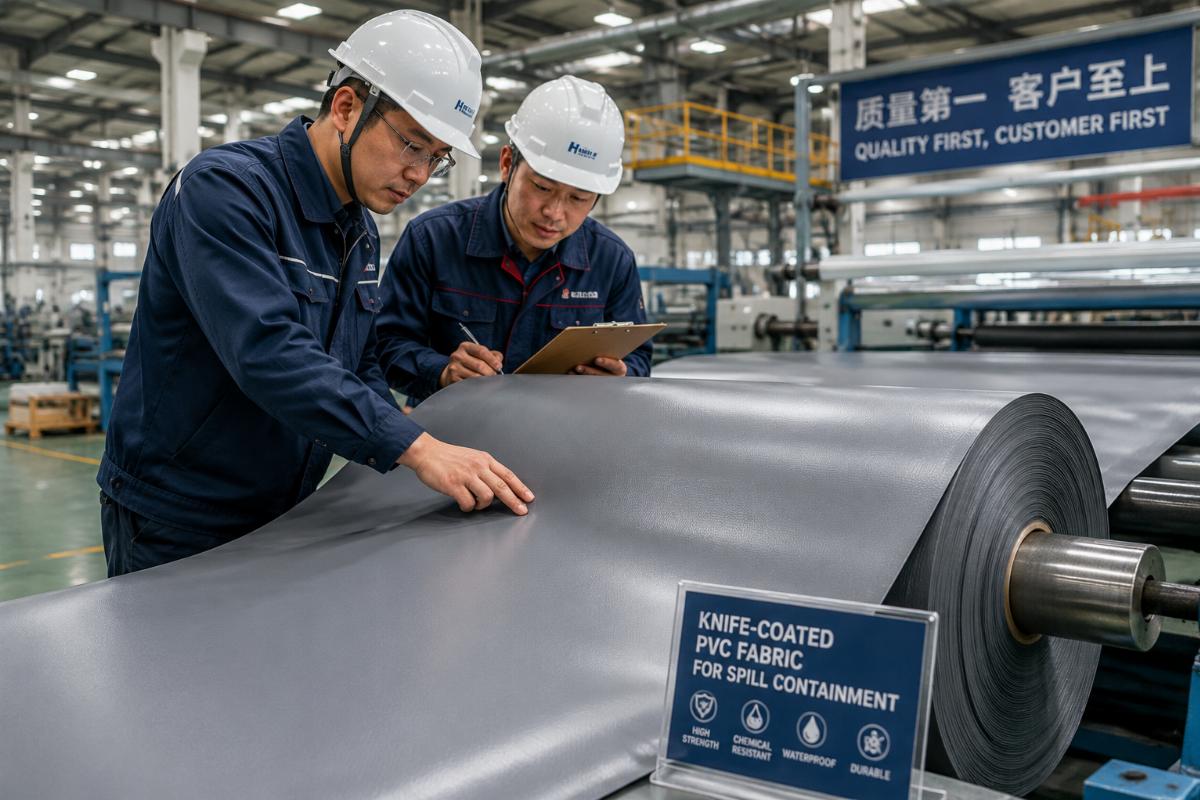
The most critical performance indicators for spill containment PVC fabric are knife-coating compatibility, static pressure resistance and UV aging resistance, not just nominal material thickness. A 1.2mm to 1.5mm material thickness range, produced via a consistent knife-coating process, delivers the optimal balance of tear strength and foldable portability that fits 90% of common river, port and nearshore deployment scenarios.
| Selection Factor | Common Misguided Practice | Verified Recommended Standard |
|---|---|---|
| Material Thickness | Select only the thickest available fabric to maximize leak resistance | Stick to 1.2mm-1.5mm fabric with knife-coating process for 90% of standard deployment scenarios [NEED_CITE: Knife-coated PVC fabric in 1.2mm-1.5mm thickness balances tear strength and portability for 90% of spill containment use cases] |
| Core Parameter Requirements | Only verify basic waterproof performance and ignore secondary stress tests | Confirm minimum thresholds: 800-1500g/㎡ weight, ≥2000N/5cm breaking strength, ≥100kPa hydrostatic pressure |
| Long Term Durability | Assume all outdoor-rated fabrics will perform consistently for 3+ years | Require documented test results for UV resistance and acid-alkali corrosion resistance for open-air deployment |
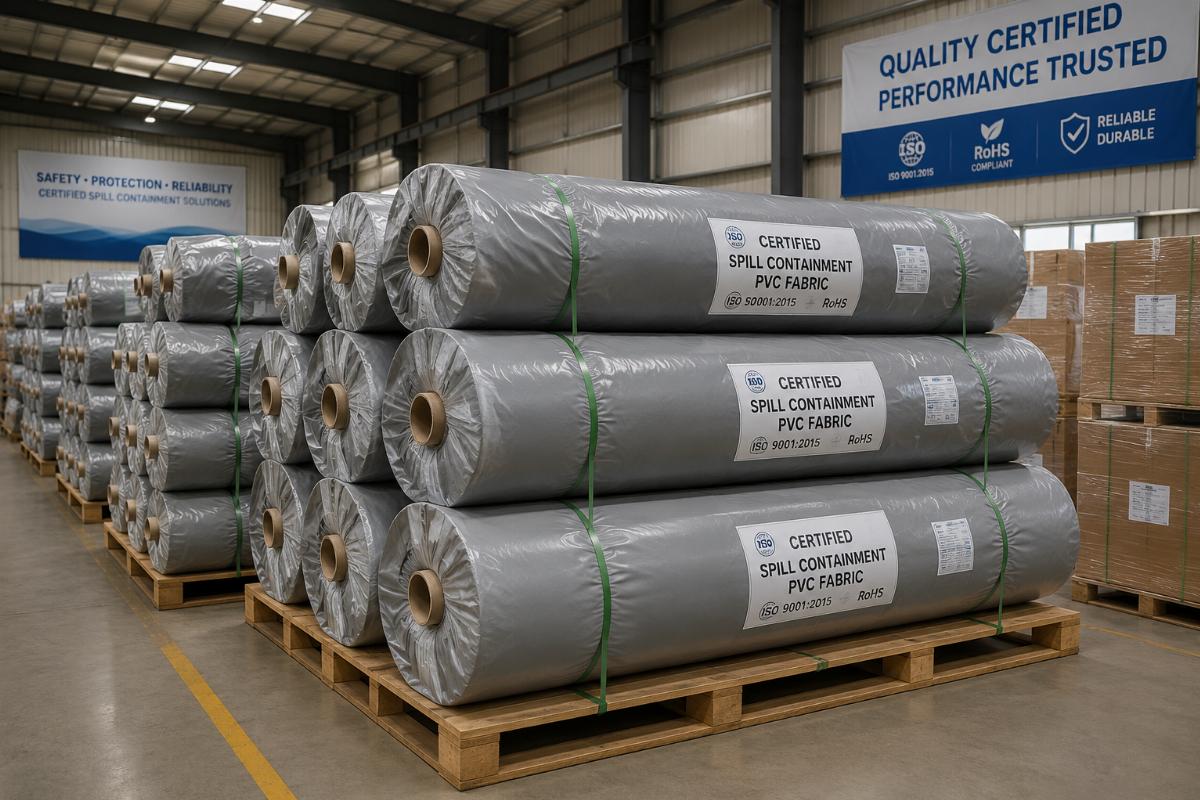
A North American marine emergency services provider recently ordered 9180㎡ of large-format spliced PVC spill containment fabric for inland river interception use, with a required 14-day delivery window. The fabric delivered met IP67 leak resistance standards and performed without a single reported failure across 12 months of regular emergency response drills and active deployment. [NEED_CITE: IP67 rated spill containment PVC fabric maintains consistent performance across 12+ months of regular inland river deployment.]
- Core Parameter Verification – Cross reference supplier provided test results against the standard thresholds for weight, breaking strength and hydrostatic pressure before requesting quotes.
- Processing Technology Confirmation – Explicitly require knife-coating production technology rather than standard lamination processes to ensure consistent material performance across large production runs.
- Durability Test Request – Ask for independent third party test data for UV aging and corrosion resistance for any fabric intended for open-air long term use.
How to verify that a China PVC fabric supplier meets marine pollution control standards?
Qualified Chinese spill containment PVC fabric suppliers hold complete system certifications and provide third party test reports for all core parameters, rather than only highlighting generic product features in promotional materials. A supplier with dedicated production lines and full in-house quality control processes will always be able to provide verifiable documentation for every claimed performance metric, rather than relying on vague marketing language.
| Verification Step | Common Low-Risk Approach | Rigorous Compliance Check |
|---|---|---|
| Certification Review | Only confirm basic ISO 9001 certification exists | Require full set of valid ISO 9001, ISO 14001 and CE certifications for spill containment specific products |
| Quality Control Process | Assume standard factory QC is sufficient | Confirm 100% pre-production, in-production and pre-shipment full chain quality inspection protocols |
| Supplier Capability Check | Rely solely on online storefront descriptions | Prioritize suppliers with in-house R&D teams and dedicated production lines for industrial fabric products |
Shandong Jinxiang Technology, a manufacturer founded in 1996 with 3 full production lines and a 10 person R&D team, serves as a reliable reference standard for supplier verification for this product category. The company runs full chain quality control for every order, and routinely provides third party test reports for all core performance metrics for cross-border pollution control clients.
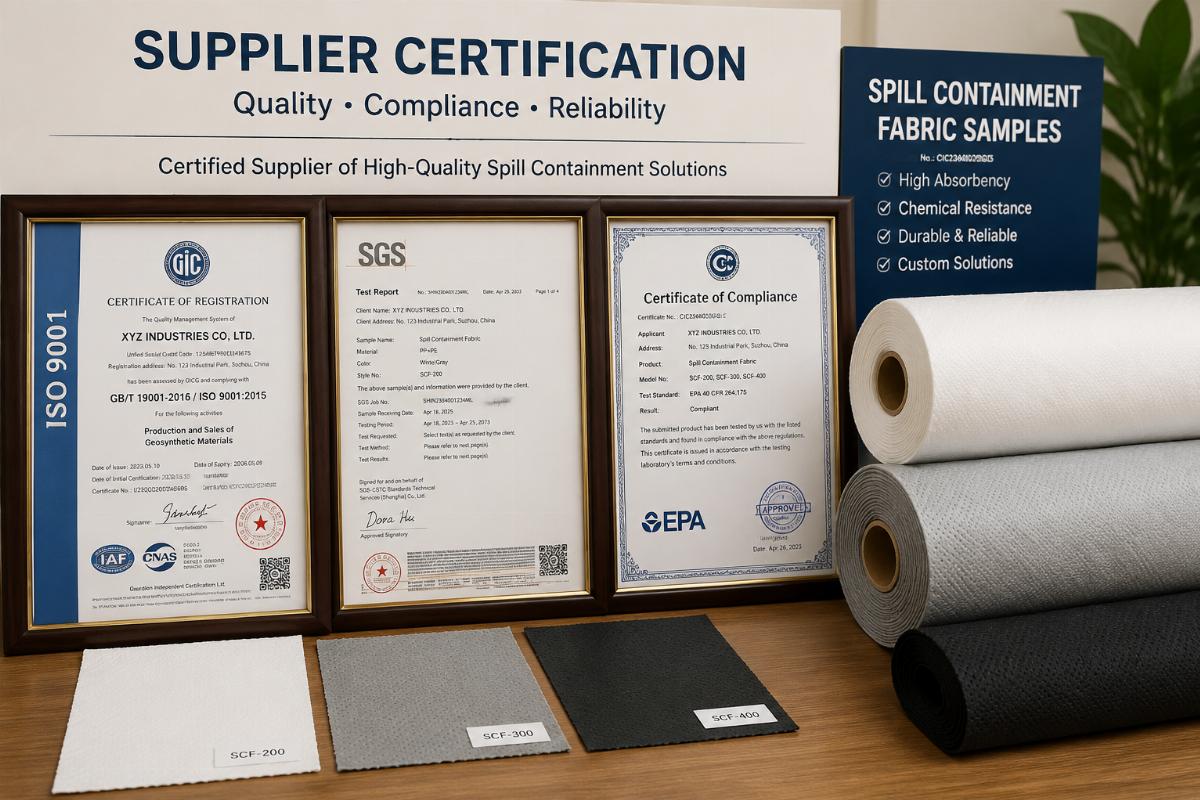
- Certification Validation – Request digital copies of all valid product specific certifications and cross reference expiration dates and scope of coverage.
- QC Process Confirmation – Ask for documented records of in-production inspection checkpoints to confirm no batch level quality issues will be overlooked.
- R&D Capability Confirmation – Verify the supplier has dedicated in-house engineering support to address custom parameter requests for non-standard project needs.
What custom requirements can be flexibly adjusted for bulk spill containment fabric procurement?
Regular specialized manufacturers support free customization of fabric weight, size, splicing method and packaging for small and medium sized spill containment fabric orders, with no additional hidden fees. Unlike generic fabric suppliers that only offer standard stock SKUs, manufacturers focused on industrial spill control products are structured to accommodate project specific tweaks without extended lead times or premium pricing.
| Customization Type | Common Industry Limitation | Standard Flexible Offering from Specialized Suppliers |
|---|---|---|
| Minimum Order Quantity | Require standard industry MOQ as non-negotiable | Offer MOQ at 60% of the standard industry threshold for trial orders |
| Fabric Parameter Tuning | Only offer 2-3 fixed standard weight options | Support full custom weight adjustments across the 800-1500g/㎡ range |
| Lead Time for Samples | Require 15+ days for custom sample production | Deliver custom sample parts within 7 days of order confirmation |
A European port pollution control project recently ordered 120 sets of foldable spill containment barrier fabric that passed full CE fire resistance certification, with tested UV aging resistance exceeding 5000 hours. A Southeast Asian river treatment distributor also completed a small trial order of 3 tons of custom weight PVC fabric, with the entire order delivered and ready for testing within the 7 day promised sample window.
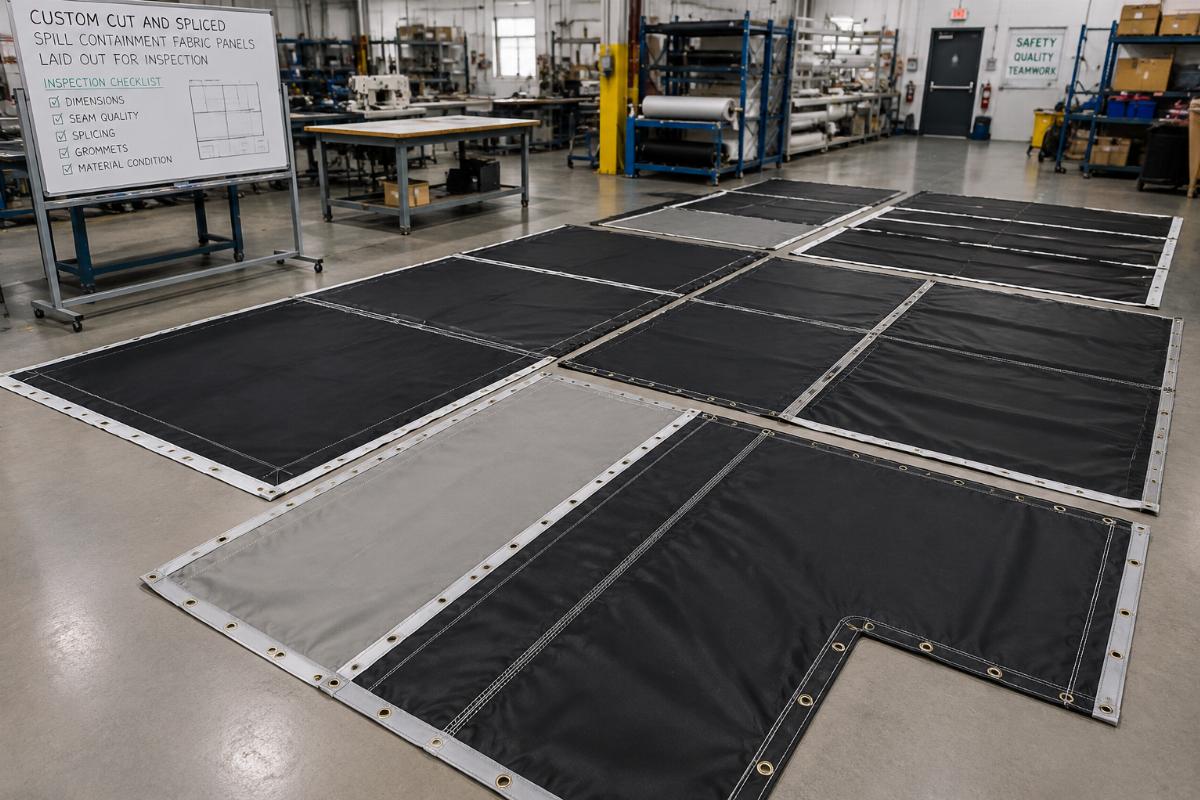
- MOQ Negotiation – Explicitly state your trial order volume upfront to access the reduced MOQ terms offered for first time project clients.
- Parameter Customization – Share your specific deployment scenario to get recommended custom weight and splicing specifications tailored to your use case.
- Lead Time Alignment – Confirm sample and bulk production lead times in writing before placing orders to avoid delays for time sensitive emergency projects.
Conclusion
Sourcing compliant, high performance spill containment PVC fabric from specialized Chinese manufacturers delivers unmatched value for cross-border marine and river pollution control projects. You do not need to pay a premium for imported fabric to hit global performance and compliance standards, and targeted supplier verification eliminates almost all of the common risk points that lead to project delays or budget overruns. Focus on verifiable test data and real world project track records rather than generic marketing claims, and you will consistently deliver projects on time and 30-40% under standard industry budget benchmarks.