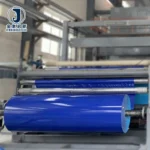
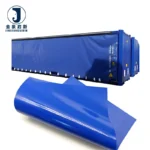
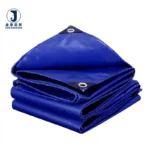
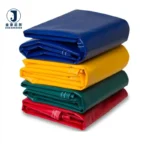
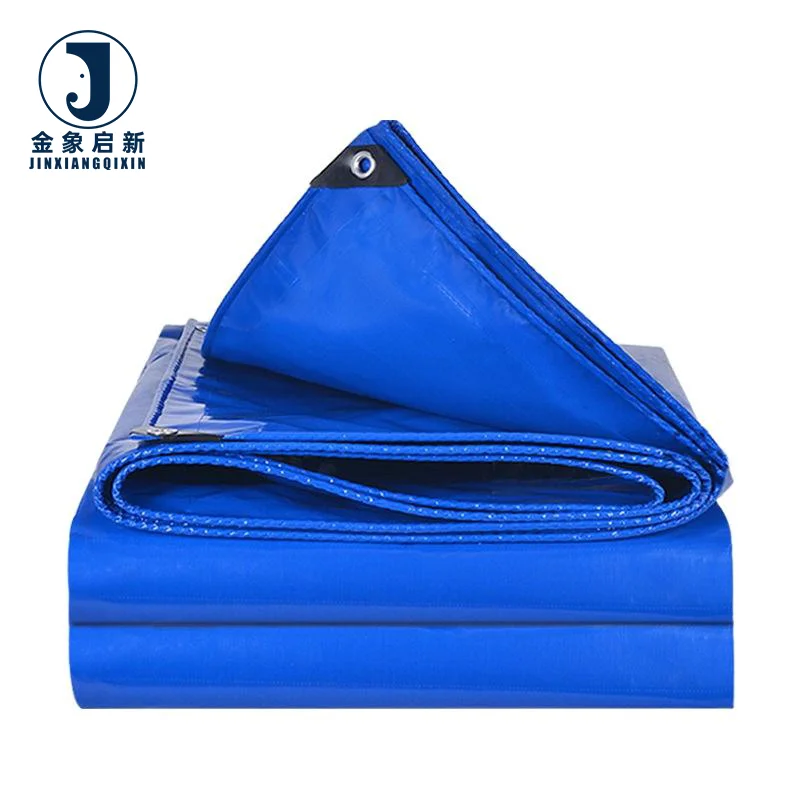
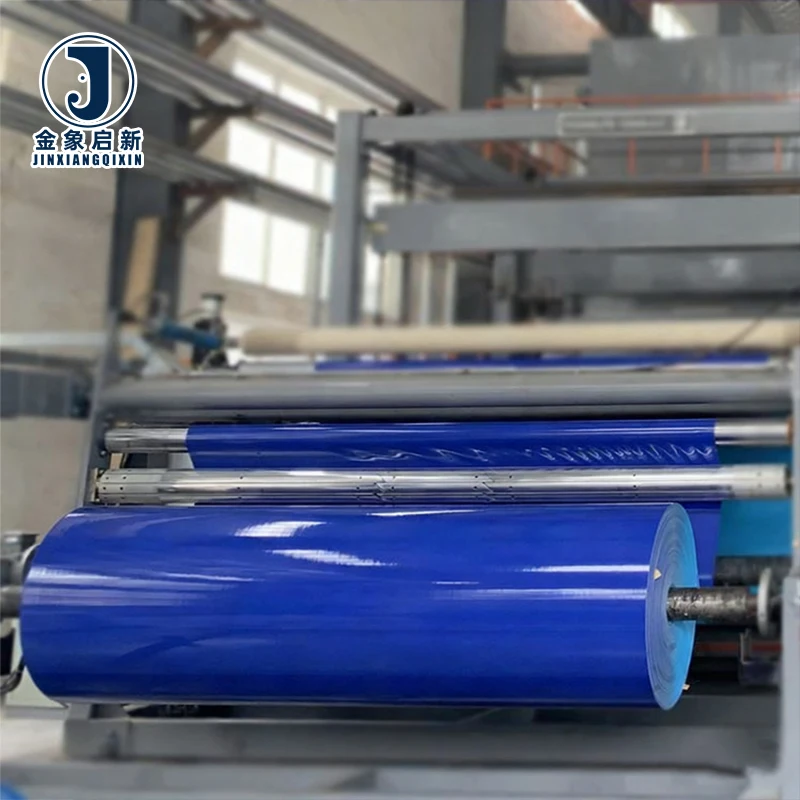
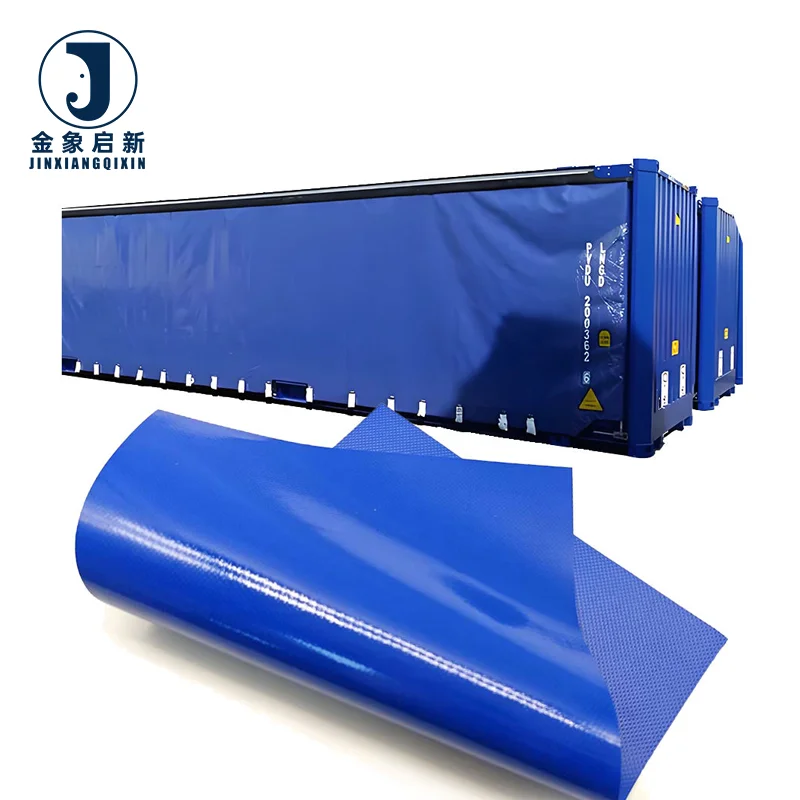
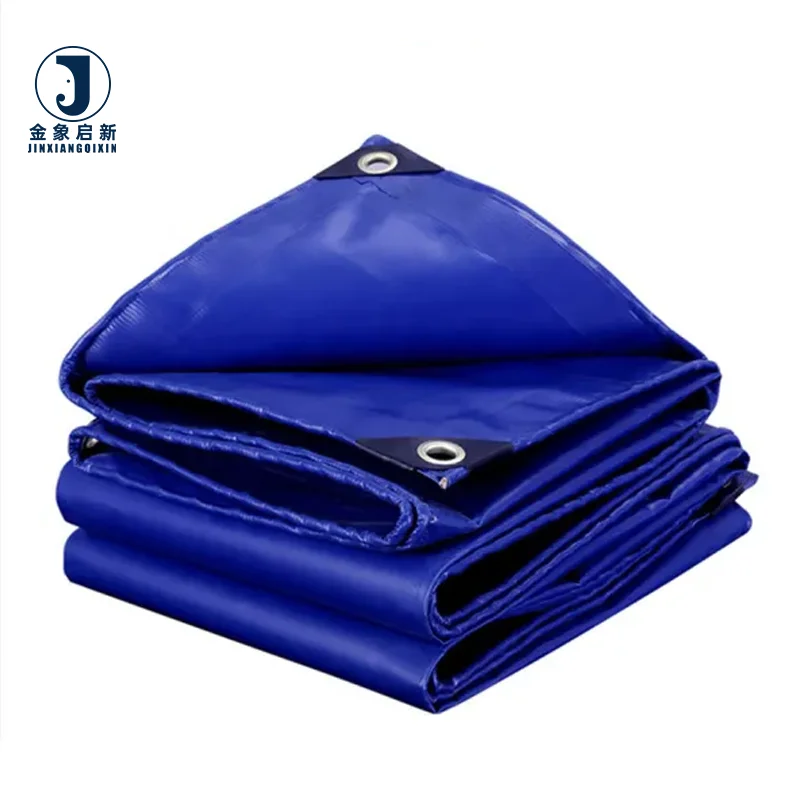
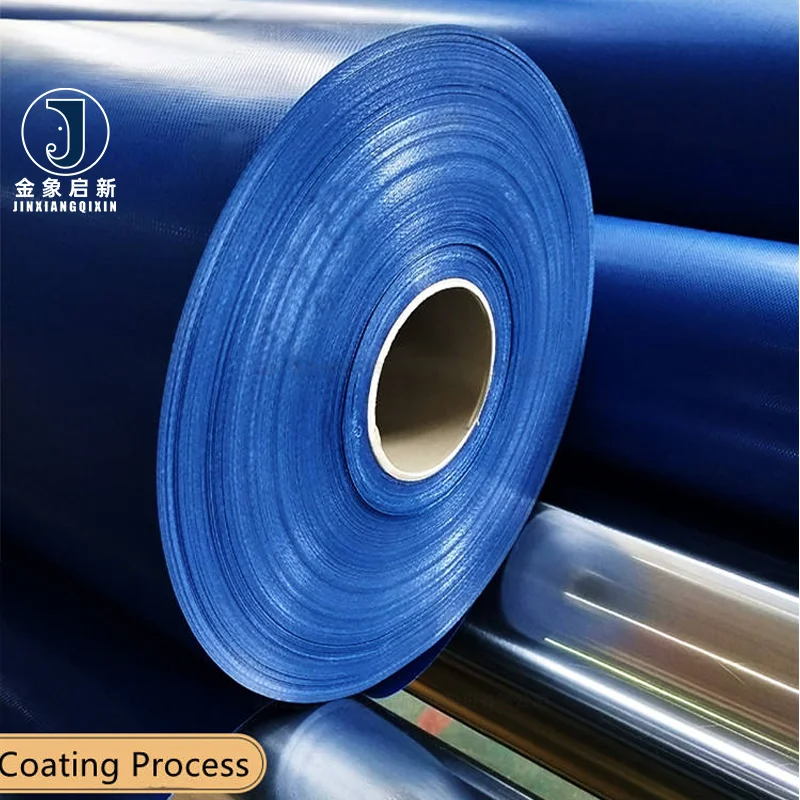
Proven Coating Control — Nearly 30 years focused on PVC coated fabric production with dedicated QA/QC at every stage, ensuring coating weight, adhesion and surface finish meet technical ventilation and structural specifications before dispatch.
Technical Specifications
| Parameter | Value |
|---|---|
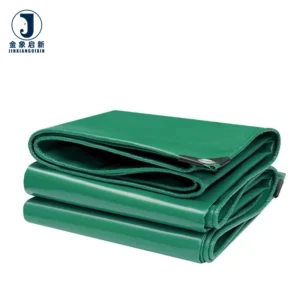
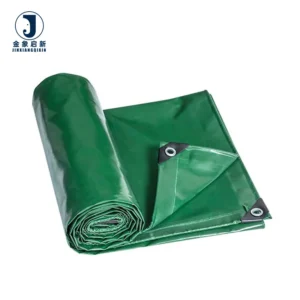
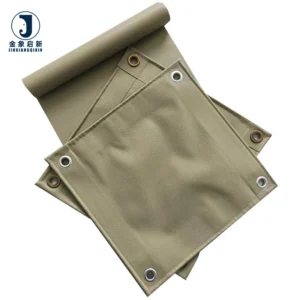
| Product Type | PVC Coated Tarpaulin |
| Material Composition | PVC coating on high-strength polyester mesh fabric |
| Coating Technology | Laminated & Hot-melt Coating |
| Weight Options | 350gsm / 420gsm / 500gsm / 550gsm / 600gsm / 750gsm (confirm grade for application) |
| Thickness Options | 0.32mm / 0.35mm / 0.4mm / 0.45mm / 0.5mm / 0.65mm (confirm grade for application) |
| Roll Dimensions | 2m × 75m or 2.1m × 50m |
| Custom Sizing | Available per project requirements |
| Surface Finish | Glossy or Matte |
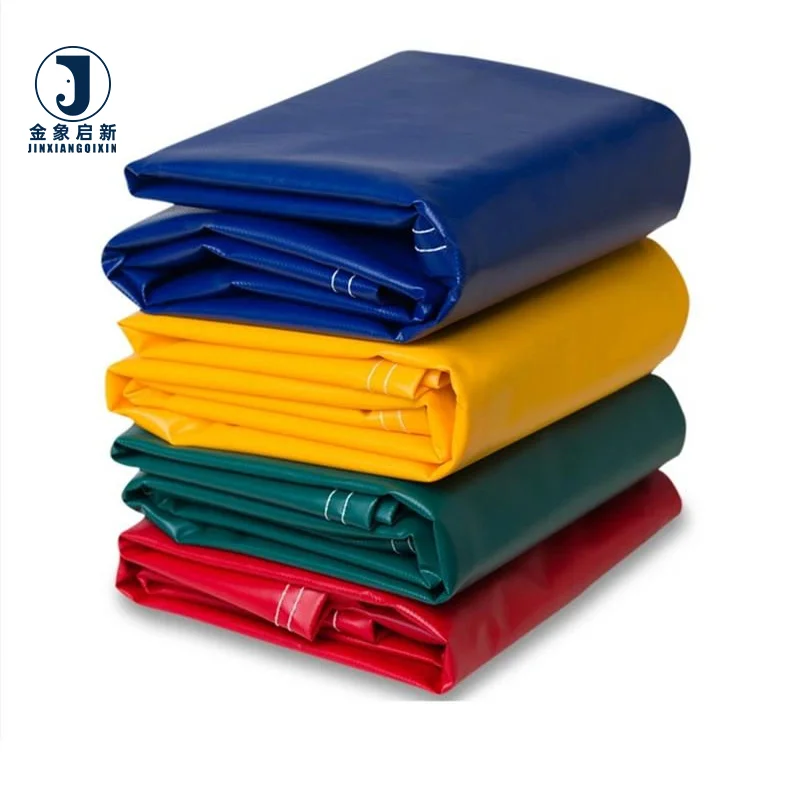
| Colour Options | Blue / Red / Yellow / Light Blue / Grey (custom colours available) |
| Waterproof Construction | Double-sided PVC coating, fully waterproof |
| Key Features | Cold crack resistance, anti-mildew treatment, anti-static treatment available, UV resistant, high tensile and tear strength for welding |
| Fire Performance | Flame retardant grades available — confirm the grade required for your market |
| Anti-Static | Treatment available — surface resistance to be confirmed per order |
| Standards | ISO, CE certified production |
Application Suitability
| Application | Exposure & Requirement |
|---|---|
| Mining ventilation ducting | Constant airflow abrasion, dust ignition risk, fire compliance mandates anti-static and flame retardant fabric |
| Tunnelling air duct systems | Humid underground conditions, mechanical contact with rock and equipment, require tear resistance at flex points |
| Aviation hangar ventilation | Sensitive electronic environments demanding documented anti-static certification and controlled airflow |
| Inflatable and membrane structures | Continuous wind load, UV exposure, welded seam integrity across long panel runs |
| Poultry farm curtains | Moisture, ammonia exposure, temperature fluctuation, require cold crack resistance and anti-mildew treatment |
| Industrial enclosure systems | Chemical dust, wind load, require consistent coating adhesion and dimensional stability |
What Happens When Ventilation Duct Fabric Lacks Documented Certification
A ventilation duct without verifiable fire and anti-static test reports is a compliance failure waiting to be discovered at site inspection.
Mining and tunnelling contractors face a recurring problem: the ventilation duct arrives on site, gets installed, and then the safety auditor asks for the flame retardant certificate and anti-static test report. The supplier either produces a generic document that does not match the batch or admits the test was never done. The duct is torn down, the project stalls, and the cost of rework far exceeds what a proper specification review would have taken [NEED_CITE: fire and anti-static compliance requirements for underground ventilation ducting].
We supply PVC coated tarpaulin fire retardant and anti-static grades with test reports aligned to your project specification. The grade and surface resistance are confirmed at inquiry stage, not after the material has already shipped.
Coating Adhesion and Weld Seam Behaviour in Duct Fabrication
The difference between laminated and hot-melt coating technology becomes critical when fabricators weld seams on ventilation duct sections. Hot-melt coating penetrates the polyester mesh more deeply, producing stronger interlayer adhesion that resists delamination at the weld line under continuous airflow vibration. Laminated coating offers a smoother surface and consistent thickness, suited to applications where the fabric is mechanically joined rather than thermally welded.
For PVC coated tarpaulin used in duct construction, the coating method directly determines whether the seam fails before the fabric body does. Fabricators working with anti-static grades must also confirm that the welding temperature and dwell time do not compromise the surface treatment layer.
Anti-Static Treatment Verification for Sensitive Environments
Aviation maintenance hangars, grain handling facilities and underground mining operations all require documented anti-static performance, but the measurement method and acceptable surface resistance range vary significantly between sectors. Anti-static treatment applied during the coating process must be verified with a test report that states the measurement standard and the result [NEED_CITE: test methods for surface resistivity of coated fabrics in industrial applications].
We provide anti-static PVC coated tarpaulin with certification details confirmed at order stage. For projects where the site safety specification calls for a particular surface resistance range, we work with you to formulate the coating compound accordingly and supply the supporting test documentation with the shipment.
Understanding How GSM, Thickness and Weave Interact in Technical Fabric
Selecting the correct specification for a ventilation duct or membrane structure requires reading multiple parameters together rather than relying on any single value. GSM indicates the total mass per square metre but does not isolate how much of that weight comes from the base polyester fabric versus the PVC coating. A 550gsm fabric with a dense, high-denier base fabric will exhibit different tensile and tear behaviour than a 550gsm fabric where most of the weight sits in a thick but low-density coating layer.
Thickness correlates with puncture resistance and flex durability but also affects the minimum bend radius during duct fabrication. Thinner grades at 0.32mm or 0.35mm suit tight-radius inflatable structures, while heavier grades at 0.5mm to 0.65mm provide the rigidity needed for long-span ventilation ducts that must resist collapse under negative pressure. The base fabric weave density determines how effectively tear propagation is arrested once a puncture occurs. Coating weight and adhesion strength influence how well the welded seam holds under cyclic loading, which is often the governing failure mode in duct systems rather than the body fabric itself.
The Cost of Undocumented Specification Claims in Technical Procurement
A duct system specified with flame retardant fabric but supplied without a matching test report creates a liability that surfaces only when the site inspector or safety auditor conducts their review. By that point, the duct is already hung, the joints are welded and the project timeline is compressed. Ripping down installed duct sections to replace them with compliant material costs multiples of what a proper documentation review at the quotation stage would have required [NEED_CITE: cost impact of non-compliant materials discovered during site safety audits].
Batch-to-batch colour variation matters less for underground ventilation than for above-ground membrane structures where panels sit adjacent to each other. However, coating weight inconsistency between rolls can produce uneven weld behaviour during fabrication, forcing operators to adjust heat settings mid-run and generating waste sections. We address this with in-process QA checks at every production stage.
Why Technical Buyers Source This Fabric Here
Our production facility runs three full coating lines and 36 sets of professional equipment, providing the capacity to fulfil large duct orders on schedule without outsourcing to secondary mills. This matters when your project requires consistent anti-static or flame retardant formulation across every roll in the shipment.
The 10-person R&D team handles custom formulation requests, developing sample panels within days so you can verify coating weight, surface finish and weld behaviour before committing to a full production run. Specification sheets state the exact GSM, base fabric construction and coating method for each roll, not a generic range that leaves the actual weight open to interpretation at delivery.
Dedicated QA/QC personnel conduct 100% inspection before shipment, checking coating adhesion, colour consistency and dimensional accuracy roll by roll. Every shipment is accompanied by the documentation package your compliance team requires: material specification sheets, applicable test reports, ISO and CE certificates and pre-shipment inspection records.
Documentation & Verification
- Material specification sheet stating exact GSM, base fabric denier, coating method and colour reference for each roll
- Flame retardant and anti-static test reports matched to batch and formulation where applicable
- Pre-shipment inspection record verifying weight, dimensions and coating adhesion per roll
- ISO and CE certificates covering production facility and quality management system
- Roll packing list with individual roll weights and dimensions for receiving verification
Fabrication, Handling & Storage
- Hot-melt coated grades tolerate higher weld temperatures; confirm dwell time settings with sample before production runs
- Matte surface finish reduces glare during installation but requires adjusted heat settings compared to glossy for consistent weld strength
- Store rolls upright on pallets in a dry, shaded area to prevent flattening and edge deformation on the 2m or 2.1m widths
- Anti-static treated fabric should be tested on arrival to confirm surface resistance before cutting and welding begins
- Cold crack resistant grades remain flexible during low-temperature transport but should be unrolled at ambient temperature for accurate cutting
- Custom roll lengths up to 75m reduce splice joints in long duct runs, minimising potential leak points at welded connections
Specifying the Right Grade for Your Project
To move forward, we need to understand the operating environment and compliance framework for your application. For ventilation duct projects, share the fire classification standard and anti-static surface resistance range mandated by your site safety specification. For membrane and inflatable structures, advise the wind load category and whether panels will be welded or mechanically joined on site.
Provide your required roll width, annual volume estimate and whether you need the fabric supplied as stock rolls or cut-to-size panels. If colour matching across multiple rolls is critical for your installation, specify the reference colour so we can confirm batch consistency at the sample stage.
Frequently Asked Questions
Q: What fire-retardant grade and test standard can you supply for this PVC coated tarpaulin?
A: We offer flame retardant grades available to match your project specification. The exact grade and test standard depend on your market requirements — whether that is a national building code classification or a site-specific mining safety standard. We confirm the applicable grade and provide the matching test report at the quotation stage, before production begins, so there is no ambiguity when the fabric arrives on site.
Q: How is anti-static performance measured and what surface resistance can be certified?
A: Anti-static treatment is applied during the coating process and measured according to the test standard specified by your project. Surface resistance values vary depending on the formulation and the measurement method. We confirm the target range during the inquiry and supply a test report with the shipment. For sensitive environments like aviation hangars or grain facilities, we recommend providing your compliance specification early so the formulation can be matched precisely.
Q: Which GSM and thickness grade is recommended for ventilation duct versus membrane structure use?
A: Ventilation duct applications typically require heavier grades with strong weld seam integrity to withstand continuous airflow vibration and negative pressure. Membrane structures may use lighter grades where flexibility and wind load resistance are prioritised. We review your specific loading conditions, span dimensions and joining method to recommend the appropriate GSM and thickness combination, then provide a sample for fabrication testing before you commit to the full order.
Q: Can you provide a test report matching our mining or aviation compliance requirement?
A: Yes. We work with your compliance documentation requirements from the inquiry stage. Share the specific standard or test method your site auditor requires, and we confirm whether our formulation and test documentation align. The test report is issued against the actual production batch, not a generic reference, so the documentation you submit for site approval corresponds directly to the material installed.
Q: How do you ensure batch-to-batch consistency on coating weight and colour for large duct orders?
A: Every production run goes through in-process QA checks at each coating stage, with dedicated QC personnel verifying coating weight, colour consistency and dimensional accuracy roll by roll before shipment. For large orders spanning multiple production batches, we match coating formulation and colour reference across all rolls and document the results in the pre-shipment inspection record that accompanies your delivery.