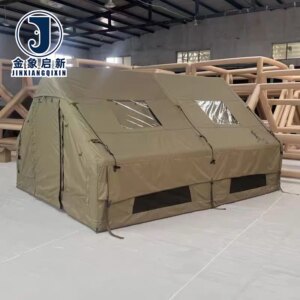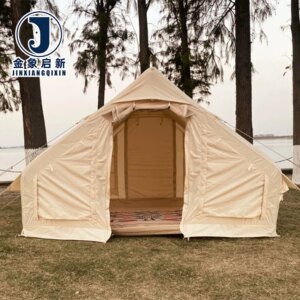
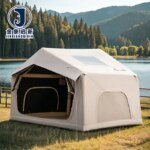
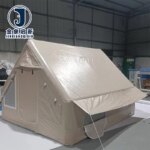
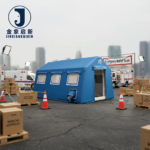
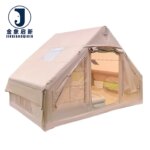
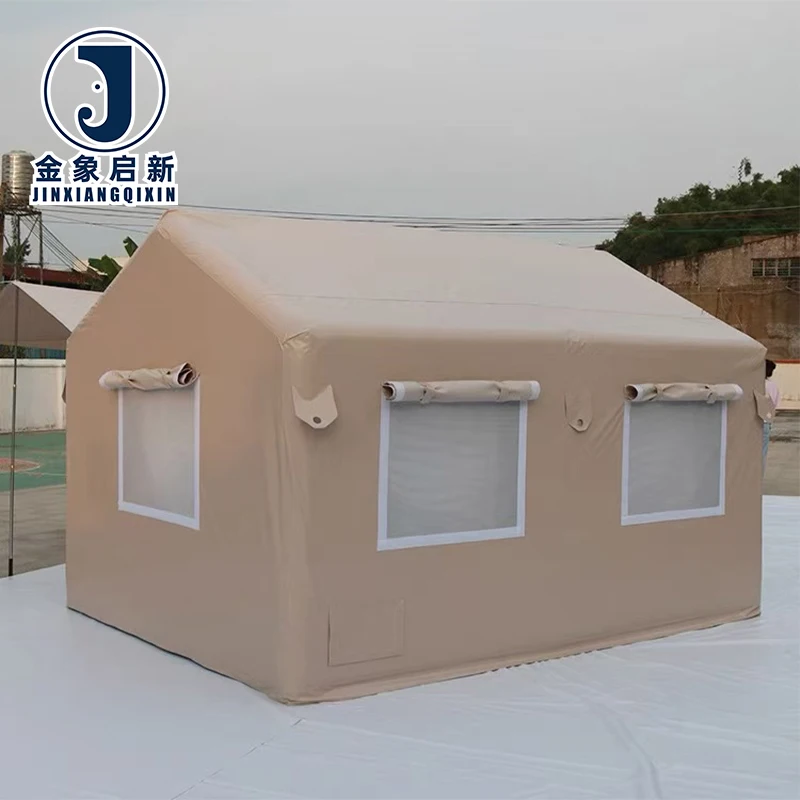
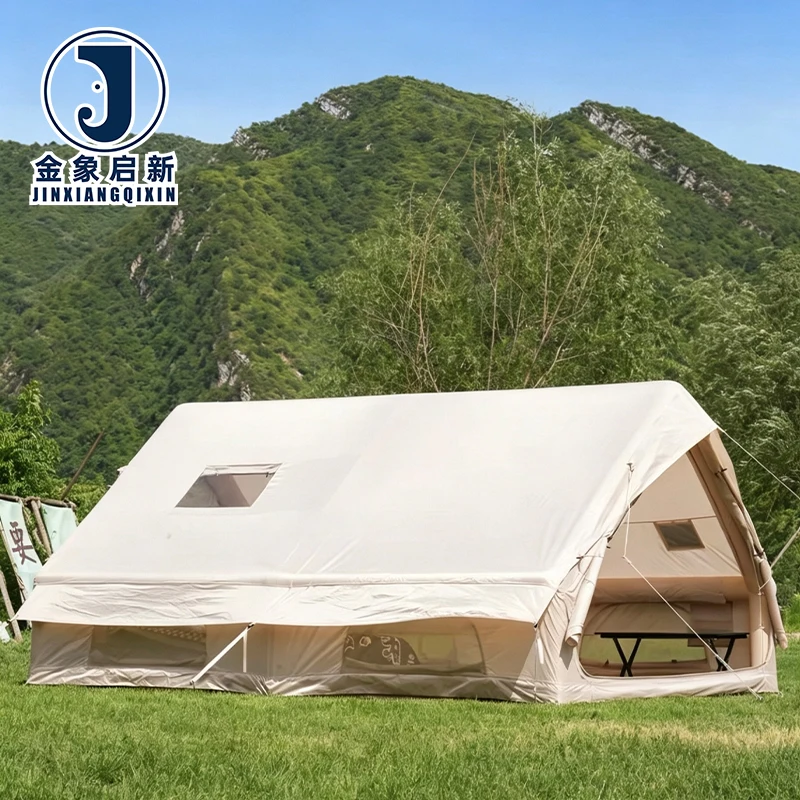
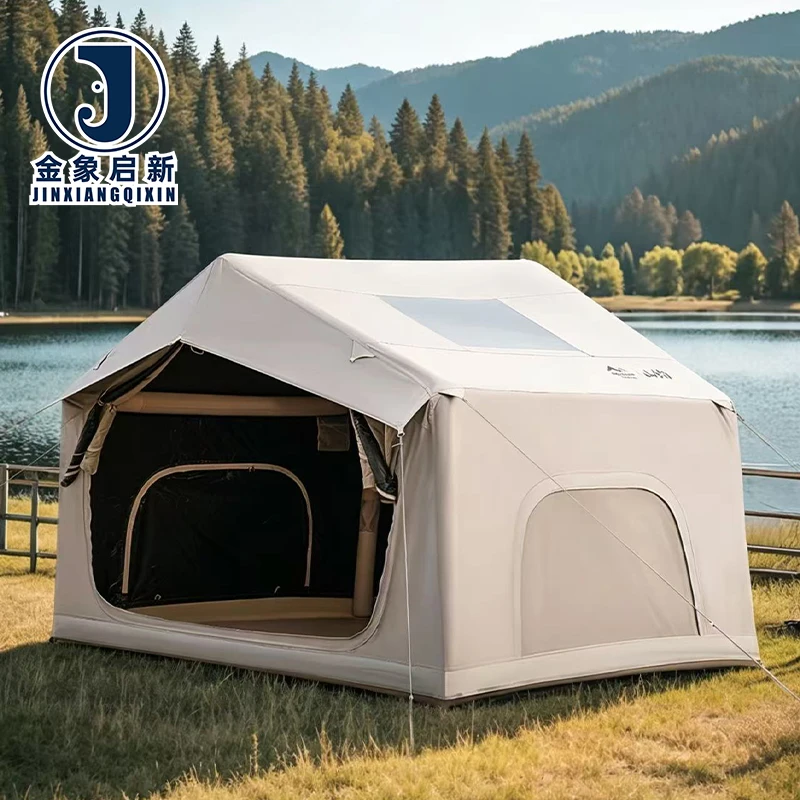
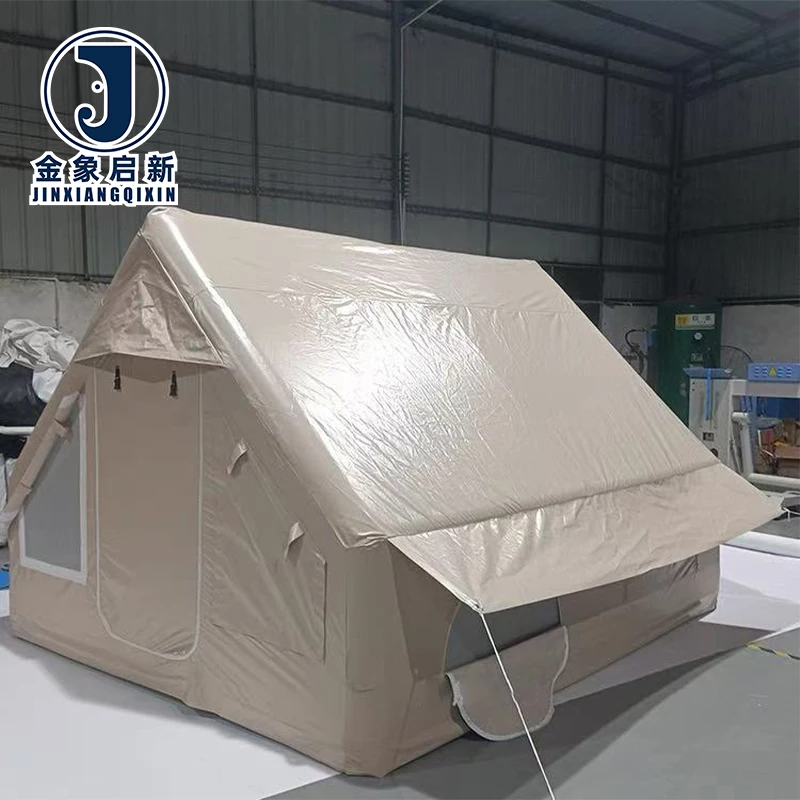
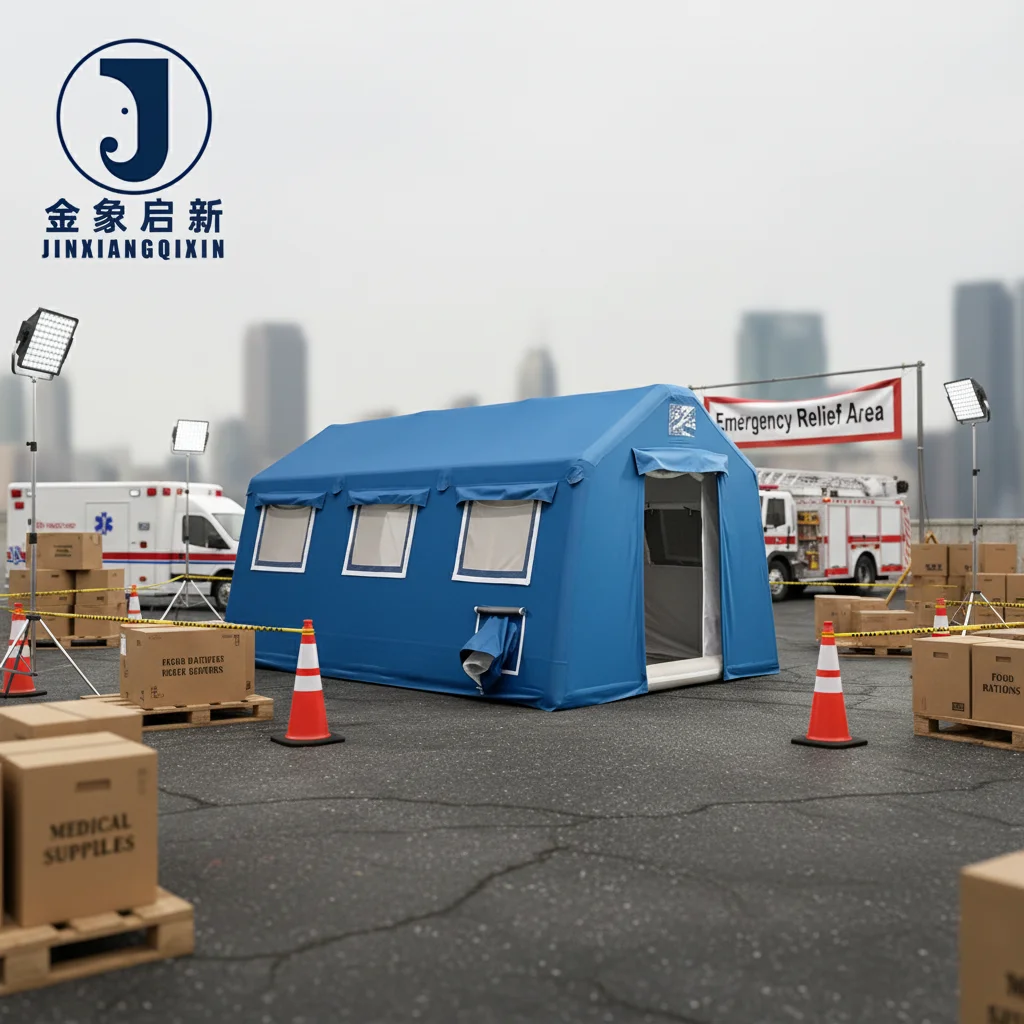
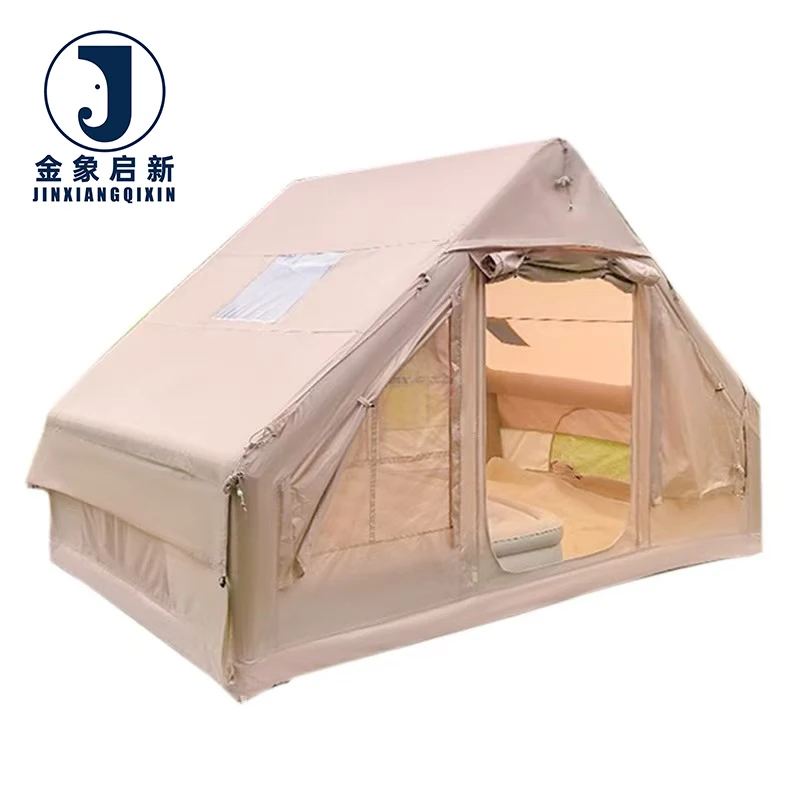
Nearly 30 Years in Coated Fabric — Every batch of fire-retardant inflatable tent fabric we produce ships with test reports traceable to the specific production run, ensuring your compliance documentation is never left to assumption.
Technical Specifications
| Parameter | Value |
|---|---|
| Product Type | Inflatable Tent |
| Core Material | PVC tarpaulin |
| Capacity | 3-4 Person |
| Material Thickness | 0.4mm–1.2mm (grade dependent on structural and inflation pressure requirements) |
| Key Performance | Waterproof, tear-resistant, UV-resistant (test basis not stated in source), fire-retardant (grade not stated in source), anti-static (standard not stated in source) |
| Customization Options | Size (2-8 persons), material thickness, color, pattern printing |
| Quality Control | Full-process inspection with dedicated QA&QC; 5-step check including material certification review, fabric strength testing, waterproof verification, inflation pressure endurance, dimensional accuracy |
| Certifications | ISO9001, ISO14001, ISO45001, CE |
Application Suitability
| Application | Exposure & Requirement |
|---|---|
| Mining and tunnelling underground shelters | Continuous exposure to confined-space fire risk; requires verifiable fire-retardant certification per site regulation |
| Aviation maintenance inflatable enclosures | Sensitive equipment nearby; demands anti-static surface properties to prevent discharge |
| Emergency disaster relief deployment | Rapid inflation and frequent relocation; needs tear-resistant seams and waterproof integrity under field conditions |
| Construction temporary site offices | Prolonged outdoor UV and weather exposure; requires durable coating adhesion and structural inflation stability |
| Logistics field equipment storage | Heavy abrasion from ground contact and wind flex; demands high tear strength at welded seams |
Why Certifications Matter More Than Claims for Inflatable Tent Fire Retardant Certified Installations
A fire-retardant claim without a named grade and test standard is unverifiable at the job site — we ship test reports matched to each production batch so your inspector sees exactly what the fabric carries.
Inflatable tent fire retardant certified installations are increasingly scrutinised by site safety officers, particularly in mining, tunnelling, and aviation environments where a generic "flame resistant" label holds no regulatory weight. Procurement teams frequently receive fabric described as fire-retardant only to discover during site inspection that the accompanying paperwork references a different product line or an expired test certificate. [NEED_CITE: fire classification standards for temporary structures in industrial environments] This gap between quotation language and delivered documentation causes project delays and failed compliance audits. We address this by binding the test report to the batch number on every roll and finished unit we dispatch.
Compliance Documentation That Travels With Every Shipment
Site auditors in mining and aviation sectors do not accept generic material safety data sheets as proof of fire-retardant or anti-static compliance. Each inflatable tent we supply for certified applications ships with a test report that names the specific grade achieved, the standard applied, and the production batch it was drawn from. This means your on-site compliance file is complete before the structure is inflated, eliminating the back-and-forth with suppliers that typically delays project sign-off. Available in fire retardant grades — confirm the grade required for your market and regulatory jurisdiction before placing your order.
Structural Integrity Under Inflation Pressure and Operational Flex
Inflatable structures place unique demands on coated fabric: the material must hold internal air pressure continuously while resisting the cyclic flex caused by wind loading and occupant movement. Our R&D team of 10 technicians develops structural patterns and seam layouts that distribute stress away from high-flex zones, particularly at the junctions where air beams meet the ground sheet. The PVC tarpaulin core is available in thicknesses from 0.4mm to 1.2mm, selected based on the inflation pressure and structural span your design requires. [NEED_CITE: tensile and tear test methods for coated fabrics per ISO 1421] Every finished unit undergoes an inflation pressure endurance test as part of our 5-step quality check before it leaves the facility.
Reading the Specification Sheet Beyond the Headline Numbers
Material thickness alone does not determine how an inflatable tent performs under load. The base fabric denier and weave density govern tear propagation resistance — a thicker coating over a loosely woven base will resist puncture but may split rapidly once a tear initiates. Coating adhesion, determined by the lamination or knife-over-edge process used, directly affects how well welded seams hold under inflation pressure; poor adhesion means the seam peels before the fabric itself fails. The balance between these properties is where process control matters: consistent coating weight application across the full width of each roll ensures that every panel cut from it behaves identically under pressure. Fire-retardant and anti-static treatments are applied during the coating stage, and their effectiveness depends on uniform distribution through the coating layer — a poorly dispersed additive creates zones of vulnerability that only show up under testing. [NEED_CITE: coating adhesion and weld strength testing for PVC tarpaulin structures]
The Hidden Cost of Undocumented Material Grades
When fire-retardant or anti-static properties are specified on a quotation but not verified on arrival with traceable test data, the consequences extend far beyond a failed inspection. In mining operations, an uncertified inflatable shelter can halt an entire shift pending safety review. In aviation maintenance environments, an anti-static failure risks discharge damage to sensitive avionics. Beyond compliance, inconsistent material across a batch forces fabricators to reject entire sections of a production run when colour or coating weight varies between rolls — a problem that only becomes visible once panels are laid side by side on the assembly table. [NEED_CITE: batch consistency requirements for coated fabrics in industrial applications] These failures are not material failures; they are documentation and process control failures that occur long before the fabric reaches the job site.
Why Procurement Teams Source Inflatable Structures From This Facility
Our 9,180 m² production facility operates three full production lines with 36 sets of professional processing equipment, giving us the capacity to supply both bulk roll stock and finished inflatable units on a single project timeline. The 10-person R&D team handles material selection, structural pattern design, and sample development — samples for custom thickness and dimensional requirements are typically ready for evaluation within days. Every production stage is monitored by dedicated QA and QC staff, with 100% pre-shipment inspection covering inflation pressure endurance and dimensional accuracy. We hold ISO9001, ISO14001, ISO45001, and CE certifications, which are cited on the documentation accompanying each shipment. For projects requiring OEM or ODM development, our sample customisation capability covers pattern printing, material grade selection, and full product design from initial concept through to production approval.
Documentation & Verification
- Material specification sheet citing PVC composition, coating weight, and base fabric denier per batch
- Fire-retardant test report with grade and standard named, traceable to the production run
- Anti-static surface resistance data aligned to the regulatory standard your site requires
- Pre-shipment inspection record covering inflation pressure endurance and dimensional accuracy
- Certificate of origin and full customs documentation for cross-border project supply
- Roll packing list with batch numbers for traceability across the shipment
Fabrication, Handling & Storage
- Heat welding parameters must match the specific PVC coating thickness selected (0.4mm–1.2mm) to achieve full seam adhesion
- Store rolls upright on pallets in a shaded, ventilated area to prevent compression creasing of the coated surface
- Avoid dragging cut panels across abrasive ground surfaces during on-site assembly to protect the waterproof coating layer
- Use PVC-compatible cleaners only; solvent-based products degrade the fire-retardant and anti-static treatment within the coating
- Repair minor field punctures with compatible PVC patch kits applied to a clean, dry surface at ambient temperature
- Plan panel cutting layout to minimise welded seams across high-inflation-pressure zones of the structure
What to Include in Your Enquiry
To provide an accurate specification recommendation and sample, we need your intended application environment (underground mining, aviation hangar, disaster relief, etc.), the fire-retardant grade or anti-static standard your site mandates, the preferred material thickness range, required dimensions or capacity, and your target order volume. If your project requires OEM development or custom pattern printing, include your design files or a description of the branding requirements so our R&D team can assess feasibility and sample lead time.
Frequently Asked Questions
Q: What fire-retardant grade does the inflatable tent fabric carry, and does it meet my site’s compliance standard?
A: The fabric is available in fire-retardant grades; the specific grade and test standard are confirmed during the specification stage based on your site’s regulatory requirements. Each production batch ships with a test report naming the grade achieved, traceable to the roll or finished unit supplied. Confirm your required standard with our team before order confirmation.
Q: How is anti-static performance verified, and what surface resistance data is provided per batch?
A: Anti-static treatment is applied during the coating process and verified through surface resistance testing aligned to the standard your project specifies. Test data is included in the documentation package accompanying each shipment, referenced to the specific batch number for traceability at your compliance audit.
Q: Can custom thickness and structural dimensions be developed for specific inflation pressure and load requirements?
A: Yes. Our 10-technician R&D team develops custom thicknesses within the 0.4mm–1.2mm range and structural patterns matched to your inflation pressure and span requirements. Samples are produced for your evaluation and approval before full production begins, ensuring the material performs correctly under your specific operating conditions.
Q: What certifications accompany each shipment for international project compliance?
A: Every shipment includes documentation referencing our ISO9001, ISO14001, ISO45001, and CE certifications, along with a certificate of origin, pre-shipment inspection record, and batch-specific test reports. Additional customs documentation is provided for cross-border supply to support your import clearance process.
Q: How are welded seams tested on inflatable structures to prevent failure under operational flex and pressure?
A: Each finished inflatable unit undergoes an inflation pressure endurance test as part of our 5-step quality inspection before dispatch. Welded seams are examined for full adhesion across their length, with particular attention to high-flex junctions where air beams connect to the ground sheet, ensuring the seam does not become the weakest point under operational loading.