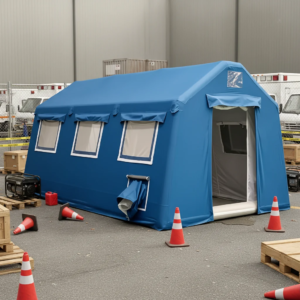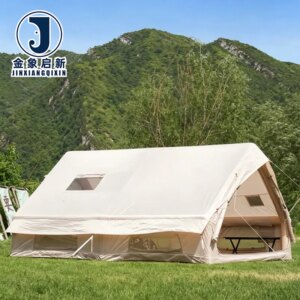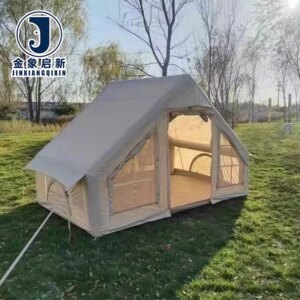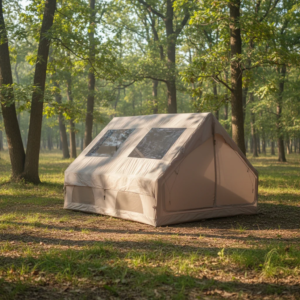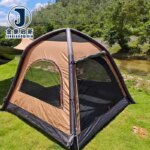
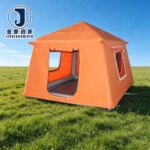


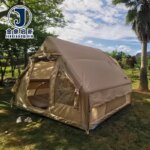
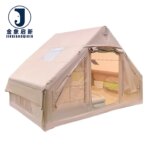
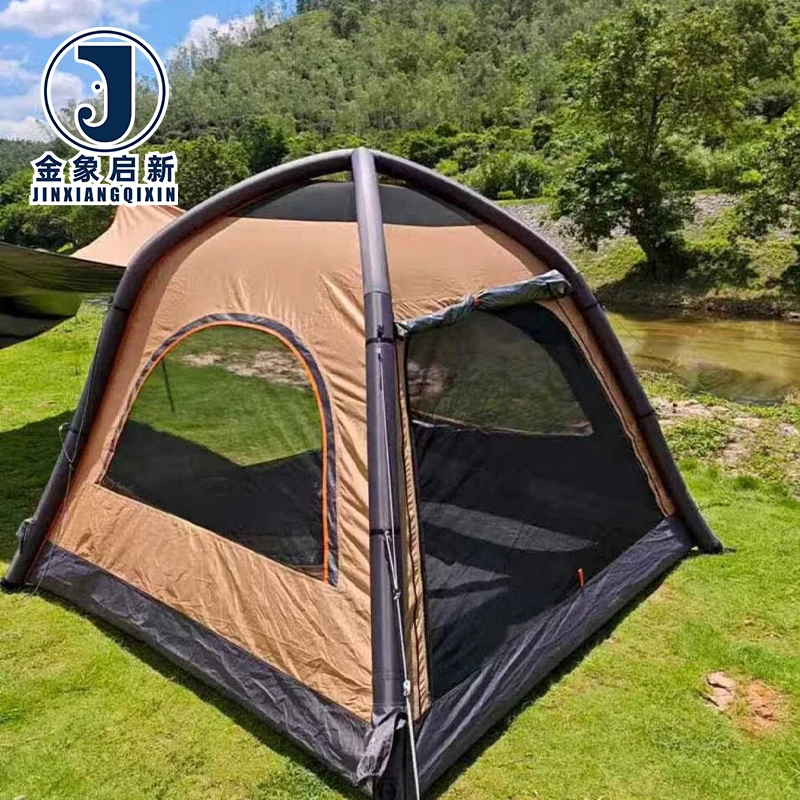
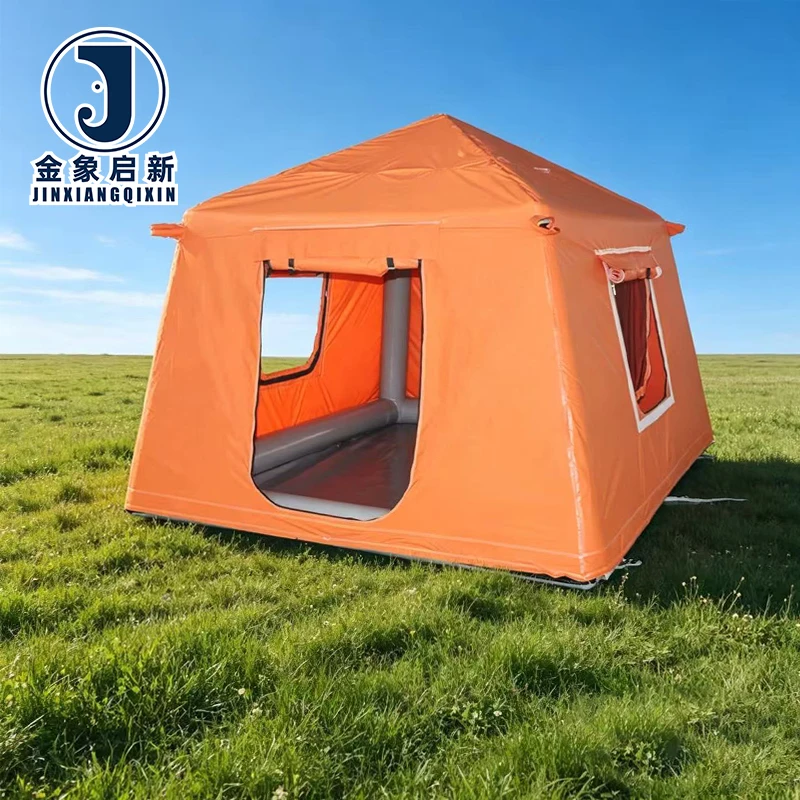
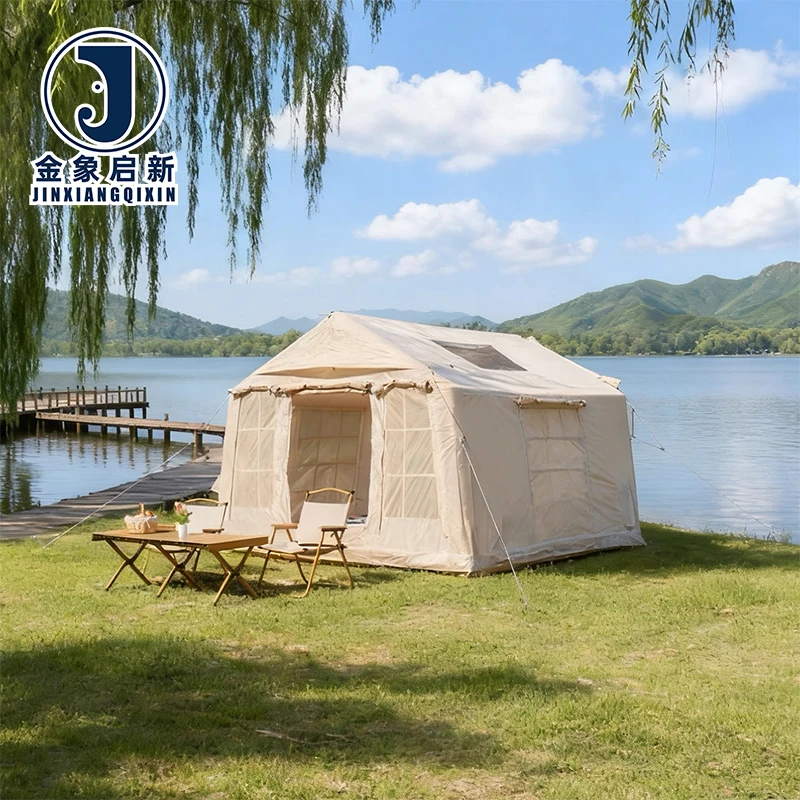
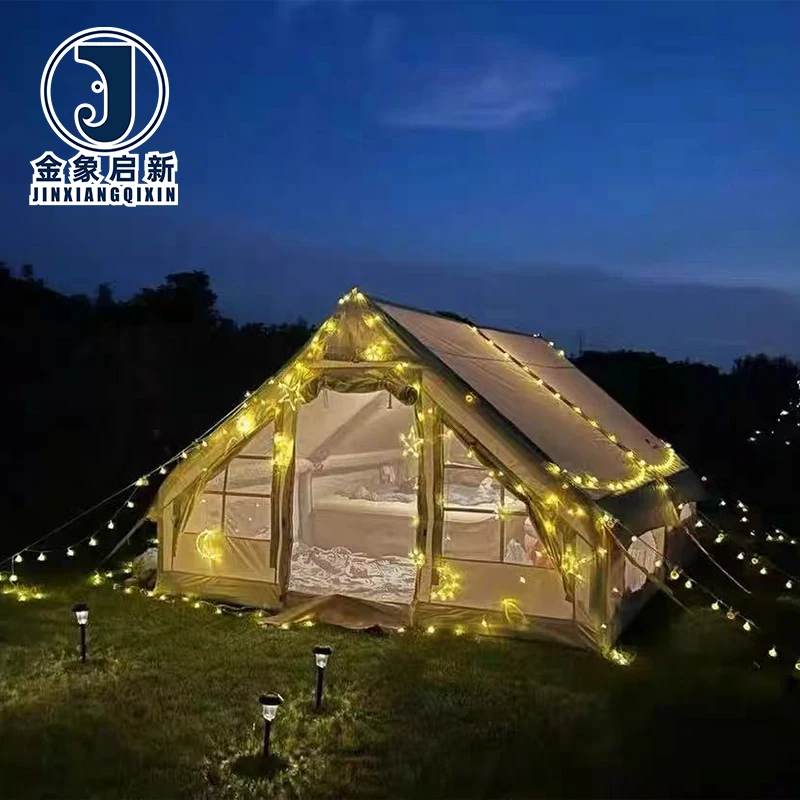
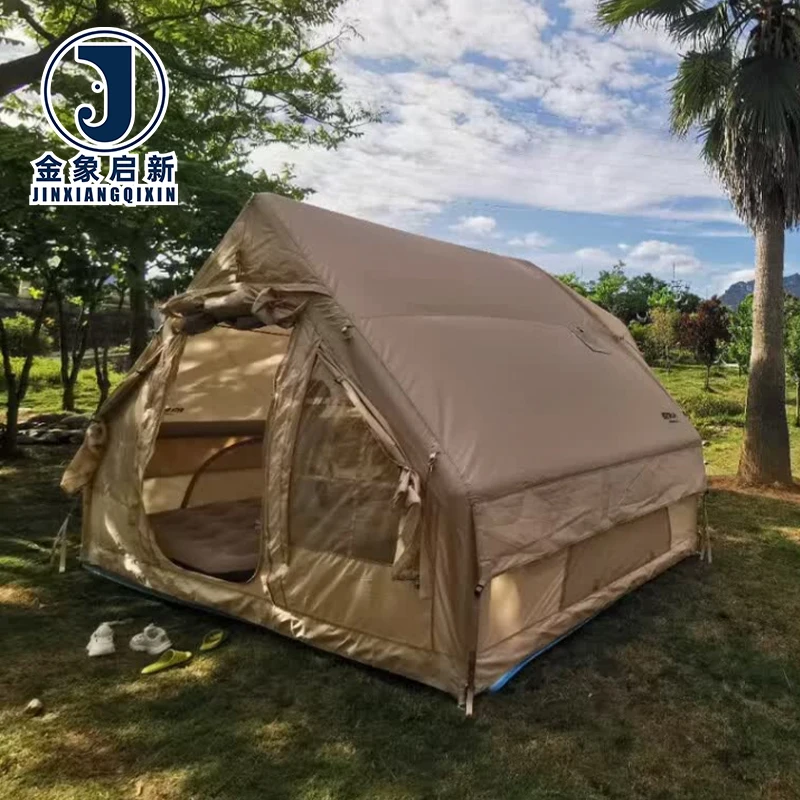
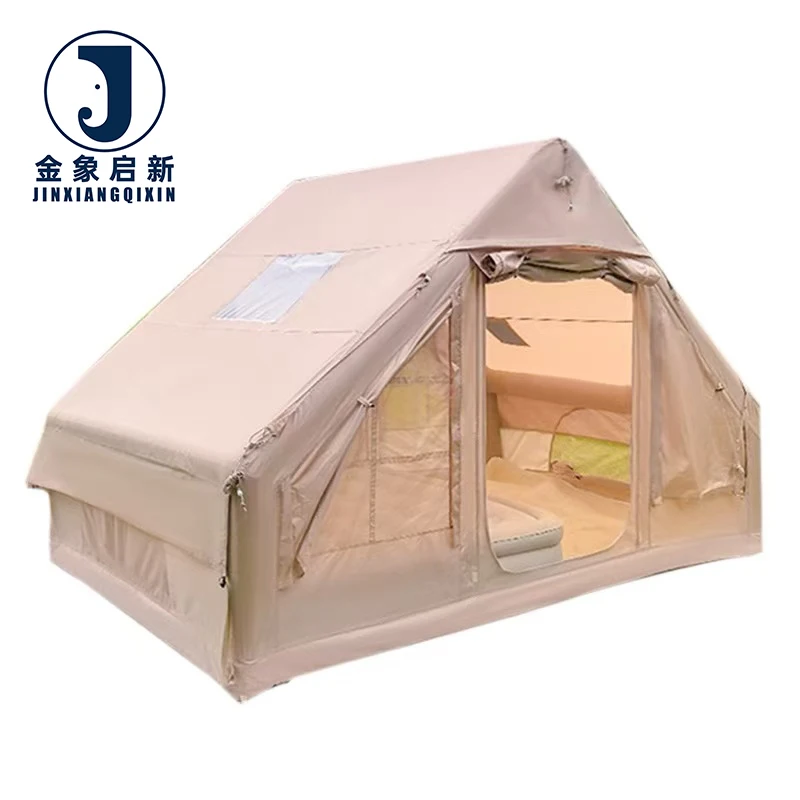
Inflatable Structure Expertise — nearly 30 years of PVC coated fabric process control applied to airtight membrane structures, ensuring every inflatable emergency shelter leaves the factory with verified inflation integrity.
Technical Specifications
| Parameter | Value |
|---|---|
| Product Type | Inflatable Tent |
| Capacity | 8-10 Person |
| Core Material | PVC Tarpaulin |
| Waterproof Rating | Hydrostatic head ≥ 5000mm |
| Tensile Strength | ≥ 3000N/5cm |
| Fire-retardant Standard | EN 13501-1 (grade not stated in source) |
| Anti-Static | Available (surface resistance standard not stated in source) |
| UV-Resistant | Available (test basis not stated in source) |
| Tear-Resistant | Available (test standard not stated in source) |
| Fabric Thickness Tolerance | ±0.1mm |
| Season Rating | 4 Season |
| Quality Testing | 24-hour airtightness pressure test before dispatch |
| Standards & Certifications | ISO9001, ISO14001, ISO45001, CE |
Application Suitability
| Application | Exposure & Requirement |
|---|---|
| Disaster relief staging areas | Rapid deployment, sustained rain, wind load, repeated inflation cycles |
| Mobile command centers | Continuous occupancy, power cable routing, sensitive electronic equipment nearby |
| Infrastructure project equipment storage | Prolonged UV exposure, dust ingress, site vehicle proximity, ground moisture |
| Temporary personnel accommodation | Thermal retention in cold climates, ventilation requirements, fire safety compliance |
| Logistics coordination hubs | High foot traffic, loading equipment movement, weather sealing for material protection |
Why Fire-Retardant Certification Matters More Than the Claim Itself
An Inflatable Tent for Industrial Emergency use must carry documented flame performance, not just a marketing statement on the quotation.
When a safety officer on a disaster recovery site asks for the fire classification of your temporary shelter, "flame retardant" without a referenced standard leaves you without an answer. We have seen procurement teams accept tents on the basis of a supplier’s verbal assurance, only to face rejection at the site compliance audit weeks later. The inflatable emergency shelter tent you deploy must align with the fire safety codes enforced in your operating region, and that alignment starts with a test report you can hand to your auditor [NEED_CITE: EN 13501-1 fire classification for construction and building materials].
Airtightness Under Repeated Inflation Cycles
An inflatable structure lives and dies by its seams. Every time the shelter is inflated, the internal pressure exerts a constant outward force on every welded joint and bonded edge. Our PVC tarpaulin inflatable emergency shelter undergoes a 24-hour pressure test before dispatch, verifying that the structure holds air without measurable decay across an extended period. This is not a sample check — every unit produced goes through this protocol.
Fabric Behaviour in Four-Season Conditions
Deploying an Inflatable Tent for Industrial Emergency response means the fabric must perform in freezing temperatures and sustained heat alike. PVC tarpaulin as a core material provides dimensional stability across a wide thermal range, resisting the brittleness that affects thinner membranes in cold weather and the softening that compromises structural rigidity in high heat. The ±0.1mm fabric thickness tolerance ensures consistent behaviour panel to panel, which matters when an inflatable structure relies on uniform internal pressure to maintain its shape.
How Tensile and Tear Performance Interact in Inflatable Structures
The stated tensile strength of ≥ 3000N/5cm indicates the force required to pull the PVC tarpaulin apart under a standardised test [NEED_CITE: tensile and tear test methods for coated fabrics per ISO 1421]. In an inflatable shelter, tensile load is distributed across the entire membrane surface by internal air pressure. Tear resistance, however, governs what happens when a puncture or cut occurs — whether a small tear propagates rapidly across a panel or remains contained. Both properties depend on the base fabric denier, weave density, and coating adhesion, not on weight alone. A heavier fabric with poor coating bond can delaminate under stress, while a lighter fabric with a tight weave and strong coating adhesion can outperform expectations. Specifying an inflatable emergency shelter requires evaluating these properties together rather than selecting on any single metric.
The Hidden Cost of Undocumented Anti-Static and UV Performance
Buyers sourcing inflatable shelters for sites with sensitive electronic equipment often request anti-static fabric but receive material without a documented surface resistance value. The result is a shelter that passes visual inspection yet fails the site safety review when the compliance team asks for test data. Similarly, UV resistance claimed without a referenced test basis leaves the buyer exposed to premature fabric degradation that only becomes visible after months of sun exposure — by which time the shelter is already deployed and replacement becomes a logistics problem rather than a procurement decision [NEED_CITE: accelerated weathering test standards for coated technical textiles].
What This Production Setup Delivers for Inflatable Structures
Three full production lines and 36 sets of processing equipment give this facility the capacity to fulfil bulk inflatable shelter orders without compressing lead times through skipped quality steps. The 10-person R&D team handles fabric formulation adjustments, custom dimensions, and pattern printing specific to each project, developing samples within days rather than weeks. Dedicated QA/QC runs at every production stage, with 100% inspection before dispatch — not a sampling protocol that leaves defective units in the shipment. The 9,180 m² production facility supports simultaneous cutting, welding, and pressure testing across multiple orders. ISO9001, ISO14001, and ISO45001 certified production ensures that process documentation meets the audit requirements of industrial and government procurement teams.
Documentation & Verification
- Material specification sheet stating PVC tarpaulin construction, fabric thickness tolerance, and waterproof rating per unit
- Fire-retardant test report referencing EN 13501-1 included with every shipment for site compliance audits
- Batch-specific quality inspection record covering tensile strength and airtightness test results
- Certificate of origin and customs documentation prepared for cross-border industrial procurement
- Pre-shipment inspection record confirming 24-hour pressure test completion on each inflatable unit
Fabrication, Handling & Storage
- Heat welding parameters must match the PVC tarpaulin coating formulation to maintain airtight seam integrity across repeated inflation cycles
- Store inflated or deflated shelters away from sharp ground contact to protect the PVC membrane surface from puncture
- Avoid folding inflatable structures along the same crease line repeatedly to prevent coating fatigue at stress points
- Use compatible PVC repair patches and solvent cement for field repairs on the tarpaulin membrane
- Clean with mild detergent only — aggressive solvents degrade the PVC coating bond and compromise waterproof performance
What We Need to Move Your Inquiry Forward
Provide the deployment environment and expected weather exposure so we can confirm the appropriate fabric formulation and treatment package for your inflatable emergency shelter. If your site enforces specific fire safety codes or anti-static surface resistance requirements, share those standards so we can align the material certification accordingly. Let us know the quantity, preferred dimensions, and whether you require pattern printing or branding on the shelter exterior.
Frequently Asked Questions
Q: How does EN 13501-1 align with regional fire safety codes for temporary structures?
A: EN 13501-1 is a European reaction-to-fire classification that categorises building and construction materials by flame spread, smoke production, and burning droplet behaviour. Many international jurisdictions reference it directly or recognise equivalent classifications. Confirm with your site safety officer which specific grade within EN 13501-1 your deployment region requires, and we will supply the matching test documentation with your inflatable shelter shipment.
Q: What custom dimensions and fabric adjustments are available for bulk inflatable shelter orders?
A: Our R&D team develops custom dimensions, fabric thickness adjustments, and pattern printing for inflatable emergency shelters through an OEM and ODM process. Sample units are produced for approval before full-scale manufacturing begins. Minimum order quantities depend on the degree of customisation — standard configurations carry lower thresholds, while fully bespoke dimensions and branded exteriors require a project-specific assessment.
Q: How is fabric thickness verified during production and what should buyers check on arrival?
A: Fabric thickness is monitored against the ±0.1mm tolerance during coating and finishing, with measurements recorded per batch. On arrival, buyers should use a calibrated thickness gauge at multiple points across the membrane surface and compare readings against the material specification sheet included in the shipment documentation package.
Q: Does the anti-static treatment meet specific surface resistance standards for sensitive equipment environments?
A: Anti-static treatment is available for inflatable shelters deployed near sensitive electronic equipment. The specific surface resistance standard required depends on your site’s regulatory framework. Share your compliance requirement during inquiry so we can confirm the treatment formulation and supply the relevant test data with your order documentation.
Q: What welding techniques ensure airtightness under repeated inflation and deflation cycles?
A: High-frequency and hot-air welding are used on PVC tarpaulin membranes to create seams that bond at the coating layer rather than relying on thread and needle holes. The welding parameters are calibrated to the specific fabric thickness and coating formulation of each inflatable shelter, and every completed unit undergoes the 24-hour pressure test to verify seam integrity before dispatch.